Connecticut Quitclaim Deed - Individual to Two Individuals
What this document covers
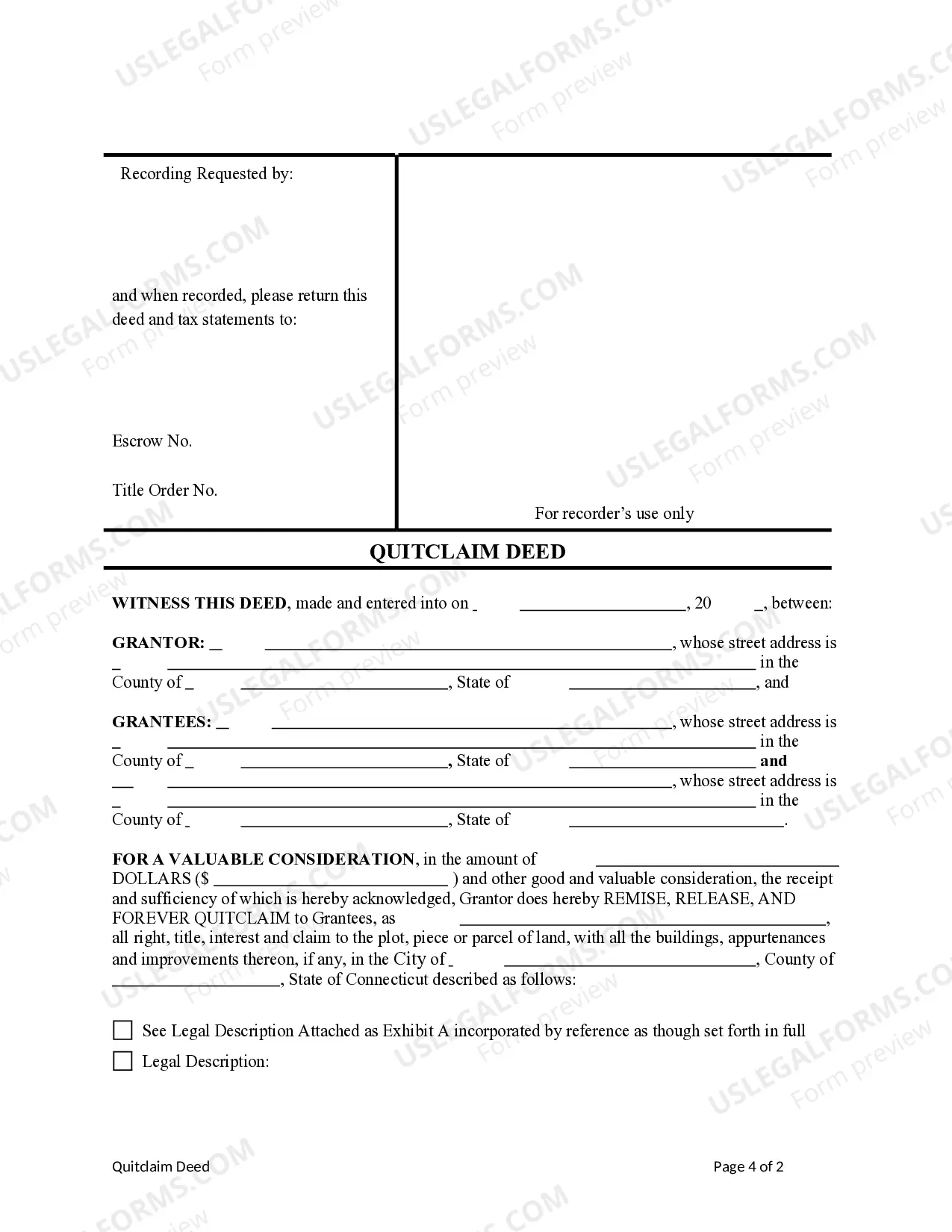
The Quitclaim Deed - Individual to Two Individuals is a legal document through which an individual, known as the Grantor, transfers their interest in a property to two individuals, referred to as Grantees. This form is distinct from other types of deeds because it conveys whatever ownership interest the Grantor has without any guarantees regarding the quality of that title. This quitclaim deed allows the Grantees to hold the property as either tenants in common or joint tenants with the right of survivorship, ensuring clarity in ownership rights after the transfer.
Main sections of this form
- Identification of the Grantor and Grantees.
- Legal description of the property being conveyed.
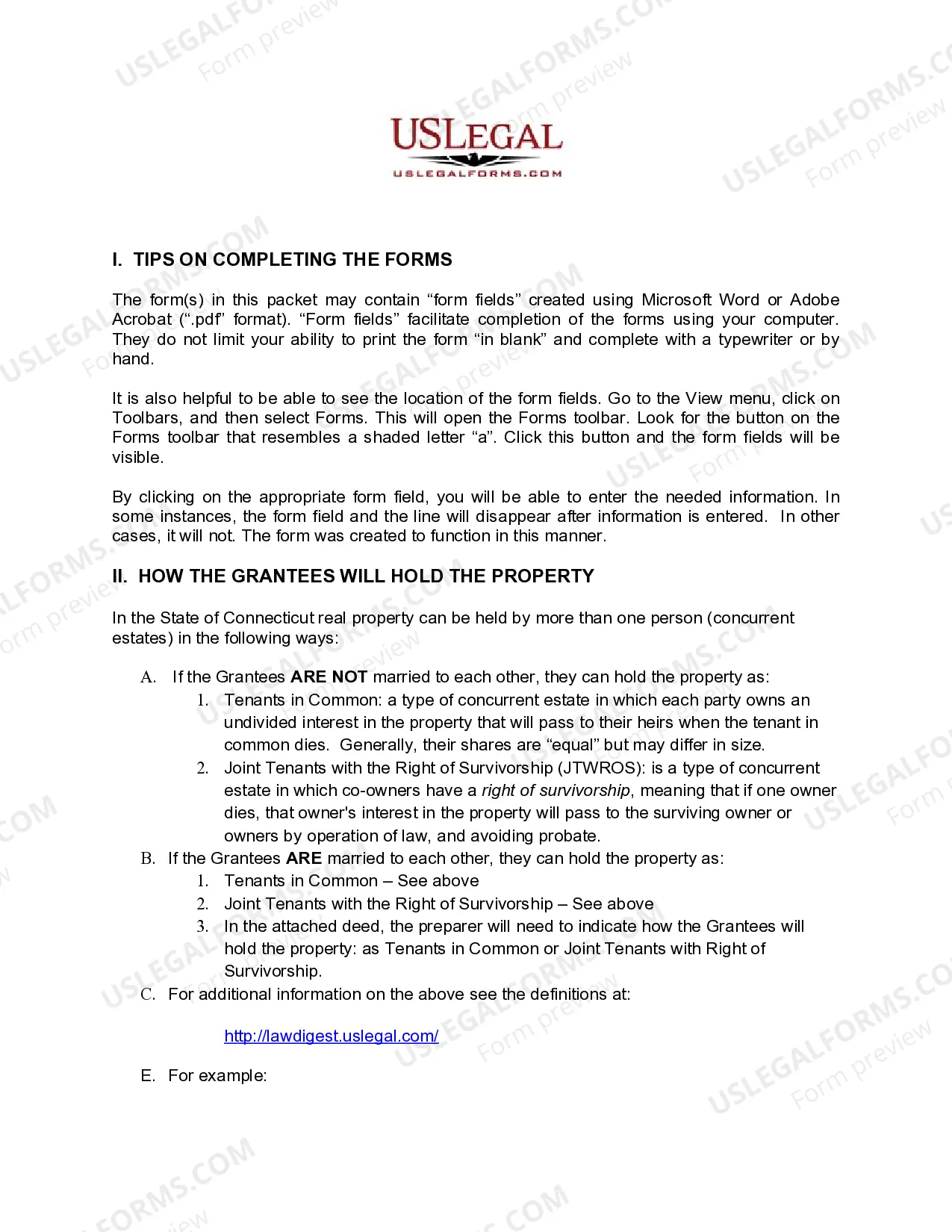
- Specification of how the Grantees will hold the property (as tenants in common or joint tenants with right of survivorship).
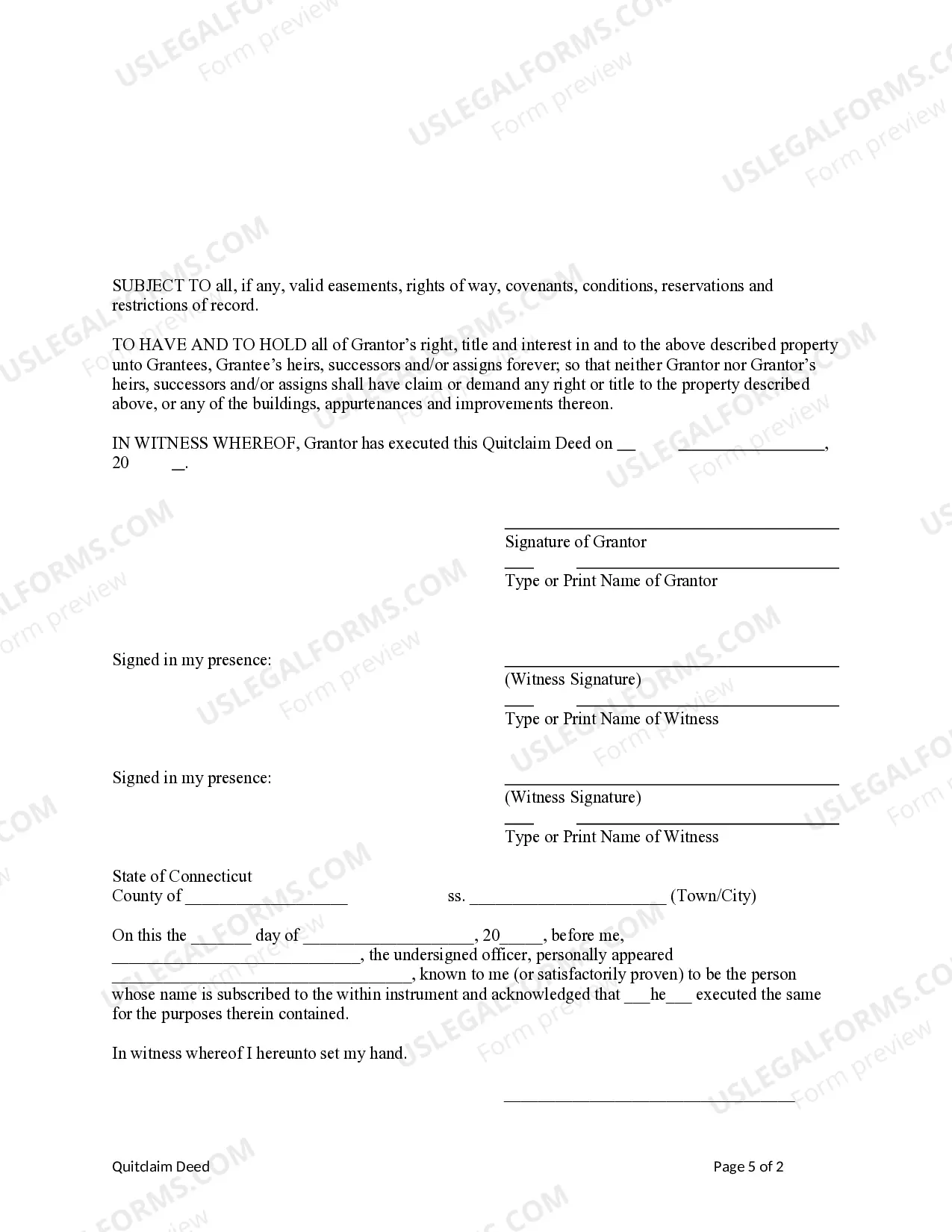
- Signatures of the Grantor, indicating transfer of ownership.
- Notarization section to validate the deed.







When this form is needed
This form is typically used when an individual wants to transfer property ownership to two different individuals, such as family members or partners. It is particularly useful in situations involving inheritance, property gifts, or transferring property rights between co-owners. Additionally, you may use this deed when you wish to clarify how ownership will be held, either ensuring that both Grantees have equal rights or establishing automatic transfer to the surviving owner in case of death.
Who needs this form
- Individuals transferring property ownership to two people.
- Property owners seeking to define ownership rights clearly.
- Those involved in estate planning who want to facilitate inheritance smoothly.
- Couples or partners not married who want to co-own a property.
Completing this form step by step
- Identify the parties: Enter the names of the Grantor and the two Grantees.
- Specify the property: Provide a detailed legal description of the property being transferred.
- Select the ownership type: Indicate whether the Grantees will hold the property as tenants in common or joint tenants with right of survivorship.
- Sign the form: The Grantor must sign the deed in the appropriate section.
- Notarize the document: Have the form notarized to ensure it is legally binding.
Does this form need to be notarized?
To make this form legally binding, it must be notarized. Our online notarization service, powered by Notarize, lets you verify and sign documents remotely through an encrypted video session.
Get your form ready online
Our built-in tools help you complete, sign, share, and store your documents in one place.
Make edits, fill in missing information, and update formatting in US Legal Forms—just like you would in MS Word.
Download a copy, print it, send it by email, or mail it via USPS—whatever works best for your next step.
Sign and collect signatures with our SignNow integration. Send to multiple recipients, set reminders, and more. Go Premium to unlock E-Sign.
If this form requires notarization, complete it online through a secure video call—no need to meet a notary in person or wait for an appointment.
We protect your documents and personal data by following strict security and privacy standards.

Make edits, fill in missing information, and update formatting in US Legal Forms—just like you would in MS Word.

Download a copy, print it, send it by email, or mail it via USPS—whatever works best for your next step.

Sign and collect signatures with our SignNow integration. Send to multiple recipients, set reminders, and more. Go Premium to unlock E-Sign.

If this form requires notarization, complete it online through a secure video call—no need to meet a notary in person or wait for an appointment.

We protect your documents and personal data by following strict security and privacy standards.
Common mistakes to avoid
- Failing to include a proper legal description of the property.
- Not specifying how the Grantees will hold the property.
- Omitting the Grantor's signature or notarization.
- Using incorrect or outdated forms that do not comply with state requirements.
Advantages of online completion
- Convenient access: Download and complete the form from anywhere at any time.
- Editability: Customize the form quickly to fit your specific needs.
- Reliability: Forms are drafted by licensed attorneys to ensure compliance with legal standards.
What to keep in mind
- The Quitclaim Deed - Individual to Two Individuals facilitates the transfer of property from one person to two others.
- It allows for clear definitions of ownership rights post-transfer.
- Notarization is required for the deed to be valid.
- Always ensure compliance with state-specific laws when completing the form.
Looking for another form?

Form popularity
FAQ
When two people are on a Connecticut Quitclaim Deed - Individual to Two Individuals, they both share ownership of the property. This means decisions about the property must be made together, and both individuals may be responsible for debts associated with the property, such as mortgages or property taxes. If one owner decides to sell their share or if disputes arise, that can complicate the ownership. To navigate these complexities, consider using a platform like US Legal Forms for guidance and to ensure proper documentation.
To remove one person from a deed, you can draft a Connecticut Quitclaim Deed - Individual to Two Individuals, transferring the property interest to the remaining owner or owners. This involves filling out the deed properly, obtaining signatures, and recording it with your local land office. It's essential to ensure all legal requirements are met during this process. Uslegalforms offers templates and guidance to assist you in this task.
Yes, you can evict someone whose name is on the deed, but it may require legal proceedings. A Connecticut Quitclaim Deed - Individual to Two Individuals does not inherently grant eviction rights if all parties are involved in ownership. You may need to establish legal grounds for eviction, such as non-payment or lease violations. Working with a legal professional helps clarify these steps.
To remove someone from your property, you can utilize a Connecticut Quitclaim Deed - Individual to Two Individuals. You will need to document the transfer of ownership through the deed and file it with your local land records office. This legal tool effectively establishes who holds ownership. Seeking guidance from professionals familiar with property laws can ensure a smooth process.
Yes, you can remove someone's name from a deed using a Connecticut Quitclaim Deed - Individual to Two Individuals. This process involves the original owner giving up their interest in the property to the remaining owner or owners. It's important to execute this deed correctly to ensure the removal is legally recognized. Using reliable resources, like uslegalforms, can streamline this process.
Yes, a Connecticut Quitclaim Deed - Individual to Two Individuals requires signatures from both the grantor and the grantee. This ensures that the transfer of interest in the property is legally valid. Both parties should understand their rights and responsibilities following the deed's execution. Consulting with a legal expert can provide clarity on any concerns.
To file a quitclaim deed in CT, you must first create the document, making sure it reflects the details of the transaction. Next, visit the local town clerk's office to submit the deed along with any applicable fees. Using platforms like US Legal Forms can streamline this process, providing you with the correct templates and guidelines to make filing simple and efficient.
Yes, you can complete a Connecticut Quitclaim Deed - Individual to Two Individuals on your own. The process involves preparing the deed, ensuring it includes the necessary details such as the names of the grantor and grantee, property description, and signatures. However, it may be beneficial to use professional services, like US Legal Forms, to ensure proper completion and compliance with state requirements.
The most common reason for using a Connecticut Quitclaim Deed - Individual to Two Individuals is to transfer property ownership quickly and easily, especially among family or close acquaintances. This straightforward process avoids lengthy legal procedures, making it efficient for personal transactions. Additionally, it's often employed to clear up title issues or establish joint ownership without added complexities. Utilizing a platform like uslegalforms can streamline this process and ensure that your deed is completed correctly.
Quitclaim deeds, such as the Connecticut Quitclaim Deed - Individual to Two Individuals, are often frowned upon due to the lack of warranty provided in the transaction. This absence of guarantees can leave the buyer vulnerable to unexpected legal complications. Additionally, since these deeds do not require title insurance, potential buyers may be hesitant, worrying about hidden defects in the property’s title. Therefore, it's vital to approach quitclaims with careful consideration and proper legal advice.