Connecticut Request for Nondisclosure of Location Information
About this form
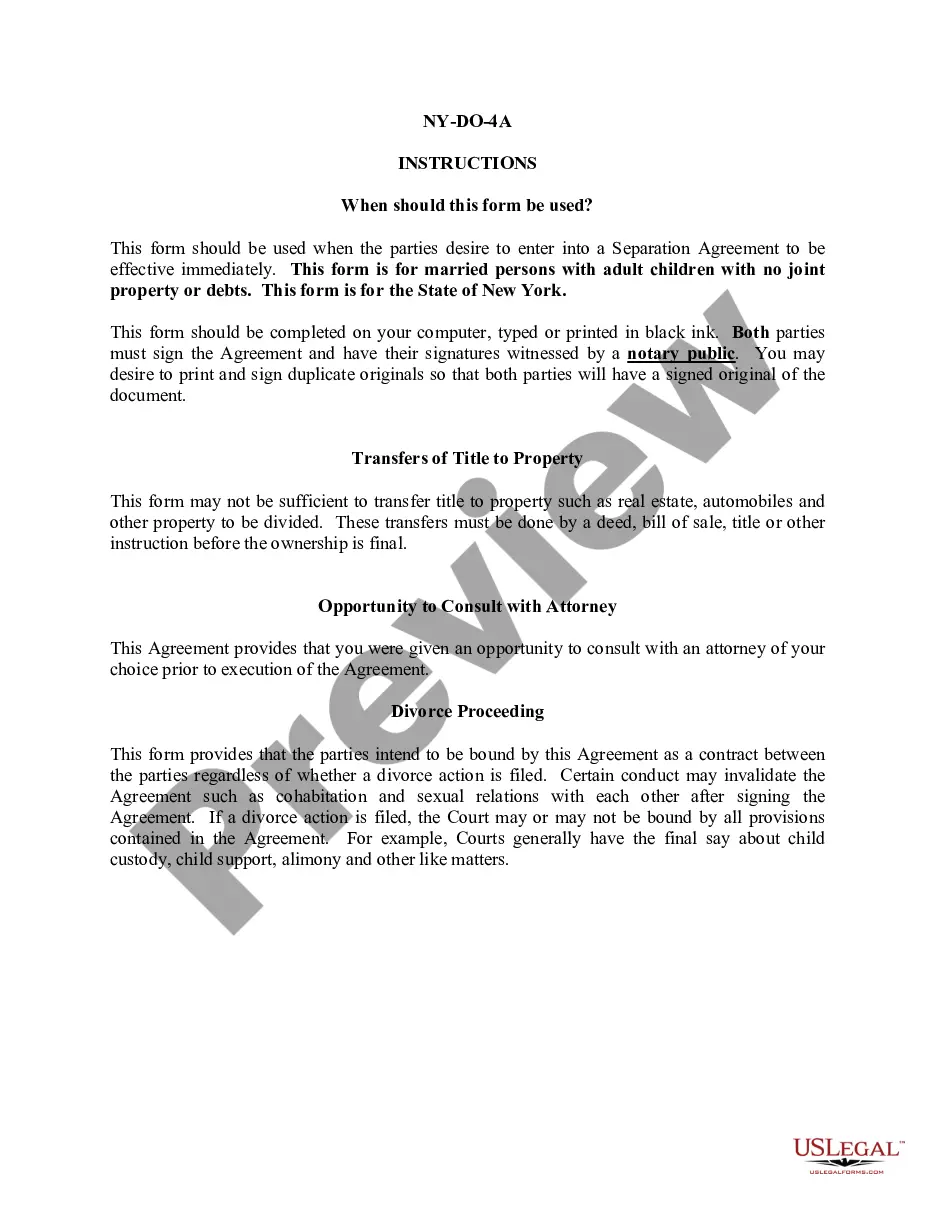
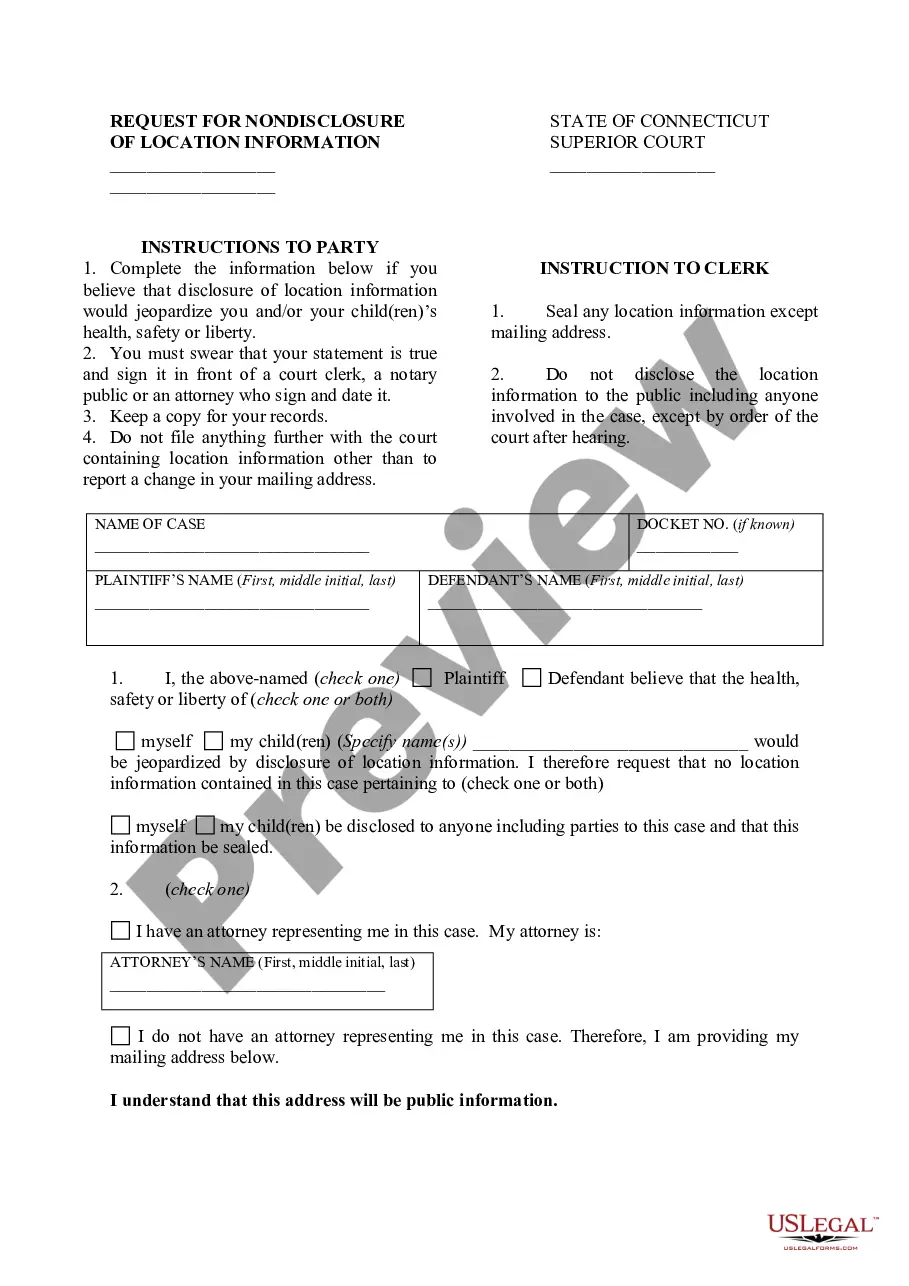
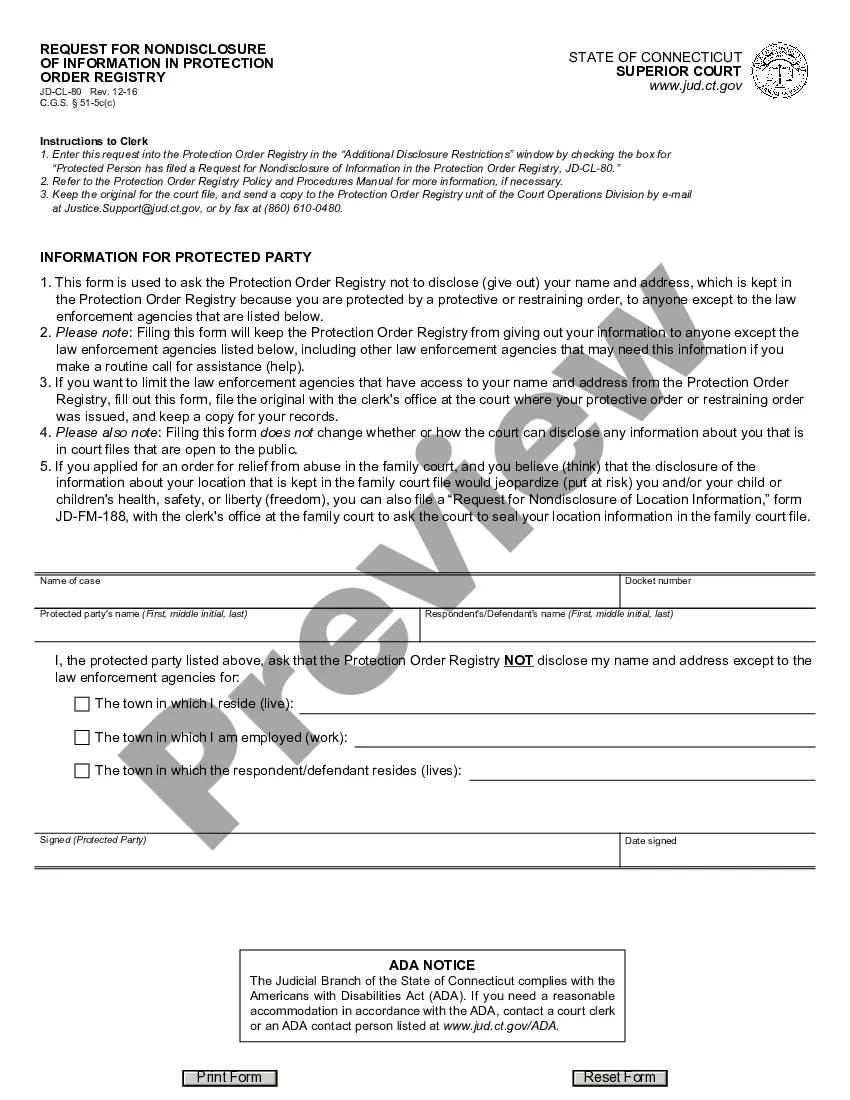
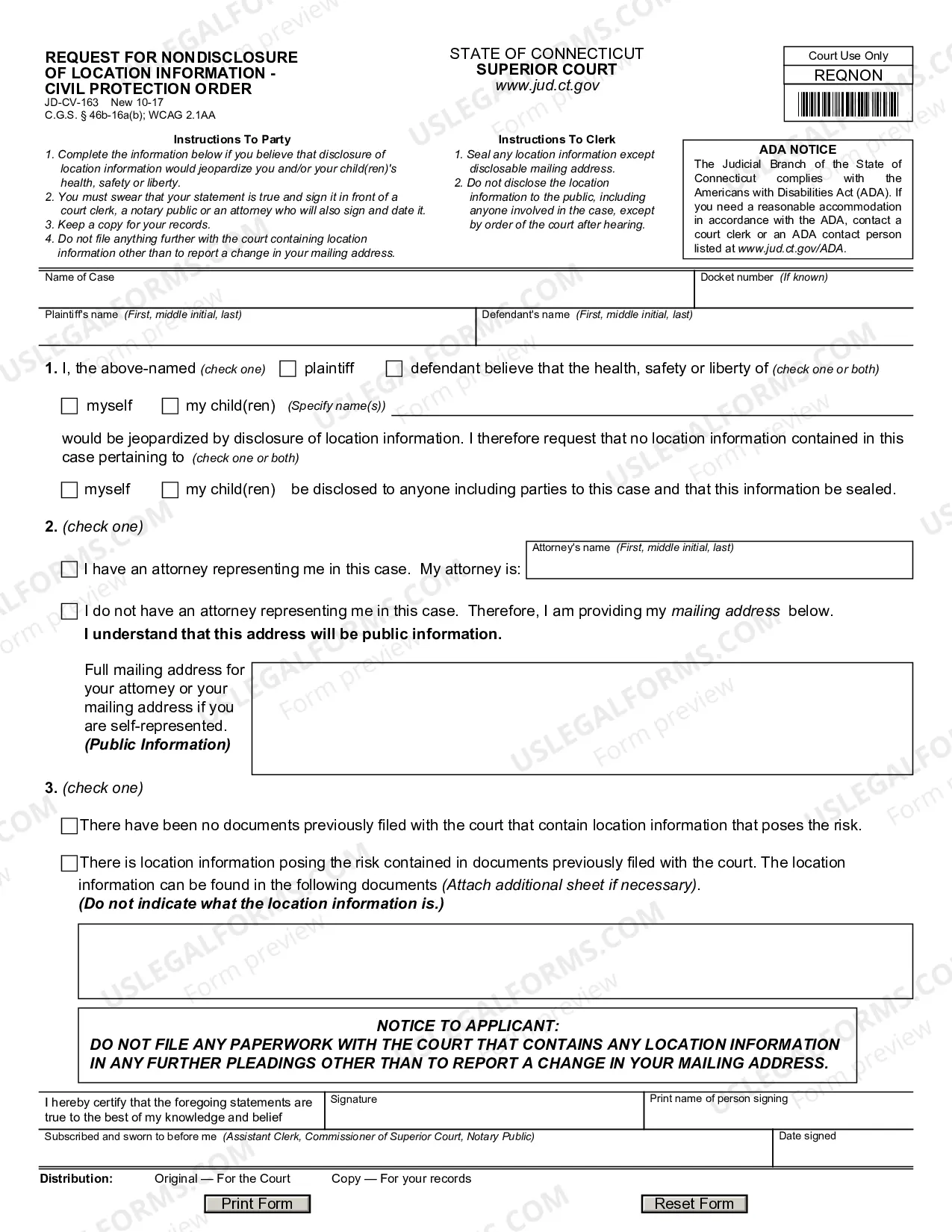
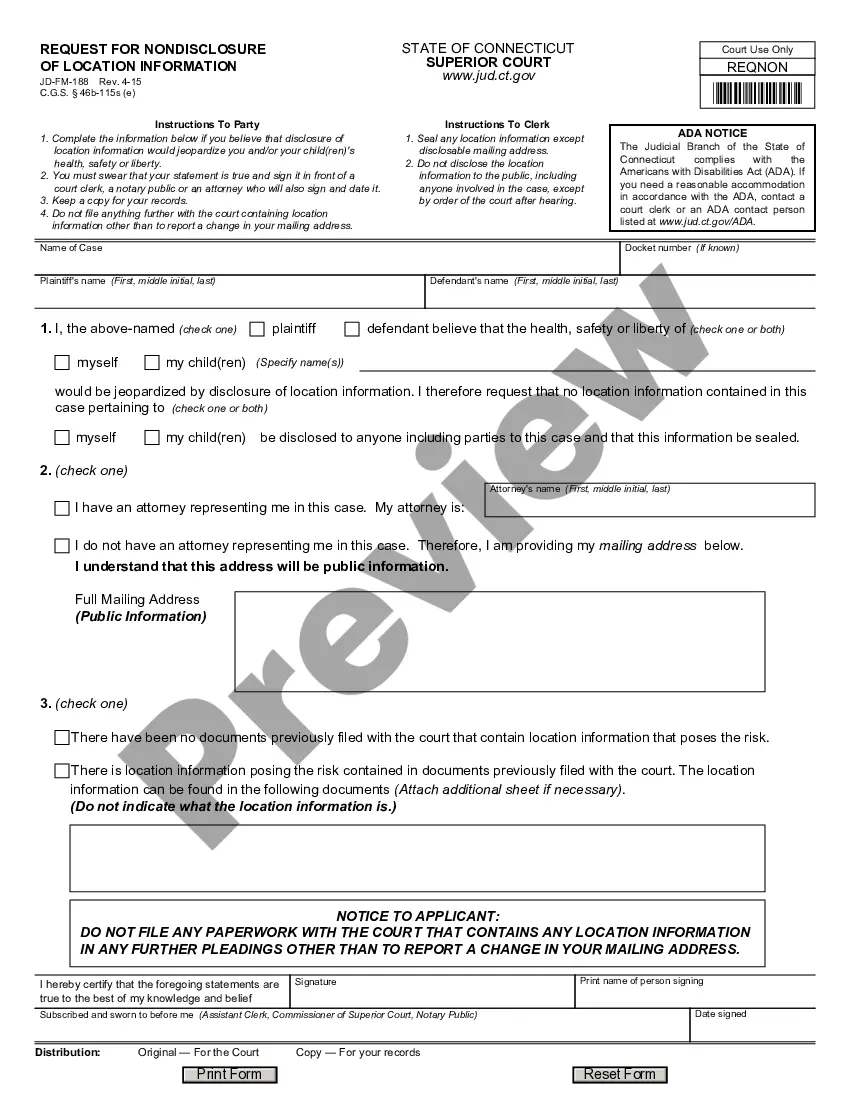
The Request for Nondisclosure of Location Information is a legal form designed to protect sensitive location details that may jeopardize your safety or liberty. This form allows individuals, specifically parents or guardians, to request that their or their child's location information remain confidential during legal proceedings. Unlike standard non-disclosure agreements, which cover various types of confidential information, this form specifically addresses location details within court cases.
Form components explained
- Case Information: Includes sections for the name of the case and docket number.
- Parties Involved: Identifies whether you are the plaintiff or defendant, and lists your information.
- Reason for Request: Requires you to state the potential jeopardy to health, safety, or liberty if location information is disclosed.
- Attorney Representation: Indicates whether you have legal representation and provides space for the attorney's information.
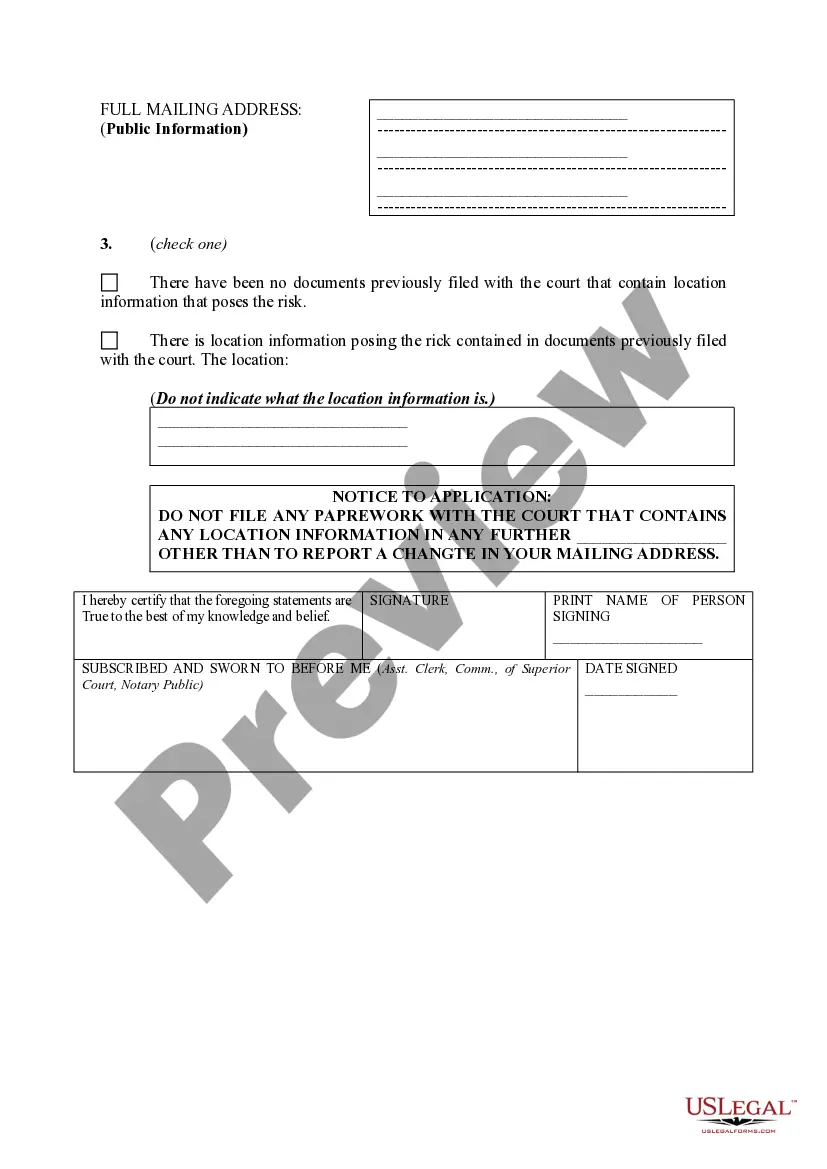
- Mailing Address: A section to provide your mailing address, which becomes public information.
- Certification: Your signature confirming the accuracy of the information, along with a space for notarization.
When to use this document
This form is essential in situations where revealing your location could endanger you or your children. Common scenarios include cases of domestic violence, stalking, or other circumstances where safety is a concern. Use this form to ensure that your location information is kept confidential during ongoing legal proceedings.
Who needs this form
- Individuals who have a reasonable fear for their safety or liberty.
- Parents or guardians seeking to protect their child's location information.
- Parties involved in court proceedings related to custody, divorce, or other sensitive matters.
How to complete this form
- Identify the case by providing the name and docket number if known.
- Determine your role as either the plaintiff or defendant and indicate your and your child's information.
- Clearly explain why disclosing your location could endanger you or your child.
- If represented by an attorney, include their name; otherwise, provide your mailing address.
- Sign the form in front of a notary public or court clerk to certify your statements.
Does this form need to be notarized?
Yes, this form must be notarized to be legally valid. It requires your signature to be witnessed by a notary public, ensuring that your request is formally recognized. US Legal Forms offers integrated online notarization services, making the process secure and accessible without the need for travel.
Get your form ready online
Our built-in tools help you complete, sign, share, and store your documents in one place.
Make edits, fill in missing information, and update formatting in US Legal Forms—just like you would in MS Word.
Download a copy, print it, send it by email, or mail it via USPS—whatever works best for your next step.
Sign and collect signatures with our SignNow integration. Send to multiple recipients, set reminders, and more. Go Premium to unlock E-Sign.
If this form requires notarization, complete it online through a secure video call—no need to meet a notary in person or wait for an appointment.
We protect your documents and personal data by following strict security and privacy standards.

Make edits, fill in missing information, and update formatting in US Legal Forms—just like you would in MS Word.

Download a copy, print it, send it by email, or mail it via USPS—whatever works best for your next step.

Sign and collect signatures with our SignNow integration. Send to multiple recipients, set reminders, and more. Go Premium to unlock E-Sign.

If this form requires notarization, complete it online through a secure video call—no need to meet a notary in person or wait for an appointment.

We protect your documents and personal data by following strict security and privacy standards.
Common mistakes
- Failing to complete all required sections, especially the reasons for non-disclosure.
- Not obtaining the necessary notarization or signature from a court official.
- Providing location information instead of leaving it unspecified as required.
- Not retaining a copy of the submitted form for personal records.
Why complete this form online
- Convenience of filling out the form from anywhere without needing to visit a courthouse.
- Easy to edit and customize to fit specific needs and circumstances.
- Reliable access to forms developed by licensed attorneys, ensuring legal compliance.
Looking for another form?

Form popularity
FAQ
A certificate of disposition indictment provides a formal record of the results of a criminal case, including details about the charges and their resolution. This document is essential for various legal and personal reasons, such as employment applications or background checks. If you need assistance, exploring the US Legal platform can help you navigate the Connecticut Request for Nondisclosure of Location Information efficiently.
You can acquire court documents in Connecticut by visiting the appropriate courthouse or accessing the online database on the Connecticut Judicial Branch website. Requesting these documents often requires specific information about your case. For those needing to protect their privacy, using the US Legal platform can help streamline your Connecticut Request for Nondisclosure of Location Information process.
To obtain a certificate of disposition in Connecticut, you can request the document from the court where your case was processed. Typically, you need to fill out a form and provide identification. Furthermore, for a more streamlined experience, consider using the US Legal platform, which facilitates the Connecticut Request for Nondisclosure of Location Information.
The success of pro se litigants varies widely based on numerous factors, including their preparation and understanding of the law. While many individuals achieve favorable outcomes, being informed about legal processes is crucial. For cases involving sensitive information, such as the Connecticut Request for Nondisclosure of Location Information, proper knowledge and documentation can significantly improve your chances. Utilize resources to assist you in your legal journey.
To file an appearance in Connecticut court, you need to complete an appearance form. This form informs the court of your involvement in your case and signifies that you will represent yourself. You should submit this form to the appropriate court, ensuring to comply with any specific instructions. If your case involves sensitive matters, consider mentioning the Connecticut Request for Nondisclosure of Location Information to safeguard your interests.
To submit evidence as a Pro Se litigant, carefully organize your documents and present them in a clear manner. You must typically file your evidence with the court as part of your case filings. Make sure to reference each piece of evidence in relation to your case and highlight its relevance, especially if relating to the Connecticut Request for Nondisclosure of Location Information. Following court procedures meticulously will enhance your submission.
Judges often express concerns about pro-se defendants because they may lack formal legal training. This can lead to misunderstandings of court procedures and potential biases in legal arguments. However, if you are well-prepared and use resources such as the Connecticut Request for Nondisclosure of Location Information, you can present your case effectively. Courts strive to ensure fairness, so understanding the rules is key.
Yes, individuals have successfully won Pro SE cases in Connecticut. Successful outcomes often result from thorough preparation and a clear understanding of court procedures. While navigating the legal system can be challenging, utilizing resources like the Connecticut Request for Nondisclosure of Location Information can aid in building a strong case. It’s crucial to ensure all necessary documents are accurately filled out to enhance your chances.
To file pro se in Connecticut, you need to prepare your court documents carefully. Start by visiting the Connecticut Judicial Branch website for forms related to your case. The Connecticut Request for Nondisclosure of Location Information may be relevant if safety concerns exist. After completing your forms, file them at your local courthouse and follow the court’s instructions.