New Mexico Living Trust for Individual Who is Single, Divorced or Widow or Widower with No Children

What is this form?
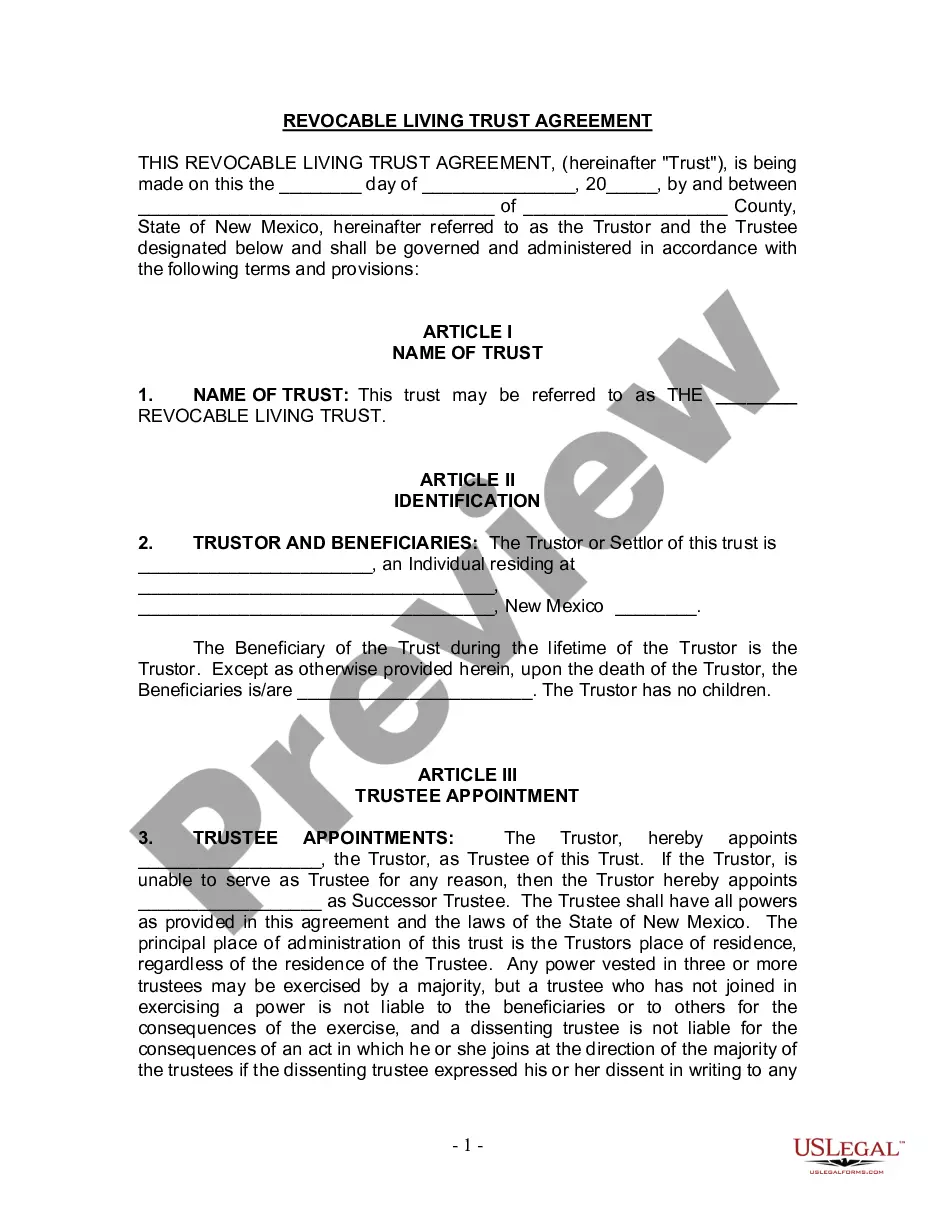
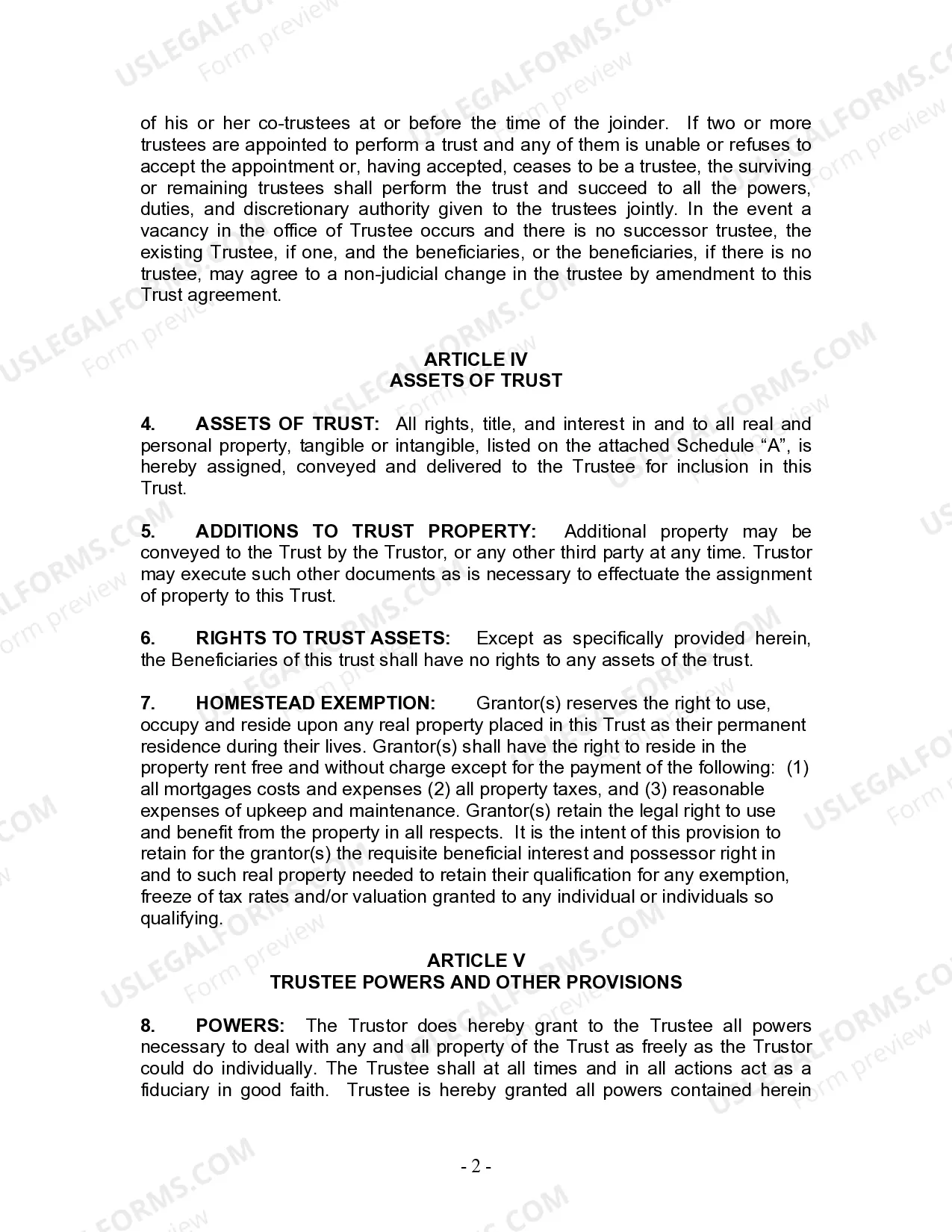
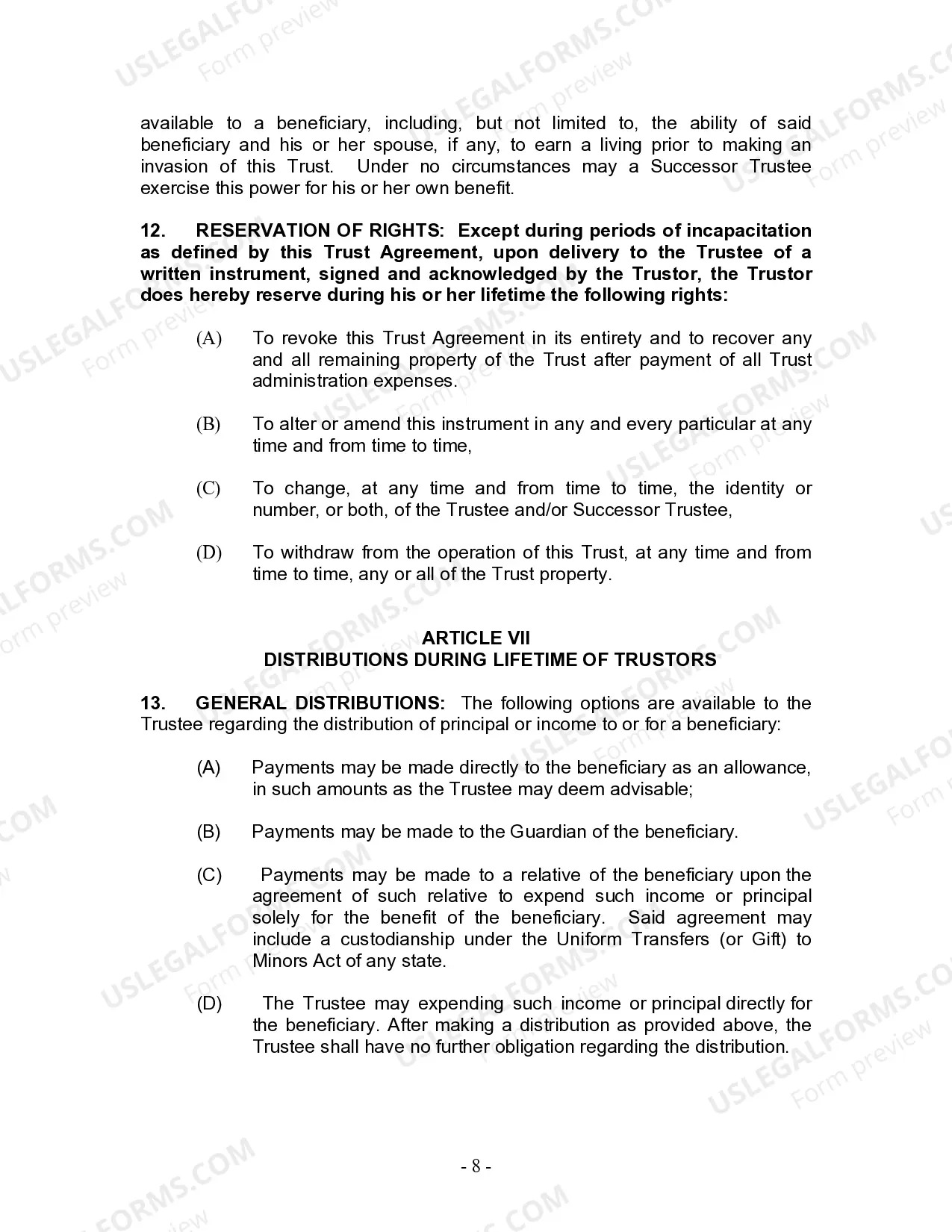
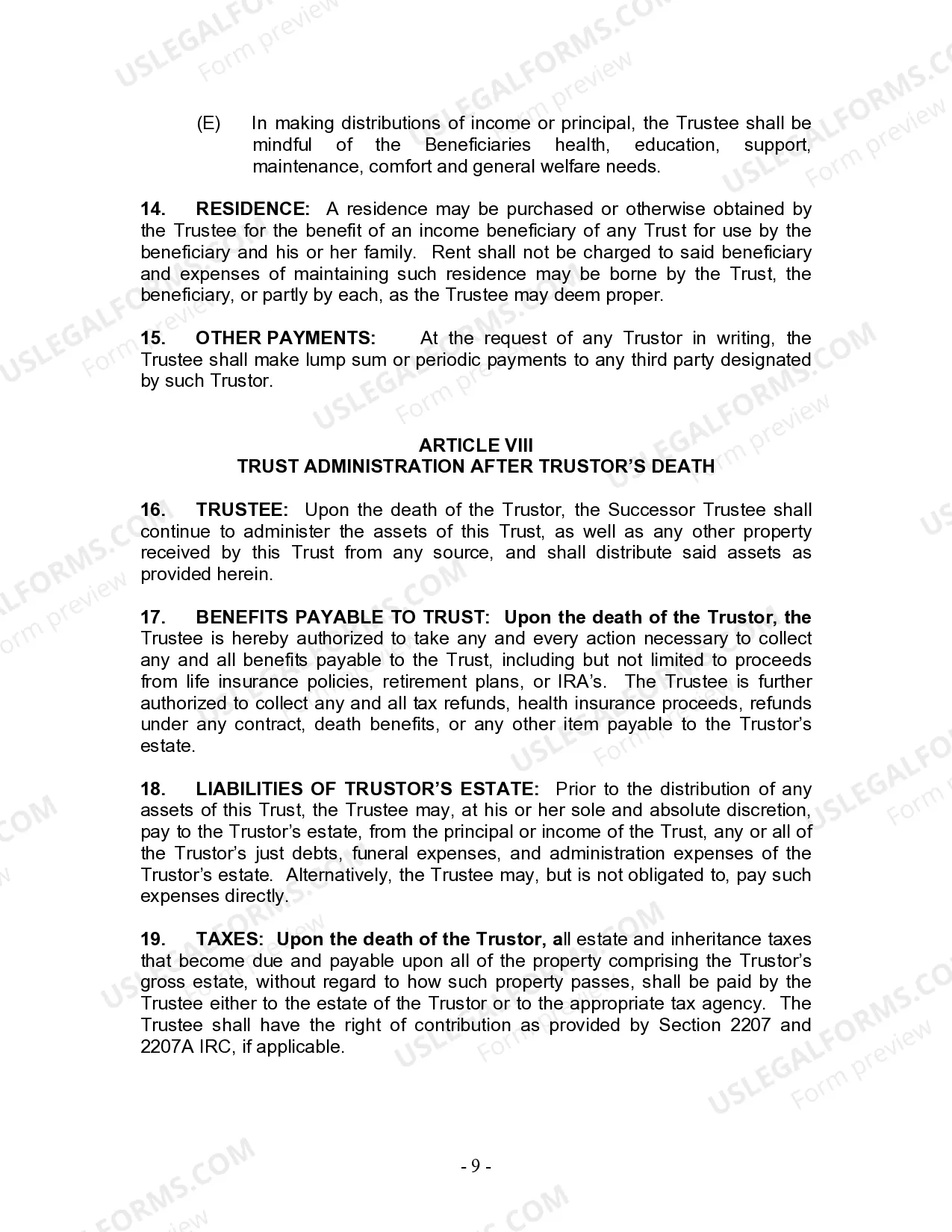
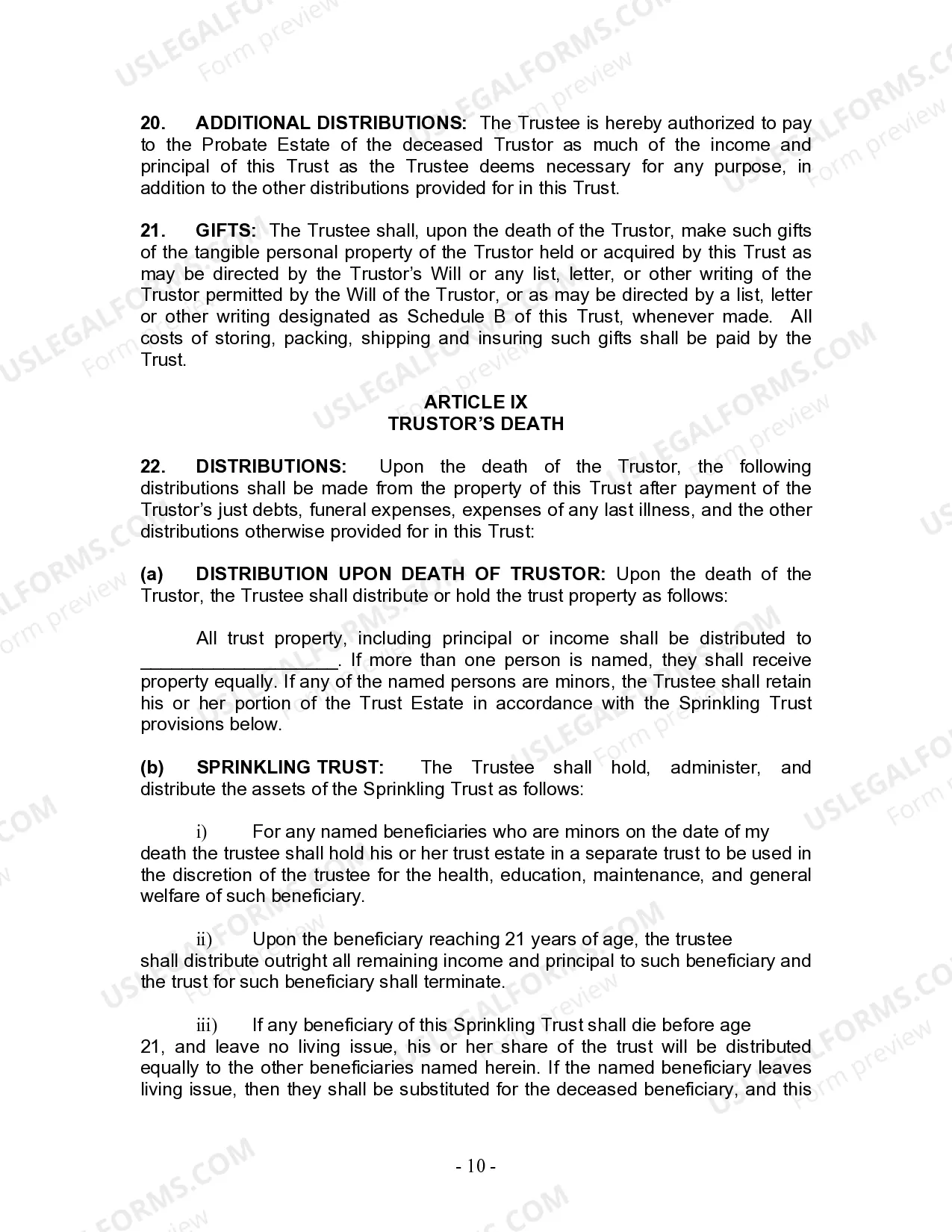
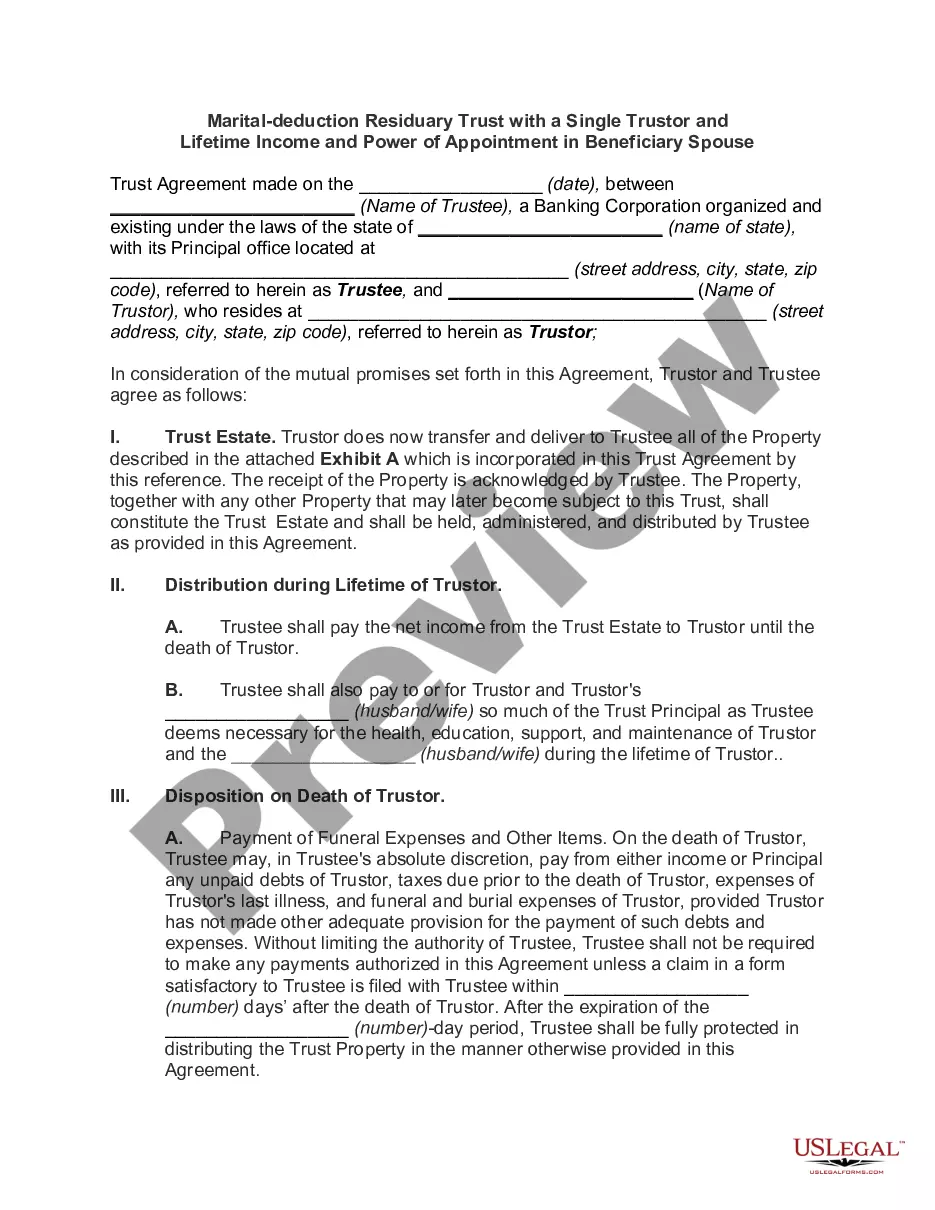
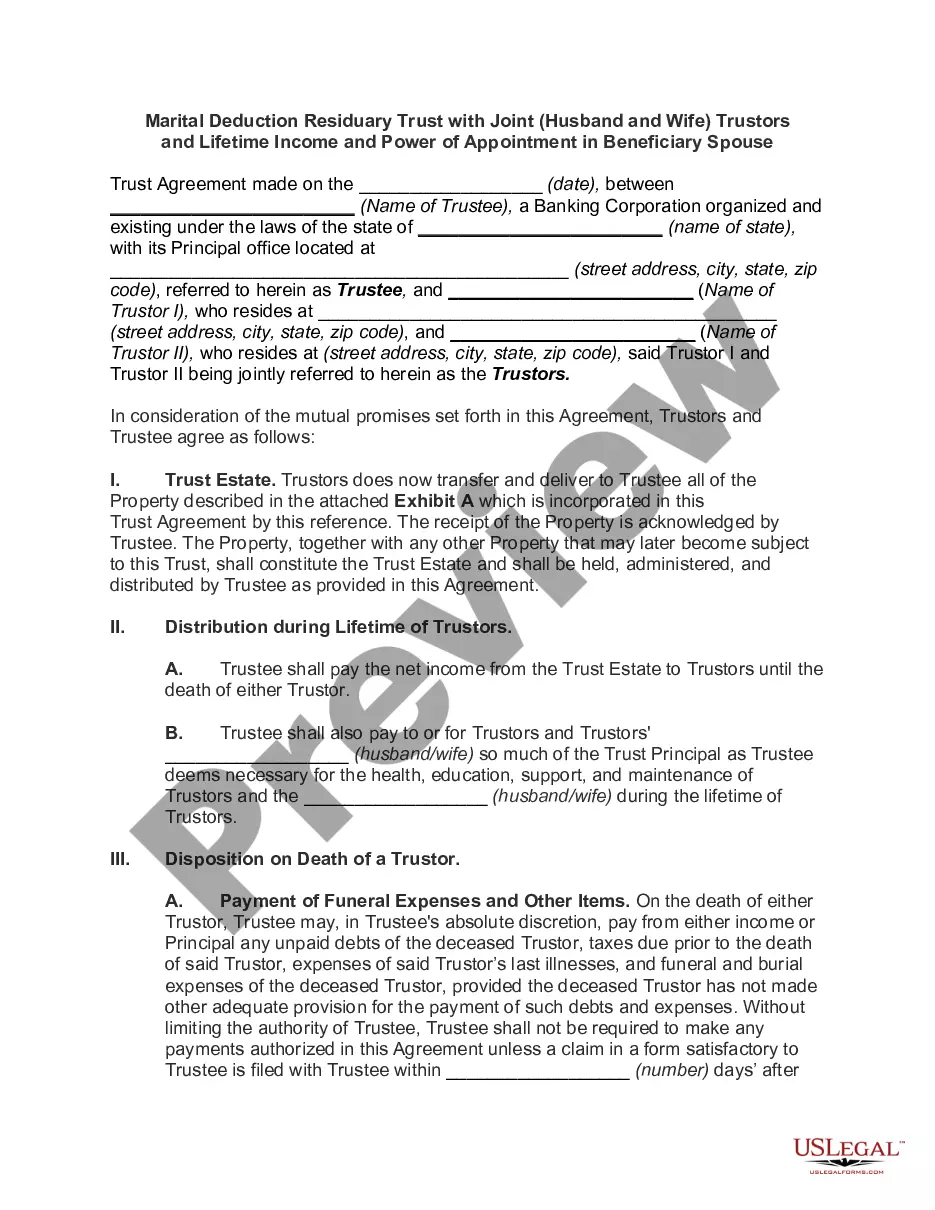
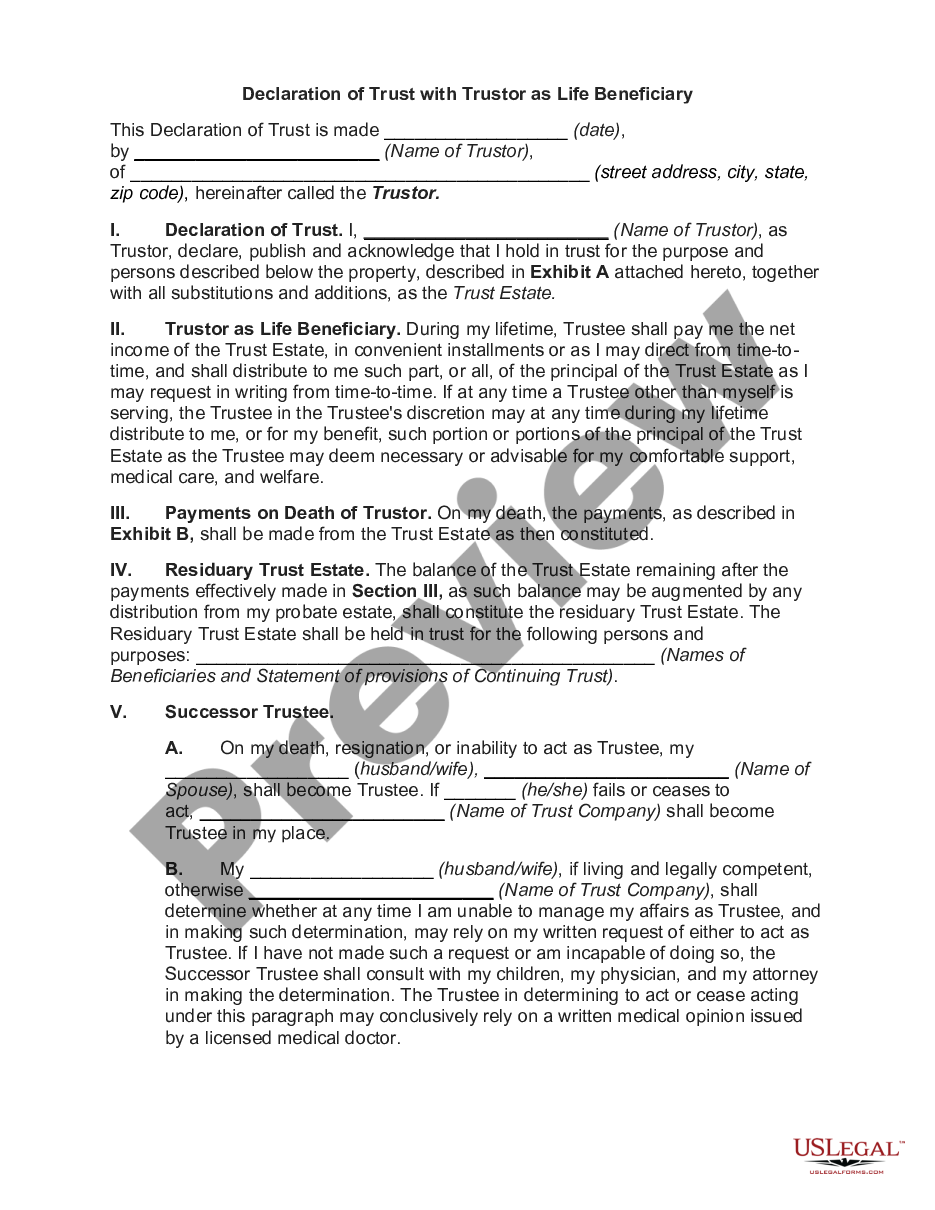
This Living Trust for Individual Who is Single, Divorced or Widow or Widower with No Children is a legal document that enables an individual to manage their assets during their lifetime and dictate how those assets will be distributed upon their death. Unlike a Last Will and Testament, a living trust allows for the immediate transfer of assets to beneficiaries without the need for probate. This document is specifically designed for individuals who are single, divorced, or widowed and do not have children, allowing them to retain control over their assets while simplifying the process for their heirs.
Form components explained
- Trustor and Trustee identification: Names and addresses of the person creating the trust and the trustee.
- Trust property: A detailed description of all assets included in the trust.
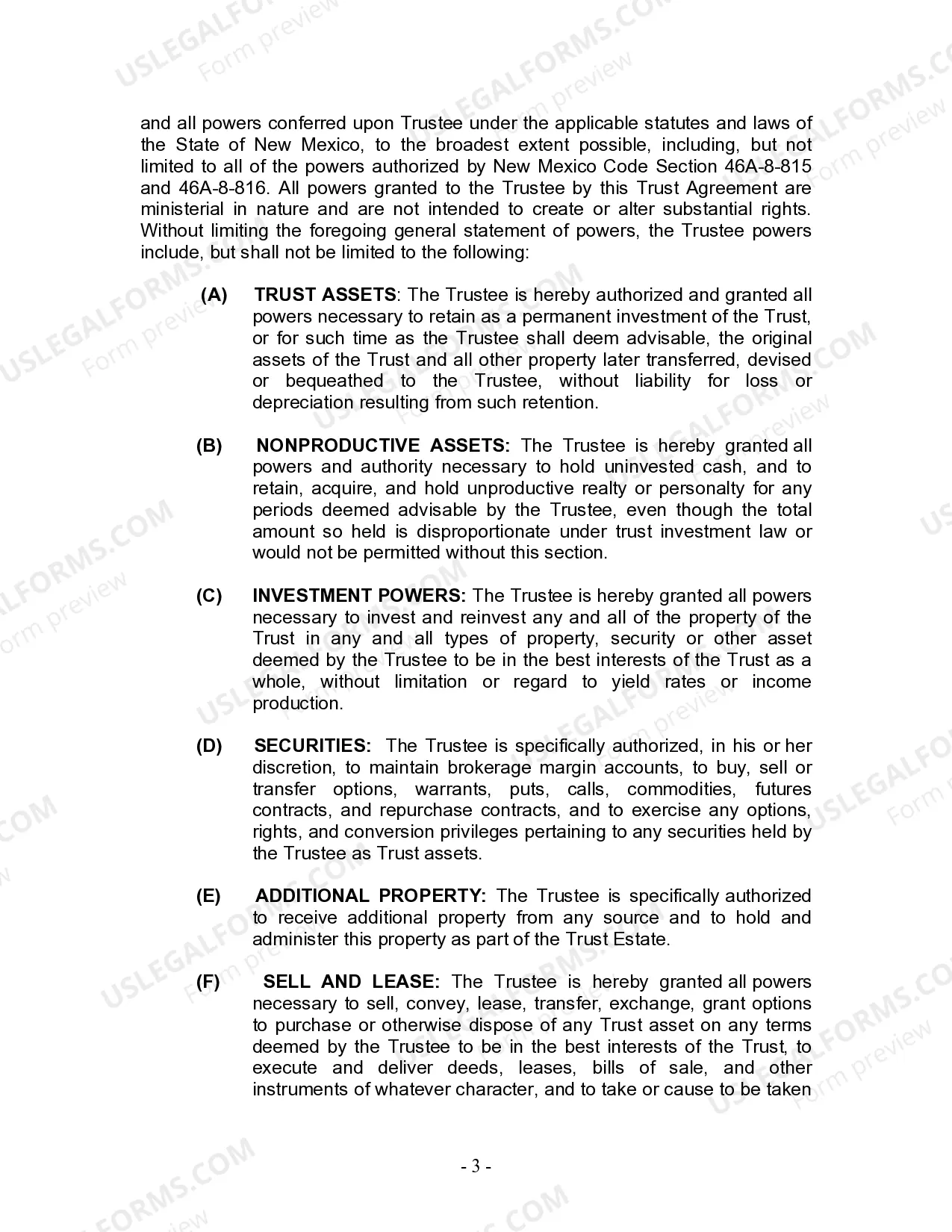
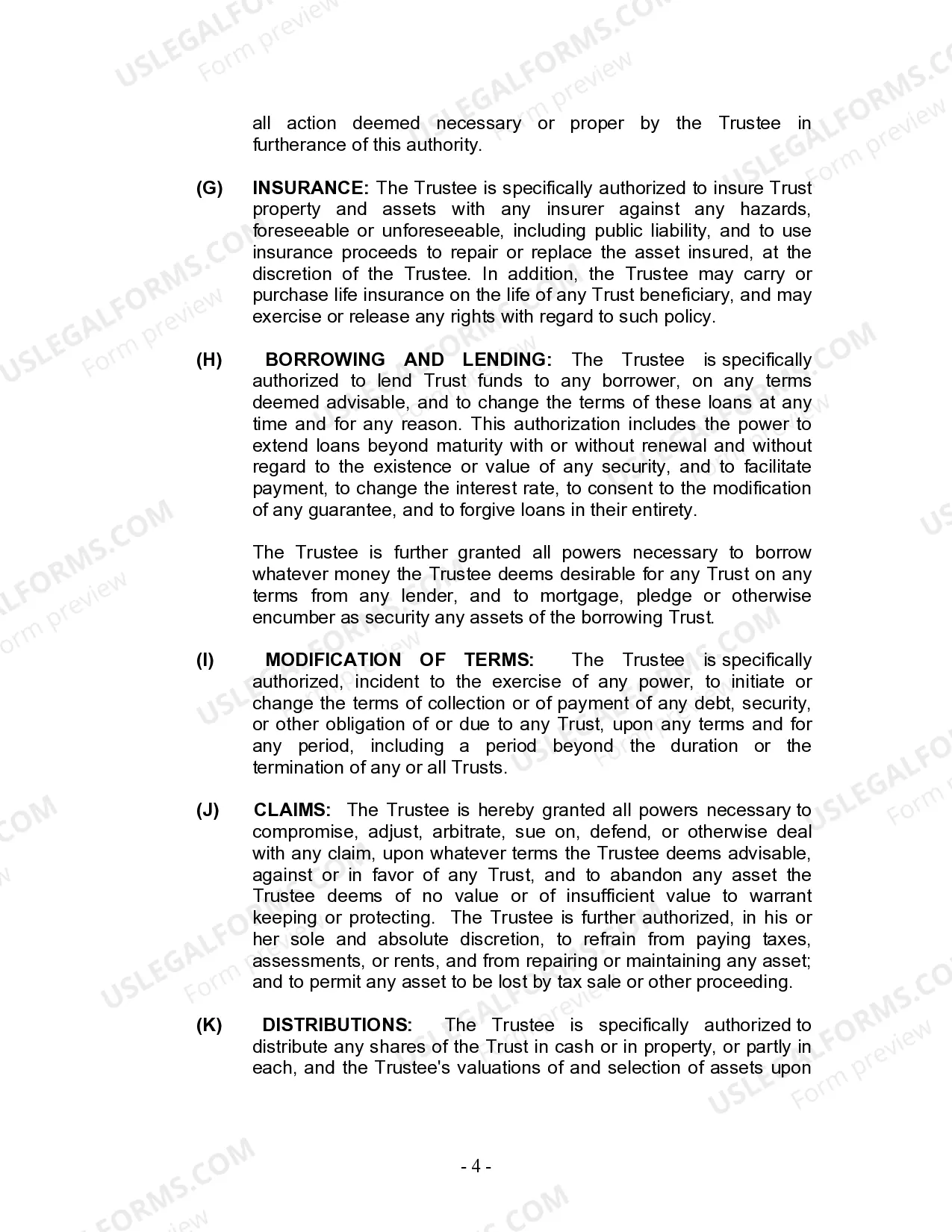
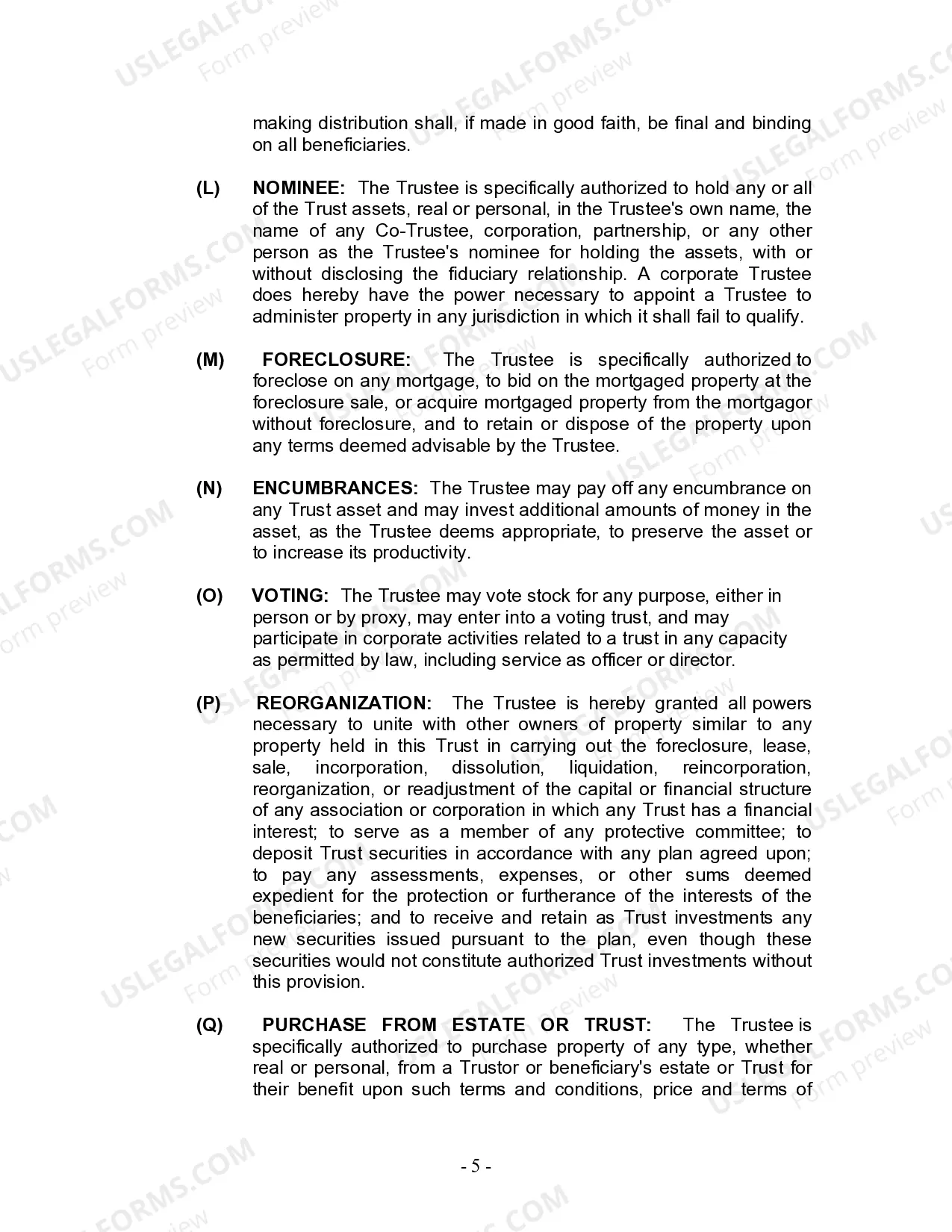
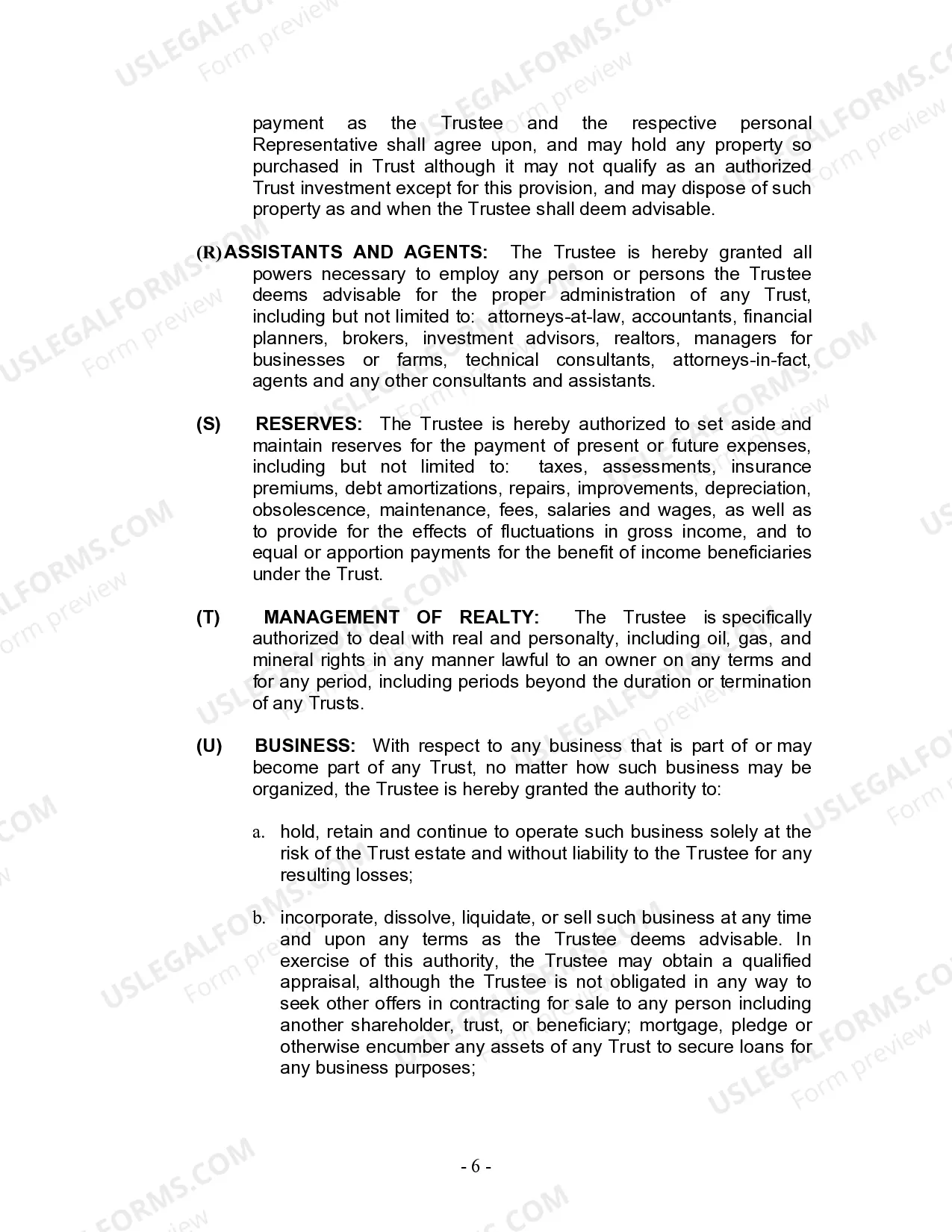
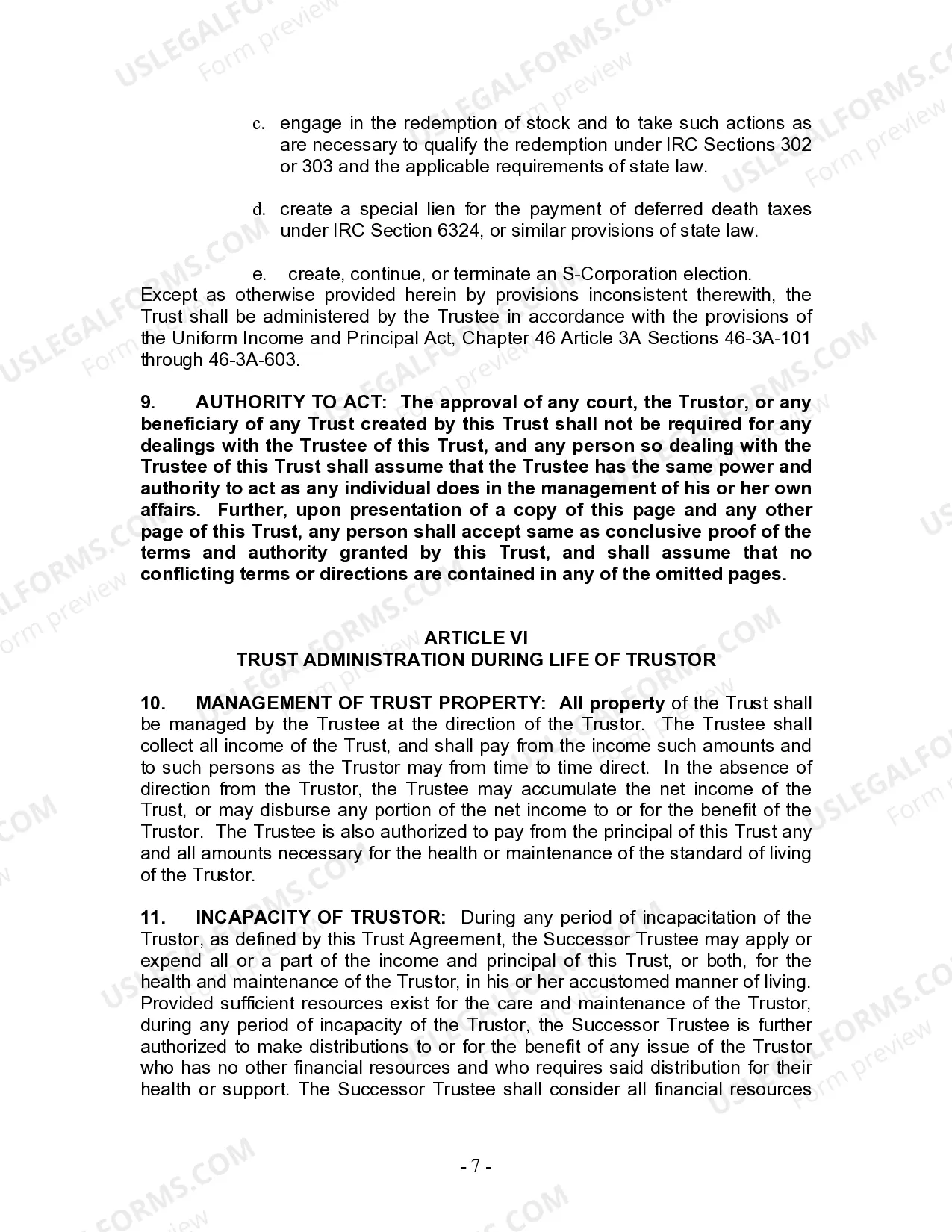
- Powers of the Trustee: Specific authorities granted to the trustee for managing the trust assets.
- Distribution of assets: Guidelines on how the trust property should be distributed upon the trustor's death.
- Successor Trustee provisions: Identification and responsibilities of replacement trustees if the original trustee is unable to serve.



Situations where this form applies
This form is appropriate when a single individual, or one who is divorced or a widower or widow without children, wishes to establish a living trust. It is ideal for those who want to maintain control over their assets during their lifetime and ensure a smooth, private transfer of those assets to chosen beneficiaries after their death, avoiding the complexities of probate court.
Intended users of this form
- Individuals who are single, divorced, or widowed.
- Those who do not have children and wish to designate beneficiaries for their estate.
- Individuals looking for a method to avoid probate and simplify the management of their estate.
- People who want to retain full control over their assets during their lifetime while planning for their future distribution.
How to complete this form
- Identify the parties: Provide the names and addresses of the trustor (you) and the appointed trustee.
- Specify the assets: List all real and personal property that will be included in the trust.
- Designate beneficiaries: Clearly state who will inherit the assets after your passing.
- Sign and date the document: Ensure it is signed in front of a notary public to validate the trust.
- Keep the trust document safe: Store it in a secure location and inform your trustee of its whereabouts.
Notarization guidance
To make this form legally binding, it must be notarized. Our online notarization service, powered by Notarize, lets you verify and sign documents remotely through an encrypted video session.
Get your form ready online
Our built-in tools help you complete, sign, share, and store your documents in one place.
Make edits, fill in missing information, and update formatting in US Legal Forms—just like you would in MS Word.
Download a copy, print it, send it by email, or mail it via USPS—whatever works best for your next step.
Sign and collect signatures with our SignNow integration. Send to multiple recipients, set reminders, and more. Go Premium to unlock E-Sign.
If this form requires notarization, complete it online through a secure video call—no need to meet a notary in person or wait for an appointment.
We protect your documents and personal data by following strict security and privacy standards.

Make edits, fill in missing information, and update formatting in US Legal Forms—just like you would in MS Word.

Download a copy, print it, send it by email, or mail it via USPS—whatever works best for your next step.

Sign and collect signatures with our SignNow integration. Send to multiple recipients, set reminders, and more. Go Premium to unlock E-Sign.

If this form requires notarization, complete it online through a secure video call—no need to meet a notary in person or wait for an appointment.

We protect your documents and personal data by following strict security and privacy standards.
Common mistakes
- Failing to accurately list all trust assets, which can lead to confusion or disputes later.
- Not updating the trust when circumstances change, such as acquiring new assets or changing beneficiaries.
- Omitting necessary signatures or notarization, which may render the trust invalid.
- Not informing the appointed trustee of their role and the location of the trust document.
Benefits of completing this form online
- Convenience: Easily access and fill out the form from home at your own pace.
- Editability: Make adjustments as needed without the hassle of rewriting the entire document.
- Reliability: Downloadable templates prepared by licensed attorneys, ensuring legal compliance and accuracy.
Legal use & context
- A living trust is a legally binding document that allows assets to be managed during the trustor's lifetime and facilitates the transfer of assets after death.
- This trust can protect individual assets from probate, saving time and costs for beneficiaries.
- It is essential to comply with state-specific laws concerning the creation and execution of trusts to ensure enforceability.
Quick recap
- A living trust helps avoid probate court and simplifies asset management.
- It is specifically designed for individuals who are single, divorced, or widowed without children.
- Following state-specific guidelines and ensuring notarization is crucial for validity.
Looking for another form?
Form popularity
FAQ
A will and a trust are separate legal documents that typically share a common goal of facilitating a unified estate plan.Since revocable trusts become operative before the will takes effect at death, the trust takes precedence over the will, when there are discrepancies between the two.
No, you don't need a lawyer to set up a trust, but it might be a good idea to seek legal advice to ensure the trust is set up correctly and that you have considered all long-term financial and estate planning aspects of the trust.Some living trusts are revocable, which means the trust can be changed at any time.
Choose whether to make an individual or shared trust. Decide what property to include in the trust. Choose a successor trustee. Decide who will be the trust's beneficiaries who will get the trust property. Create the trust document.
To manage and control spending and investments to protect beneficiaries from poor judgment and waste; To avoid court-supervised probate of trust assets and be private; To protect trust assets from the beneficiaries' creditors;To reduce income taxes or shelter assets from estate and transfer taxes.
If this is how you feel, then you should set up a living irrevocable trust fund. This type of trust can be set up to begin dispersing funds when certain conditions are met. There is no stipulation that you cannot be alive when that happens. You can place cash, stock, real estate, or other valuable assets in your trust.
Decide whether you need a shared trust or an individual trust. Decide what items to leave in the trust. Decide who will inherit your trust property. Choose someone to be your successor trustee. Choose someone to manage property for youngsters. Prepare the trust document.
Living Trust Like a will, a trust will require you to transfer property after death to loved ones.Unlike a will, a living trust passes property outside of probate court. There are no court or attorney fees after the trust is established. Your property can be passed immediately and directly to your named beneficiaries.
As of 2019, attorney fees can range from $1,000 to $2,500 to set up a trust, depending upon the complexity of the document and where you live. You can also hire an online service provider to set up your trust. As of 2019, you can expect to pay about $300 for an online trust.
The advantages of placing your house in a trust include avoiding probate court, saving on estate taxes and possibly protecting your home from certain creditors. Disadvantages include the cost of creating the trust and the paperwork.