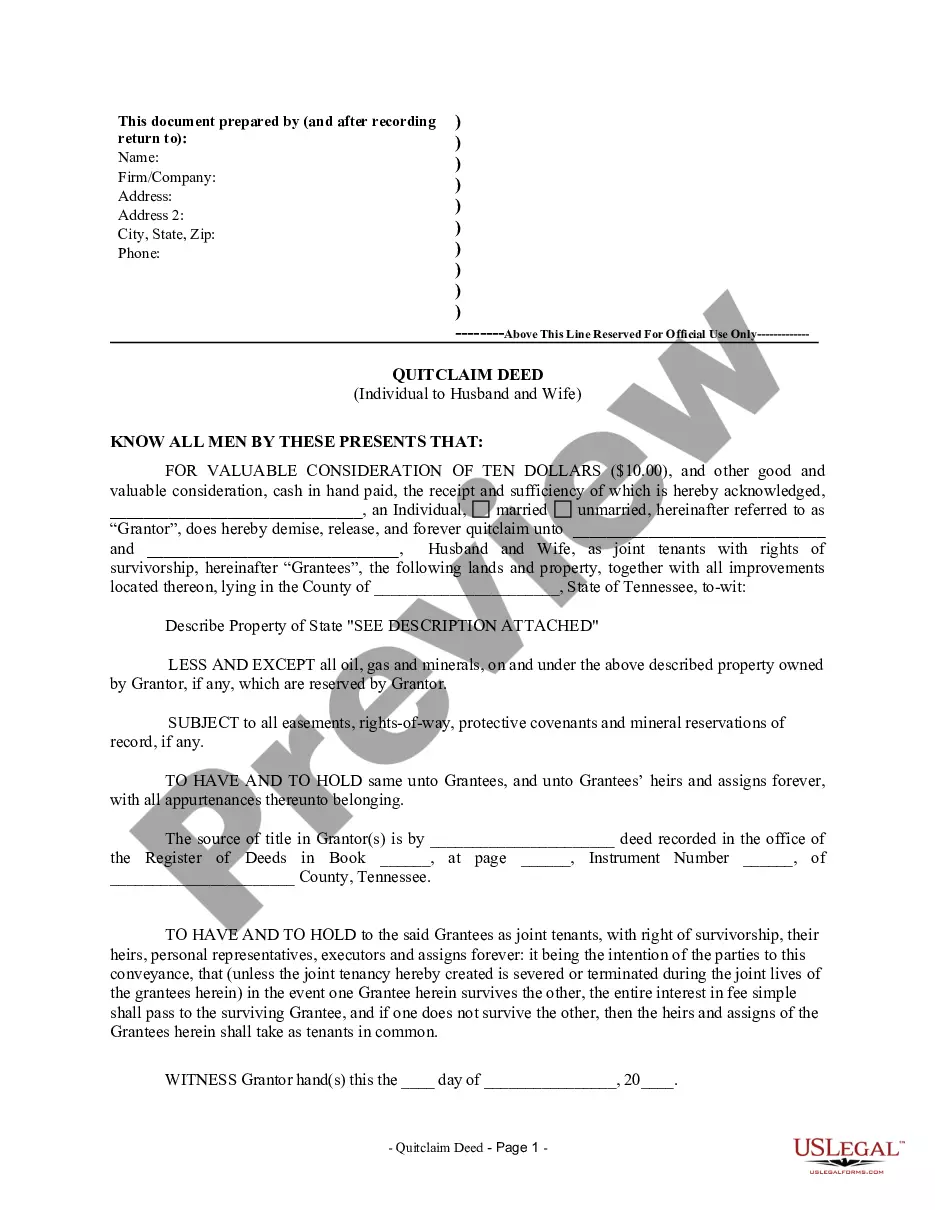
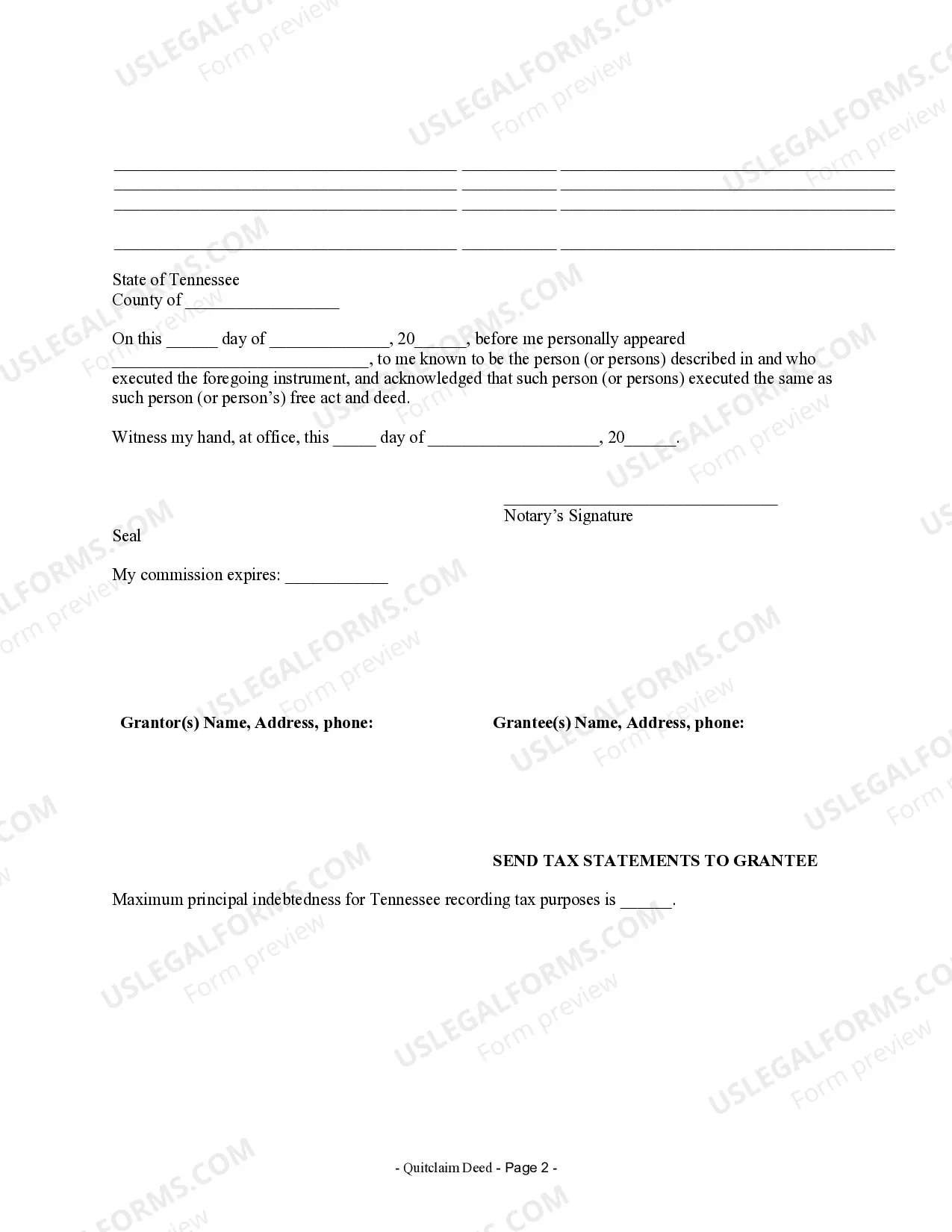
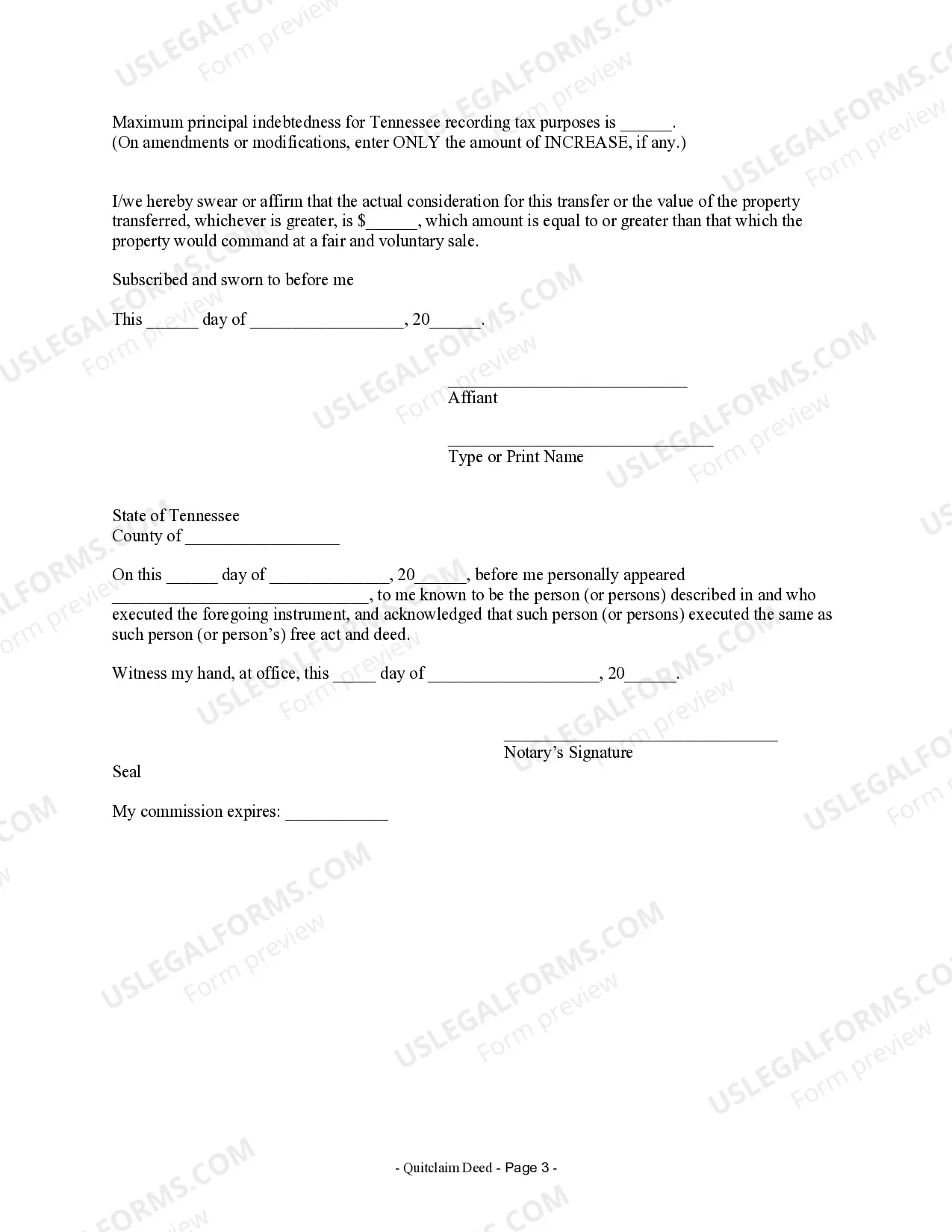
This Quitclaim Deed from Individual to Husband and Wife form is a Quitclaim Deed where the Grantor is an individual and the Grantees are husband and wife. Grantor conveys and quitclaims the described property to Grantees, less and except all oil, gas and minerals, on and under the property owned by Grantor, if any, which are reserved by Grantor. This deed complies with all applicable state statutory laws.
Tennessee Quit Claim Deed Form Pdf
State:
Tennessee
Control #:
TN-01-77
Format:
Word;
Rich Text
Instant download
Description
Free preview Deed Individual Wife
How to fill out Tennessee Quitclaim Deed From Individual To Husband And Wife?
Access to quality Tennessee Quitclaim Deed from Individual to Husband and Wife templates online with US Legal Forms. Steer clear of hours of misused time browsing the internet and dropped money on forms that aren’t up-to-date. US Legal Forms gives you a solution to just that. Find around 85,000 state-specific legal and tax samples that you can save and complete in clicks within the Forms library.
To receive the example, log in to your account and then click Download. The file will be stored in two places: on your device and in the My Forms folder.
For individuals who don’t have a subscription yet, take a look at our how-guide listed below to make getting started easier:
- See if the Tennessee Quitclaim Deed from Individual to Husband and Wife you’re looking at is suitable for your state.
- See the form making use of the Preview function and read its description.
- Visit the subscription page by clicking on Buy Now button.
- Choose the subscription plan to continue on to register.
- Pay by card or PayPal to complete making an account.
- Choose a favored file format to download the document (.pdf or .docx).
You can now open the Tennessee Quitclaim Deed from Individual to Husband and Wife template and fill it out online or print it and get it done by hand. Think about giving the papers to your legal counsel to be certain everything is completed appropriately. If you make a error, print out and fill sample once again (once you’ve registered an account every document you download is reusable). Make your US Legal Forms account now and get access to far more templates.