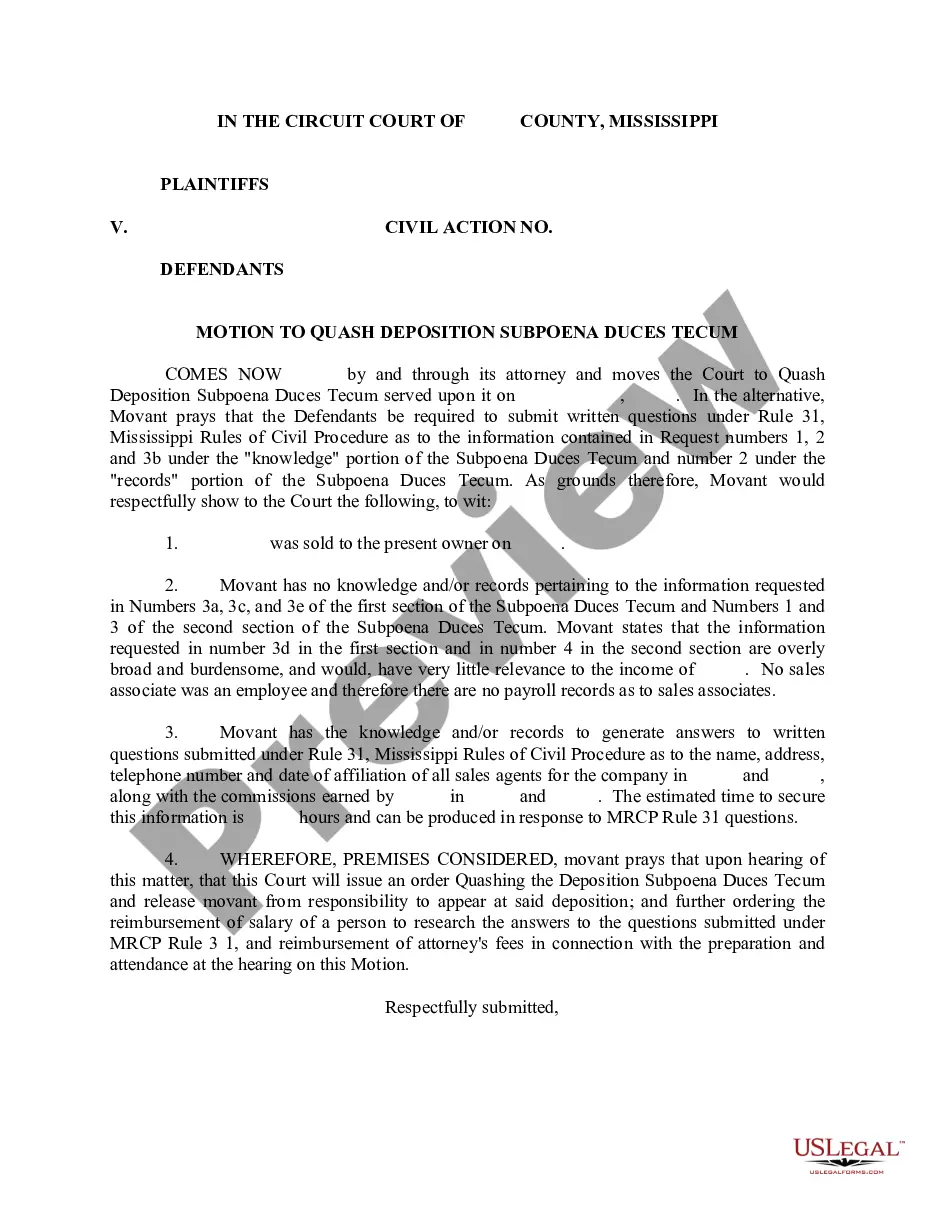
North Dakota Apartment Rules and Regulations
Overview of this form
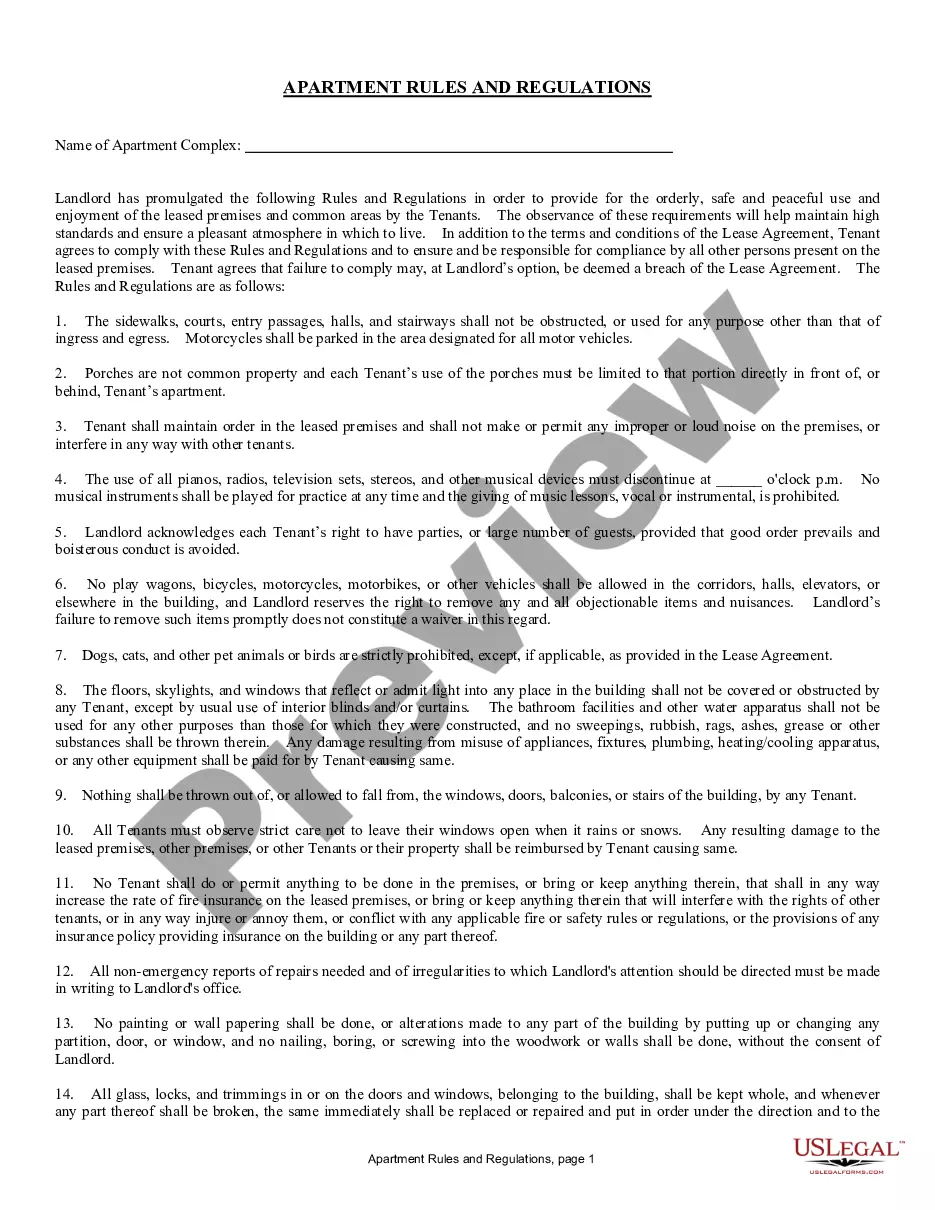
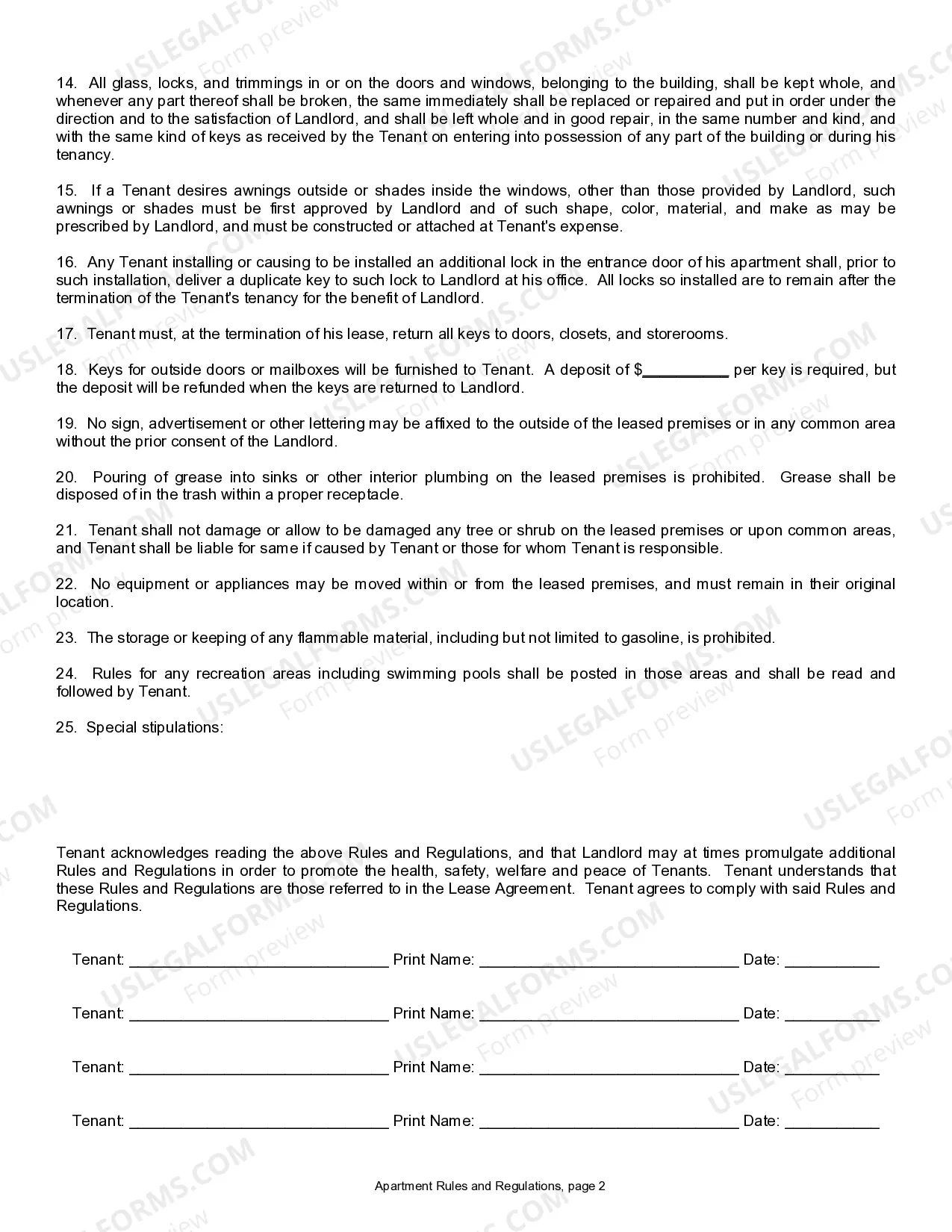
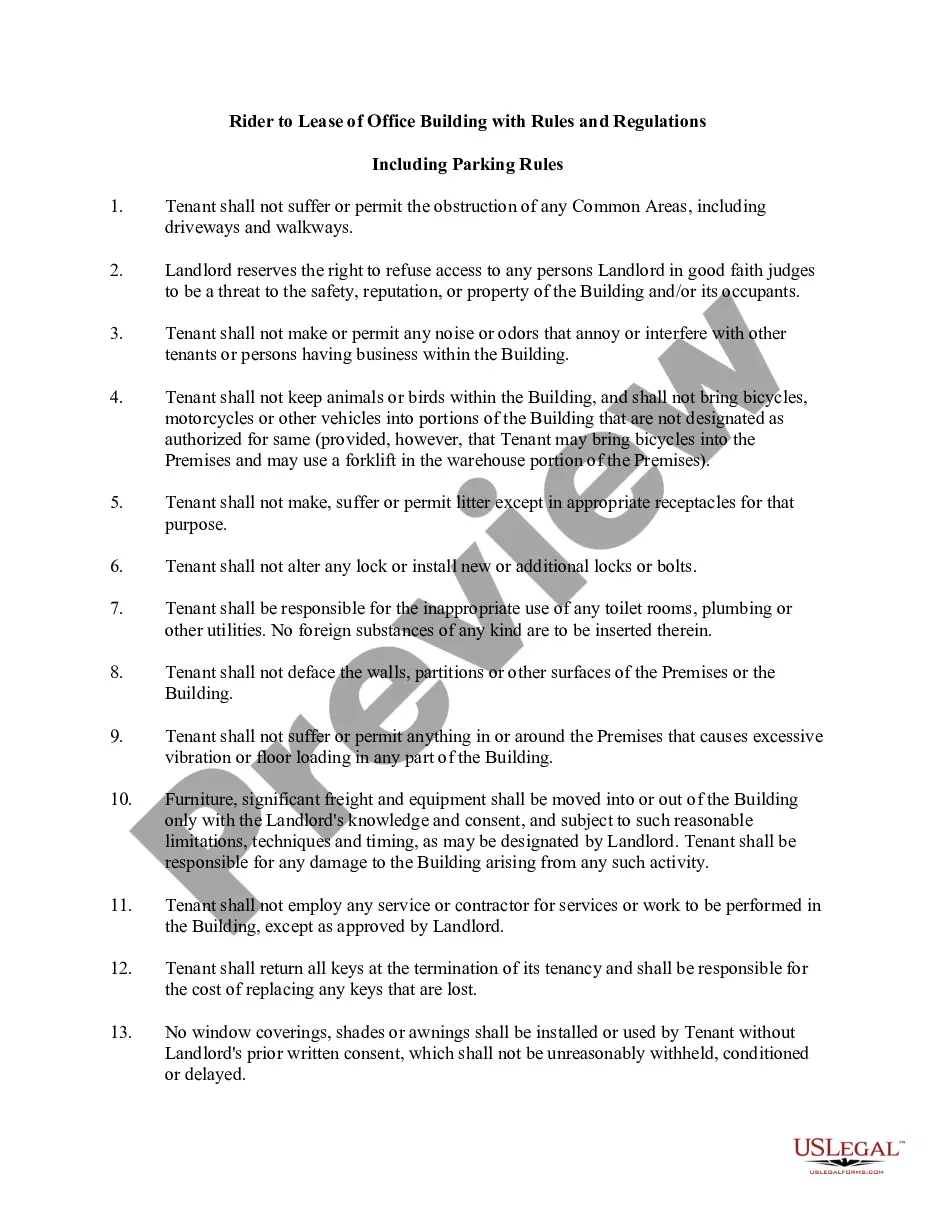
The Apartment Rules and Regulations form establishes guidelines tenants must adhere to while living in a rental apartment. It details behavioral expectations and responsibilities, distinct from the conditions outlined in the Apartment Lease. This form helps promote a safe and pleasant living environment for all residents by clarifying the rules concerning the use of common areas and personal conduct within the property.
What’s included in this form
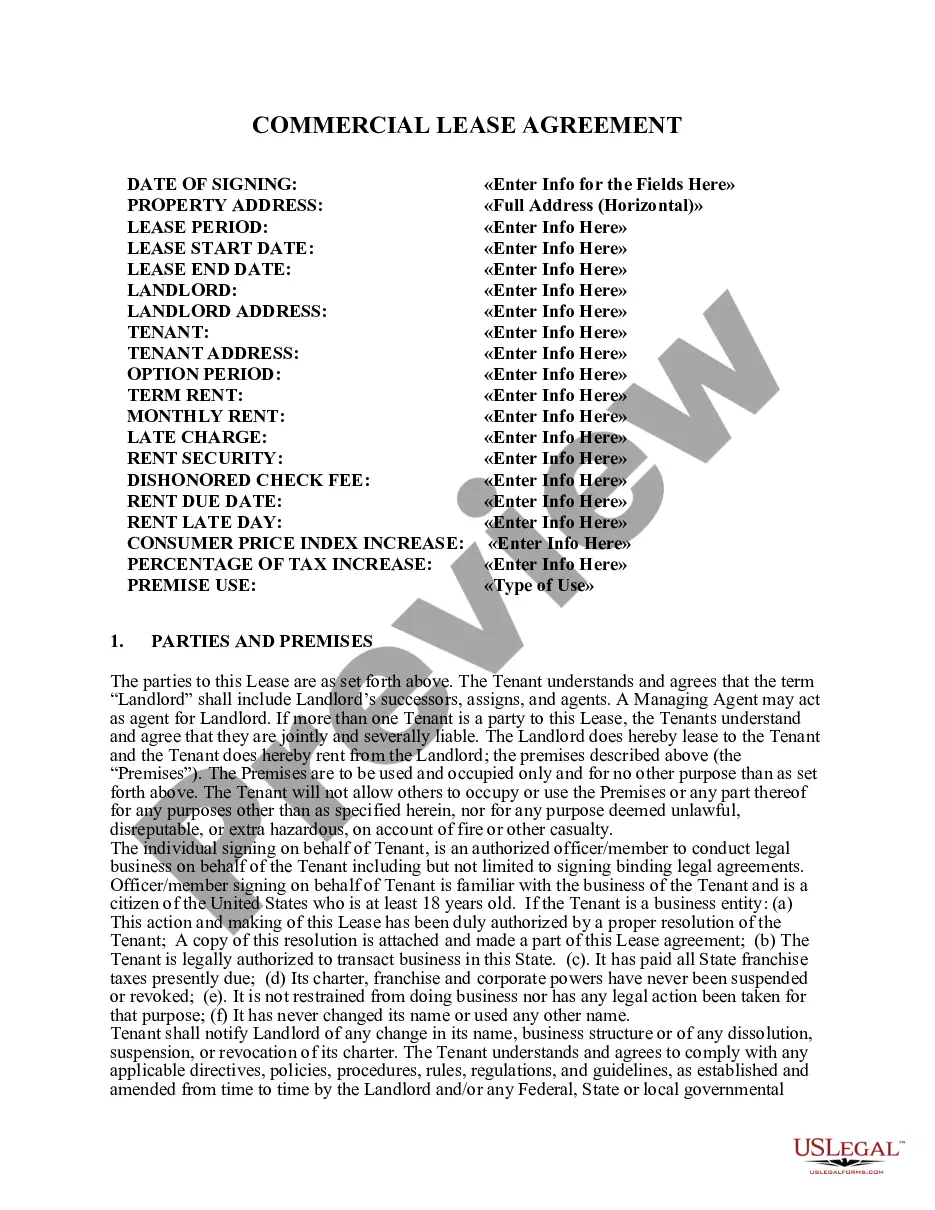
- Identification of the apartment complex and landlord.
- Specific rules regarding noise and parties.
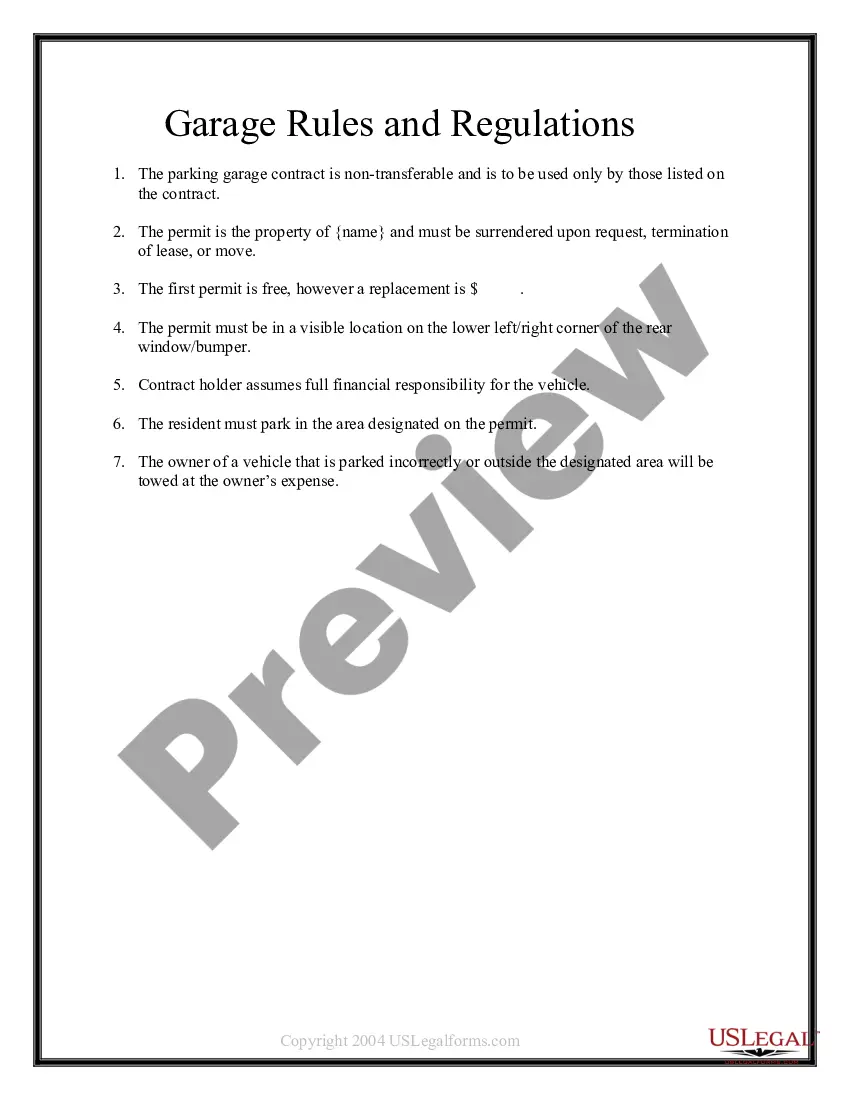
- Guidelines for the use of common areas, such as hallways and stairways.
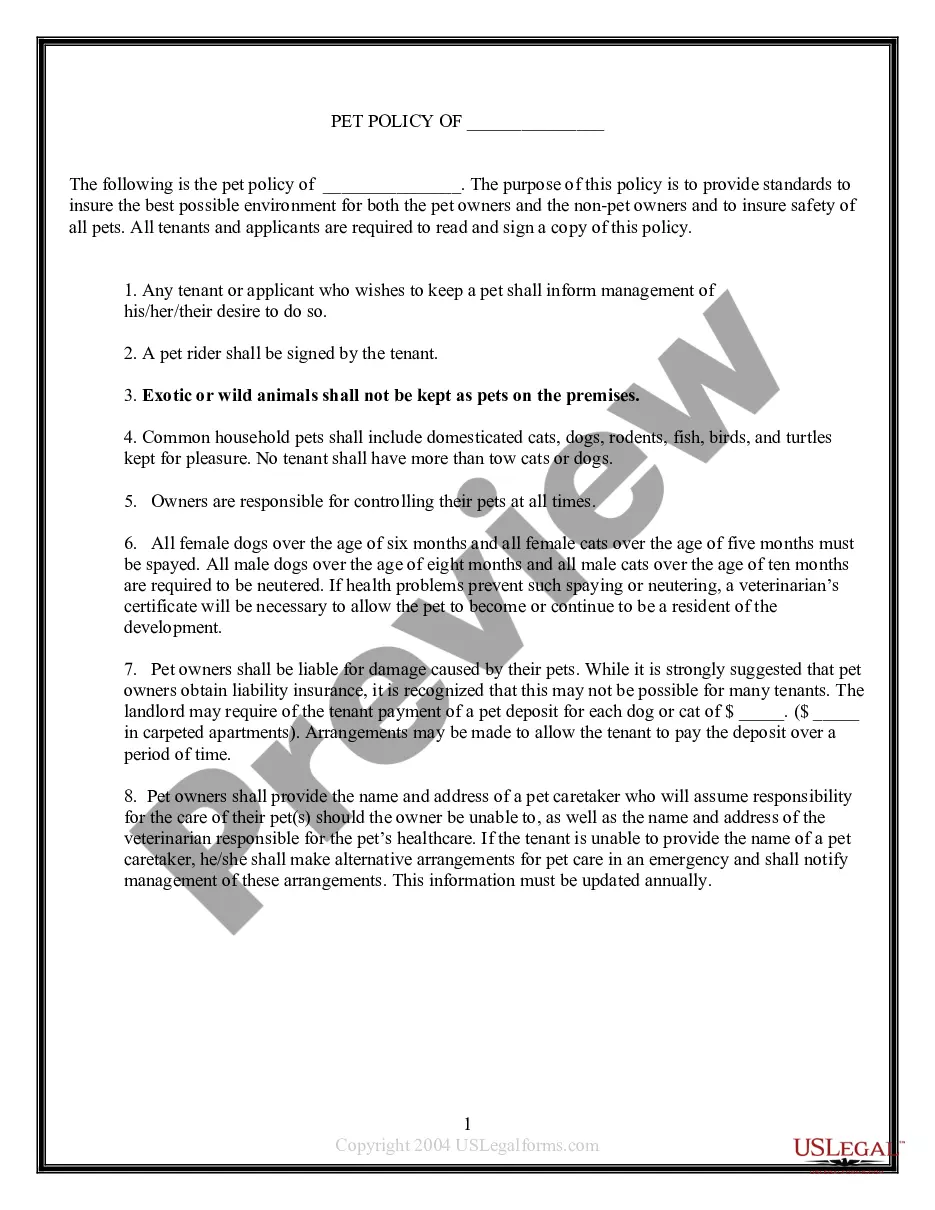
- Restrictions on pets and certain personal items.
- Responsibilities regarding damages and maintenance requests.
- Procedures for installation of additional locks and return of keys upon lease termination.
When to use this document
This form is essential when new tenants are moving into an apartment complex. It serves as a foundational document ensuring all residents are aware of the rules that govern their tenancy. Using this form can help prevent conflicts and misunderstandings about allowable behaviors and responsibilities, fostering a harmonious community environment.
Who needs this form
- Landlords seeking to set clear rules for their tenants.
- Property management professionals responsible for maintaining tenant relations.
- Tenants who want to understand their rights and obligations when leasing an apartment.
How to complete this form
- Enter the name of the apartment complex and the landlord's details.
- Review each rule and ensure compliance aligns with tenant expectations.
- Have all tenants print their names and sign the document to confirm agreement.
- Specify any necessary details, such as quiet hours and key deposits, where indicated.
- Distribute copies of the signed form to all tenants and retain a copy for records.
Notarization requirements for this form
In most cases, this form does not require notarization. However, some jurisdictions or signing circumstances might. US Legal Forms offers online notarization powered by Notarize, accessible 24/7 for a quick, remote process.
Get your form ready online
Our built-in tools help you complete, sign, share, and store your documents in one place.
Make edits, fill in missing information, and update formatting in US Legal Forms—just like you would in MS Word.
Download a copy, print it, send it by email, or mail it via USPS—whatever works best for your next step.
Sign and collect signatures with our SignNow integration. Send to multiple recipients, set reminders, and more. Go Premium to unlock E-Sign.
If this form requires notarization, complete it online through a secure video call—no need to meet a notary in person or wait for an appointment.
We protect your documents and personal data by following strict security and privacy standards.

Make edits, fill in missing information, and update formatting in US Legal Forms—just like you would in MS Word.

Download a copy, print it, send it by email, or mail it via USPS—whatever works best for your next step.

Sign and collect signatures with our SignNow integration. Send to multiple recipients, set reminders, and more. Go Premium to unlock E-Sign.

If this form requires notarization, complete it online through a secure video call—no need to meet a notary in person or wait for an appointment.

We protect your documents and personal data by following strict security and privacy standards.
Mistakes to watch out for
- Failing to have all tenants sign the document, which can lead to misunderstandings.
- Not reviewing the rules thoroughly, resulting in disputes later on.
- Overlooking state-specific requirements related to rental agreements.
Advantages of online completion
- Easy access to downloadable templates created by licensed attorneys.
- Convenient editing capabilities to customize rules based on tenant needs.
- Time-saving by eliminating the need for in-person visits to legal offices.
- Secure storage options for digital forms for future reference.
Legal use & context
- Rules and regulations are enforceable terms of the lease, provided tenants are aware and consent.
- Failure to comply can result in actions considered breaches of the lease agreement.
- Tenants are encouraged to refer back to these rules for clarification on their responsibilities.
Quick recap
- The Apartment Rules and Regulations form is crucial for maintaining order in rental properties.
- All tenants should be informed and agree to the rules to foster a pleasant living environment.
- Using this form online provides convenience and accessibility for landlords and tenants alike.
Looking for another form?
Form popularity
FAQ
This includes keeping the property clean, safe and habitable. The landlord must adhere to all building codes, perform necessary repairs, maintain common areas, keep all vital services, such as plumbing, electricity, and heat, in good working order, must provide proper trash receptacles and must supply running water.
Keep your rented properties safe and free from health hazards. make sure all gas and electrical equipment is safely installed and maintained. provide an Energy Performance Certificate for the property. protect your tenant's deposit in a government-approved scheme.
Fundamental responsibilities of landlords include: providing and maintaining the property in a clean and reasonable standard; giving proper receipts and maintaining records of all transactions pertaining to the tenancy; paying council rates and taxes; maintaining locks to ensure the property's security; and lodging the
Give the landlord/agent a written termination notice and vacate move out and return the keys according to your notice, and/or. apply to the NSW Civil & Administrative Tribunal (NCAT) for a termination order.
In some circumstances, a tenant can break a fixed-term agreement early without penalty. A tenant can give 14 days' written notice to end an agreement early without penalty if: they have accepted an offer of social housing (e.g. from DCJ Housing)
Notice to terminate a week-to-week lease. One-week written notice (§ 47-16-15(1)) Notice to terminate a month-to-month lease. Notice to terminate a yearly lease with no end date.
Unlawful North Dakota Eviction A tenant can be evicted during the winter months for nonpayment of rent or for other material violations of the lease agreement.
A landlord cannot evict a tenant without an adequately obtained eviction notice and sufficient time. A landlord cannot retaliate against a tenant for a complaint. A landlord cannot forego completing necessary repairs or force a tenant to do their own repairs.A landlord cannot remove a tenant's personal belongings.
Gas Safety Check. Smoke and Carbon Monoxide Alarms. Energy Performance Certificate (EPC) Tenancy Deposit Scheme. Tenancy Deposit 'Prescribed Information' Landlord Selective License. Furniture and Furnishings Regulation. Electrical Safety Standards Inspection/Report.