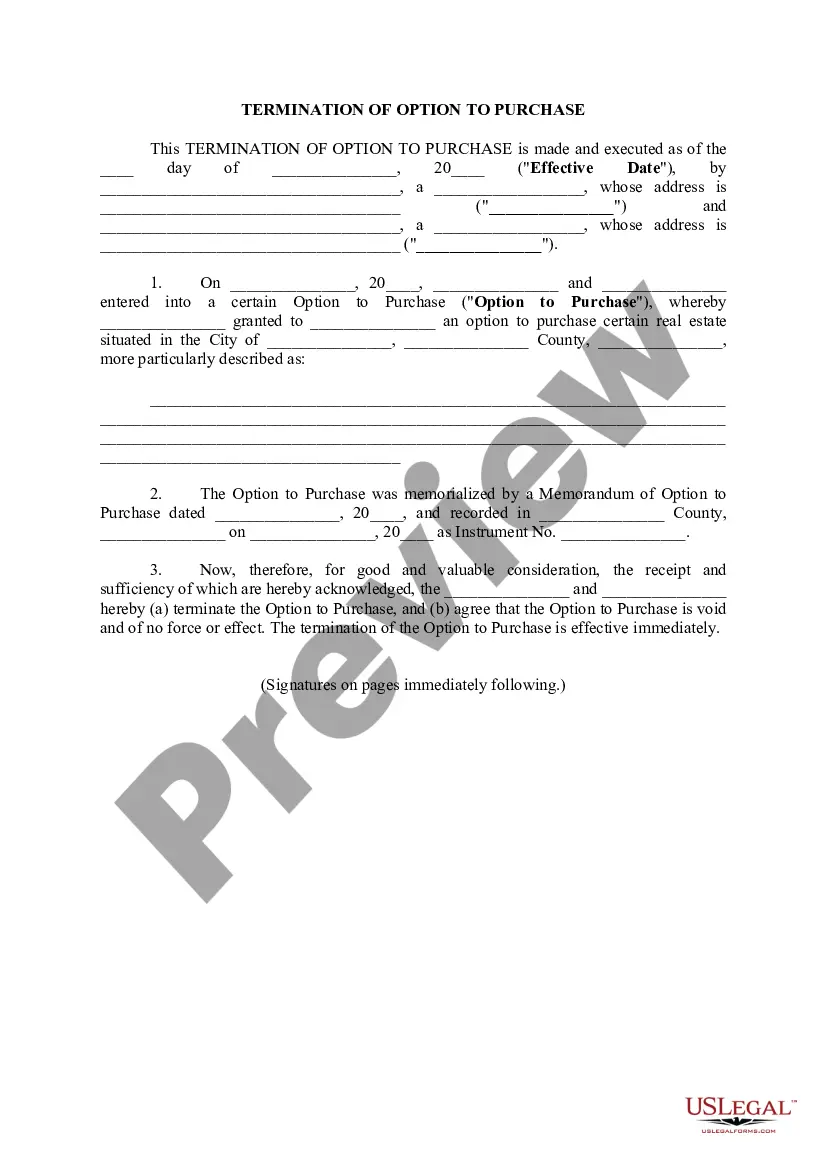
Apartment Complex Pet Policy
What is this form?
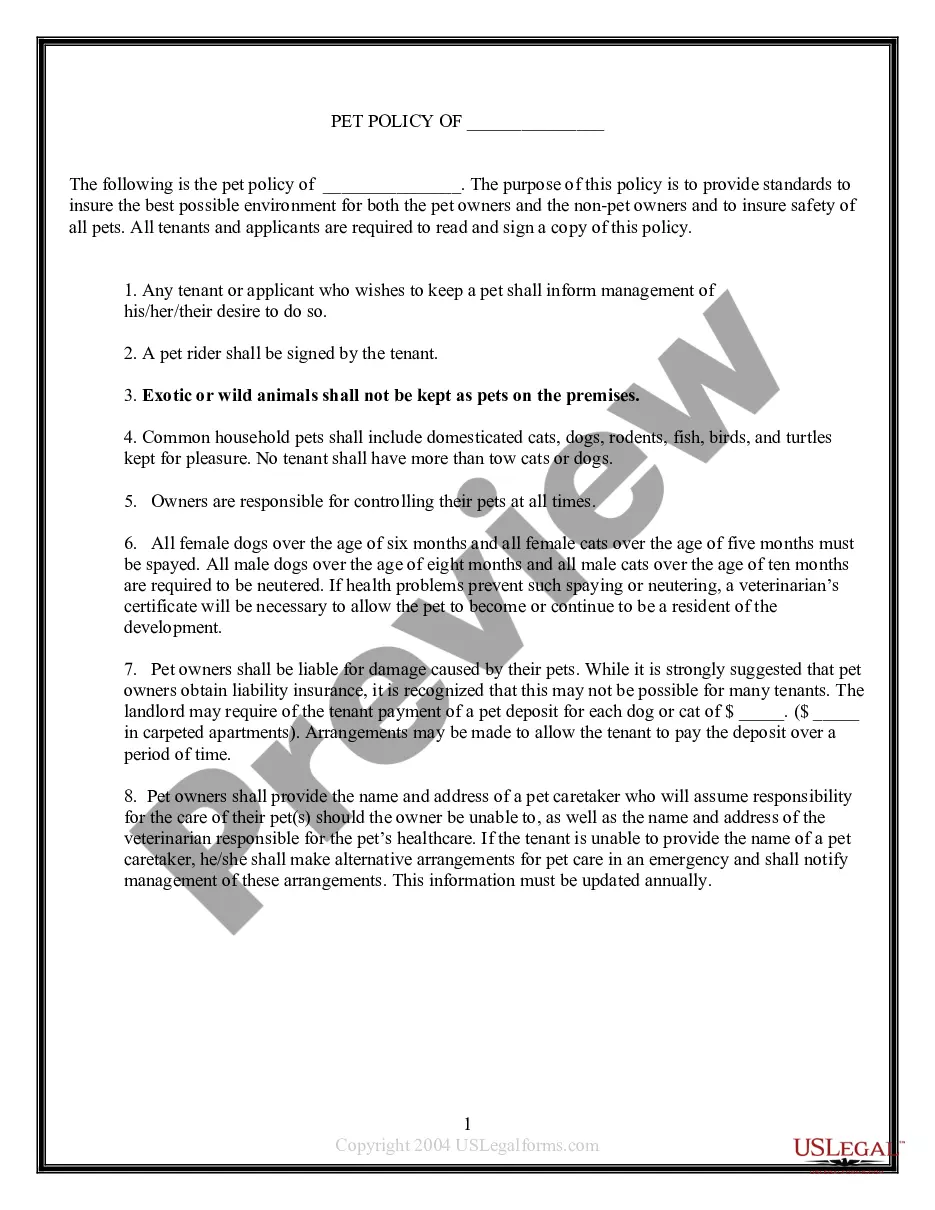
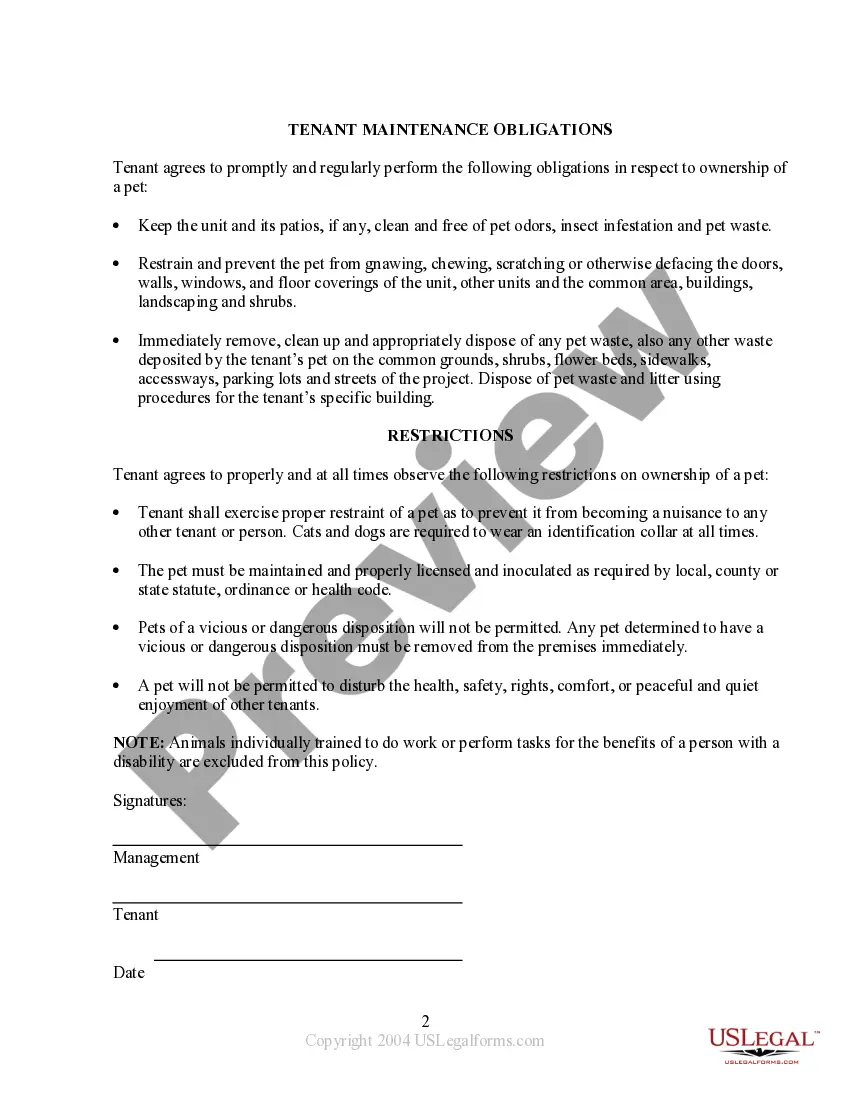
The Apartment Complex Pet Policy outlines the regulations and responsibilities associated with having pets in apartment units. This form ensures a balanced living environment for both pet owners and non-pet owners, enhancing community safety and comfort. Unlike generic pet policies, this document is tailored for apartment complexes and includes specific clauses that address pet ownership standards, liability, and maintenance obligations.
Key parts of this document
- Tenant responsibilities for pet care, cleanliness, and noise control.
- Registration of pets and requirements for spaying or neutering.
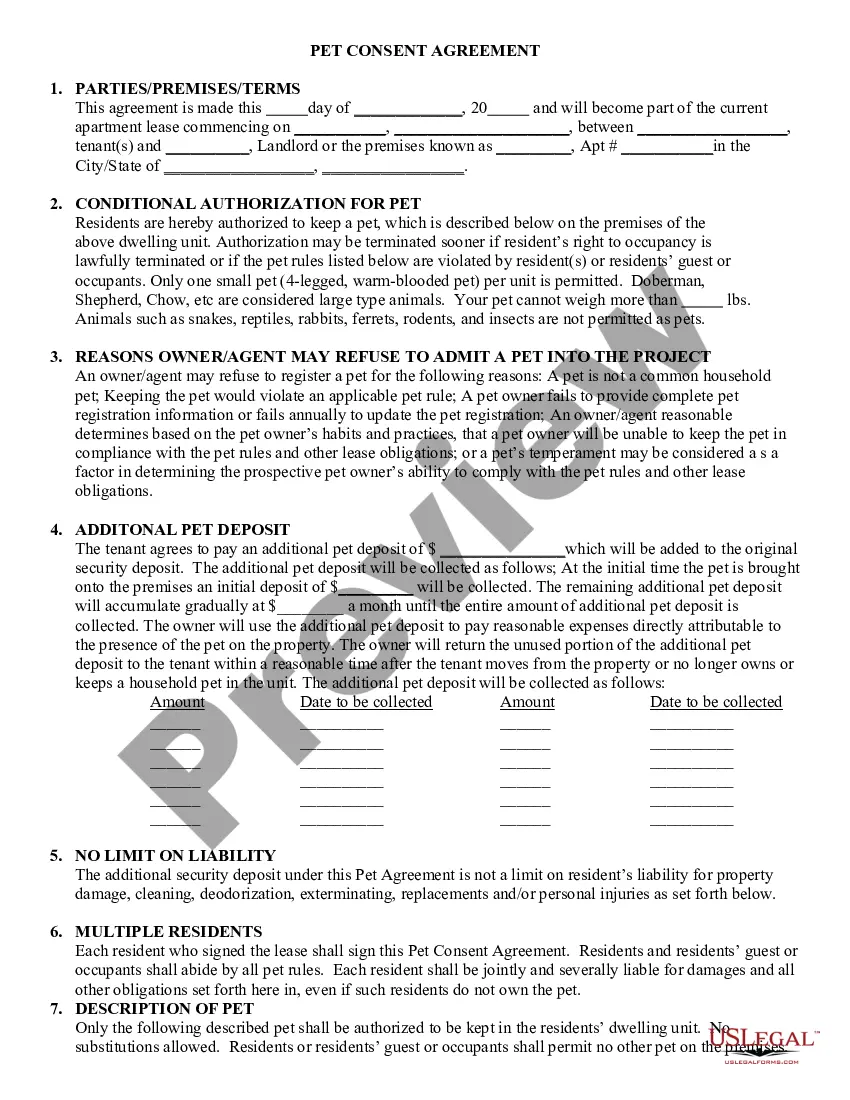
- Liability for damages caused by pets and pet deposit details.
- Provision of emergency pet caretaker information.
- Restrictions on the types of pets allowed and identification requirements.
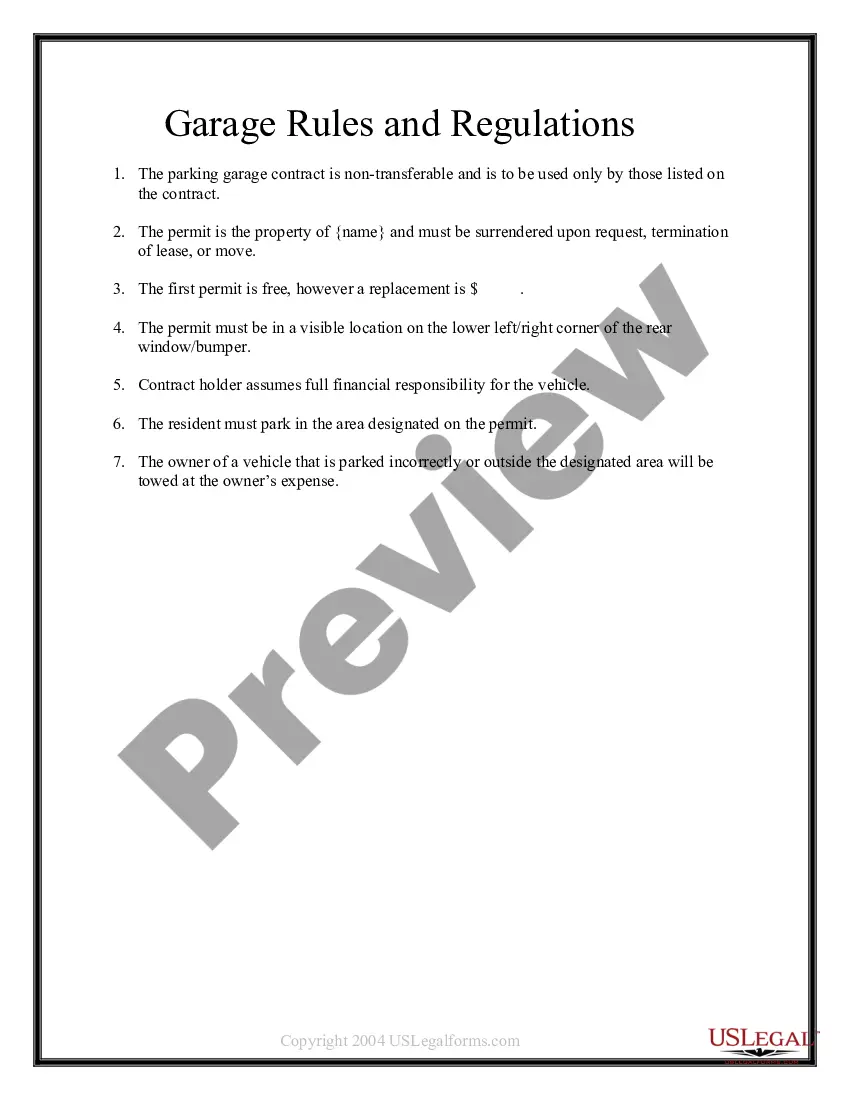
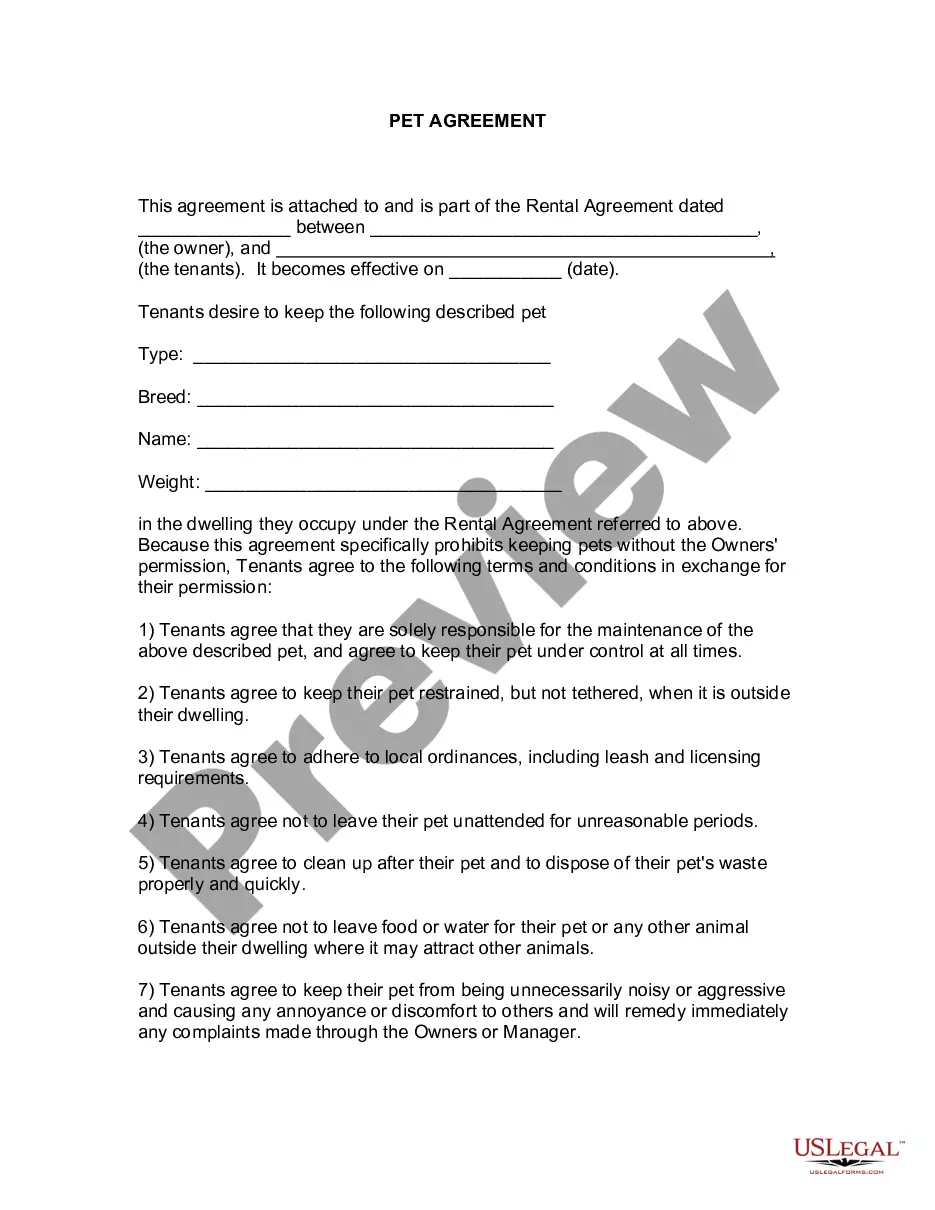
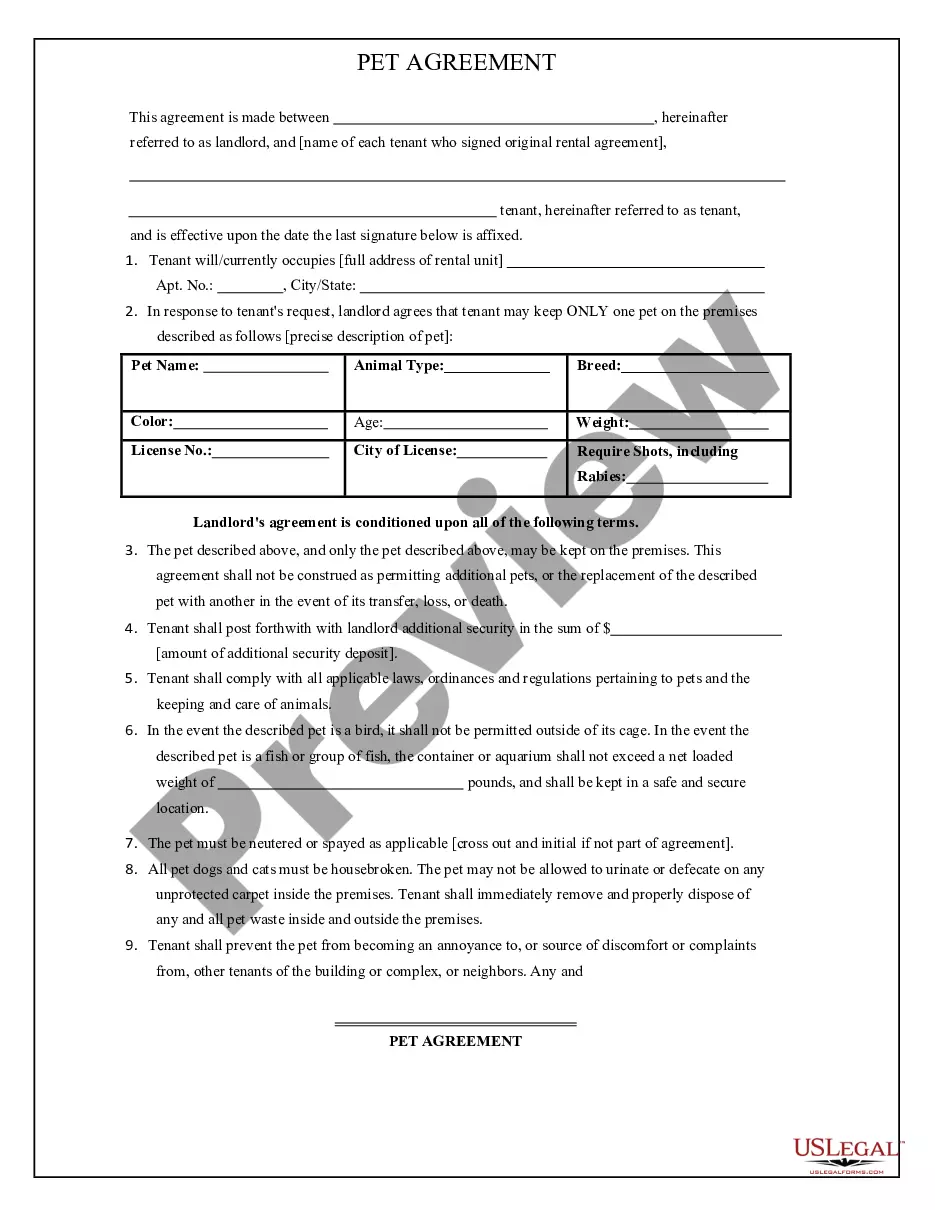
Situations where this form applies
This form is necessary when tenants wish to have pets in their apartment units. It is an essential document for both landlords and tenants to ensure compliance with community standards and to prevent disputes related to pet ownership. It should be used whenever a new tenant moves in with a pet or when current tenants wish to register a new pet.
Intended users of this form
- Apartment complex management seeking to establish clear pet policies.
- Tenants who wish to keep pets in their apartment.
- Property owners looking to enforce pet-related regulations.
- Applicants for apartments that allow pet ownership.
Instructions for completing this form
- Fill in the name of the apartment complex at the top of the document.
- Specify the type and number of pets being registered.
- Sign the pet rider agreement acknowledging understanding and compliance with the policy.
- Provide the name and contact information of a temporary pet caretaker.
- Complete any required deposit information as stipulated in the form.
Notarization guidance
In most cases, this form does not require notarization. However, some jurisdictions or signing circumstances might. US Legal Forms offers online notarization powered by Notarize, accessible 24/7 for a quick, remote process.
Get your form ready online
Our built-in tools help you complete, sign, share, and store your documents in one place.
Make edits, fill in missing information, and update formatting in US Legal Forms—just like you would in MS Word.
Download a copy, print it, send it by email, or mail it via USPS—whatever works best for your next step.
Sign and collect signatures with our SignNow integration. Send to multiple recipients, set reminders, and more. Go Premium to unlock E-Sign.
If this form requires notarization, complete it online through a secure video call—no need to meet a notary in person or wait for an appointment.
We protect your documents and personal data by following strict security and privacy standards.

Make edits, fill in missing information, and update formatting in US Legal Forms—just like you would in MS Word.

Download a copy, print it, send it by email, or mail it via USPS—whatever works best for your next step.

Sign and collect signatures with our SignNow integration. Send to multiple recipients, set reminders, and more. Go Premium to unlock E-Sign.

If this form requires notarization, complete it online through a secure video call—no need to meet a notary in person or wait for an appointment.

We protect your documents and personal data by following strict security and privacy standards.
Avoid these common issues
- Failing to sign the pet rider agreement.
- Not providing accurate caretaker contact information.
- Omitting pet deposit details or misunderstanding deposit requirements.
- Neglecting to update pet information annually as required.
Benefits of using this form online
- Immediate access to a comprehensive pet policy created by legal professionals.
- Editability allows tenants and landlords to customize terms as needed.
- Quick download and easy sharing with all relevant parties.
- Reduces the risk of legal disputes by clearly outlining responsibilities and rules.
Legal use & context
- Defines pet ownership standards within apartment communities.
- Helps protect the rights of both pet owners and non-pet owners.
- Establishes a framework for addressing pet-related disputes.
- Ensures that tenants are aware of their responsibilities regarding pet ownership.
Main things to remember
- Clear guidelines help maintain a harmonious living environment.
- Effectively managing pet ownership benefits all community members.
- Completion and adherence to this form are essential for pet owners in apartments.
- Document serves as a crucial agreement between tenants and management regarding pets.
Looking for another form?
Form popularity
FAQ
If you are moving into a new apartment, you (the tenant) must request reasonable accommodations from your landlord (preferably through email), explaining that you do have a mental/emotional disability and you need the ESA to lessen the effects of your disability.
There's no law that requires landlords to allow tenants to keep pets, and many landlords don't allow pets because of the potential damage they cause to the rental unit. If you want to add a pet to your lease, talk to your landlord and get an agreement in writing before you bring your new pet home.
Ask the Landlord to Meet Your Pet Some landlords make exceptions for pets under a certain size or weight, or even for certain breeds. Asking the landlord to meet with you and your pet in person shows your seriousness about the property as well as the fact that you want to bring your pet into your home with you.
Most apartment purchases are on a leasehold basis, which means it will have a leasehold title.The lease may state that it is prohibited to keep a pet within the apartment, or it may say a pet can be kept in the property with written consent.
You will have to forfeit your rental bond, you'll be forced to move and you'll have a black mark put on your tenancy record. It could get worse, though. If the reason your landlord did not allow dogs was because their policy did not cover them, and your dog bites another tenant, that tenant could sue your landlord.
Yes. In Alberta, landlords can decide whether or not to allow pets in their rental properties. If a landlord does not allow pets or the building has a no pets policy, then pets are not allowed in the property. If pets are allowed in the rental property, the landlord may charge a pet fee.
I, name, tenant of address, agree to abide by the following rules while any dog is in my residence and under my care: Clean up any and all messes my dog leaves anywhere on the property. Ensure that my dog is friendly and approachable through training and socialization.
Re: Permission to have a pet in my apartment Dear (Name of landlord or manager), I am writing to you today to request permission to adopt a (insert animal) to join our household. As current, responsible tenants, we'd like to make every effort to assure you we'll be courteous pet owners.
Your landlord cannot go into your apartment and remove a pet or show up and force you or your pet out.Generally the landlord cannot even enter the home without giving the tenant notice except in an emergency, unless the lease specifies otherwise.