Pet Agreement for Lease
What is this form?
The Pet Agreement for Lease is a legal document that serves as an addendum to a rental contract, permitting tenants to keep specific pets in a rental property with the landlord's consent. This agreement outlines the rights and responsibilities of both the tenant and the landlord regarding the pet. It differs from generic rental agreements by specifically addressing pet ownership and the associated rules, helping to ensure a harmonious living environment for all parties involved.
Key parts of this document
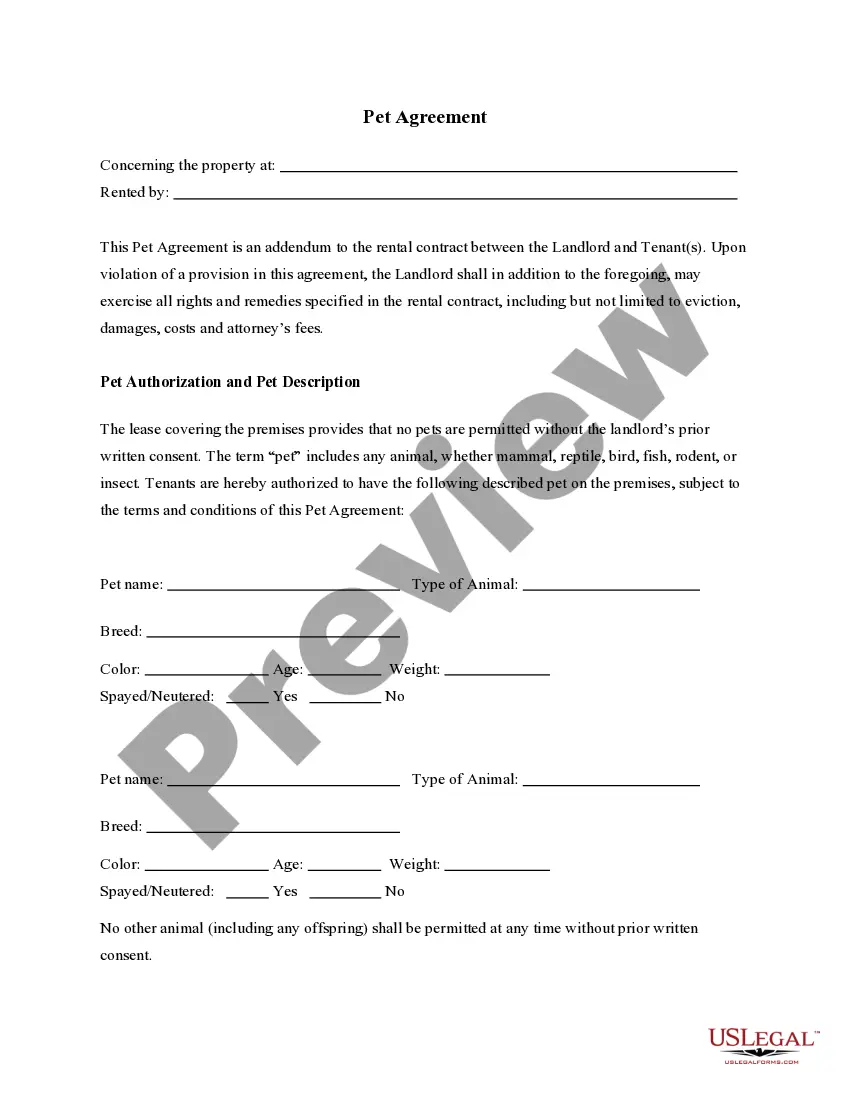
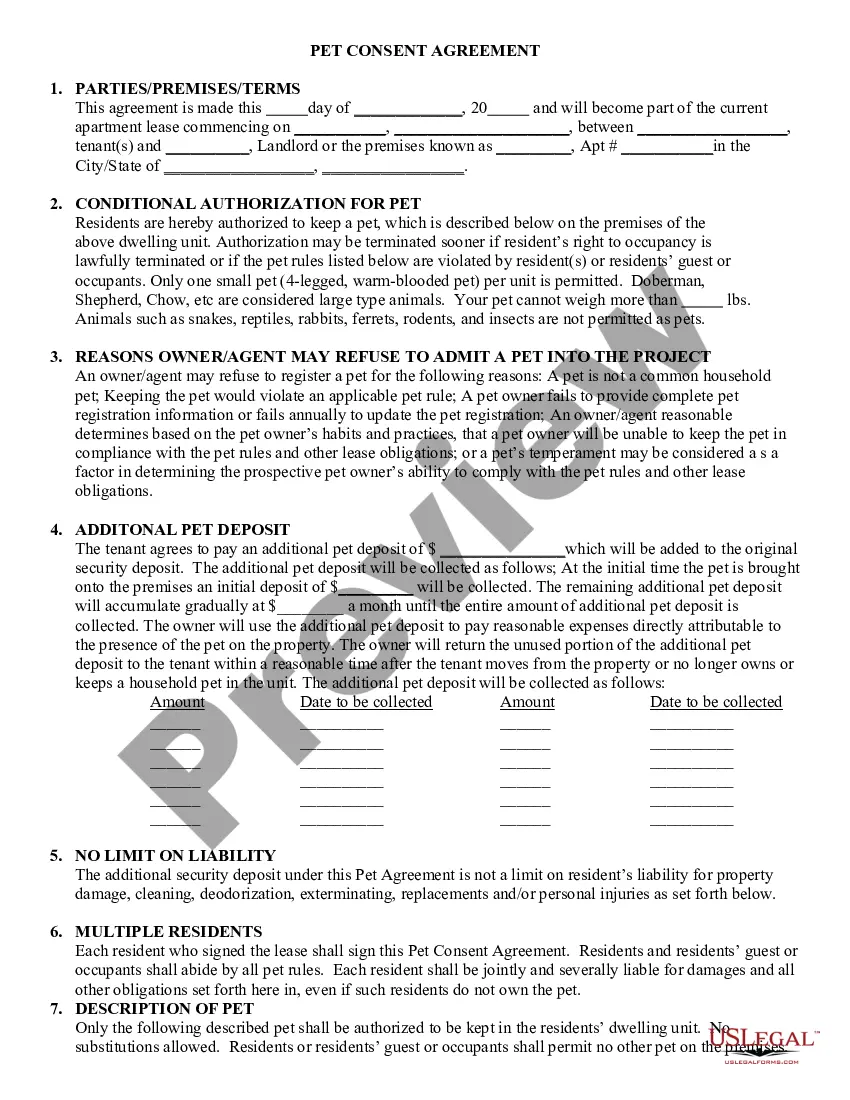
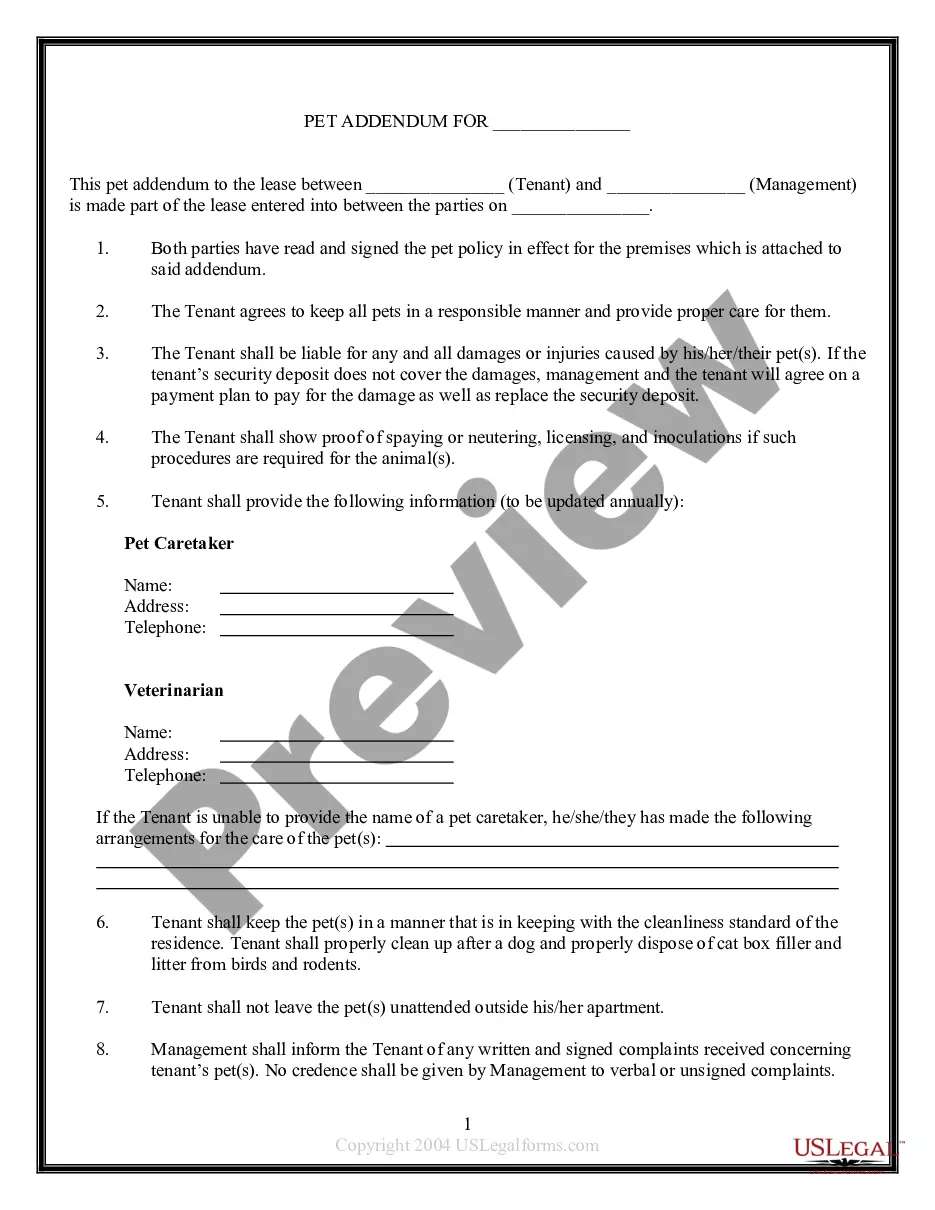
- Pet authorization and description, including details such as name, type, breed, and age.
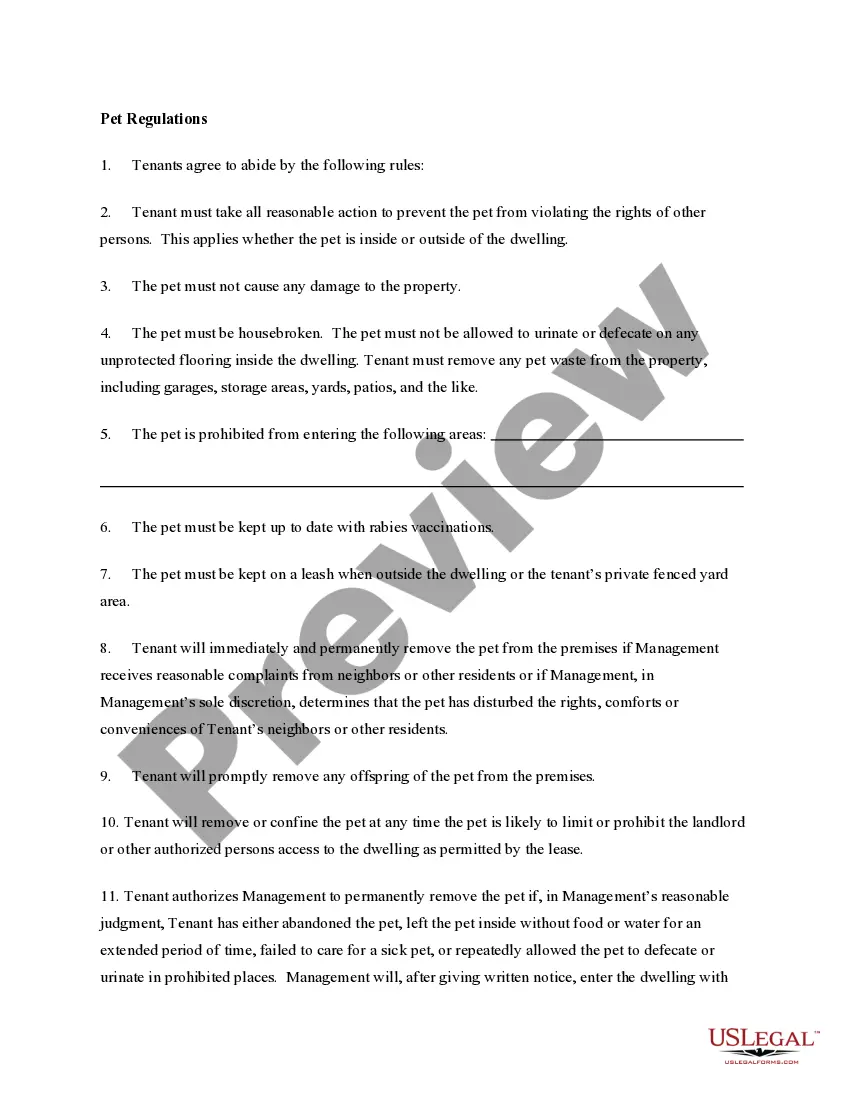
- Pet regulations outlining the responsibilities of the tenant regarding pet behavior and property upkeep.
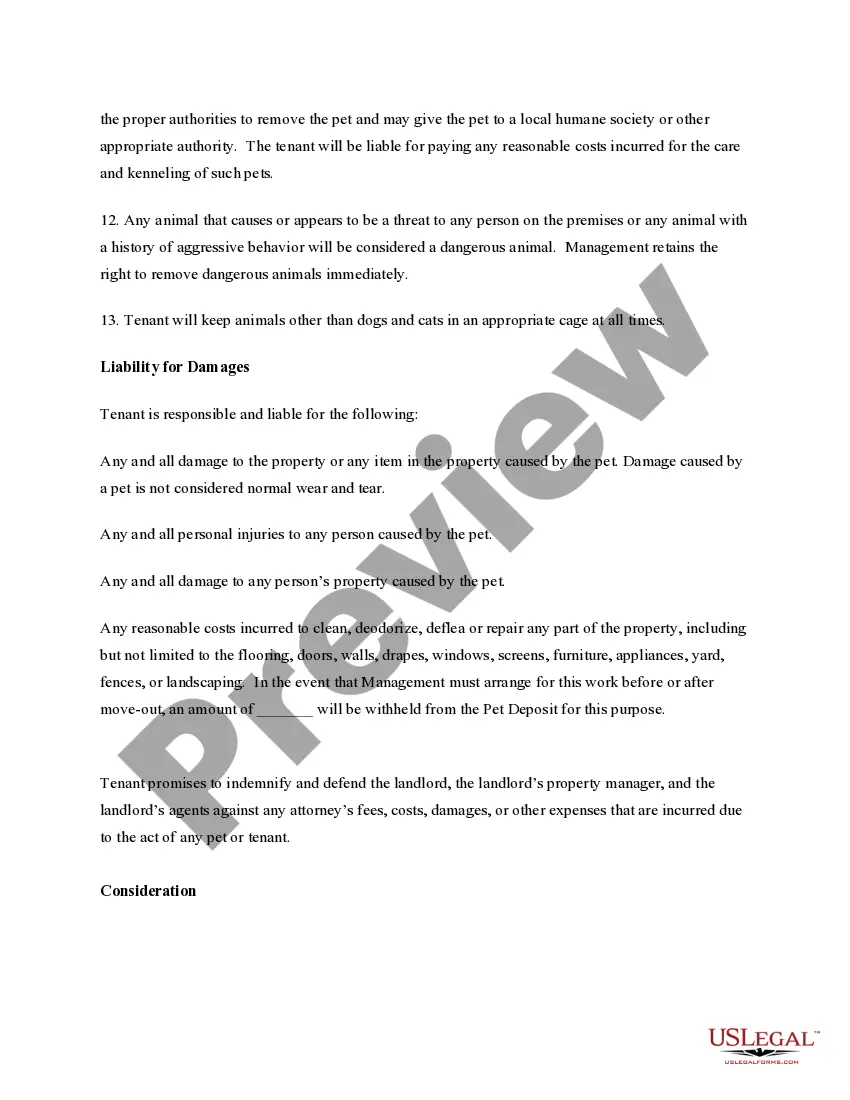
- Liability for damages, which holds the tenant accountable for any harm caused by their pet.
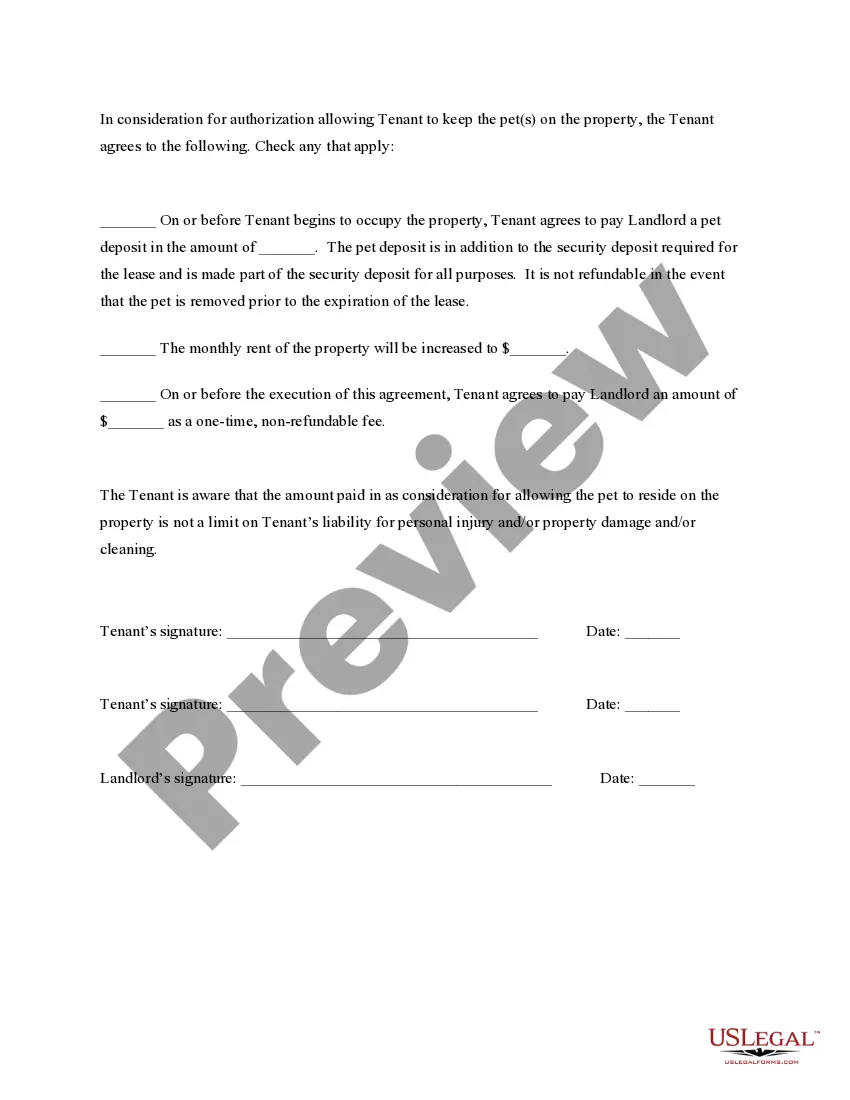
- Consideration for keeping the pet, which may include pet deposits or increased rent.
- Signatures of both tenant and landlord to validate the agreement.
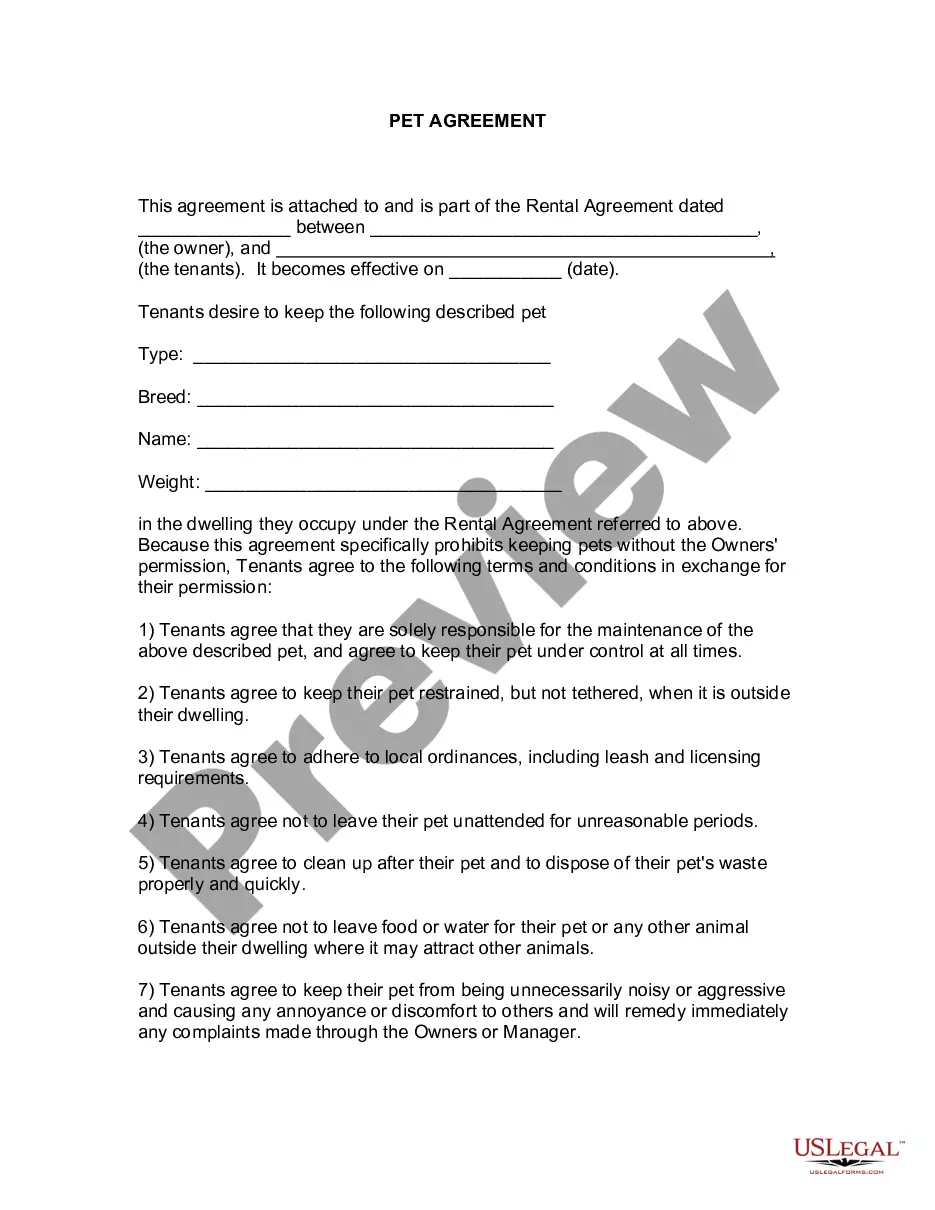
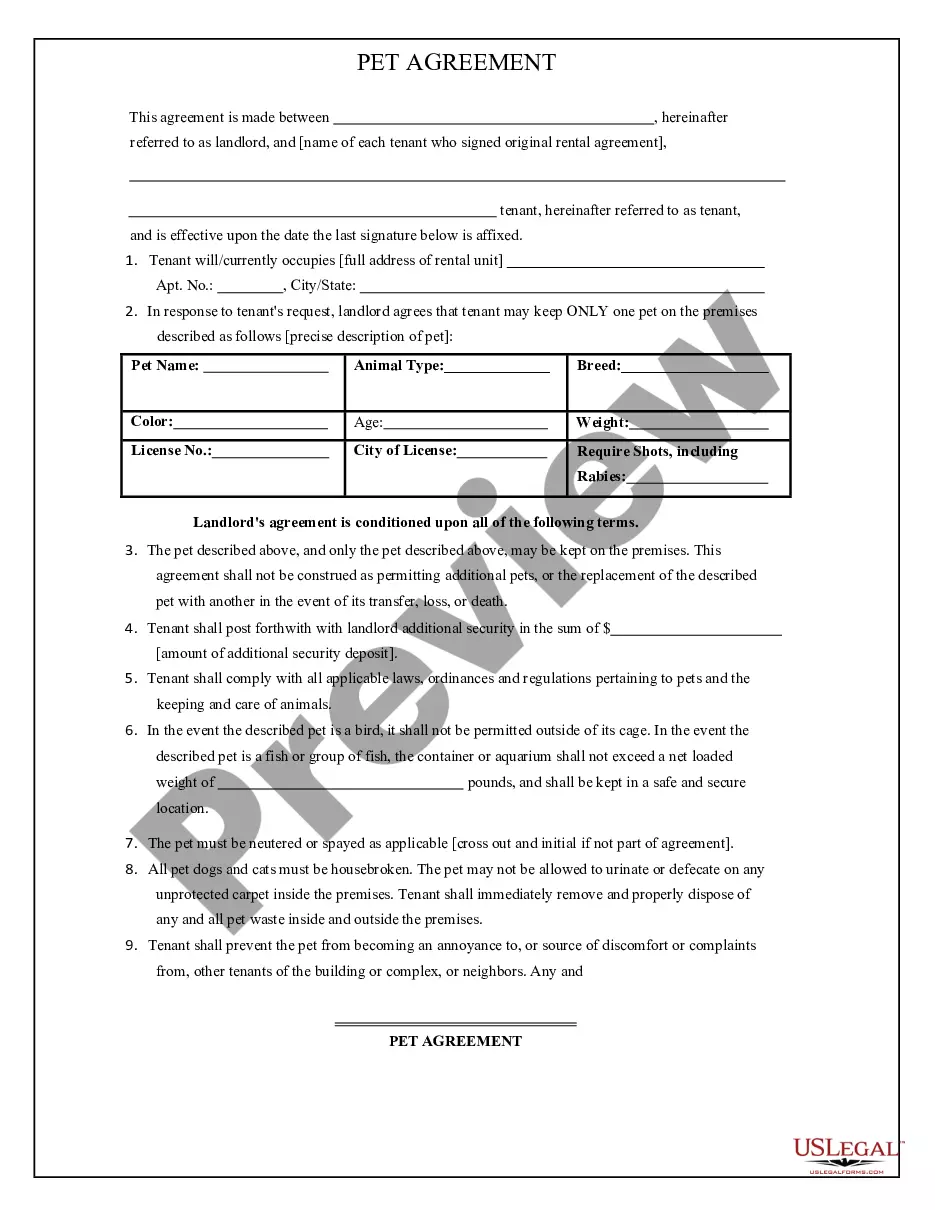
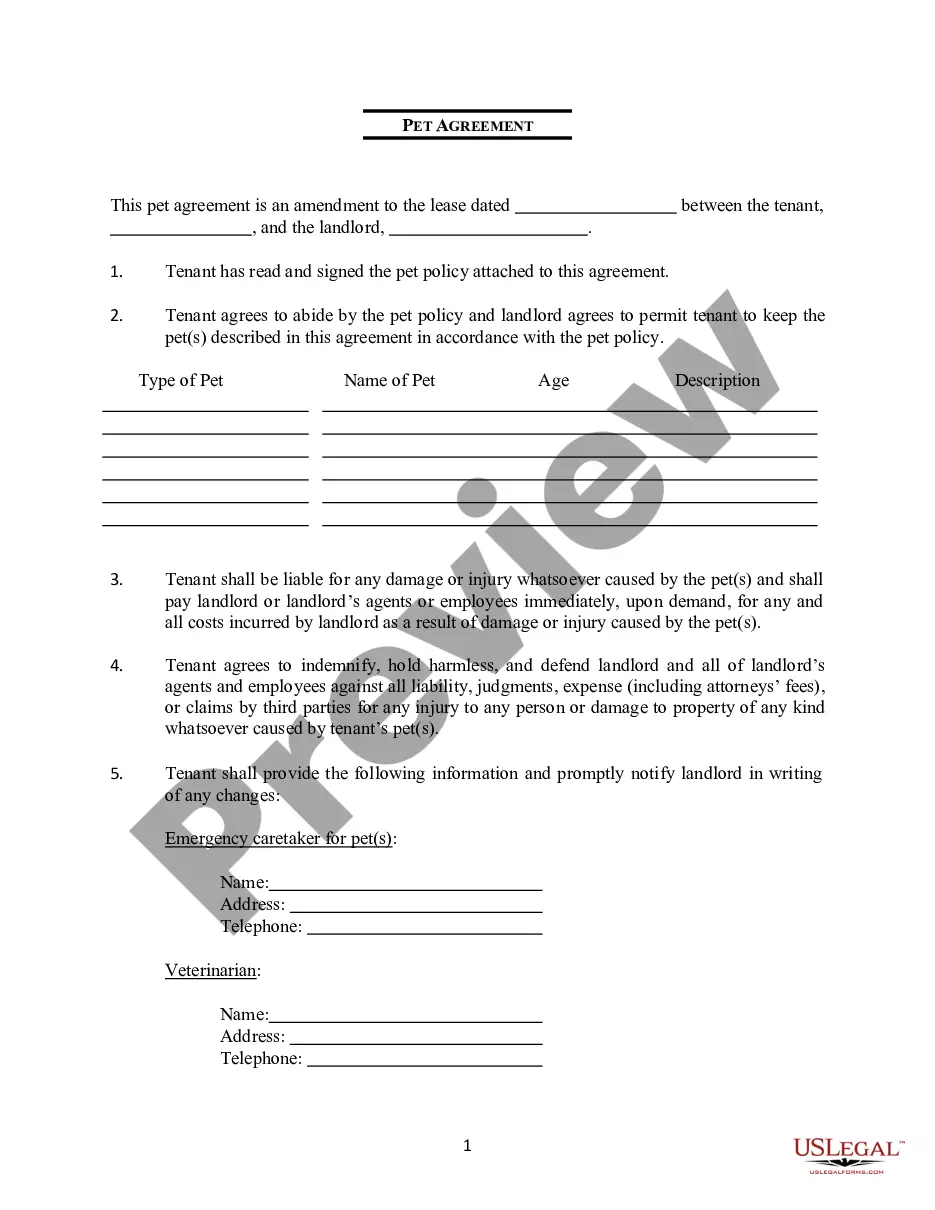
Situations where this form applies
This form is necessary when a tenant wishes to have a pet in a rental property where the landlord has previously prohibited pets. It is used to formalize the agreement between the landlord and tenant, ensuring that all parties understand the terms under which the pet is allowed to reside in the property. It is particularly important when the rental contract stipulates no pets without prior consent.
Who this form is for
- Tenants who want to keep pets in a rental property that has pet restrictions.
- Landlords who wish to outline specific pet policies and protect their property.
- Property managers who need a standardized document for pet-related agreements.
- Anyone involved in leasing property where pet ownership must be regulated.
Instructions for completing this form
- Identify the parties involved by filling in the names of the landlord and tenant.
- Specify the property address where the pet will reside.
- Provide detailed descriptions of the pet(s), including name, type, breed, age, and whether they are spayed or neutered.
- Check the applicable considerations, including any pet deposits or increased rent amount, and fill in the amounts as required.
- Gather signatures from all parties to finalize the agreement.
Does this form need to be notarized?
This form does not typically require notarization unless specified by local law. However, it is recommended to check with legal counsel to confirm any jurisdiction-specific requirements that may apply to pet agreements.
Get your form ready online
Our built-in tools help you complete, sign, share, and store your documents in one place.
Make edits, fill in missing information, and update formatting in US Legal Forms—just like you would in MS Word.
Download a copy, print it, send it by email, or mail it via USPS—whatever works best for your next step.
Sign and collect signatures with our SignNow integration. Send to multiple recipients, set reminders, and more. Go Premium to unlock E-Sign.
If this form requires notarization, complete it online through a secure video call—no need to meet a notary in person or wait for an appointment.
We protect your documents and personal data by following strict security and privacy standards.

Make edits, fill in missing information, and update formatting in US Legal Forms—just like you would in MS Word.

Download a copy, print it, send it by email, or mail it via USPS—whatever works best for your next step.

Sign and collect signatures with our SignNow integration. Send to multiple recipients, set reminders, and more. Go Premium to unlock E-Sign.

If this form requires notarization, complete it online through a secure video call—no need to meet a notary in person or wait for an appointment.

We protect your documents and personal data by following strict security and privacy standards.
Mistakes to watch out for
- Failing to complete all pet description fields, leading to uncertainty about which pets are allowed.
- Not reviewing local laws regarding pet ownership in rental properties.
- Overlooking the importance of signatures from both landlord and tenant for legitimacy.
- Ignoring specific pet regulations stated in the lease, which could lead to disputes later on.
Benefits of completing this form online
- Convenient access to customizable legal templates that fit your specific needs.
- Easy download and printing options for immediate use.
- Reliability backed by legal professionals who draft the forms, ensuring they meet state and local standards.
- Ability to make adjustments to the agreement based on individual circumstances before finalizing it.
Looking for another form?

Form popularity
FAQ
Pet Deposits in Maryland Maryland law allows property managers/landlords to charge a pet security deposit. ing to the Federal Fair Housing Act, people with disabilities may not have to pay a pet security deposit if they use service animals, as they're entitled to full access to housing.
Paragraph of your Lease Agreement specifically prohibits pets. The pet must be removed from the premises immediately. An inspection of the property will be conducted on (Date and Time) to verify the unauthorized pet is no longer in the property.
Some information to have so you can show your new landlord includes: A letter from your current landlord speaking to how well-behaved and non-disruptive your pet is. Vet records, including records from vaccinations and checkups. Records from any training or obedience classes your pet has taken. Spay or neuter records.
In Maryland, landlords can charge a pet deposit, except for service dogs and emotional support animals. However, the total security deposit cannot exceed two months' rent. Landlords cannot exceed the limit by giving them another name like ?pet deposit? or ?damage deposit.?
The security deposit may not be more than two months' rent. If you are overcharged, you have the right to recover up to three times the extra amount charged, plus reasonable attorney's fees. The landlord must give you a receipt for the security deposit. The receipt can be included in the written lease.
$200 initial pet fee and $35/month pet rent is usually more than adequate.
An average pet deposit is usually between $100 and $600. It's worth noting that pet deposits only cover pet-related damage, not normal wear and tear. You'll need to check state and local laws to see if there are restrictions on pet deposits.