Sample Letter to Attorney Opposite regarding Return Admission of Service
What this document covers
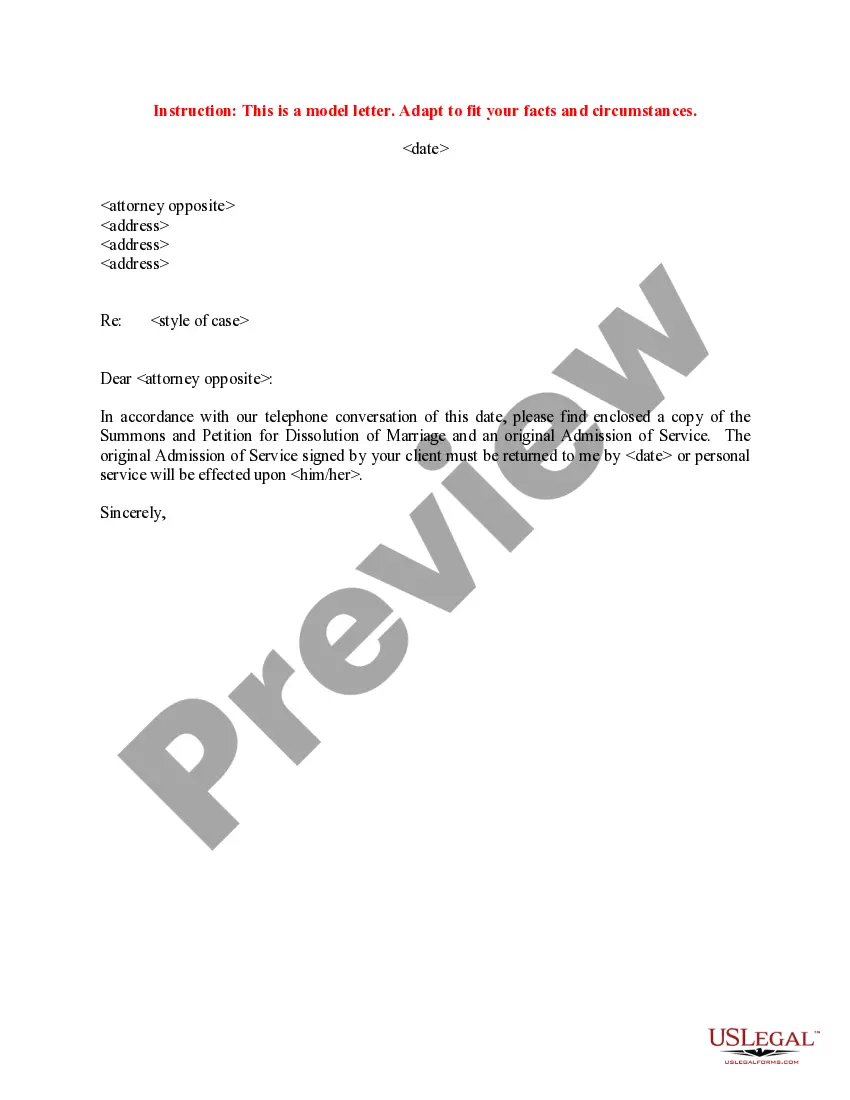
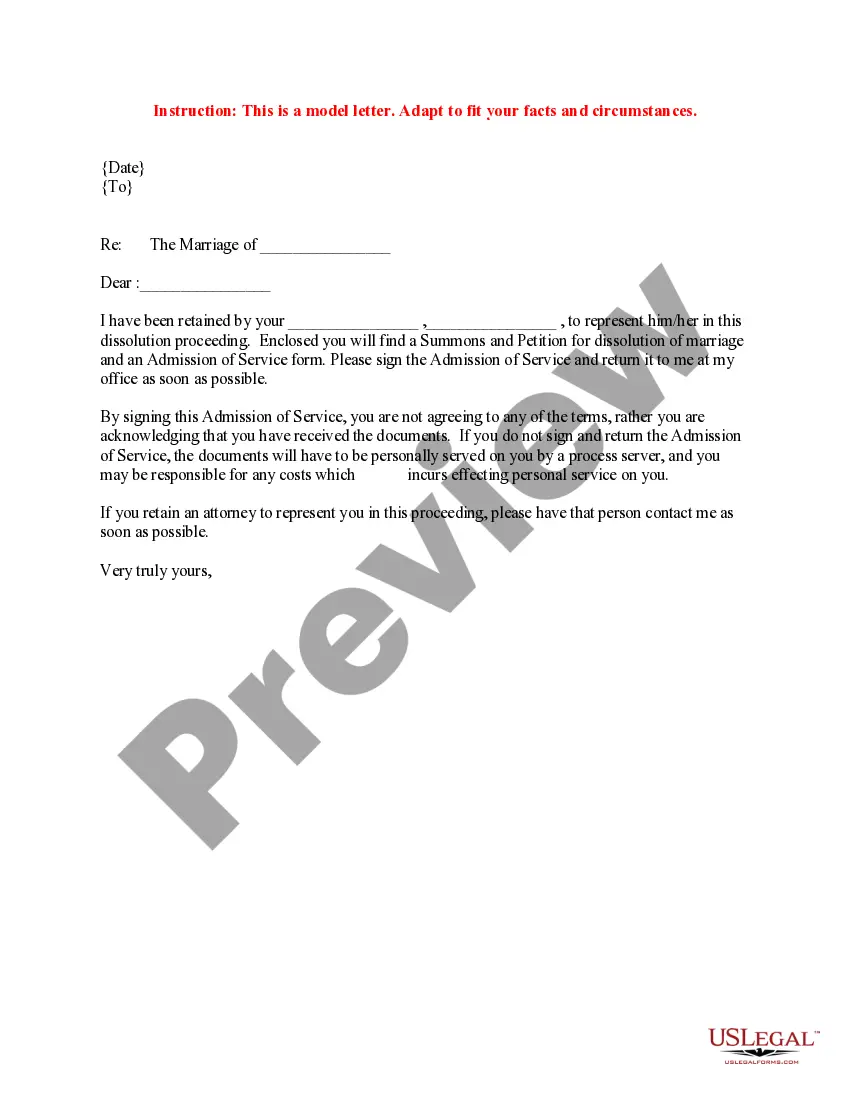
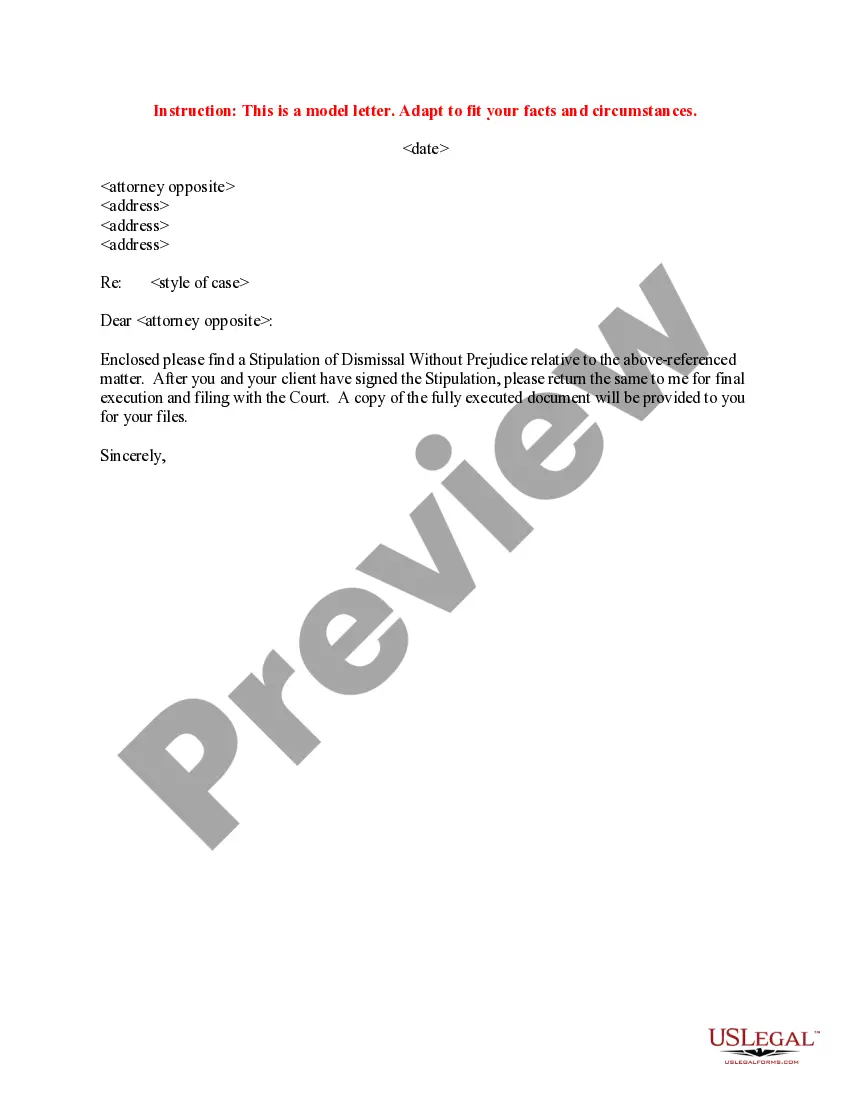
This Sample Letter to Attorney Opposite regarding Return Admission of Service is a straightforward template designed for communication between attorneys regarding the return of the Admission of Service. This form serves a specific purpose, distinct from other legal letters, by focusing on the formal request for the return of signed legal documents related to a dissolution of marriage case.
What’s included in this form
- Date: The date on which the letter is written.
- Address: The contact information of the attorney opposite.
- Style of case: The specific title or identification of the legal case.
- Body of the letter: Includes details about the enclosed documents and deadlines for response.
- Signature: The closing of the letter with the name of the sender.
Common use cases
This form is used when an attorney needs to formally notify another attorney about the requirement of returning the signed Admission of Service. It is typically employed in divorce proceedings to ensure that the other party acknowledges and accepts the complaint filed, thereby facilitating the next steps in the divorce process.
Who needs this form
This letter should be used by:
- Divorce attorneys who represent clients seeking a dissolution of marriage.
- Lawyers handling family law cases that require the issuance of a Summons and Petition.
- Legal professionals needing to communicate formally with opposing counsel.
How to complete this form
- Identify the date on which you are sending the letter.
- Fill in the complete address of the attorney you are contacting.
- Specify the style of the case to ensure clarity in reference.
- Draft the main body, including the request for the signed Admission of Service and the deadline for return.
- Sign the letter, including your name and title, to provide official closure.
Notarization requirements for this form
Notarization is generally not required for this form. However, certain states or situations might demand it. You can complete notarization online through US Legal Forms, powered by Notarize, using a verified video call available anytime.
Get your form ready online
Our built-in tools help you complete, sign, share, and store your documents in one place.
Make edits, fill in missing information, and update formatting in US Legal Forms—just like you would in MS Word.
Download a copy, print it, send it by email, or mail it via USPS—whatever works best for your next step.
Sign and collect signatures with our SignNow integration. Send to multiple recipients, set reminders, and more. Go Premium to unlock E-Sign.
If this form requires notarization, complete it online through a secure video call—no need to meet a notary in person or wait for an appointment.
We protect your documents and personal data by following strict security and privacy standards.

Make edits, fill in missing information, and update formatting in US Legal Forms—just like you would in MS Word.

Download a copy, print it, send it by email, or mail it via USPS—whatever works best for your next step.

Sign and collect signatures with our SignNow integration. Send to multiple recipients, set reminders, and more. Go Premium to unlock E-Sign.

If this form requires notarization, complete it online through a secure video call—no need to meet a notary in person or wait for an appointment.

We protect your documents and personal data by following strict security and privacy standards.
Mistakes to watch out for
- Failing to include the correct address of the opposing attorney.
- Leaving out essential case details such as style of case.
- Not specifying a clear deadline for the return of the signed document.
Why complete this form online
- Convenient access to the template whenever needed.
- Editable format allows for customization to address specific cases.
- Professionally drafted by licensed attorneys, ensuring legal compliance and reliability.
Legal use & context
- This form is used to communicate important legal requirements between attorneys.
- It helps establish a record of communication regarding service of process.
- Proper use of the letter can aid in expediting legal proceedings and reduce potential disputes over service.
What to keep in mind
- The form serves a critical purpose in family law cases, specifically in divorce proceedings.
- It is essential for attorneys to communicate effectively regarding document handling.
- Understanding local legal requirements and timelines is crucial for proper usage.
Looking for another form?
Form popularity
FAQ
When someone is evading service, you have two options. The first option is to hire a private process server, who delivers Complaints to Defendants and performs document retrievals on a litigant's behalf. Process servers also perform skip traces to track down Defendants by using technology and surveillance techniques.
A letter to an attorney should be written in a formal letter format with the attorney's name, law firm and address at the top near the date, addressed using a salutation and signed off with a closing such as "Very Truly Yours" or "Sincerely."
If you still can't locate the defendant, you can ask the Court for permission to serve the defendant by mail. In other words, you are asking the Court to relieve you from using personal service or substitute service.
What if the person being served refuses to accept the papers? In most cases, a defendant or target does not have to formally accept service in order for it to be considered effective. If the defendant comes to the door but refuses the papers, the process server may just have to leave them at their feet and walk away.
A Simple Answer to "What Happens if a Process Server Can't Serve You?" The simple answer to your question is that the court continues without you. Evidence is brought forth without a rebuttal or defense from you and a judgment is issued.
"The Judge is biased against me" Is it possible that the Judge is "biased" against you?"Everyone is out to get me""It's the principle that counts""I don't have the money to pay you"Waiting until after the fact.
Dear Name of Attorney, I am writing to officially notify you that I am terminating your services immediately. This is because {reason(s) for terminating the representation}.
Personal Service. Send a Letter. Search for a Phone Number or Address. Use Social Media. Pay for a Person Search. Consider Contacting Others. Search Property Records. Use Another Address.
1Get Straight To The Point.2Be Firm.3Make Your Case Plainly.4Don't Be Spiteful.5Acknowledge Your Responsibility For Applicable Lawyer Fees.6Get A Copy Of Your Case File.