Mississippi Order to File a Response to Motion for Summary Judgment
About this form
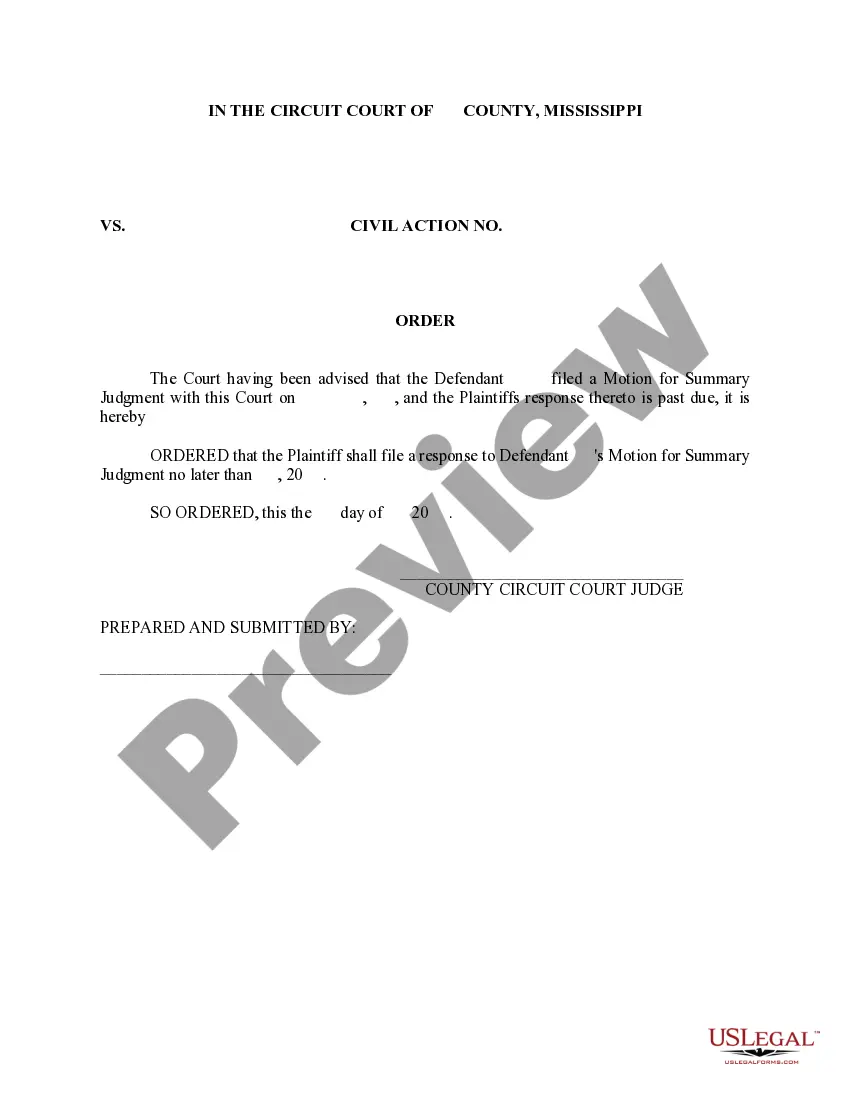
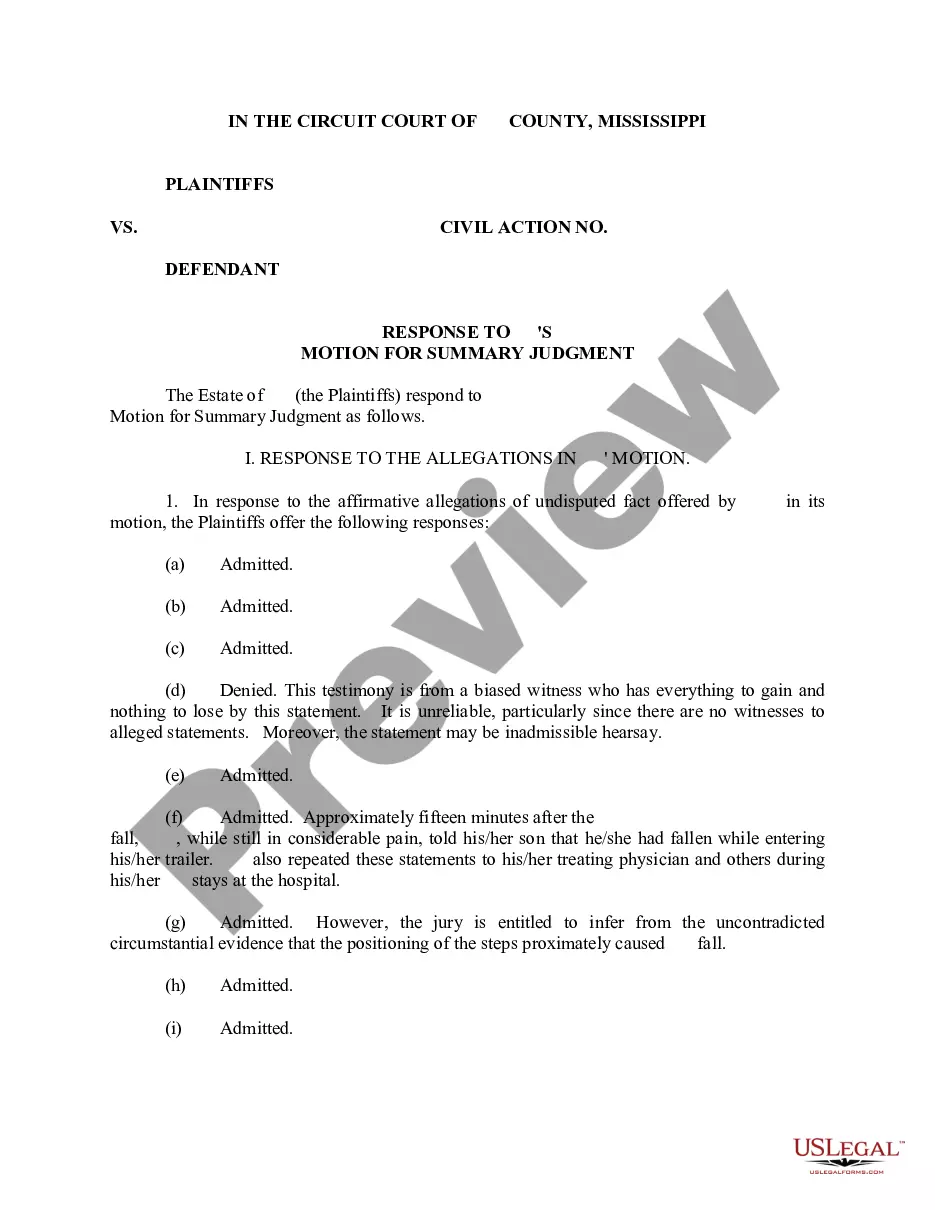
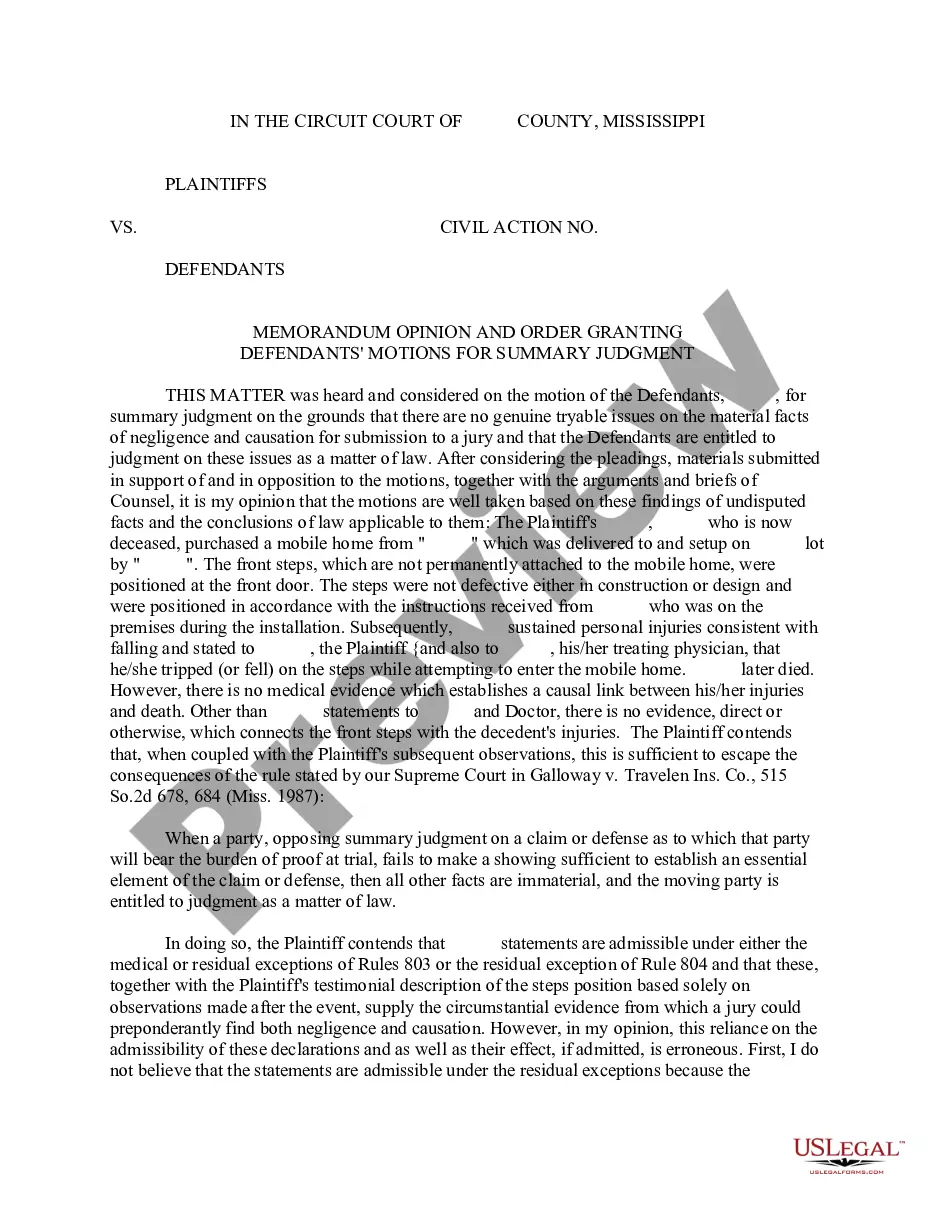
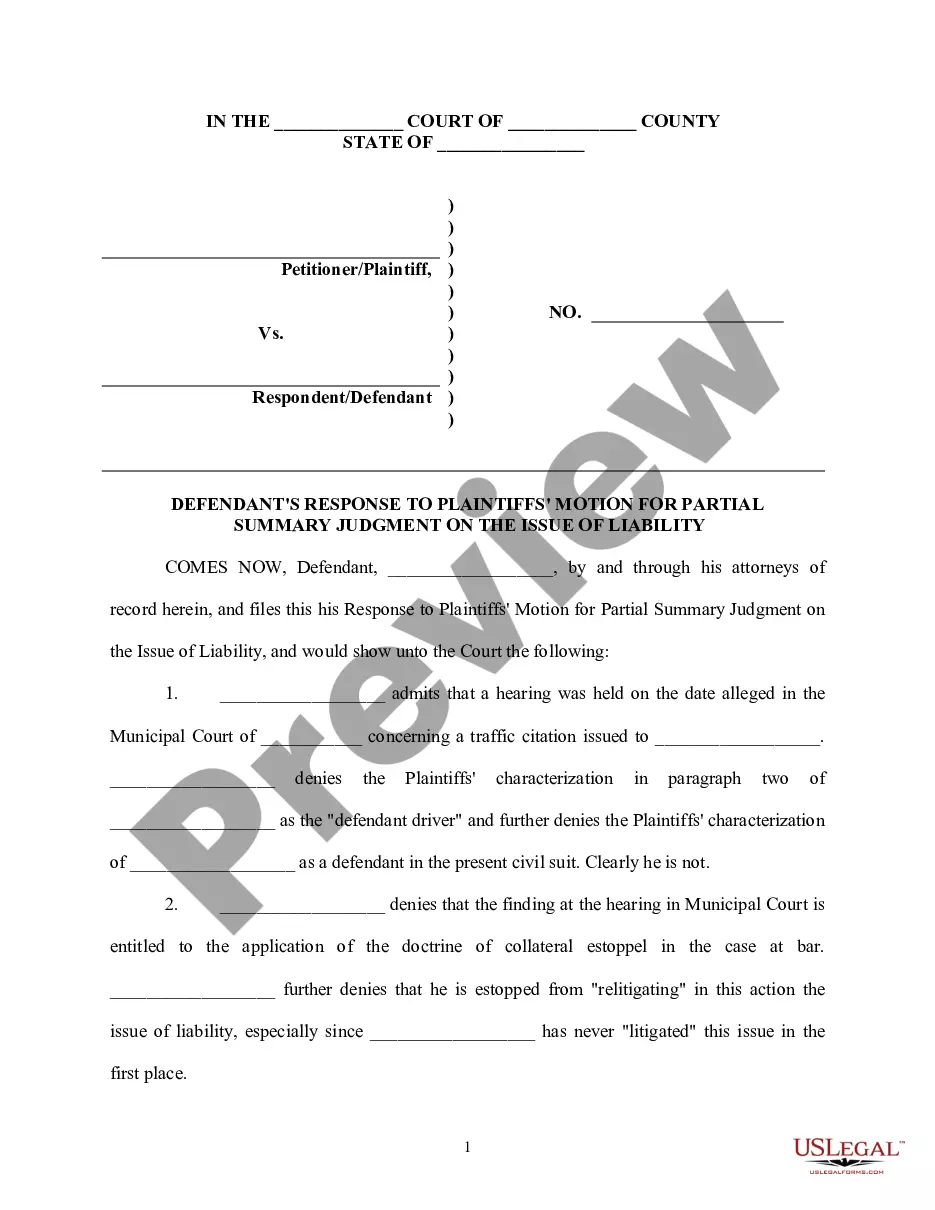
The Order to File a Response to Motion for Summary Judgment is a formal court document that instructs a party to submit their response to a motion for summary judgment. This order is issued by a judge when a response is overdue. Unlike other legal forms, this specific order serves to enforce compliance with court deadlines, making it critical for ensuring the proper progression of a case.
Key parts of this document
- Case title identifying the parties involved.
- Civil action number for reference in court proceedings.
- Order section specifying the deadline for the plaintiff's response.
- Signature line for the judge's approval.
- Prepared and submitted by details to document who drafted the order.
Common use cases
This form is used when a defendant has filed a motion for summary judgment and the plaintiff has failed to respond by the indicated deadline. It is essential for maintaining the timeline set by the court and can serve as a basis for further legal action if the plaintiff does not comply with the order.
Who needs this form
- Plaintiffs involved in a civil action where a motion for summary judgment has been filed by the defendant.
- Legal representatives who need to ensure compliance with court orders.
- Participants in civil litigation wishing to enforce proper case procedures.
How to prepare this document
- Identify and enter the names of the parties involved in the case.
- Fill in the civil action number to accurately reference the case.
- Specify the date when the defendant's motion for summary judgment was filed.
- Indicate the deadline by which the plaintiff must file their response.
- Provide the date and sign the order as the judge.
Does this document require notarization?
In most cases, this form does not require notarization. However, some jurisdictions or signing circumstances might. US Legal Forms offers online notarization powered by Notarize, accessible 24/7 for a quick, remote process.
Get your form ready online
Our built-in tools help you complete, sign, share, and store your documents in one place.
Make edits, fill in missing information, and update formatting in US Legal Forms—just like you would in MS Word.
Download a copy, print it, send it by email, or mail it via USPS—whatever works best for your next step.
Sign and collect signatures with our SignNow integration. Send to multiple recipients, set reminders, and more. Go Premium to unlock E-Sign.
If this form requires notarization, complete it online through a secure video call—no need to meet a notary in person or wait for an appointment.
We protect your documents and personal data by following strict security and privacy standards.

Make edits, fill in missing information, and update formatting in US Legal Forms—just like you would in MS Word.

Download a copy, print it, send it by email, or mail it via USPS—whatever works best for your next step.

Sign and collect signatures with our SignNow integration. Send to multiple recipients, set reminders, and more. Go Premium to unlock E-Sign.

If this form requires notarization, complete it online through a secure video call—no need to meet a notary in person or wait for an appointment.

We protect your documents and personal data by following strict security and privacy standards.
Common mistakes to avoid
- Failing to enter the correct civil action number, leading to confusion in court.
- Missing the filing deadline specified in the order.
- Neglecting to have the order signed by the judge before submission.
Advantages of online completion
- Convenient access to a professionally drafted template available for immediate download.
- Ability to customize the form according to specific case details with ease.
- Reliable format that ensures compliance with legal standards.
Legal use & context
- This order is a formal request from the court, and compliance is essential to avoid potential contempt charges.
- It serves to maintain order and efficiency in civil proceedings.
- Understanding the implications of the order is crucial for both plaintiffs and defendants in litigation.
Summary of main points
- The Order to File a Response to Motion for Summary Judgment is vital for ensuring compliance with legal deadlines.
- This form is flexible and can be adapted to meet jurisdiction-specific requirements.
- Completion of this form helps prevent legal complications arising from missed deadlines.
Looking for another form?
Form popularity
FAQ
The motion to compel further responses has to be brought within 45 days of service of the response. (C.C.P. § 2030.300) Sounds simple enough, but it's not. You have to understand when something is deemed served.
The response must be filed within 10 days after service of the motion unless the court shortens or extends the time. A motion authorized by Rules 8, 9, 18, or 41 may be granted before the 10-day period runs only if the court gives reasonable notice to the parties that it intends to act sooner.
You have only 14 days to respond to a regular motion. The time to respond runs from the date the motion was filed. Check the certificate of service, which should be included with the Motion papers. If you need to respond to an Administrative Motion, you have only 4 days.
Rule 56 of the Federal Rules of Civil Procedure governs summary judgment for federal courts. Under Rule 56, in order to succeed in a motion for summary judgment, a movant must show 1) that there is no genuine dispute as to any material fact, and 2) that the movant is entitled to judgment as a matter of law.
Judgment on the pleadings is a motion made after pleading and before discovery; summary judgment happens after discovery and before trial; JMOL occurs during trial.Timing is very important in making a motion for JMOL; the motion can be made only after the opposing party has presented its case.
(a) Motion and opposition (3) Any opposition must be served and filed within 15 days after the motion is filed.
A motion is a written request made to the court, asking the judge to issue an order.Other parties have the chance to file and serve a written response to the motion. There is a specific deadline for filing and serving a written response, usually fourteen (14) days prior to a hearing.
If the motion is granted, the judgment on the issue or case is deemed to be a final judgment from which a party may seek an appeal. The court of appeal can reverse the grant of summary judgment and reinstate the claim in the lower court. However, this is rarely done and most summary judgments are upheld on appeal.
19, 2008) (motions to dismiss or for summary judgment are not responsive pleadings, and therefore do not cut off a plaintiff's right to amend his pleadings once at any time).