Rider to Lease of Office Building with Rules and Regulations
Understanding this form
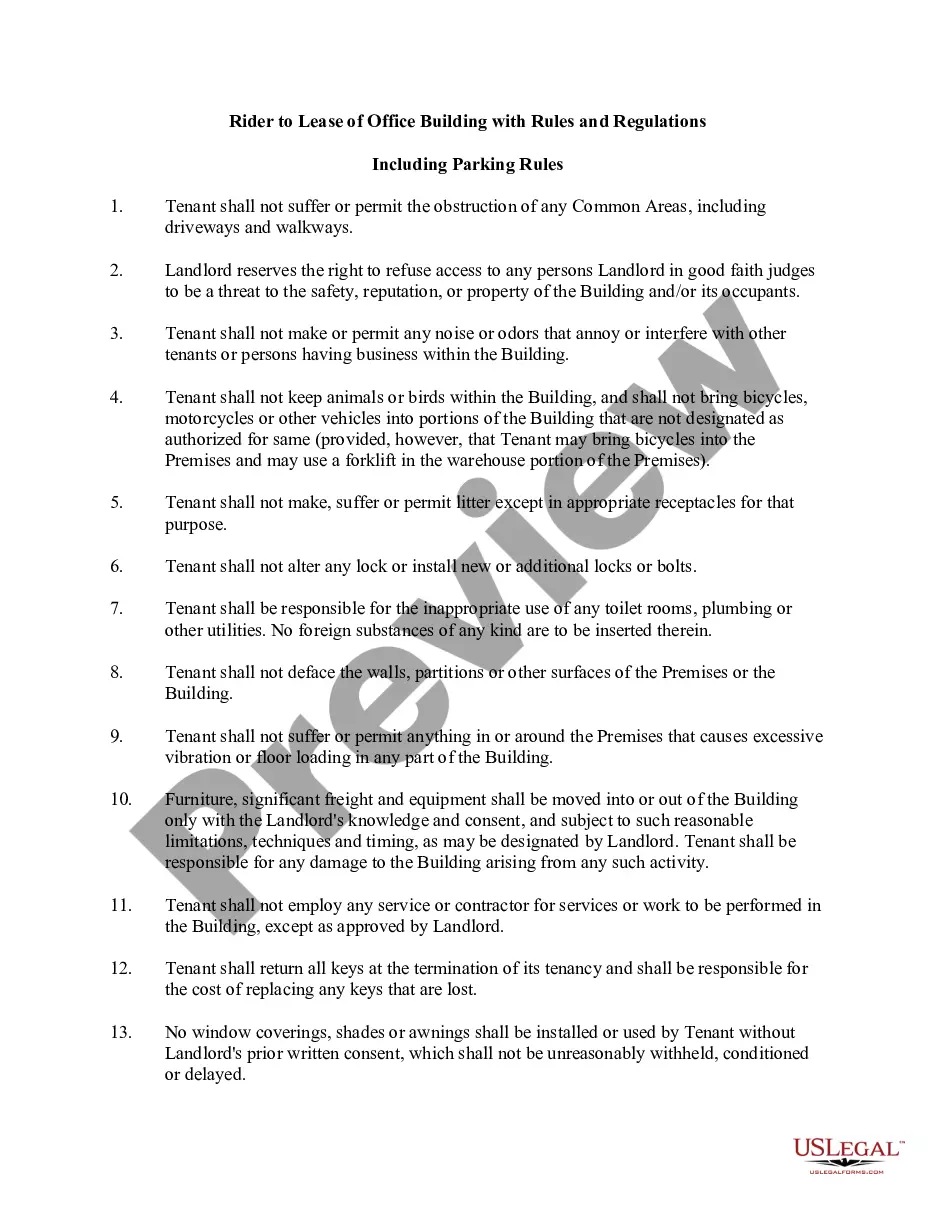
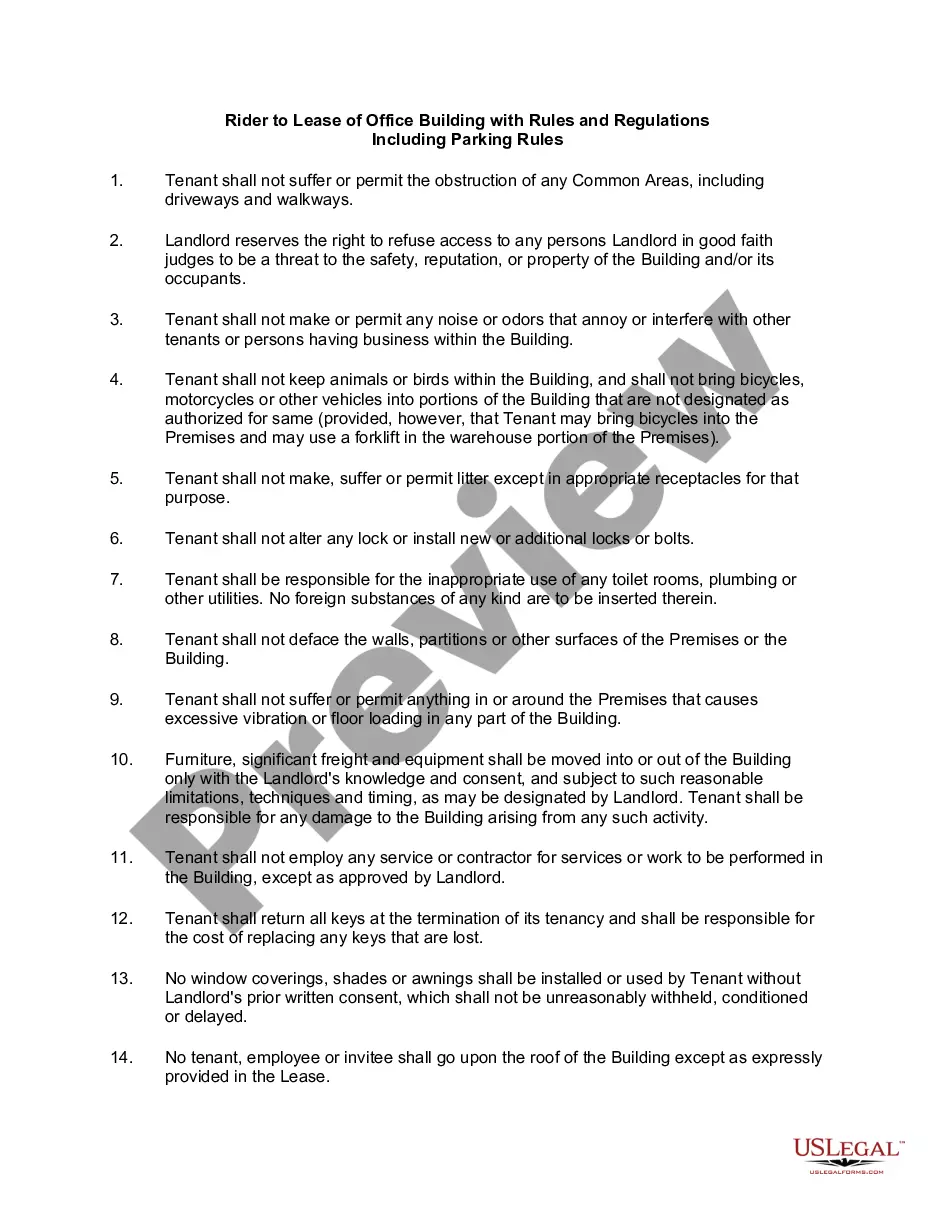
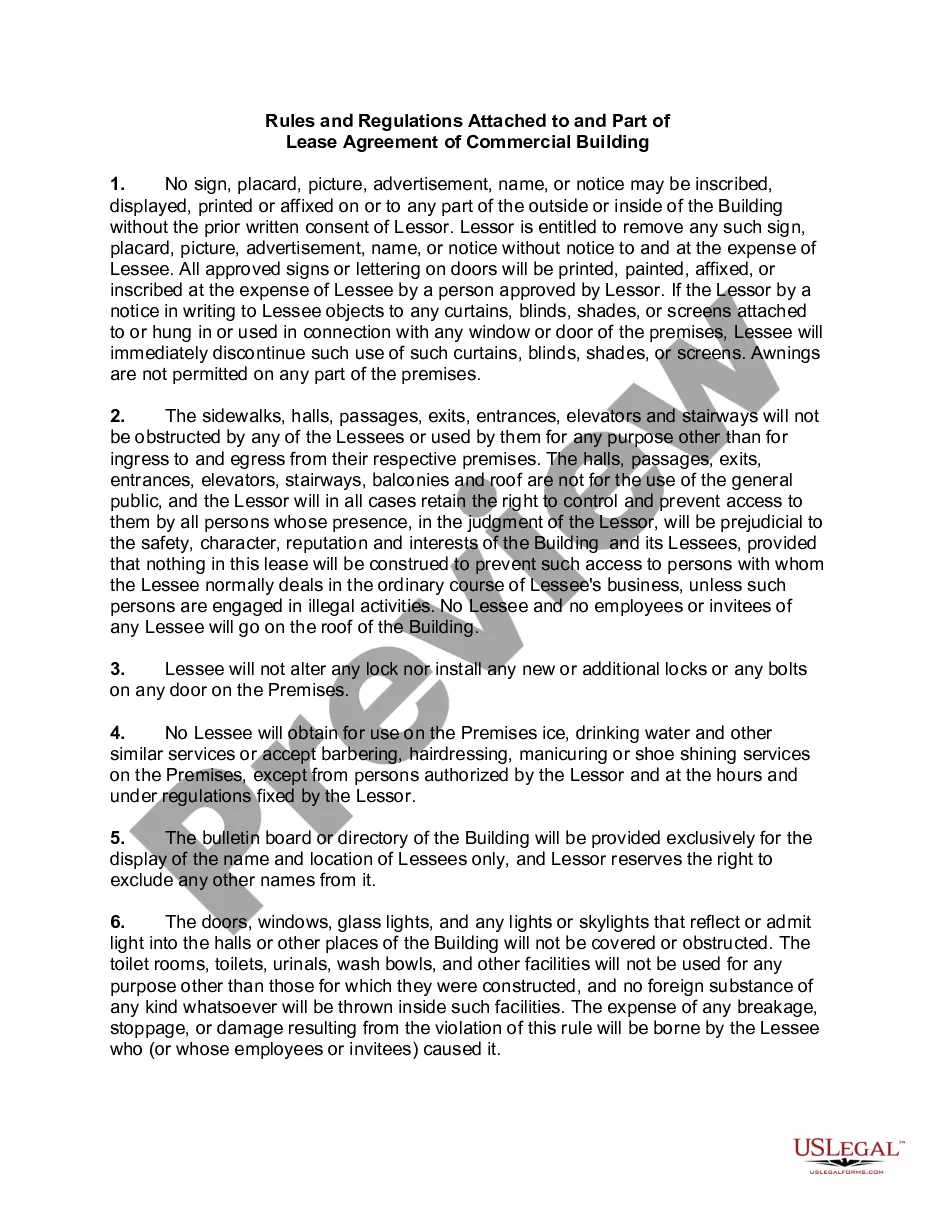
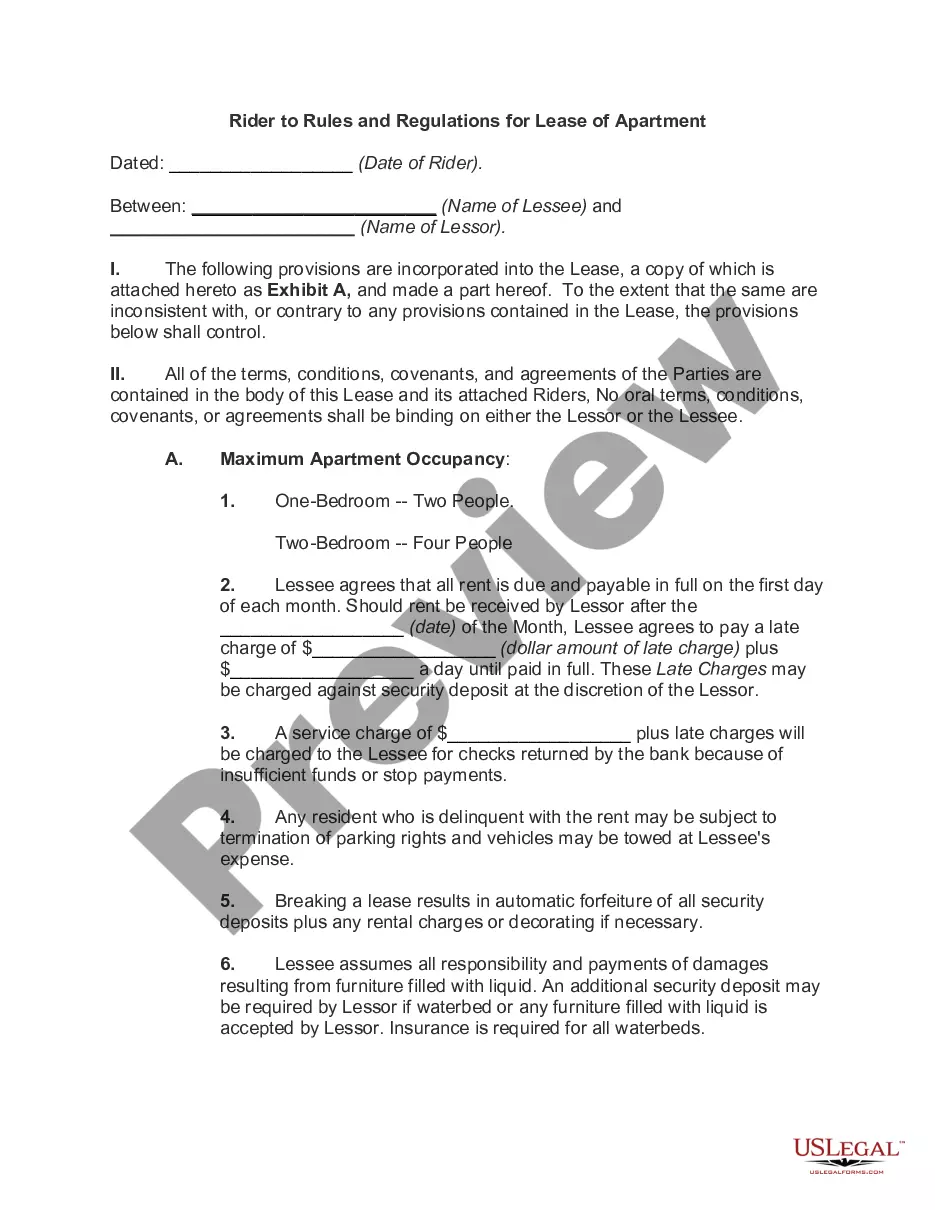
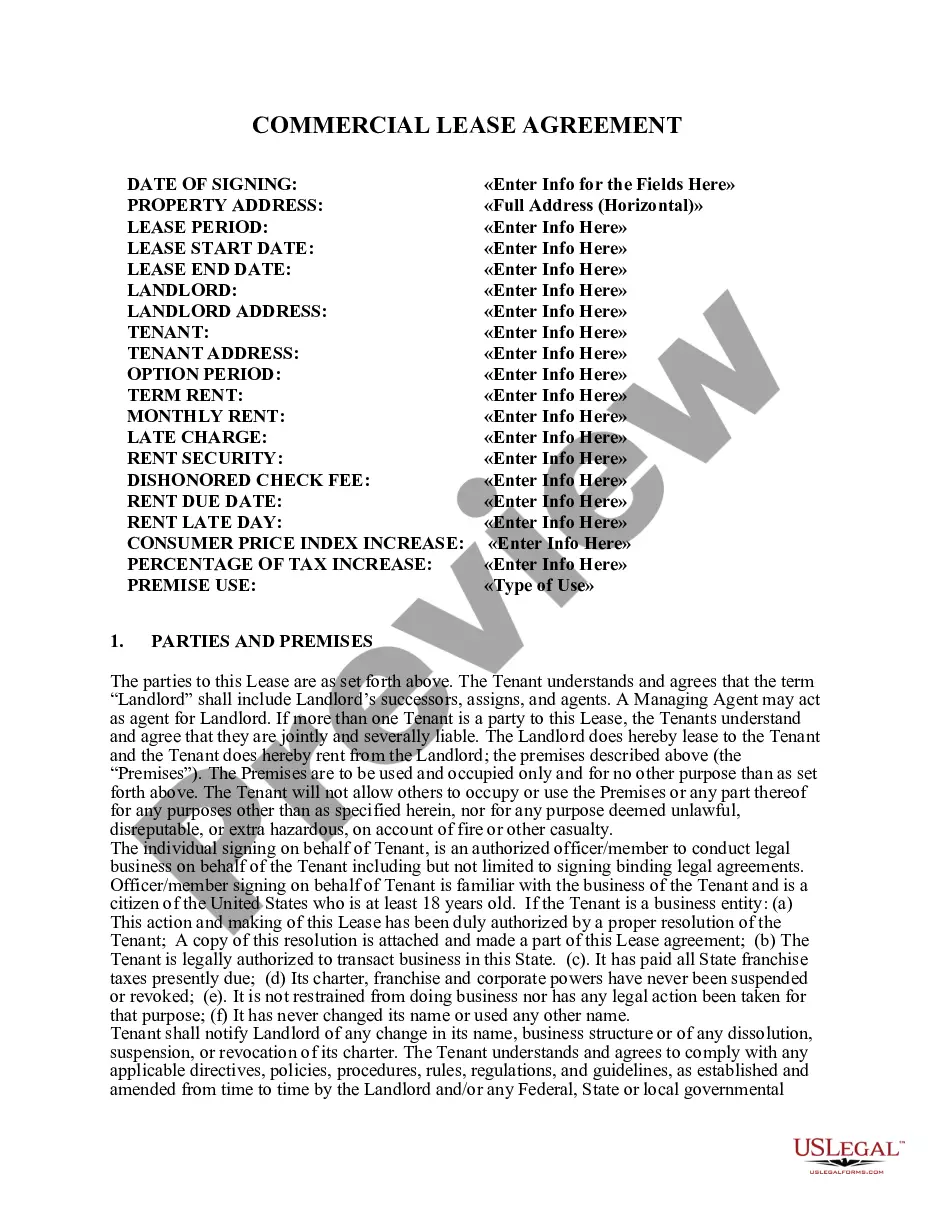
The Rider to Lease of Office Building with Rules and Regulations is an important document that acts as an addendum to a standard office lease. This rider outlines specific rules and regulations that tenants must follow while occupying office space in a building, ensuring a harmonious and organized environment for all occupants. Unlike a regular lease, this form provides detailed guidelines that address various aspects of tenant behavior and building maintenance, crucial for both landlords and tenants to understand their obligations and rights.
Key parts of this document
- Specific parking rules and regulations for tenants.
- Guidelines on maintaining common areas within the building.
- Restrictions on noise, odors, and animal presence.
- Detailed procedures for moving furniture and equipment in and out of the building.
- Rules regarding alterations and installation of locks and window coverings.
- Safety and compliance requirements for tenants with regards to fire regulations.


When to use this form
This form should be used whenever a landlord wants to set clear expectations and regulations for tenants occupying an office building. It is especially important when entering a new lease agreement or renewing an existing one, to ensure that all parties are aware of their responsibilities regarding property use and common area maintenance. The rider serves as a supplemental guideline, clarifying any standard lease terms to prevent disputes and misunderstandings among tenants.
Who needs this form
- Landlords of commercial office spaces who want to ensure compliance with building rules.
- Tenants entering into a lease agreement and wanting to understand their obligations.
- Property managers responsible for enforcing building regulations and maintaining order.
- Legal professionals drafting or reviewing lease agreements to protect their clients' interests.
Completing this form step by step
- Review the lease agreement to determine where to attach this rider.
- Clearly identify both the landlord and tenant, including their contact information.
- Fill in specific rules and regulations applicable to the premises.
- Ensure all parties sign and date the rider, indicating acceptance of the terms.
- Distribute copies of the signed rider to all involved parties for their records.
Notarization requirements for this form
This form does not typically require notarization unless specified by local law. However, it is good practice to consult with a legal professional to ensure all requirements are met for your specific situation.
Get your form ready online
Our built-in tools help you complete, sign, share, and store your documents in one place.
Make edits, fill in missing information, and update formatting in US Legal Forms—just like you would in MS Word.
Download a copy, print it, send it by email, or mail it via USPS—whatever works best for your next step.
Sign and collect signatures with our SignNow integration. Send to multiple recipients, set reminders, and more. Go Premium to unlock E-Sign.
If this form requires notarization, complete it online through a secure video call—no need to meet a notary in person or wait for an appointment.
We protect your documents and personal data by following strict security and privacy standards.

Make edits, fill in missing information, and update formatting in US Legal Forms—just like you would in MS Word.

Download a copy, print it, send it by email, or mail it via USPS—whatever works best for your next step.

Sign and collect signatures with our SignNow integration. Send to multiple recipients, set reminders, and more. Go Premium to unlock E-Sign.

If this form requires notarization, complete it online through a secure video call—no need to meet a notary in person or wait for an appointment.

We protect your documents and personal data by following strict security and privacy standards.
Mistakes to watch out for
- Failing to review the rider carefully before signing.
- Not discussing modifications or additional rules before completion.
- Assuming that verbal agreements override the written terms of the rider.
- Neglecting to provide copies of the signed rider to all parties.
Why use this form online
- Convenience of instant access and download.
- Editability to tailor the form to specific leasing needs.
- Reliability of having a legally vetted document crafted by licensed attorneys.
- Secure storage and easy sharing options for all parties involved.
Looking for another form?
Form popularity
FAQ
Contents of a lease agreement Amount of rent and due dates, grace period, late charges. Mode of rent payment. Methods to terminate the agreement prior to the expiration date and charges if any. Amount of security deposit and the account where it is held.
A lease agreement transfers the ownership for a certain period and the actual owner does not have any possession during lease tenure. In a rent agreement, a landlord has full control over the property.
A lease is a contract outlining the terms under which one party agrees to rent an asset?in this case, property?owned by another party. It guarantees the lessee, also known as the tenant, use of the property and guarantees the lessor (the property owner or landlord) regular payments for a specified period in exchange.
Under a lease, the tenant is granted exclusive possession of a property for a time period specified in the contract. A lease is defined under Section 105 of the Transfer of Property Act 1882. Whereas under a license, an owner permits another party to use their immovable property for certain purposes.
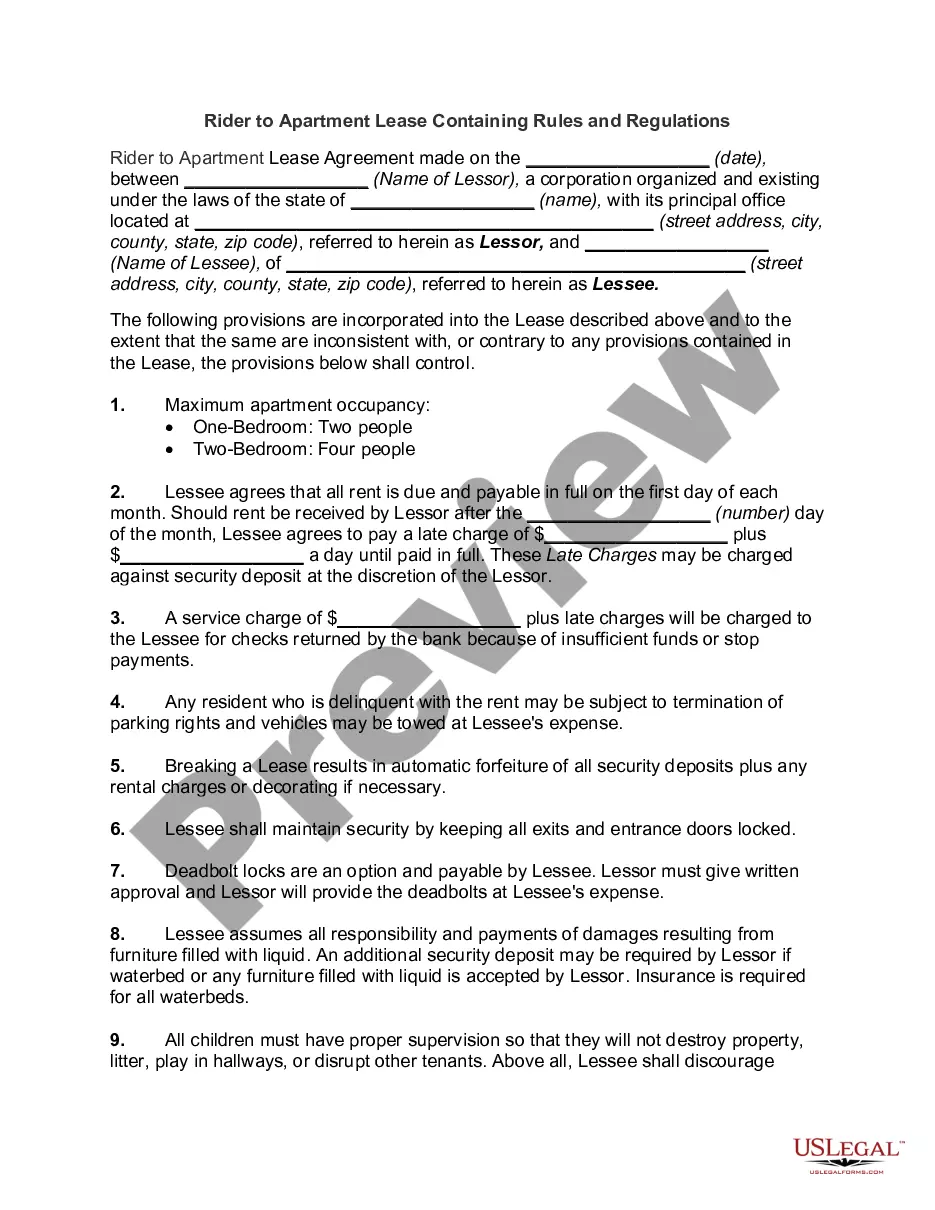
A LEASE RIDER is an addition to the lease indicating a specific condition of that lease that varies from the printed terms of the lease document. For example, some leases may end at a date other than June 30, or a construction project may be taking place during the lease term.
In leasing, you'll have to pay a fixed amount ( it will be 40-50 times that of the rental amount). Additionally, if a particular company requires an asset throughout the year, then a lease is the best option. However, if there is no such demand, then renting is the best option.
In India, there are two different kinds of rental agreements, one of which is a lease with a minimum term of 12 months. Rent Control Laws established by the State Government regulate this. The other kind is a lease and license contract that lasts up to 11 months and is exempt from rent control laws.
The lease agreement is a contract between two parties in India. The two parties are the landlord and the tenant. The purpose of a lease agreement is to decide who will be responsible for paying the rent, repairs, and other charges associated with the property. Lease agreements can be written or oral.