North Carolina Newly Widowed Individuals Package
What this form package covers
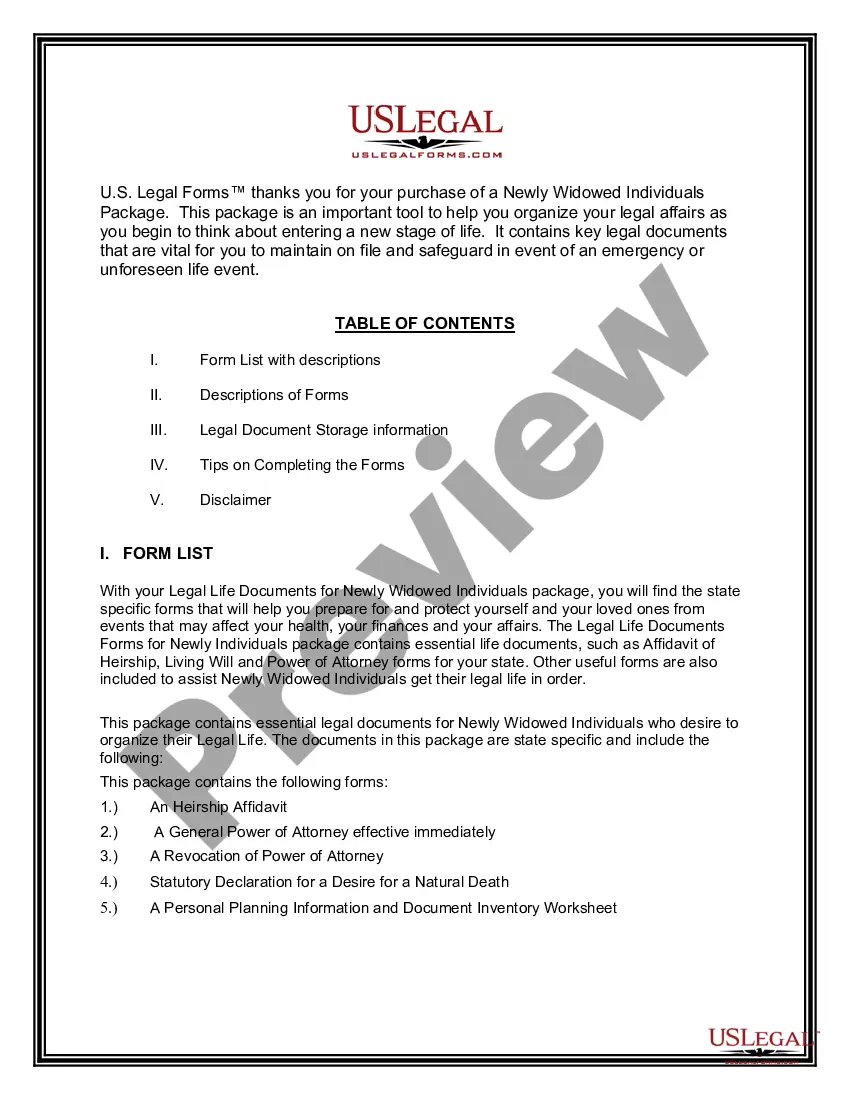
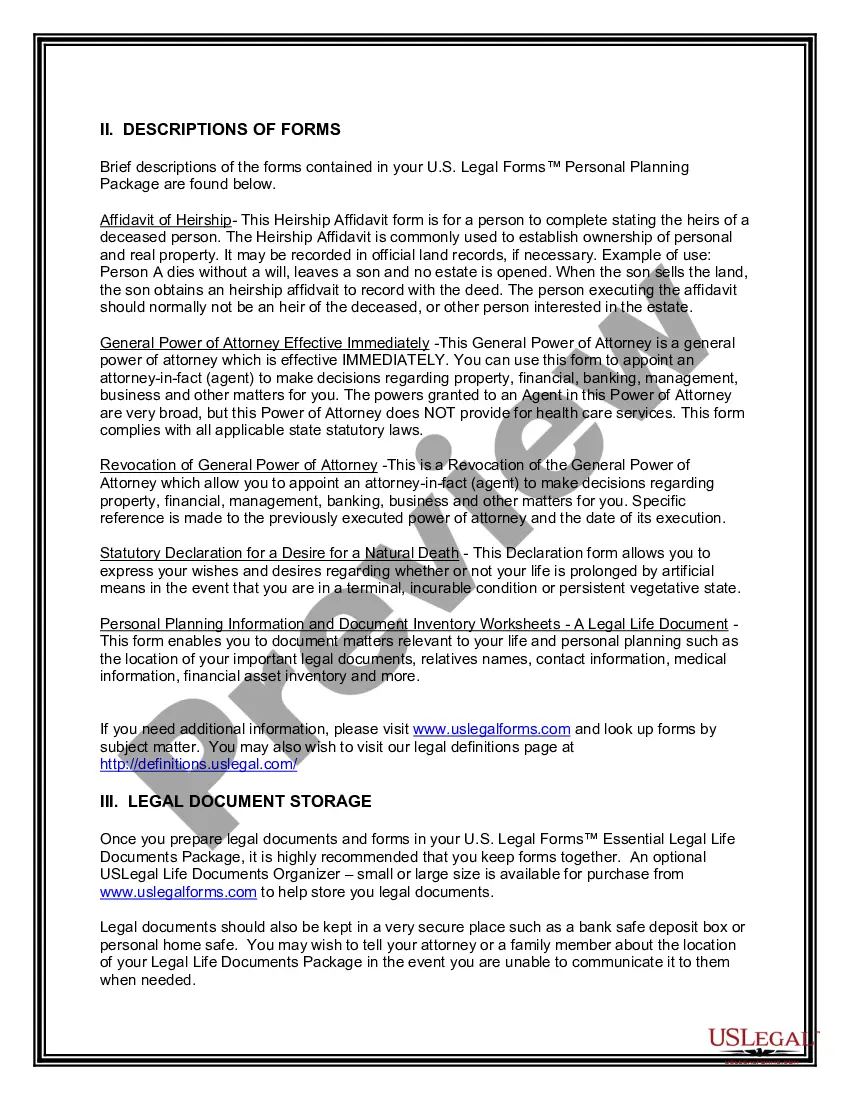
The North Carolina Newly Widowed Individuals Package contains essential legal documents tailored for individuals who have recently lost a spouse. This package is designed to help you organize your legal affairs with state-specific forms that facilitate essential decision-making during a difficult time. The included documents provide you with a solid foundation to manage your health, finances, and overall affairs in North Carolina.
What’s included in this form package
- Last Will and Testament
- Small Estate Affidavit For Collection Of Personal Property Of Decedent Intestate - Testate
- Statutory Short Form of General Power of Attorney
- Revocation of Statutory General Power of Attorney
- Statutory Living Will - Advance Directive for a Natural Death
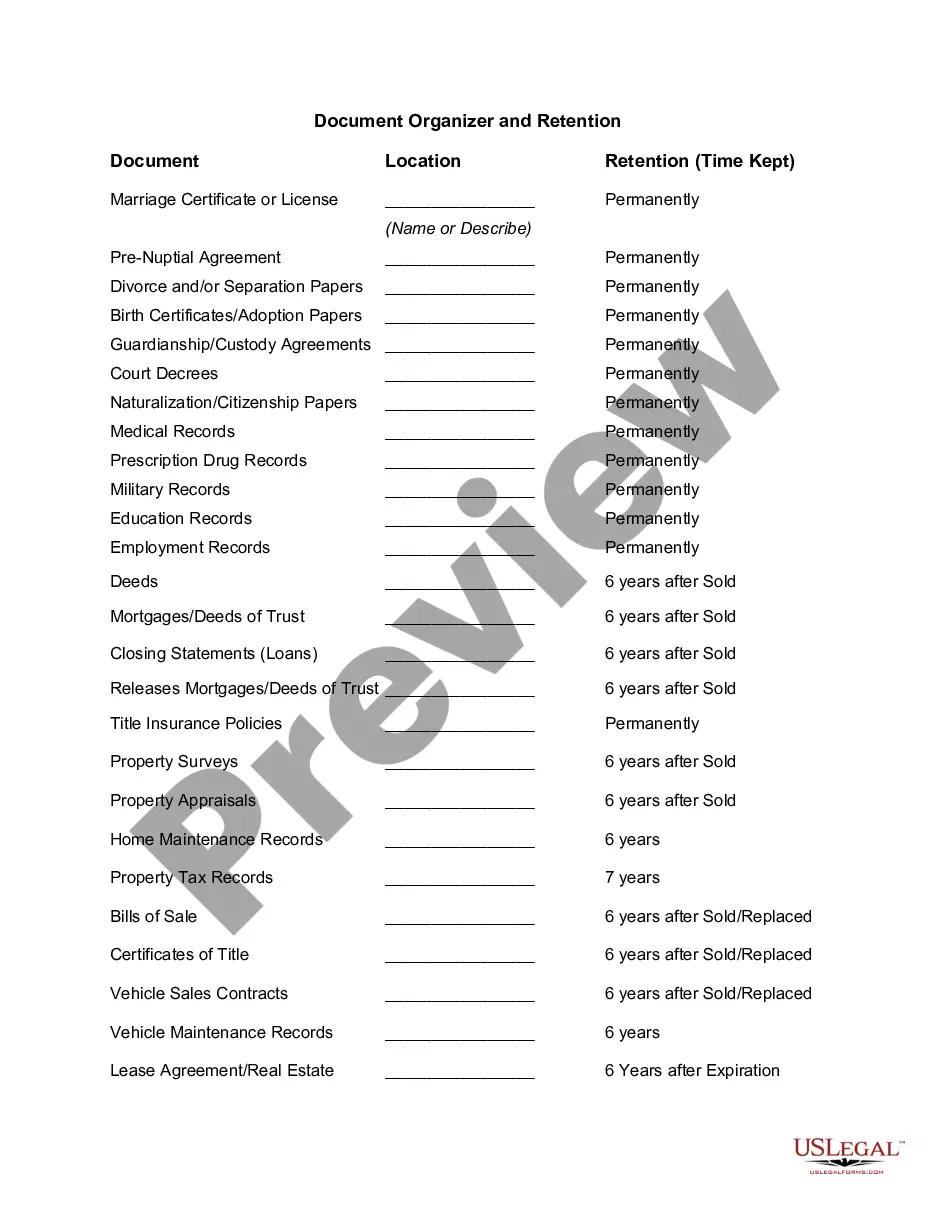
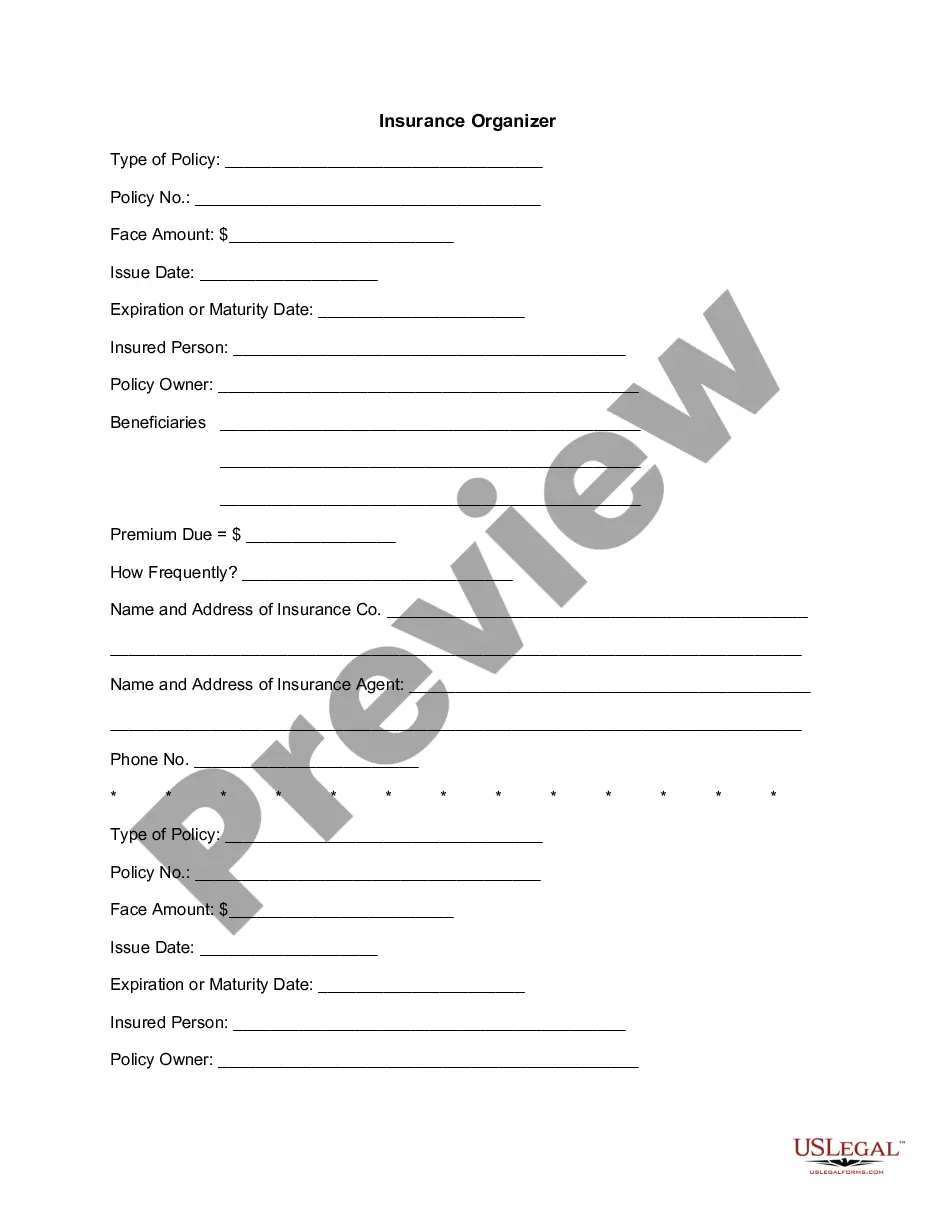
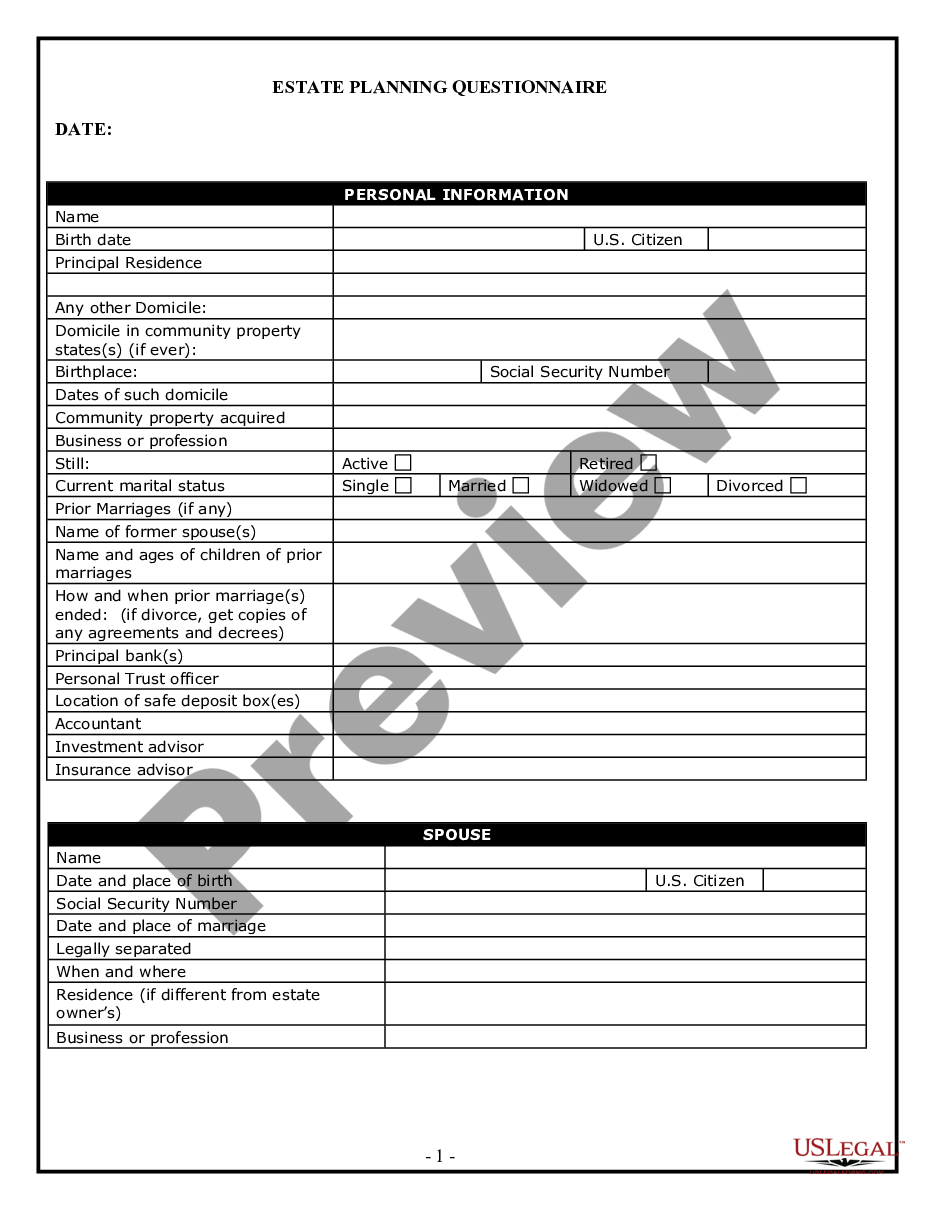
- Personal Planning Information and Document Inventory Worksheets - A Legal Life Document

When this form package is needed
This form package is particularly useful in the following scenarios:
- After the passing of a spouse, when legal decisions must be made regarding finances, property, and personal care.
- If you need to establish a power of attorney to manage financial or legal matters.
- When creating a living will to express your healthcare preferences if you become unable to communicate them.
- To manage and clarify the distribution of assets among heirs.
Who needs this form package
- Individuals who have recently lost their spouse and need to handle legal affairs.
- Anyone looking to establish a power of attorney and living will.
- Individuals wishing to ensure their wishes regarding healthcare and asset distribution are clearly documented.
- Those who want to organize their legal documents and information efficiently.
Completing these forms step by step
- Review the included documents to understand their purpose and requirements.
- Complete each form by entering the necessary information, such as names, dates, and signatures.
- Consult with an attorney if you have questions or need clarification on any of the forms.
- Store completed forms in a secure location, such as a safe deposit box or personal home safe.
- Share the location of your legal documents with a trusted family member or your attorney.
Do forms in this package need to be notarized?
Certain documents in this package must be notarized for legal effectiveness. Our online notarization service, powered by Notarize, lets you verify and sign documents remotely through an encrypted video session, available anytime.
Get your form ready online
Our built-in tools help you complete, sign, share, and store your documents in one place.
Make edits, fill in missing information, and update formatting in US Legal Forms—just like you would in MS Word.
Download a copy, print it, send it by email, or mail it via USPS—whatever works best for your next step.
Sign and collect signatures with our SignNow integration. Send to multiple recipients, set reminders, and more. Go Premium to unlock E-Sign.
If this form requires notarization, complete it online through a secure video call—no need to meet a notary in person or wait for an appointment.
We protect your documents and personal data by following strict security and privacy standards.

Make edits, fill in missing information, and update formatting in US Legal Forms—just like you would in MS Word.

Download a copy, print it, send it by email, or mail it via USPS—whatever works best for your next step.

Sign and collect signatures with our SignNow integration. Send to multiple recipients, set reminders, and more. Go Premium to unlock E-Sign.

If this form requires notarization, complete it online through a secure video call—no need to meet a notary in person or wait for an appointment.

We protect your documents and personal data by following strict security and privacy standards.
Common mistakes
- Failing to sign or date the forms, which may render them invalid.
- Not having a witness present when required for certain documents.
- Overlooking the need for notarization for specific forms.
- Inaccurate completion of forms, leading to legal complications.
Benefits of using this package online
- Convenience: Download and complete your legal documents from the comfort of home.
- Editability: Make changes easily without the hassle of starting over.
- Reliability: All forms are pre-drafted by licensed attorneys, ensuring their legality and compliance with North Carolina laws.
Quick recap
- The North Carolina Newly Widowed Individuals Package provides essential legal forms to help you navigate your responsibilities after losing a spouse.
- Completing these forms helps ensure your wishes are known and legally documented.
- Follow all instructions carefully to avoid common mistakes.
- Secure your legal documents in a safe location and inform someone you trust about their whereabouts.
Looking for another form?


Form popularity
FAQ
Spouses in North Carolina Inheritance Law Descendants include children, grandchildren, and great-grandchildren. If you have no living parents or descendants, your spouse will inherit all of your intestate property.
In North Carolina, you cannot disinherit your spouse.Even if your Will or your Trust specifically excludes your spouse, your spouse will still have the legal right to share in your estate under the law.
The surviving spouse has the right to Family Exempt Property.The surviving spouse has the right to receive Letters of Administration, which means that ahead of all other family members, he/she has the right to serve as the Administrator when someone dies intestate.
Many married couples own most of their assets jointly with the right of survivorship. When one spouse dies, the surviving spouse automatically receives complete ownership of the property. This distribution cannot be changed by Will.
Spousal benefits are based on a living spouse or ex-spouse's work history. Survivor benefits are based on a deceased spouse or ex-spouse's work history. The maximum spousal benefit is 50% of the worker's full retirement age (FRA) benefit.
You should expect it to take a minimum of six months to a year to settle an estate because of the legal notice requirements and time that creditors have to submit claims against the estate. Creditors have 90 days from the first publication date of the notice of probate.
North Carolina Intestate Succession Laws Under the North Carolina statutes, if you are survived by: 1. No spouse or children, with parent(s) living: Your entire estate will pass to and be divided equally among your parents. If only one parent is still living, then everything will pass to the living parent.
Determine Your State's Laws Regarding Inventory Forms. Review the Instructions Provided. Identify Real Property. Identify Personal Property. Identify Bank Accounts. Identify Retirement Accounts. Identify Non-Probate Assets. File the Form With the Court.
Your inventory should include the number of shares of each type of stock, the name of the corporation, and the name of the exchange on which the stock is traded. Meanwhile, you should note the total gross amount of a bond, the name of the entity that issued it, the interest rate on the bond, and its maturity date.