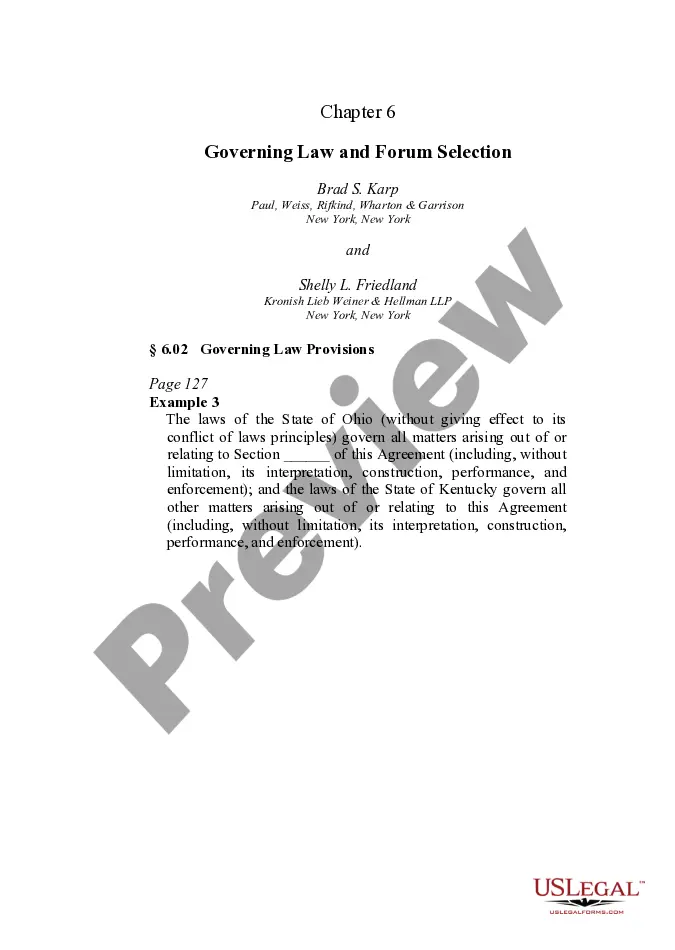
Governing Law Provisions
What is this form?
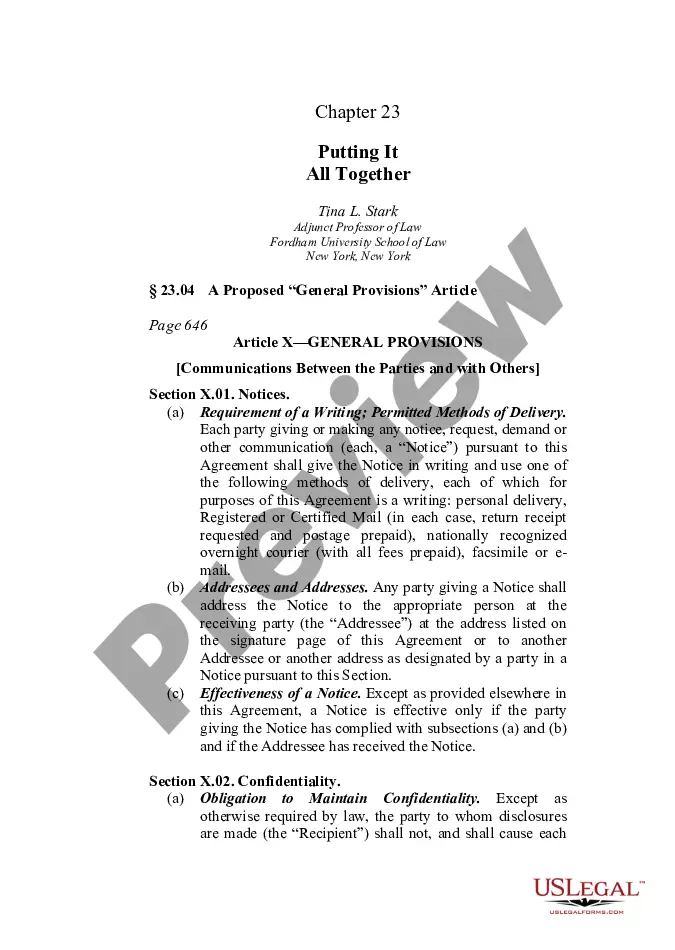
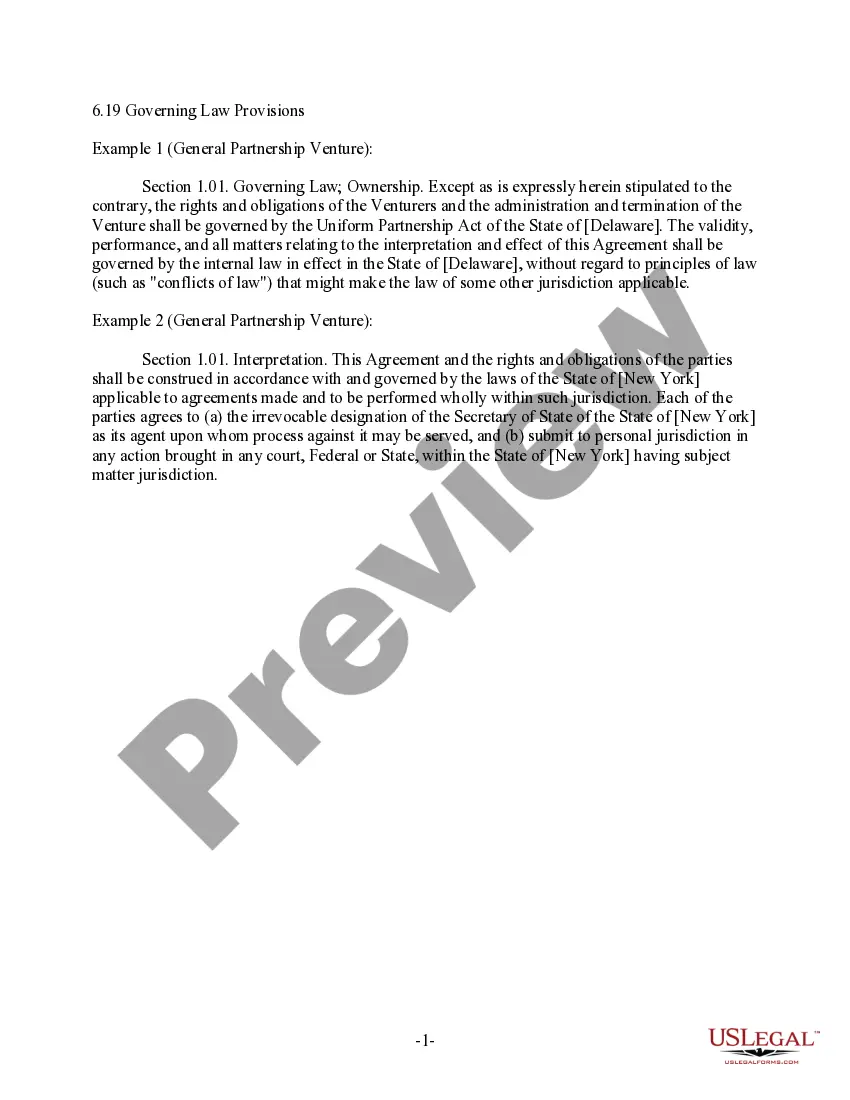
The Governing Law Provisions form provides essential clauses that specify which laws govern a contract and where legal disputes will be resolved. This form is crucial for ensuring clarity about legal jurisdiction, differentiating it from other contract forms that may not address these important aspects.
Key parts of this document
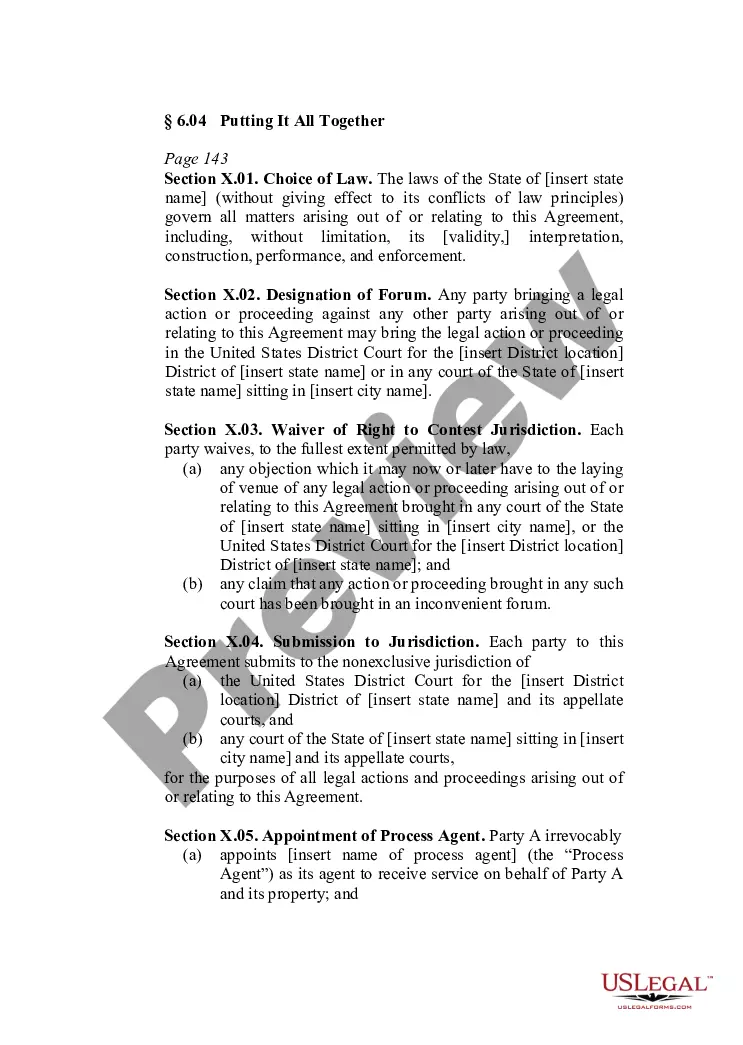
- Governing law clause: Defines which state's laws apply to the contract.
- Forum selection clause: Identifies the jurisdiction for resolving disputes.
- Conflict of laws provisions: Addresses potential conflicts between jurisdictions.
- Applicable law specification: Clarifies which specific laws are relevant for different sections of the contract.

When to use this document
This form should be used when drafting contracts to ensure both parties clearly understand the legal framework governing their agreement. It's particularly important in scenarios involving interstate agreements or cross-jurisdictional dealings where the selection of governing law can impact legal interpretation and enforcement.
Who this form is for
This form is suitable for:
- Businesses entering into contracts with partners or clients from different states.
- Individuals drafting legal agreements that require clear jurisdictional guidelines.
- Attorneys helping clients to specify governing law in contracts.
Instructions for completing this form
- Identify the parties involved in the contract.
- Specify the governing law for the agreement, including any relevant provisions.
- Select the jurisdiction for resolving disputes, clearly stating the forum.
- Include any conflict of law provisions as necessary.
- Review the entire document to ensure all sections are completed accurately.
Does this document require notarization?
Notarization is not commonly needed for this form. However, certain documents or local rules may make it necessary. Our notarization service, powered by Notarize, allows you to finalize it securely online anytime, day or night.
Get your form ready online
Our built-in tools help you complete, sign, share, and store your documents in one place.
Make edits, fill in missing information, and update formatting in US Legal Forms—just like you would in MS Word.
Download a copy, print it, send it by email, or mail it via USPS—whatever works best for your next step.
Sign and collect signatures with our SignNow integration. Send to multiple recipients, set reminders, and more. Go Premium to unlock E-Sign.
If this form requires notarization, complete it online through a secure video call—no need to meet a notary in person or wait for an appointment.
We protect your documents and personal data by following strict security and privacy standards.

Make edits, fill in missing information, and update formatting in US Legal Forms—just like you would in MS Word.

Download a copy, print it, send it by email, or mail it via USPS—whatever works best for your next step.

Sign and collect signatures with our SignNow integration. Send to multiple recipients, set reminders, and more. Go Premium to unlock E-Sign.

If this form requires notarization, complete it online through a secure video call—no need to meet a notary in person or wait for an appointment.

We protect your documents and personal data by following strict security and privacy standards.
Common mistakes to avoid
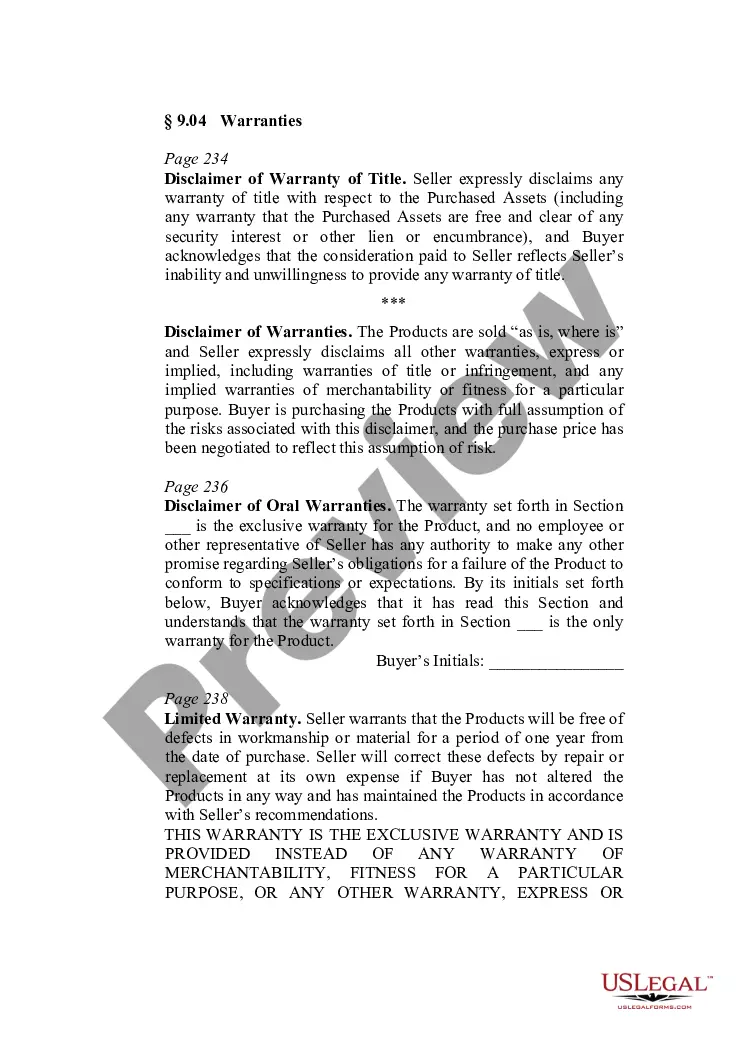
- Failing to specify both governing law and forum selection clauses.
- Using vague language that can lead to ambiguity in enforcement.
- Not considering the implications of conflict of laws when choosing applicable laws.
Why complete this form online
- Convenient access to legal templates at any time.
- Editable digital format allows easy customization for specific needs.
- Drafted by licensed attorneys, ensuring legal validity and reliability.
Legal use & context
- Governing law provisions outline the legal framework essential for contract enforcement.
- They help avert jurisdictional disputes by clearly stating applicable laws.
- Incorporating these clauses is critical for international or interstate contracts to avoid complications.
Looking for another form?



Form popularity
FAQ
A "choice of law" or "governing law" provision in a contract allows the parties to agree that a particular state's laws will be used to interpret the agreement, even if they live in (or the agreement is signed in) a different state.
Provision noun (LAW) a statement within an agreement or a law that a particular thing must happen or be done, especially before another can happen or be done: We have inserted certain provisions into the treaty to safeguard foreign workers.
(a) A contract shall be governed by the law chosen by the parties. The choice shall be made expressly or clearly demonstrated by the terms of the contract or the circumstances of the case. By their choice the parties can select the law applicable to the whole or to only part of the contract.
New California Law Prohibits Choice of Law and Venue in Employment Contracts.
Provision is defined as a supply of something or to the act of providing a supply of something. An example of provision is food you take with you on a hike. An example of provision is when legal aid provides legal advice.A bank must provision against losses from bad loans.
What happens if there is no governing law clause or jurisdiction clause? Before the parties even get to resolve their dispute on the merits, much time and money will be lost not only to find the appropriate court, but also to have a judge decide the applicable law based on the parties and the facts in dispute.
(a) A contract shall be governed by the law chosen by the parties. The choice shall be made expressly or clearly demonstrated by the terms of the contract or the circumstances of the case. By their choice the parties can select the law applicable to the whole or to only part of the contract.