Mississippi Affidavit regarding Creditor Search
About this form
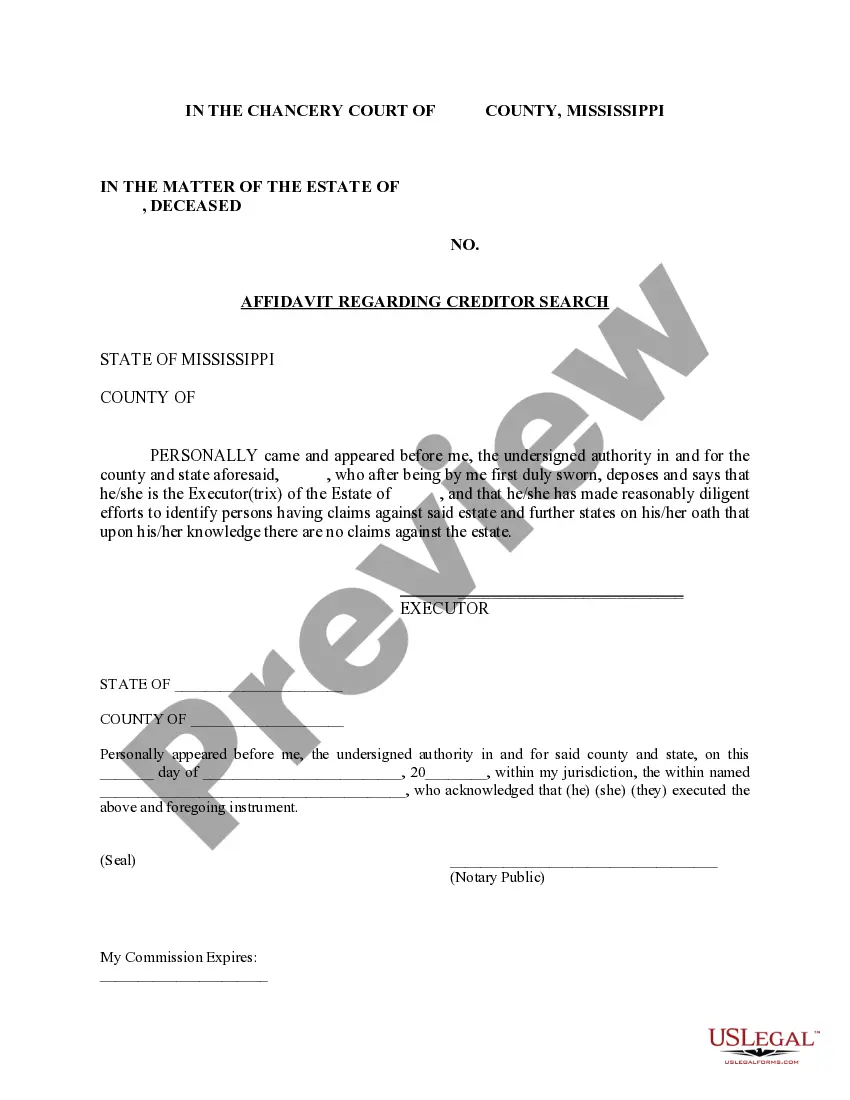
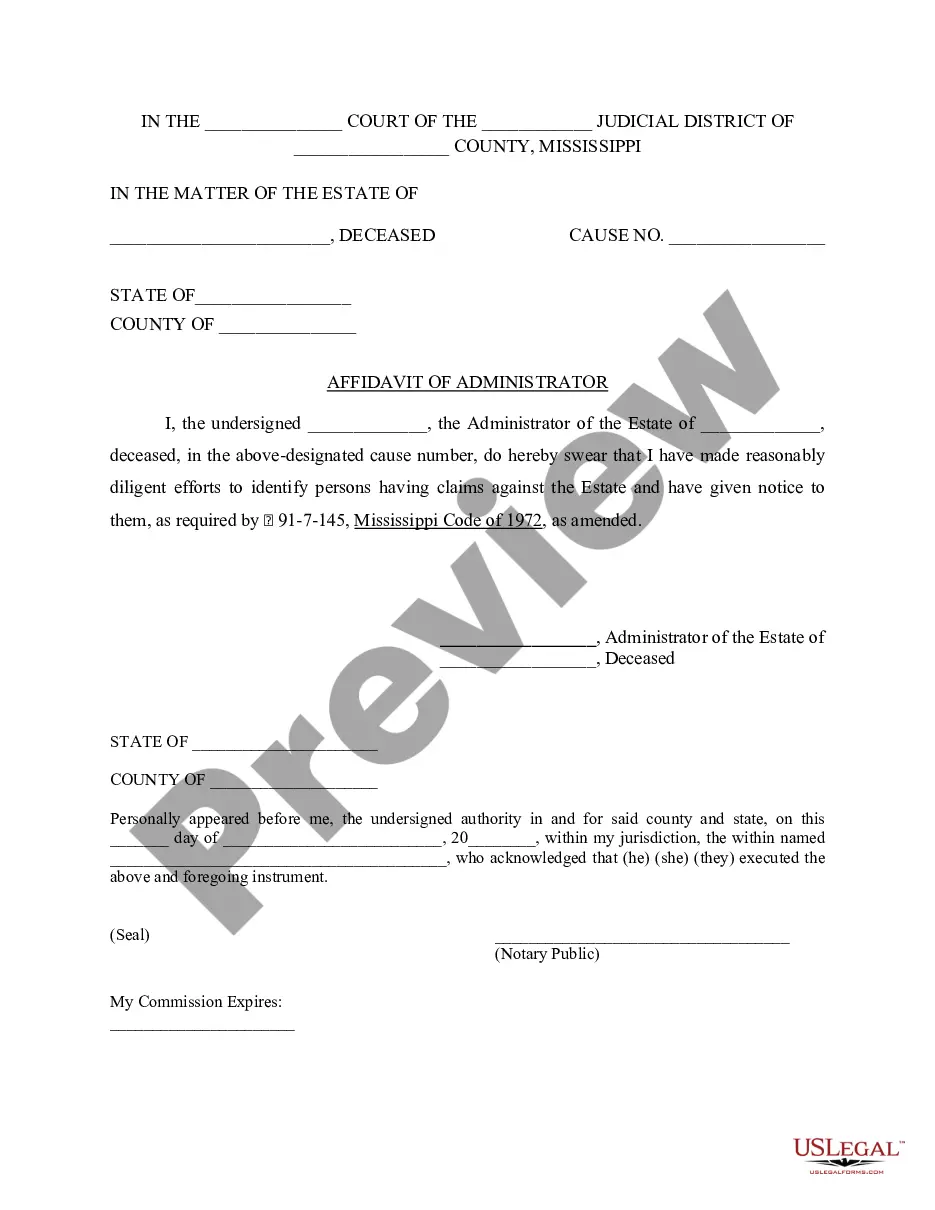
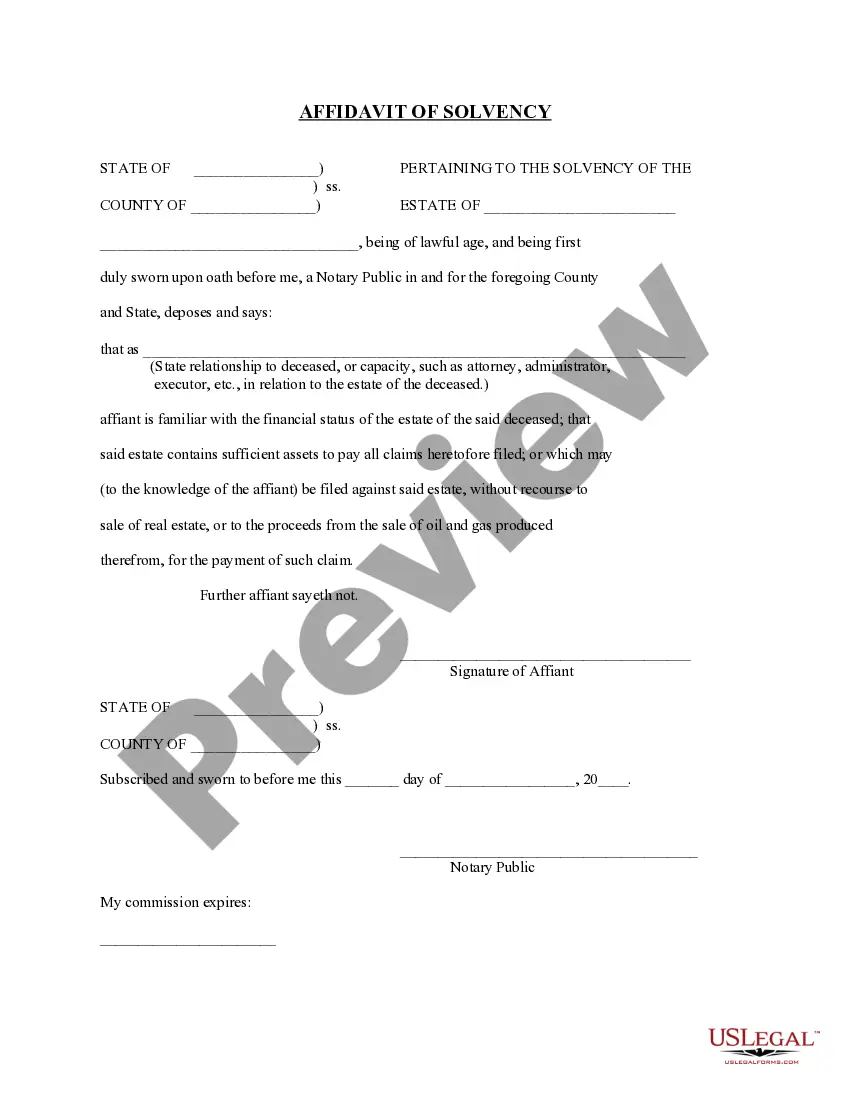
The Affidavit regarding Creditor Search is a sworn statement used to verify the search conducted for creditors in a legal matter. It serves as proof that the affiant has performed due diligence in identifying any potential creditors. This form is distinct from other affidavits as it specifically focuses on the results of a creditor search, making it essential for legal proceedings involving debts or financial obligations.
What’s included in this form
- Affiant's full name and contact information
- Details of the creditor search conducted
- Affiant's sworn statement regarding the accuracy of the search
- Notary public's acknowledgment section
- Date of the affidavit's completion
When this form is needed
This affidavit is typically needed during bankruptcy proceedings, loan applications, or any situation where proving that a thorough creditor search has been conducted is necessary. It ensures transparency and compliance with legal requirements to validate financial matters.
Who can use this document
- Individuals filing for bankruptcy
- Debtors seeking loans that require proof of creditor searches
- Attorneys assisting clients with financial legal matters
- Business owners confirming financial liabilities before transactions
How to complete this form
- Begin by entering the full name and contact information of the affiant.
- Provide a clear description of the creditor search conducted.
- Affirm the accuracy of the information by completing the sworn statement section.
- Have the affidavit signed in front of a notary public.
- Ensure the notary completes their acknowledgment by signing and stamping the document.
Is notarization required?
Notarization is required for this form to take effect. Our online notarization service, powered by Notarize, lets you verify and sign documents remotely through an encrypted video session, available 24/7.
Get your form ready online
Our built-in tools help you complete, sign, share, and store your documents in one place.
Make edits, fill in missing information, and update formatting in US Legal Forms—just like you would in MS Word.
Download a copy, print it, send it by email, or mail it via USPS—whatever works best for your next step.
Sign and collect signatures with our SignNow integration. Send to multiple recipients, set reminders, and more. Go Premium to unlock E-Sign.
If this form requires notarization, complete it online through a secure video call—no need to meet a notary in person or wait for an appointment.
We protect your documents and personal data by following strict security and privacy standards.

Make edits, fill in missing information, and update formatting in US Legal Forms—just like you would in MS Word.

Download a copy, print it, send it by email, or mail it via USPS—whatever works best for your next step.

Sign and collect signatures with our SignNow integration. Send to multiple recipients, set reminders, and more. Go Premium to unlock E-Sign.

If this form requires notarization, complete it online through a secure video call—no need to meet a notary in person or wait for an appointment.

We protect your documents and personal data by following strict security and privacy standards.
Mistakes to watch out for
- Failing to include complete contact information for the affiant.
- Not providing sufficient details about the creditor search.
- Neglecting to have the affidavit signed before a notary public.
- Forgetting to include the date of completion.
Why complete this form online
- Convenient access to legal forms anytime, anywhere.
- Editable templates to easily tailor the document to your specific needs.
- Instant download allows for immediate use.
- Products drafted by licensed attorneys ensure legal accuracy.
Summary of main points
- The Affidavit regarding Creditor Search is essential for verifying creditor searches in legal situations.
- Ensure to complete and notarize the affidavit for legal validity.
- This form can help individuals and businesses confirm their financial standing.
Looking for another form?


Form popularity
FAQ
You can typically find your collector's information on your credit reports from the three major consumer credit bureaus. Since your debt may have been bought and sold by multiple collectors, be sure to look at your most-current credit reports to determine which company to contact.
The quickest way to get your free annual report is to order online at www.annualcreditreport.com. You can also get your free Experian credit report at any time with no credit card required. Your credit report will list detailed information about each account that is reported to Experian.
To find out what you have in collections, you will need to check your latest credit reports from each of the 3 credit bureaus. Collection agencies are not required to report their account information to all three of the national credit reporting agencies.
Typically, the only way to remove a collection account from your credit reports is by disputing it. But if the collection is legitimate, even if it's paid, it'll likely only be removed once the credit bureaus are required to do so by law. There are 3 collection accounts on my credit reports.
Obtain a free copy of your credit report at AnnualCreditReport.com. Make a list of all of the active accounts on your credit report. Call the creditors or sign into your online accounts to find out your current balance.
Check your credit file. The easiest way to find out what you owe is to check your credit file online. Check emails and letters from creditors. Contact your creditors. Check your bank account statements. Find CCJs and court records online.
To find out what you have in collections, you will need to check your latest credit reports from each of the 3 credit bureaus. Collection agencies are not required to report their account information to all three of the national credit reporting agencies.
You can only find your full account number on the paperwork associated with the account, or you can contact the individual creditor that provides that information. Contact information is available on your credit report, under Accounts.