Mississippi Affidavit of Administrator regarding Attempts to Find Creditors
Understanding this form
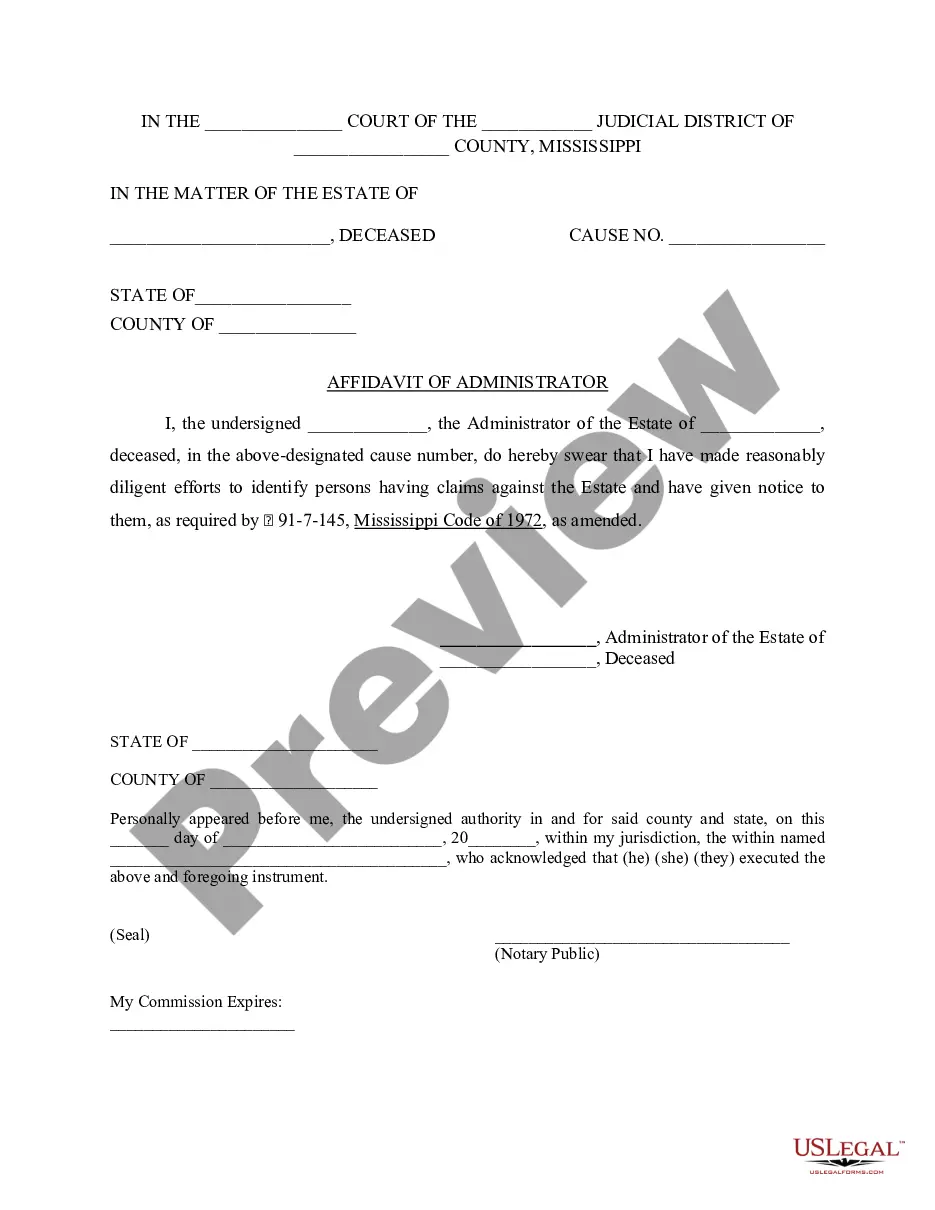
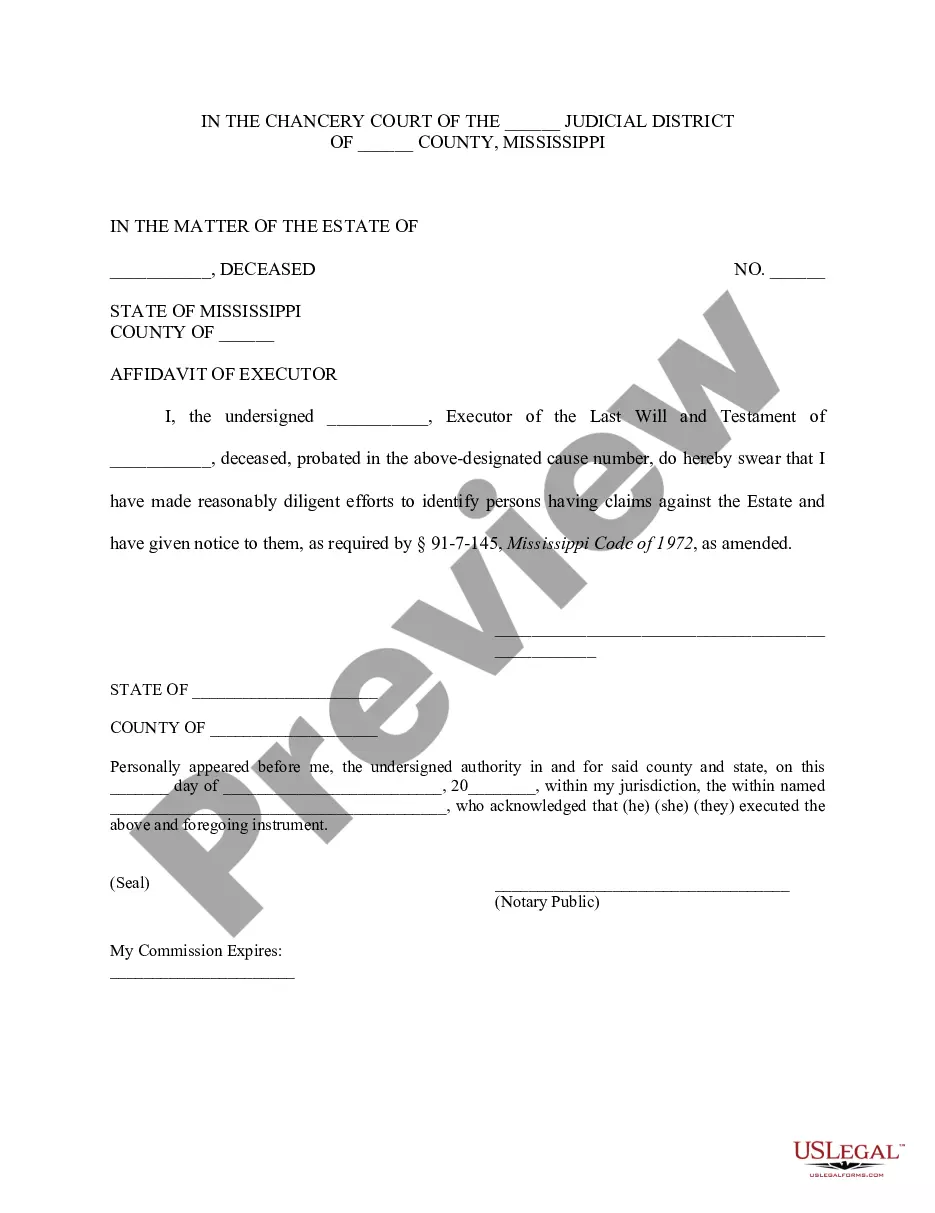
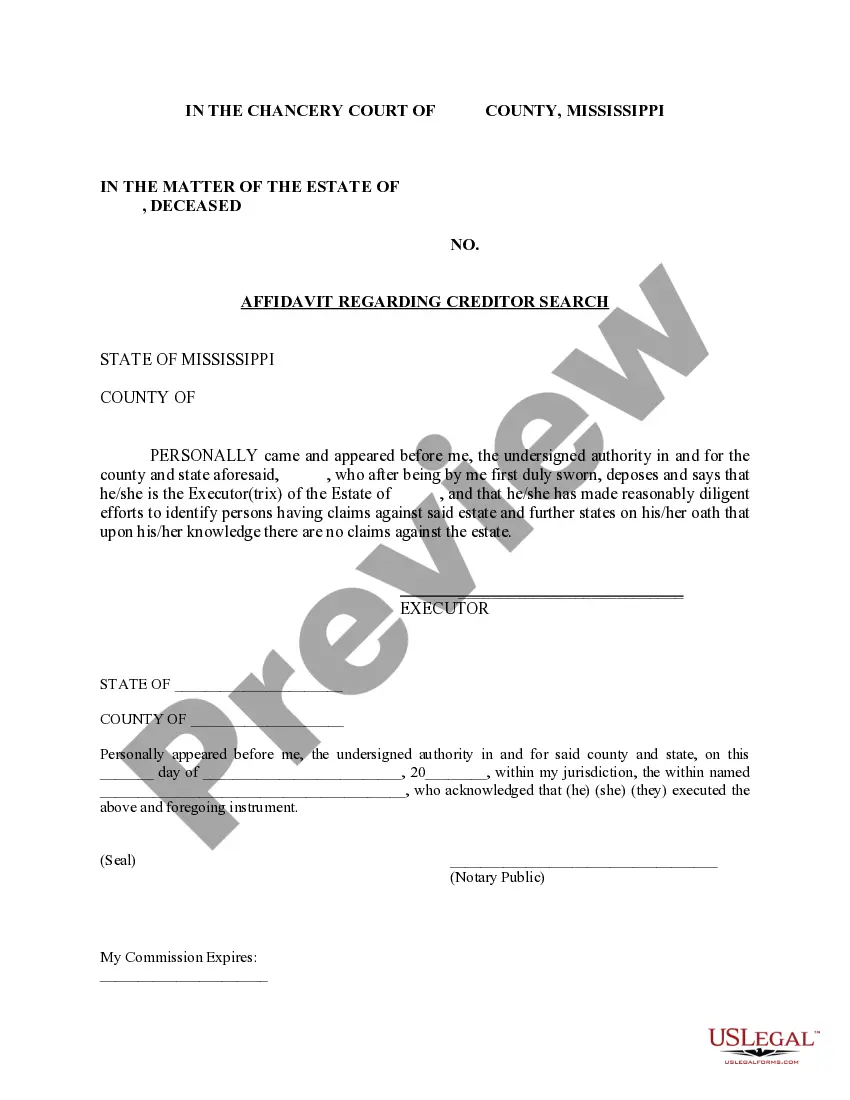
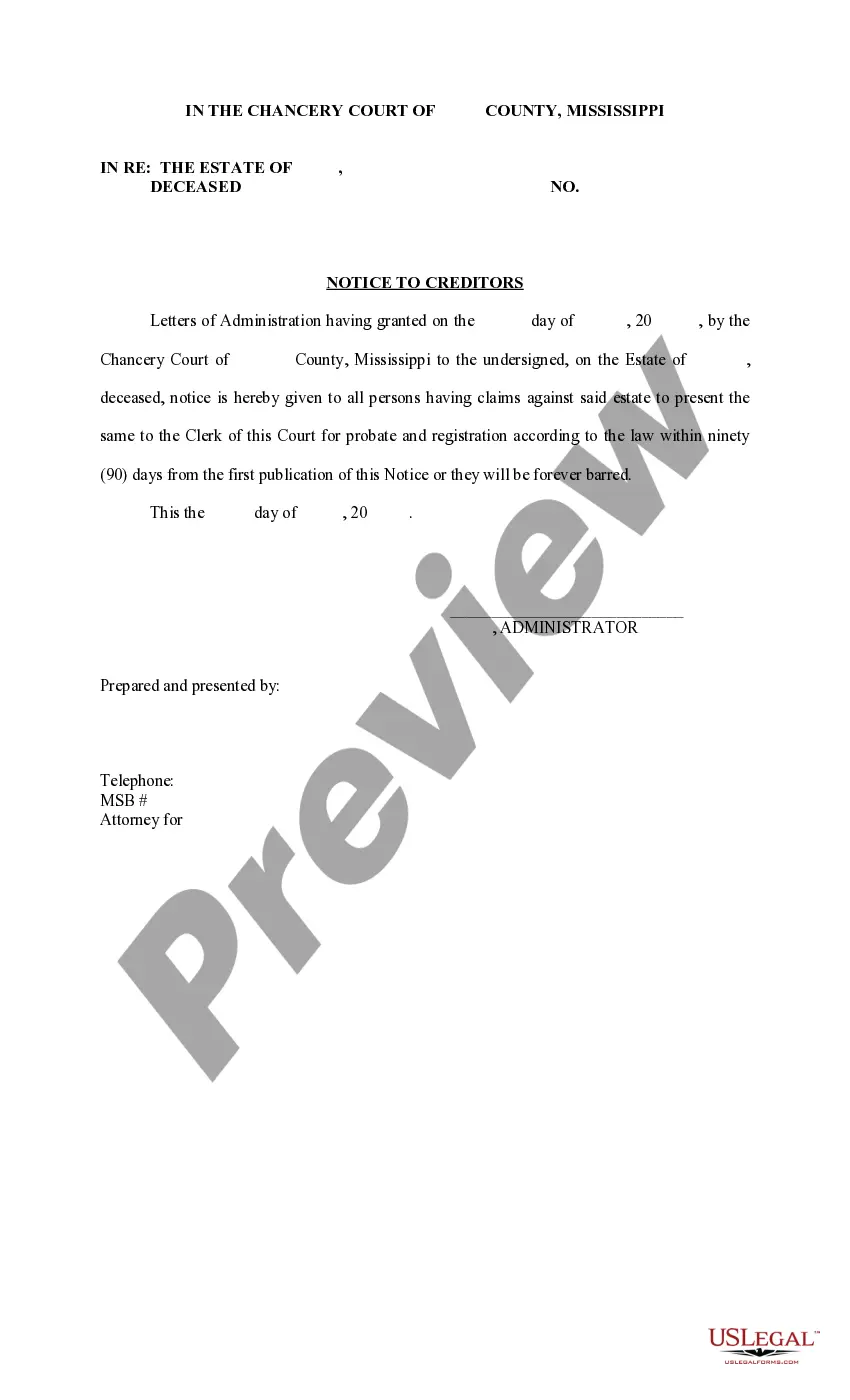
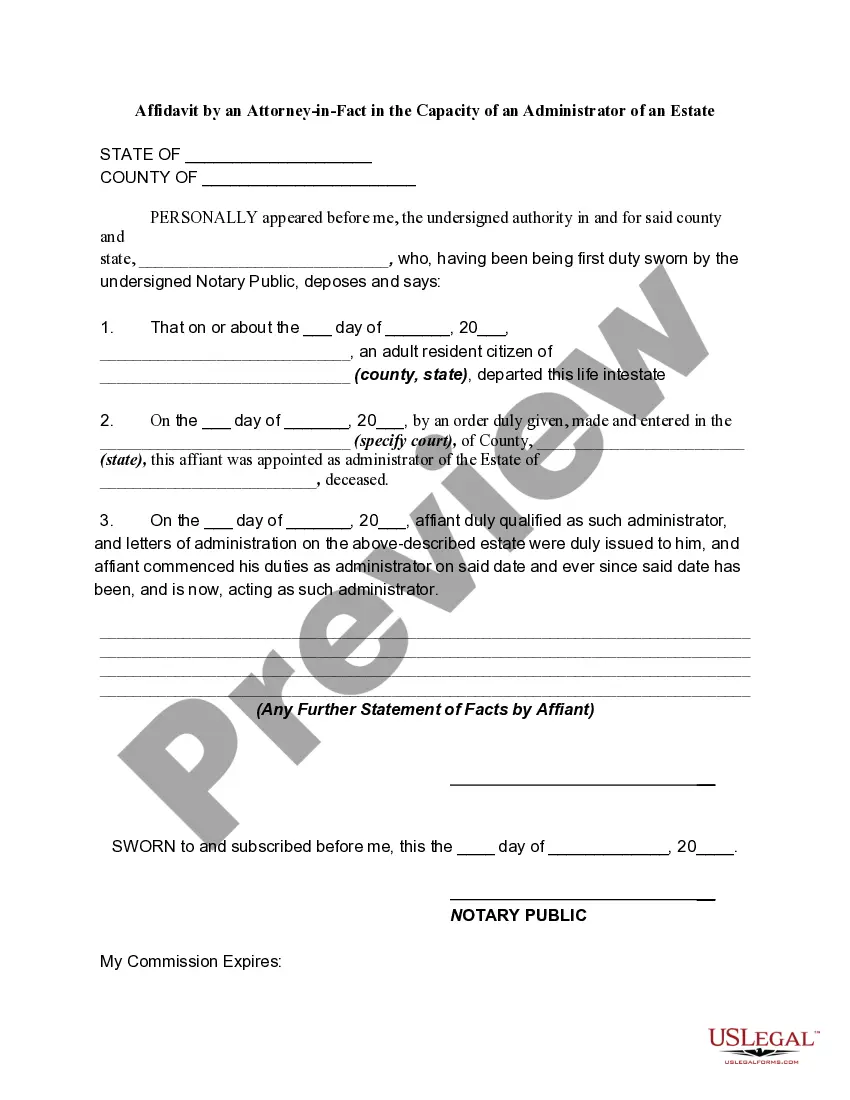
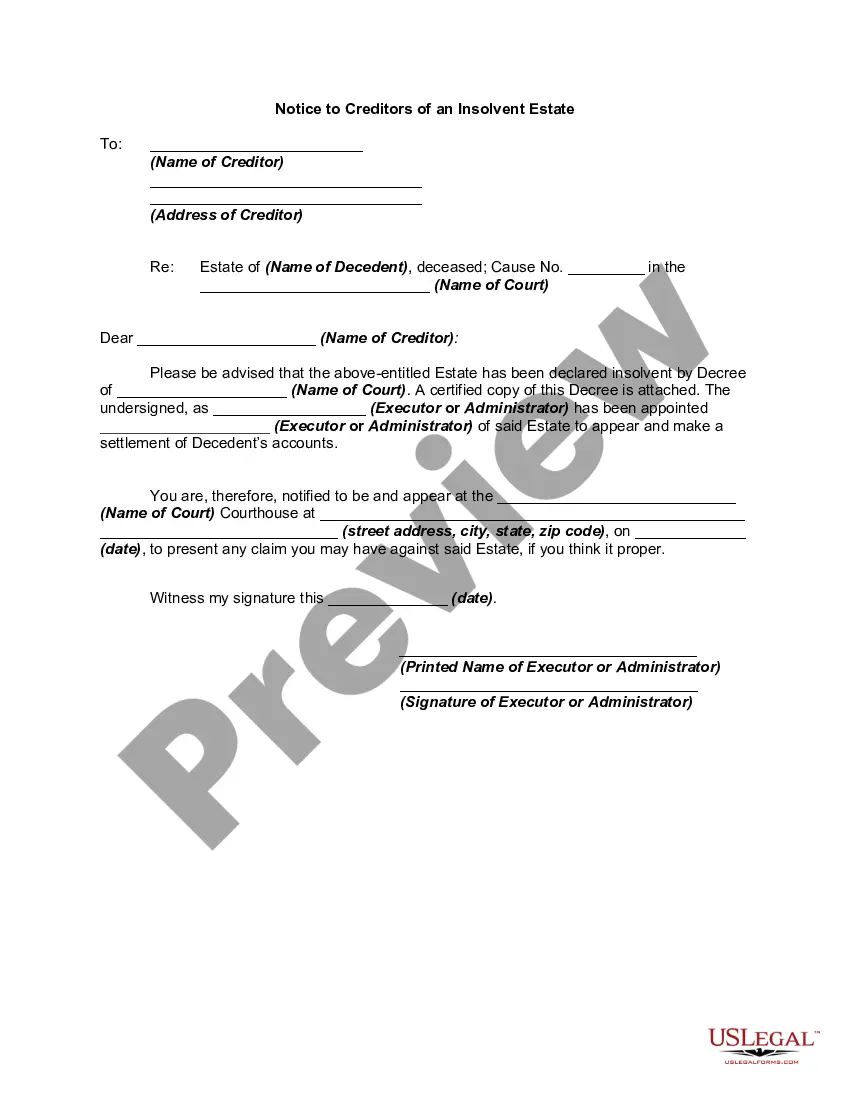
The Affidavit of Administrator regarding Attempts to Find Creditors is a legal document used by an estate administrator. This form verifies and itemizes the efforts made to locate any creditors of the deceased estate, ensuring compliance with Mississippi law.
Key components of this form
- Identification of the estate and the administrator
- Declaration of diligent efforts made to locate creditors
- Compliance statement referencing Mississippi Code
- Signature and notarization section

Situations where this form applies
This form should be used during the probate process when the estate administrator has made efforts to identify and notify creditors of the deceased. It is essential when handling the settlement of debts to prevent any future claims against the estate.
Intended users of this form
This form is intended for:
- Estate administrators managing the probate process
- Personal representatives tasked with settling an estate
- Legal counsel assisting clients in estate matters
Steps to complete this form
- Identify the county and state where the estate is being probated.
- Fill in the name of the deceased and the related cause number.
- Write your name as the Administrator of the Estate.
- Detail the efforts made to locate creditors, including dates and methods used.
- Sign the affidavit in the presence of a notary public.
- Ensure that the notary fills in their information regarding commission expiration and MSB number.
Does this document require notarization?
Notarization is required for this form to take effect. Our online notarization service, powered by Notarize, lets you verify and sign documents remotely through an encrypted video session, available 24/7.
Get your form ready online
Our built-in tools help you complete, sign, share, and store your documents in one place.
Make edits, fill in missing information, and update formatting in US Legal Forms—just like you would in MS Word.
Download a copy, print it, send it by email, or mail it via USPS—whatever works best for your next step.
Sign and collect signatures with our SignNow integration. Send to multiple recipients, set reminders, and more. Go Premium to unlock E-Sign.
If this form requires notarization, complete it online through a secure video call—no need to meet a notary in person or wait for an appointment.
We protect your documents and personal data by following strict security and privacy standards.

Make edits, fill in missing information, and update formatting in US Legal Forms—just like you would in MS Word.

Download a copy, print it, send it by email, or mail it via USPS—whatever works best for your next step.

Sign and collect signatures with our SignNow integration. Send to multiple recipients, set reminders, and more. Go Premium to unlock E-Sign.

If this form requires notarization, complete it online through a secure video call—no need to meet a notary in person or wait for an appointment.

We protect your documents and personal data by following strict security and privacy standards.
Mistakes to watch out for
- Failing to document all efforts made to contact creditors.
- Not signing the affidavit in front of a notary public.
- Leaving blank sections or failing to fill in required dates.
- Using incorrect or outdated legal terminology.
Benefits of using this form online
- Convenience of downloading and printing from home.
- Editable fields for specific case details.
- Access to professionally drafted templates ensuring legal compliance.
Key takeaways
- The affidavit is crucial for estate administration and creditor notification.
- It requires careful completion to avoid legal issues.
- Notarization is necessary for validity in Mississippi.
Looking for another form?

Form popularity
FAQ
You can put your company or limited liability partnership ( LLP ) into administration if it's in debt and can't pay the money it owes. You'll be protected from legal action by people or organisations who are owed money ('creditors') and nobody can apply to wind up your company during administration.
An Administrator provides office support to either an individual or team and is vital for the smooth-running of a business. Their duties may include fielding telephone calls, receiving and directing visitors, word processing, creating spreadsheets and presentations, and filing.
The position requires the processing of reconciliations against supplier's statements, capturing invoices onto pastel evolution, dealing with queries, ensure compliance with Sonke's financial policies and procedures, assist with audits and financial reports.
An administrator can be appointed by: the board of directors of a company taking a majority decision. the shareholders of a company at a general meeting. a qualifying floating charge holder meaning a debenture holder, usually a bank.
Some secured creditors, for example a bank or qualified floating charge holder, can also appoint an administrator.This is usually the last resort to retrieve debt. Statutory demands and county court judgements are often the first port of call.
The primary difference between the two procedures is that company administration aims to help the company repay debts in order to escape insolvency (if possible), whereas liquidation is the process of selling all assets before dissolving the company completely.
Your administrator will try to stop your company being wound up ('liquidated'). If they can't, they will try to pay as much of your company's debts as possible from the company's assets. Your administrator has 8 weeks to write a statement explaining what they plan to do.
When a company enters administration the control of the company is passed to the appointed administrator (who must be a licensed insolvency practitioner). The administrator's primary goal is to leverage the company's assets to repay creditors as quickly and as fully as possible without preference.
Communicates with relevant agencies to produce travel itineraries for business directors and employee events. Arranges meetings by scheduling appropriate meeting times, booking rooms, and planning refreshments. Manages correspondence by answering emails and sorting mail.