Surface Use Agreement (Where Lands are Currently in Use)
What is this form?
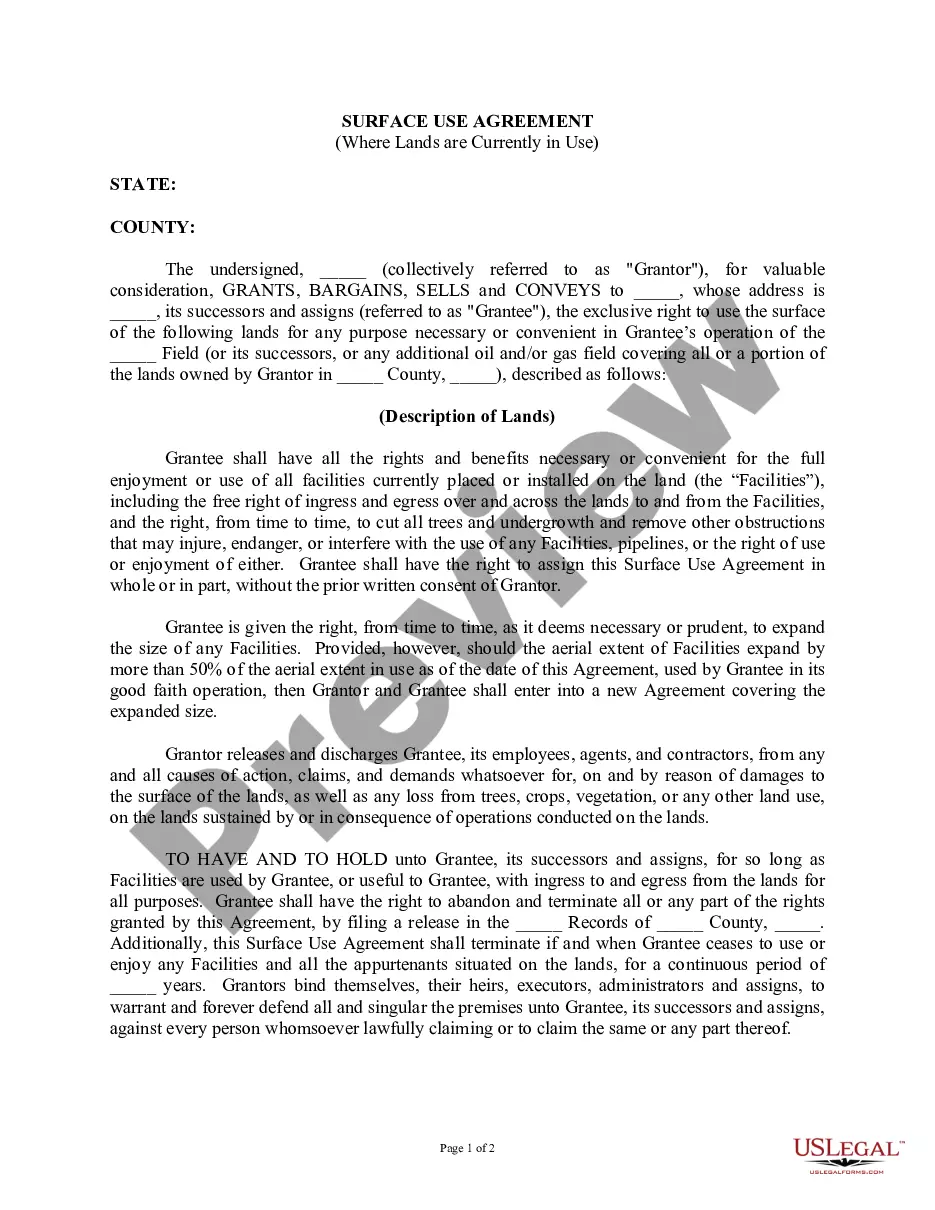
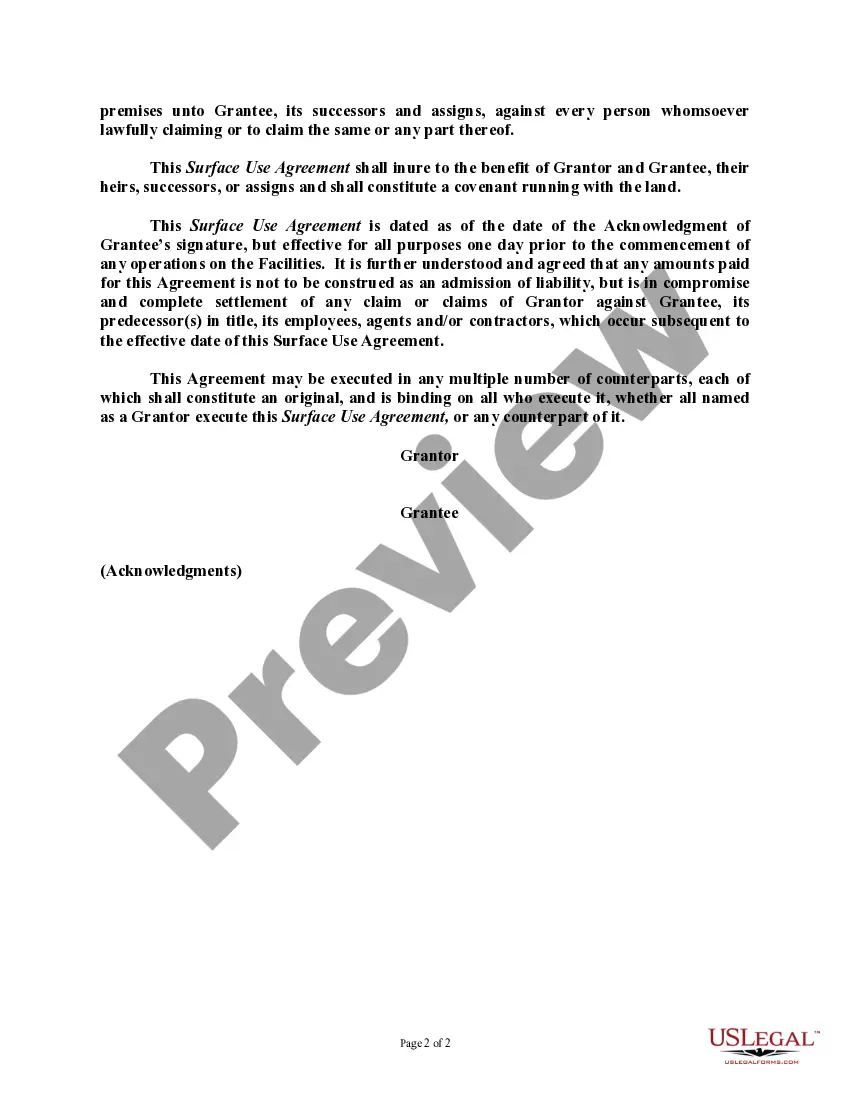
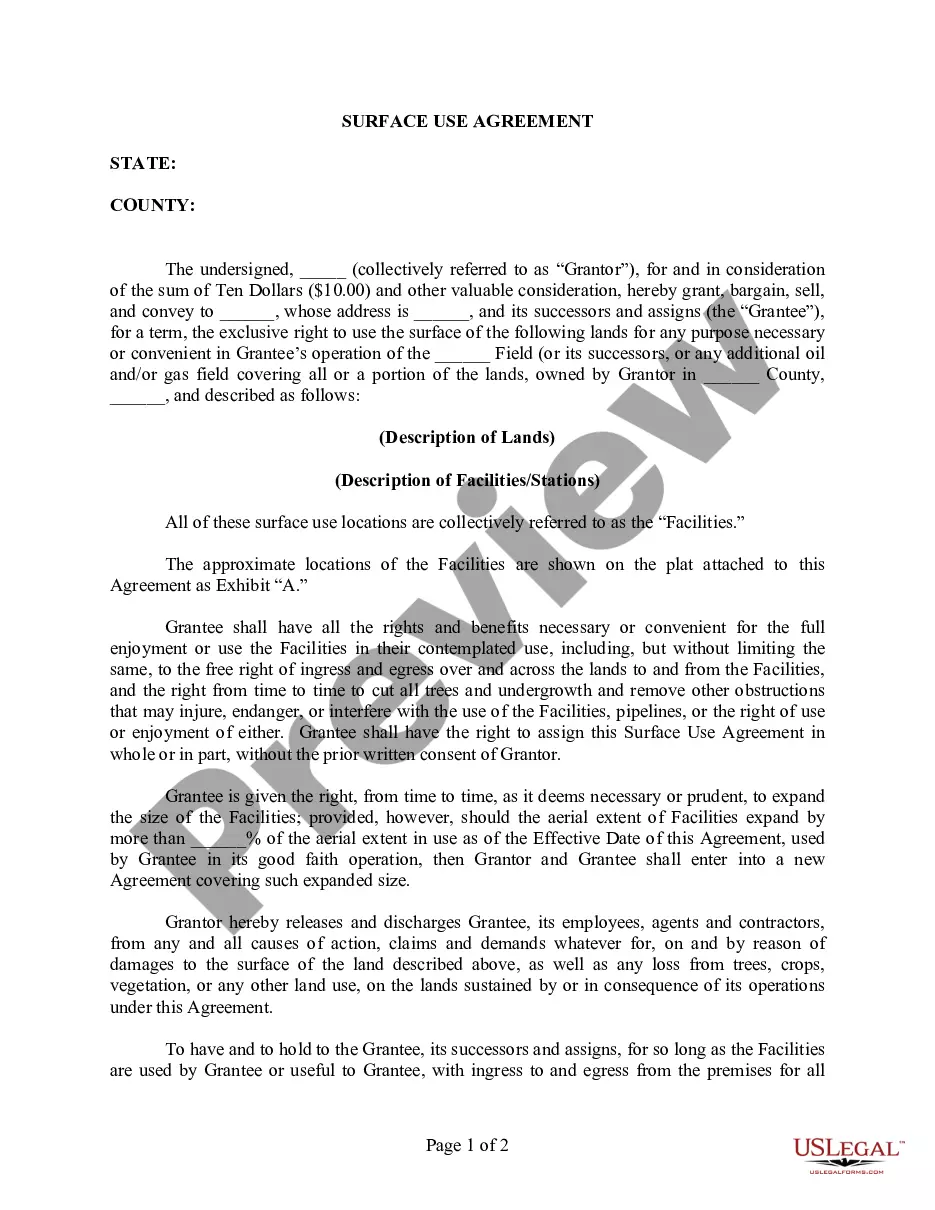
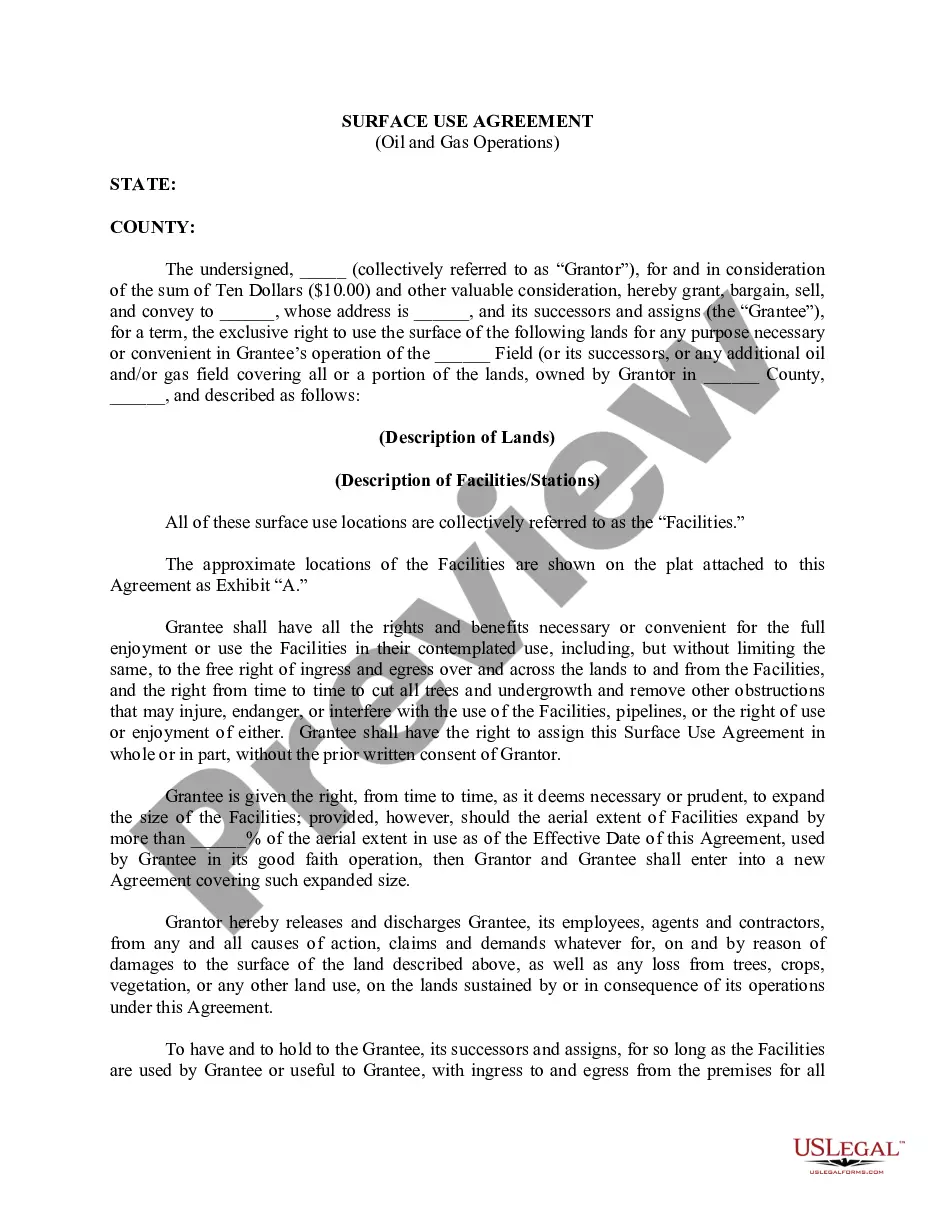
The Surface Use Agreement (where lands are currently in use) is a legal document granting a party the exclusive right to use the surface of specified lands for operational purposes, particularly in relation to oil and gas fields. This agreement ensures that the grantee can conduct necessary activities on the land while protecting both parties' interests, differing from other land use agreements by focusing specifically on surface rights and existing operational facilities.
Key components of this form
- Identification of the Grantor and Grantee parties involved in the agreement.
- Description of the specific lands covered by the agreement.
- Grant of exclusive surface use rights to the Grantee for operations.
- Rights for Grantee to enter, exit, and modify facilities as needed.
- Release of liability for damages to the land caused by Grantee's operations.
- Termination conditions and the process for abandoning the agreement.
When to use this form
This form should be used when a landowner (Grantor) wishes to allow another party (Grantee) to use the surface of their property for specific purposes, such as operating oil and gas facilities. It is particularly relevant in scenarios where the land is already in use, ensuring that the Grantee has clear rights and obligations, while also addressing any liabilities associated with land use.
Intended users of this form
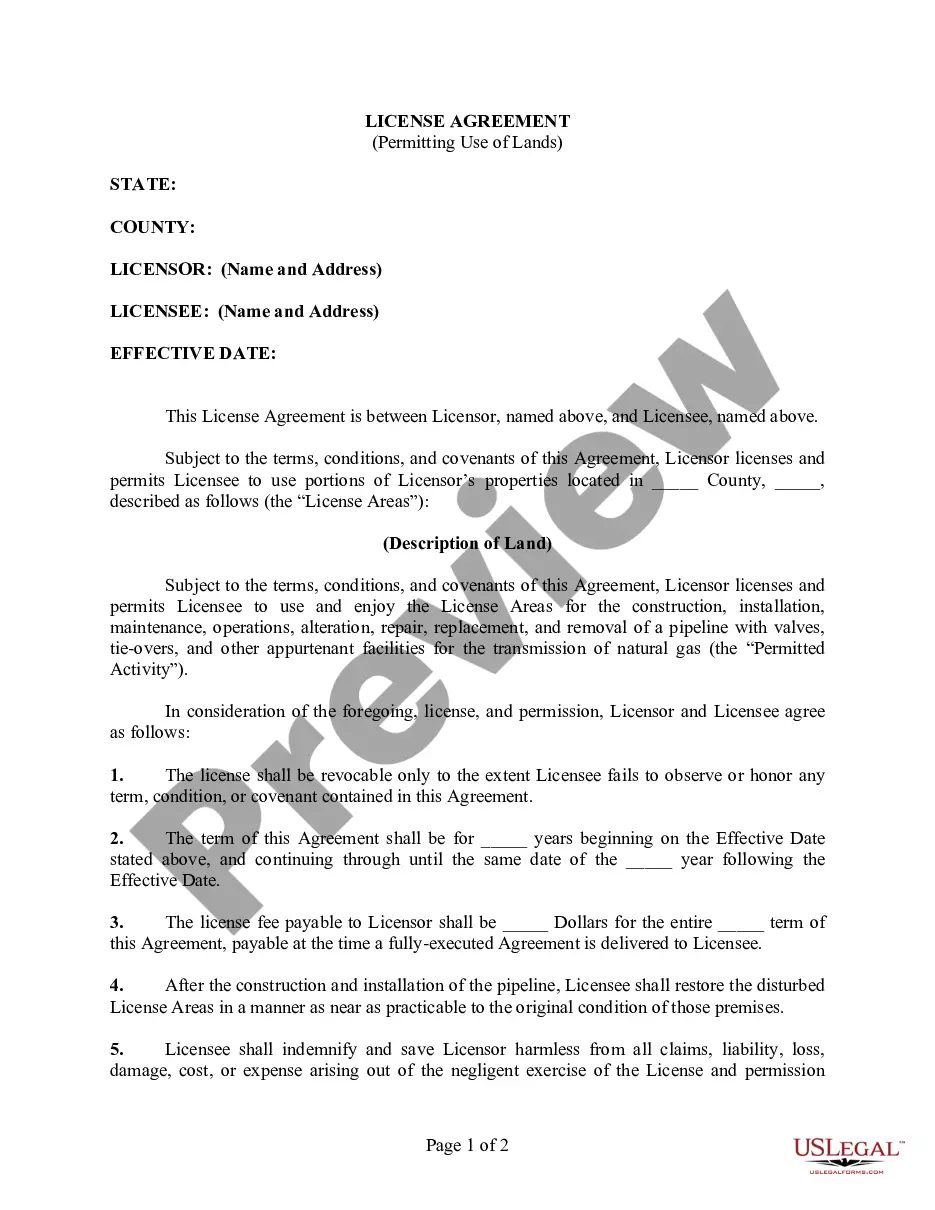
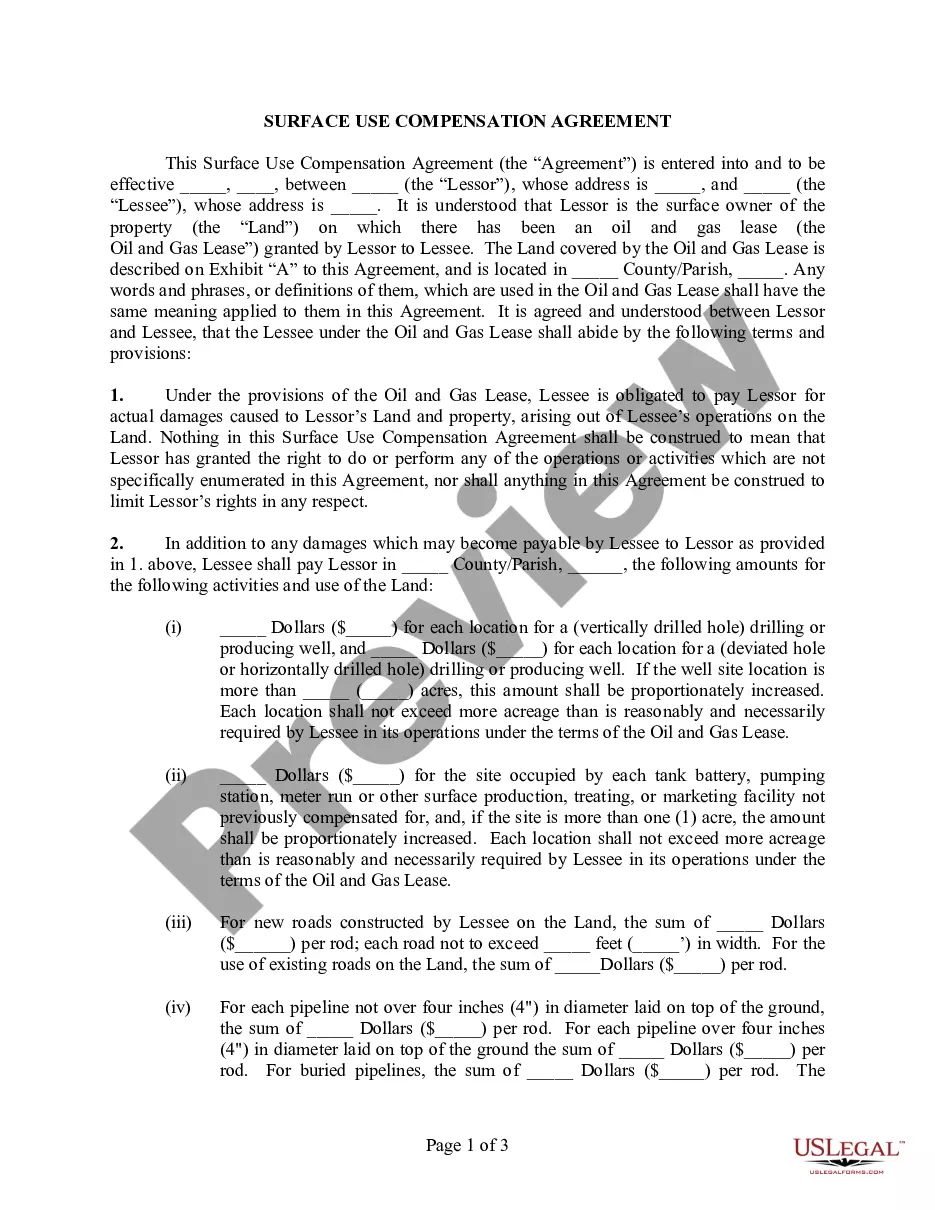
- Property owners who plan to lease or grant surface rights for oil and gas operations.
- Oil and gas companies seeking to formalize access to land needed for operational activities.
- Land managers and operators who need a clear framework for land use and liability.
How to complete this form
- Identify and enter the names of the Grantor and Grantee along with their addresses.
- Describe the lands included in the agreement with sufficient detail.
- Specify the purpose of the Grantee's use of the land.
- Include any necessary terms regarding ingress and egress rights.
- Sign and date the agreement, and ensure any needed acknowledgments are included.
Is notarization required?
This form does not typically require notarization unless specified by local law. However, having it notarized can provide an additional level of security and validation.
Get your form ready online
Our built-in tools help you complete, sign, share, and store your documents in one place.
Make edits, fill in missing information, and update formatting in US Legal Forms—just like you would in MS Word.
Download a copy, print it, send it by email, or mail it via USPS—whatever works best for your next step.
Sign and collect signatures with our SignNow integration. Send to multiple recipients, set reminders, and more. Go Premium to unlock E-Sign.
If this form requires notarization, complete it online through a secure video call—no need to meet a notary in person or wait for an appointment.
We protect your documents and personal data by following strict security and privacy standards.

Make edits, fill in missing information, and update formatting in US Legal Forms—just like you would in MS Word.

Download a copy, print it, send it by email, or mail it via USPS—whatever works best for your next step.

Sign and collect signatures with our SignNow integration. Send to multiple recipients, set reminders, and more. Go Premium to unlock E-Sign.

If this form requires notarization, complete it online through a secure video call—no need to meet a notary in person or wait for an appointment.

We protect your documents and personal data by following strict security and privacy standards.
Common mistakes
- Failing to clearly describe the lands covered by the agreement.
- Not specifying the exact purpose for which the surface rights are granted.
- Omitting signatures or acknowledgments from the involved parties.
Why use this form online
- Convenient access to legally vetted templates from licensed attorneys.
- Easy editing capabilities to customize the agreement for specific needs.
- Quick download and printing options for immediate use.
Legal use & context
- This agreement is legally binding once signed by both parties.
- It establishes clear rights and responsibilities between the landowner and Grantee.
- It may be subject to local property laws and regulations, affecting its enforceability.
Main things to remember
- The Surface Use Agreement is essential for formalizing rights to use land surface for operations.
- It is important to accurately specify all terms to prevent misunderstandings.
- This document provides legal protection for both Grantor and Grantee.
Looking for another form?


Form popularity
FAQ
Land use rights refer to the rights to occupy, use, make profit from or dispose of the land by the land users. The land users obtain the land use rights from the land owner (either the state for state-owned land or the farmers' collectives for collectively-owned land).
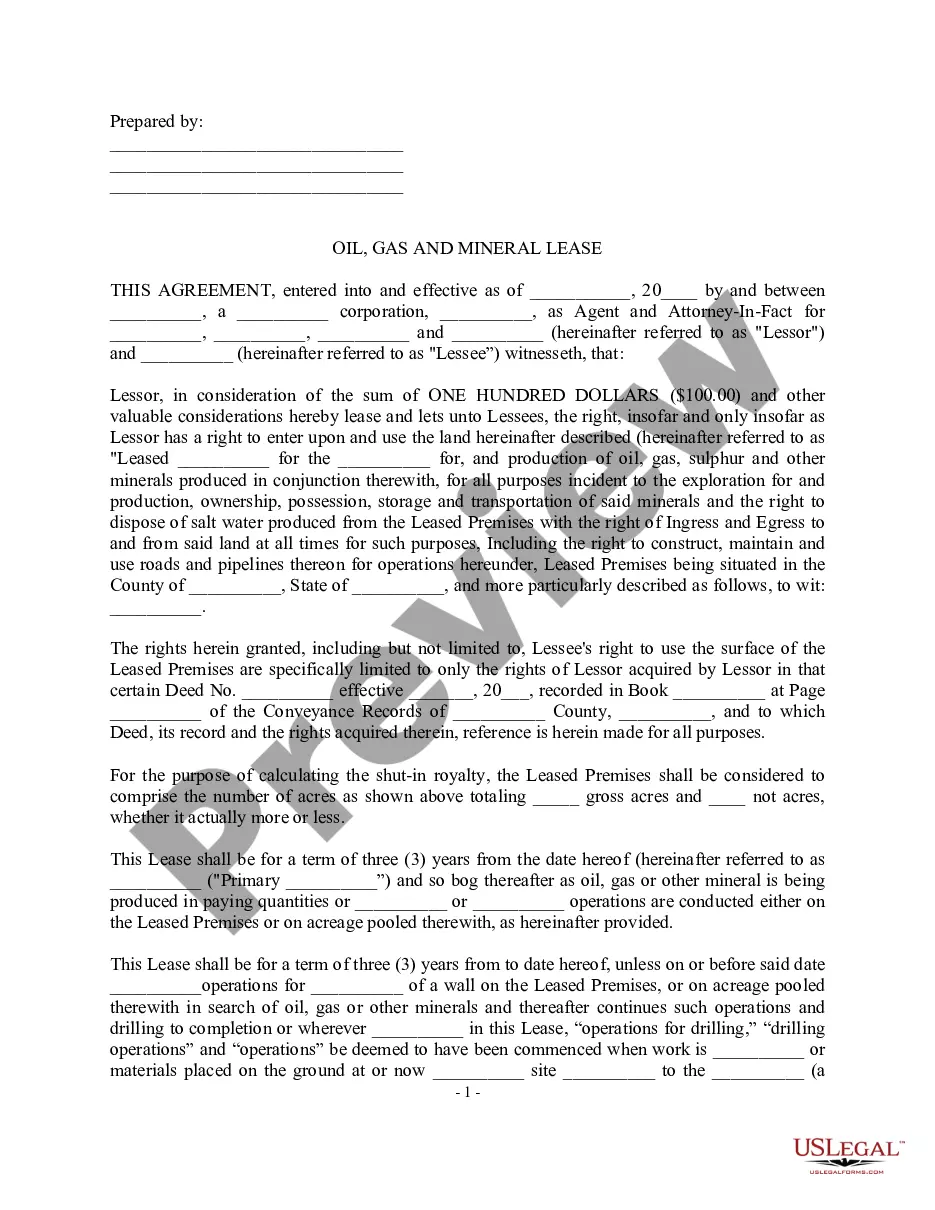
(Oil & Gas Exploration and Production) An oil, natural gas, and mineral lease gives the lessee rights to exploit minerals beneath the surface of the property.It also grants the lessee the right to utilize the surface of the property to access those minerals.
Land Details. The description of the land should be as specific as possible. Use of Property. How the lessee will use the property should be detailed carefully. Duration of Agreement. A land lease agreement should have specific starting and end dates. Financial Terms. Legal Review.
Land Use Agreements means (a) the Lease, (b) any access right or other right to use or traverse real property, and (c) any encumbrance, easement, license, restriction, or limitation of any kind applicable to the Site or used in connection with the construction of the Project.
In states with split ownership laws, land can be sold to only include surface rights. This means that if oil or gas is present under the soil, the landowner will have no legal rights to them.
An indigenous land use agreement is a voluntary agreement between a native title group and other parties on the use and management of land and waters. Indigenous land use agreements are established by the Native Title Act 1993.
Surface lease means a lease, easement, or other agreement providing the holder with the right to enter the surface of any land for the purpose of constructing and operating a well, facility, flowline, roadway, or power line; Sample 1. Based on 1 documents. Save.
Texas courts have long held that the mineral estate is the dominant estate, and that the mineral owner, or the owner's lessee, has an implied easement to use the surface in a manner that is reasonably necessary to develop the minerals.
A Land Use Contract (LUC) is an agreement between a local government and a land owner that provided the land owner with development rights over and above what was allowed under current zoning.