Surface Use Compensation Agreement
About this form
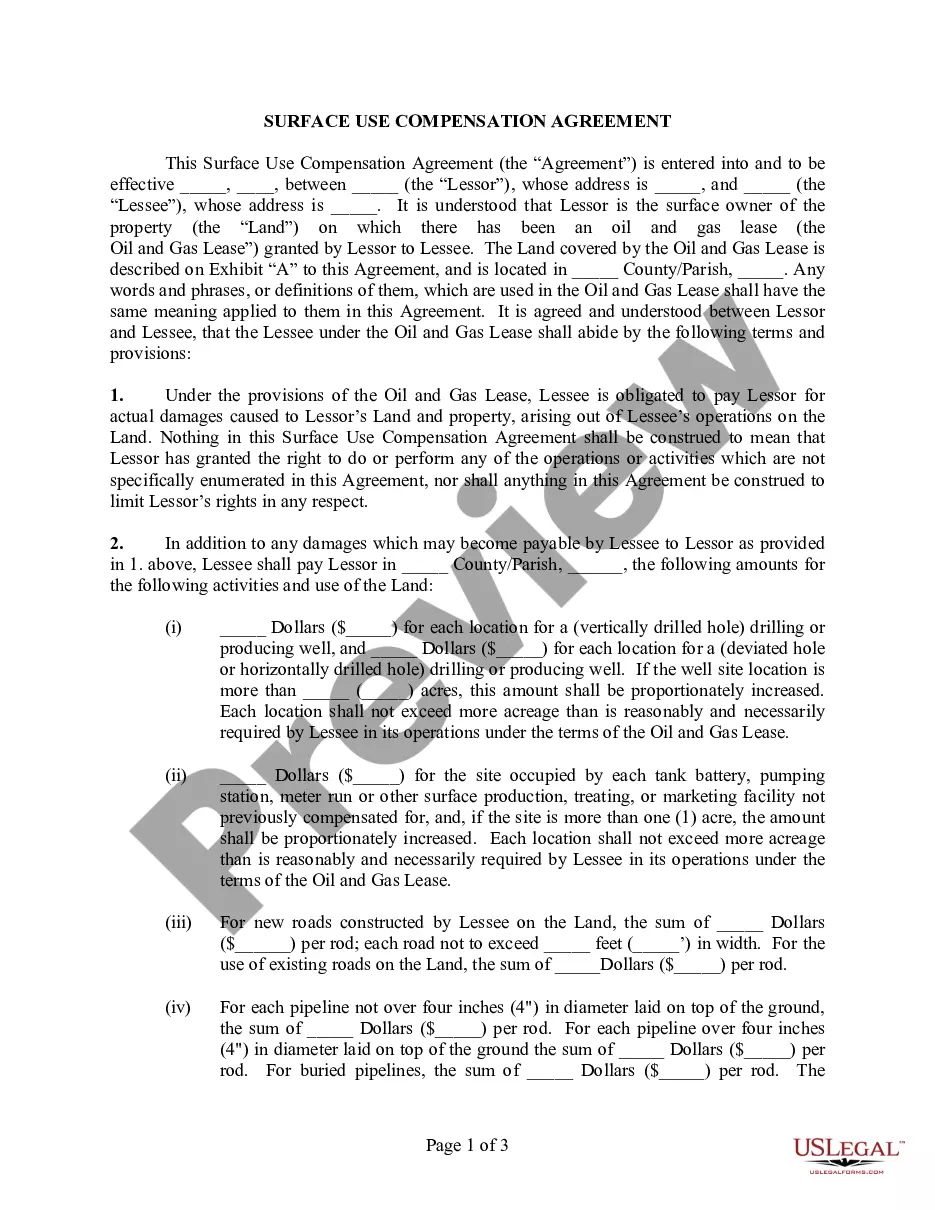
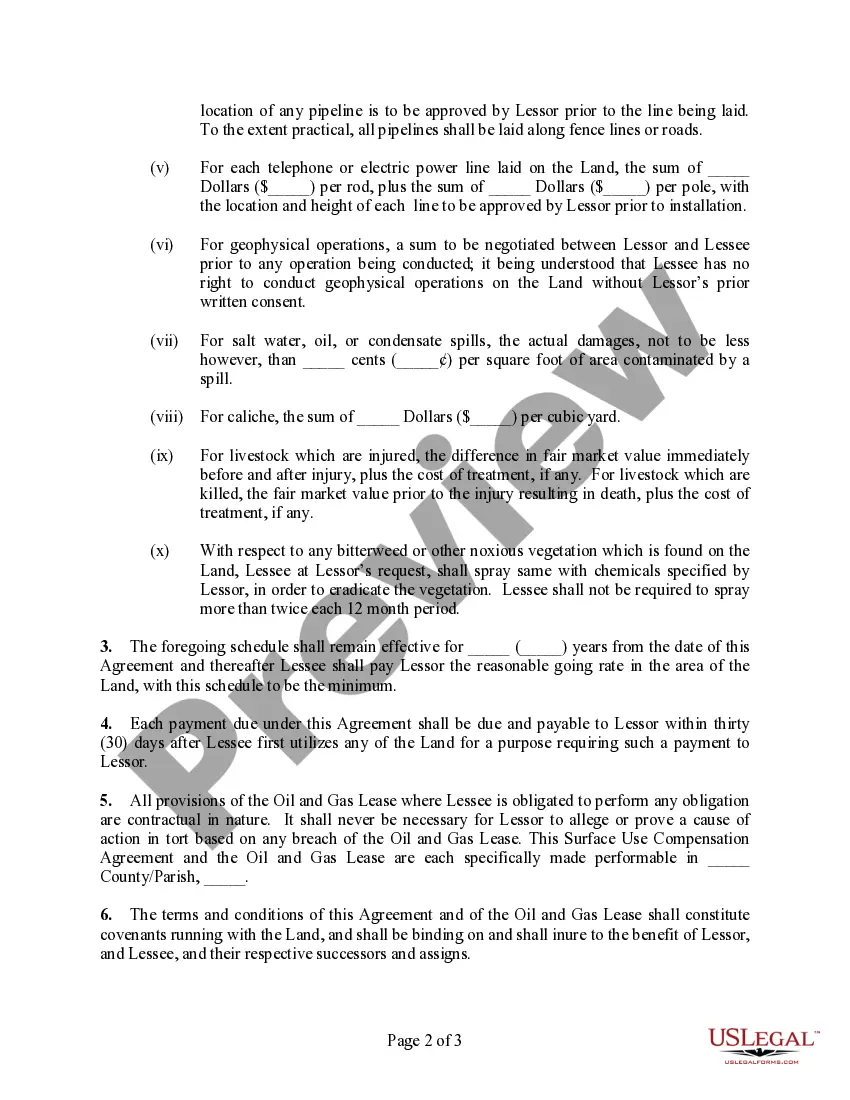
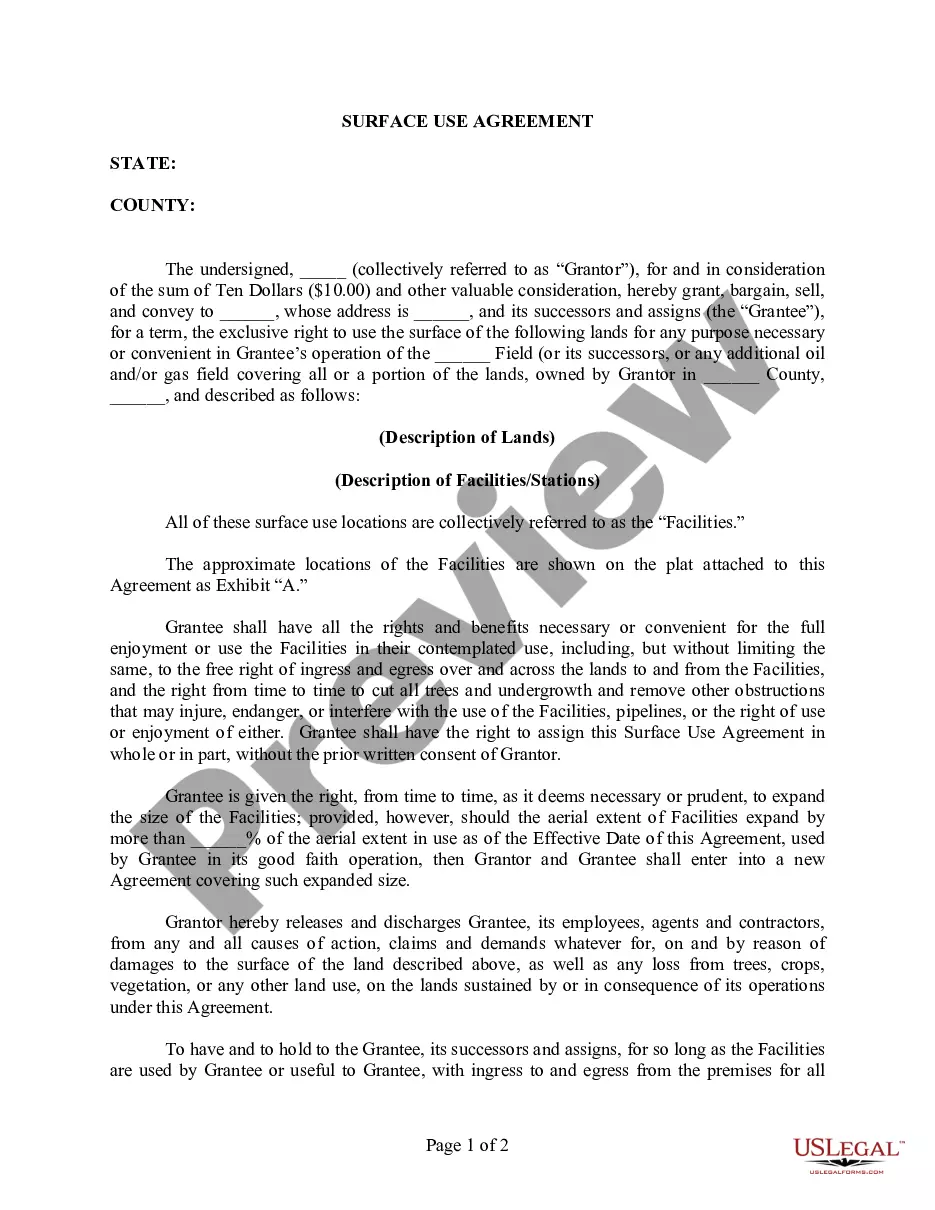
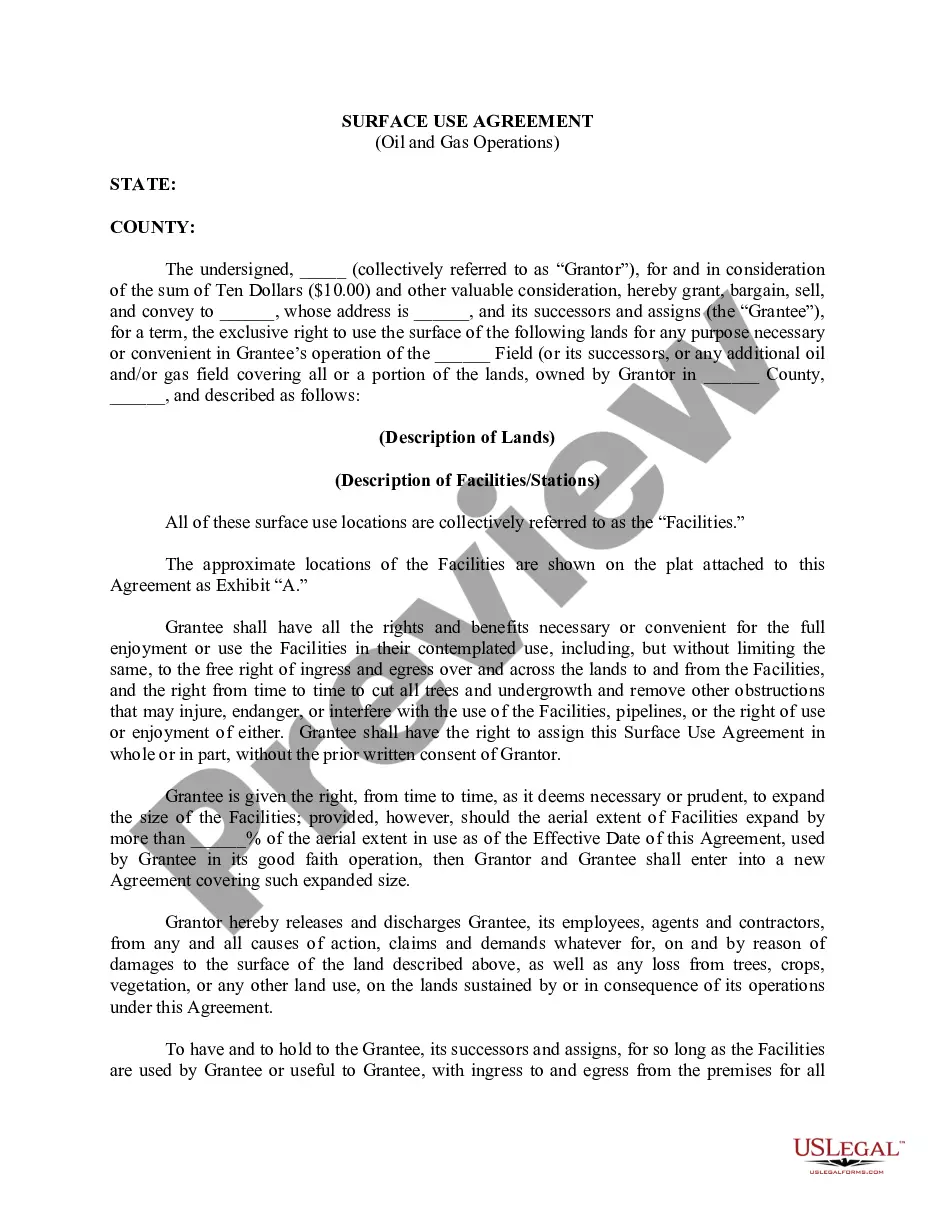
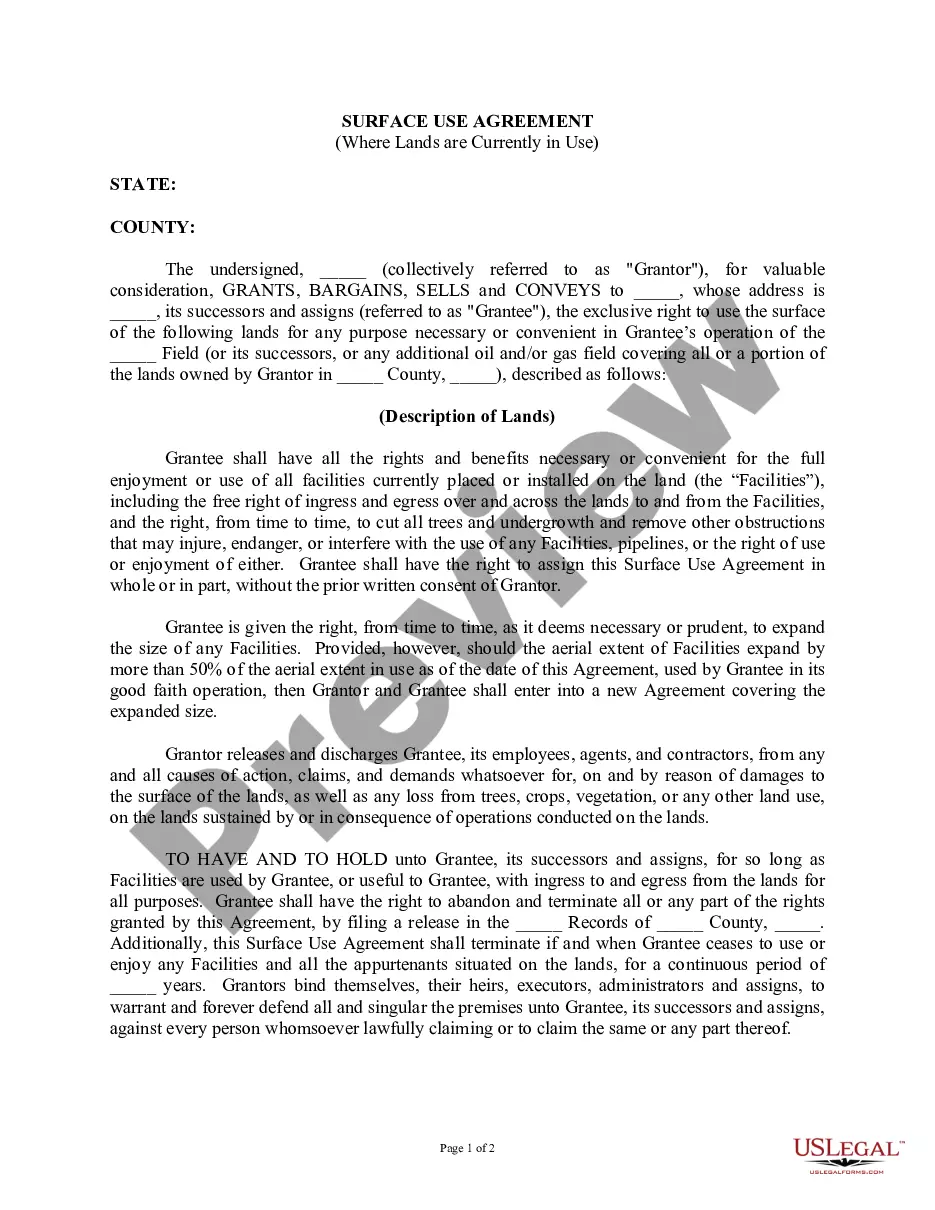
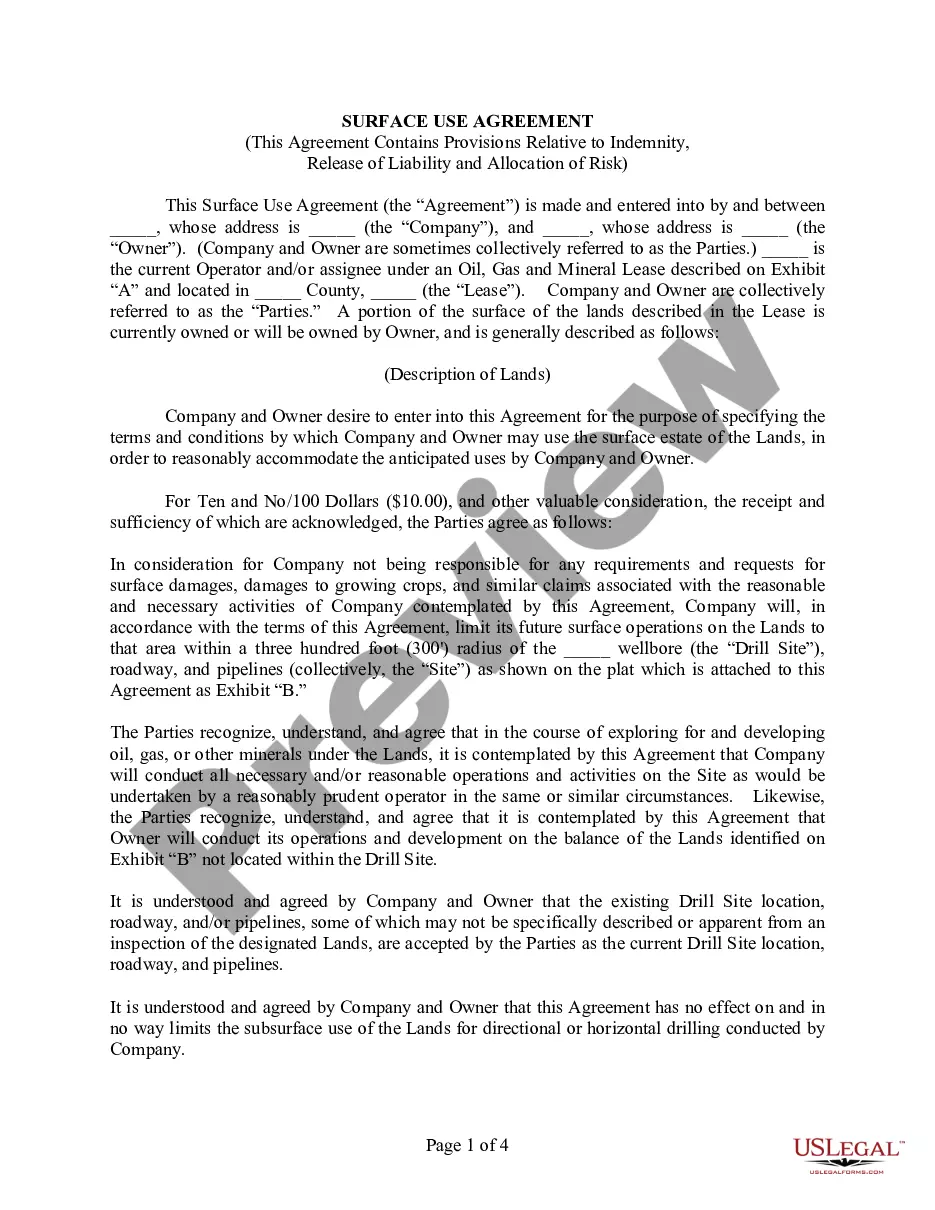
The Surface Use Compensation Agreement is a legal document designed for situations where the lessor of an oil and gas lease is also the surface landowner. This form establishes the terms under which the lessee compensates the lessor for various activities conducted on the surface of the property. Unlike other lease agreements, this specific contract clearly outlines compensation for damages and the use of land for oil and gas operations, ensuring that both parties understand their rights and obligations.
Form components explained
- Identification of parties involved: names and addresses of the lessor and lessee.
- Description of the property covered by the oil and gas lease, including any attachments.
- List of specific activities and corresponding compensation amounts due to the lessor.
- Time frames for payments and conditions for compensation for damages.
- Clauses regarding the responsibilities of the lessee towards the surface land.
- Provisions for resolving disputes related to compensation and usage of the land.
Common use cases
This agreement is essential when a landowner leases their property for oil and gas exploration and production while retaining surface ownership. It should be used when the lessee's activities may impact the surface land, requiring formal compensation arrangements. This form is particularly useful when defining compensation for various operations such as drilling, construction, and potential damages to land or livestock.
Intended users of this form
- Surface landowners who have granted oil and gas leases and wish to ensure fair compensation.
- Lessee companies looking to clarify their financial obligations regarding surface land usage.
- Landowners seeking to safeguard their rights and property during oil and gas operations.
- Legal professionals assisting clients in drafting or reviewing surface use agreements.
Instructions for completing this form
- Identify the parties involved by entering the names and addresses of the lessor and lessee.
- Fill in the effective date of the agreement.
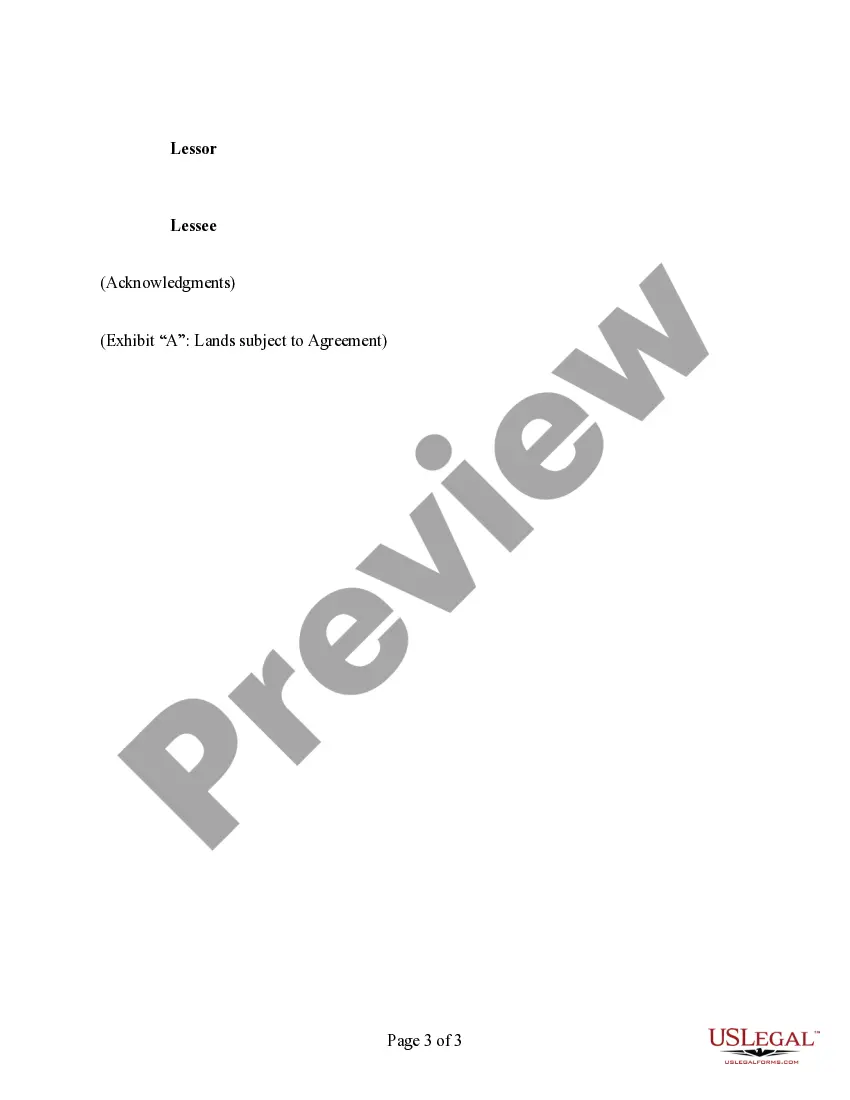
- Describe the land subject to the agreement, including any maps or property descriptions in the attached Exhibit A.
- Specify the financial amounts for each activity performed on the land as outlined in the form.
- Include any necessary approval processes or conditions for the installation of infrastructure like pipelines and power lines.
- Obtain signatures from both parties to finalize the agreement.
Is notarization required?
Notarization is not commonly needed for this form. However, certain documents or local rules may make it necessary. Our notarization service, powered by Notarize, allows you to finalize it securely online anytime, day or night.
Get your form ready online
Our built-in tools help you complete, sign, share, and store your documents in one place.
Make edits, fill in missing information, and update formatting in US Legal Forms—just like you would in MS Word.
Download a copy, print it, send it by email, or mail it via USPS—whatever works best for your next step.
Sign and collect signatures with our SignNow integration. Send to multiple recipients, set reminders, and more. Go Premium to unlock E-Sign.
If this form requires notarization, complete it online through a secure video call—no need to meet a notary in person or wait for an appointment.
We protect your documents and personal data by following strict security and privacy standards.

Make edits, fill in missing information, and update formatting in US Legal Forms—just like you would in MS Word.

Download a copy, print it, send it by email, or mail it via USPS—whatever works best for your next step.

Sign and collect signatures with our SignNow integration. Send to multiple recipients, set reminders, and more. Go Premium to unlock E-Sign.

If this form requires notarization, complete it online through a secure video call—no need to meet a notary in person or wait for an appointment.

We protect your documents and personal data by following strict security and privacy standards.
Common mistakes
- Failing to accurately describe the property, which can lead to disputes about the affected areas.
- Not specifying the payment amounts for each category of land use, leading to confusion about compensation.
- Omitting signatures or dates, which can invalidate the agreement.
- Ignoring state-specific legal requirements, which could render the agreement unenforceable.
- Not consulting with a legal professional, risking non-compliance with regulations.
Why complete this form online
- Convenient access to a legally vetted template, ensuring compliance with legal standards.
- Editability allows users to customize the details to fit specific agreements and needs.
- Secure download ensures that users have access to their forms anytime without needing to visit an office.
- Time-efficient process, enabling quicker completion and submission of necessary agreements.
Legal use & context
- Establishes clear compensation terms for surface usage in oil and gas leasing.
- Legally binding, ensuring that both parties adhere to agreed terms and conditions.
- Aids in preventing disputes by explicitly outlining rights and obligations.
What to keep in mind
- The Surface Use Compensation Agreement clarifies the terms of compensation for surface use related to oil and gas operations.
- Accurate documentation of all parties and compensation amounts is crucial for enforceability.
- This form helps protect the rights of the surface owner while ensuring the lessee can operate effectively.
Looking for another form?

Form popularity
FAQ
Surface rights mean that you own the top of the land. Essentially, you'll own the grass, trees and any structures that are part of the land itself. All of the rights to these essential parts of the land will be owned once the title of the land has been transferred to your name.
(Oil & Gas Exploration and Production) An oil, natural gas, and mineral lease gives the lessee rights to exploit minerals beneath the surface of the property.It also grants the lessee the right to utilize the surface of the property to access those minerals.
Surface rights are subservient to mineral rights, which means the owner of a mineral servitude will be able to access and use the surface to extract the minerals from underneath.
An indigenous land use agreement is a voluntary agreement between a native title group and other parties on the use and management of land and waters. Indigenous land use agreements are established by the Native Title Act 1993.
Surface rights are, as the name implies, the rights to the surface area of a piece of land. This includes any structures on the property, as well as the rights to farm the land or exploit aboveground resources such as trees, plants, or water according to local laws and ordinances.
A Land Use Contract (LUC) is an agreement between a local government and a land owner that provided the land owner with development rights over and above what was allowed under current zoning.
Land Use Agreements means (a) the Lease, (b) any access right or other right to use or traverse real property, and (c) any encumbrance, easement, license, restriction, or limitation of any kind applicable to the Site or used in connection with the construction of the Project.
How far down the mineral rights go depends on the mineral and technology used. The average depth of open-pit mining a surface mining technique used to extract metals such as nickel, copper, uranium, and coal is between 100500 meters. For deep mining, the average depth is 2.83.4 kilometers.
Surface rights. Ownership rights in real property that include the right to occupy the land, develop it with buildings and fixtures and even to destroy its resources such as timber and water. air space rights.