Surface Use Agreement
Understanding this form
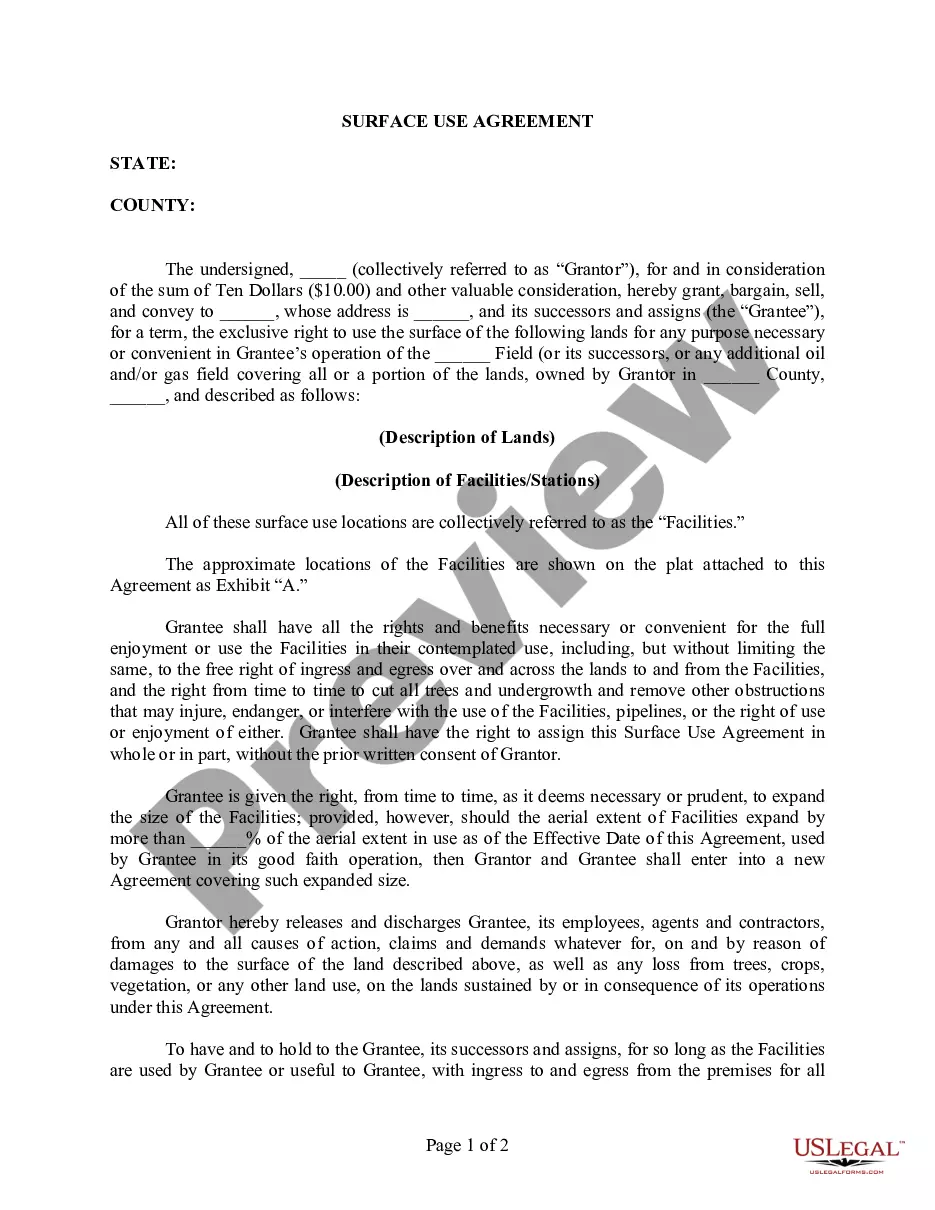
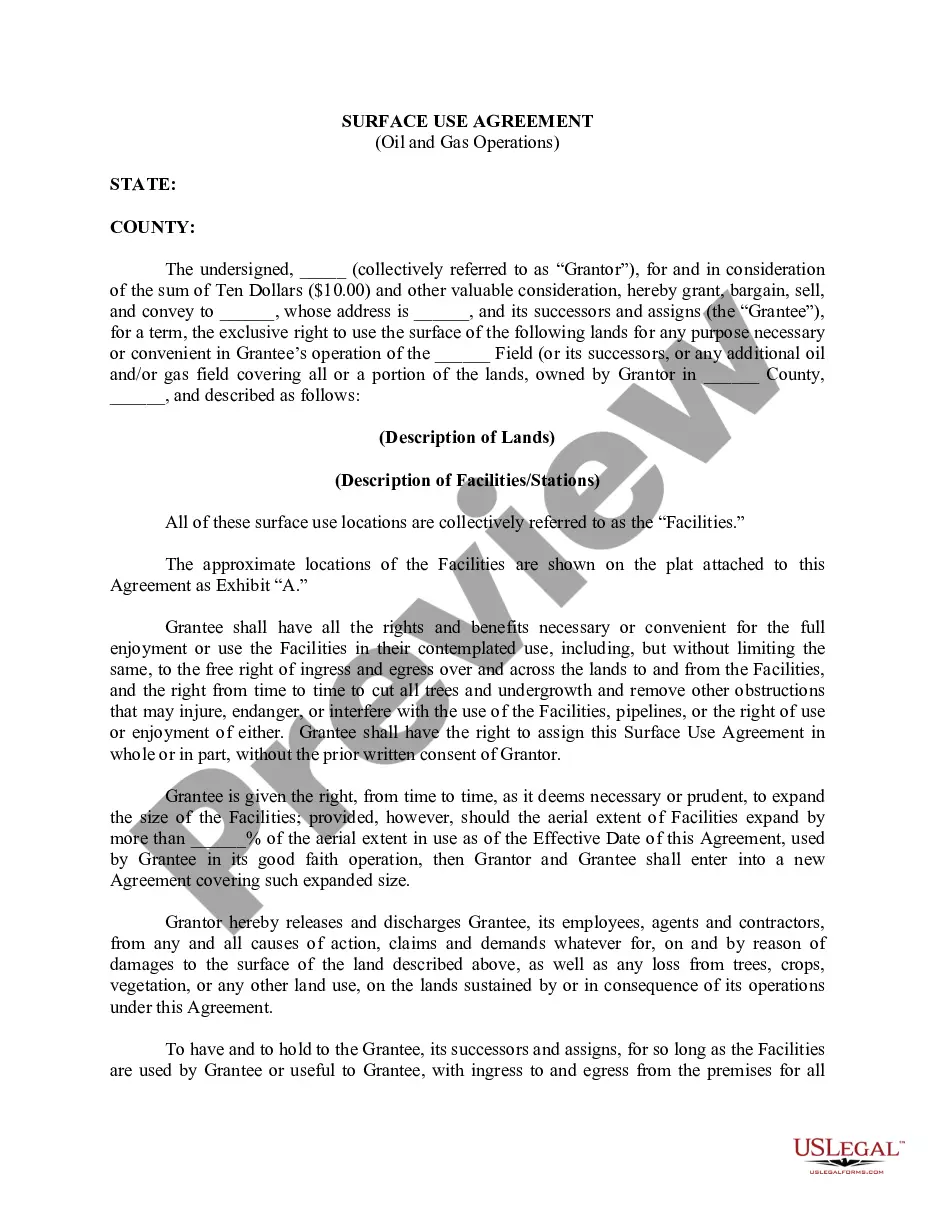
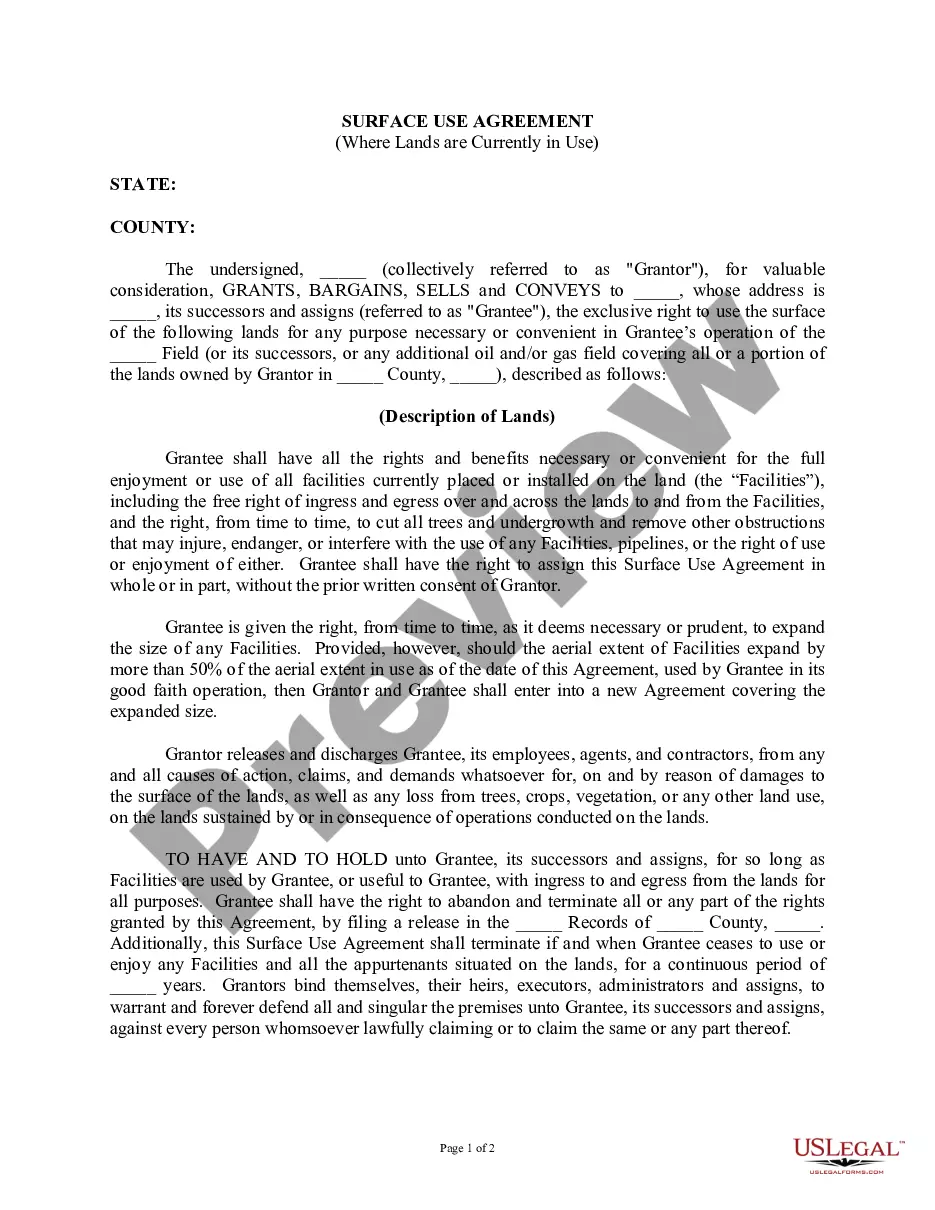
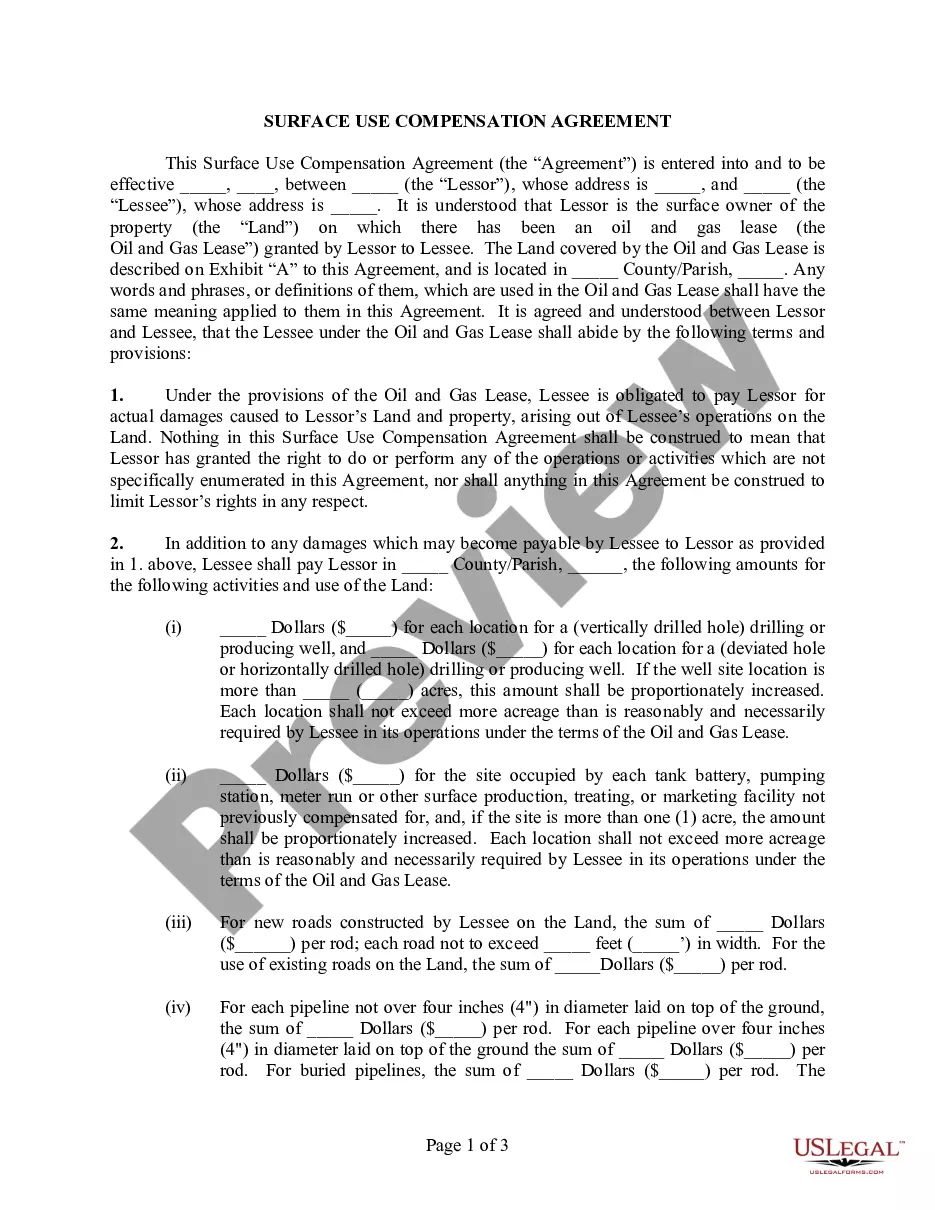
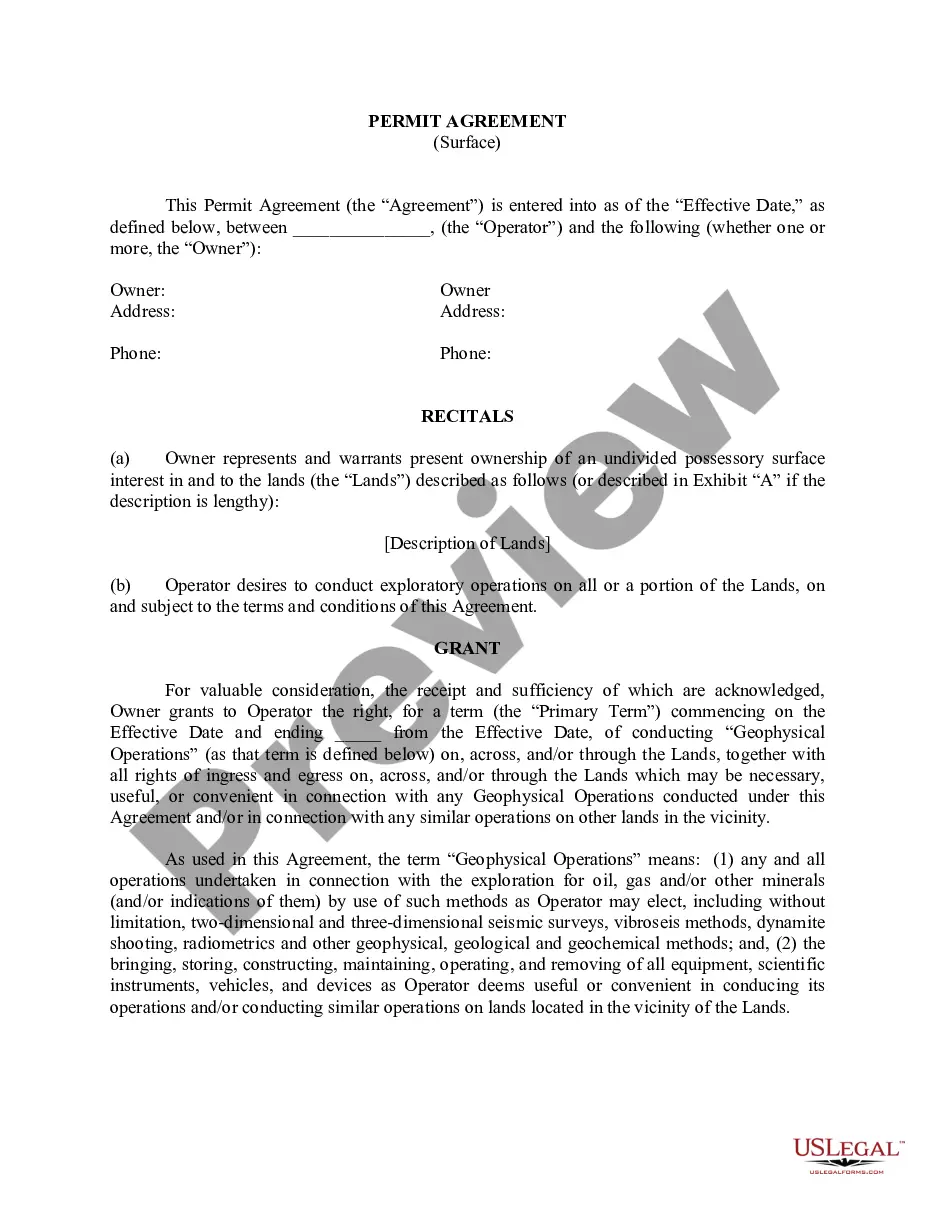
The Surface Use Agreement is a legal document that grants a party (Grantee) the right to use the surface of specified land for operations related to oil and gas extraction. This agreement differs from other property agreements by specifically focusing on surface rights, allowing the Grantee access to facilities while detailing the terms under which these rights are granted and maintained. It serves to clarify the responsibilities and protections for both parties involved, making it essential for landowners and energy companies.
Main sections of this form
- Identification of the parties: Grantor (landowner) and Grantee (operator).
- Description of the land: Specific areas covered under the agreement.
- Rights granted: Details on surface use, ingress, and egress for operations.
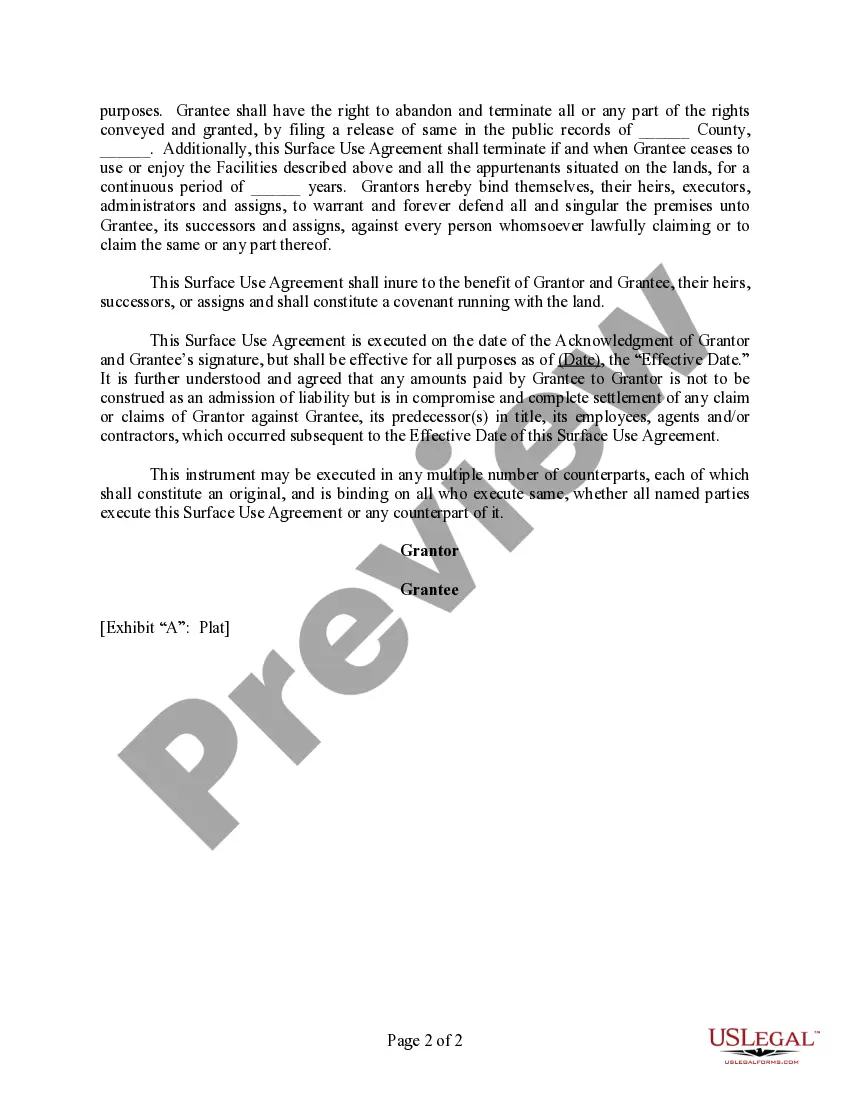
- Conditions for termination: Outline of when and how the agreement may be terminated.
- Liability release: Grantor releases the Grantee from certain claims related to surface damage.
- Provisions for expansion: Conditions under which the facilities may be expanded.
Situations where this form applies
This form is needed when landowners want to allow an oil or gas operator to use their land's surface for related activities. It is typically used in situations where a landowner enters into agreements with an energy company for exploration, extraction, or infrastructure purposes, ensuring clarity about land use and responsibilities between the parties.
Who this form is for
This form is appropriate for:
- Property owners (Grantors) who are leasing surface rights to energy companies.
- Oil and gas operators (Grantees) requiring surface access for extracting resources.
- Land management professionals seeking to formalize land use agreements.
Completing this form step by step
- Identify the parties involved by entering the names and addresses of the Grantor and Grantee.
- Specify the lands covered by the agreement, including detailed descriptions and any relevant maps or plats.
- Define the rights of the Grantee, including details on surface use and any permitted actions regarding land modifications.
- State the conditions under which the agreement may terminate, including time limits and operational cessation.
- Ensure all required signatures are obtained from both parties to validate the agreement.
Notarization guidance
This form does not typically require notarization unless specified by local law. However, it is advisable to consult with a legal professional to ensure that all requirements are met for your specific situation.
Get your form ready online
Our built-in tools help you complete, sign, share, and store your documents in one place.
Make edits, fill in missing information, and update formatting in US Legal Forms—just like you would in MS Word.
Download a copy, print it, send it by email, or mail it via USPS—whatever works best for your next step.
Sign and collect signatures with our SignNow integration. Send to multiple recipients, set reminders, and more. Go Premium to unlock E-Sign.
If this form requires notarization, complete it online through a secure video call—no need to meet a notary in person or wait for an appointment.
We protect your documents and personal data by following strict security and privacy standards.

Make edits, fill in missing information, and update formatting in US Legal Forms—just like you would in MS Word.

Download a copy, print it, send it by email, or mail it via USPS—whatever works best for your next step.

Sign and collect signatures with our SignNow integration. Send to multiple recipients, set reminders, and more. Go Premium to unlock E-Sign.

If this form requires notarization, complete it online through a secure video call—no need to meet a notary in person or wait for an appointment.

We protect your documents and personal data by following strict security and privacy standards.
Typical mistakes to avoid
- Failing to clearly specify the boundaries of the land being used.
- Not including emergency procedures or protocols for unforeseen events.
- Overlooking the necessity of signatures from both parties before finalizing.
- Ignoring local regulations that may affect the agreement's validity.
Advantages of online completion
- Convenient access to legally verified templates drafted by licensed attorneys.
- Easy editability to customize the form to specific needs and local regulations.
- Reliable information that is updated to reflect the latest legal standards.
Looking for another form?
Form popularity
FAQ
(Oil & Gas Exploration and Production) An oil, natural gas, and mineral lease gives the lessee rights to exploit minerals beneath the surface of the property.It also grants the lessee the right to utilize the surface of the property to access those minerals.
Surface rights are subservient to mineral rights, which means the owner of a mineral servitude will be able to access and use the surface to extract the minerals from underneath.
Surface lease means a lease, easement, or other agreement providing the holder with the right to enter the surface of any land for the purpose of constructing and operating a well, facility, flowline, roadway, or power line; Sample 1. Based on 1 documents. Save.
Land Use Agreements means (a) the Lease, (b) any access right or other right to use or traverse real property, and (c) any encumbrance, easement, license, restriction, or limitation of any kind applicable to the Site or used in connection with the construction of the Project.
In states with split ownership laws, land can be sold to only include surface rights. This means that if oil or gas is present under the soil, the landowner will have no legal rights to them.
A Land Use Contract (LUC) is an agreement between a local government and a land owner that provided the land owner with development rights over and above what was allowed under current zoning.
How far down the mineral rights go depends on the mineral and technology used. The average depth of open-pit mining a surface mining technique used to extract metals such as nickel, copper, uranium, and coal is between 100500 meters. For deep mining, the average depth is 2.83.4 kilometers.
Surface rights. Ownership rights in real property that include the right to occupy the land, develop it with buildings and fixtures and even to destroy its resources such as timber and water. air space rights.
What are surface rights? Surface rights are, as the name implies, the rights to the surface area of a piece of land. This includes any structures on the property, as well as the rights to farm the land or exploit aboveground resources such as trees, plants, or water according to local laws and ordinances.