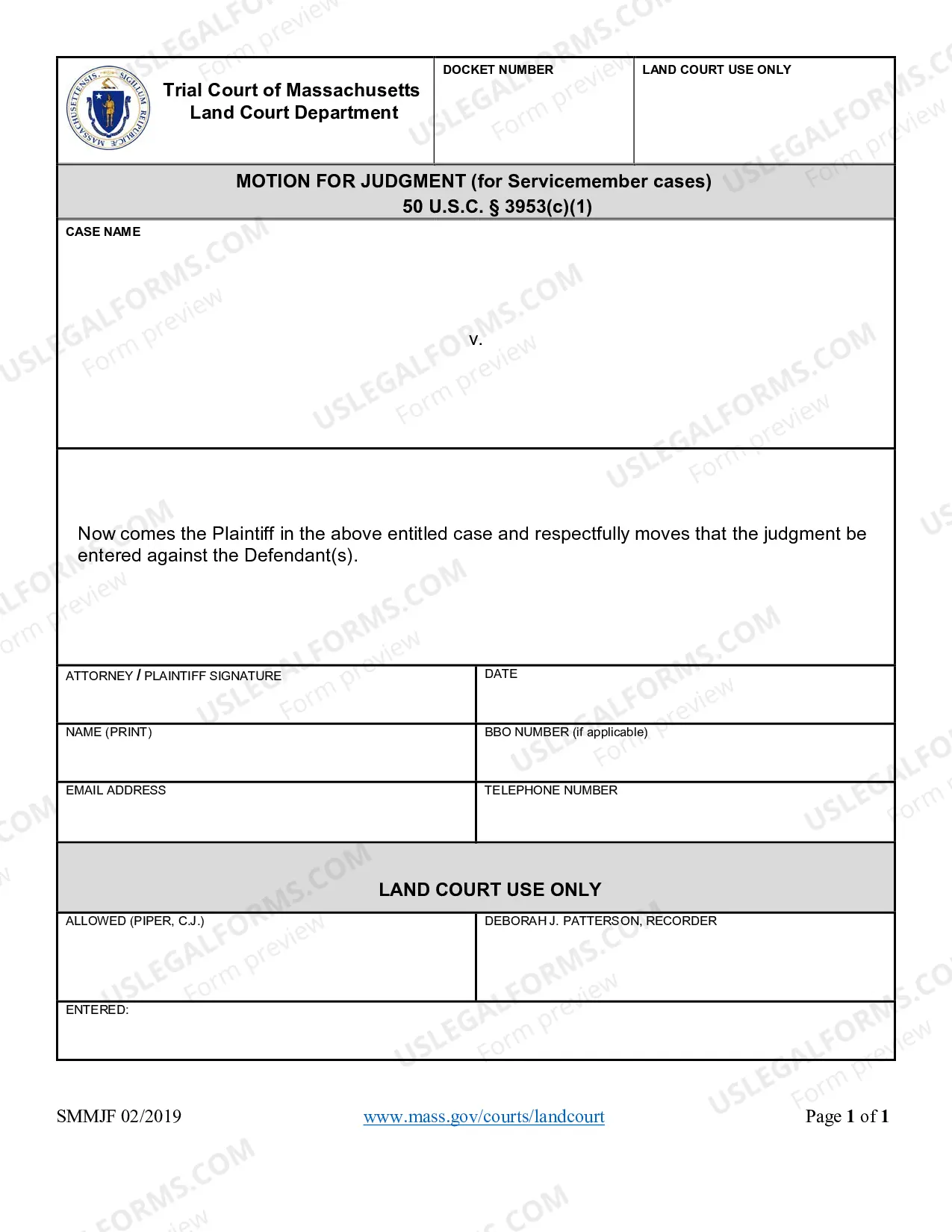
Resume Supplement
About this form
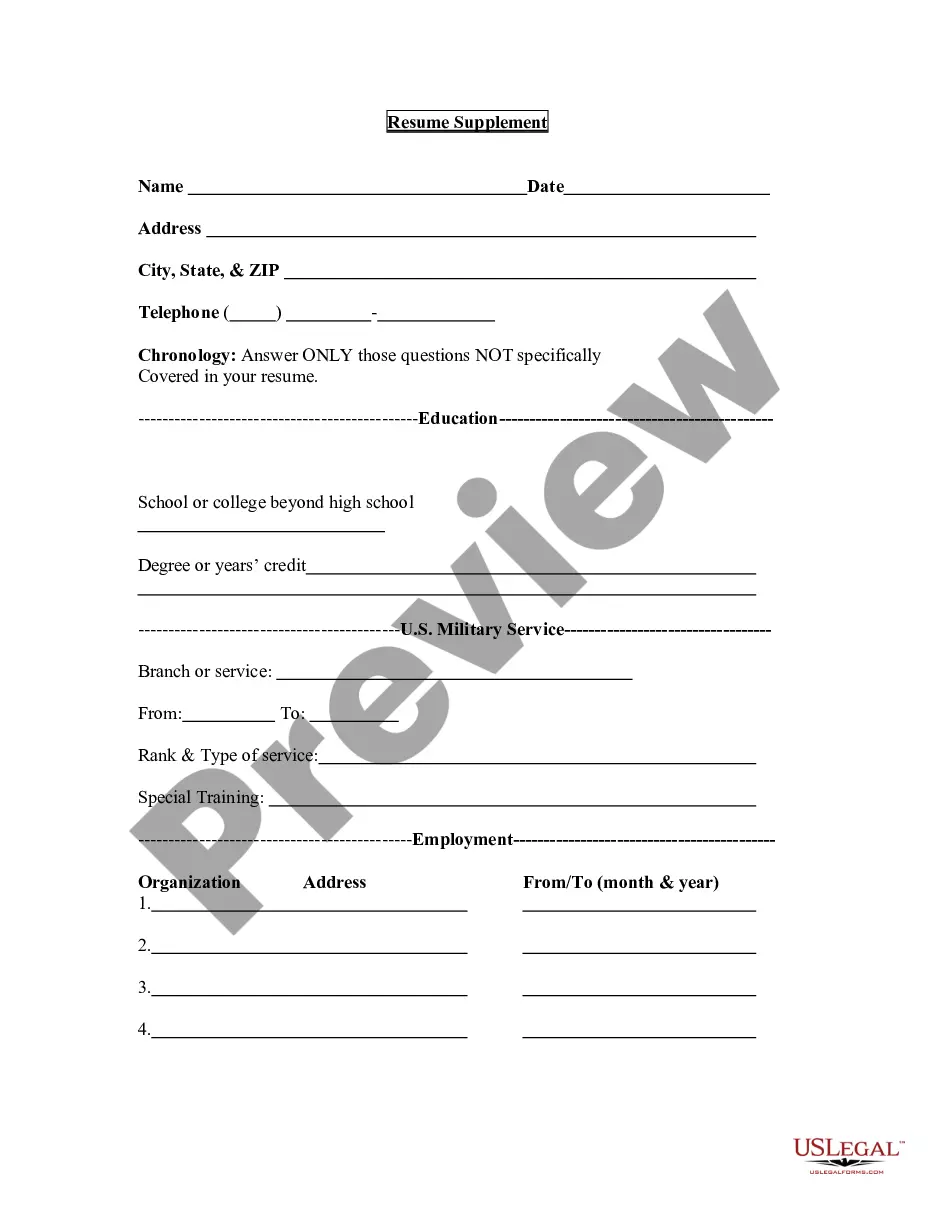
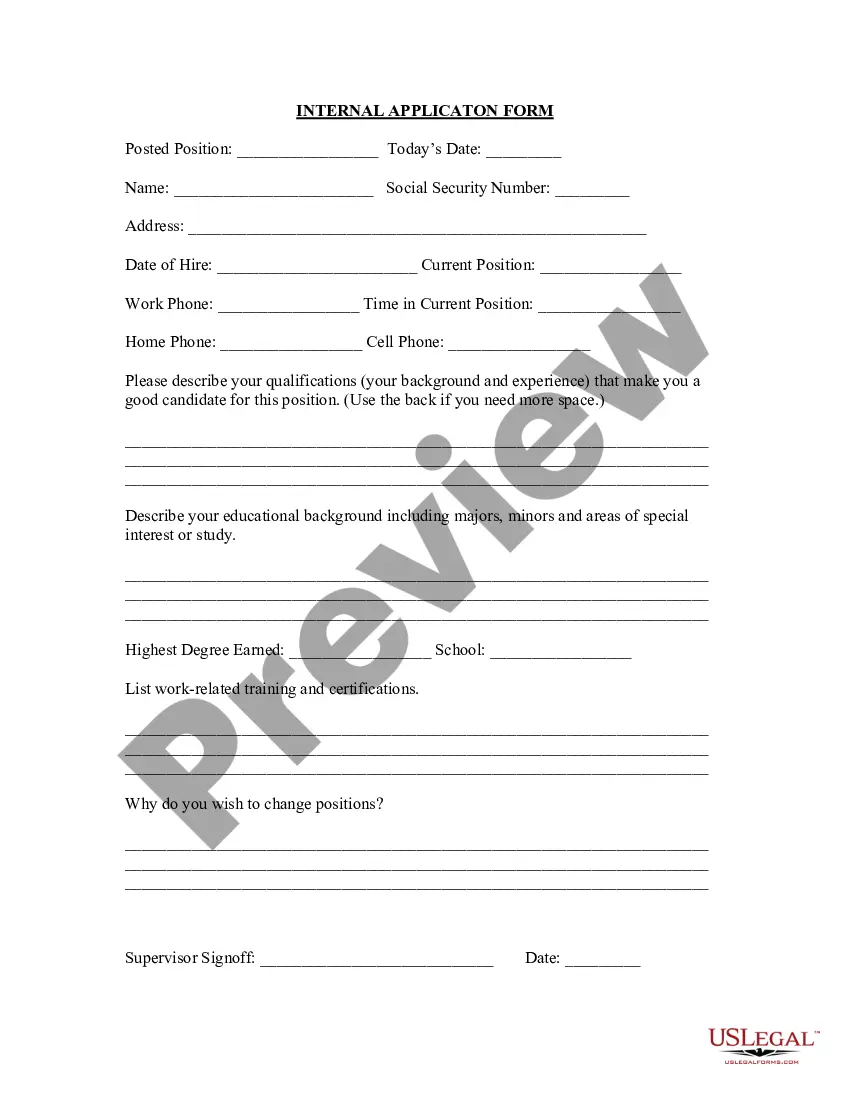
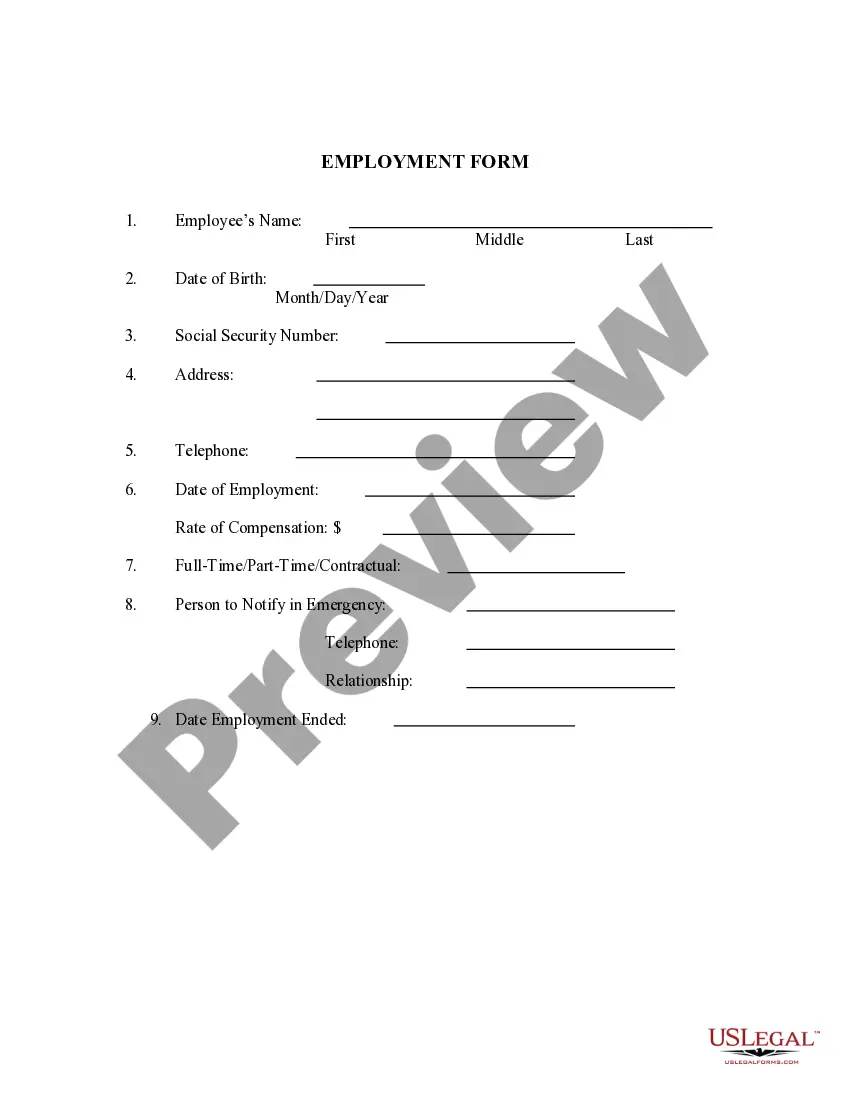
The Resume Supplement is a legal form created to gather preliminary information from job applicants. This form is distinct from a traditional resume, as it focuses specifically on key information that employers may require during the hiring process, ensuring consistency and compliance with hiring regulations.
Main sections of this form
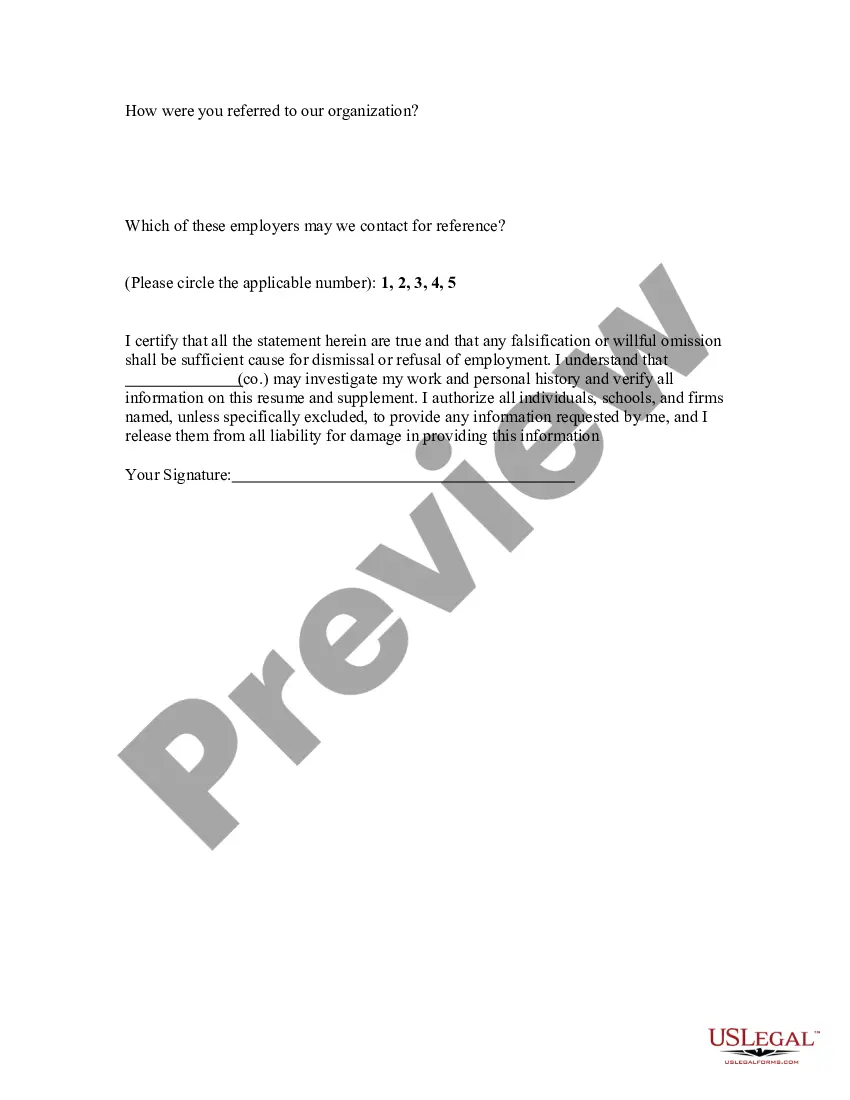
- Your Signature: A space for the applicant to provide their signature, affirming the accuracy of the information offered.

Situations where this form applies
This form is used when an employer needs to collect important details about a job applicant prior to the interview process. It is often required as part of the hiring process, particularly for positions that involve sensitive information or skills assessments.
Who can use this document
- Employers seeking to standardize their hiring process.
- Recruiters looking to collect essential applicant information efficiently.
- Job applicants asked to fill out preliminary hiring forms as part of a job application.
Completing this form step by step
- Gather the necessary personal information, including your full name and contact details.
- Fill out any required employment history or qualifications as specified.
- Review all entries for accuracy before signing.
- Sign the form in the designated area to validate your information.
Does this form need to be notarized?
This form does not typically require notarization unless specified by local law.
Get your form ready online
Our built-in tools help you complete, sign, share, and store your documents in one place.
Make edits, fill in missing information, and update formatting in US Legal Forms—just like you would in MS Word.
Download a copy, print it, send it by email, or mail it via USPS—whatever works best for your next step.
Sign and collect signatures with our SignNow integration. Send to multiple recipients, set reminders, and more. Go Premium to unlock E-Sign.
If this form requires notarization, complete it online through a secure video call—no need to meet a notary in person or wait for an appointment.
We protect your documents and personal data by following strict security and privacy standards.

Make edits, fill in missing information, and update formatting in US Legal Forms—just like you would in MS Word.

Download a copy, print it, send it by email, or mail it via USPS—whatever works best for your next step.

Sign and collect signatures with our SignNow integration. Send to multiple recipients, set reminders, and more. Go Premium to unlock E-Sign.

If this form requires notarization, complete it online through a secure video call—no need to meet a notary in person or wait for an appointment.

We protect your documents and personal data by following strict security and privacy standards.
Typical mistakes to avoid
- Providing incomplete or inaccurate personal information.
- Neglecting to sign the document, making it invalid.
- Failing to update any outdated employment history.
Benefits of completing this form online
- Easy access to downloadable format for quick use.
- Convenient editing options to customize the form for specific job requirements.
- Reliability, as the form is created by licensed attorneys to ensure legal compliance.
Quick recap
- The Resume Supplement assists job applicants in providing comprehensive information.
- Ensure all sections are completed accurately and signed for validity.
- This form enhances your job application by highlighting additional qualifications.
Looking for another form?
Form popularity
FAQ
Services typically charge anywhere from $100 to $400, depending on how advanced your resume needs to be.
The word vitae is the plural form of vita.The term curriculum vitae means "course of life" in Latin. While it is appropriate to write either curriculum vitae or just vita, it is incorrect to use the phrase curriculum vita, the form vitae being the genitive of vita. The plural of curriculum vitae is curricula vitae.
The key to ensuring that your resume writing service is worth the cost is to choose wisely. Find a well-known, reputable company that actively works with you to craft the perfect resume and cover letter for your needs. When you can do that, your resume will almost certainly be worth the money you paid.
A vita, short for curriculum vitae, is Latin for the course of one's life. The two terms are often used interchangeably, with resume the more frequently used in the general population. Vita or C.V. (for curriculum vitae) is more often used in academic and research environments.A resume is intended to be brief.
The accurate term for the CV is the "curriculum vitae." It's called a "vita," which is true in everyday conversation, but that's not the whole story.
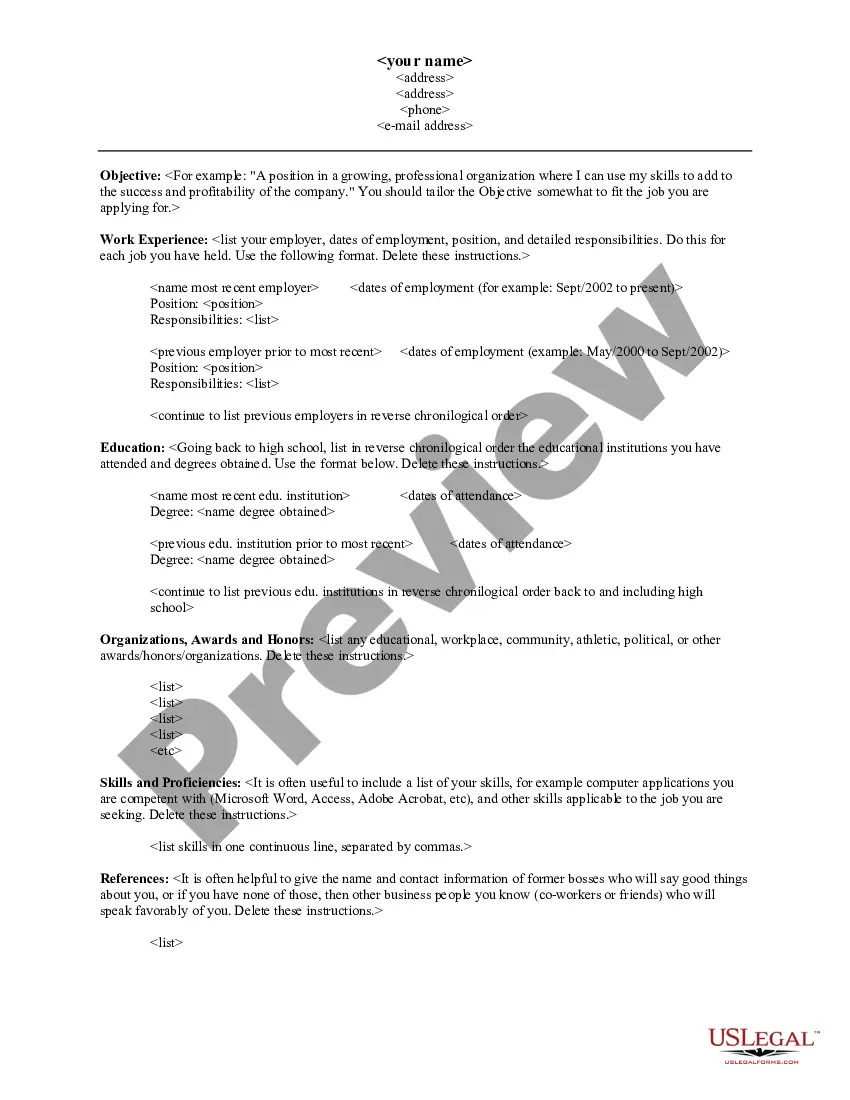
A resume builder may give you a document that feels generic.If you have a background in creative arts, it's often worth it to spend the time creating a resume yourself rather than relying on a resume generator. Resume templates provide space for common fields like education, work experience, and skills.
Supplemental information is an optional part of the definition of a lexical unit, containing culturally or logically expected information. 200b Lexical unit. Analytic definition. Supplemental info.
Vita, from the Latin for "life," actually means "a biographical sketch," so an academic resume is often more accurately referred to as a curriculum vitae (or "cv"), which Webster defines as "a short account of one's career and qualifications prepared typically by an applicant for a position." The word vitae is the
The resume will be tailored to each position whereas the CV will stay put and any changes will be in the cover letter.I would say the main difference between a resume and a CV is that a CV is intended to be a full record of your career history and a resume is a brief, targeted list of skills and achievements.