Mississippi Order Granting Partial Summary Judgment
Overview of this form
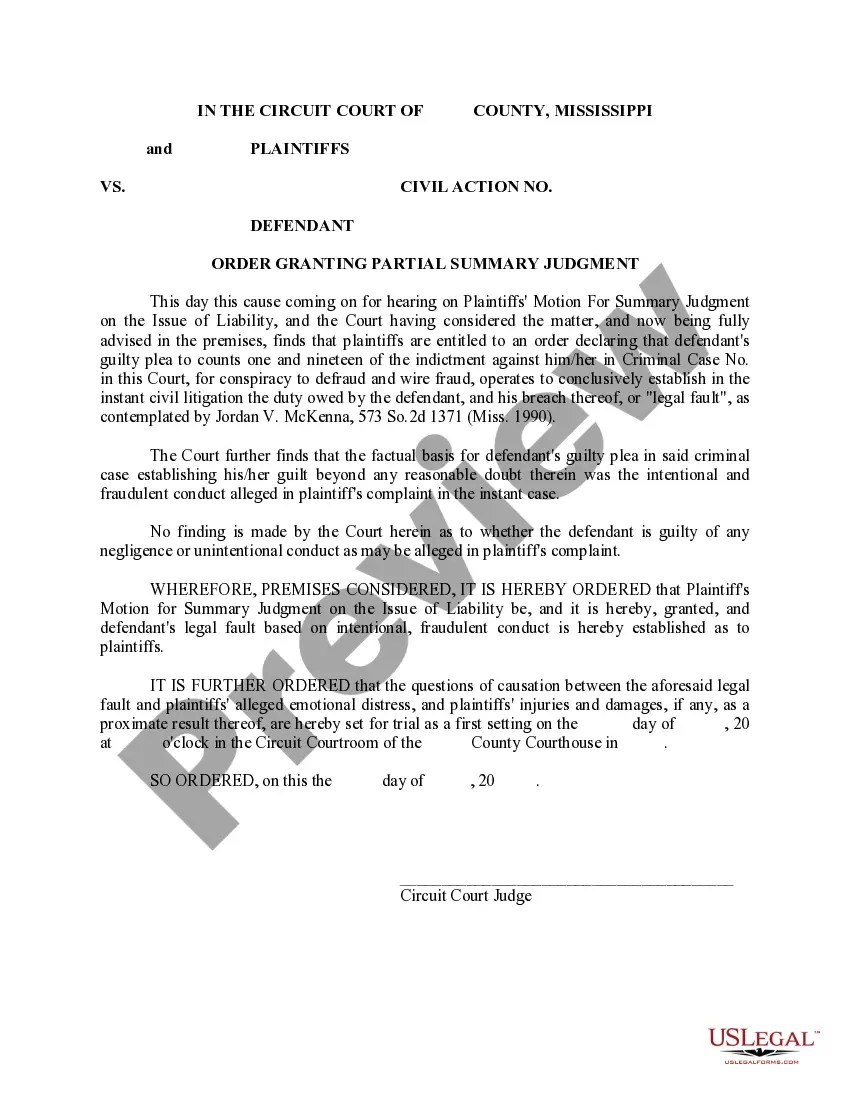
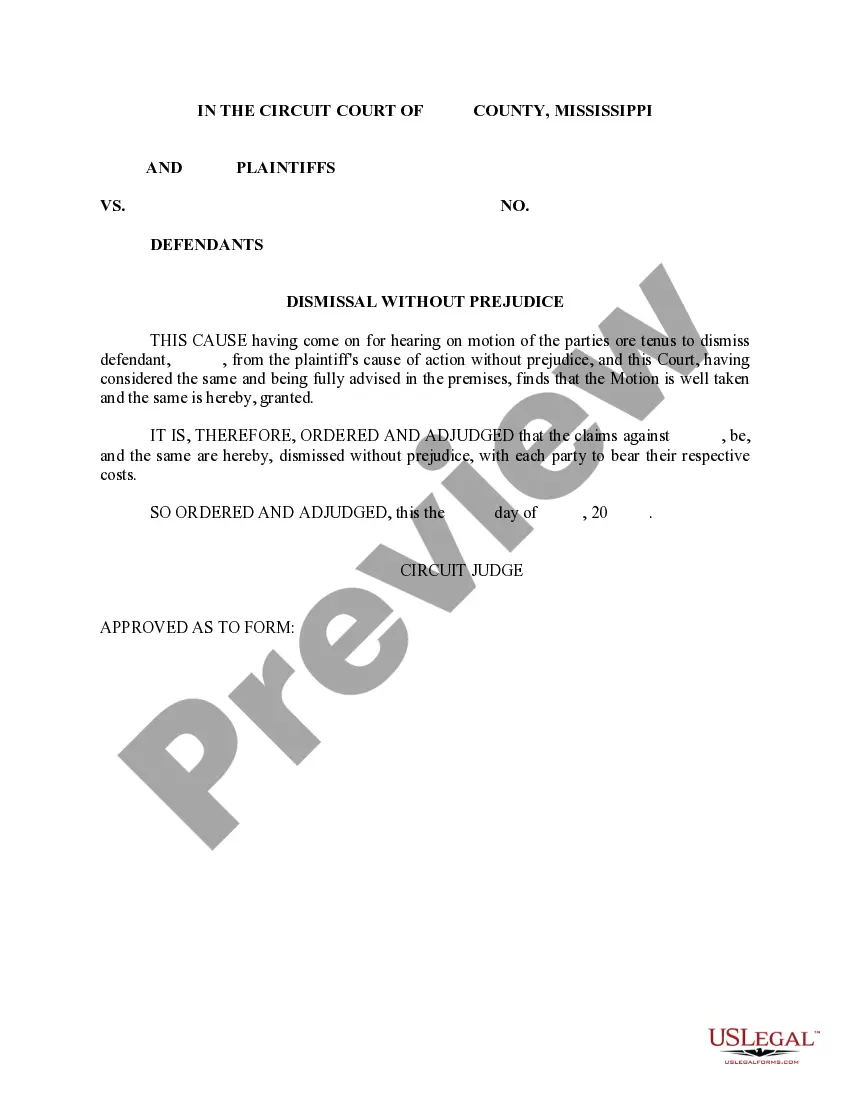
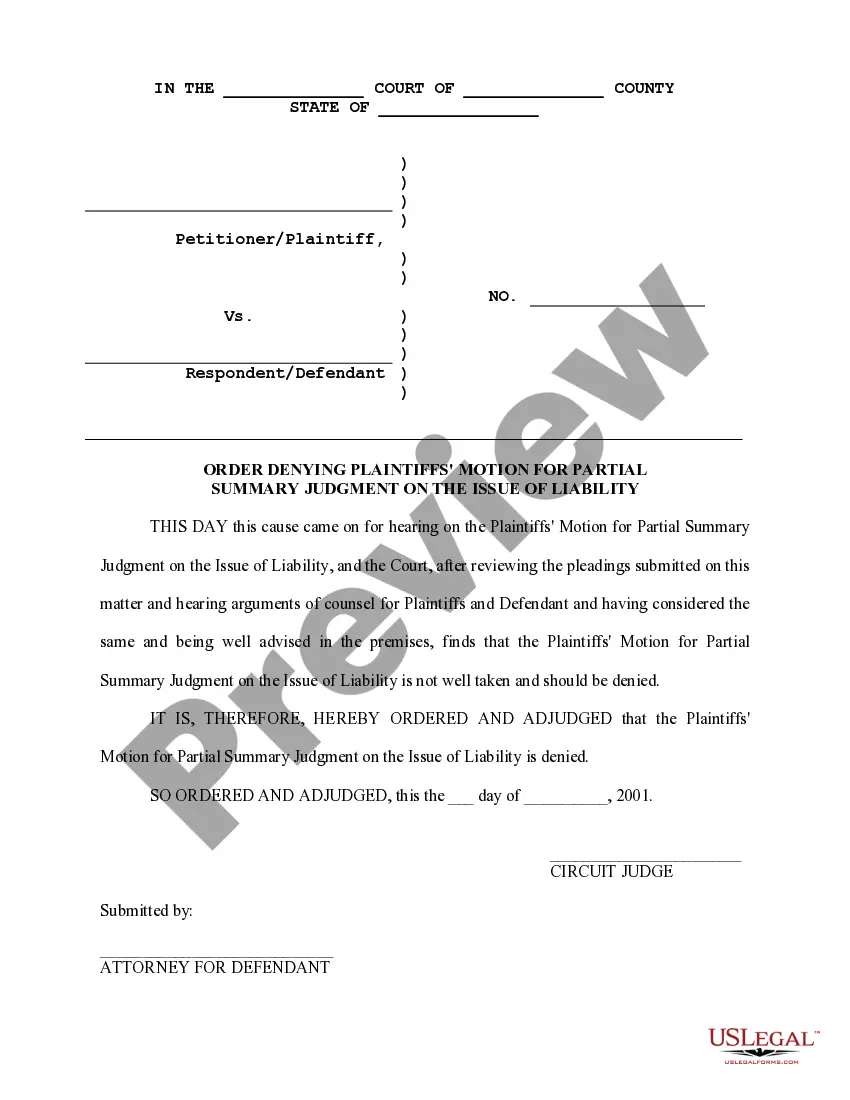
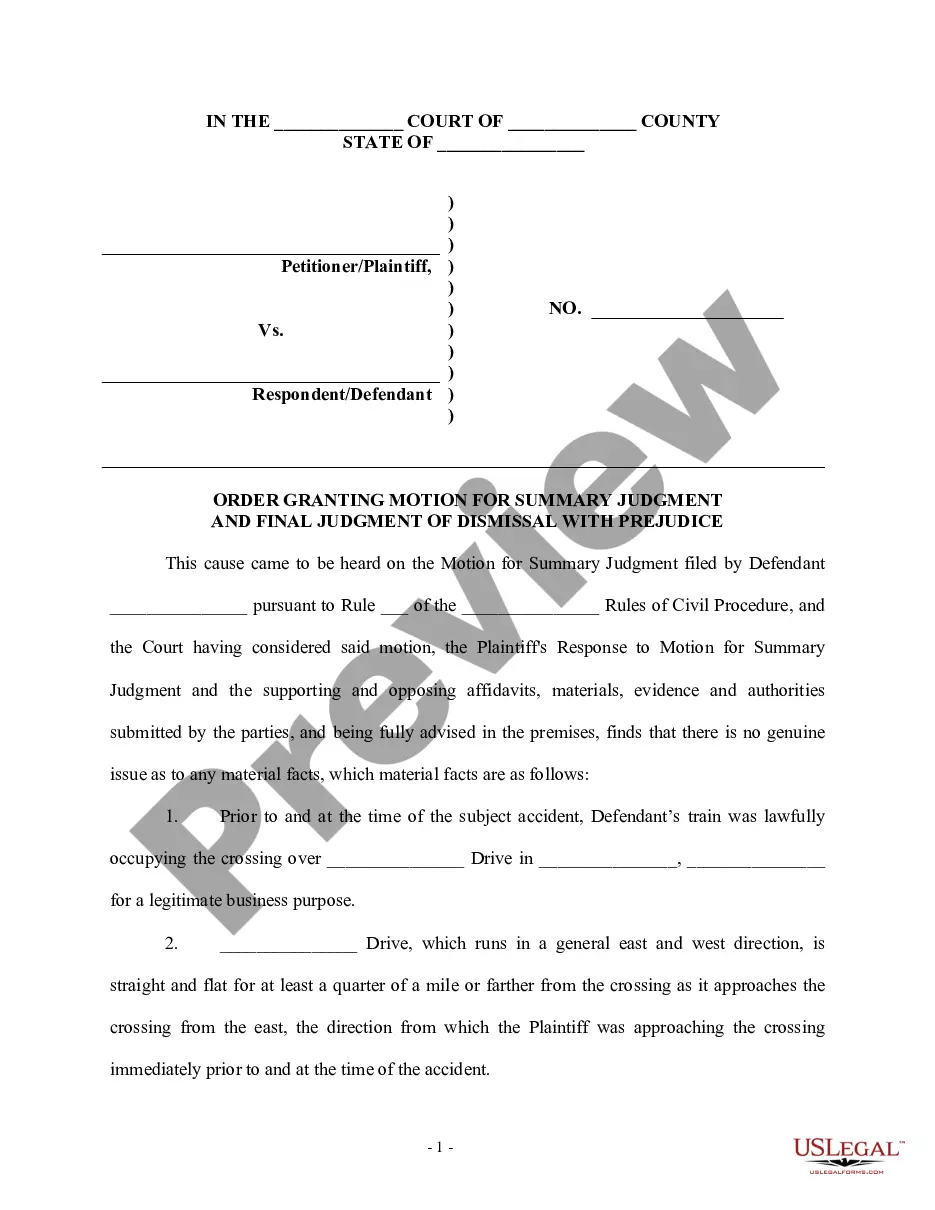
The Order Granting Partial Summary Judgment is an official document issued by a court that indicates a decision on a portion of the issues in a legal case, based on undisputed facts. This form commands a party to take or refrain from a specific action and is signed by a judge. This type of order is crucial in clarifying liability in civil proceedings, and it differs from other orders in that it addresses only particular legal issues rather than the entire case.
Key components of this form
- Court findings regarding the defendant's guilt based on fraudulent conduct alleged in the complaint.
- Clarification that no ruling is made on other allegations, such as negligence.
- Formal granting of the plaintiff's motion for summary judgment on the issue of liability.
- Establishment of the defendant's legal fault as it pertains to intentional and fraudulent conduct.
When to use this form
This form should be used in civil court cases where one party seeks to establish liability against another party based on undisputed facts. It is particularly relevant when a defendant has admitted to fraudulent conduct, allowing the court to issue a ruling on that issue without a full trial.
Who needs this form
- Plaintiffs seeking a legal declaration of liability in a civil case.
- Legal representatives filing motions for summary judgment on behalf of their clients.
- Defendants who have entered a guilty plea and are involved in related civil litigation.
Instructions for completing this form
- Identify the court that will be issuing the order.
- Enter the names of the parties involved in the case.
- Include the case number and relevant details about the previous guilty plea.
- Specify the findings of the court as they relate to the defendant's conduct.
- Have the judge sign the order to make it official.
Notarization guidance
Notarization is generally not required for this form. However, certain states or situations might demand it. You can complete notarization online through US Legal Forms, powered by Notarize, using a verified video call available anytime.
Get your form ready online
Our built-in tools help you complete, sign, share, and store your documents in one place.
Make edits, fill in missing information, and update formatting in US Legal Forms—just like you would in MS Word.
Download a copy, print it, send it by email, or mail it via USPS—whatever works best for your next step.
Sign and collect signatures with our SignNow integration. Send to multiple recipients, set reminders, and more. Go Premium to unlock E-Sign.
If this form requires notarization, complete it online through a secure video call—no need to meet a notary in person or wait for an appointment.
We protect your documents and personal data by following strict security and privacy standards.

Make edits, fill in missing information, and update formatting in US Legal Forms—just like you would in MS Word.

Download a copy, print it, send it by email, or mail it via USPS—whatever works best for your next step.

Sign and collect signatures with our SignNow integration. Send to multiple recipients, set reminders, and more. Go Premium to unlock E-Sign.

If this form requires notarization, complete it online through a secure video call—no need to meet a notary in person or wait for an appointment.

We protect your documents and personal data by following strict security and privacy standards.
Common mistakes
- Failing to accurately cite the case number or court details.
- Not clarifying the specific grounds for the motion for summary judgment.
- Omitting necessary signatures where required.
Advantages of online completion
- Accessibility for download at any time from your home or office.
- Templates are easy to edit, allowing customization to fit your specific case.
- Reliability of forms drafted by licensed attorneys, ensuring legal compliance.
Looking for another form?
Form popularity
FAQ
A summary judgement occurs when, in a civil case, one party wants to move to a court decision without a trial.When a motion for summary judgement is granted, it indicates there is sufficient evidence to declare one party the clear winner.
What happens during a motion for summary judgment hearing? Once the motion and response has been filed, the judge will read both and then preside over a hearing. At the hearing, each party will be given a certain amount of time to reiterate their argument in front of the judge.
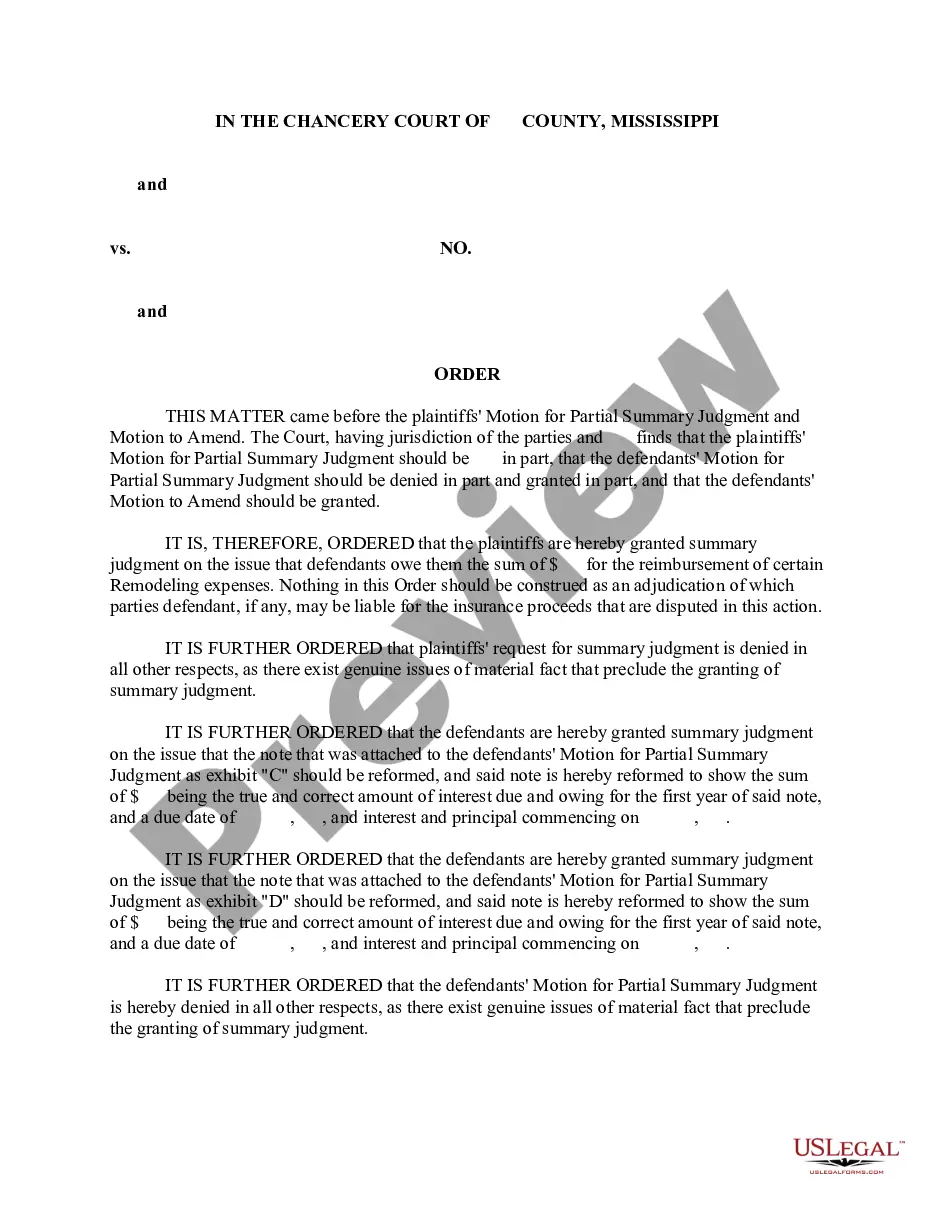
The grant of summary judgment usually results in a final judgment only if the grant resolves all issues as to all parties. An order for summary judgment is interlocutory if it does not entirely end the proceedings before the trial court.
If you win the summary judgment, then you get to do exactly what you were trying to do before the motion was ever filed, which is progress your client's case towards litigation with a chance of settlement. If you lose, then you can either file for an appeal or tell your client to give up but who would do that?
Generally, you should move all at once. However, you can move to dismiss various affirmative defenses, causes of action and/or counterclaims early on but there's a high chance of being denied as premature.
Partial summary judgment," as used in' this comment, refers to the granting of judgment on a portion of a single claim. It is not used to refer to the granting of judgment on a single claim where more than one claim is presented in a case.
The grant of summary judgment usually results in a final judgment only if the grant resolves all issues as to all parties. An order for summary judgment is interlocutory if it does not entirely end the proceedings before the trial court.
Motions filed, the percent of cases with motions granted in whole or in part, and the percent of cases terminated by summary judgment. The percentage of cases with summary judgment motions, averaged across the six courts in the study, has increased from approximately 12% in 1975, to 17% in 1985, to 19% in 1988.
Summary judgment orders usually cannot be appealed after a trial has taken place. The Ninth Circuit Court of Appeals called it a pointless academic exercise to review factual summary judgment issues after a trial in Banuelos v. Construction Laborers' Trust Funds for So. Calif., 382 F.