California Quitclaim Deed - Trust to Husband and Wife
What is this form?
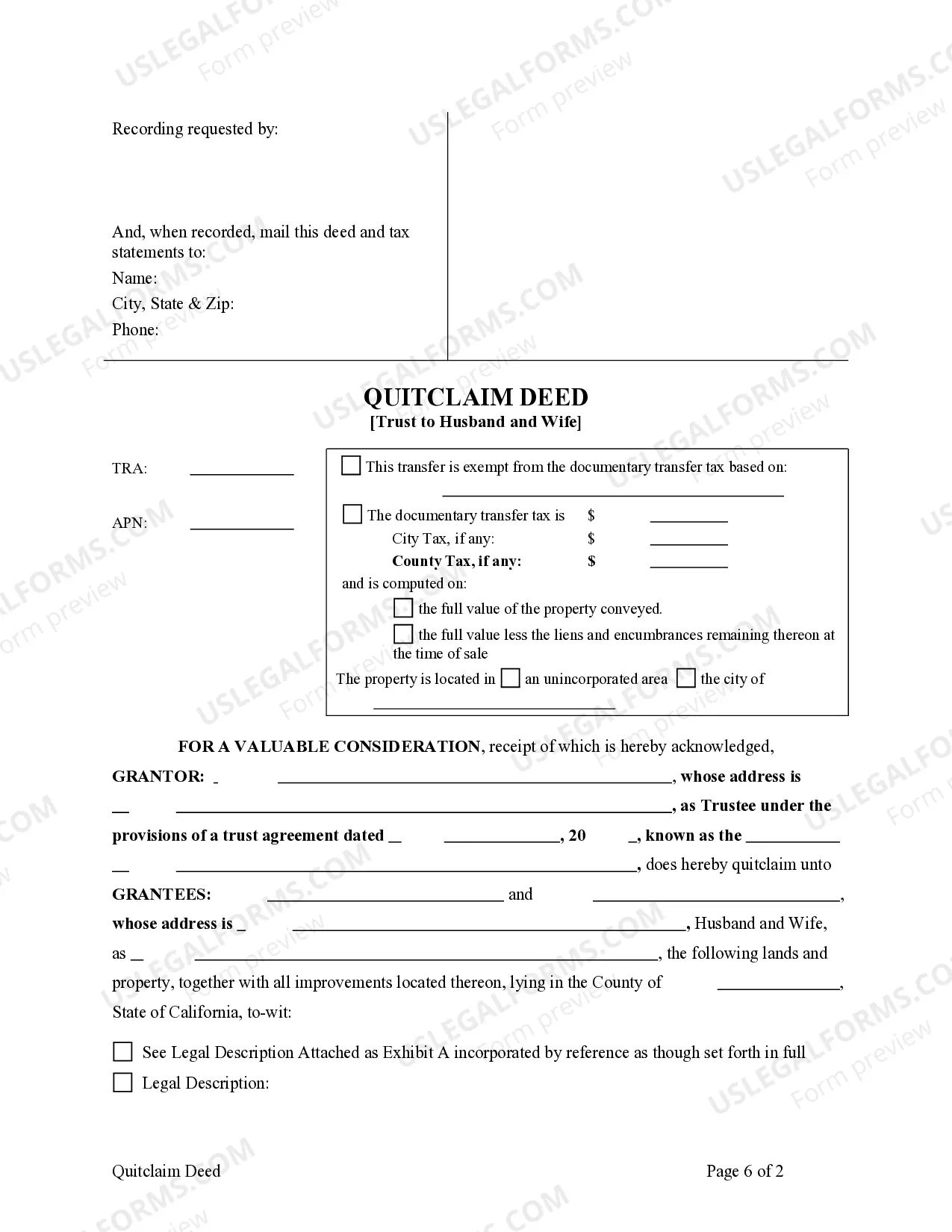
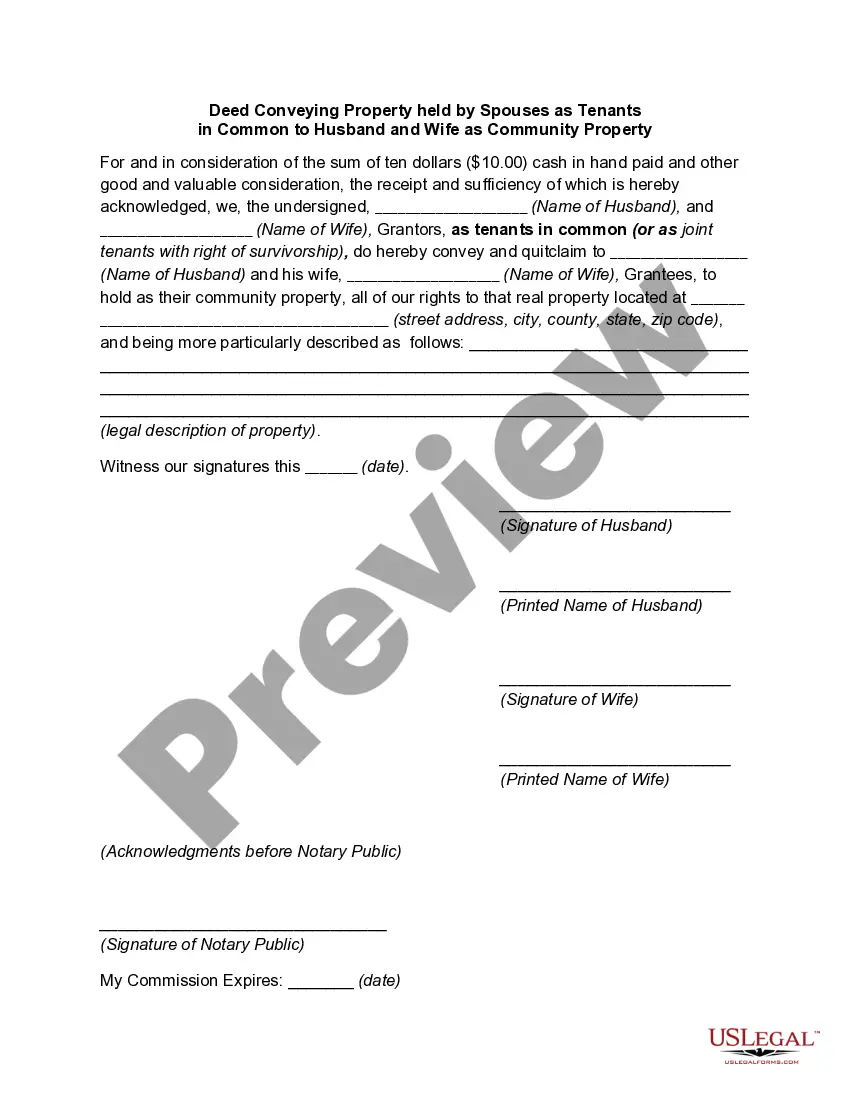
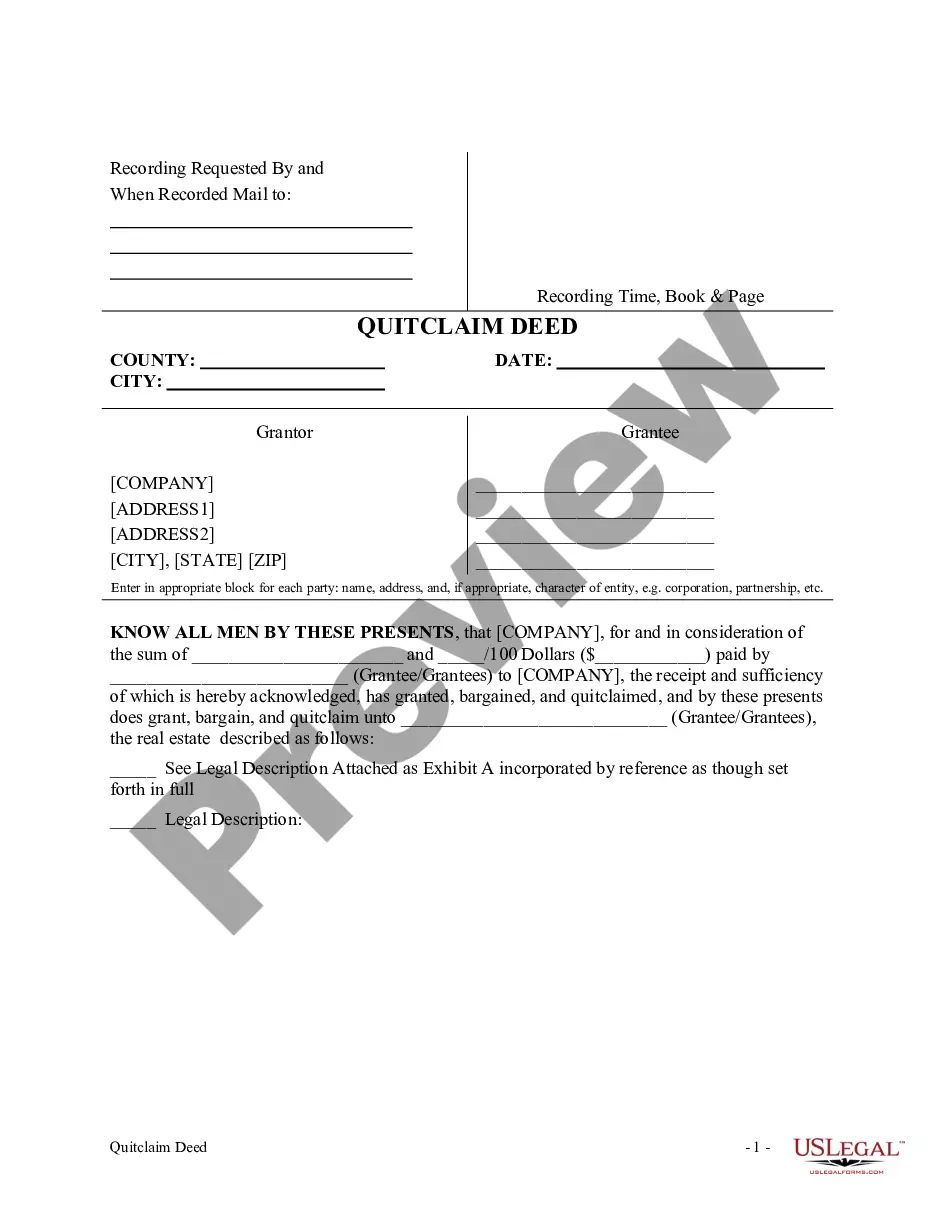
This Quitclaim Deed allows a trust to transfer property ownership to a husband and wife. It is specifically designed for circumstances where property is conveyed to both parties as community property, joint tenants, or common tenants. Unlike other deeds, the Quitclaim Deed does not guarantee title, but simply transfers whatever interest the trust has in the property to the couple.
Main sections of this form
- Identification of the grantor (the trust) and grantees (husband and wife).
- Description of the property being transferred.
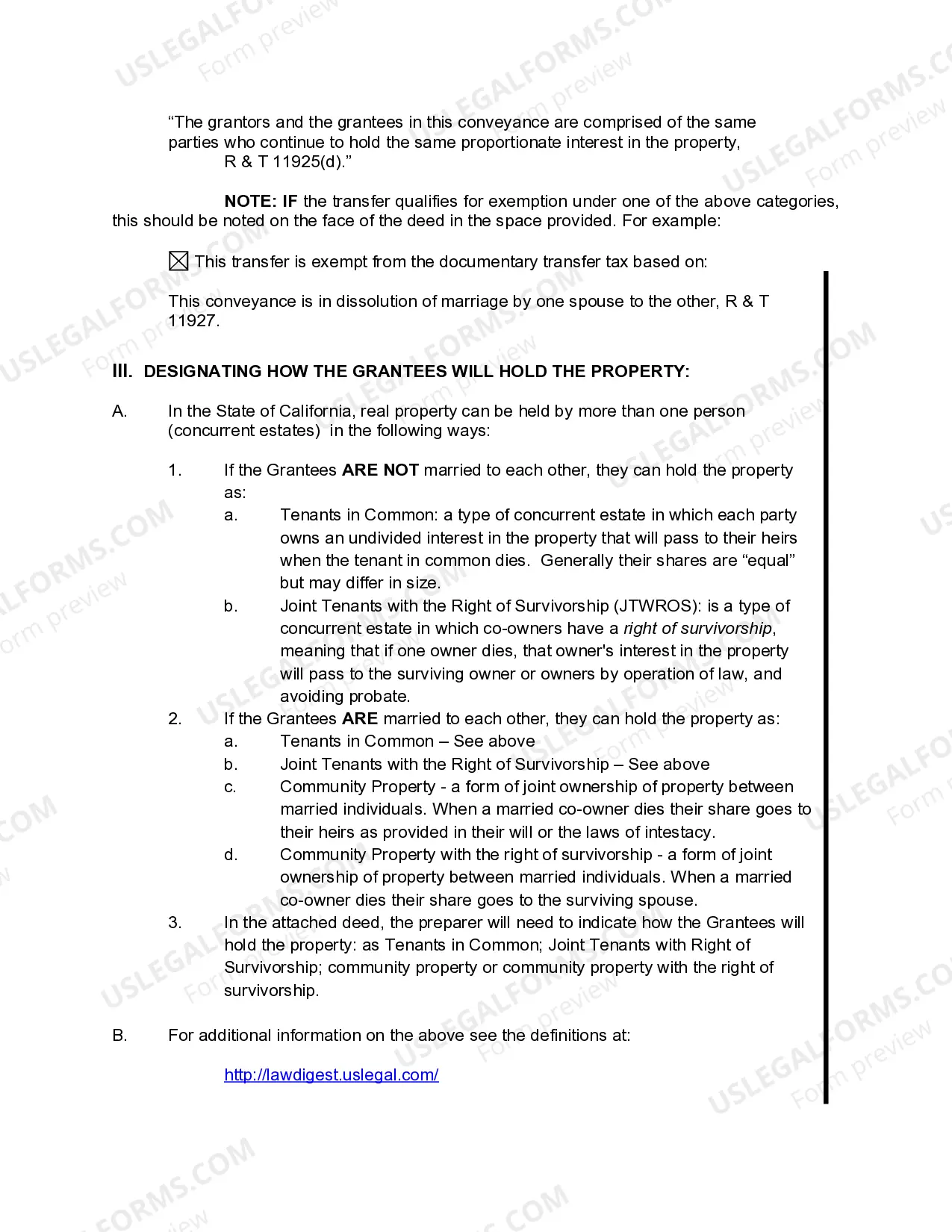
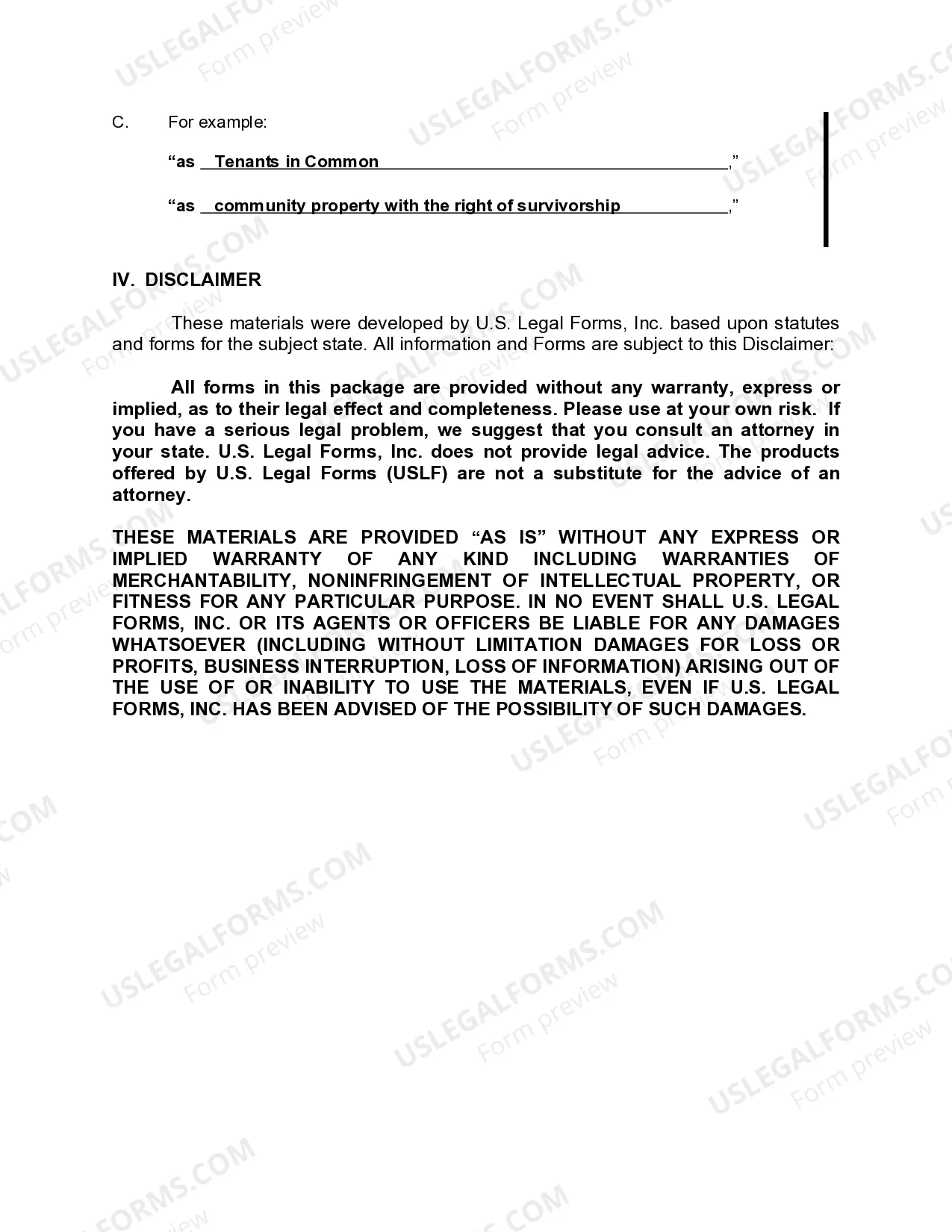
- Choice of how the grantees will hold the property (e.g., community property, joint tenants).
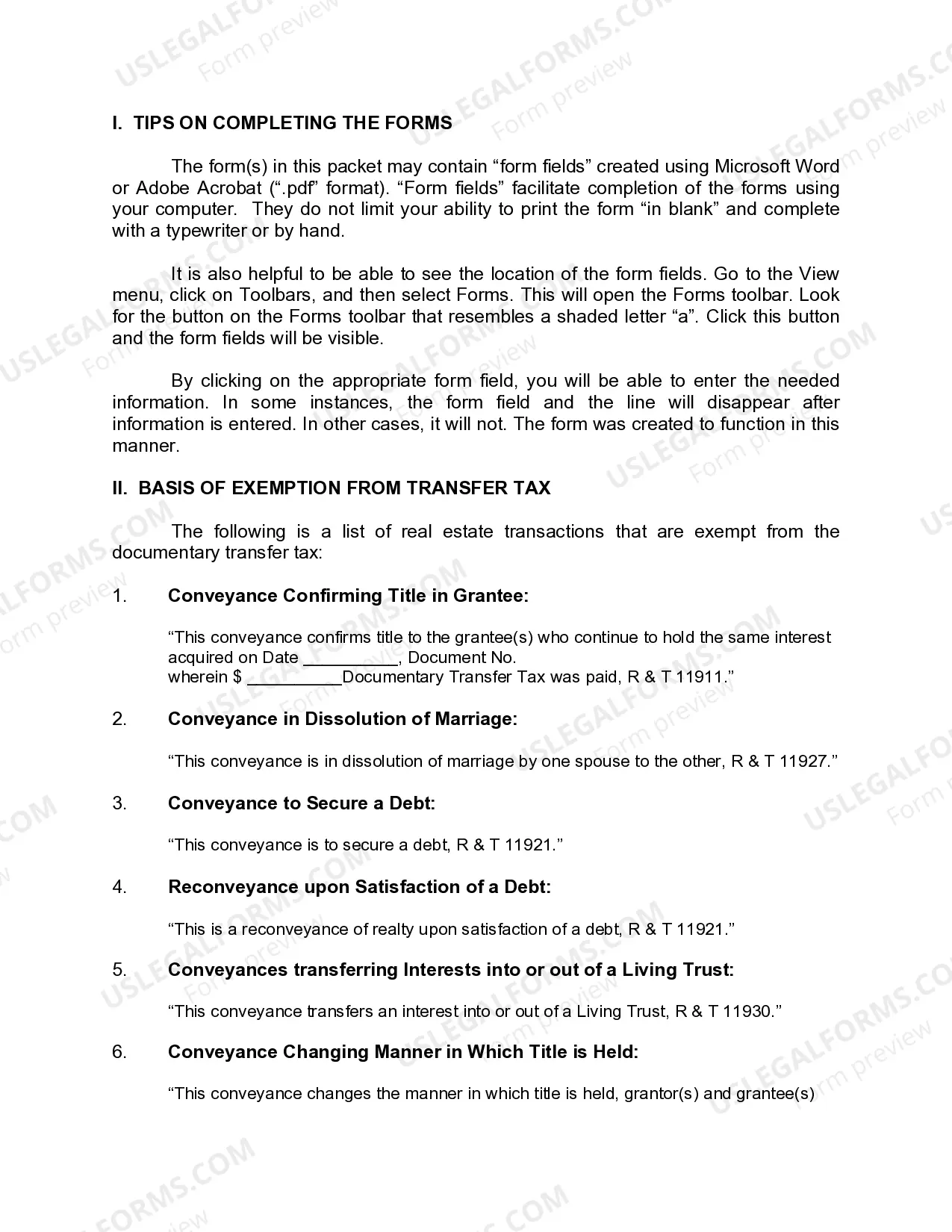
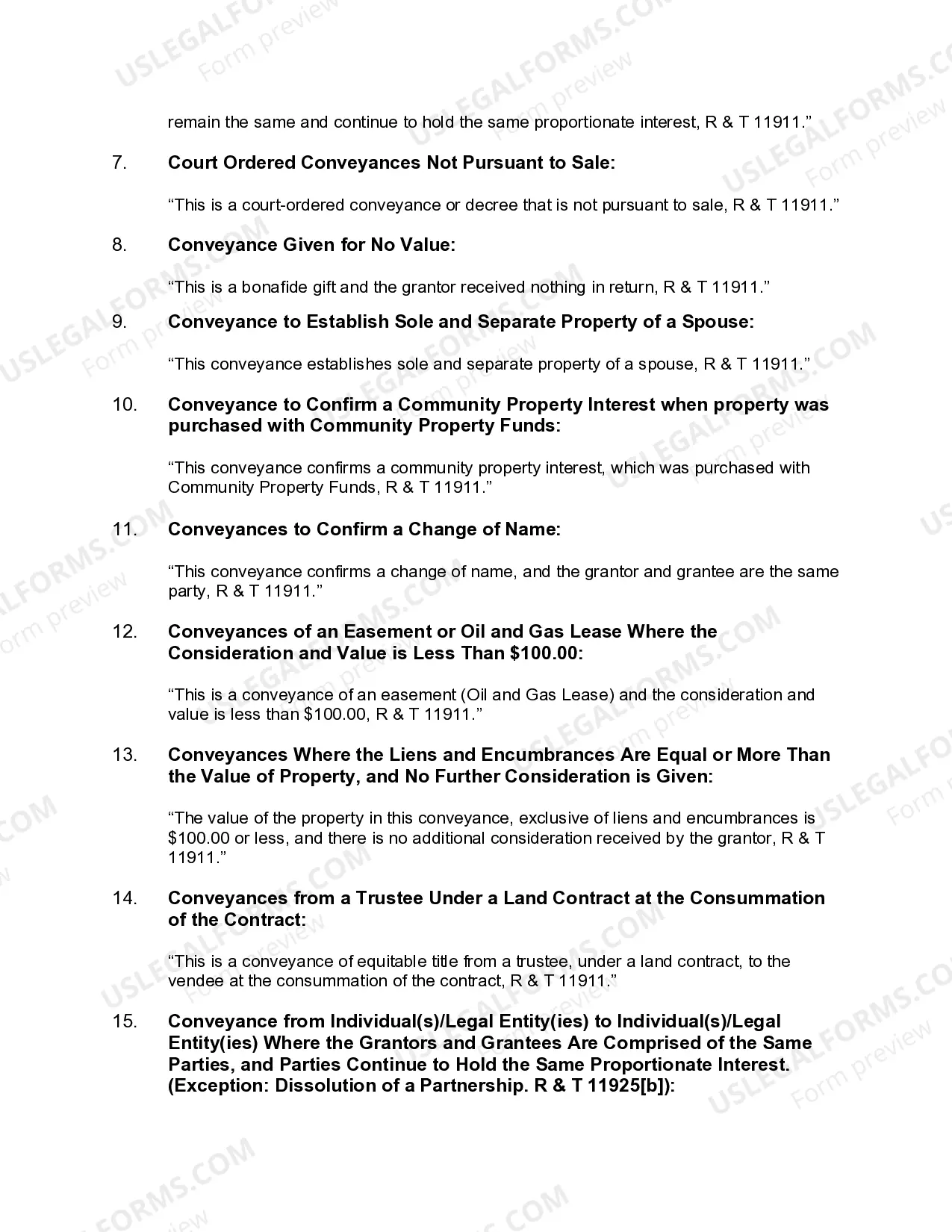
- Inclusion of any exemptions from transfer tax.
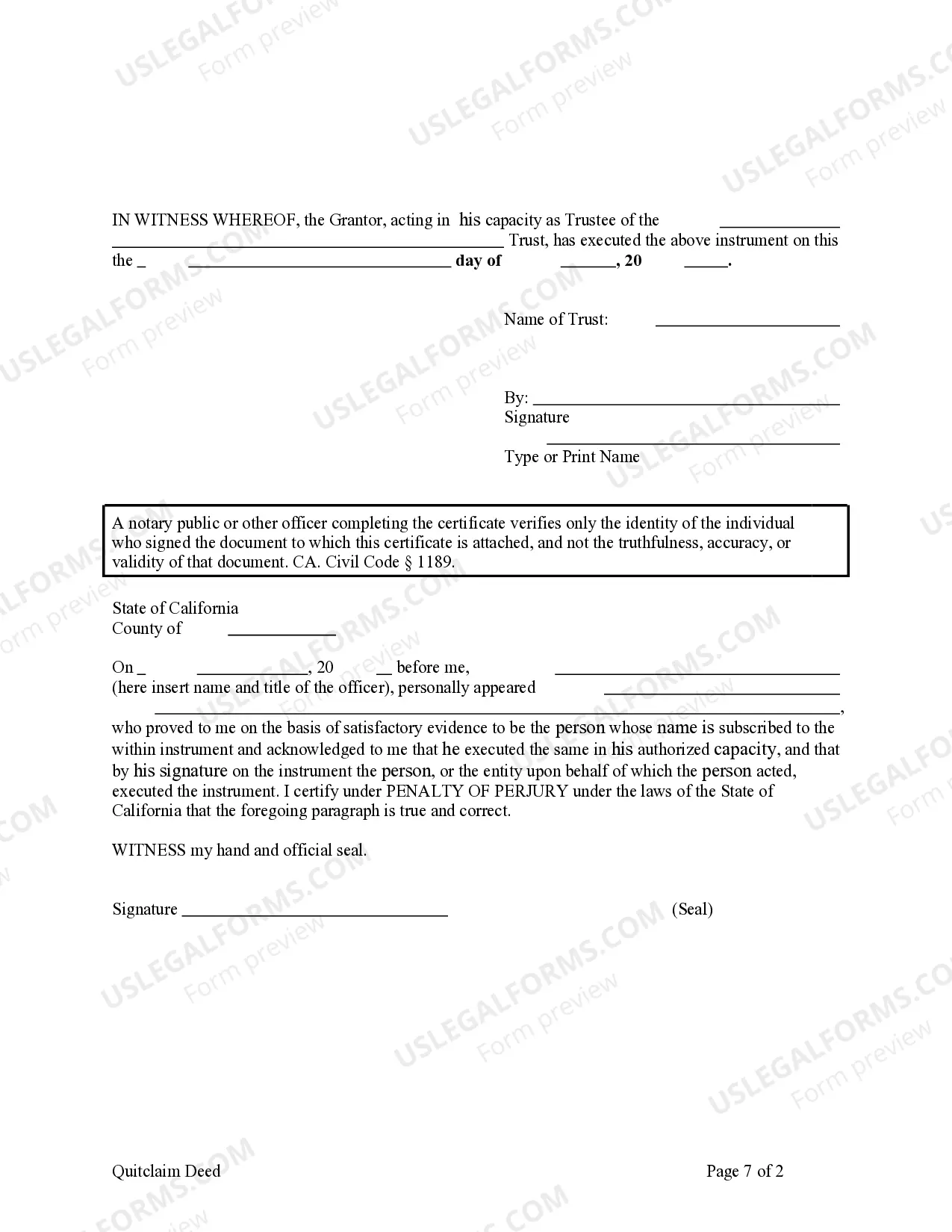
- Signatures of both grantees and a witness or notary, if applicable.



When this form is needed
You should use this Quitclaim Deed when transferring property from a trust to a husband and wife. This form is particularly useful in situations where you wish to designate property as community property or to simplify the transfer of real estate between spouses.
Who needs this form
- Individuals or couples looking to transfer real property from a trust.
- Married couples wishing to clarify how they hold property together.
- Trustees who need to execute property transfers as part of estate planning.
How to prepare this document
- Identify the grantor as the trust and the grantees as the husband and wife.
- Clearly describe the property being transferred.
- Select the manner in which the grantees will hold the property (e.g., community property or joint tenants).
- Enter the date of the transfer and any necessary exemptions from transfer tax.
- Obtain the required signatures from both grantees and complete any necessary notarization.
Does this form need to be notarized?
Notarization is required for this form to take effect. Our online notarization service, powered by Notarize, lets you verify and sign documents remotely through an encrypted video session, available 24/7.
Get your form ready online
Our built-in tools help you complete, sign, share, and store your documents in one place.
Make edits, fill in missing information, and update formatting in US Legal Forms—just like you would in MS Word.
Download a copy, print it, send it by email, or mail it via USPS—whatever works best for your next step.
Sign and collect signatures with our SignNow integration. Send to multiple recipients, set reminders, and more. Go Premium to unlock E-Sign.
If this form requires notarization, complete it online through a secure video call—no need to meet a notary in person or wait for an appointment.
We protect your documents and personal data by following strict security and privacy standards.

Make edits, fill in missing information, and update formatting in US Legal Forms—just like you would in MS Word.

Download a copy, print it, send it by email, or mail it via USPS—whatever works best for your next step.

Sign and collect signatures with our SignNow integration. Send to multiple recipients, set reminders, and more. Go Premium to unlock E-Sign.

If this form requires notarization, complete it online through a secure video call—no need to meet a notary in person or wait for an appointment.

We protect your documents and personal data by following strict security and privacy standards.
Common mistakes to avoid
- Failing to clearly describe the property in detail.
- Not selecting the appropriate manner of hold for the property.
- Neglecting to have the form notarized when required by local law.
- Forgetting to include necessary signatures or dates, leading to an incomplete form.
Benefits of using this form online
- Convenient access to a legally compliant form that can be filled out at your own pace.
- Editable and adaptable to specific circumstances without having to visit an attorney's office.
- Instant download, allowing for immediate use once completed.
Looking for another form?
Form popularity
FAQ
If your name is not on a deed in California, your rights to that property can still be significant, especially under community property laws. As a spouse, you may have rights to half of the property acquired during the marriage, even without being listed as an owner on the deed. This is why understanding the California Quitclaim Deed - Trust to Husband and Wife is crucial, as it can help clarify ownership and rights concerning property.
In California, when one spouse signs a quitclaim deed transferring property to the other spouse, it typically means that the transferring spouse relinquishes any claim to that property. However, this does not affect the spouse's marital rights to the property under California community property laws. Therefore, if you are considering the California Quitclaim Deed - Trust to Husband and Wife, understanding these nuances is important to protect both spouses' interests.
In divorce situations, a quitclaim deed is commonly utilized to transfer property interests between former spouses. This type of deed allows for a straightforward relinquishment of claims, facilitating the division of assets during legal proceedings. A California quitclaim deed can help clarify ownership rights for a husband and wife, ensuring that both parties understand their responsibilities and claims post-divorce. Consider consulting US Legal Forms for guidance on creating effective quitclaim deeds during this transition.
A quitclaim deed for a married couple allows one spouse to transfer their property interest to the other without any warranties. This method is often used to simplify ownership, especially when preparing a trust for estate planning. By using a California quitclaim deed, both partners can clarify their property rights and secure their intentions regarding asset distribution. This makes it easier to manage shared investments and properties.
For married couples, a joint tenancy deed is often the best choice, allowing both partners to share equal ownership. However, a California quitclaim deed can also serve effectively when one spouse wishes to transfer their interest to the other. This is particularly relevant in creating a trust between husband and wife, as it simplifies the transfer process and formalizes their shared intentions. Ultimately, the decision may depend on specific needs and circumstances.
A quitclaim deed is most often used to transfer property interests without any guarantees about the title's quality. It enables a person to relinquish any claim they have to a property, making it particularly useful for settling disputes or changing property ownership among family members. Using a California quitclaim deed allows a husband and wife to update ownership, especially when creating trusts or managing joint assets. It's a straightforward legal tool for property transactions.
A quitclaim deed primarily benefits individuals transferring property ownership without the need for extensive documentation. This type of deed is often used in situations involving family transfers, such as between spouses or parents to children, making it simple to transfer rights. In the context of California quitclaim deeds, both the trust and the husband and wife can enjoy smooth ownership transitions. Furthermore, it eliminates the need for complex legal procedures.
To record a deed of trust in California, you must first prepare the document, ensuring it complies with state requirements. Next, submit the deed to the county recorder's office where the property is located, along with any applicable fees. After recording, the deed becomes part of public records, providing protection for all parties involved. For detailed guidance, consider using US Legal Forms, where you can find templates and assistance.
A spouse might execute a quitclaim deed to formalize changes in property ownership, simplify the transfer during divorce, or clarify ownership for estate planning purposes. This deed can effectively seal the intention of one spouse to give up their claim on the property, which can be essential for financial decisions. Involving a California Quitclaim Deed - Trust to Husband and Wife can enhance the management of shared property, providing a clear path for both legal ownership and trust-related duties.
A quitclaim deed between husband and wife typically involves one spouse transferring their interest in a property to the other spouse. This can occur during divorce settlements, estate planning, or simply to clarify ownership. Utilizing a quitclaim deed, especially in the context of a California Quitclaim Deed - Trust to Husband and Wife, allows couples to efficiently manage property ownership and align it with their trust agreements. This can help avoid future disputes and clarify intentions.