California Deed of Rescission - Individual to Individual
Understanding this form
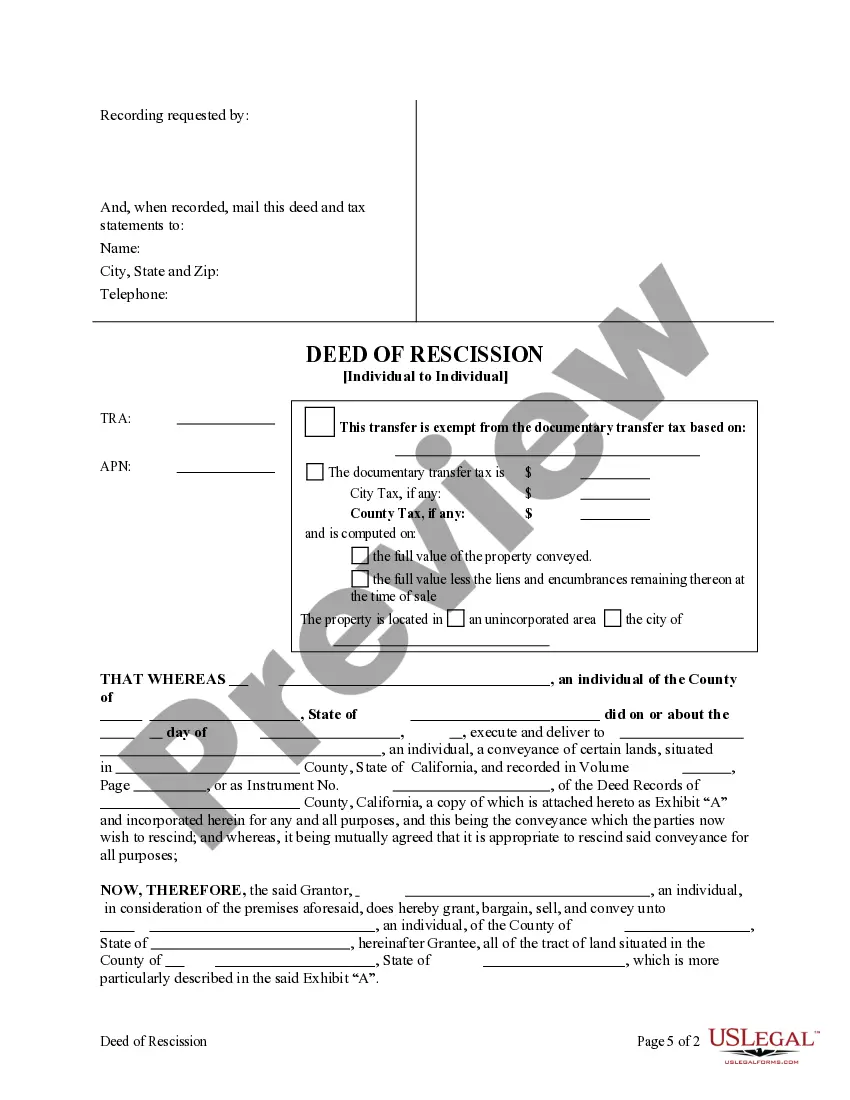
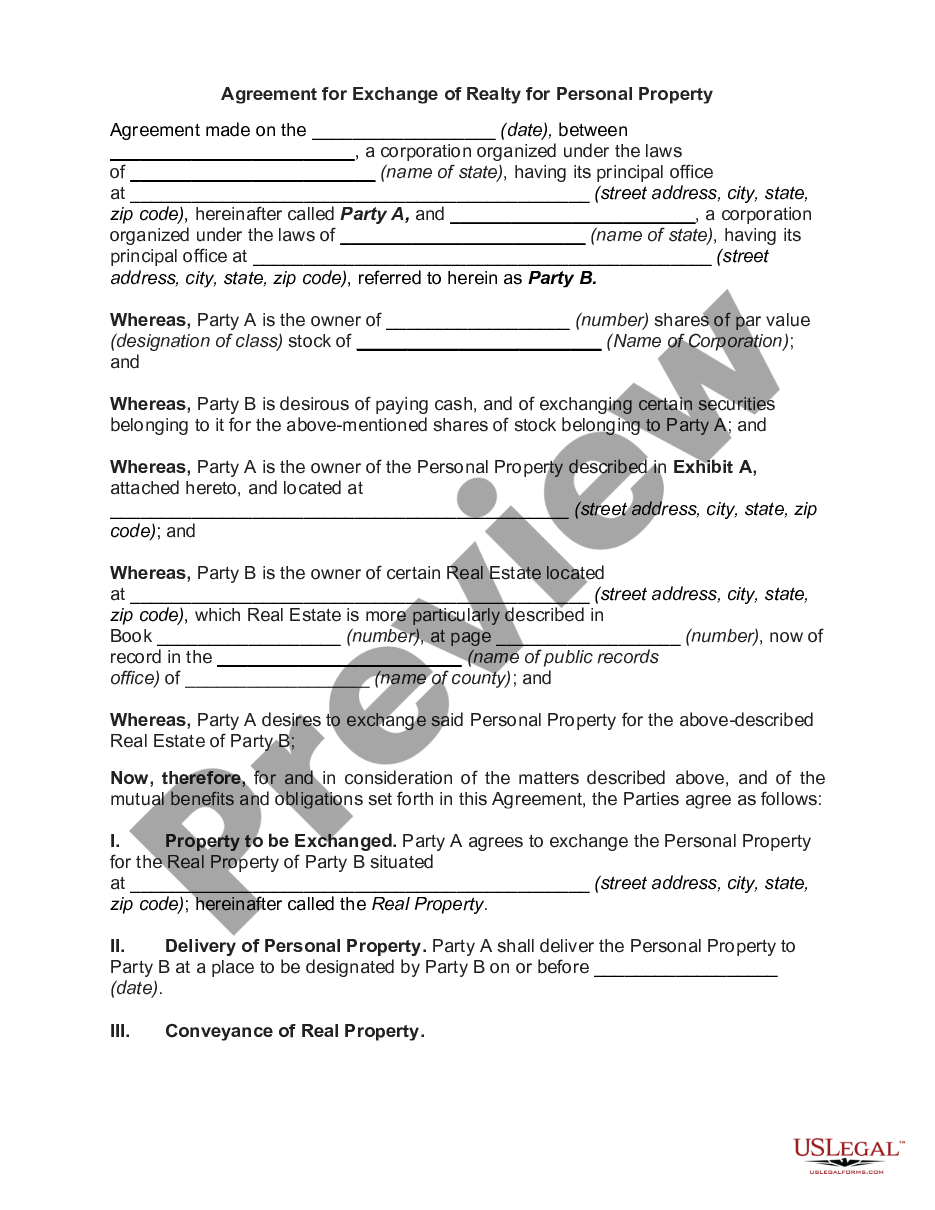
The Deed of Rescission - Individual to Individual is a legal document used to cancel a previous transfer of real estate between two individuals. This form specifically indicates that the grantor (the person who previously transferred the property) is executing the deed to retract that transfer, returning the property to the grantee (the person who received it). This type of deed ensures compliance with state laws while officially documenting the reversal of ownership. Unlike other forms, the deed of rescission focuses solely on unwinding a prior transaction rather than establishing new ownership or transferring rights.
Key parts of this document
- Grantor's Details: Information regarding the individual rescinding the property transfer.
- Grantee's Details: Information about the individual receiving the property back.
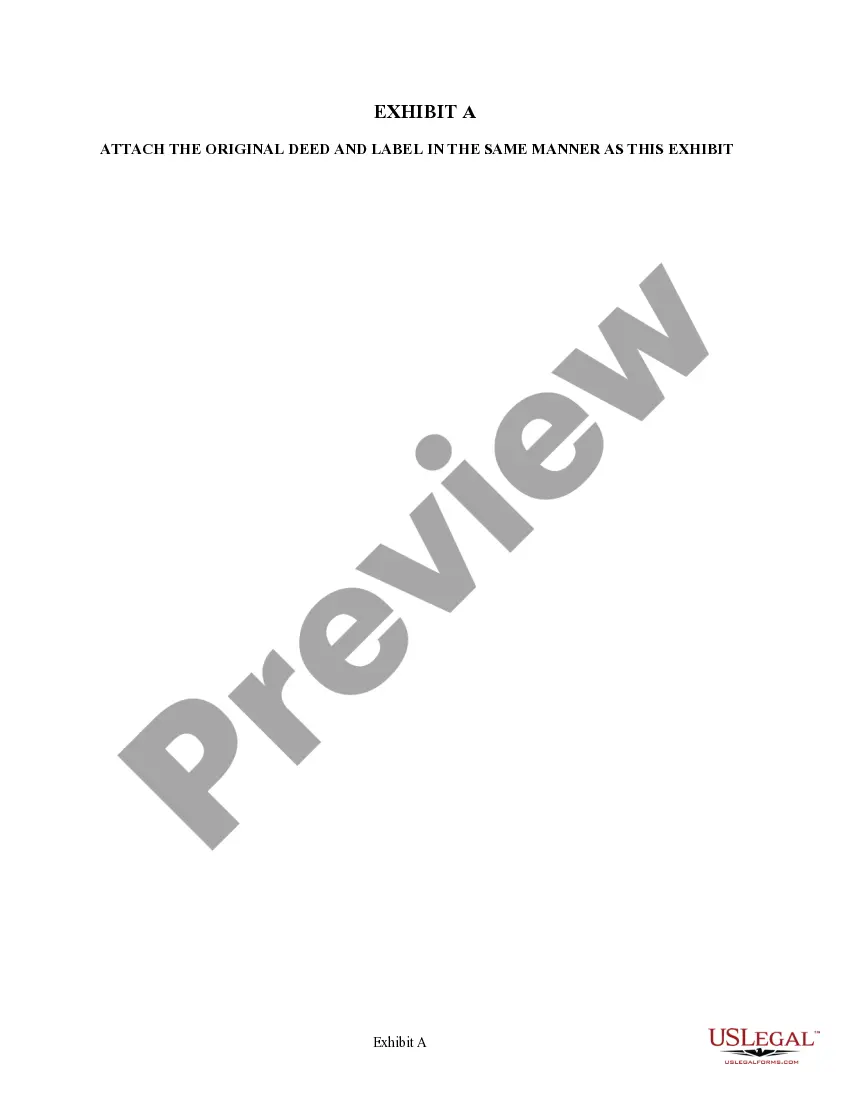
- Description of Property: A clear description of the real estate being rescinded.
- Legal Compliance: Clauses ensuring adherence to all state statutory laws.
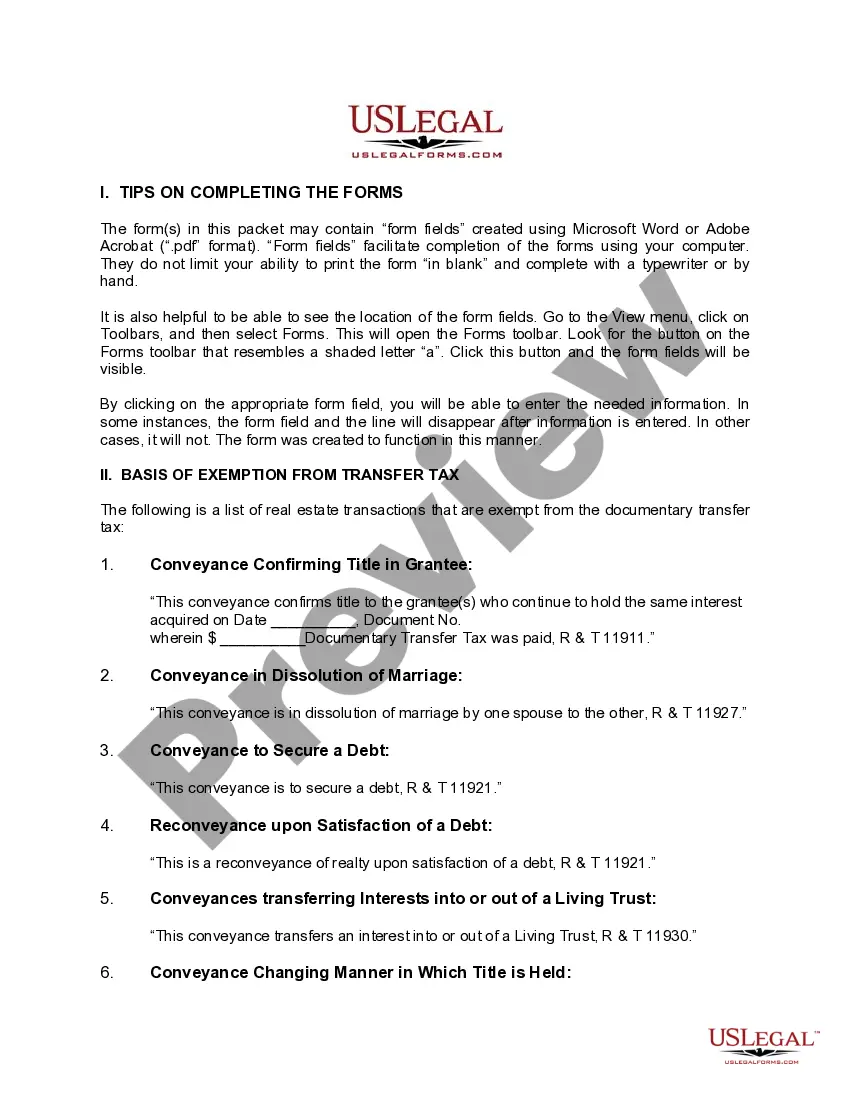
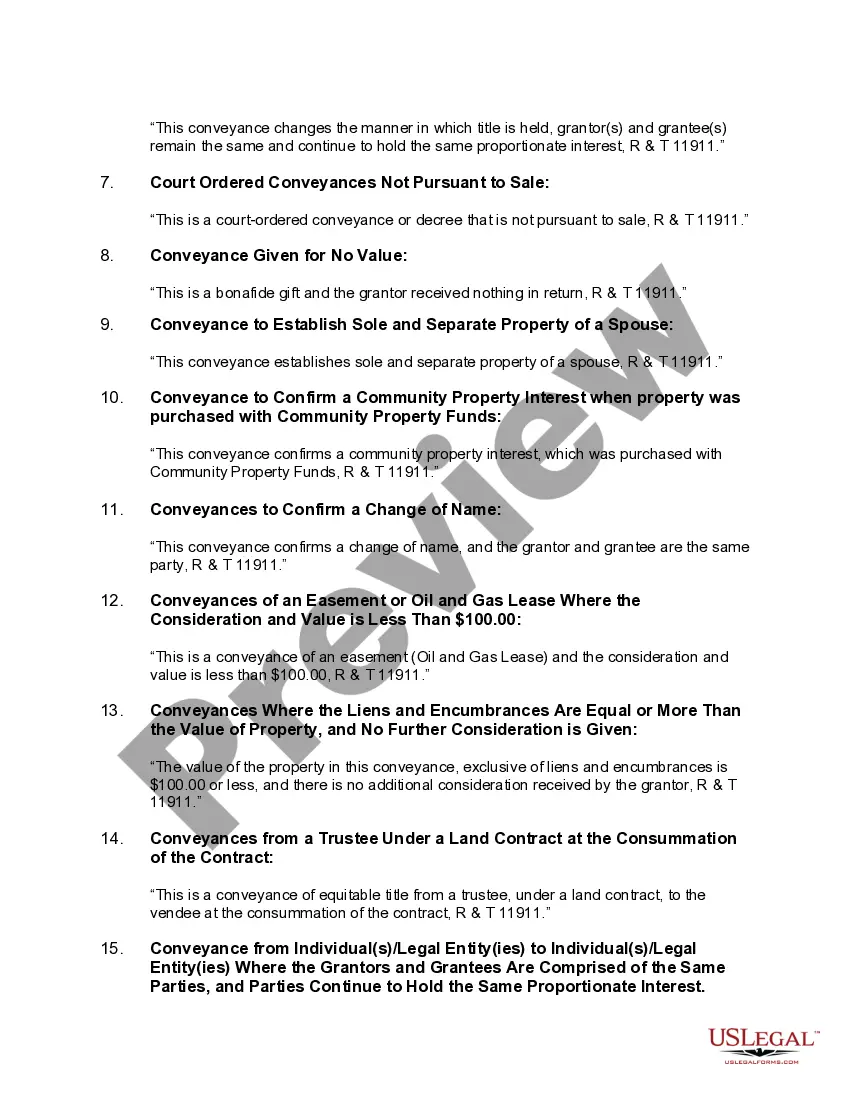
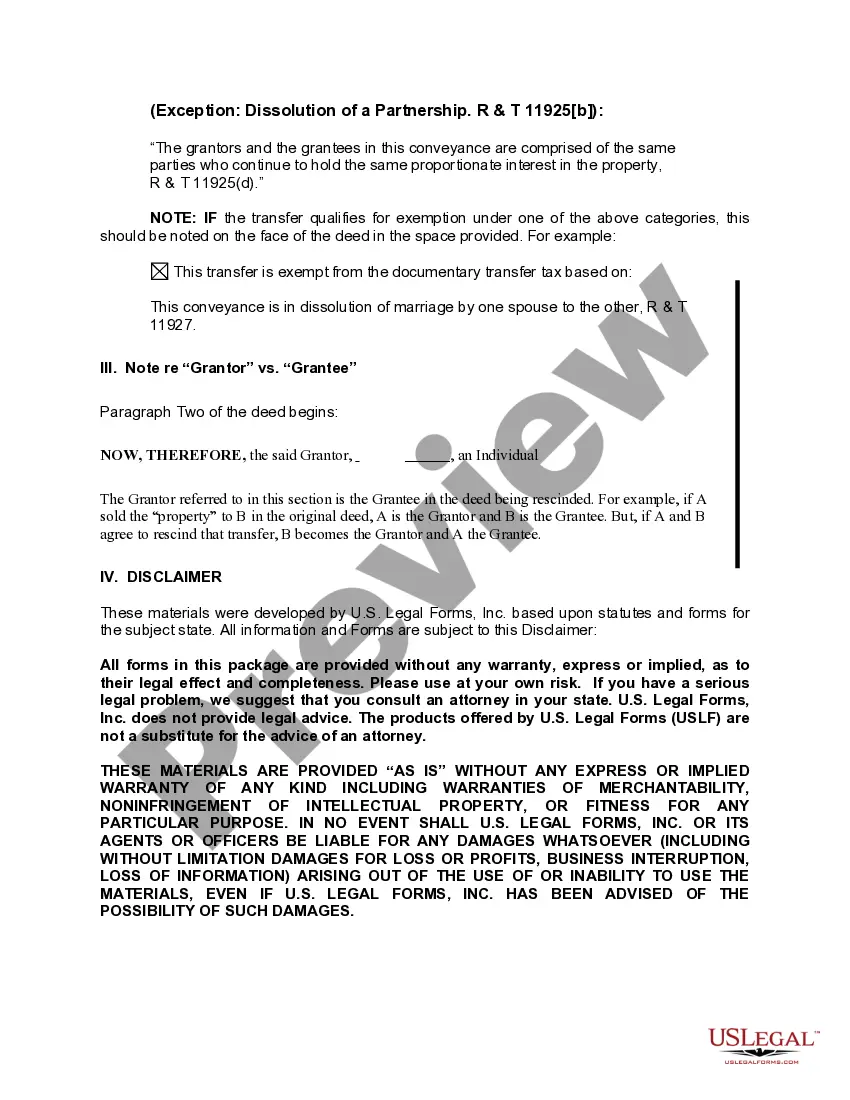
- Transfer Tax Exemption: Options to indicate if the transaction is exempt from transfer taxes.

Situations where this form applies
This form is essential when individuals wish to reverse a real estate transaction. Circumstances may include the annulment of a property sale, a mutual agreement to rescind a gift of property, or resolving disputes regarding ownership. It is particularly useful in situations where the initial transfer was made in error or where one party has a compelling reason to cancel the prior agreement.
Who can use this document
This form is intended for:
- Individuals who acted as grantors in a previous property transfer.
- Individuals who are grantees looking to formally undo a previous transaction.
- Parties involved in a real estate dispute needing to document a rescission.
How to prepare this document
- Identify the grantor and grantee, including their full names and addresses.
- Provide a clear legal description of the property being rescinded.
- Complete the date of the original transfer and any pertinent document number.
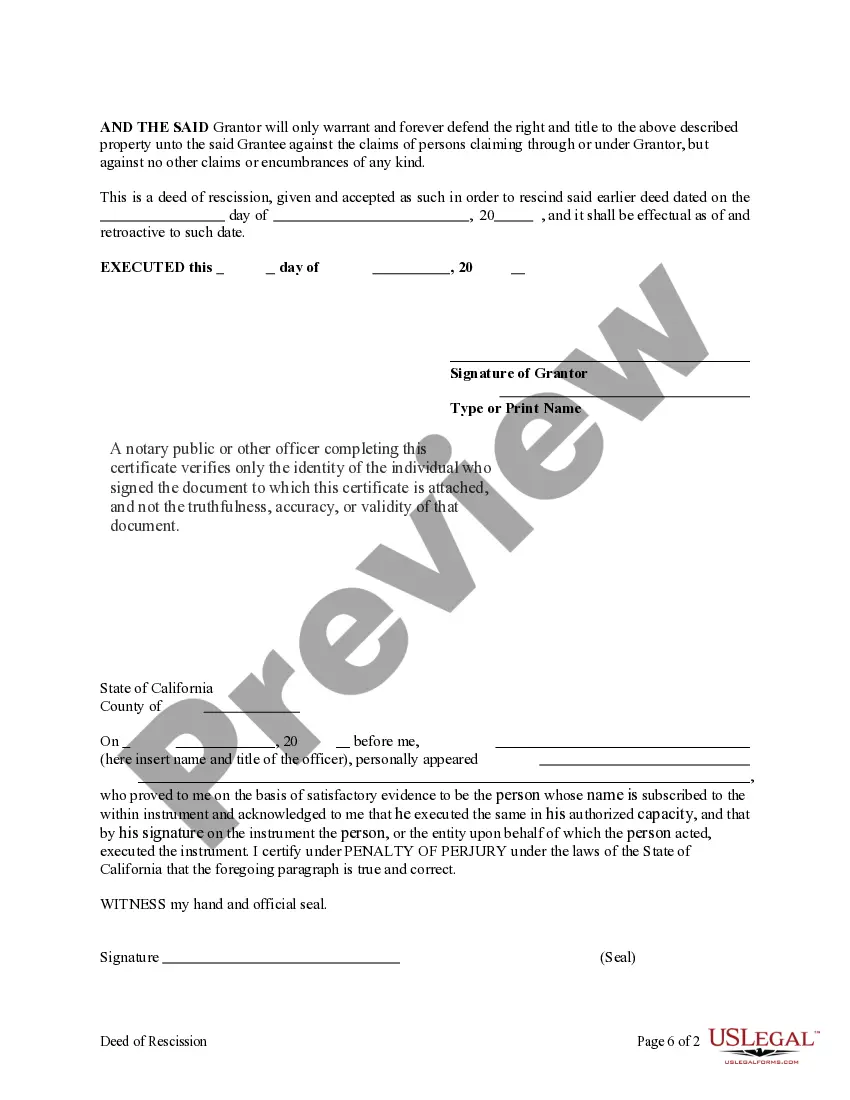
- Sign the form in the presence of a notary if required by local law.
- Include any notes regarding exemptions from transfer tax in the appropriate section.
Notarization guidance
This form does not typically require notarization unless specified by local law. However, it is advisable to have it notarized to enhance credibility and legal validity.
Get your form ready online
Our built-in tools help you complete, sign, share, and store your documents in one place.
Make edits, fill in missing information, and update formatting in US Legal Forms—just like you would in MS Word.
Download a copy, print it, send it by email, or mail it via USPS—whatever works best for your next step.
Sign and collect signatures with our SignNow integration. Send to multiple recipients, set reminders, and more. Go Premium to unlock E-Sign.
If this form requires notarization, complete it online through a secure video call—no need to meet a notary in person or wait for an appointment.
We protect your documents and personal data by following strict security and privacy standards.

Make edits, fill in missing information, and update formatting in US Legal Forms—just like you would in MS Word.

Download a copy, print it, send it by email, or mail it via USPS—whatever works best for your next step.

Sign and collect signatures with our SignNow integration. Send to multiple recipients, set reminders, and more. Go Premium to unlock E-Sign.

If this form requires notarization, complete it online through a secure video call—no need to meet a notary in person or wait for an appointment.

We protect your documents and personal data by following strict security and privacy standards.
Common mistakes
- Failing to include a clear description of the property.
- Not providing correct names or addresses for the grantor and grantee.
- Neglecting to check state-specific requirements for notarization or filing.
- Omitting the date of the original transfer transaction.
Advantages of online completion
- Convenient access: Download and complete the form at your own pace.
- Editability: Customize the form easily with your information using Microsoft Word or Adobe Acrobat.
- Legal compliance: Ensure the form adheres to state-specific laws.
Summary of main points
- The Deed of Rescission reverses a prior property transfer between two individuals.
- It is critical to ensure all details are correct to avoid legal issues.
- Consulting with a legal professional can help clarify local requirements.
Looking for another form?
Form popularity
FAQ
Yes, you can remove yourself from a deed by utilizing a California Deed of Rescission - Individual to Individual. This legal document helps undo a previous deed, effectively restoring the property ownership to its original status. It's important to ensure that all parties involved in the deed agree to the rescission. Using platforms like US Legal Forms can simplify the process and provide you with the necessary templates and guidance.
Adding someone to a deed in California may have tax implications, as it can be considered a gift, which could trigger gift taxes if the property value exceeds a certain threshold. Additionally, property reassessment may occur, affecting property taxes. It’s advisable to consult with a tax professional to fully understand the implications of using a California Deed of Rescission - Individual to Individual in your specific situation.
To add someone to a deed in California, start by preparing a new grant deed that includes both the original owner and the new co-owner's information. After signing the deed, file it with the local county recorder’s office to make it official. Platforms like US Legal Forms can provide you with the necessary templates and guidance.
The best way to add someone to a deed is to create a new deed that reflects the changes. This process usually includes drafting, signing, and then filing the new deed with the county recorder's office. Using online services, like US Legal Forms, can simplify this process and ensure accuracy.
Yes, you can add someone to your house deed in California. This typically involves drafting a new grant deed that includes both names. Utilizing the correct forms, like those available on US Legal Forms, ensures that the addition is legally recognized and properly documented.
The best way to transfer property between family members is through a grant deed or a quitclaim deed. These methods are generally straightforward and can minimize potential legal complications. Using a California Deed of Rescission - Individual to Individual can also be helpful if there are existing deeds that need to be rescinded during the transfer.
Yes, you can rescind a deed in California using a California Deed of Rescission - Individual to Individual. This legal document nullifies the original deed, effectively restoring ownership to the grantor. It's essential to follow the proper procedures to ensure the rescission is legally binding.
To fill out a California grant deed, you must provide the grantor's name, the grantee's name, and a legal description of the property. Ensure to include the date of execution and the signatures of the parties involved. For a smooth process, consider using online resources or platforms like US Legal Forms, which guide you through the steps necessary for a valid deed transfer.
To rescind a deed in California, you generally need to draft a California Deed of Rescission - Individual to Individual. This document explicitly states the intent to nullify the original deed and must comply with state laws. It usually requires signatures from all parties involved, and filing it with the appropriate county office is crucial for it to take effect. Legal platforms like uslegalforms can provide templates and guidance throughout this process.
In California, the two principal types of deeds are grant deeds and quitclaim deeds. A grant deed provides a warranty that the property has not been sold to anyone else, while a quitclaim deed transfers whatever interest the grantor has without guarantee. Each has its uses depending on the situation, and understanding their differences can help in making informed choices. Consider your options carefully when dealing with property transfers.