Missouri Concrete Mason Contract for Contractor
Understanding this form
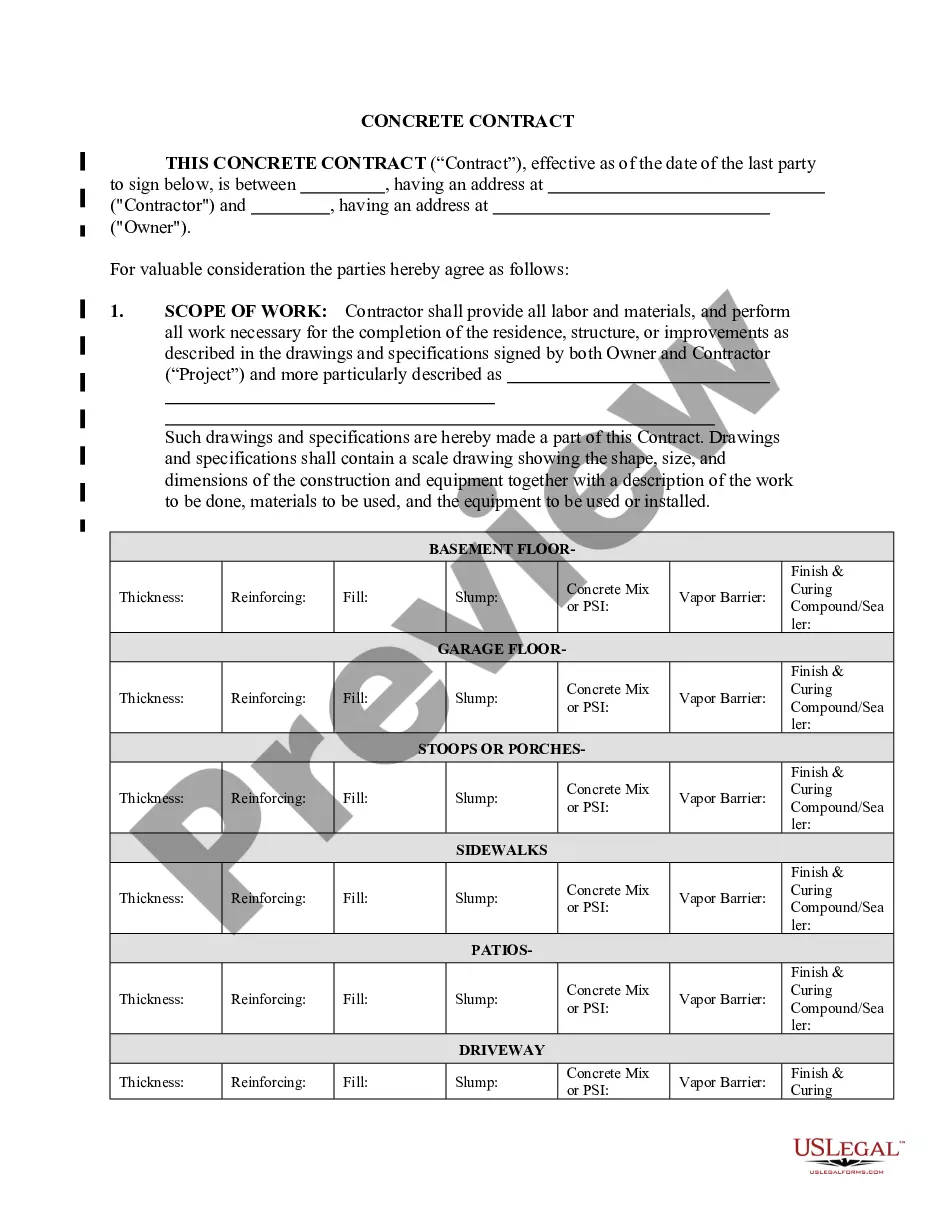
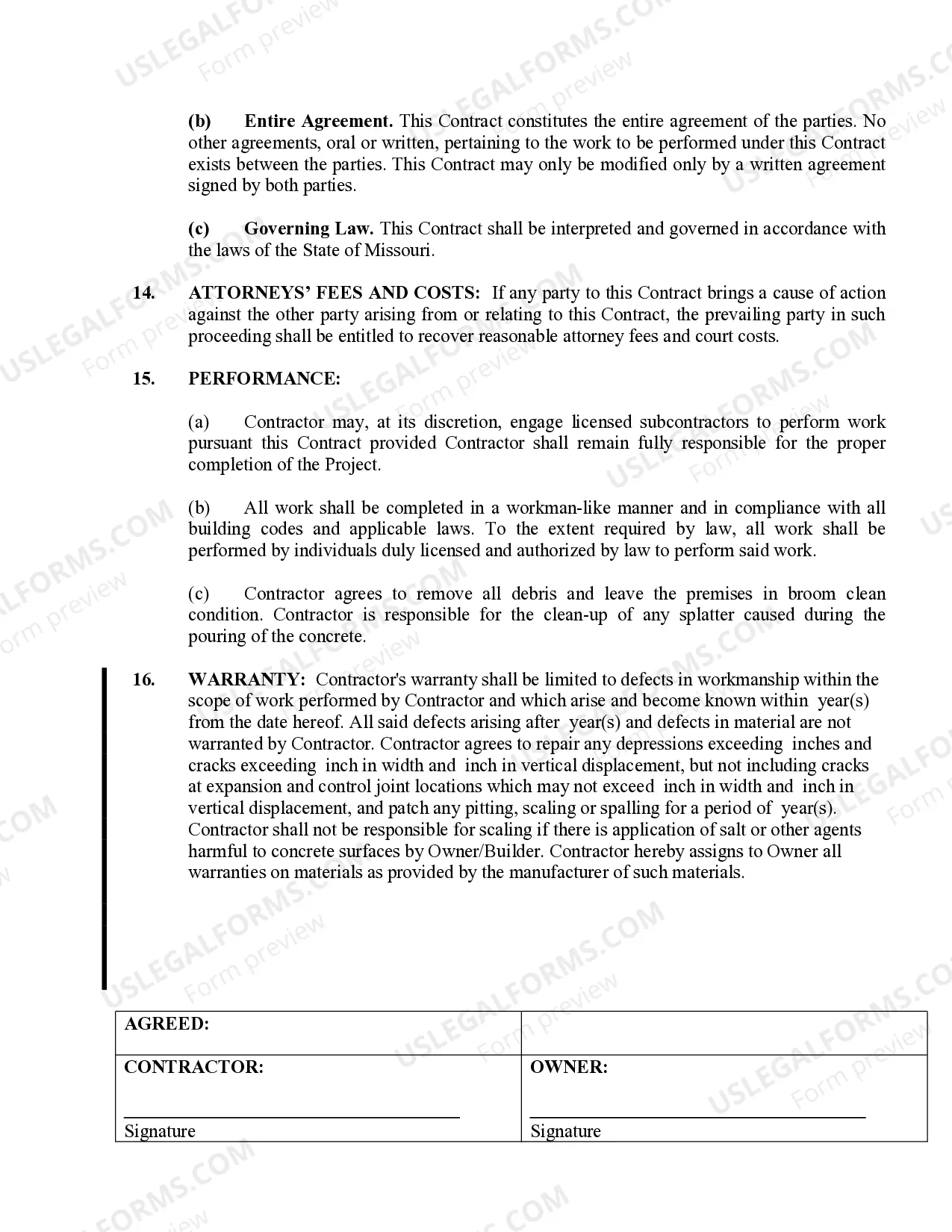
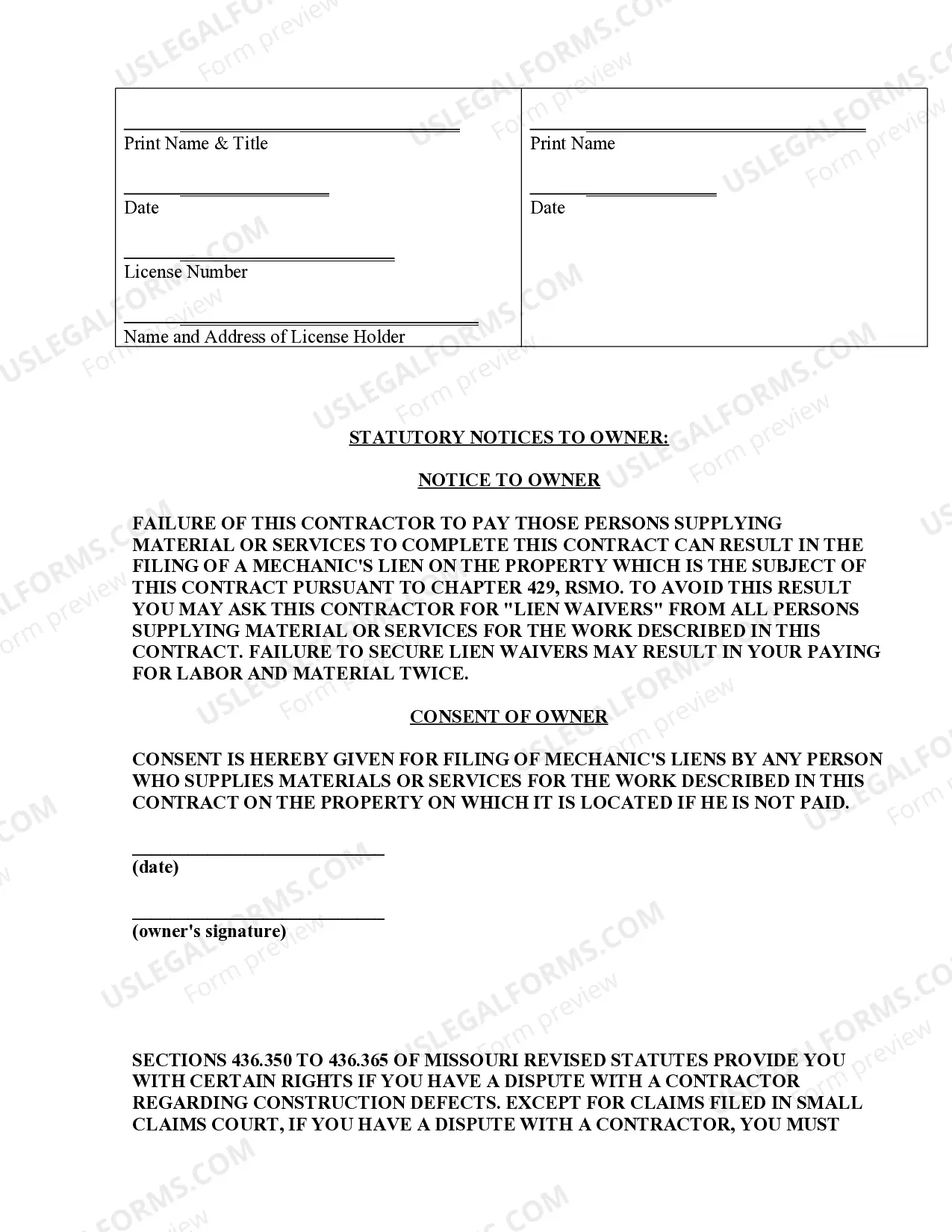
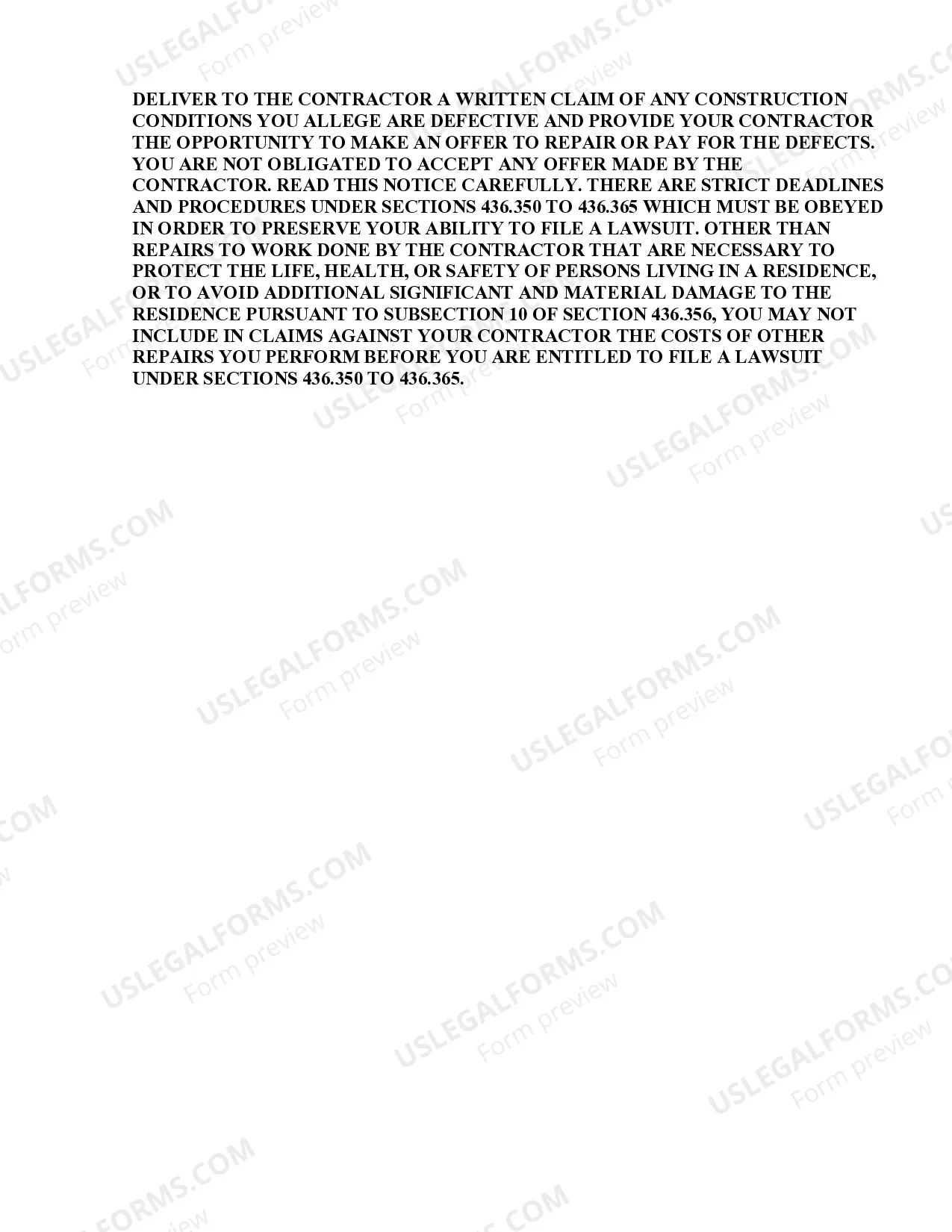
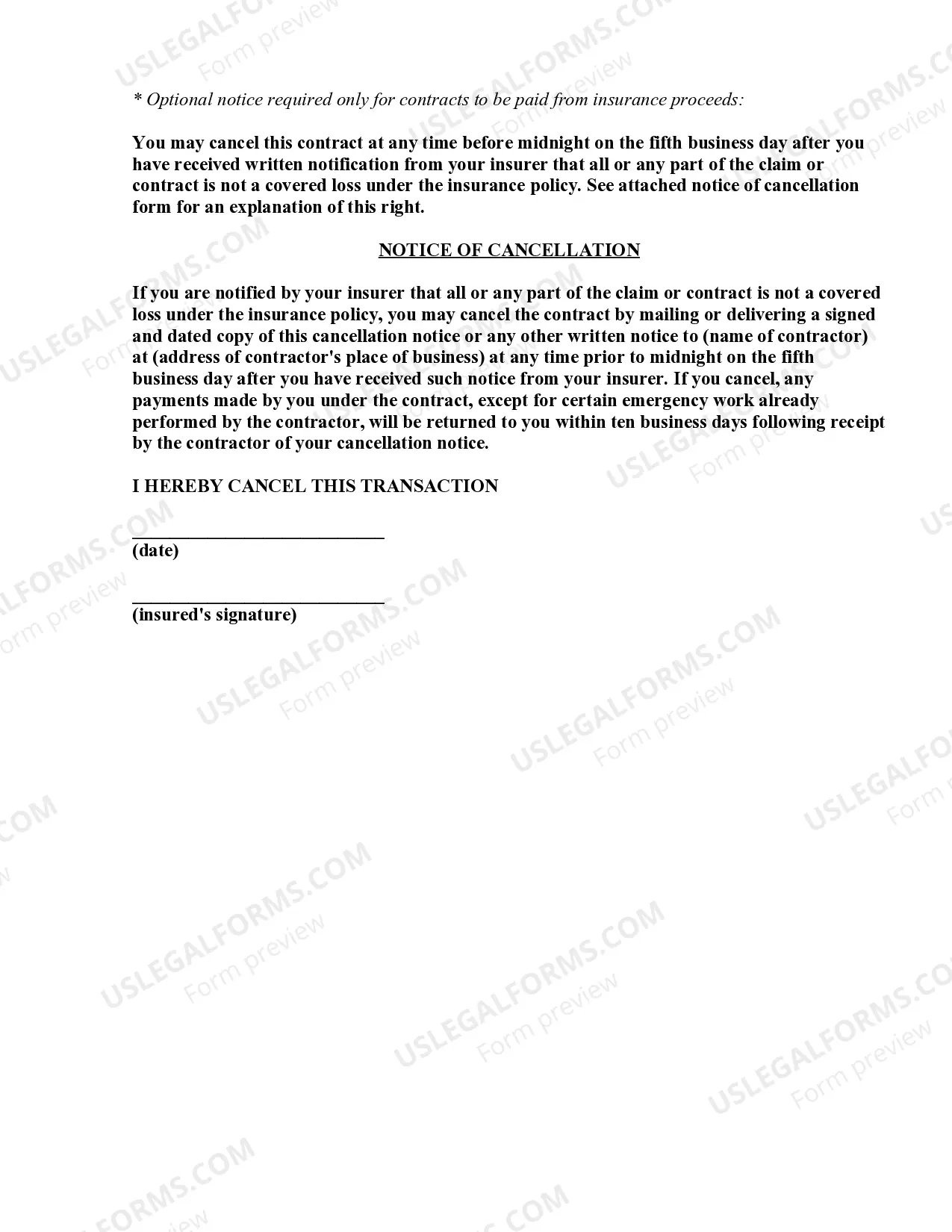
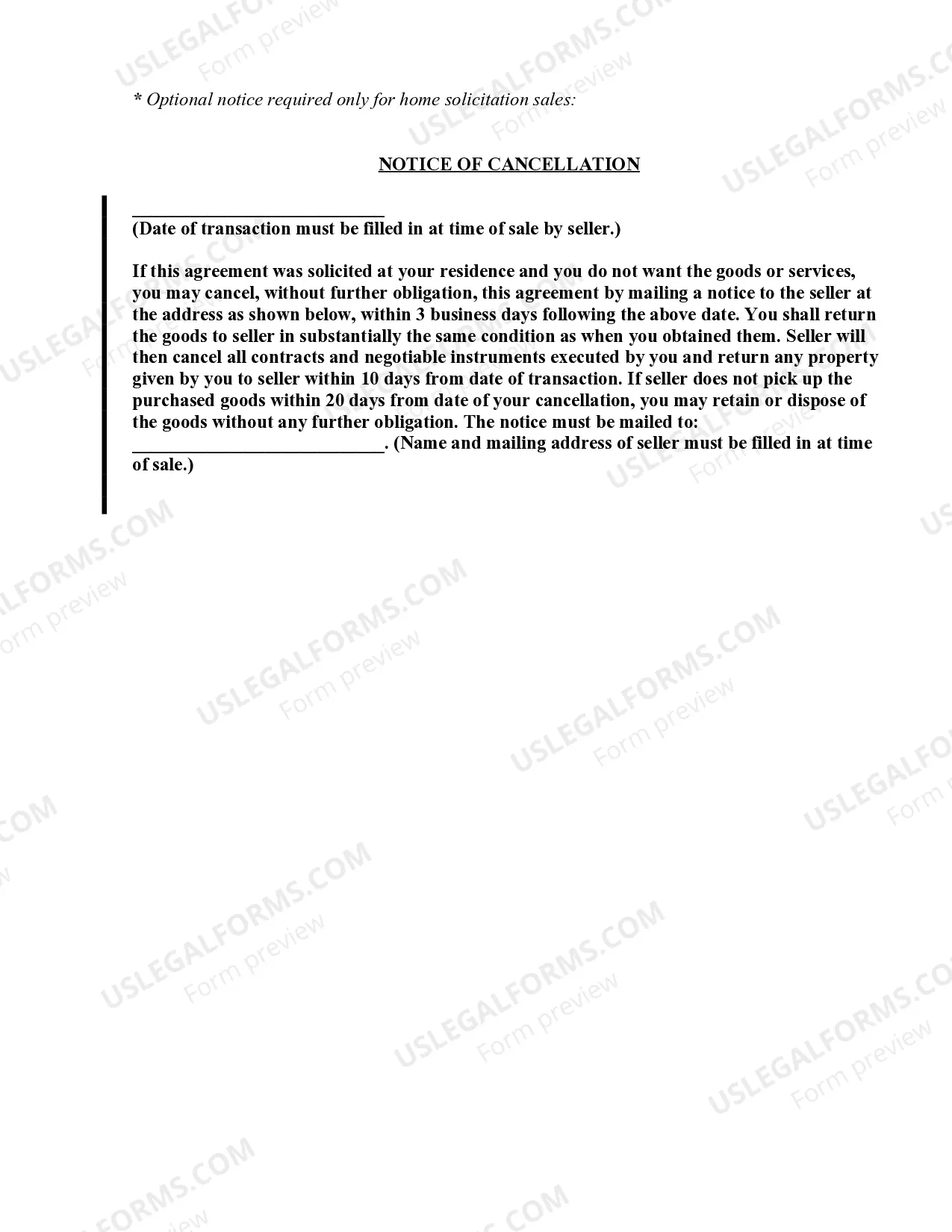
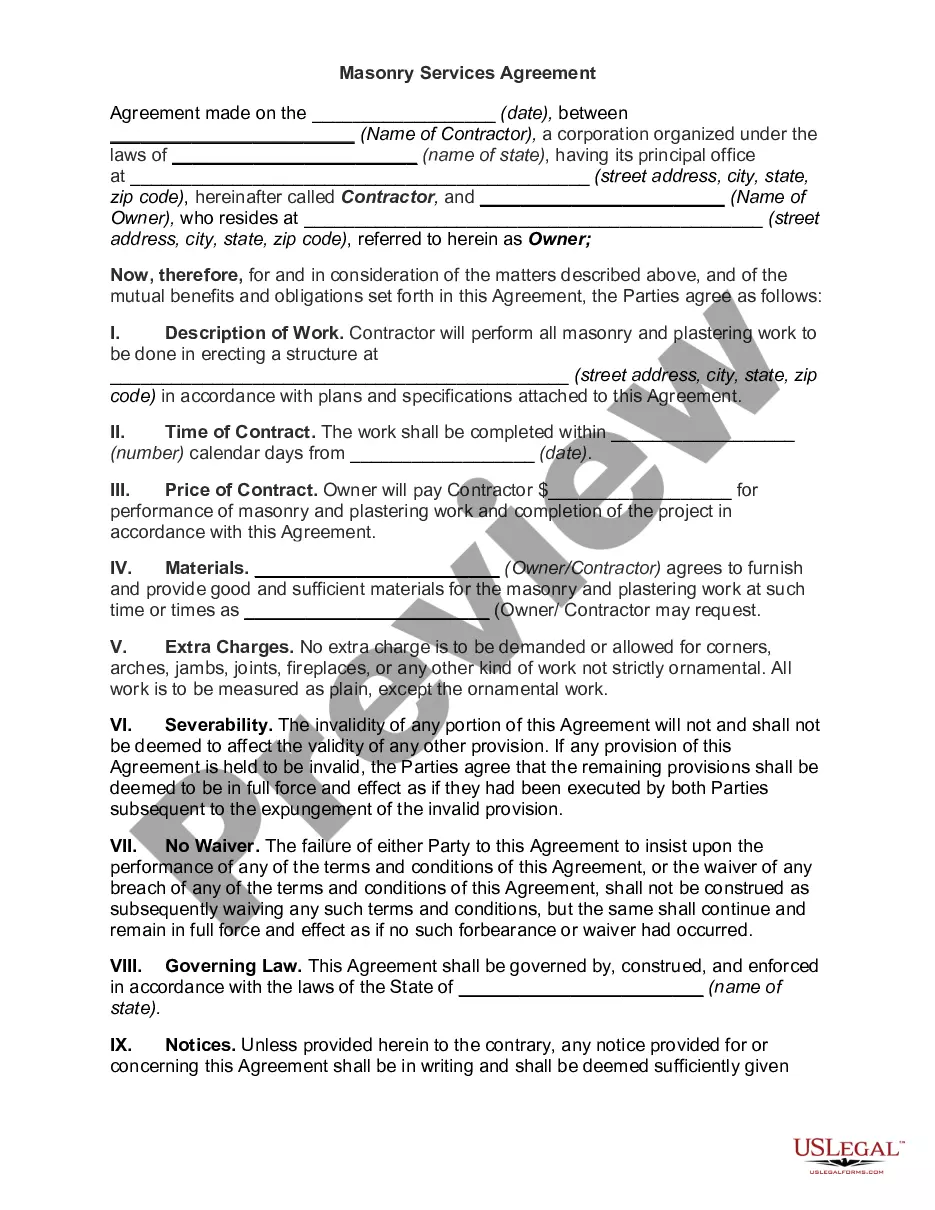
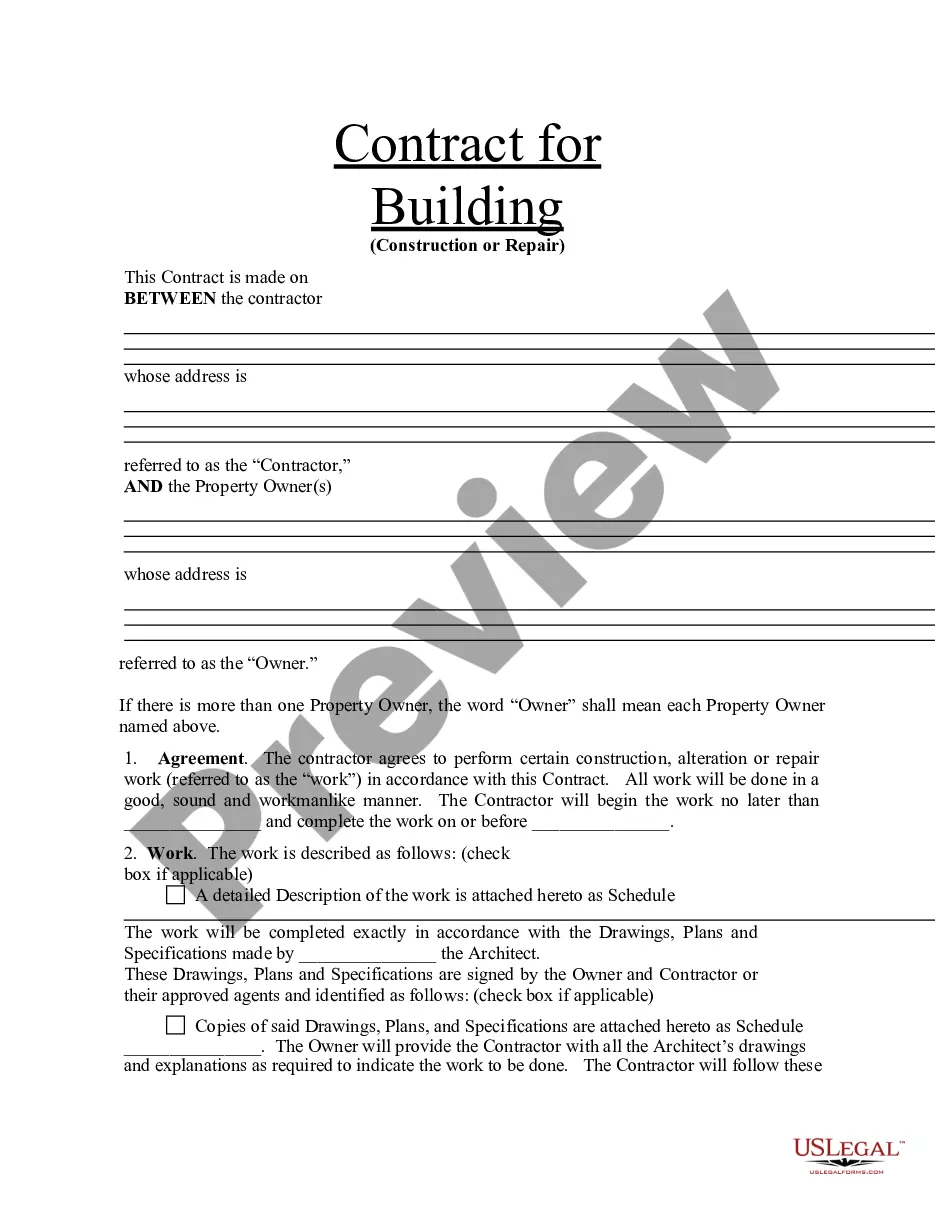
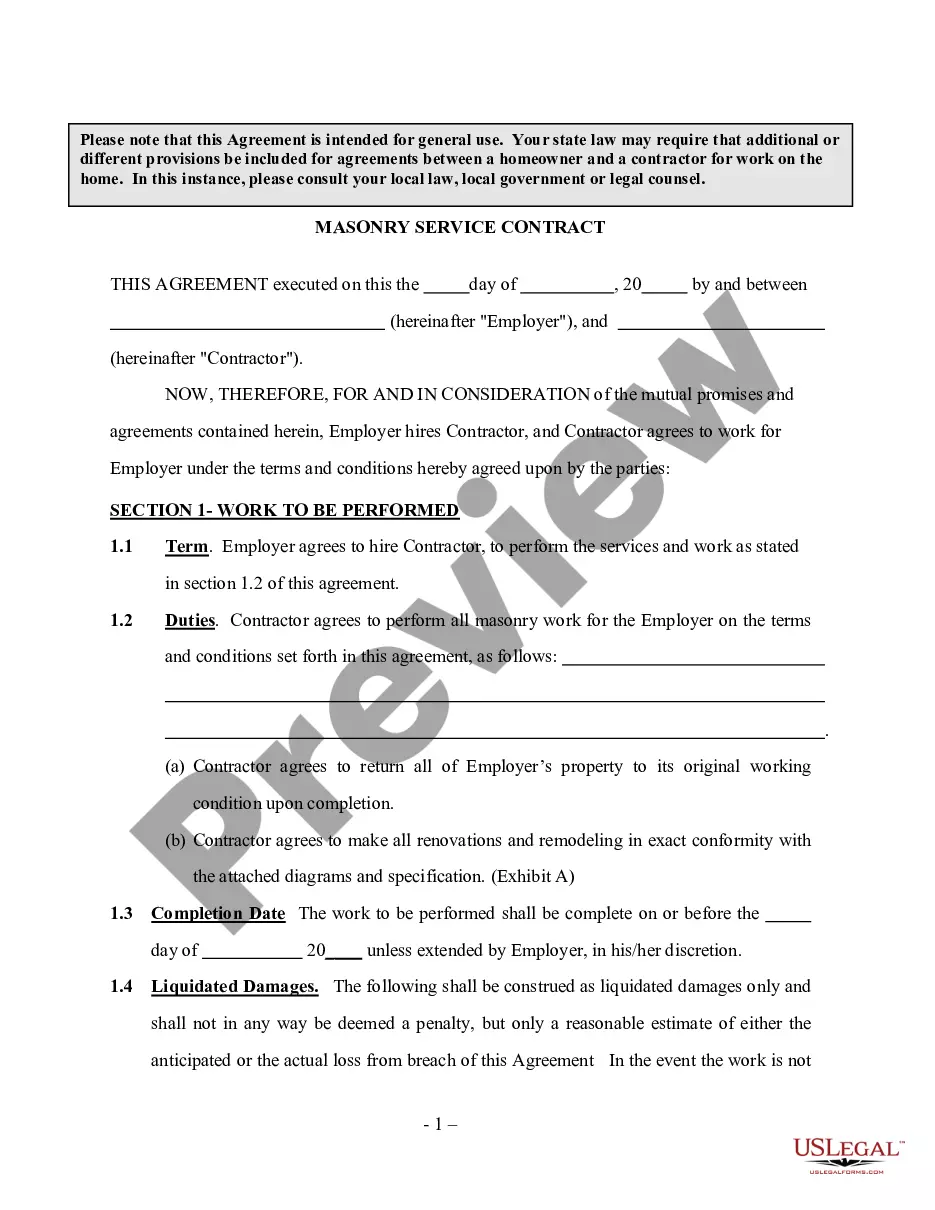
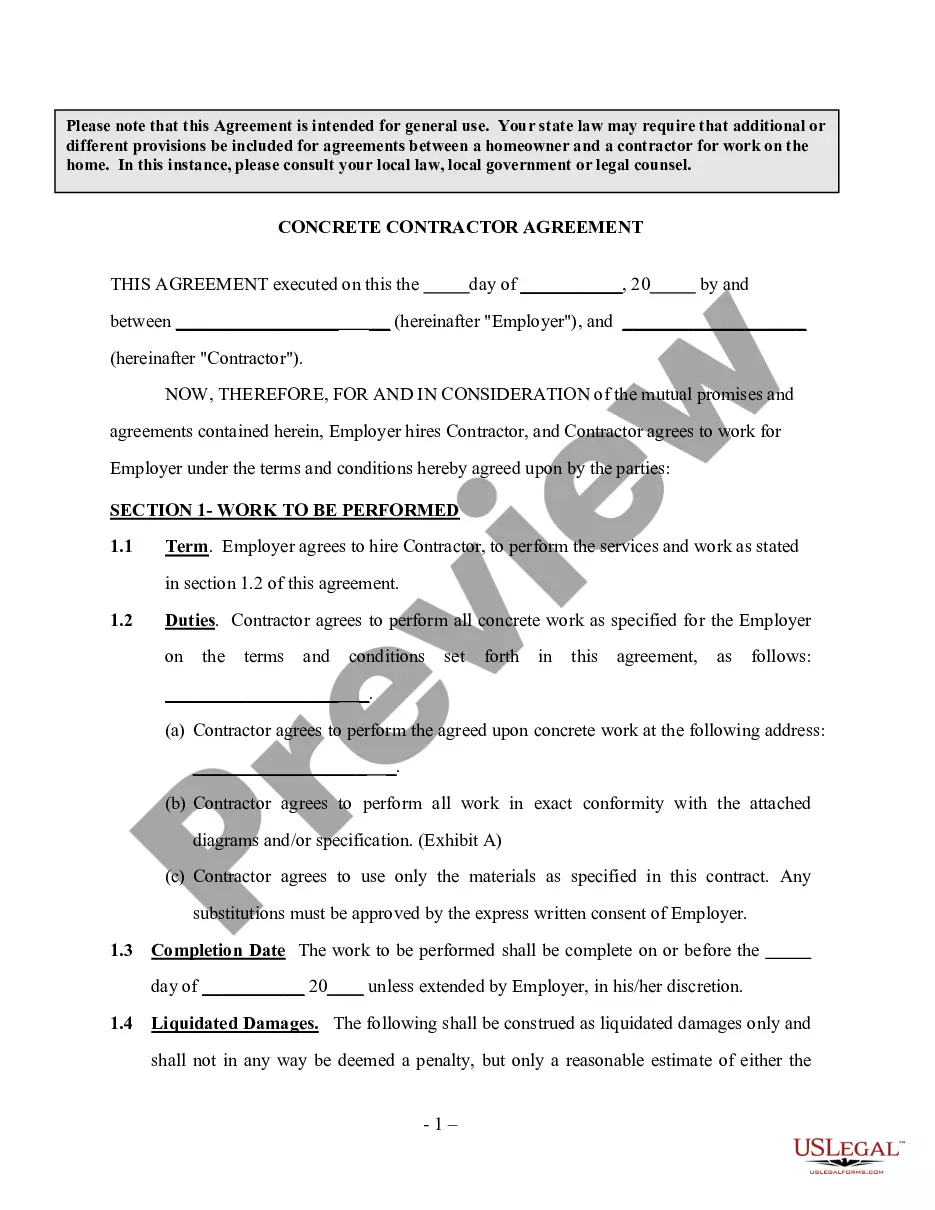
The Concrete Mason Contract for Contractor is a legally binding agreement between concrete mason contractors and property owners. It specifies the terms of the construction project, including payment arrangements such as fixed fees or cost-plus. This contract also addresses important aspects like change orders, work site conditions, insurance, and warranties, ensuring that both parties understand their rights and responsibilities during the construction process.
Key components of this form
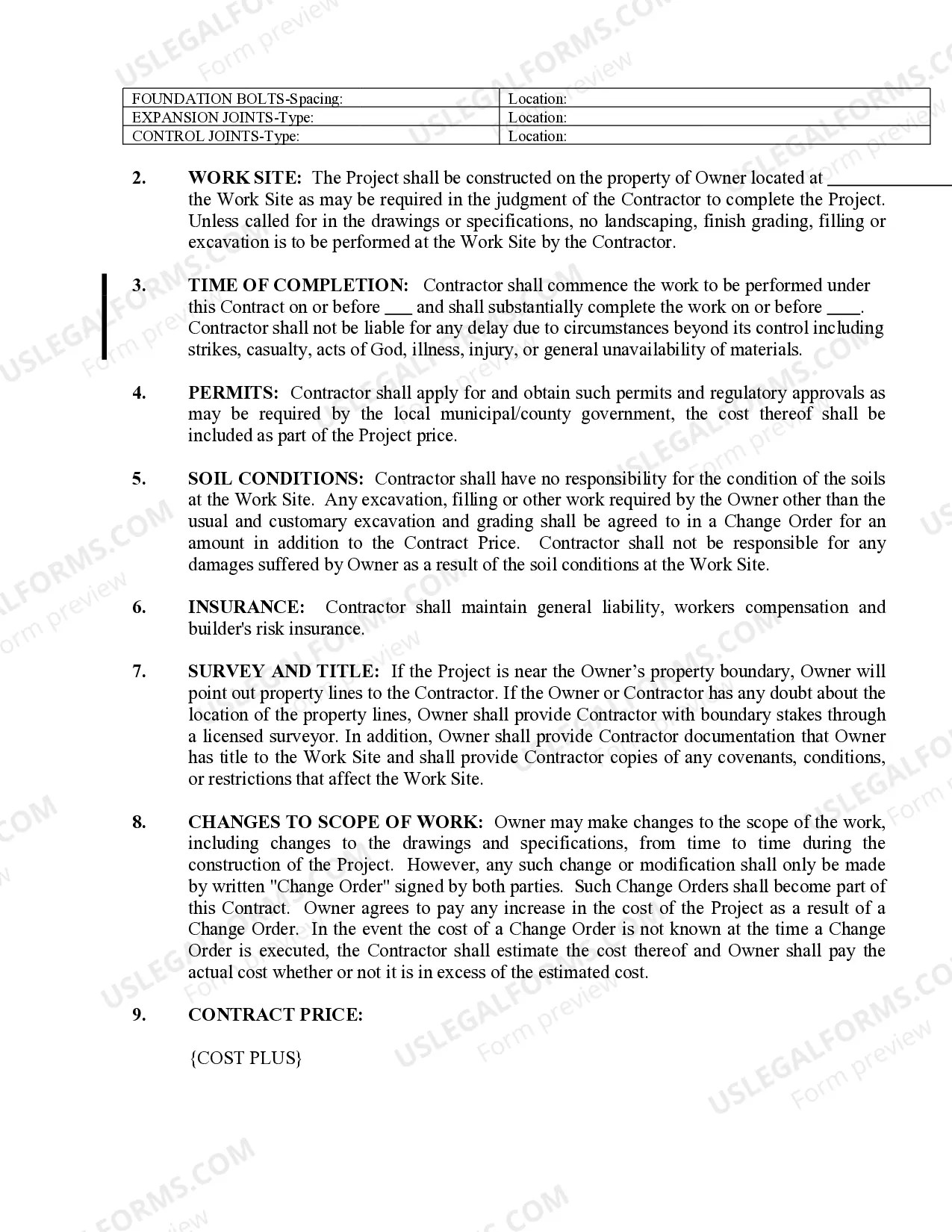
- Permits: The contractor is responsible for obtaining necessary permits and regulatory approvals.
- Soil Conditions: The contractor is not liable for the condition of the soil at the work site.
- Insurance: The contractor must maintain general liability and workers compensation insurance.
- Changes to Scope of Work: Any modifications to the work require a written Change Order signed by both parties.
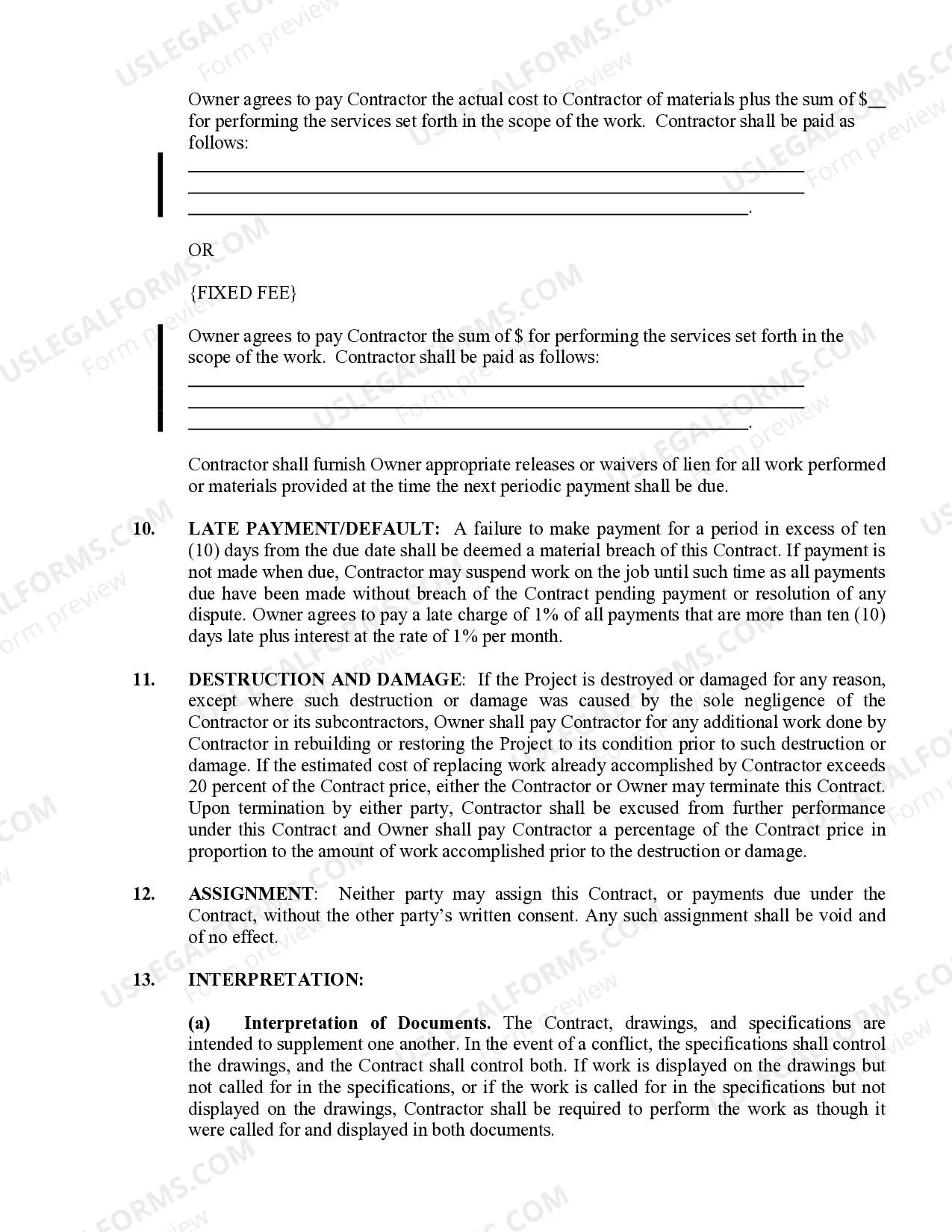
- Payment Terms: The contract outlines the consequences of late payments and breach of contract.
- Termination and Damages: The contract details the procedures for addressing destruction or damage to the project.

When to use this document
This contract is essential when a property owner hires a concrete mason for construction or renovation projects. Use this form when you need to establish clear expectations about project scope, payment structure, and responsibilities. It is especially beneficial when the work involves potential changes in design, site soil conditions, or regulatory requirements.
Who this form is for
This form is intended for:
- Concrete mason contractors looking to formalize agreements with property owners.
- Property owners who require professional concrete work.
- Contractors needing to outline terms of service, including costs and responsibilities.
Steps to complete this form
Steps to complete this form:
- Identify the parties involved in the contract, including the contractor and property owner.
- Specify the project details, including the scope of work and any special conditions.
- Determine payment terms, whether fixed or cost-plus, and outline them clearly.
- Include provisions for change orders, specifying how changes will be managed and priced.
- Provide signatures from both parties to validate the contract.
Does this document require notarization?
This form does not typically require notarization unless specified by local law.
Get your form ready online
Our built-in tools help you complete, sign, share, and store your documents in one place.
Make edits, fill in missing information, and update formatting in US Legal Forms—just like you would in MS Word.
Download a copy, print it, send it by email, or mail it via USPS—whatever works best for your next step.
Sign and collect signatures with our SignNow integration. Send to multiple recipients, set reminders, and more. Go Premium to unlock E-Sign.
If this form requires notarization, complete it online through a secure video call—no need to meet a notary in person or wait for an appointment.
We protect your documents and personal data by following strict security and privacy standards.

Make edits, fill in missing information, and update formatting in US Legal Forms—just like you would in MS Word.

Download a copy, print it, send it by email, or mail it via USPS—whatever works best for your next step.

Sign and collect signatures with our SignNow integration. Send to multiple recipients, set reminders, and more. Go Premium to unlock E-Sign.

If this form requires notarization, complete it online through a secure video call—no need to meet a notary in person or wait for an appointment.

We protect your documents and personal data by following strict security and privacy standards.
Avoid these common issues
Common mistakes to avoid:
- Failing to outline all project details can lead to misunderstandings.
- Not obtaining required permits before beginning work may result in legal issues.
- Neglecting to document changes through signed Change Orders can complicate disputes.
- Ignoring late payment terms can result in financial losses for contractors.
Benefits of using this form online
Benefits of using this form online:
- Convenient access to legal documentation without needing to visit a lawyer.
- Editable templates allow customization to fit specific project needs.
- Reliability of professionally drafted documents to meet legal standards.
Legal use & context:
- This contract serves as an enforceable agreement under Missouri law.
- It provides protections for both parties in the event of disputes.
- Failure to adhere to contract terms may result in legal action.
Key takeaways
Key takeaways:
- The Concrete Mason Contract is crucial for clear communication and expectations.
- It legally protects both contractors and property owners throughout the project.
- Proper completion and understanding of this form can prevent many common issues.
Looking for another form?
Form popularity
FAQ
To avoid being ripped off by contractors, conduct thorough research and check references before hiring anyone. Always request a written agreement that outlines all terms, including costs and timelines. Using a Missouri Concrete Mason Contract for Contractor from U.S. Legal Forms can help ensure that you have a clear and enforceable agreement, protecting your investment.
Drafting a contractor contract involves outlining the scope of work, payment terms, and timelines. It is crucial to include provisions for dispute resolution and termination. Utilizing a Missouri Concrete Mason Contract for Contractor from U.S. Legal Forms can simplify this process, providing you with a solid foundation to customize for your specific project.
Independent contractors can attract clients through various marketing strategies, including social media, online advertising, and professional networking. Establishing a strong online presence and asking for referrals can also be effective. Using a Missouri Concrete Mason Contract for Contractor from U.S. Legal Forms can help build trust with potential clients, showcasing your professionalism.
In Missouri, a contract becomes legally binding when it includes an offer, acceptance, and consideration. Both parties must have the capacity to contract, and the terms must be clear and specific. When using a Missouri Concrete Mason Contract for Contractor, ensure all essential elements are present to protect your interests.
To obtain a contract as a contractor, focus on showcasing your skills and experience. Create a strong portfolio and utilize online platforms to market your services. You can also leverage U.S. Legal Forms to access a Missouri Concrete Mason Contract for Contractor, ensuring that you present a professional agreement to potential clients.
Contractors often secure contracts through networking, referrals, and bidding on projects. Building relationships with clients, suppliers, and other contractors can lead to new opportunities. Additionally, platforms like U.S. Legal Forms offer templates for a Missouri Concrete Mason Contract for Contractor, which can help streamline the process.
When writing a contract as a contractor, begin by outlining the project details, including deliverables and timelines. Clearly state payment terms and any warranties or guarantees for your work. Make sure to address liability and insurance matters to protect both parties. For a comprehensive Missouri Concrete Mason Contract for Contractor, consider using US Legal Forms to find templates that simplify this process.
Yes, Missouri requires certain contractors, including those in masonry, to obtain a license. The specific requirements can vary by city or county, so it is crucial to check local regulations. Having the proper licensing not only ensures compliance but also builds trust with clients when entering into a Missouri Concrete Mason Contract for Contractor. For guidance on licensing requirements, you can refer to state resources or legal platforms.
To write a simple Missouri Concrete Mason Contract for Contractor, start by clearly defining the project scope, including materials and labor involved. Specify payment terms, deadlines, and any conditions for changes to the work. It's also essential to include clauses for dispute resolution and termination of the contract. Using a platform like US Legal Forms can help you access templates that ensure you cover all necessary legal aspects.
Filling out a contractor agreement, such as the Missouri Concrete Mason Contract for Contractor, involves several key steps. First, clearly identify the parties involved, including names and contact information. Next, outline the scope of work, detailing the specific tasks and responsibilities. Finally, include payment terms, timelines, and any necessary legal provisions to ensure both parties understand their obligations.