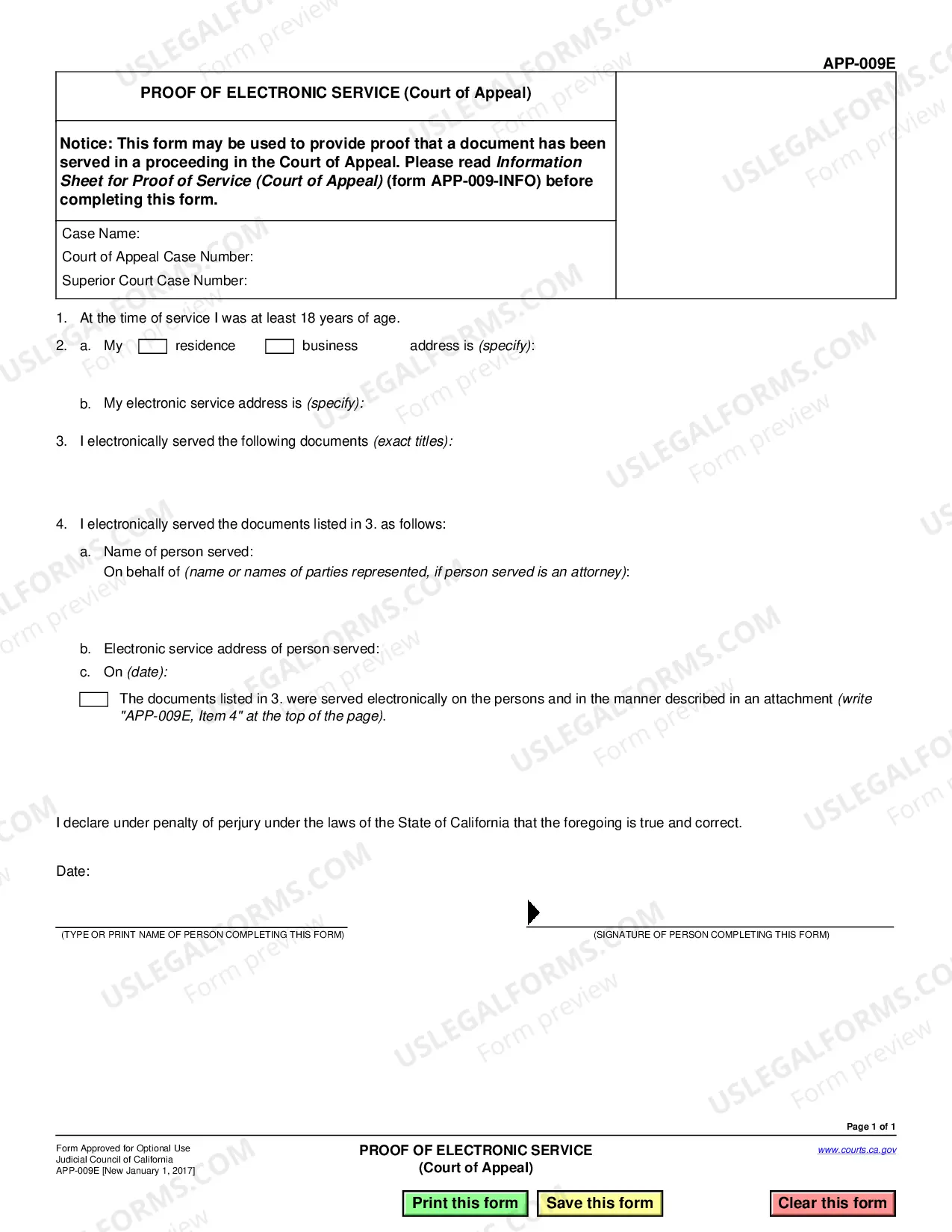
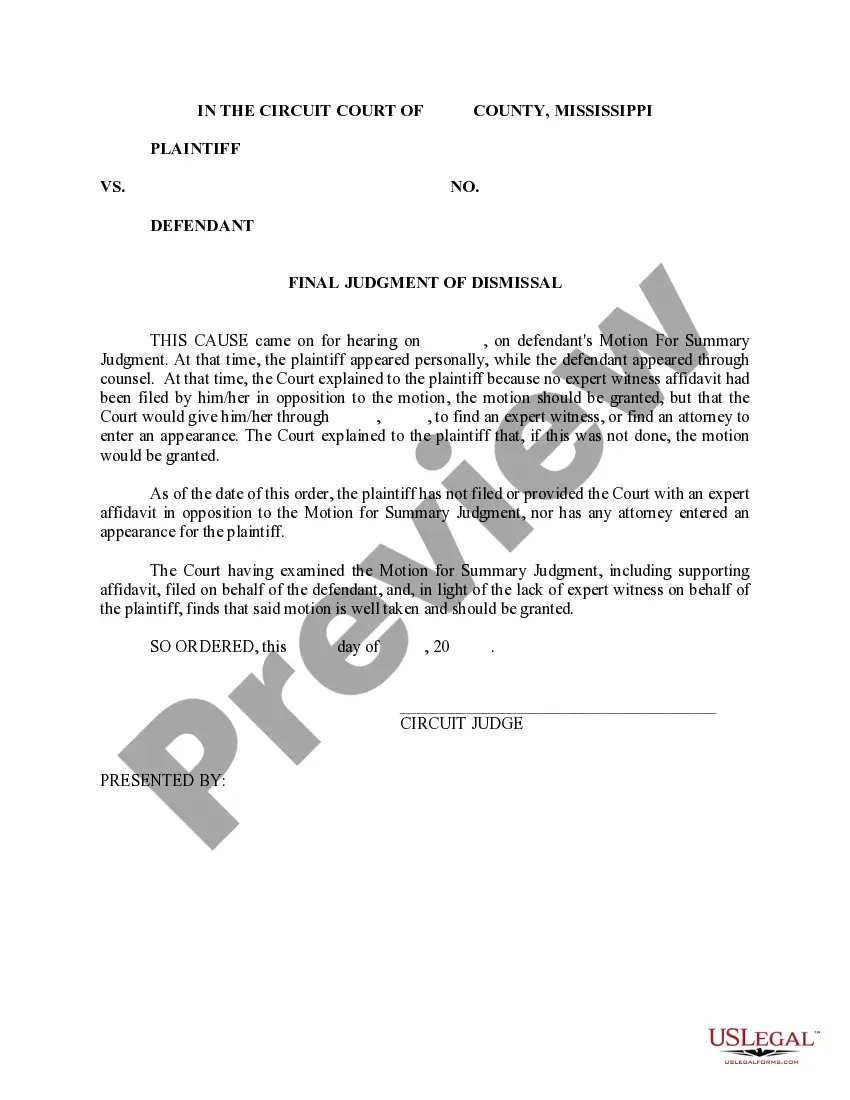
Mississippi Final Judgment Granting Motion for Summary Judgment
About this form
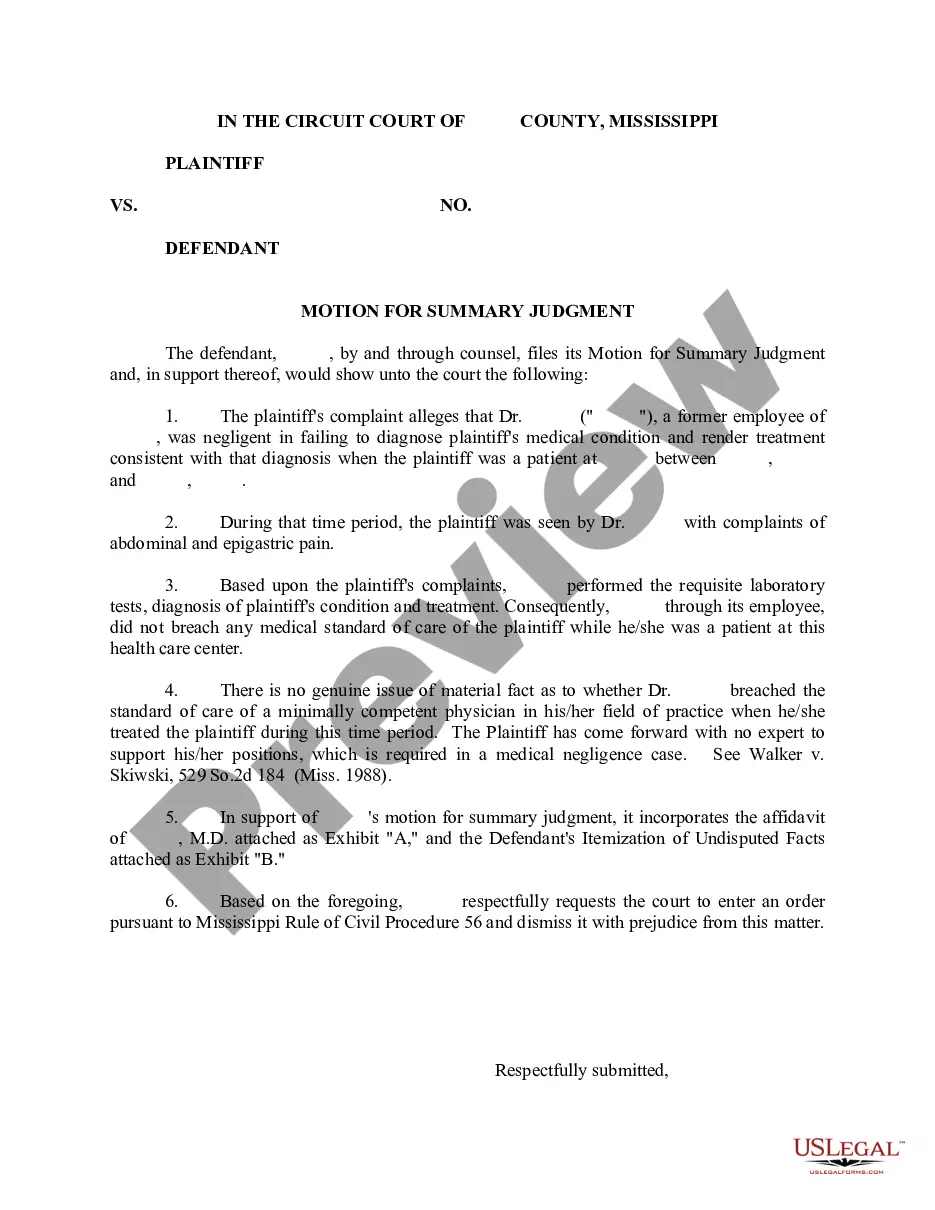
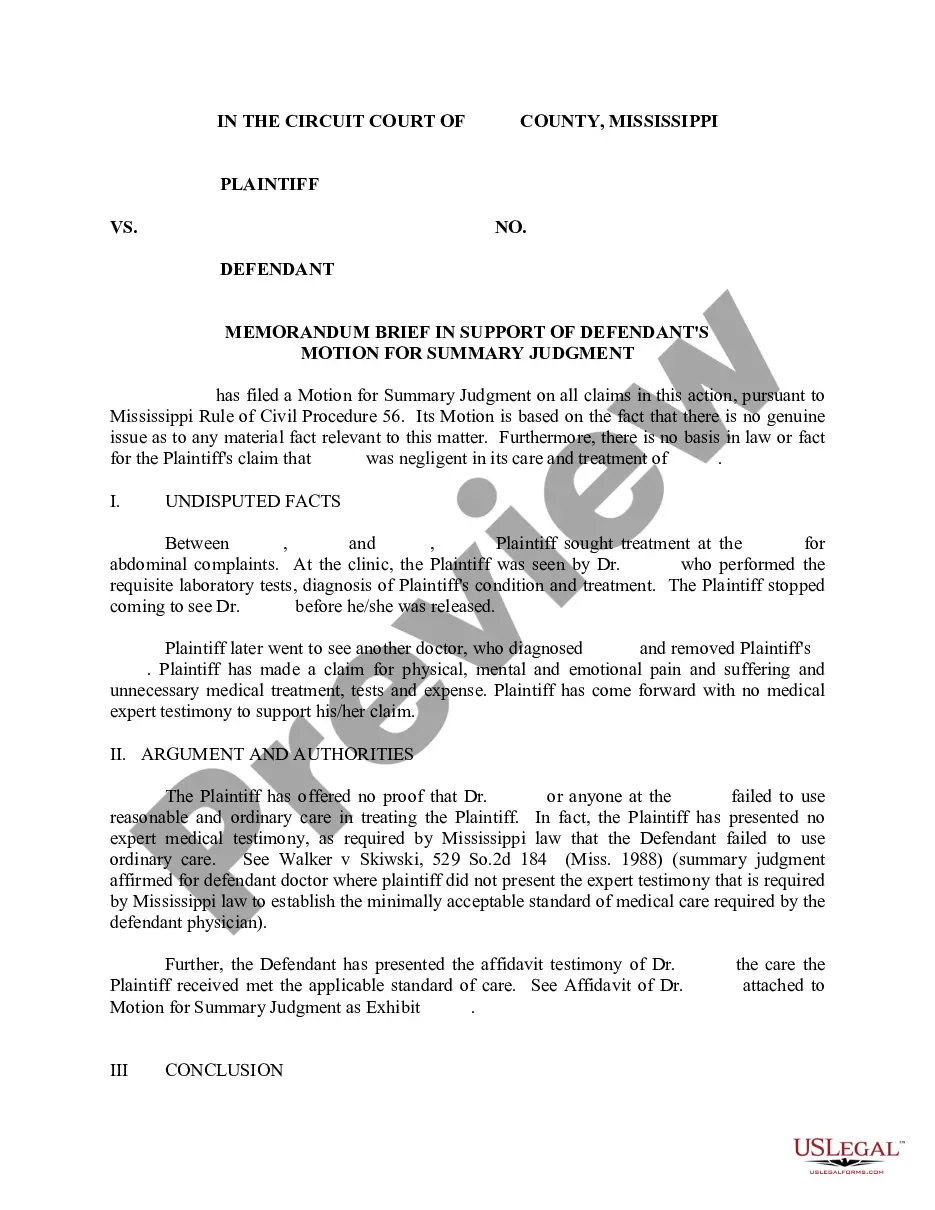
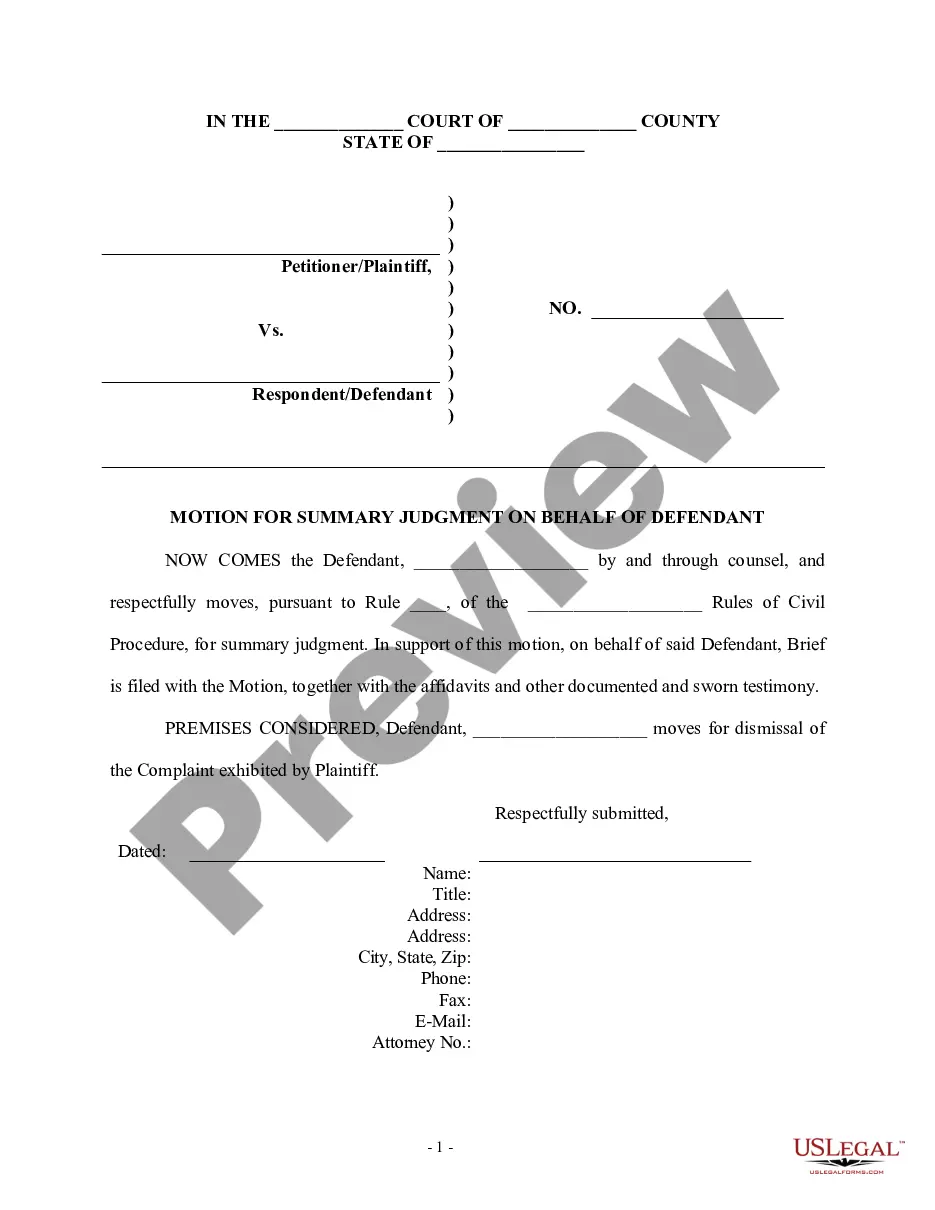
The Final Judgment Granting Motion for Summary Judgment is a legal document used to request that a court issue a final judgment based on the evidence presented without going to trial. This motion is typically filed when one party believes there is no genuine dispute over material facts, allowing the court to make a decision based on the law. It differs from other motions, such as ones that seek to dismiss a case, by specifically requesting a judgment on the merits of the case without further litigation.
Key components of this form
- The statement of the motion, outlining the request presented to the court.
- A section for the court to acknowledge the examination of evidence, including affidavits from both parties.
- The court's findings regarding the absence of any genuine disputes that require a trial.
- The final judgment declaring the motion to be granted or denied.
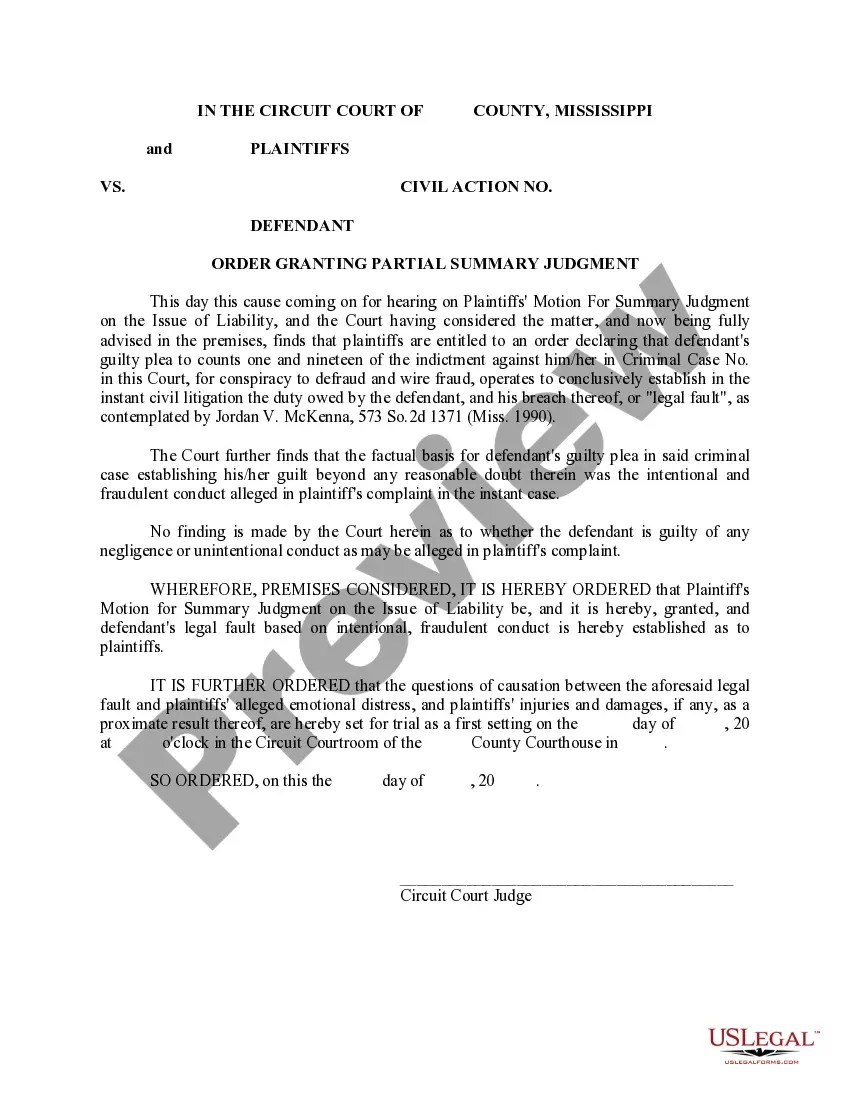
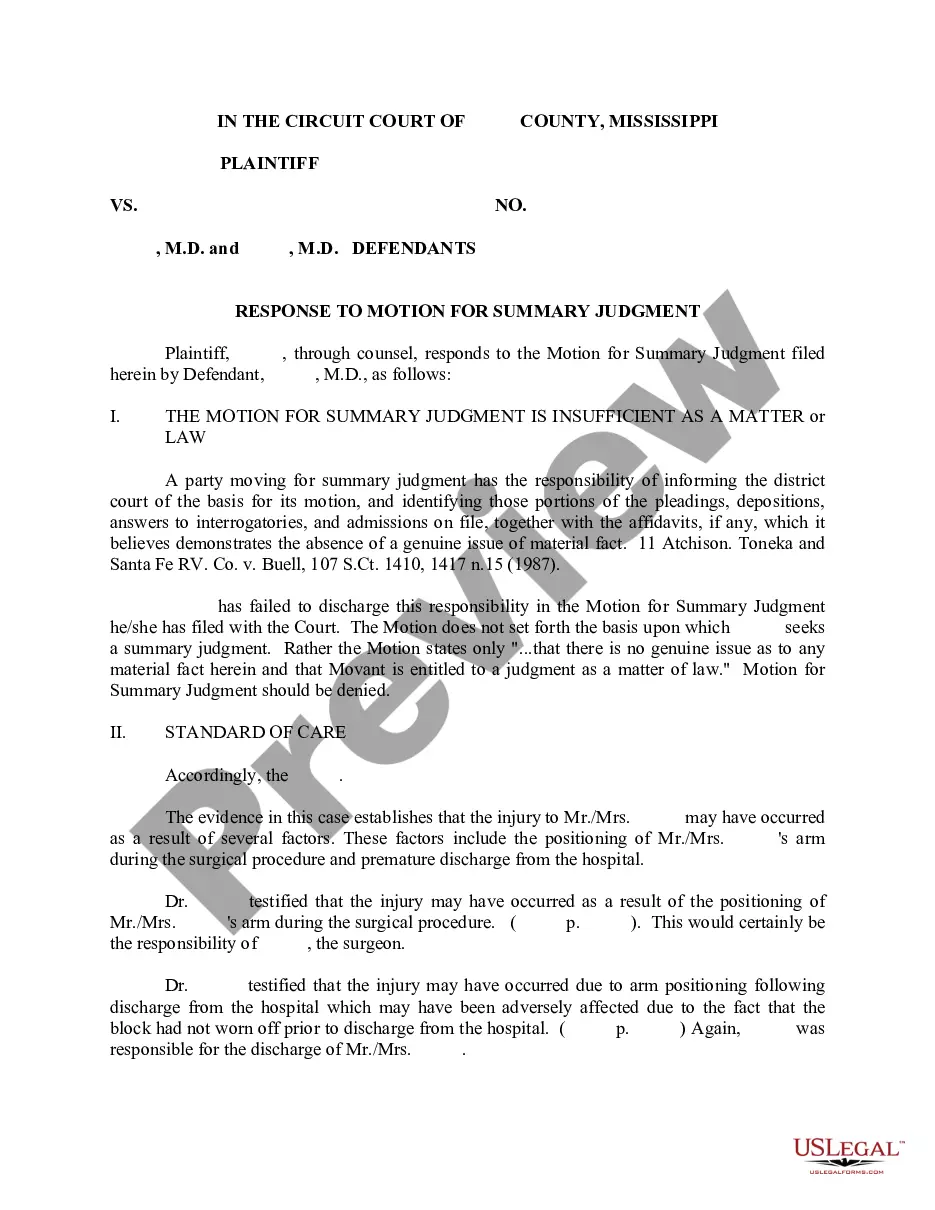
Situations where this form applies
This form should be used when one party in a lawsuit believes they have sufficient evidence to support their position, and they wish to avoid the time and expense of a full trial. Situations can include cases involving contract disputes, personal injury claims, or other civil matters where the facts are clear and undisputed. By using this motion, you seek to have the court decide the case based on the filings and evidence presented.
Who should use this form
- Defendants in civil lawsuits who believe the plaintiff lacks sufficient evidence to support their claims.
- Attorneys representing clients in cases where a summary judgment is appropriate.
- Any party seeking to expedite the resolution of a legal matter without proceeding to trial.
How to complete this form
- Identify the case and relevant parties involved in the motion.
- Clearly state the grounds for the motion, including specific legal reasons for seeking summary judgment.
- Attach all necessary supporting documents, including affidavits or declarations that substantiate your claims.
- File the completed form with the appropriate court and ensure that copies are served to all involved parties.
- Prepare for any opposition to the motion from the other party, including potential rebuttals or hearings.
Is notarization required?
In most cases, this form does not require notarization. However, some jurisdictions or signing circumstances might. US Legal Forms offers online notarization powered by Notarize, accessible 24/7 for a quick, remote process.
Get your form ready online
Our built-in tools help you complete, sign, share, and store your documents in one place.
Make edits, fill in missing information, and update formatting in US Legal Forms—just like you would in MS Word.
Download a copy, print it, send it by email, or mail it via USPS—whatever works best for your next step.
Sign and collect signatures with our SignNow integration. Send to multiple recipients, set reminders, and more. Go Premium to unlock E-Sign.
If this form requires notarization, complete it online through a secure video call—no need to meet a notary in person or wait for an appointment.
We protect your documents and personal data by following strict security and privacy standards.

Make edits, fill in missing information, and update formatting in US Legal Forms—just like you would in MS Word.

Download a copy, print it, send it by email, or mail it via USPS—whatever works best for your next step.

Sign and collect signatures with our SignNow integration. Send to multiple recipients, set reminders, and more. Go Premium to unlock E-Sign.

If this form requires notarization, complete it online through a secure video call—no need to meet a notary in person or wait for an appointment.

We protect your documents and personal data by following strict security and privacy standards.
Mistakes to watch out for
- Failing to provide sufficient evidence to support the claims made in the motion.
- Not following specific formatting or filing procedures required by the court.
- Overlooking deadlines for filing motions or responding to opposition motions.
Why complete this form online
- Convenient access to a legally vetted template that can save you time.
- Editable format that allows you to tailor the motion to fit your specific facts and circumstances.
- Reliable resource created by licensed attorneys, ensuring compliance with the latest legal standards.
Looking for another form?
Form popularity
FAQ
The grant of summary judgment usually results in a final judgment only if the grant resolves all issues as to all parties. An order for summary judgment is interlocutory if it does not entirely end the proceedings before the trial court.
How Is Summary Judgment Granted? Summary judgment is granted when there are no other facts to be tried.Summary judgment is granted when the facts can be decided upon without needing to go to trial, where the opposing party would lose due to a lack of evidence.
Unless the requirements of Code of Civil Procedure 437c, subdivision (f)(2), are met a party may not file a second summary judgment motion. The pertinent provision provides: However, a party may not move for summary judgment...
Judgment on the pleadings is a motion made after pleading and before discovery; summary judgment happens after discovery and before trial; JMOL occurs during trial.Timing is very important in making a motion for JMOL; the motion can be made only after the opposing party has presented its case.
Attack the Legal Argument. The first place to look for a weakness in your opponent's motion is at their legal argument. Attack the Evidence. Attack the Separate Statement. Consider Whether Your Opponent's Motion Meets its Burden. Consider Seeking a Continuance to Conduct More Discovery. Conclusion.
What happens during a motion for summary judgment hearing? Once the motion and response has been filed, the judge will read both and then preside over a hearing. At the hearing, each party will be given a certain amount of time to reiterate their argument in front of the judge.
If the motion is granted, the judgment on the issue or case is deemed to be a final judgment from which a party may seek an appeal. The court of appeal can reverse the grant of summary judgment and reinstate the claim in the lower court. However, this is rarely done and most summary judgments are upheld on appeal.
This is known as a summary judgment, in that it summarily ends the case before trial.If the court agrees with the party opposing the motion and finds that the key facts are in dispute, the court cannot enter judgment and must instead send the case to trial.
A summary judgement occurs when, in a civil case, one party wants to move to a court decision without a trial.When a motion for summary judgement is granted, it indicates there is sufficient evidence to declare one party the clear winner.