Mississippi Motion for Summary Judgment
What this document covers
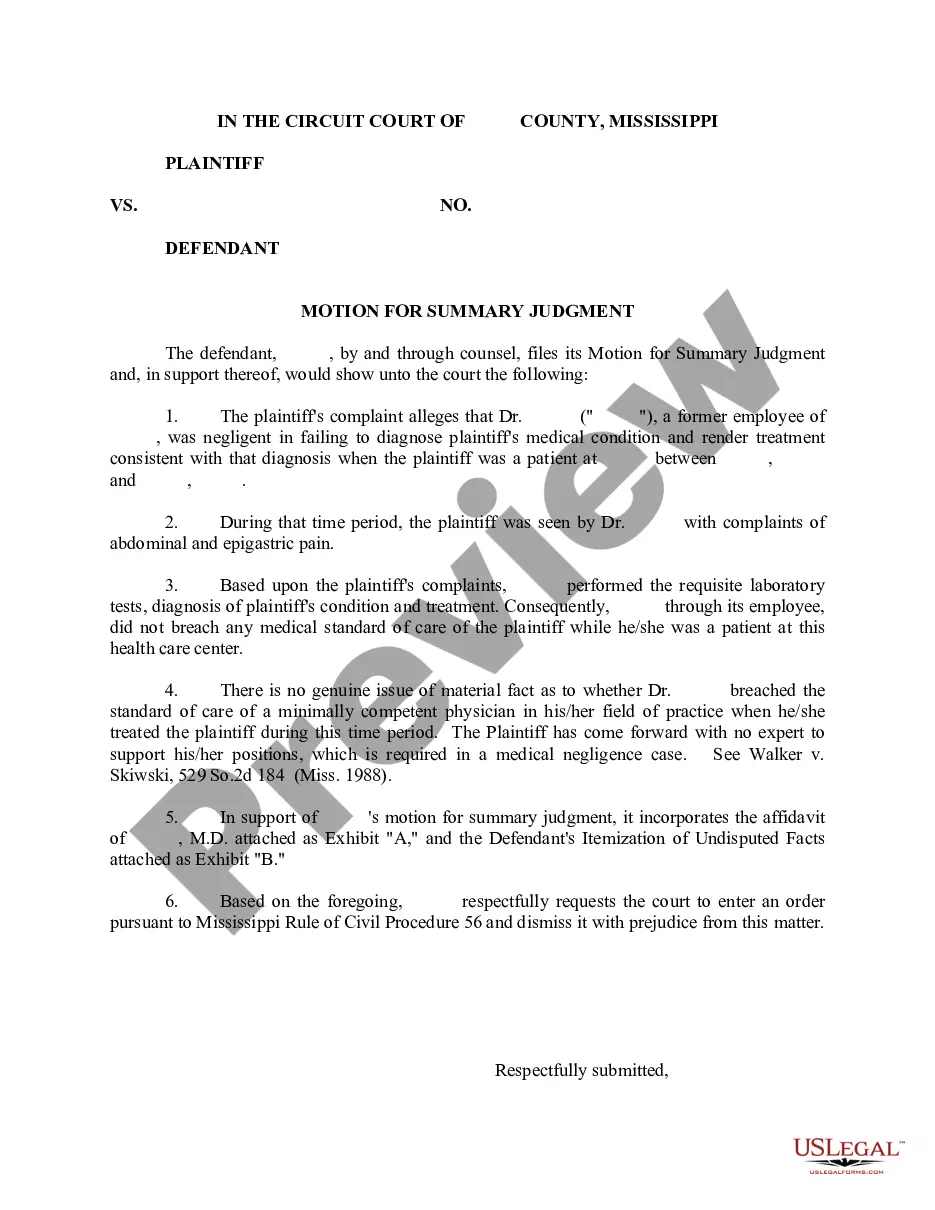
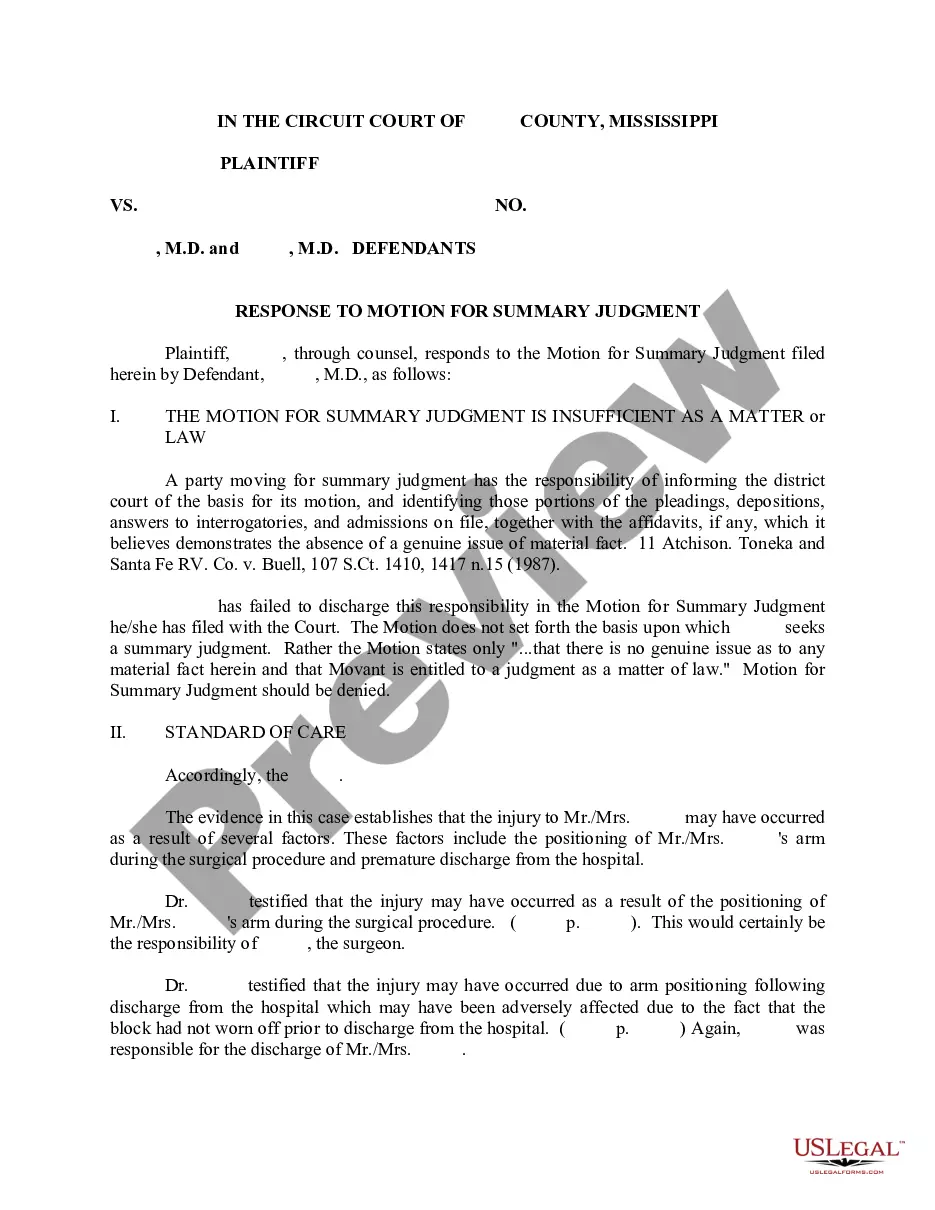
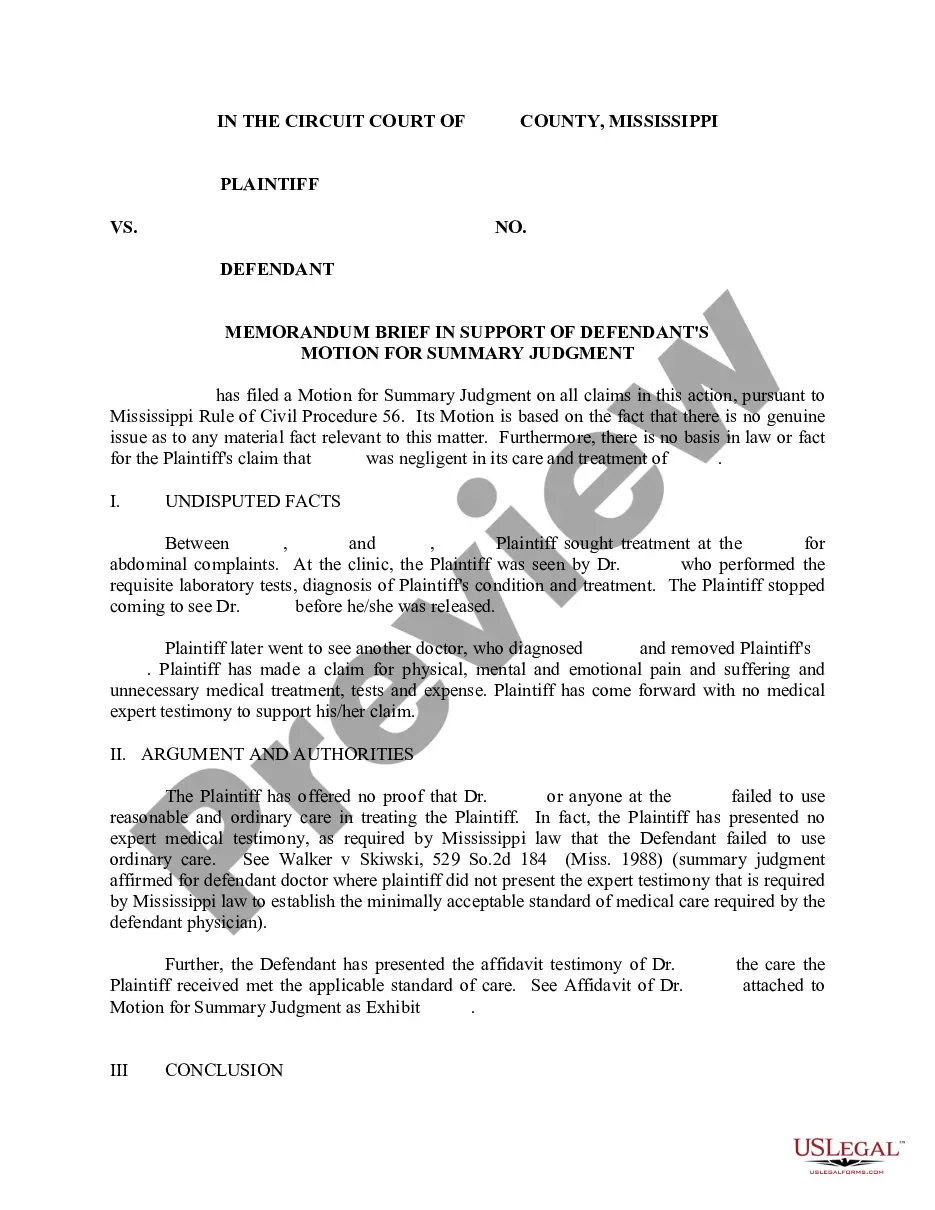
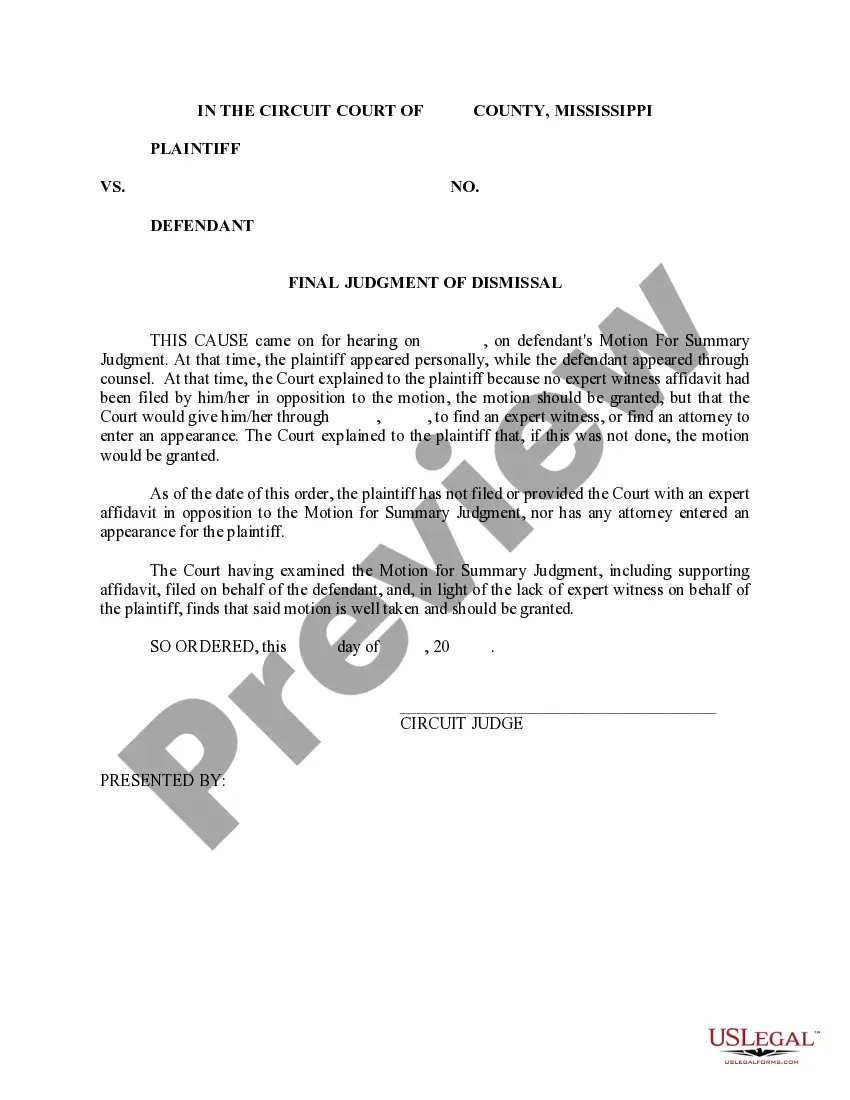
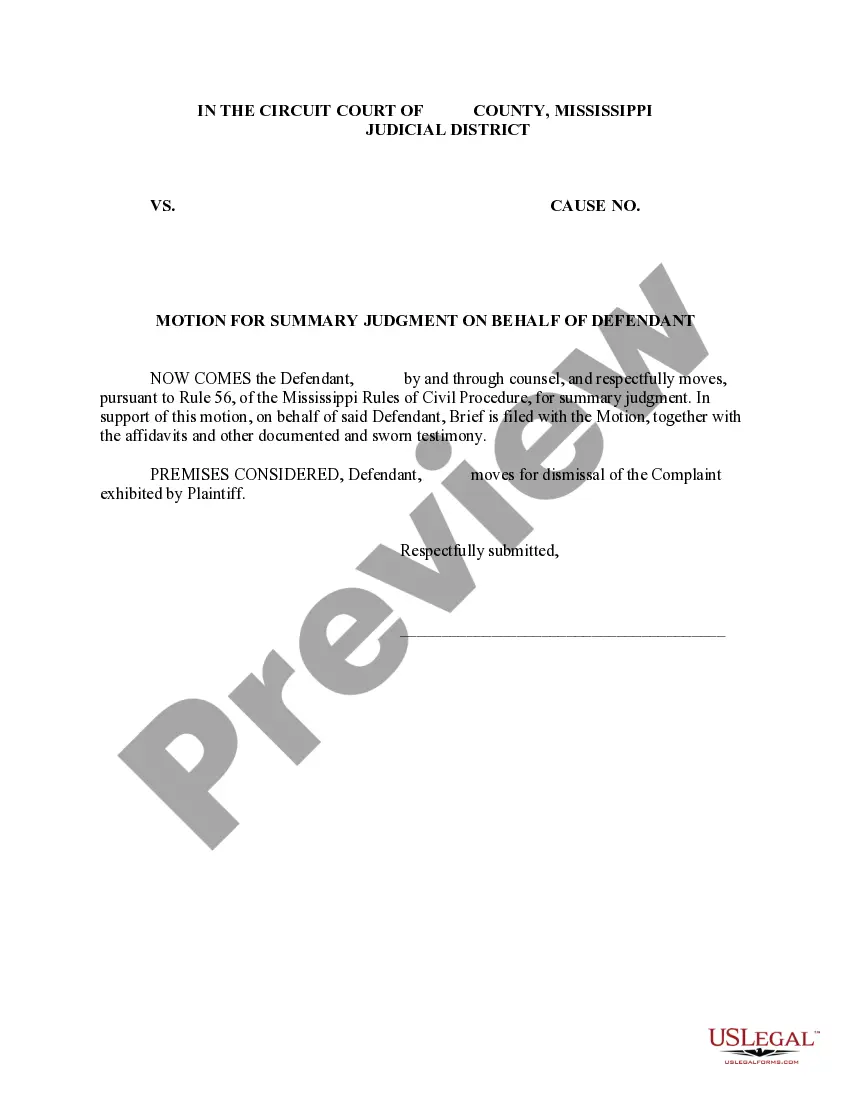
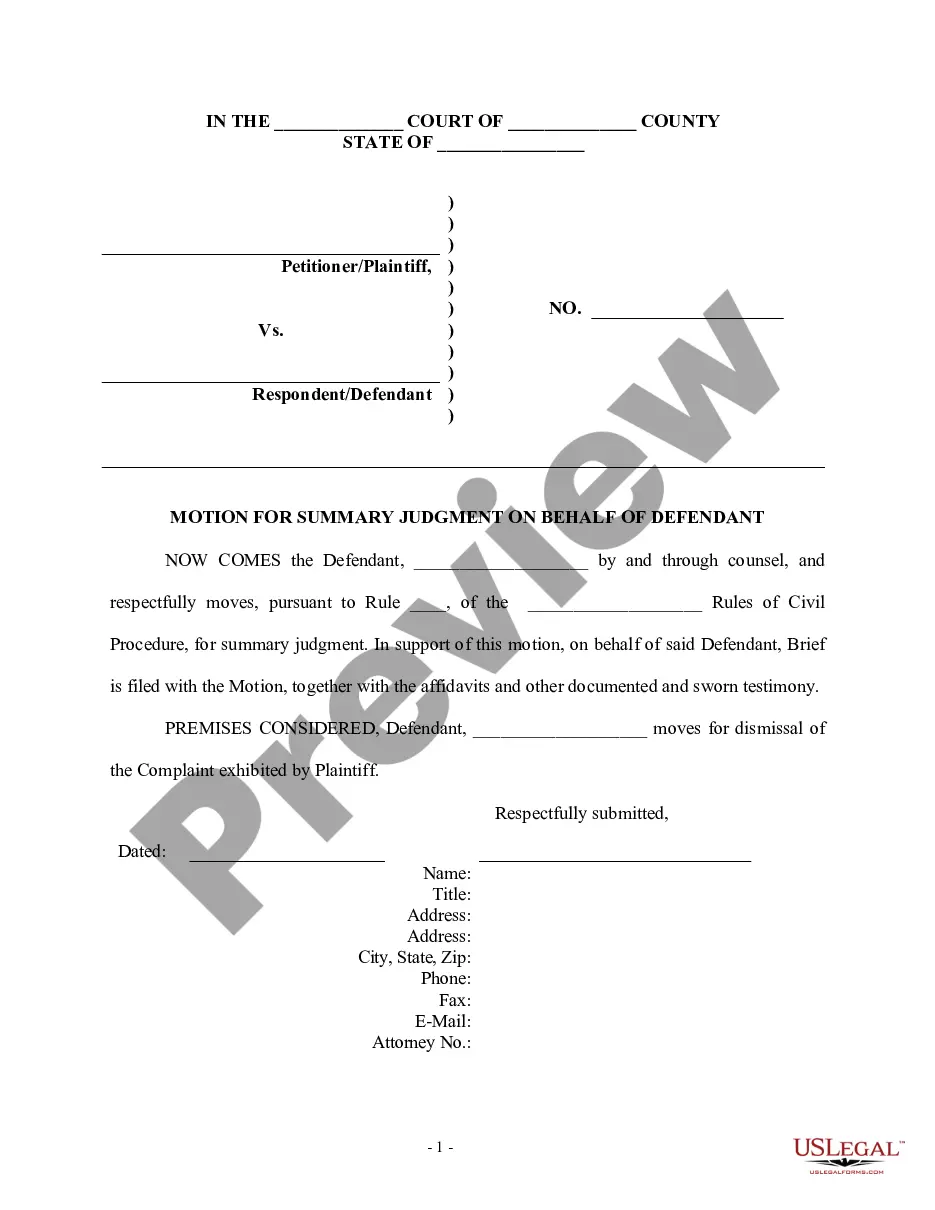
A Motion for Summary Judgment is a legal document that requests the court to rule in favor of one party without going to trial. This form is used when one party believes there are no significant facts in dispute and the law clearly supports their case. Unlike other motions, this form specifically asks the court to make a judgment based on the evidence presented, potentially saving time and resources for all parties involved.
Form components explained
- Case caption: Identifies the court and the parties involved in the case.
- Statement of undisputed facts: Outlines the facts that are not in dispute between the parties.
- Legal arguments: Provides the reasoning and relevant laws that support the motion.
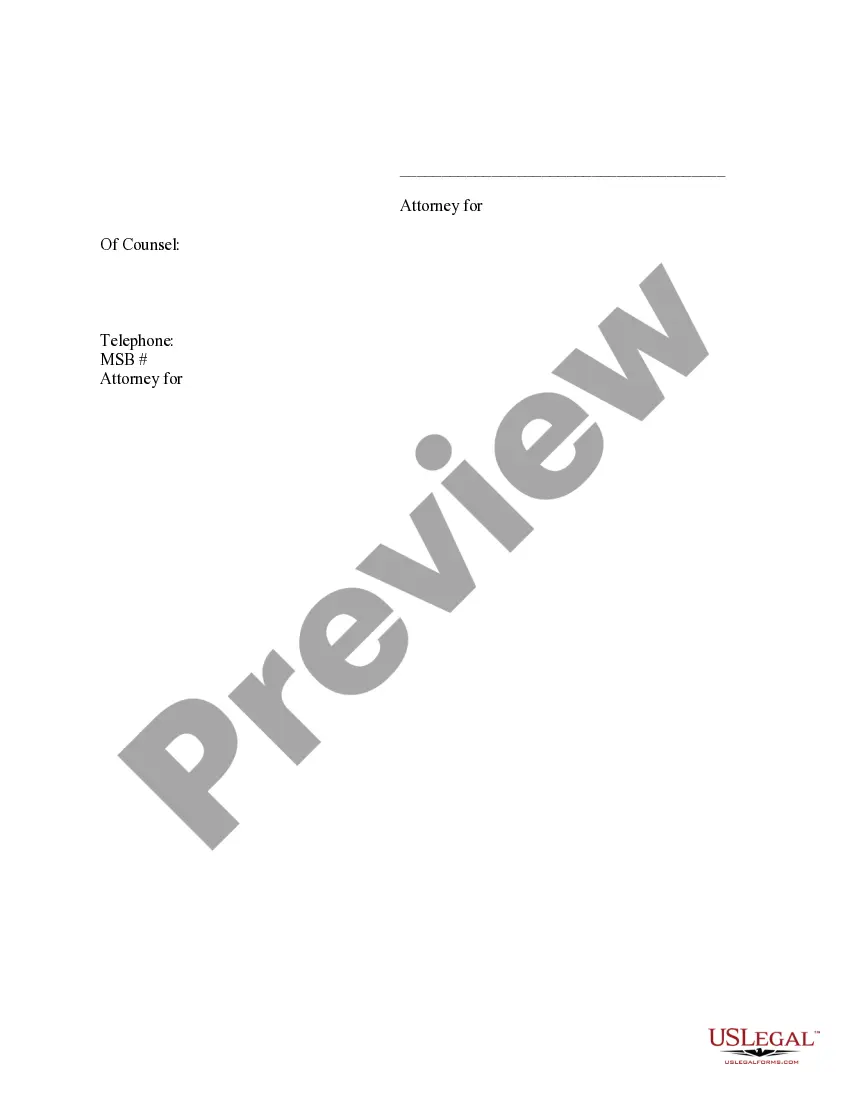
- Request for relief: Specifies what the requesting party is seeking from the court.
Common use cases
This form is typically used in civil litigation when one party wants to resolve the case quickly. It may be appropriate in situations such as a breach of contract, personal injury claims, or any case where the evidential support is overwhelming and there is no genuine dispute over material facts.
Intended users of this form
- Litigants involved in civil lawsuits.
- Parties seeking to expedite a court case.
- Individuals or legal representatives who believe that the undisputed facts support their case strongly.
How to prepare this document
- Identify the parties: Clearly state the names of all parties involved in the case.
- Draft the statement of undisputed facts: Include a detailed account of the facts that everyone agrees upon.
- Present legal arguments: Cite applicable laws and precedents that support the motion.
- State your request: Clearly articulate what you want the court to do with this motion.
- Sign and date the form: Ensure it is signed by the party or their attorney to make it valid.
Notarization requirements for this form
In most cases, this form does not require notarization. However, some jurisdictions or signing circumstances might. US Legal Forms offers online notarization powered by Notarize, accessible 24/7 for a quick, remote process.
Get your form ready online
Our built-in tools help you complete, sign, share, and store your documents in one place.
Make edits, fill in missing information, and update formatting in US Legal Forms—just like you would in MS Word.
Download a copy, print it, send it by email, or mail it via USPS—whatever works best for your next step.
Sign and collect signatures with our SignNow integration. Send to multiple recipients, set reminders, and more. Go Premium to unlock E-Sign.
If this form requires notarization, complete it online through a secure video call—no need to meet a notary in person or wait for an appointment.
We protect your documents and personal data by following strict security and privacy standards.

Make edits, fill in missing information, and update formatting in US Legal Forms—just like you would in MS Word.

Download a copy, print it, send it by email, or mail it via USPS—whatever works best for your next step.

Sign and collect signatures with our SignNow integration. Send to multiple recipients, set reminders, and more. Go Premium to unlock E-Sign.

If this form requires notarization, complete it online through a secure video call—no need to meet a notary in person or wait for an appointment.

We protect your documents and personal data by following strict security and privacy standards.
Typical mistakes to avoid
- Failing to provide sufficient undisputed facts.
- Not following the specific formatting rules for the jurisdiction.
- Omitting the legal arguments necessary to support the motion.
- Submitting the motion without the necessary signatures.
Benefits of completing this form online
- Convenience: Access and complete the form from anywhere at any time.
- Editability: Easily modify the form to fit your specific case requirements.
- Reliability: Ensure you are using a template drafted by licensed attorneys to meet legal standards.
Looking for another form?
Form popularity
FAQ
Motions filed, the percent of cases with motions granted in whole or in part, and the percent of cases terminated by summary judgment. The percentage of cases with summary judgment motions, averaged across the six courts in the study, has increased from approximately 12% in 1975, to 17% in 1985, to 19% in 1988.
A motion for summary judgment filed by an opposing party claims that you cannot prevail in the case because there is no legal dispute or your claim is without merit or a defense. Failure to respond to a motion for summary judgment can result in your case being dismissed or a judgment being rendered against you.
Decision on motions for summary judgment: About 15 months after beginning of representation. The judge will make a decision on summary judgment about three months after s/he hears arguments from both sides.
If the motion is granted, the judgment on the issue or case is deemed to be a final judgment from which a party may seek an appeal. The court of appeal can reverse the grant of summary judgment and reinstate the claim in the lower court. However, this is rarely done and most summary judgments are upheld on appeal.