Mississippi Brief in Support of Motion for Summary Judgment
What this document covers
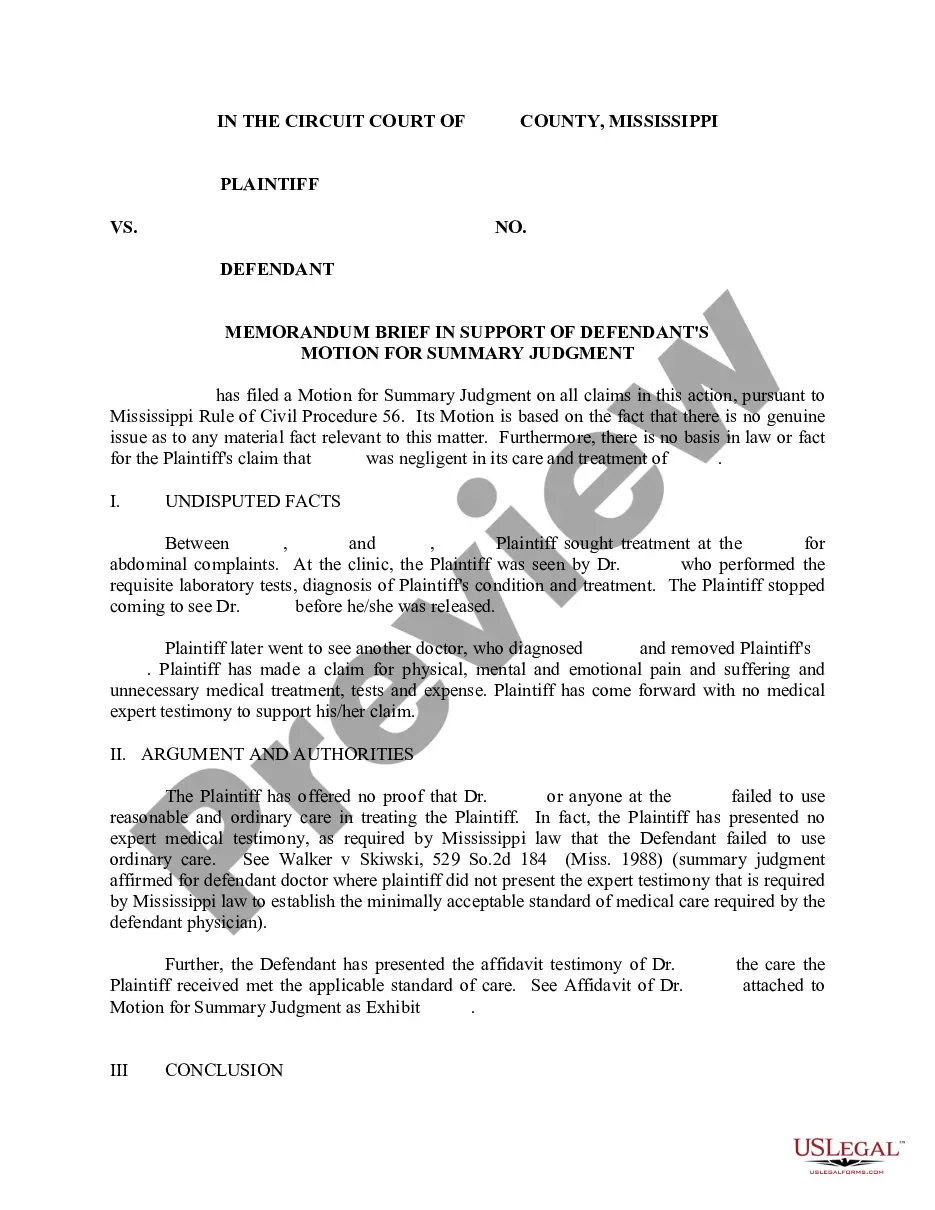
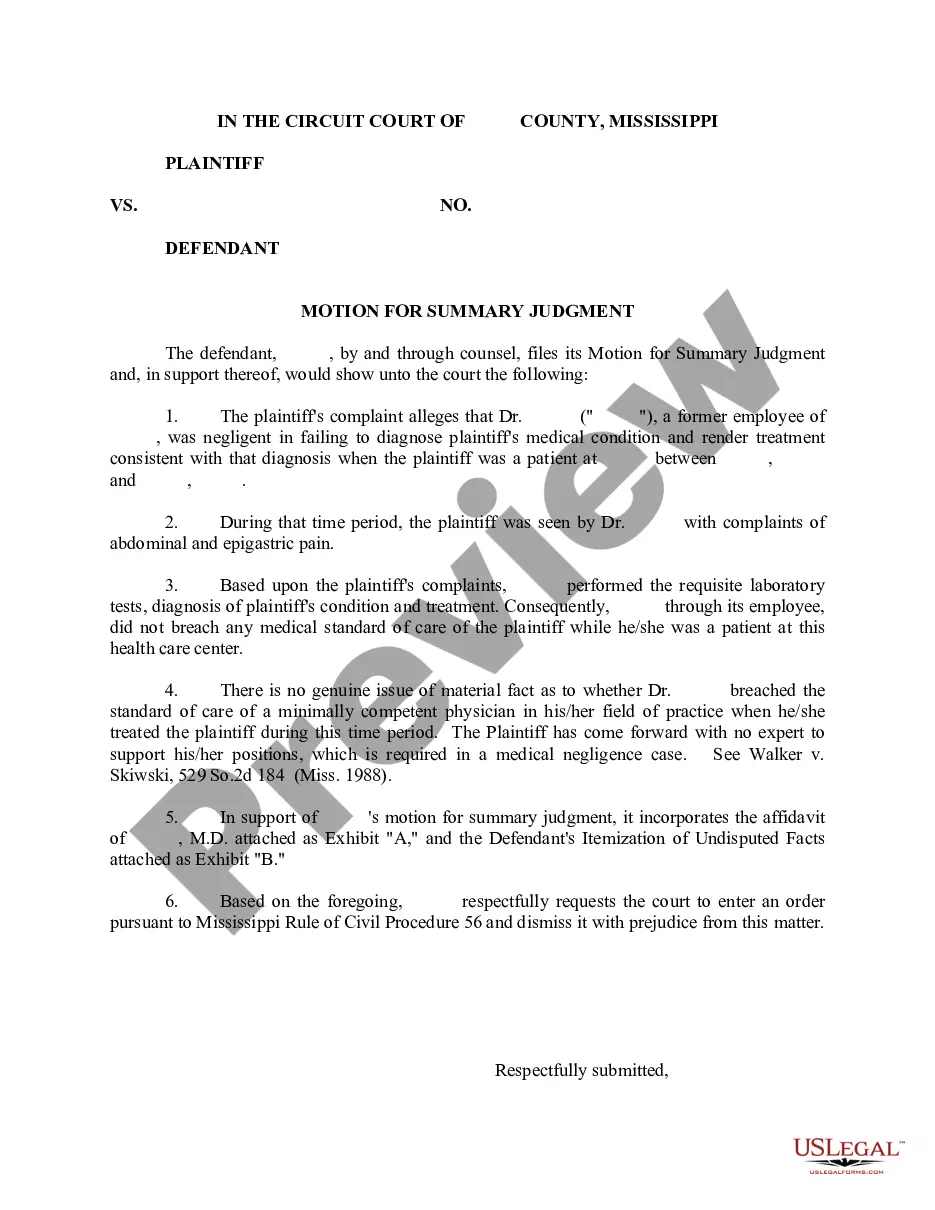
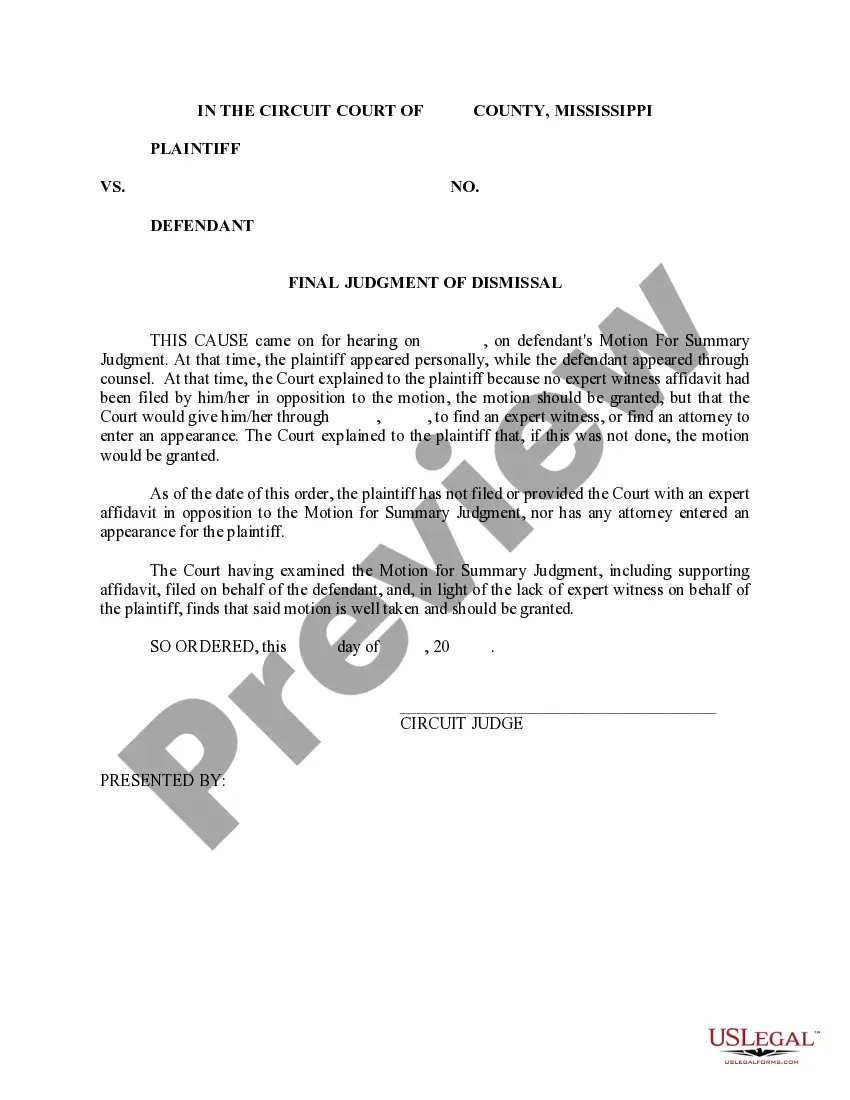
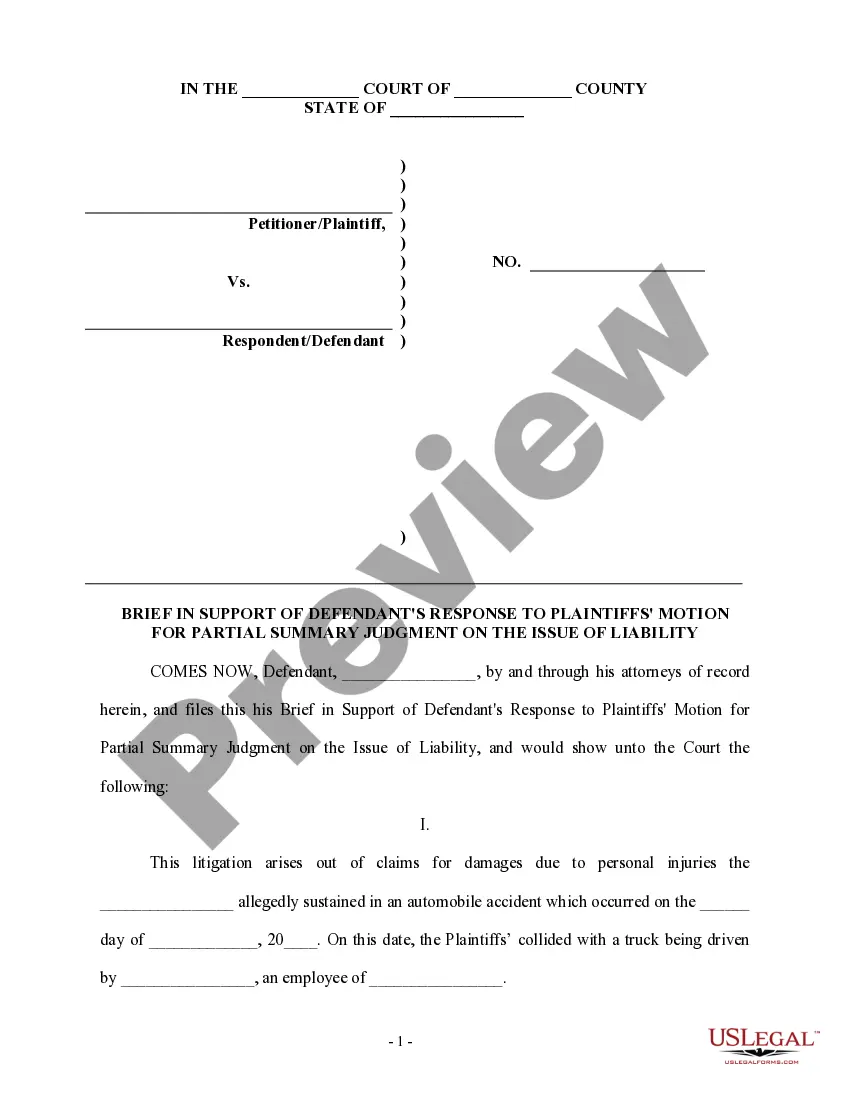
The Brief in Support of Motion for Summary Judgment is a legal document used to request the court to grant a summary judgment in favor of the moving party. This form is a crucial tool in litigation as it allows a party to seek a judgment without a trial when there are no genuine disputes over material facts. It differs from other motions because it specifically aims to establish that the evidence presented is so compelling that it warrants a decision in the moving party's favor as a matter of law.
What’s included in this form
- Heading that identifies the court and parties involved.
- Introduction outlining the purpose of the motion.
- Argument section detailing the legal justifications for the summary judgment.
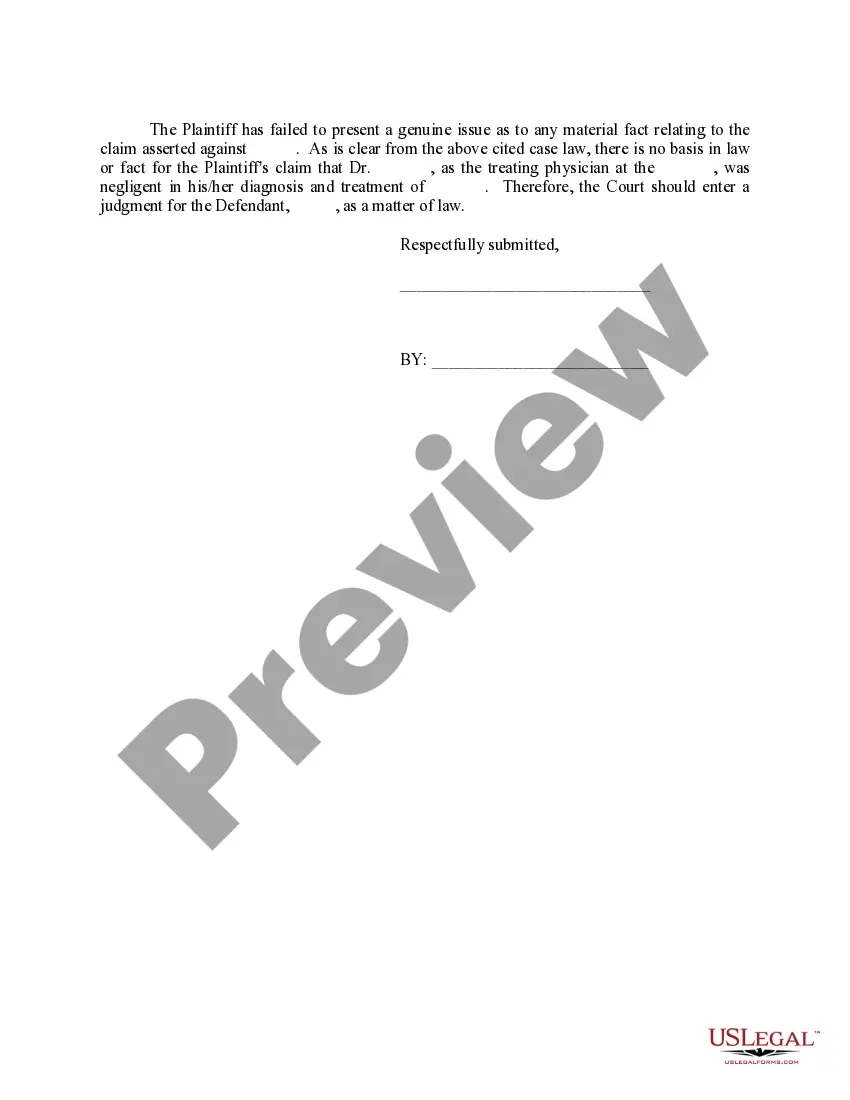
- Conclusion summarizing the requests made to the court.
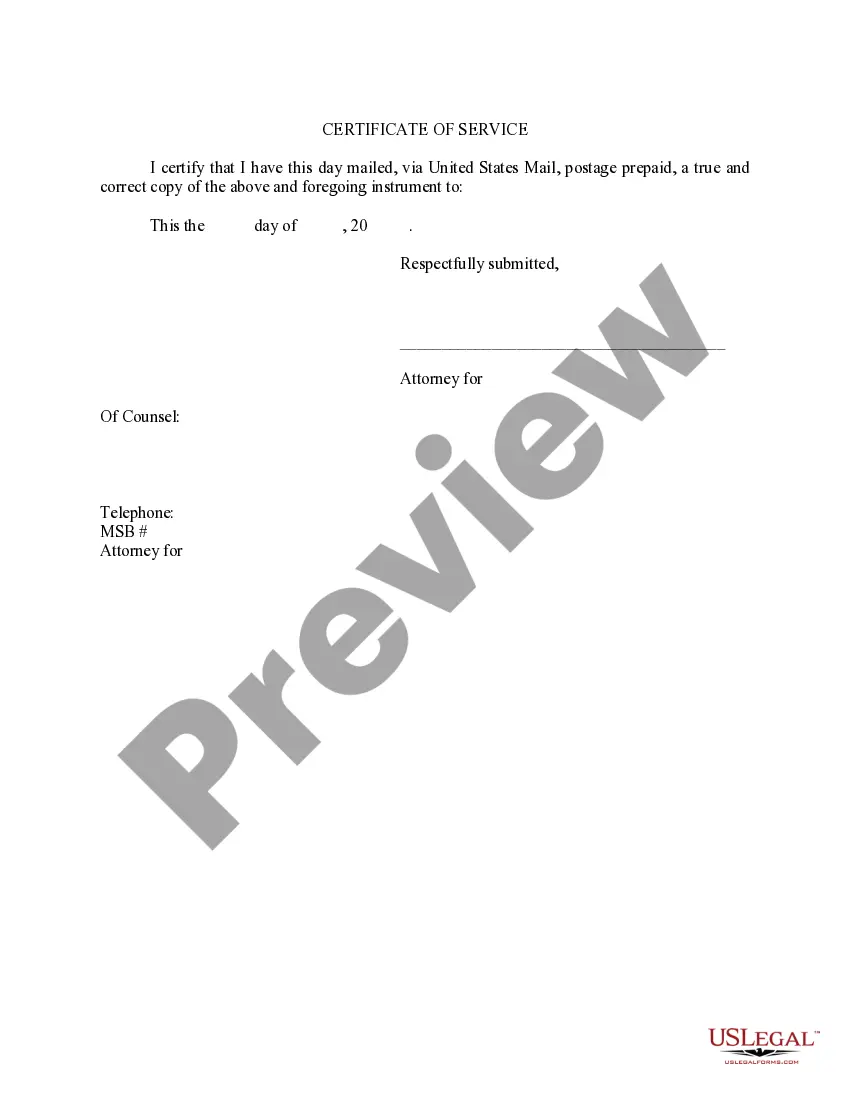
- Certificate of service confirming that copies have been properly distributed.
When to use this form
This form should be used when a party believes that there is no genuine dispute of material fact in a case and that they are entitled to judgment as a matter of law. Common scenarios include when the opposing party has failed to provide evidence that contradicts the moving party's claims or when the evidence clearly supports one side's position. It is particularly useful in civil cases where quick resolution is desired to save time and resources.
Who can use this document
- Individuals or businesses involved in a civil lawsuit seeking a summary judgment.
- Attorneys preparing to file motions in court on behalf of clients.
- Parties wishing to expedite the legal process by avoiding a lengthy trial.
How to complete this form
- Identify the court and the parties involved at the top of the document.
- Clearly state the purpose of the motion in the introduction section.
- Present arguments and legal authorities that support your request for summary judgment in the argument section.
- Summarize the key points and restate the relief sought in the conclusion.
- Complete the certificate of service to confirm distribution of the document.
Does this document require notarization?
Notarization is not commonly needed for this form. However, certain documents or local rules may make it necessary. Our notarization service, powered by Notarize, allows you to finalize it securely online anytime, day or night.
Get your form ready online
Our built-in tools help you complete, sign, share, and store your documents in one place.
Make edits, fill in missing information, and update formatting in US Legal Forms—just like you would in MS Word.
Download a copy, print it, send it by email, or mail it via USPS—whatever works best for your next step.
Sign and collect signatures with our SignNow integration. Send to multiple recipients, set reminders, and more. Go Premium to unlock E-Sign.
If this form requires notarization, complete it online through a secure video call—no need to meet a notary in person or wait for an appointment.
We protect your documents and personal data by following strict security and privacy standards.

Make edits, fill in missing information, and update formatting in US Legal Forms—just like you would in MS Word.

Download a copy, print it, send it by email, or mail it via USPS—whatever works best for your next step.

Sign and collect signatures with our SignNow integration. Send to multiple recipients, set reminders, and more. Go Premium to unlock E-Sign.

If this form requires notarization, complete it online through a secure video call—no need to meet a notary in person or wait for an appointment.

We protect your documents and personal data by following strict security and privacy standards.
Typical mistakes to avoid
- Failing to support claims with adequate legal authority or precedent.
- Not adhering to court-specific formatting or filing procedures.
- Neglecting to include all necessary sections, like the certificate of service.
Benefits of using this form online
- Convenience of immediate download and access to legal templates.
- Editability to customize the form based on individual circumstances.
- Reliability backed by templates drafted by licensed attorneys.
Key takeaways
- The Brief in Support of Motion for Summary Judgment is critical for cases where there are no facts in dispute.
- Thoroughly cite legal precedents and ensure proper formatting per state rules.
- Utilizing this form online streamlines the process and enhances accuracy.
Looking for another form?

Form popularity
FAQ
The conference generally lasts all day, and the judge or neutral will try to settle our case. Motions for summary judgment: About one year after beginning of representation.
You cannot file a second motion dismiss. You have to raise it as an affirmative defense in your answer and present it with evidence at summary judgement or trial...
That said, the Court recognizes that multiple motions for summary judgment may be appropriate in some circumstances. For instance, it is usually more efficient for a defendant to file a dispositive motion raising jurisdictional issues early in the litigation, before challenging the merits of a plaintiff's claim.
The court should state on the record the reasons for granting or denying the motion. (b) Time to File a Motion. Unless a different time is set by local rule or the court orders otherwise, a party may file a motion for summary judgment at any time until 30 days after the close of all discovery.
Attack the Legal Argument. The first place to look for a weakness in your opponent's motion is at their legal argument. Attack the Evidence. Attack the Separate Statement. Consider Whether Your Opponent's Motion Meets its Burden. Consider Seeking a Continuance to Conduct More Discovery. Conclusion.
Completely resolve a case (e.g., entry of judgment for plaintiff or defendants) Completely resolve a claim. Completely determine the status of a particular party. Resolve a particular claim's application to a particular party. Establish a fact or ruling applicable to the case as it is further adjudicated.
Rule 56 of the Federal Rules of Civil Procedure governs summary judgment for federal courts. Under Rule 56, in order to succeed in a motion for summary judgment, a movant must show 1) that there is no genuine dispute as to any material fact, and 2) that the movant is entitled to judgment as a matter of law.
What happens during a motion for summary judgment hearing? Once the motion and response has been filed, the judge will read both and then preside over a hearing. At the hearing, each party will be given a certain amount of time to reiterate their argument in front of the judge.
A summary judgement occurs when, in a civil case, one party wants to move to a court decision without a trial.When a motion for summary judgement is granted, it indicates there is sufficient evidence to declare one party the clear winner.