Mississippi Response to Motion of Summary Judgment
What is this form?
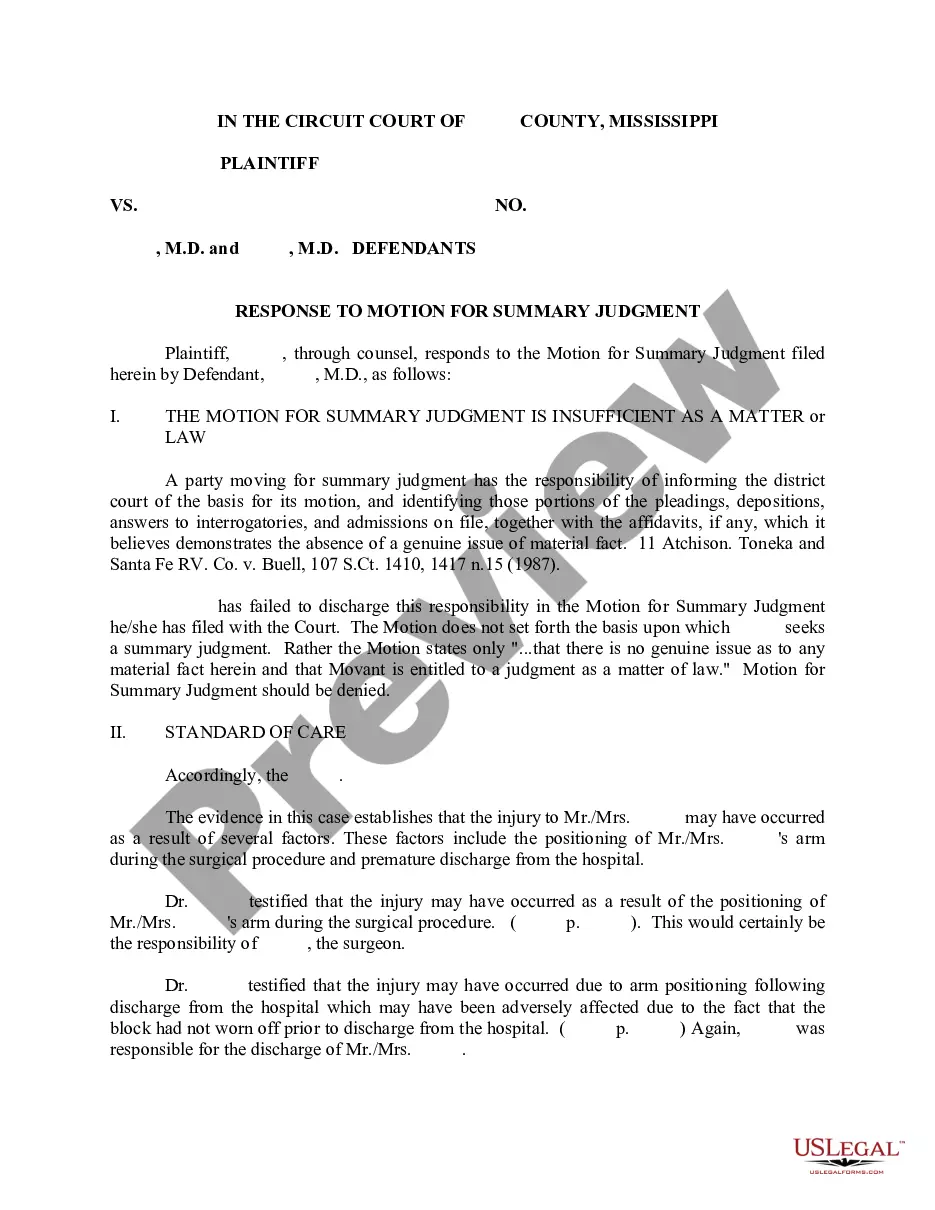
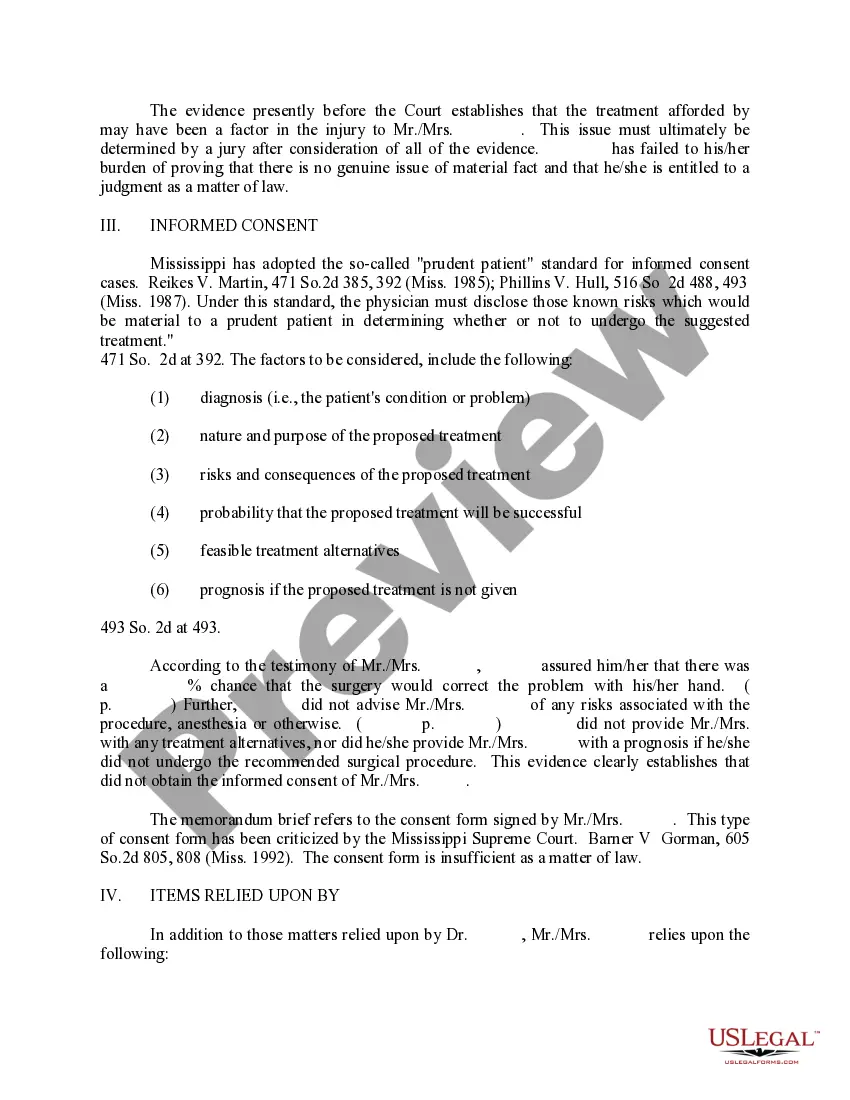
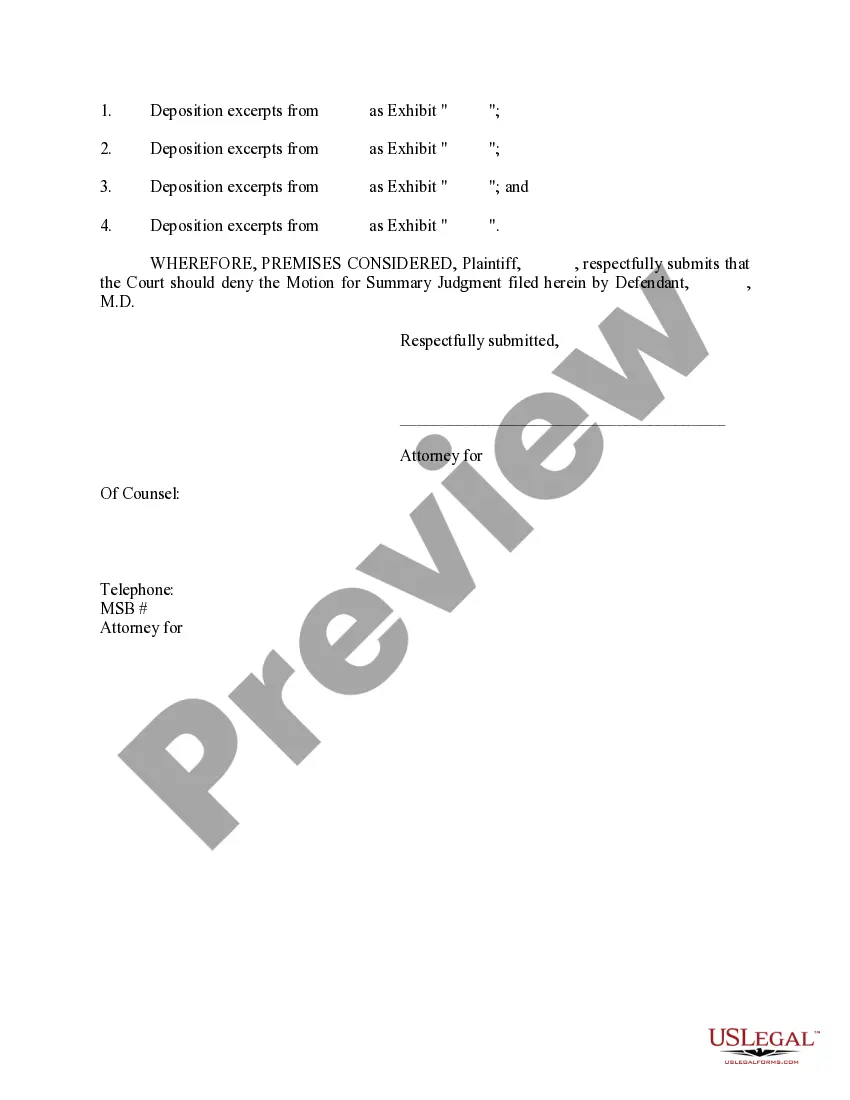
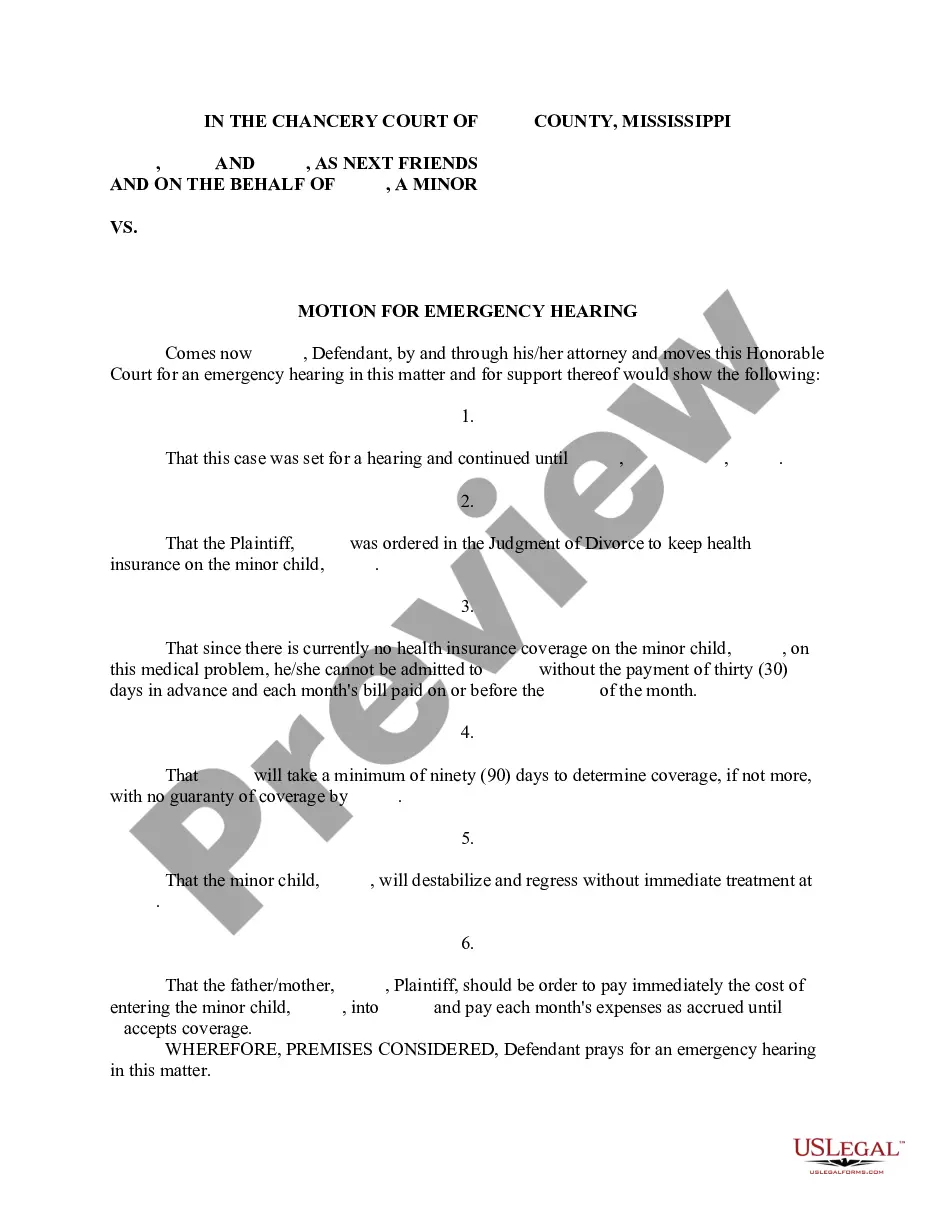
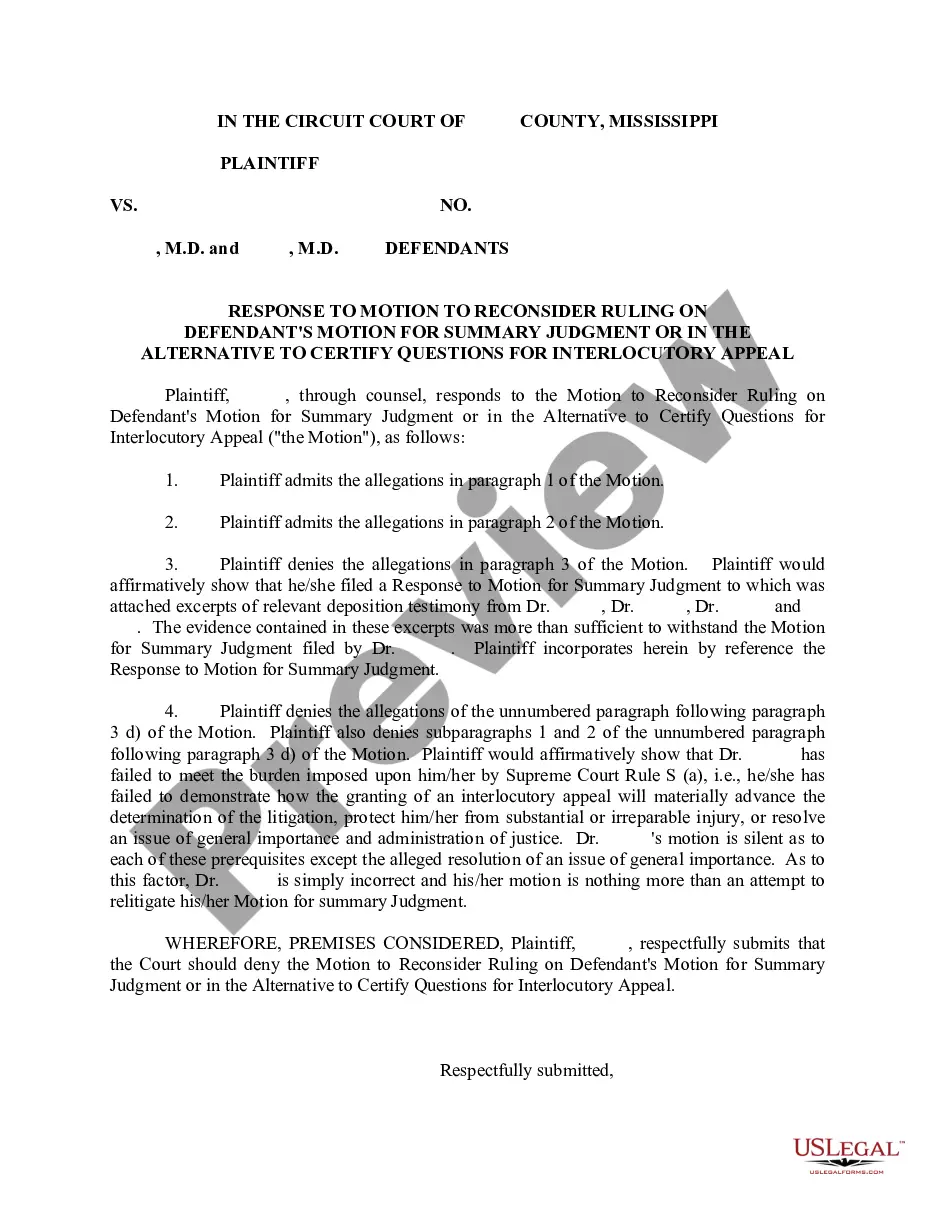
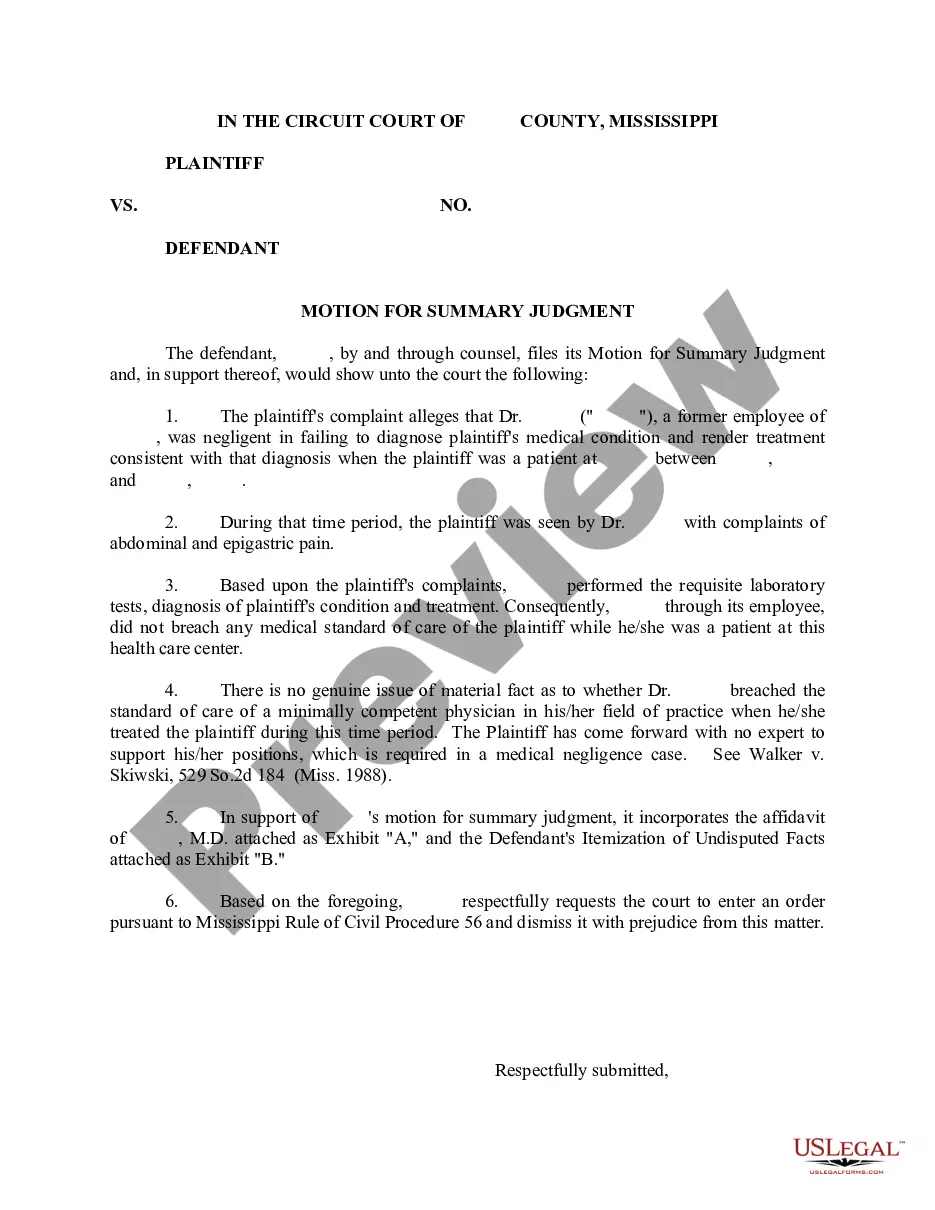
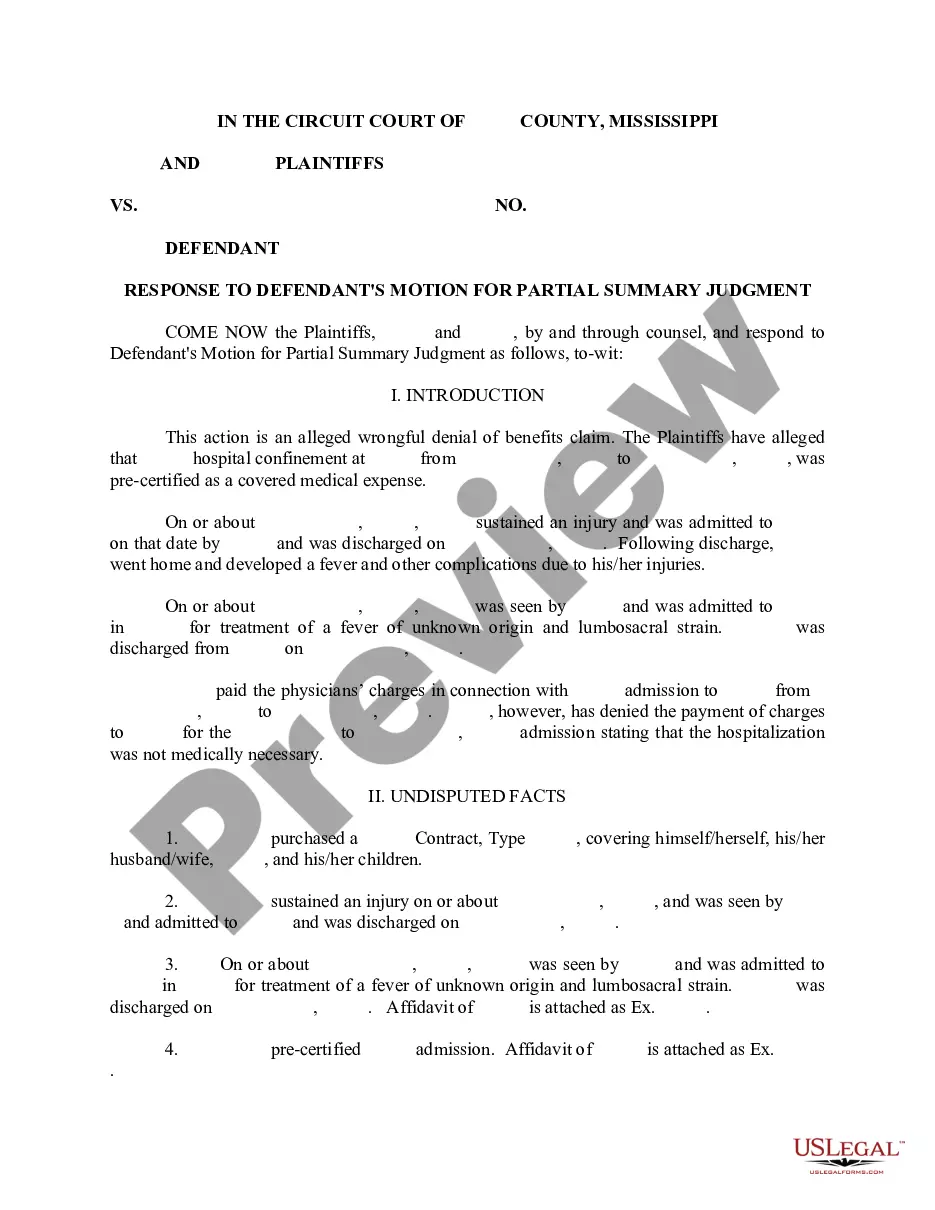
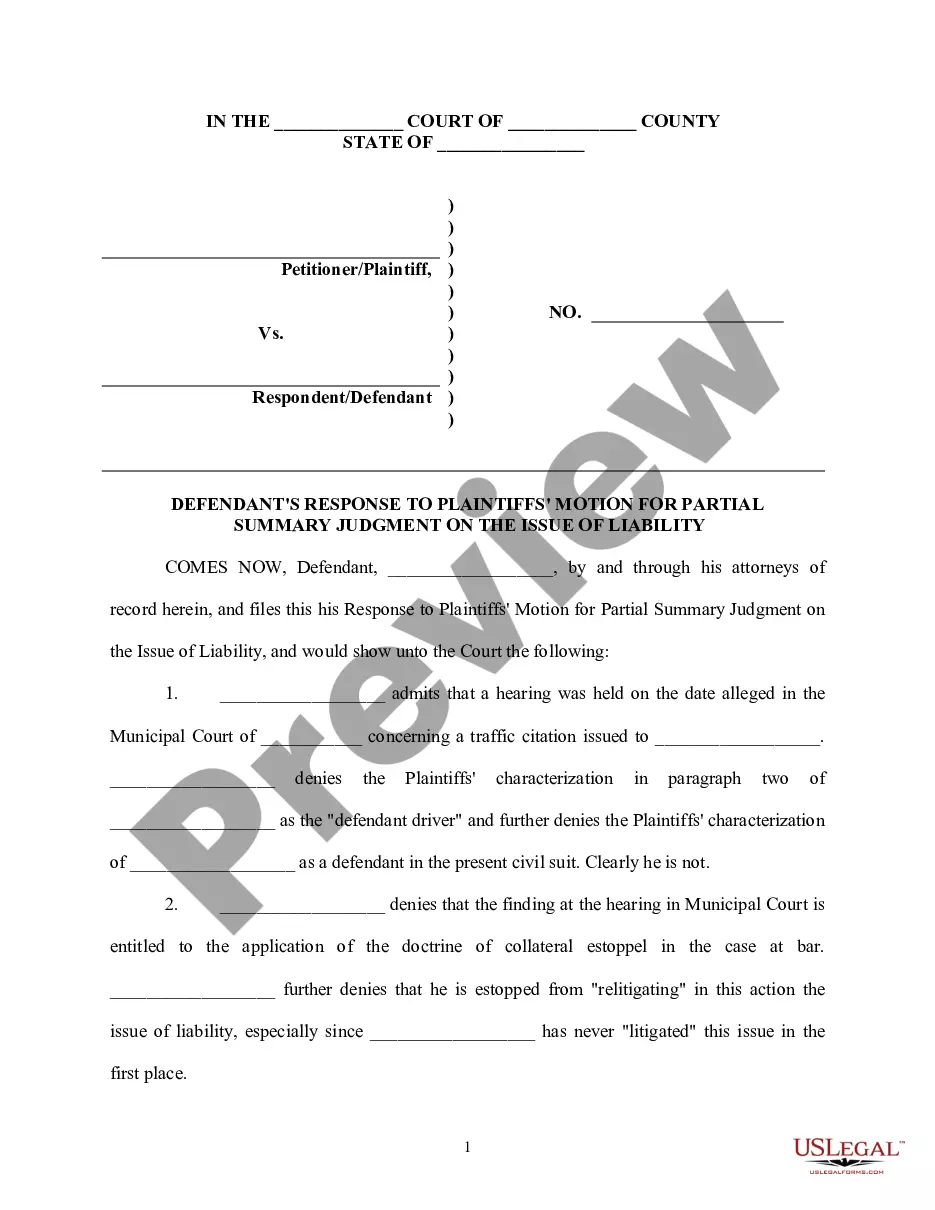
This Response to Motion of Summary Judgment form is designed to help a party respond to a request for a court ruling without a trial. It enables the responding party to present their position and arguments against the motion for summary judgment. Unlike similar forms, this one specifically addresses the need to counter factual assertions and legal expectations presented by the moving party, ensuring a clear articulation of the response.
Key parts of this document
- Case information: Includes fields for case number, court details, and parties involved.
- Response section: Specific areas to counter the claims made in the motion for summary judgment.
- Legal arguments: Space for presenting legal reasoning and references to relevant statutes or case law.
- Affidavit: A statement of facts under oath that supports the response.
- Signature section: Includes spaces for the signature of the responding party or their attorney.

When to use this form
This form is used when you need to respond to a Motion of Summary Judgment filed against you in court. It is critical in situations where the opposing party believes there are no genuine issues of material fact that warrant a trial. This form helps you assert your position, outline any factual disputes, and present evidence that supports your case, ensuring your arguments are formally recognized by the court.
Intended users of this form
- Defendants facing a Motion of Summary Judgment.
- Parties who have an interest in a case where a motion has been filed.
- Individuals who wish to contest the motion without proceeding to trial.
- Legal representatives acting on behalf of a client in civil or criminal matters.
How to prepare this document
- Identify the case information, including the case number and court.
- Fill in your response in the designated section, addressing each claim made in the motion.
- Include any supporting documents or affidavits that substantiate your position.
- Review your arguments and ensure they are clearly articulated and referenced.
- Sign the form where required, and ensure any necessary witnesses or notarization is completed if applicable.
Notarization guidance
This form does not typically require notarization to be legally valid. However, some jurisdictions or document types may still require it. US Legal Forms provides secure online notarization powered by Notarize, available 24/7 for added convenience.
Get your form ready online
Our built-in tools help you complete, sign, share, and store your documents in one place.
Make edits, fill in missing information, and update formatting in US Legal Forms—just like you would in MS Word.
Download a copy, print it, send it by email, or mail it via USPS—whatever works best for your next step.
Sign and collect signatures with our SignNow integration. Send to multiple recipients, set reminders, and more. Go Premium to unlock E-Sign.
If this form requires notarization, complete it online through a secure video call—no need to meet a notary in person or wait for an appointment.
We protect your documents and personal data by following strict security and privacy standards.

Make edits, fill in missing information, and update formatting in US Legal Forms—just like you would in MS Word.

Download a copy, print it, send it by email, or mail it via USPS—whatever works best for your next step.

Sign and collect signatures with our SignNow integration. Send to multiple recipients, set reminders, and more. Go Premium to unlock E-Sign.

If this form requires notarization, complete it online through a secure video call—no need to meet a notary in person or wait for an appointment.

We protect your documents and personal data by following strict security and privacy standards.
Mistakes to watch out for
- Failing to address all points raised in the motion.
- Not including proper legal citations or evidence.
- Missing filing deadlines.
- Neglecting to sign or improperly signing the document.
Advantages of online completion
- Convenience of downloading and completing the form at your own pace.
- Editability allows you to tailor the response to your specific circumstances easily.
- Access to a reliable, attorney-drafted template that mitigates legal missteps.
Looking for another form?
Form popularity
FAQ
Completely resolve a case (e.g., entry of judgment for plaintiff or defendants) Completely resolve a claim. Completely determine the status of a particular party. Resolve a particular claim's application to a particular party. Establish a fact or ruling applicable to the case as it is further adjudicated.
The motion must include a separate "Notice of Motion" which includes a brief summary of the nature of the motion, the deadline for filing a response, and if there is a hearing, the date, time, and location of the hearing.
Rule 56 of the Federal Rules of Civil Procedure governs summary judgment for federal courts. Under Rule 56, in order to succeed in a motion for summary judgment, a movant must show 1) that there is no genuine dispute as to any material fact, and 2) that the movant is entitled to judgment as a matter of law.
If the motion is granted, the judgment on the issue or case is deemed to be a final judgment from which a party may seek an appeal. The court of appeal can reverse the grant of summary judgment and reinstate the claim in the lower court. However, this is rarely done and most summary judgments are upheld on appeal.
You have only 14 days to respond to a regular motion. The time to respond runs from the date the motion was filed. Check the certificate of service, which should be included with the Motion papers. If you need to respond to an Administrative Motion, you have only 4 days.
19, 2008) (motions to dismiss or for summary judgment are not responsive pleadings, and therefore do not cut off a plaintiff's right to amend his pleadings once at any time).
A motion asking the court to issue summary judgment on at least one claim.Typically, the motion must show that no genuine issue of material fact exists, and that the opposing party loses on that claim even if all its allegations are accepted as true.
A summary judgement occurs when, in a civil case, one party wants to move to a court decision without a trial. That only happens however, when the two parties agree to the critical facts of the issue, and the law allows summary judgement based on the undisputed facts at hand.
The response must be filed within 10 days after service of the motion unless the court shortens or extends the time. A motion authorized by Rules 8, 9, 18, or 41 may be granted before the 10-day period runs only if the court gives reasonable notice to the parties that it intends to act sooner.