Minnesota Notice of Trial Date
Understanding this form
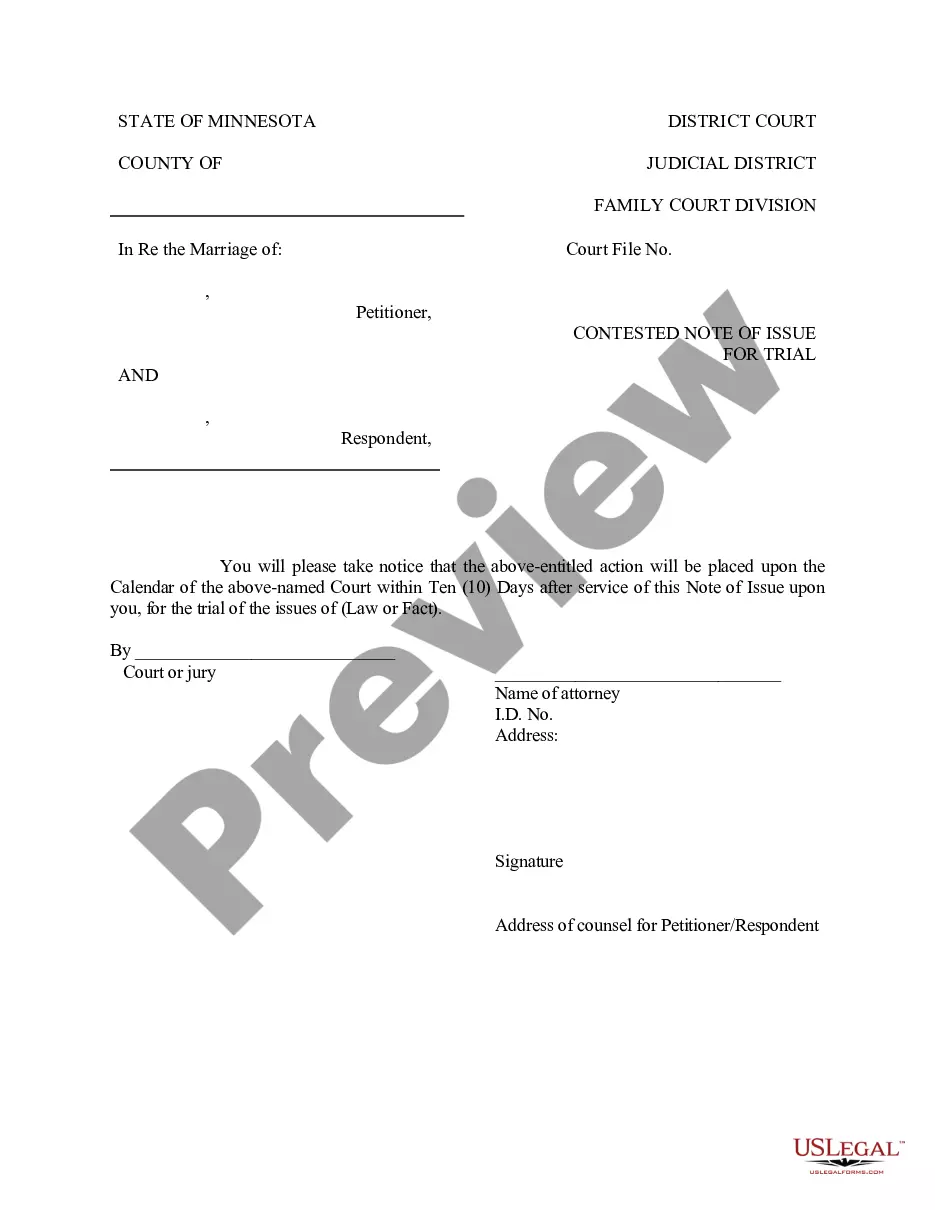
The Notice of Trial Date is a legal document that informs involved parties that a court action will be scheduled for trial. This form distinguishes itself from other court documents by specifically setting the trial date within ten days of its service. It plays a crucial role in formalizing the trial process for contested issues, ensuring that all parties are aware of the upcoming proceedings.
Key components of this form
- The title of the action and the names of the parties involved.
- Date of mailing the form to the opposing party.
- Issuing attorney's name, address, and identification number.
- Signature line for the attorney representing the petitioner or respondent.
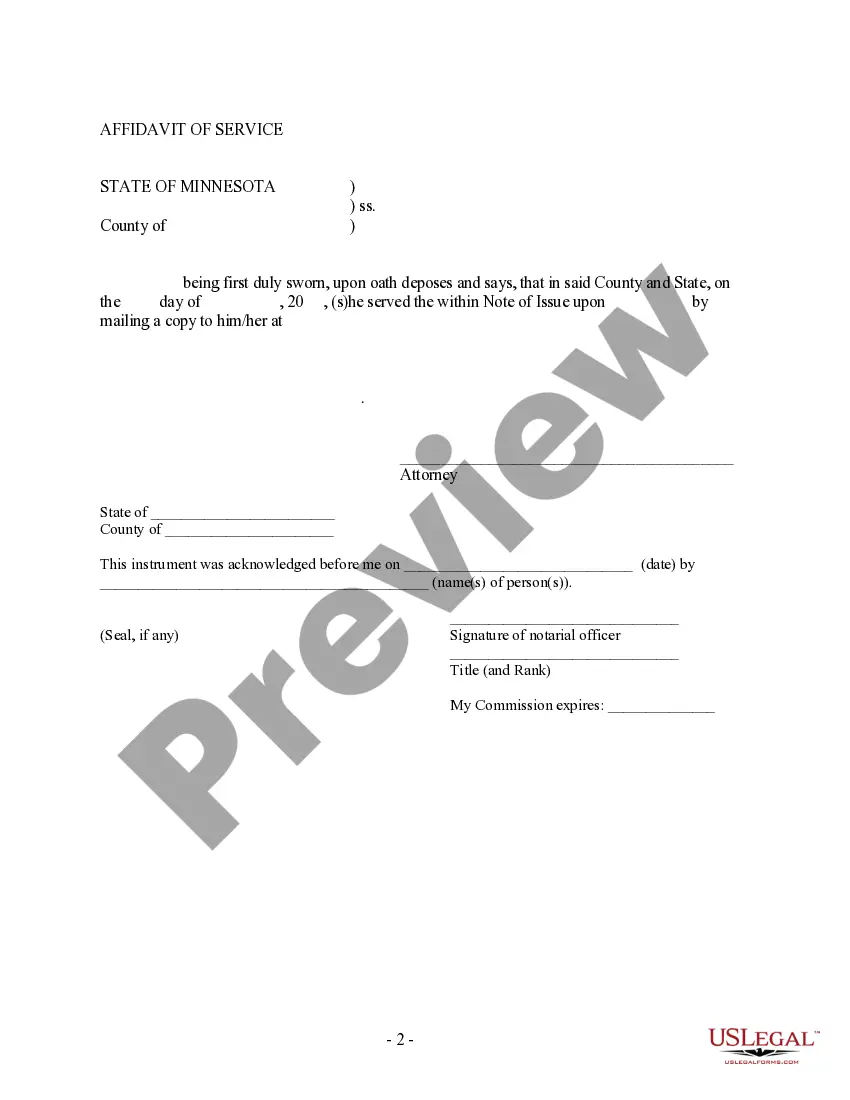
- Affidavit of service confirming that the form was properly delivered.
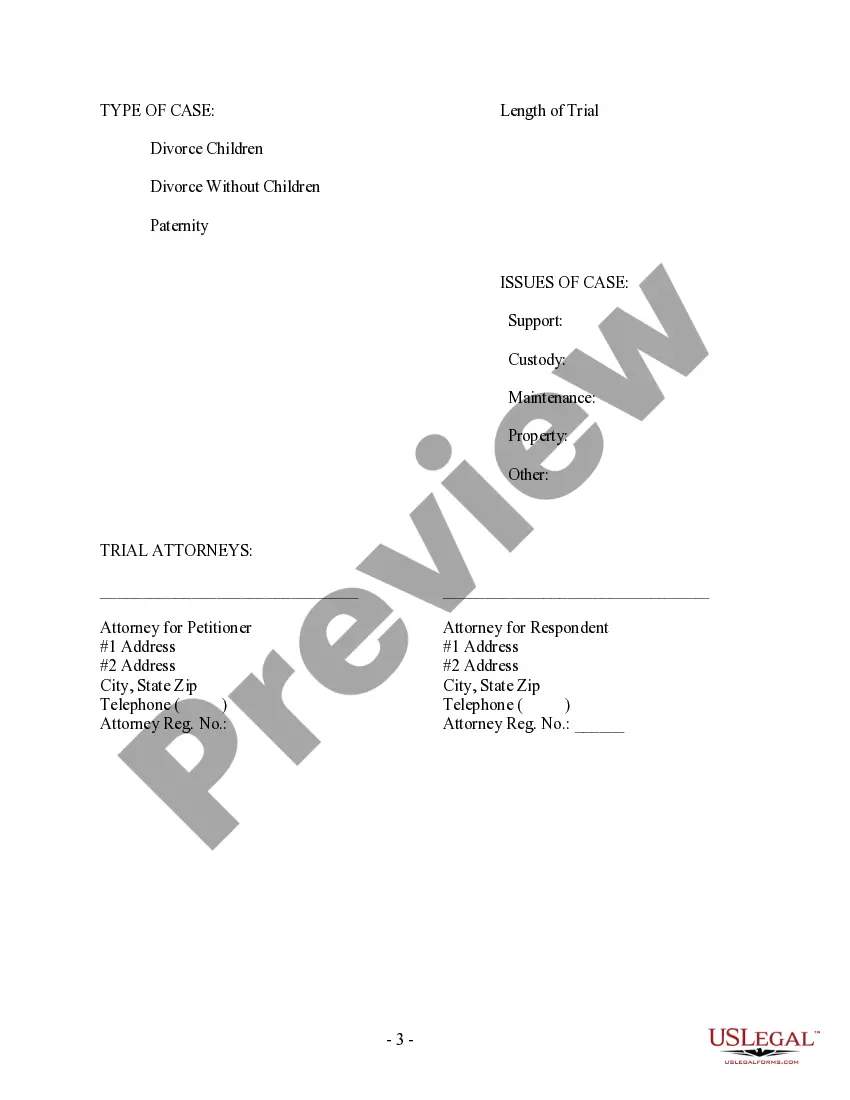
- Details of the case type (e.g., Divorce, Paternity) and specific trial issues (e.g., Custody, Support).
When this form is needed
This form should be used when you are ready to initiate a trial for a legal action that has already progressed through earlier stages, such as mediation or settlement discussions. It is particularly relevant in contested family law cases, including divorces and custody disputes, where issues remain unresolved and require legal adjudication in court.
Who needs this form
- Individuals or attorneys representing clients in contested civil matters.
- Parties involved in family law cases, such as divorce or child custody disputes.
- Respondents or petitioners who need to notify the court and other involved parties of the trial date.
How to complete this form
- Enter the title of the court action and the names of the petitioner and respondent.
- Specify whether the trial involves issues of law or fact.
- Fill in the attorney's name, identification number, and address.
- Sign the document to verify its authenticity.
- Complete the affidavit of service, indicating the date of mailing and the recipient's address.
Notarization guidance
This form needs to be notarized to ensure legal validity. US Legal Forms provides secure online notarization powered by Notarize, allowing you to complete the process through a verified video call, available anytime.
Get your form ready online
Our built-in tools help you complete, sign, share, and store your documents in one place.
Make edits, fill in missing information, and update formatting in US Legal Forms—just like you would in MS Word.
Download a copy, print it, send it by email, or mail it via USPS—whatever works best for your next step.
Sign and collect signatures with our SignNow integration. Send to multiple recipients, set reminders, and more. Go Premium to unlock E-Sign.
If this form requires notarization, complete it online through a secure video call—no need to meet a notary in person or wait for an appointment.
We protect your documents and personal data by following strict security and privacy standards.

Make edits, fill in missing information, and update formatting in US Legal Forms—just like you would in MS Word.

Download a copy, print it, send it by email, or mail it via USPS—whatever works best for your next step.

Sign and collect signatures with our SignNow integration. Send to multiple recipients, set reminders, and more. Go Premium to unlock E-Sign.

If this form requires notarization, complete it online through a secure video call—no need to meet a notary in person or wait for an appointment.

We protect your documents and personal data by following strict security and privacy standards.
Common mistakes to avoid
- Not accurately entering the names or details of the parties involved.
- Failing to provide the correct mailing address for the notice.
- Not signing the form before submitting it to the court.
- Inadvertently omitting issues to be resolved at trial.
Why use this form online
- Quick and easy access to properly drafted legal forms.
- The ability to fill out and customize the form for specific needs.
- Immediate downloads, facilitating prompt action.
- Access to forms prepared by licensed attorneys, ensuring legal compliance.
Legal use & context
- The Notice of Trial Date is essential for timely court proceedings.
- Failure to provide this notice can lead to delays or dismissal of the case.
- It serves as a formal record of the trial schedule as required by the court.
Main things to remember
- The Notice of Trial Date informs all parties of the scheduled trial.
- It must be served within the specified timeframe to be valid.
- Proper completion is crucial to avoid procedural complications.
Looking for another form?
Form popularity
FAQ
In Minnesota, certain crimes cannot be expunged, including first-degree murder, criminal sexual conduct, and some felony-level offenses. Expungement laws are complex and vary based on the crime and circumstances. If you seek to understand your options regarding expungement, being familiar with the Minnesota Notice of Trial Date is beneficial, as it can help you stay informed about your case and any potential legal remedies.
The 48-hour rule in Minnesota is similar to the rules in criminal procedure, ensuring that individuals arrested must be either charged or released within 48 hours. This rule is designed to protect individuals from prolonged detention without charges. Understanding this rule is vital for anyone involved in the legal system, and resources like the Minnesota Notice of Trial Date can assist you in tracking your case.
In criminal procedure, the 48-hour rule mandates that an arrested individual must be charged or released within 48 hours of their arrest. This rule protects against unlawful detention and ensures that individuals have their rights upheld. When facing legal proceedings, being informed about the Minnesota Notice of Trial Date can help you understand the next steps in your case.
Rule 69 in Minnesota governs the execution of judgments in civil cases. It outlines the procedures for enforcing a judgment, including the methods of taking property to satisfy a debt. This rule is crucial for creditors seeking payment and ensures a fair process. For individuals navigating this process, knowing about the Minnesota Notice of Trial Date can help manage timelines effectively.
The 36 48-hour rule in Minnesota refers to the timeline for a defendant's initial appearance following an arrest. Under this rule, a defendant must be brought before a judge within 36 hours of arrest, excluding weekends and holidays. This ensures that individuals are not held without proper judicial oversight. If you face delays, understanding your rights is crucial, and resources like the Minnesota Notice of Trial Date can provide guidance.