Pedestrian Access Easement
What this document covers
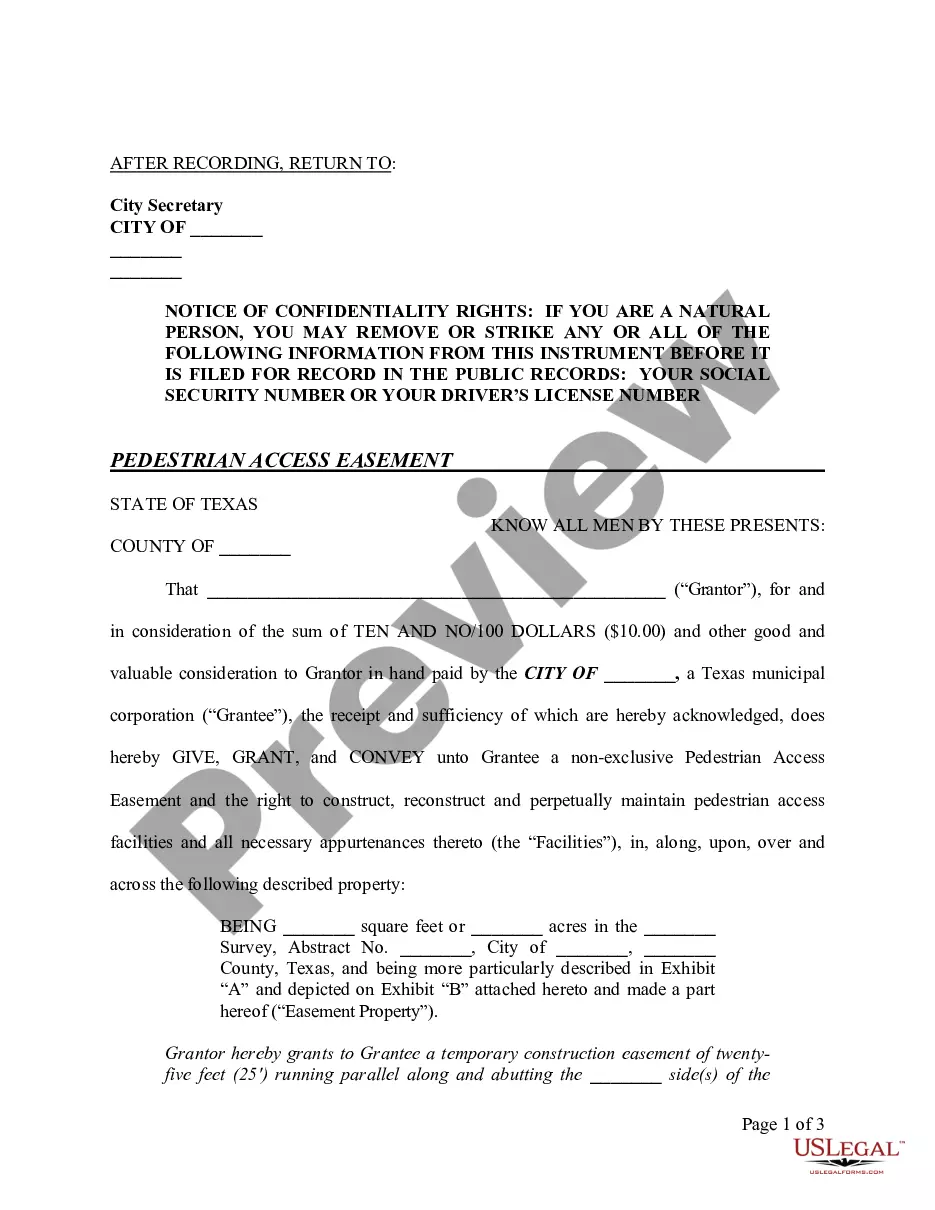
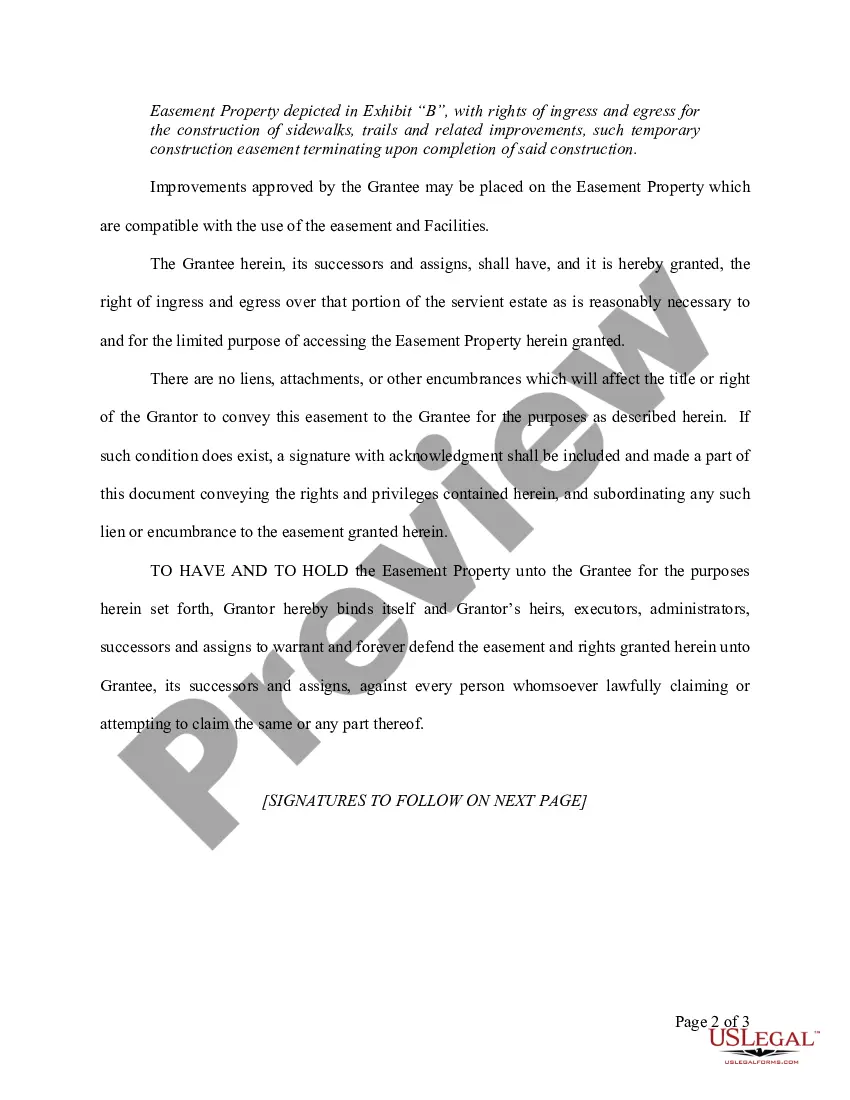
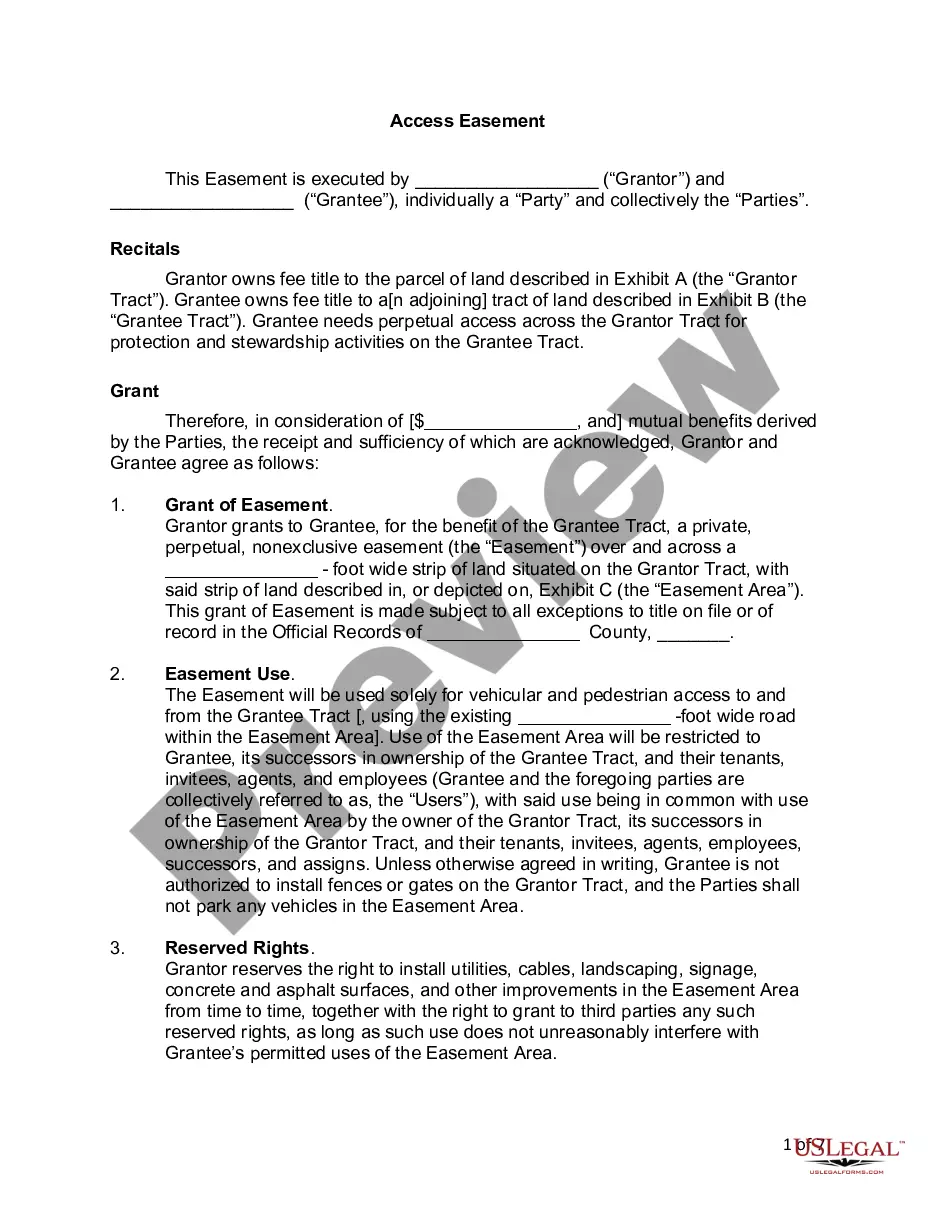
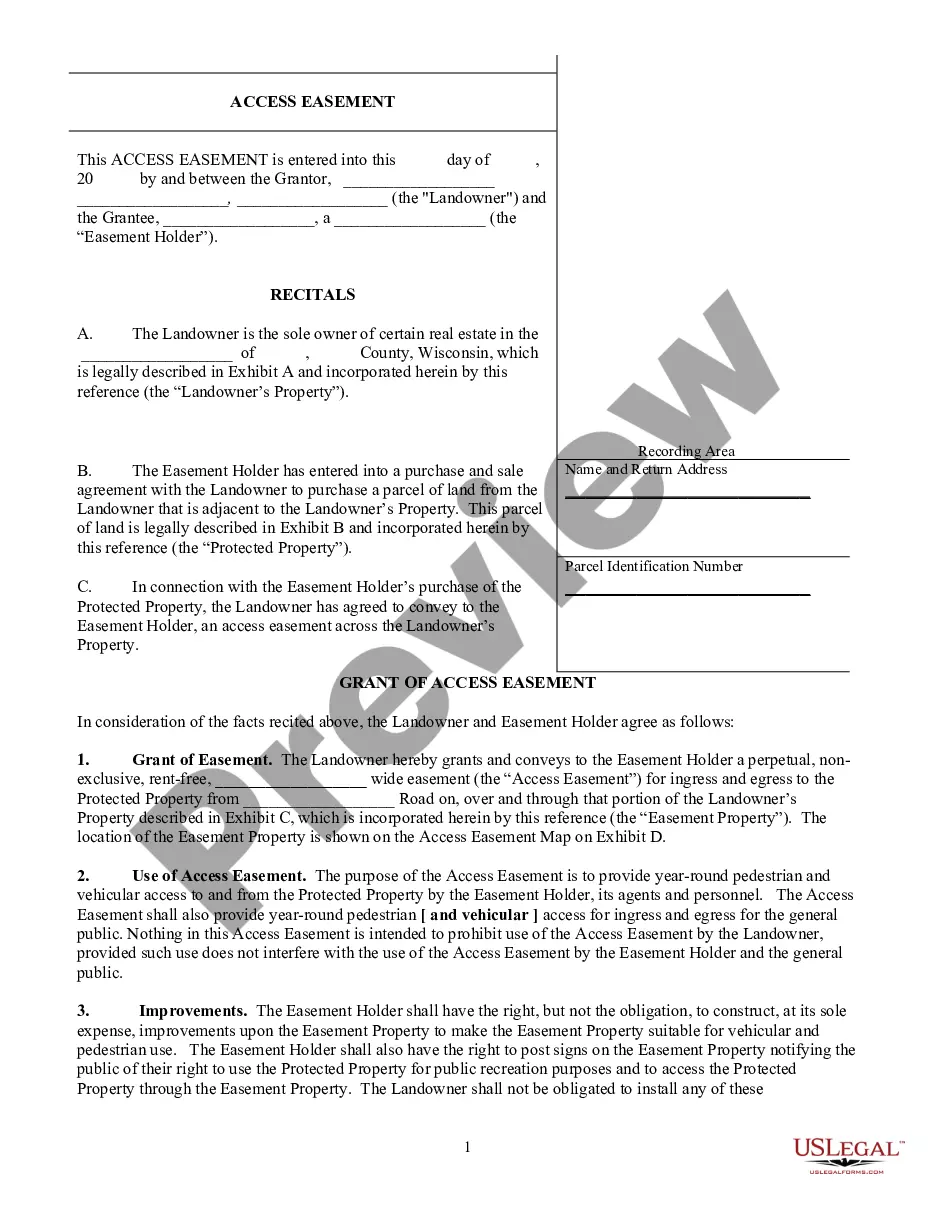
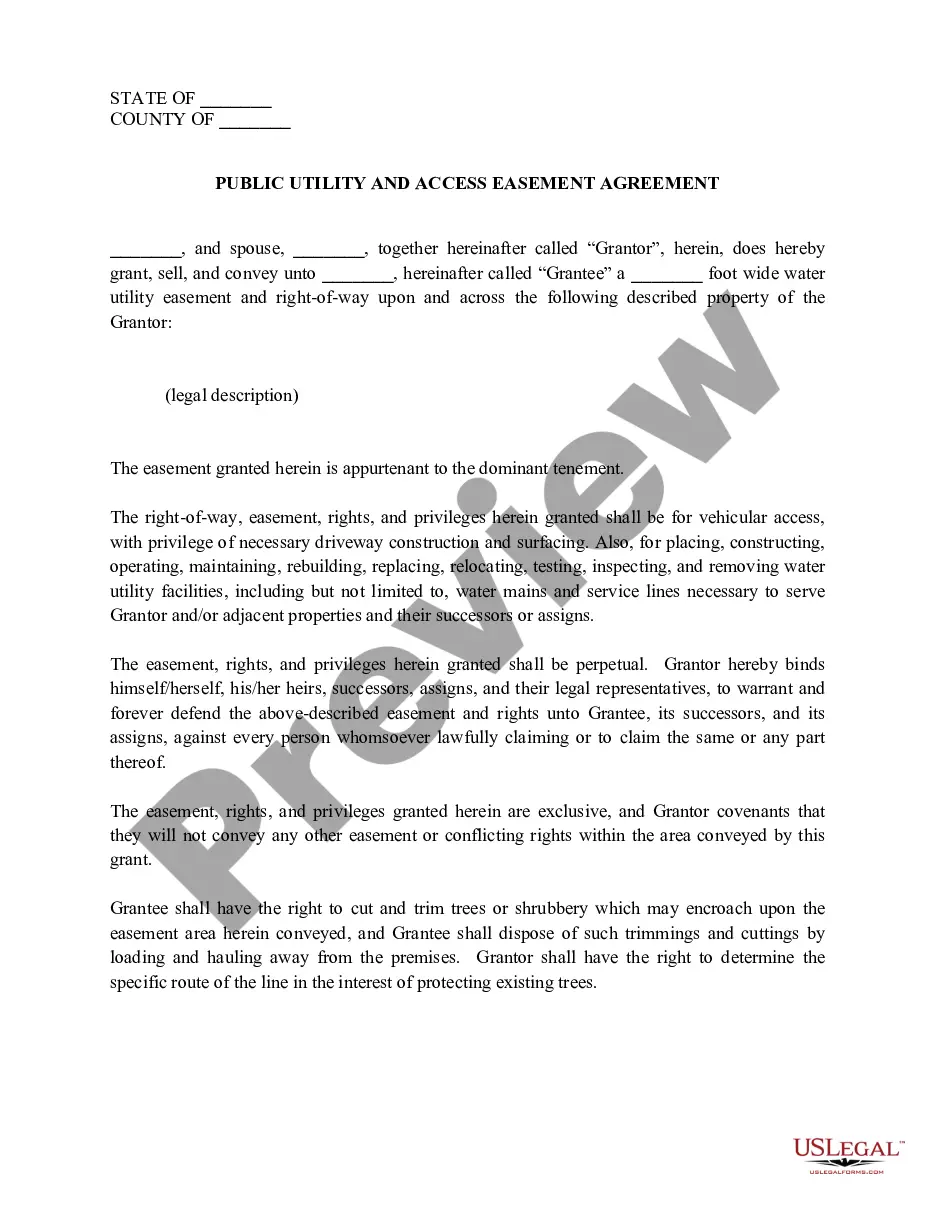
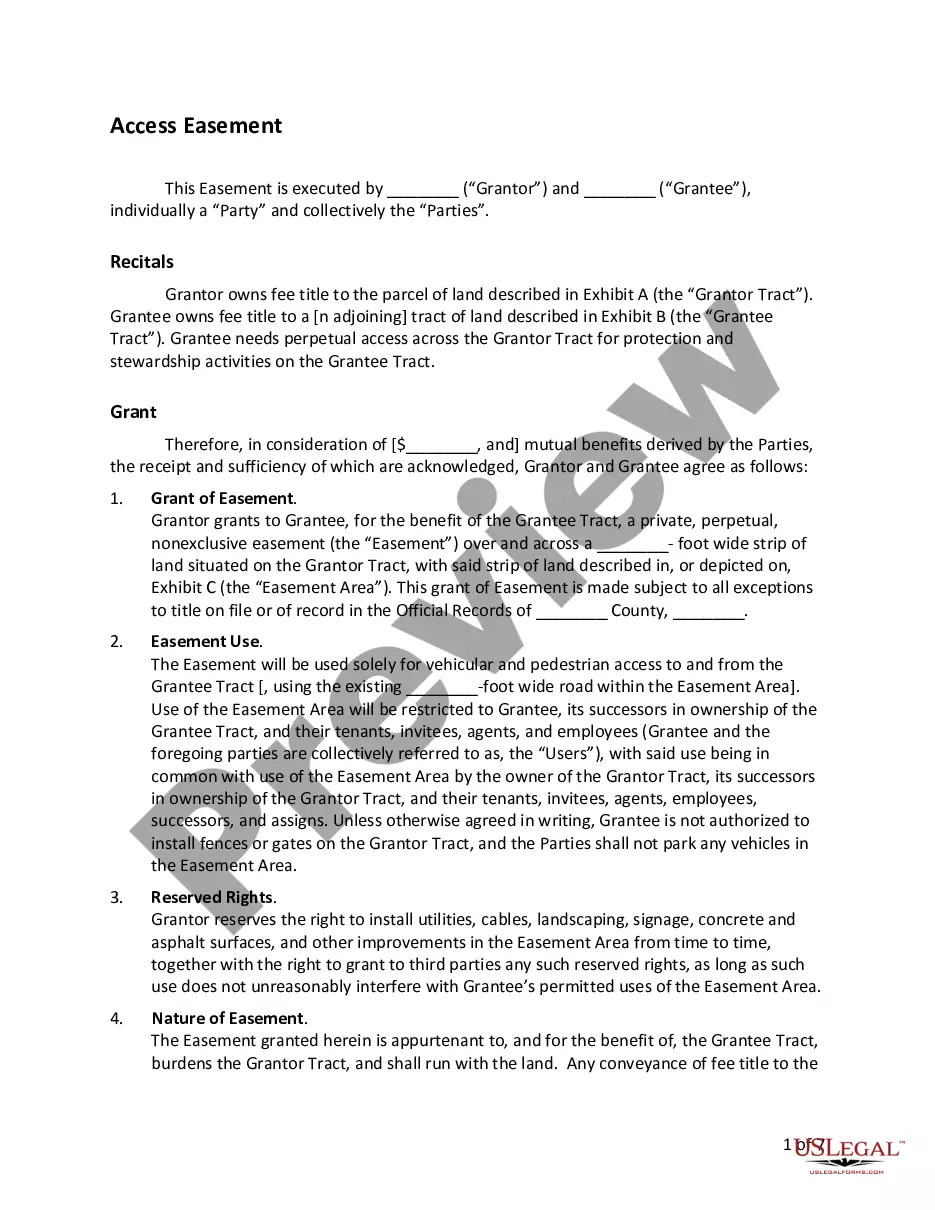
The Pedestrian Access Easement form is a legal document that grants another party the right to use a specific portion of land for pedestrian access purposes. This easement allows the designated party to construct, maintain, and utilize facilities like sidewalks or trails, without granting them possession or ownership of the land. It differs from other easements by focusing solely on pedestrian access, ensuring that the property owner retains control while allowing limited use for the benefit of the community or city.
Key parts of this document
- Identification of the Grantor and Grantee parties involved in the easement agreement.
- Description of the easement property, including specific location and area measurements.
- Granting of a non-exclusive easement for pedestrian access and related facilities.
- Provision for a temporary construction easement to facilitate improvements.
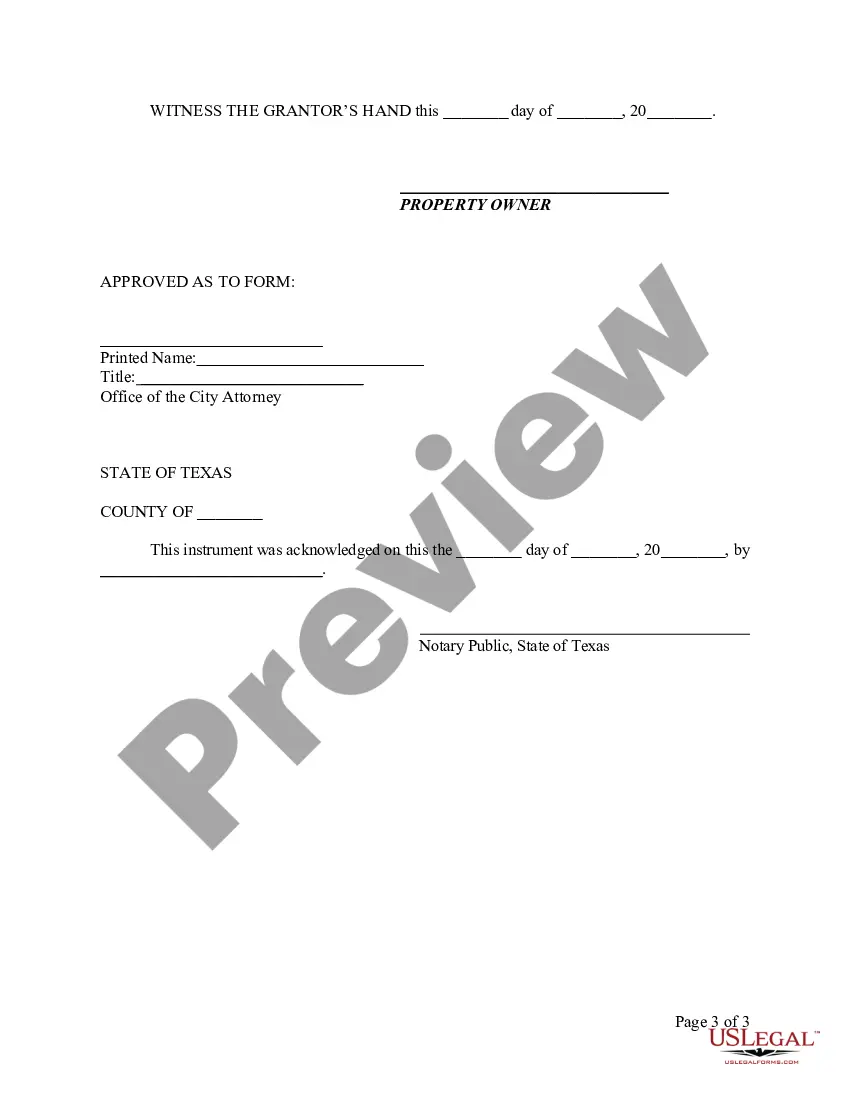
- Warranties from the Grantor regarding the legal right to convey the easement.
- Signatures of both parties and a notarization section for legal validity.
When to use this form
This Pedestrian Access Easement form is used when a property owner wants to permit a city or municipality to create and maintain pedestrian pathways on their land. It is relevant for urban planning, where enhancing pedestrian access can improve community connectivity. The form is ideal for property owners who wish to support public infrastructure without losing ownership rights to their land.
Who this form is for
- Property owners granting access over their land for pedestrian pathways.
- Cities or municipalities seeking to enhance public access and mobility.
- Developers looking to establish infrastructure that includes pedestrian facilities.
Instructions for completing this form
- Identify the parties: Fill in the names of the property owner (Grantor) and the city or municipality (Grantee).
- Specify the property: Provide a detailed description of the easement property, including measurements and location references.
- Outline the easement purpose: Clearly state the pedestrian access rights and any facilities to be maintained or constructed.
- Enter financial consideration: Include the amount of compensation being exchanged for the easement.
- Obtain signatures: Ensure both parties sign and date the document.
- Schedule notarization: Have the document notarized to ensure it is legally binding.
Does this document require notarization?
Yes, this form must be notarized to be legally valid. Notarization helps to verify the identities of the parties involved and certifies that the agreement has been executed voluntarily. US Legal Forms offers integrated online notarization services, available 24/7, ensuring a secure and efficient process without the need for travel.
Get your form ready online
Our built-in tools help you complete, sign, share, and store your documents in one place.
Make edits, fill in missing information, and update formatting in US Legal Forms—just like you would in MS Word.
Download a copy, print it, send it by email, or mail it via USPS—whatever works best for your next step.
Sign and collect signatures with our SignNow integration. Send to multiple recipients, set reminders, and more. Go Premium to unlock E-Sign.
If this form requires notarization, complete it online through a secure video call—no need to meet a notary in person or wait for an appointment.
We protect your documents and personal data by following strict security and privacy standards.

Make edits, fill in missing information, and update formatting in US Legal Forms—just like you would in MS Word.

Download a copy, print it, send it by email, or mail it via USPS—whatever works best for your next step.

Sign and collect signatures with our SignNow integration. Send to multiple recipients, set reminders, and more. Go Premium to unlock E-Sign.

If this form requires notarization, complete it online through a secure video call—no need to meet a notary in person or wait for an appointment.

We protect your documents and personal data by following strict security and privacy standards.
Avoid these common issues
- Failing to accurately describe the easement property can lead to disputes.
- Not having the document notarized, which may invalidate the agreement.
- Leaving out signatures from either party, rendering the form incomplete.
- Neglecting to outline the specific purposes of the easement can cause confusion later.
Why use this form online
- Convenience: Easily download and complete the form from any device.
- Editability: Modify the content as needed to fit your specific circumstances.
- Reliability: Use templates that are drafted by licensed attorneys, ensuring compliance with legal standards.
Looking for another form?

Form popularity
FAQ
Pedestrian access means a doorway which has been designed for the primary use of the patrons or customers of that particular use.
Public Easements In Texas Public easements give the right of enjoyment and use to the public generally or to an entire community. A public easement may be created (a) by a dedication from the owner, (b) by prescription (use by the public for many years), or (c) by condemnation by the government.
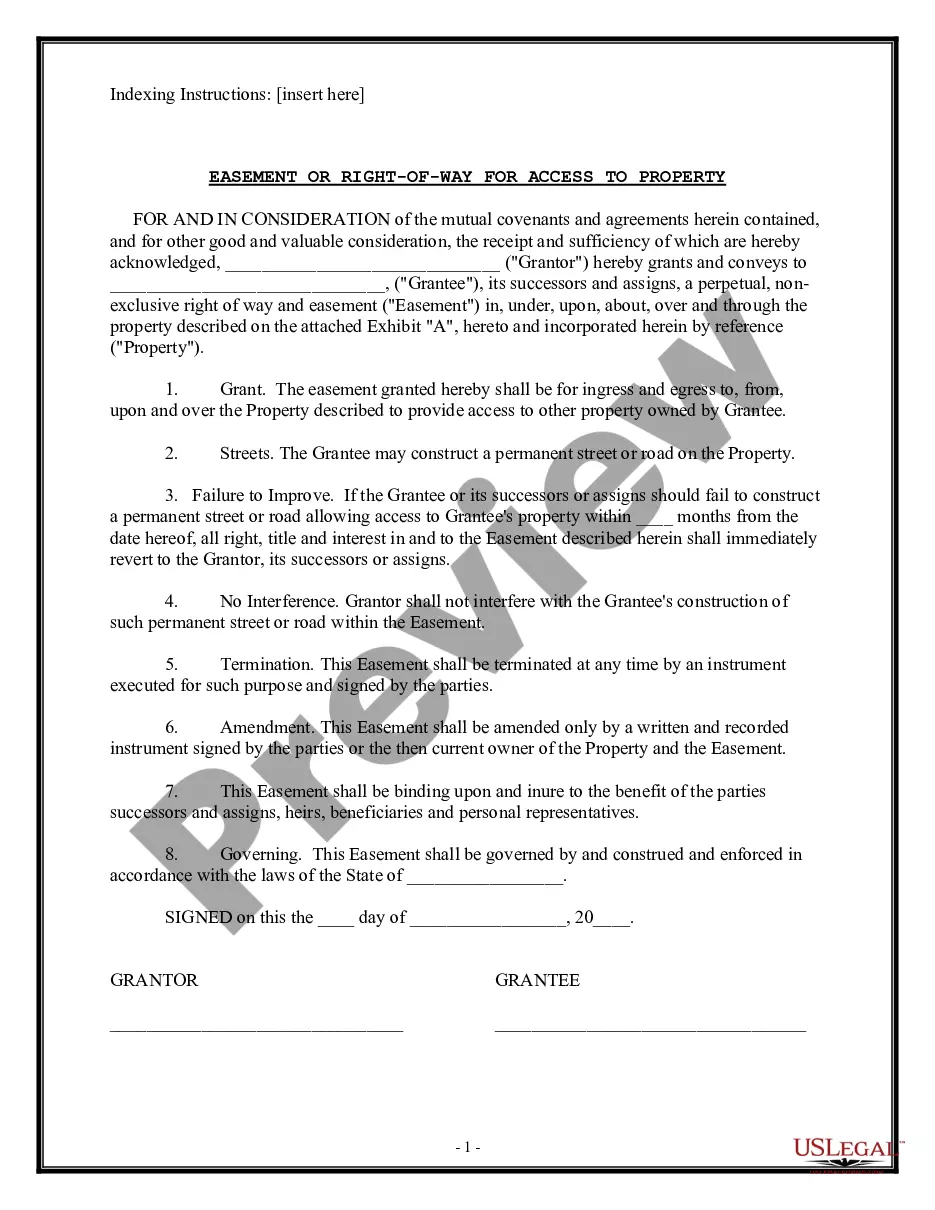
What Is An Easement In Real Estate? An easement is defined as the grant of a nonpossessory property interest that grants the easement holder permission to use another person's land. Easement itself is a legal term for a type of property right held by the users of the easement.
What is the State's minimum right-of-way width? The NCDOT requires 45 feet for local subdivision roads. Collector roads require 50 feet; five lane highways require 80 feet and cul-de-sacs must have a 50 foot right of way radius. 10.
Under strict necessity, the owner of the landlocked property must prove that the severance of title caused the property to be absolutely landlocked, meaning the property must be entirely surround by adjoining landowners and the owner must not have any legal way of reaching their land, such as though an existing
Generally, the owner of any easement has a duty to maintain the easement. If the easement is owned by more than one person, or is attached parcels of land under different ownership, each owner must share in the cost of maintaining the easement pursuant to their agreement.
How does it work? An easement on your property does not mean that someone else owns part of your property. It simply means that another party knows a nonpossessory interest in your property. This means that other parties will be able to access your property or use a part of your property for a specific reason.
Cross Access Easement - An easement or other development right offered to one party by another party that allows ingress and egress across private lands.