Illinois Easement Agreement
What this document covers
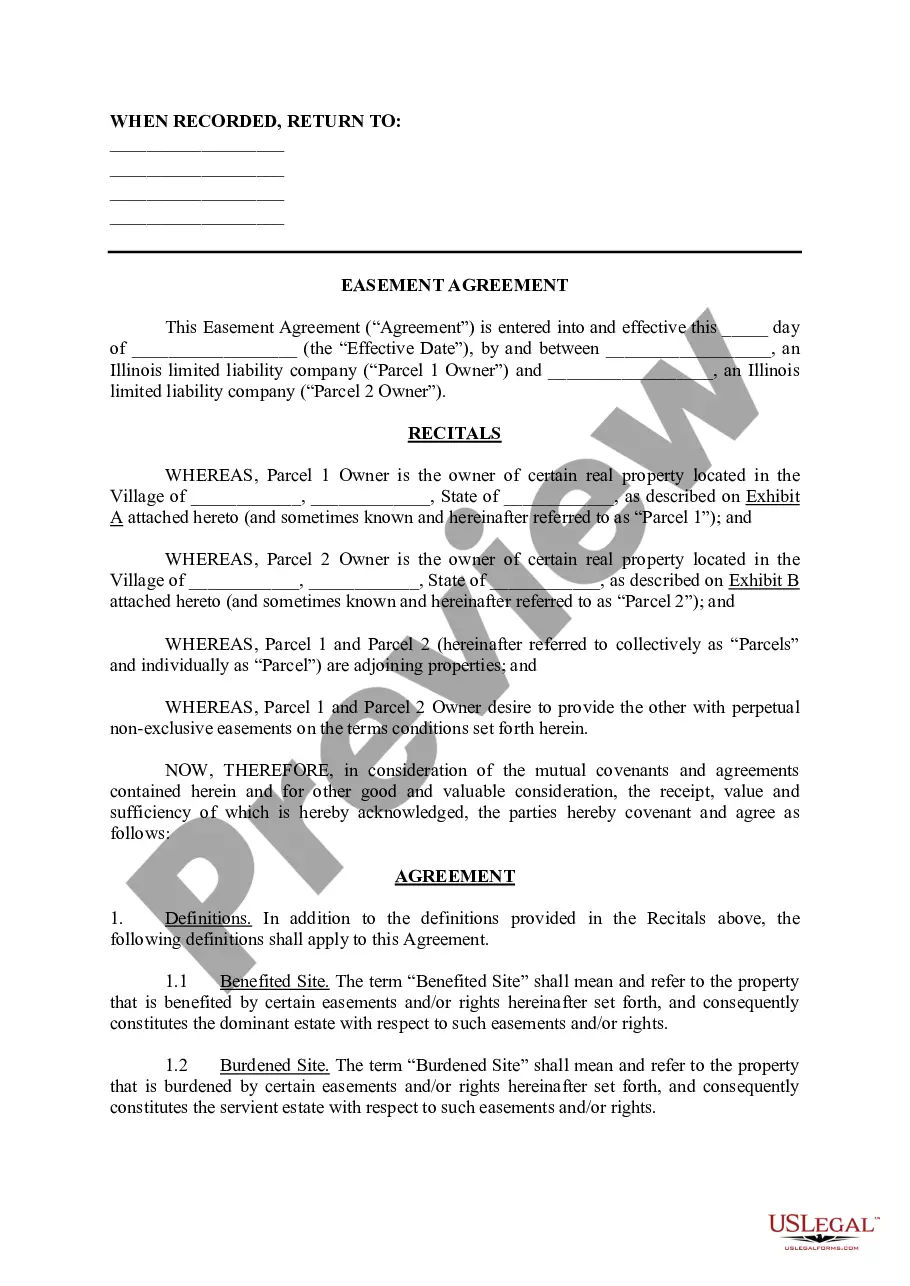
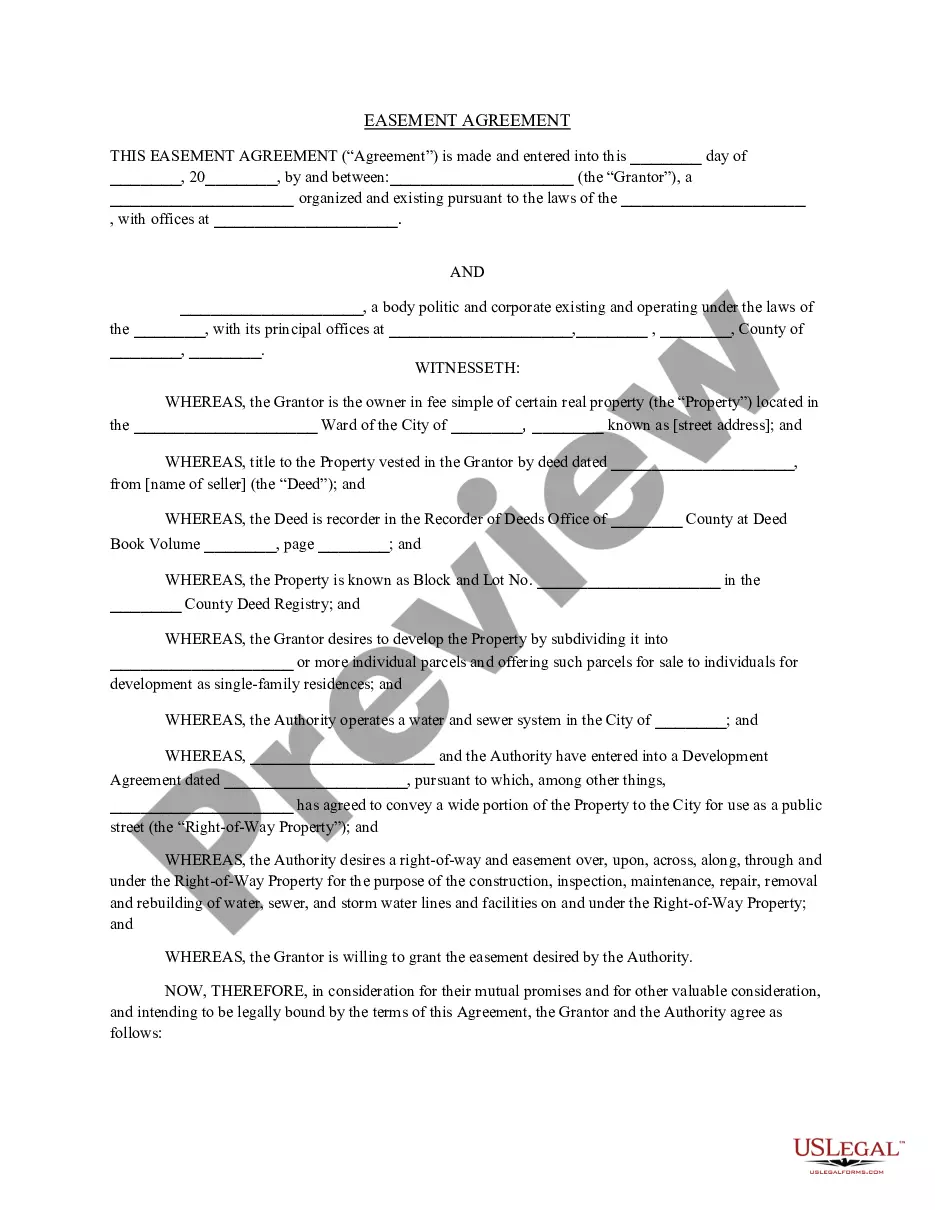
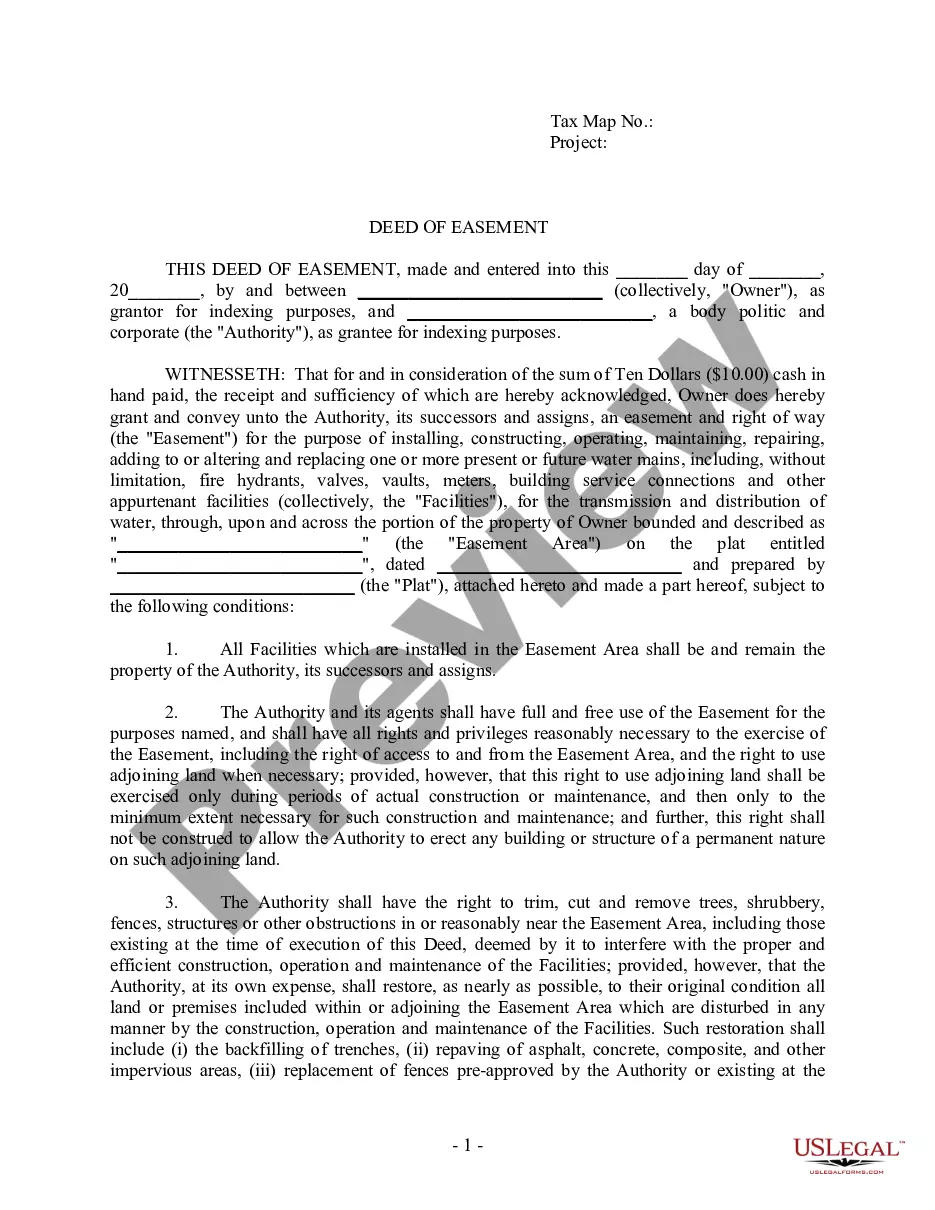
An Easement Agreement is a legal document that grants one party the right to use a portion of another party's property for a specific purpose. This agreement differs from other property agreements by focusing on the use of land rather than ownership transfer. It is essential for establishing clear rights, responsibilities, and limitations regarding land use between the involved parties.
What’s included in this form
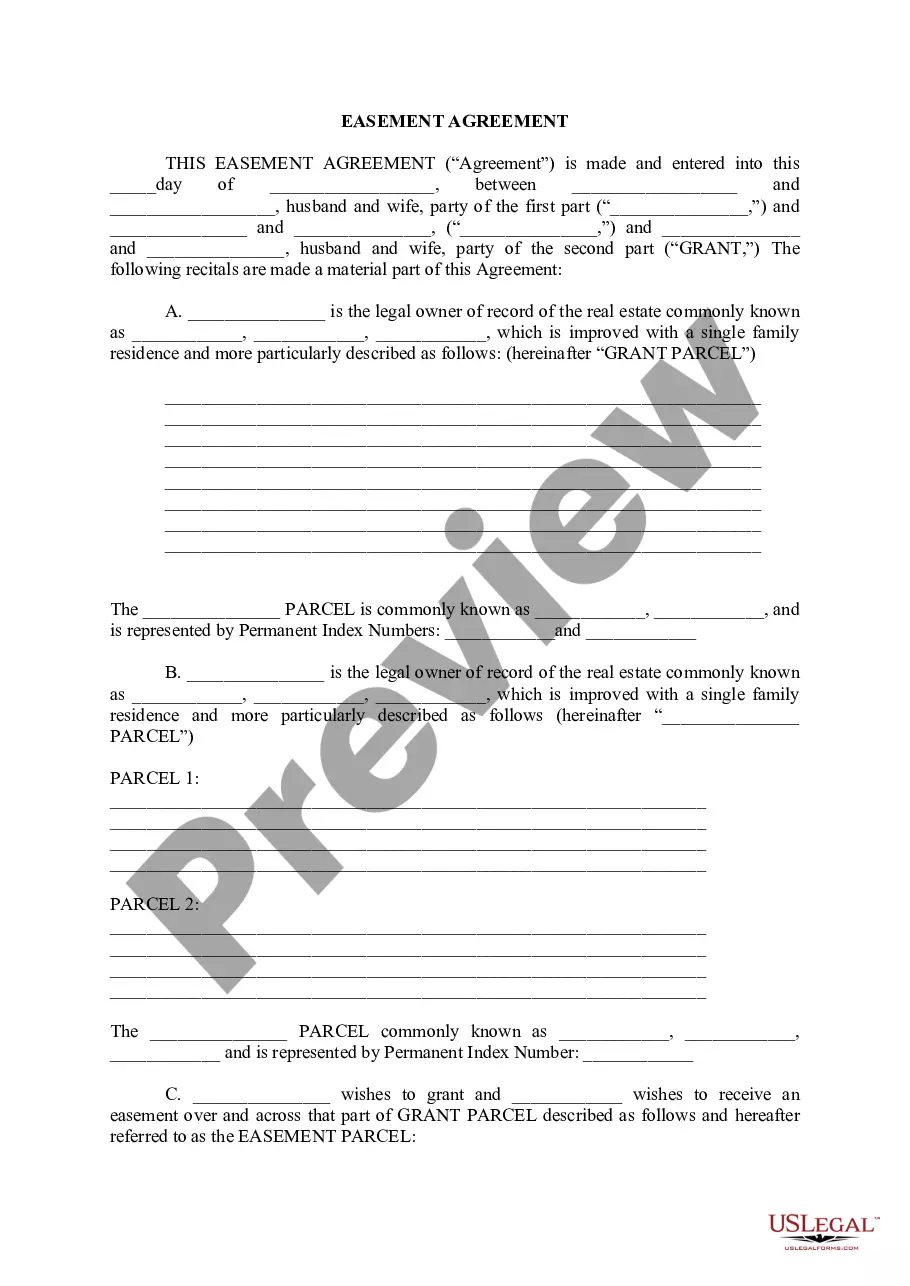
- Parties Involved: Identifies the individuals or entities involved in the agreement, referred to as Grantors and Grantees.
- Property Description: Specifies the properties involved, including the Grant Parcel and the Easement Parcel.
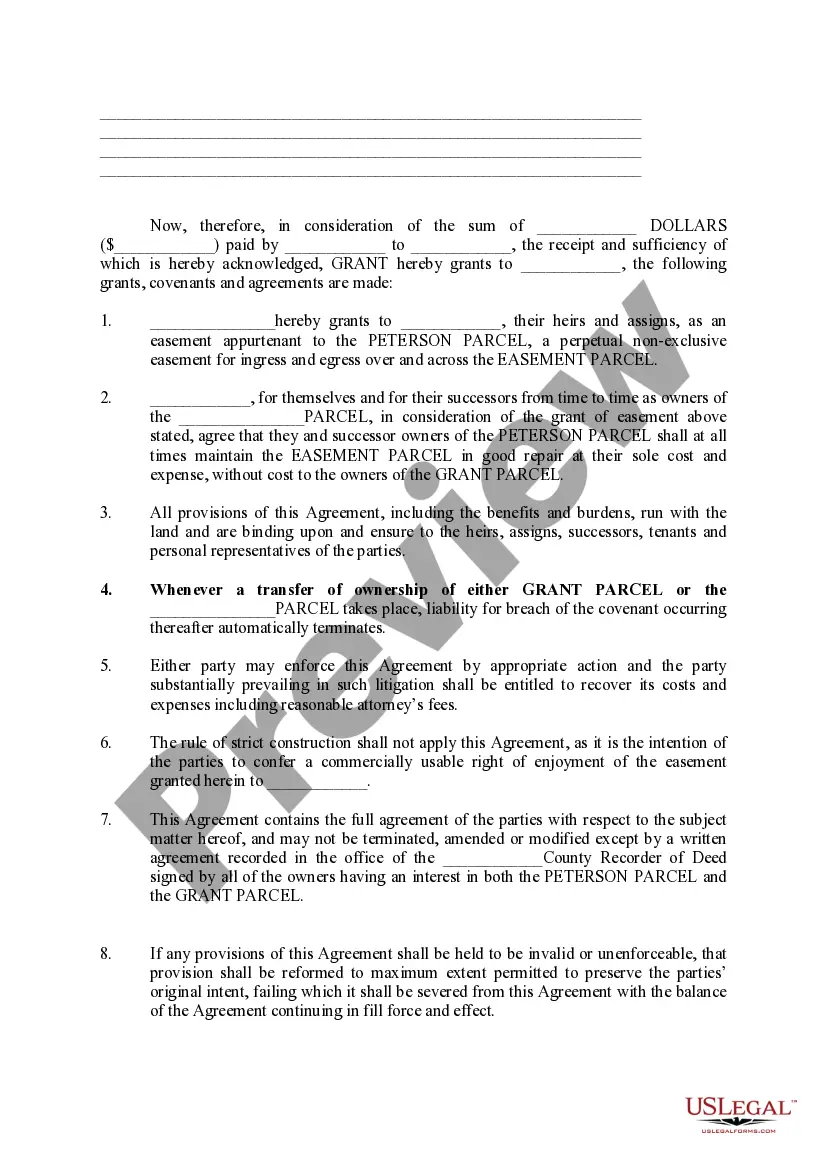
- Easement Rights: Details the nature of the easement, granting rights of ingress and egress over the specified lands.
- Maintenance Obligations: Outlines the responsibilities of the Grantee to keep the easement area in good repair.
- Transfer of Rights: Addresses the implications of property transfer on the easement agreement.
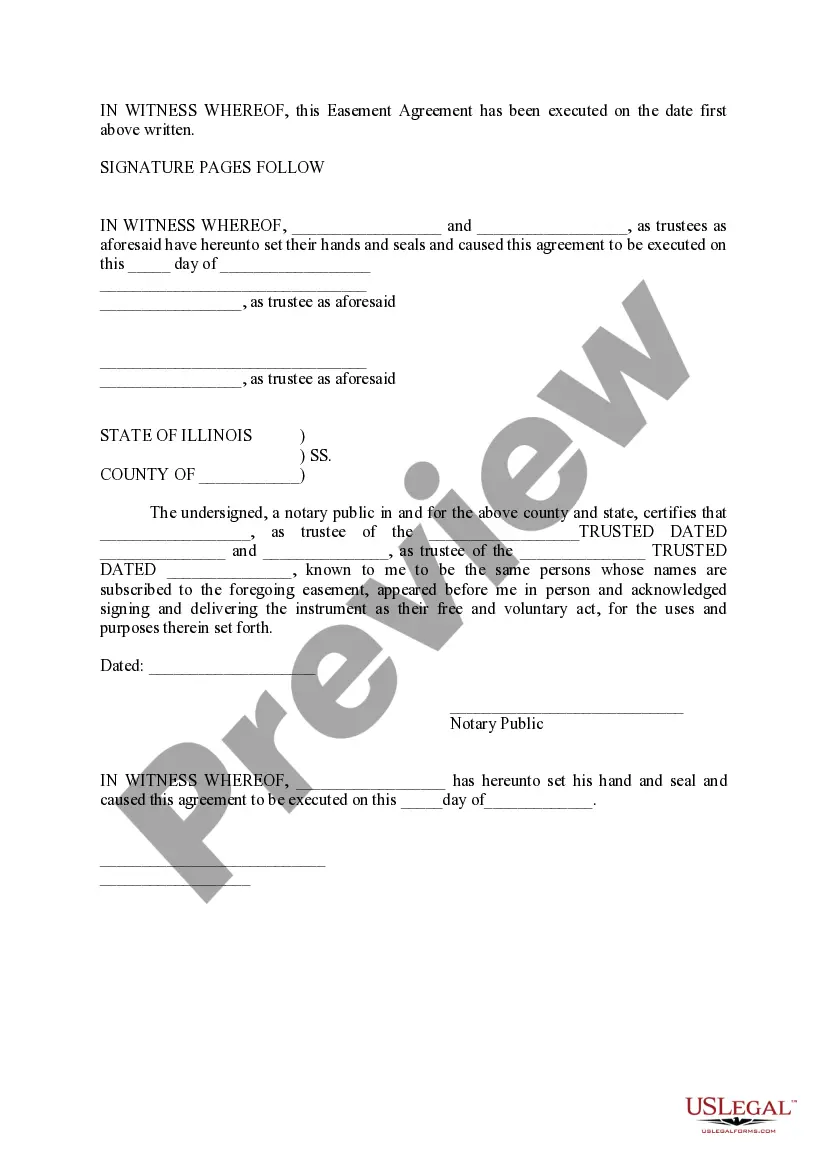
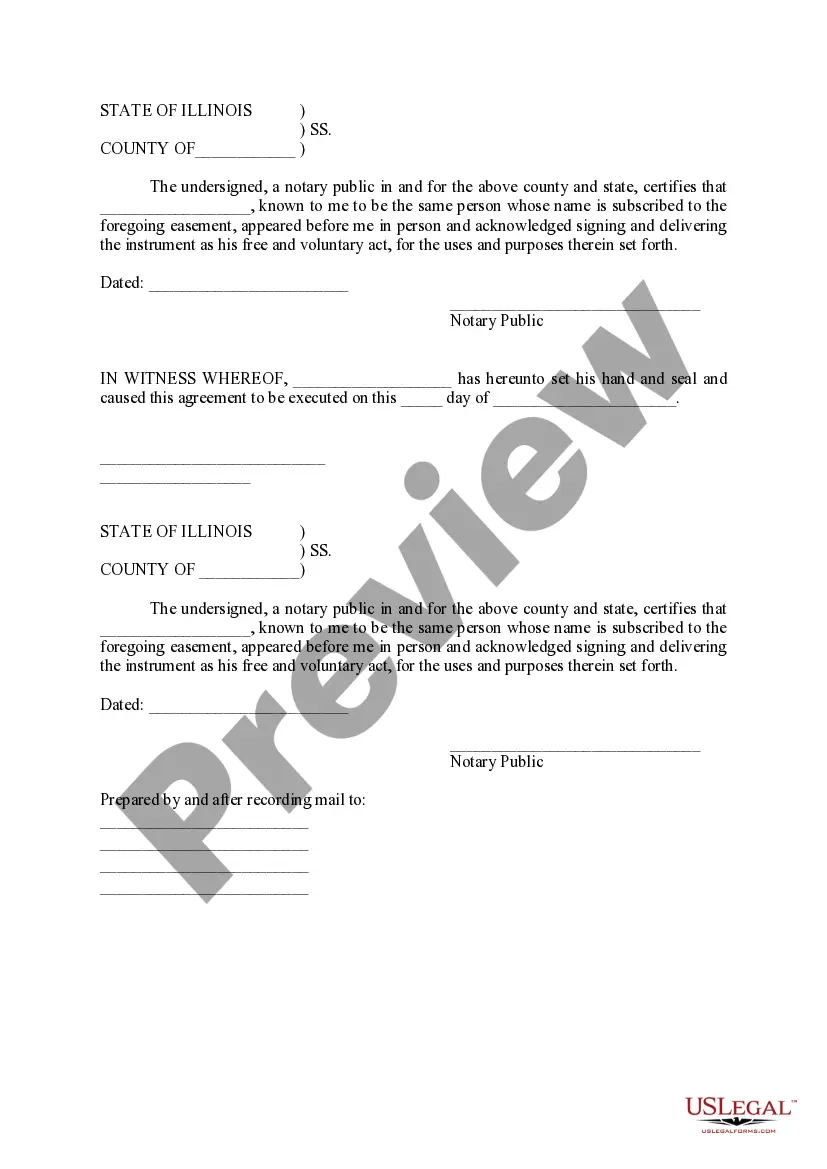
- Notary Requirements: Includes provisions regarding notarization to ensure legal validity.
When to use this document
This Easement Agreement is ideal for situations where one property owner needs access to or through another's property. Common scenarios include the need for utility lines, access roads, or pathways that require permission from the property owner. It provides a legal framework to avoid disputes over land use and clarify the rights of both parties.
Who can use this document
- Property owners looking to grant easement rights to another party.
- Individuals or organizations seeking to establish legal access to a property for specific purposes.
- Homeowners planning construction that may impact neighboring properties.
Steps to complete this form
- Identify the parties: Fill in the names of the Grantors and Grantees involved in the agreement.
- Specify the properties: Clearly describe the Grant Parcel and the Easement Parcel, including addresses and legal descriptions.
- Detail the easement rights: Define the specific rights granted through the easement, such as access for utilities or pathways.
- Enter the consideration amount: State the sum of money exchanged for the easement, if any.
- Include signatures: Ensure all parties sign the document in the presence of a notary public.
Does this form need to be notarized?
Yes, this form must be notarized to be legally valid. US Legal Forms offers integrated online notarization services, allowing you to easily complete the notarization process via secure video call, ensuring that you meet all legal requirements without needing to travel.
Get your form ready online
Our built-in tools help you complete, sign, share, and store your documents in one place.
Make edits, fill in missing information, and update formatting in US Legal Forms—just like you would in MS Word.
Download a copy, print it, send it by email, or mail it via USPS—whatever works best for your next step.
Sign and collect signatures with our SignNow integration. Send to multiple recipients, set reminders, and more. Go Premium to unlock E-Sign.
If this form requires notarization, complete it online through a secure video call—no need to meet a notary in person or wait for an appointment.
We protect your documents and personal data by following strict security and privacy standards.

Make edits, fill in missing information, and update formatting in US Legal Forms—just like you would in MS Word.

Download a copy, print it, send it by email, or mail it via USPS—whatever works best for your next step.

Sign and collect signatures with our SignNow integration. Send to multiple recipients, set reminders, and more. Go Premium to unlock E-Sign.

If this form requires notarization, complete it online through a secure video call—no need to meet a notary in person or wait for an appointment.

We protect your documents and personal data by following strict security and privacy standards.
Common mistakes to avoid
- Failing to accurately describe the properties involved, leading to potential disputes.
- Not specifying the rights granted, which can lead to misunderstandings.
- Neglecting to have the agreement notarized, risking legal enforceability.
Advantages of online completion
- Convenience: Easily download and customize the form from home.
- Editability: Modify sections to fit specific needs without facing bureaucratic delays.
- Reliability: Access forms drafted by licensed attorneys to ensure legal compliance.
Looking for another form?
Form popularity
FAQ
When one of the owners of either the dominant estate which an easement benefits or the servient estate over which the easement runs becomes the owner of both properties, then there is a unity of the two titles, and since an owner does not need an easement over the owner's own property, according to Florida law, the
Types of Easements An easement may be classified as either an easement appurtenant or an easement in gross. Easement Appurtenant. An easement appurtenant is an easement that benefits one parcel of land, known as the dominant tenement, to the detriment of another parcel of land, known as the servient tenement.
If an authority has an easement registered over your land, they have the right to access the easement to maintain or repair the easement land or their equipment on the land.
In Illinois if there is a non-permissive use land for a 20-year period, and that use is adverse, uninterrupted, exclusive, continuous and under a claim of right, the user can claim something called a prescriptive easement.
One issue that comes up from time to time is whose responsibility it is to maintain an easement. The short answer is the owner of the easement is responsible for maintaining the easement.