Colorado Last Will and Testament for Domestic Partner with Adult Children from Prior Marriage
What this document covers
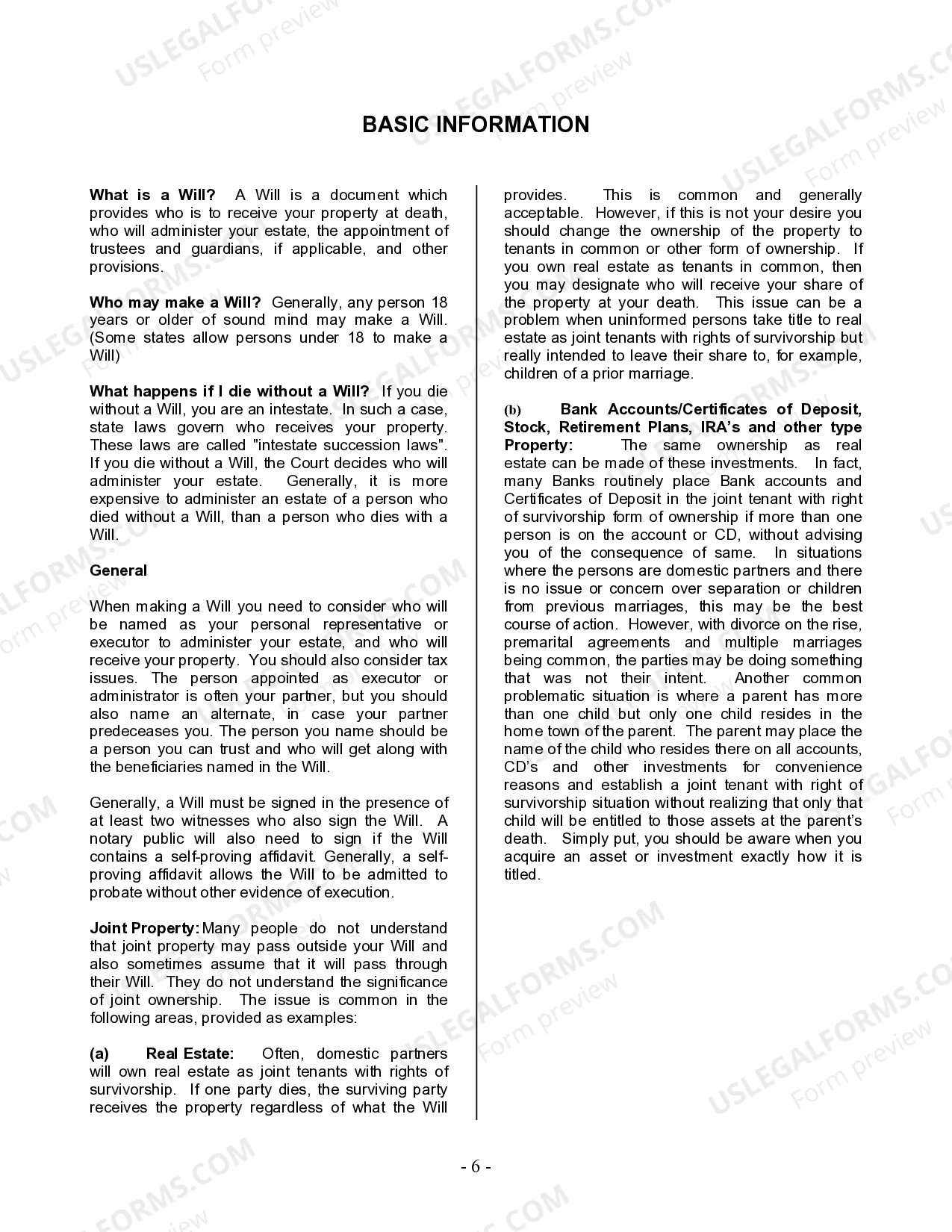
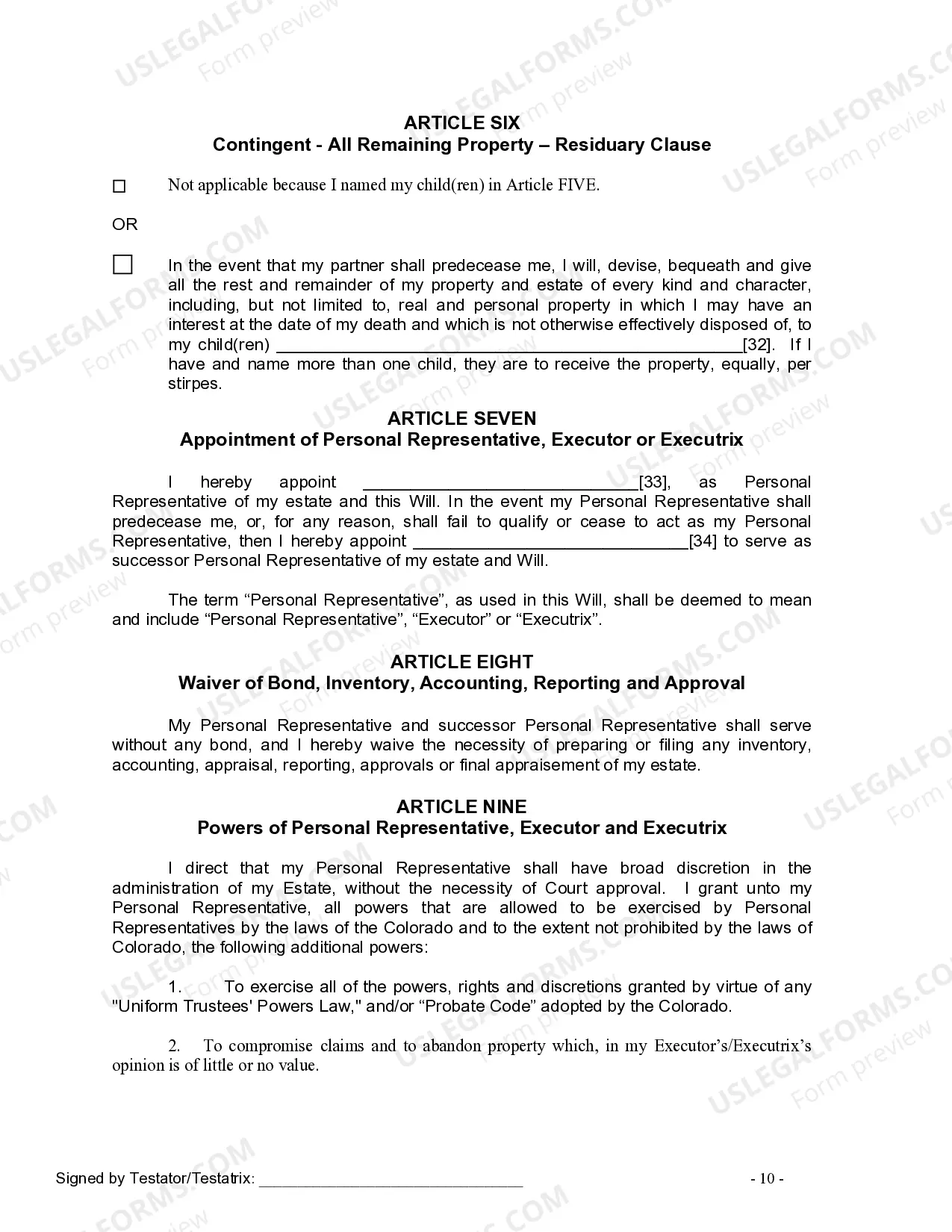
The Last Will and Testament for Domestic Partner with Adult Children from Prior Marriage is a legal document designed to outline how your assets will be distributed upon your death. It serves a unique purpose for those in domestic partnerships, especially when there are adult children from a previous marriage, ensuring that all parties are considered in the distribution of property. This form is tailored to reflect the specific legal needs of individuals in domestic partnerships, differentiating it from standard wills that may not account for such circumstances.
What’s included in this form
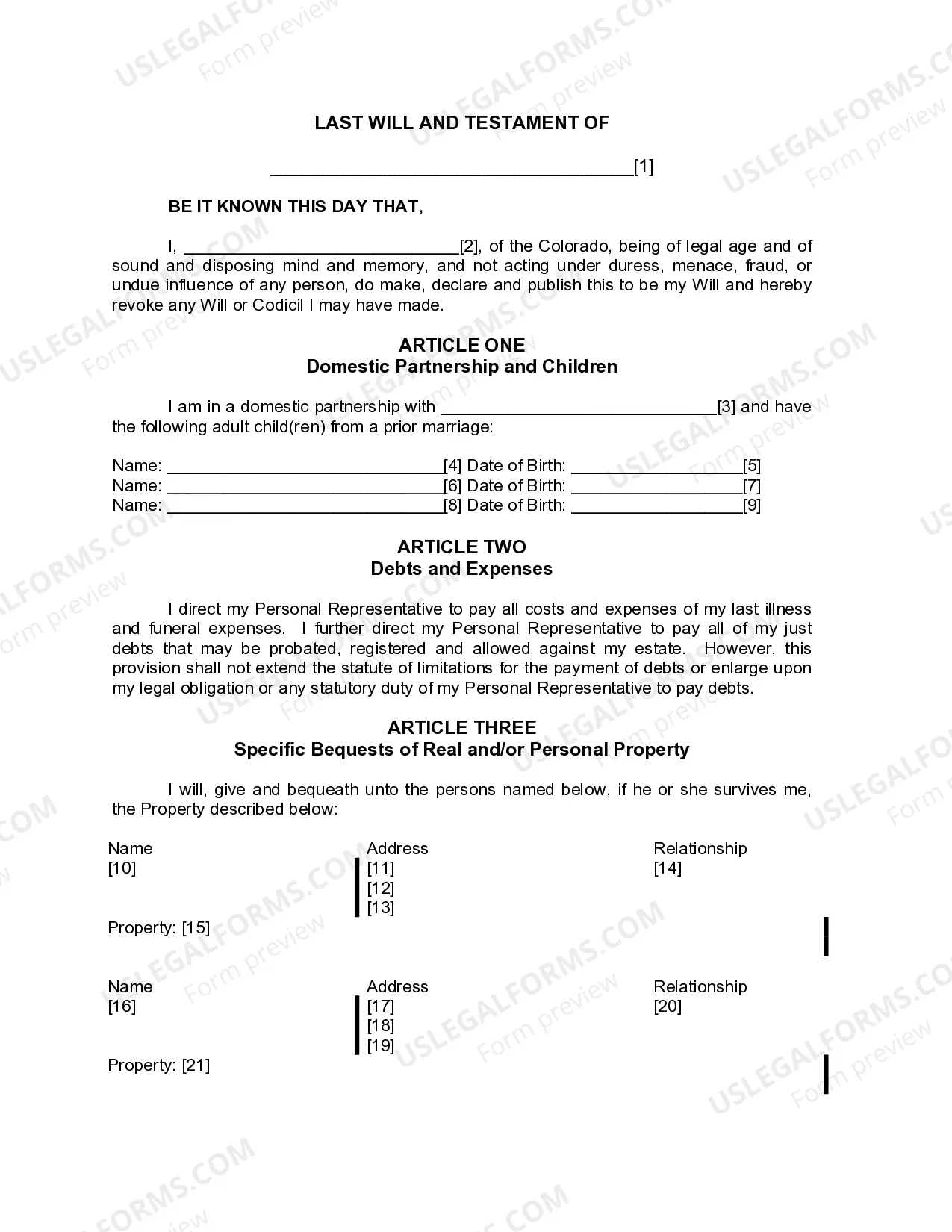
- Appointment of a personal representative to manage your estate.
- Designation of beneficiaries, including your domestic partner and children from prior marriages.
- Specific bequests of property to chosen individuals.
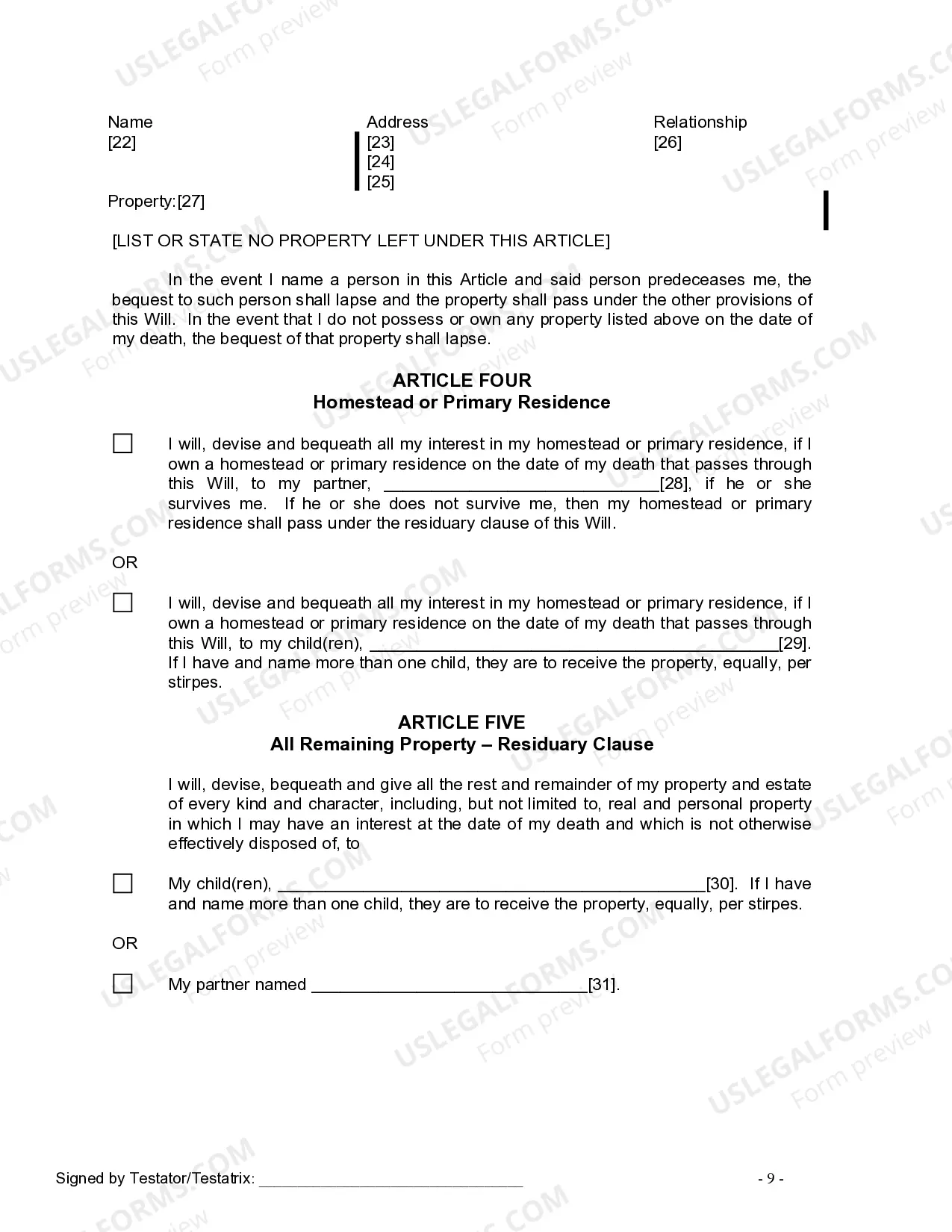
- Provisions for your homestead or primary residence based on your intent.
- Contingency plans if your partner predeceases you.
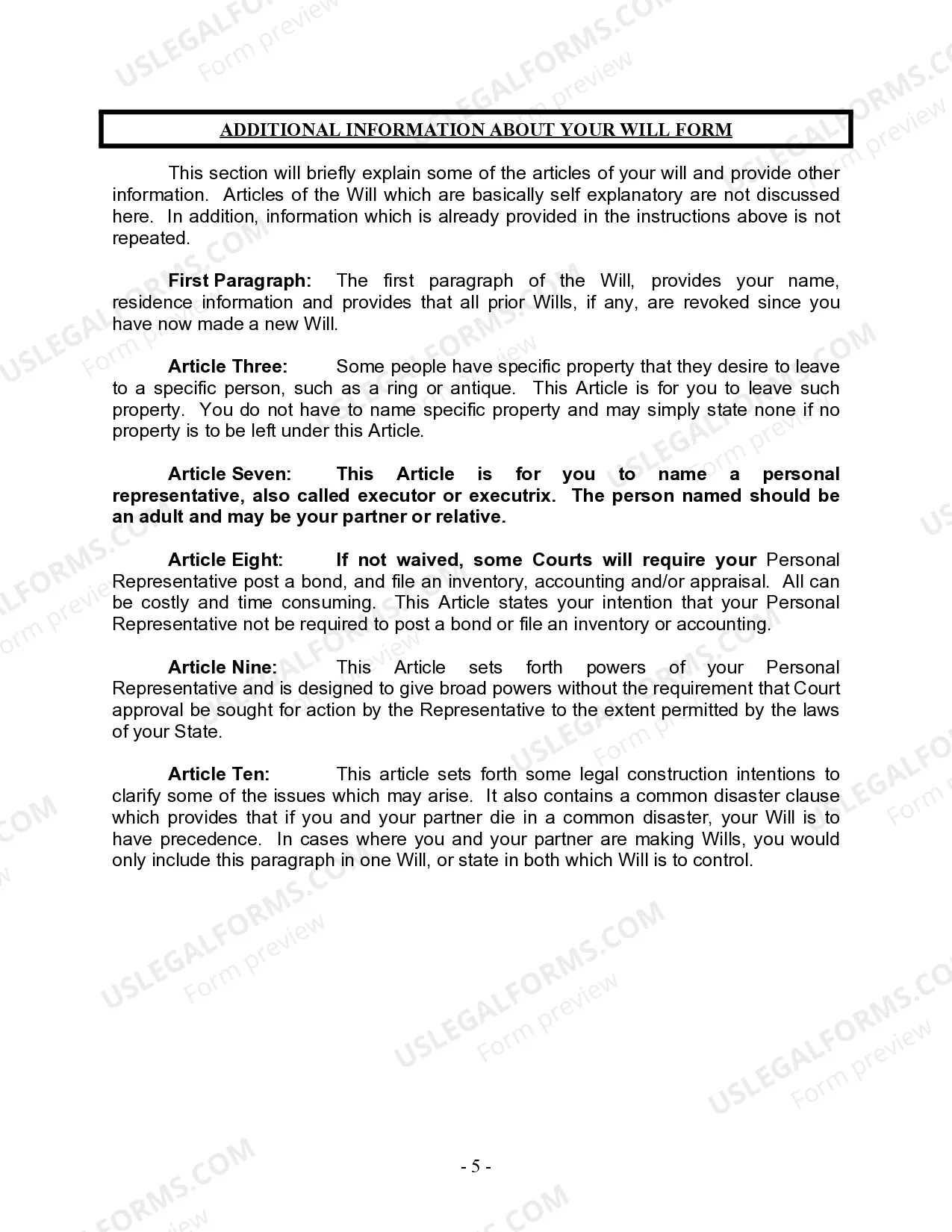
- Instructions regarding the interpretation and execution of your will.




When to use this document
This form is needed when you want to ensure that your property is distributed according to your wishes after your death, especially if you are a domestic partner with adult children from a previous marriage. It is particularly useful in situations where you wish to legally recognize your partner and provide for your children in a way that reflects your family's unique dynamics.
Who this form is for
This form is designed for:
- Individuals in a domestic partnership.
- Those with adult children from a prior marriage.
- Anyone wishing to clarify their intentions regarding the distribution of assets after their death.
- Individuals looking to ensure their domestic partner is included in their estate planning.
How to prepare this document
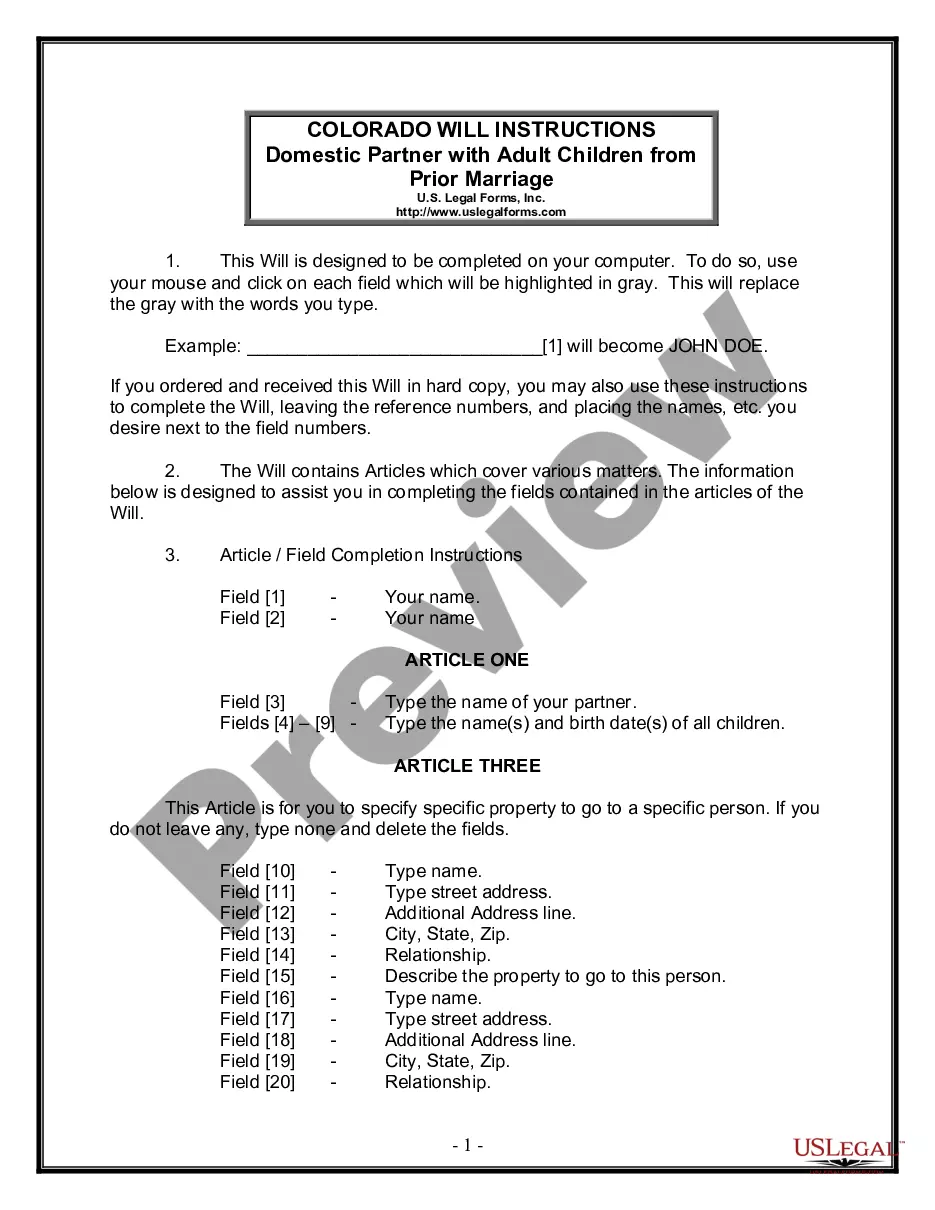
- Enter your full name and address as the testator at the beginning of the will.
- List the name of your domestic partner and your adult children from prior marriages.
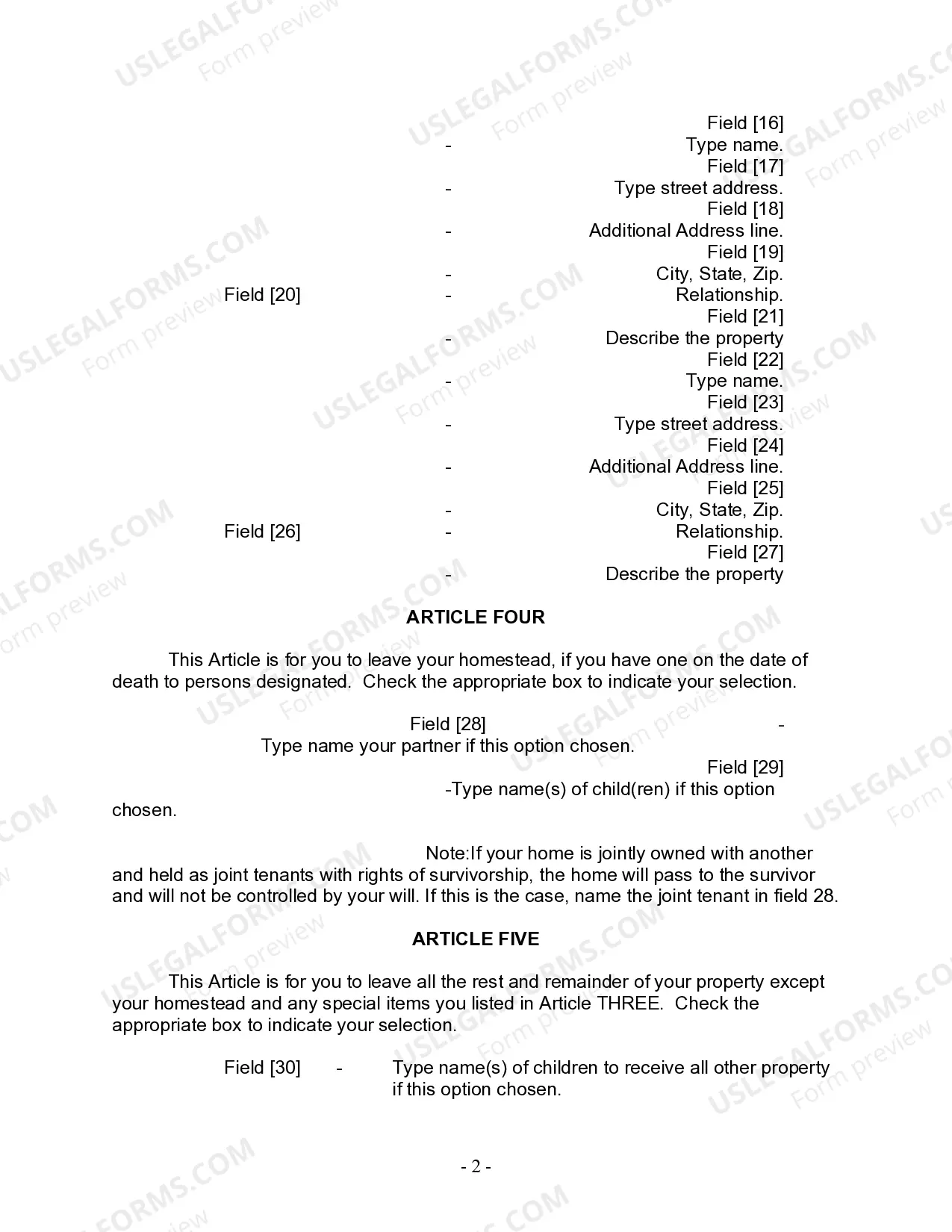
- Designate specific property to be bequeathed to individuals by filling in their names and details.
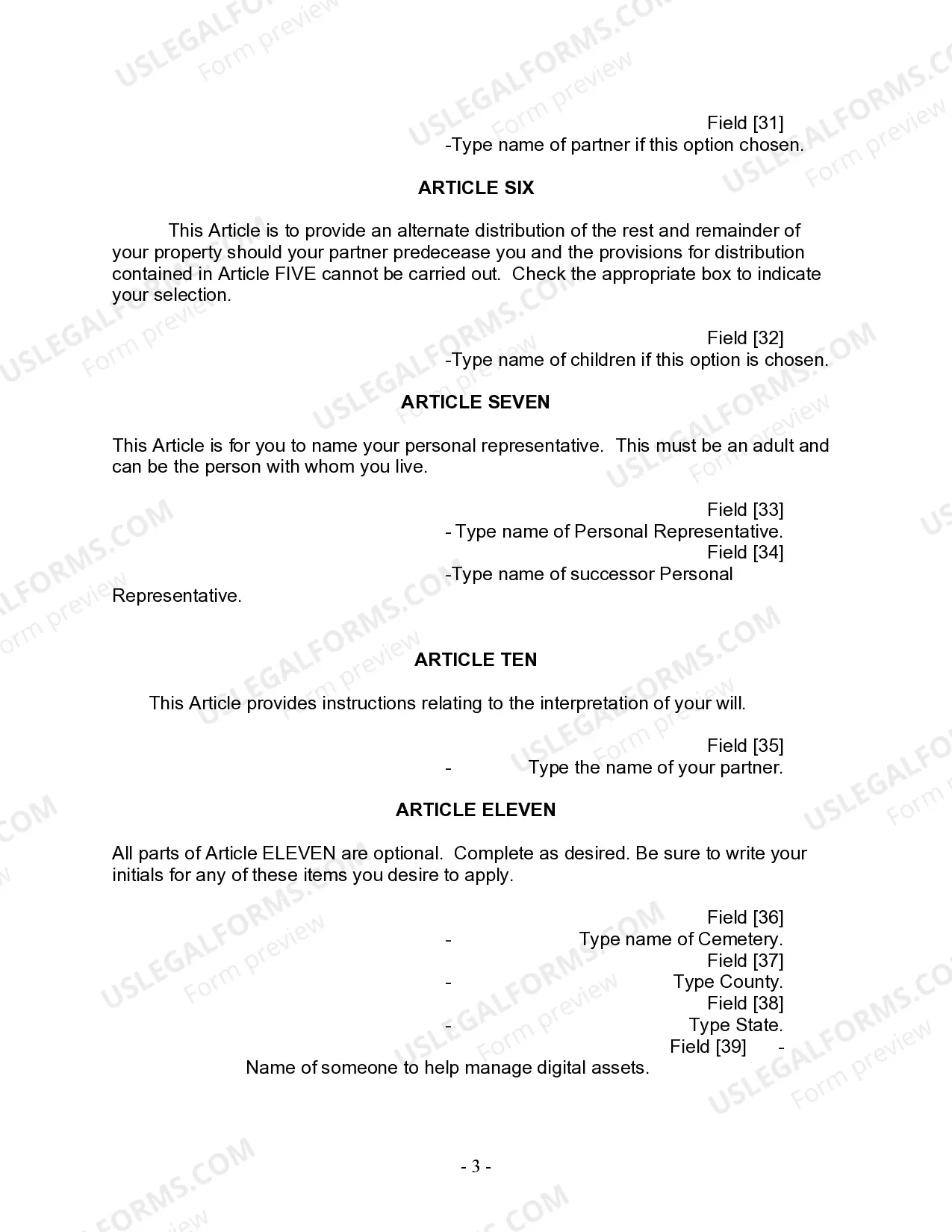
- Indicate your wishes regarding your homestead and any other remaining property.
- Appoint a personal representative to administer the estate and a successor if needed.
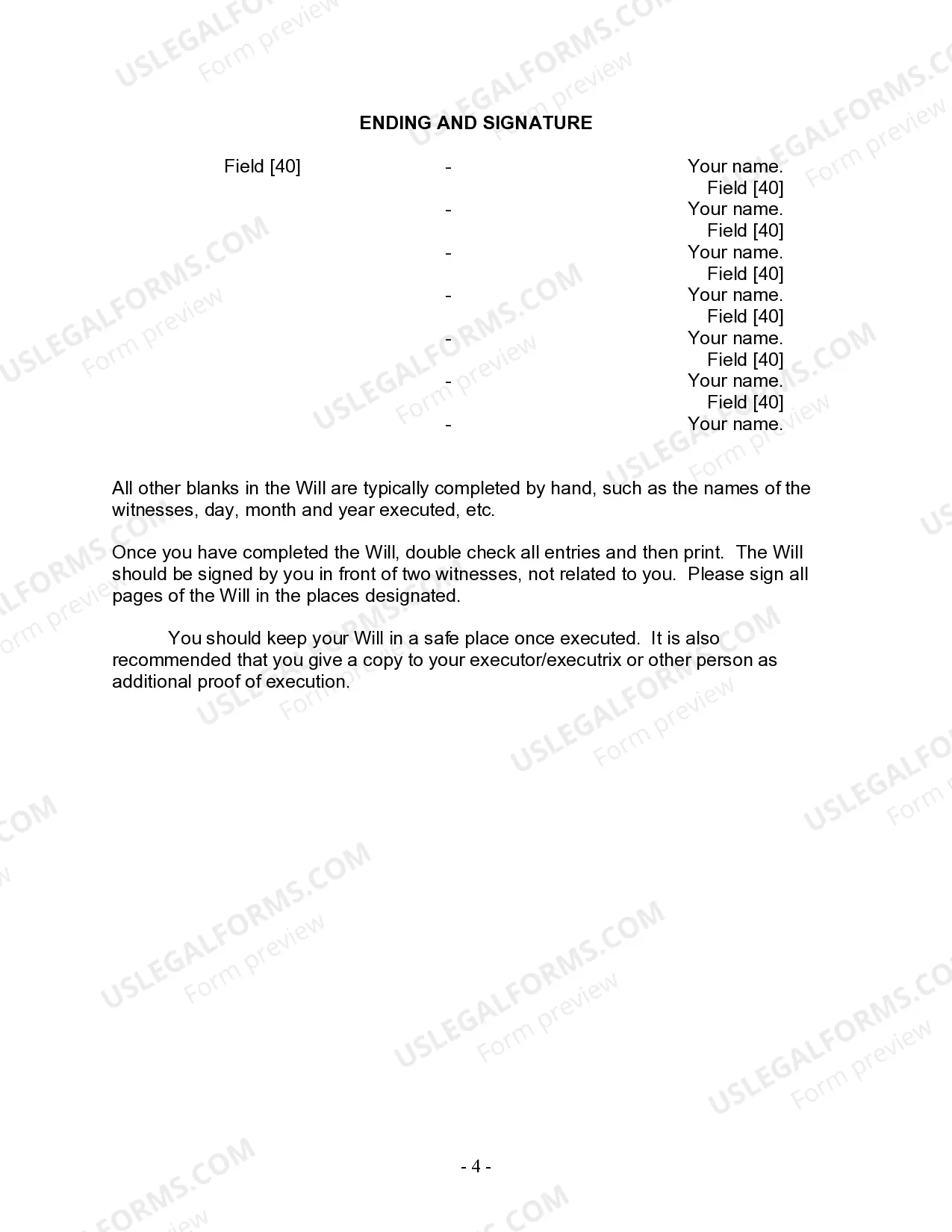
- Ensure all necessary signatures and witness declarations are completed according to your state's requirements.
Notarization guidance
This form does not typically require notarization unless specified by local law. However, some states may have specific requirements for a self-proving affidavit, which involves notarization to expedite the probate process.
Get your form ready online
Our built-in tools help you complete, sign, share, and store your documents in one place.
Make edits, fill in missing information, and update formatting in US Legal Forms—just like you would in MS Word.
Download a copy, print it, send it by email, or mail it via USPS—whatever works best for your next step.
Sign and collect signatures with our SignNow integration. Send to multiple recipients, set reminders, and more. Go Premium to unlock E-Sign.
If this form requires notarization, complete it online through a secure video call—no need to meet a notary in person or wait for an appointment.
We protect your documents and personal data by following strict security and privacy standards.

Make edits, fill in missing information, and update formatting in US Legal Forms—just like you would in MS Word.

Download a copy, print it, send it by email, or mail it via USPS—whatever works best for your next step.

Sign and collect signatures with our SignNow integration. Send to multiple recipients, set reminders, and more. Go Premium to unlock E-Sign.

If this form requires notarization, complete it online through a secure video call—no need to meet a notary in person or wait for an appointment.

We protect your documents and personal data by following strict security and privacy standards.
Avoid these common issues
- Failing to clearly name all beneficiaries, leading to potential disputes.
- Not signing the will in the presence of the required witnesses.
- Neglecting to update the will after significant life changes, such as marriage or the birth of a child.
- Assuming that joint property will be distributed according to the will when it passes outside of it.
Benefits of using this form online
- Convenient access from anywhere, making it easy to update your will as needed.
- Editability allows you to make changes without the need for retyping the entire document.
- Reliable templates drafted by licensed attorneys ensure legal compliance.
Looking for another form?
Form popularity
FAQ
No, a spouse does not automatically inherit everything in Colorado. If a person dies without a will, the spouse may inherit a portion of the estate, but the distribution depends on whether there are children or other heirs involved. Using a Colorado Last Will and Testament for Domestic Partner with Adult Children from Prior Marriage can help you outline your distribution preferences clearly and ensure your loved ones are cared for according to your wishes.
In Colorado, an inheritance is generally considered separate property and not subject to division during divorce proceedings. However, if the inherited assets are mixed with marital property or used for marital purposes, they may become marital property. To protect your inheritance, consider establishing a Colorado Last Will and Testament for Domestic Partner with Adult Children from Prior Marriage. This can help clarify your intentions and safeguard your assets.
In Colorado, marriage can impact the distribution of assets, especially if the will was made prior to the marriage. Typically, a spouse may claim an elective share despite what the will states. If you are in a blended family situation, a Colorado Last Will and Testament for Domestic Partner with Adult Children from Prior Marriage can provide the clarity you need. This document helps ensure that your wishes regarding asset distribution are respected, regardless of marital changes.
In Colorado, when a husband dies, the wife is entitled to a significant share of the estate. This entitlement can include property jointly owned or the right to claim up to half of the separate property if there are no children. Utilizing a Colorado Last Will and Testament for Domestic Partner with Adult Children from Prior Marriage can give clarity on asset distribution and ensure your wishes are honored. This legal document can protect your rights.
If your name is not on a deed but you are married in Colorado, you still have rights to the property. Colorado law recognizes that both spouses contribute to the marriage, even if one name is missing from a property title. You may have claims under property rights and could benefit from a Colorado Last Will and Testament for Domestic Partner with Adult Children from Prior Marriage. Understanding your rights can help you secure your interests.
A notarized will does not need to be probated.When a person dies leaving behind a will that is not notarized, the law requires that its validity be ascertained by a notary or by a court. Similarly, any non-notarized modification made to a will must be probated, whether the will is notarized or not.
Wills in Colorado A will is the most common estate planning docu- ment that all individuals should create regardless of their financial status.The will must be witnessed by two uninterested parties or notarized by a Notary Public authorized to take acknowledgments.
You can either download a template (many are free) and write your Will at your own pace offline using your word processor, or tell us your wishes in our online questionnaire and let us write it for you.
A holographic will can be perfectly valid in Colorado.The will must be signed by you; and. There must be sufficient evidence that you actually intended the document to be your last will and testament.
You can make your own will in Colorado, using Nolo's Quicken WillMaker & Trust. However, you may want to consult a lawyer in some situations. For example, if you think that your will might be contested or if you want to disinherit your spouse, you should talk with an attorney.