Indiana Warranty Deed - Two Individuals, or Husband and Wife, as Grantors, One Grantor acting through an attorney in fact, to Two Individuals or Husband and Wife as Grantees.
Overview of this form
This form is a Warranty Deed in which two individuals or a husband and wife act as Grantors, with one Grantor potentially representing through an attorney-in-fact. The Grantors convey and warrant the specified property to two individuals or a husband and wife as Grantees. This document ensures that the ownership transfer complies with state statutory laws, making it an essential legal instrument for property transactions.
Key parts of this document
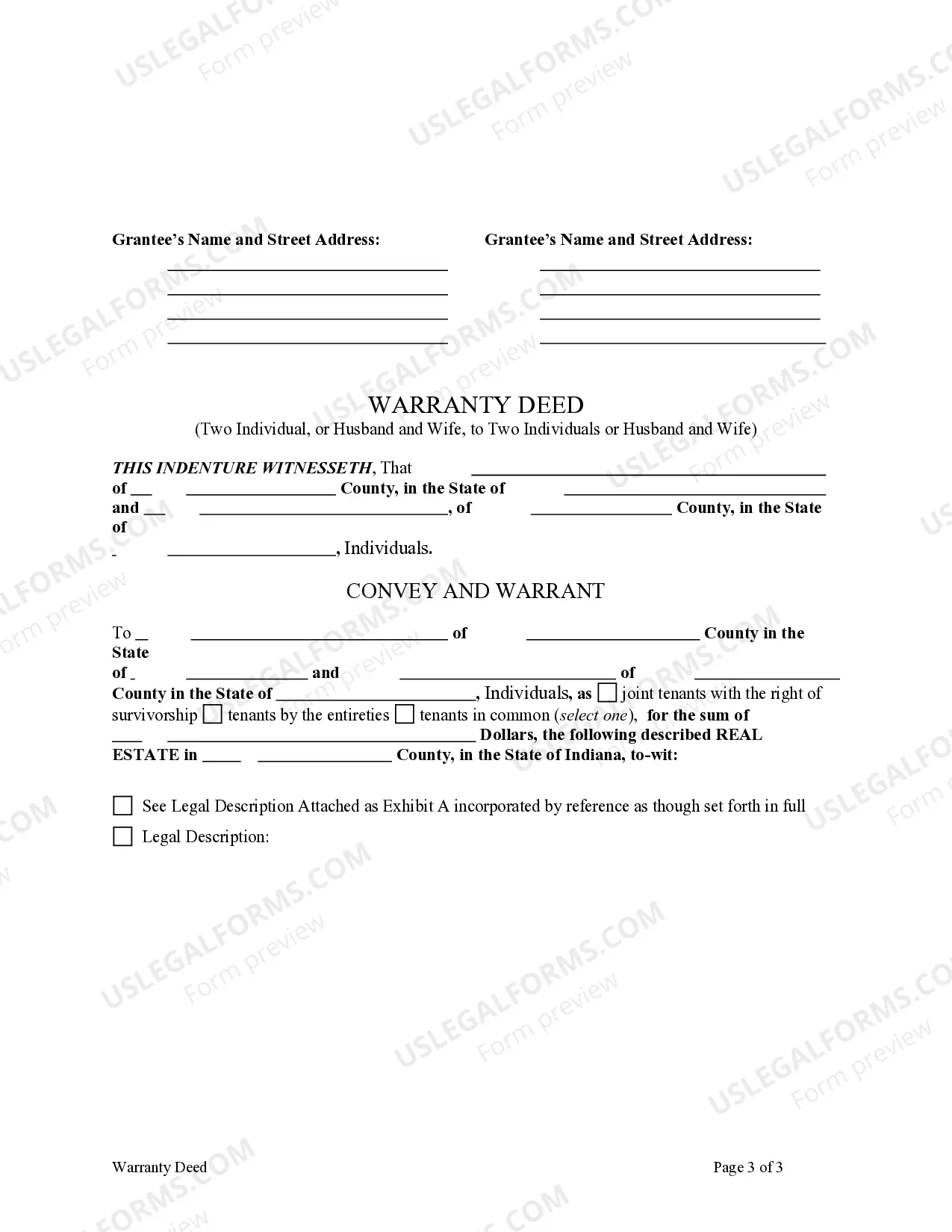
- Grantor and Grantee information: Names and addresses are required.
- Property description: Specific details regarding the property being conveyed.
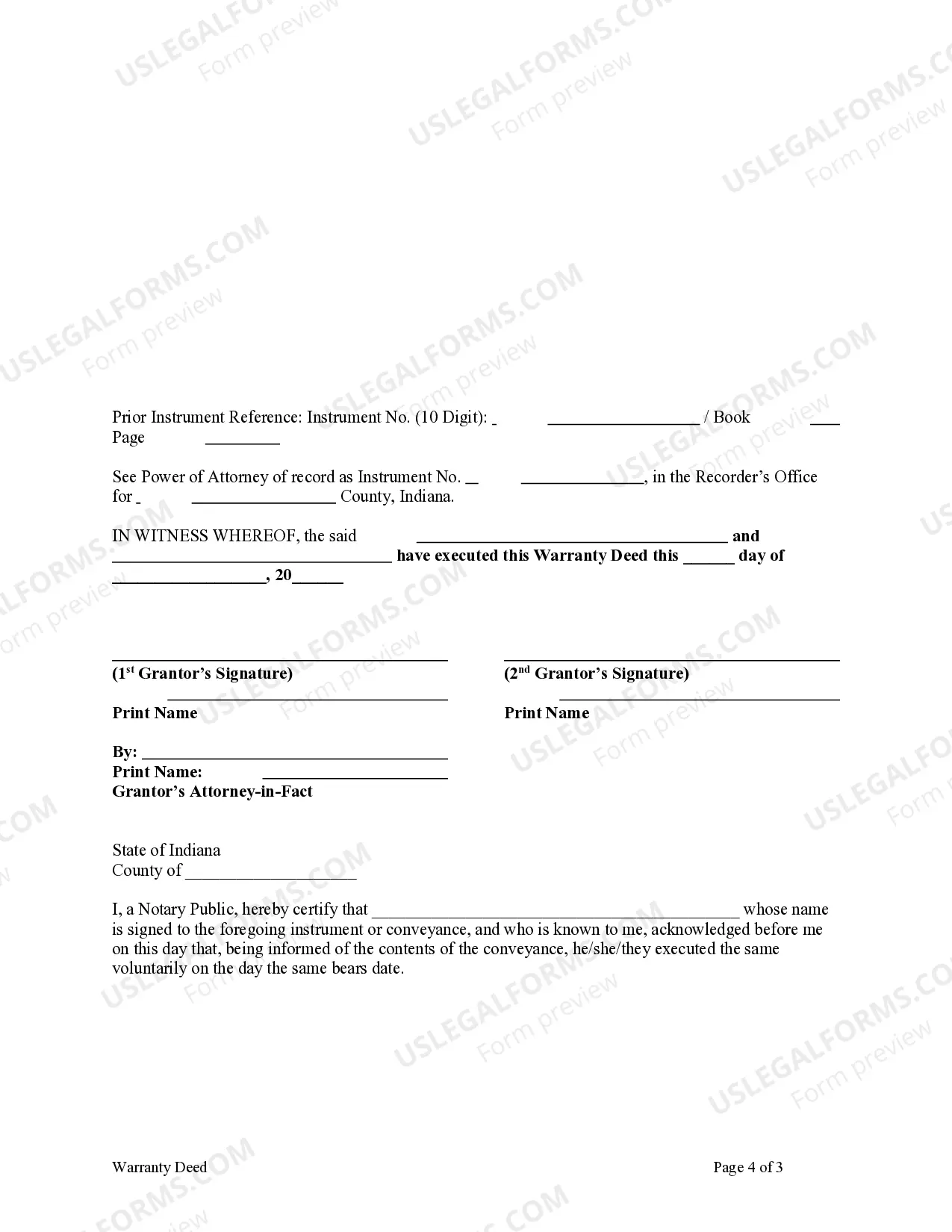
- Attorney-in-fact designation: If applicable, the name and authority of the attorney acting for a Grantor.
- Warranty clause: Ensures a guarantee against any title issues.
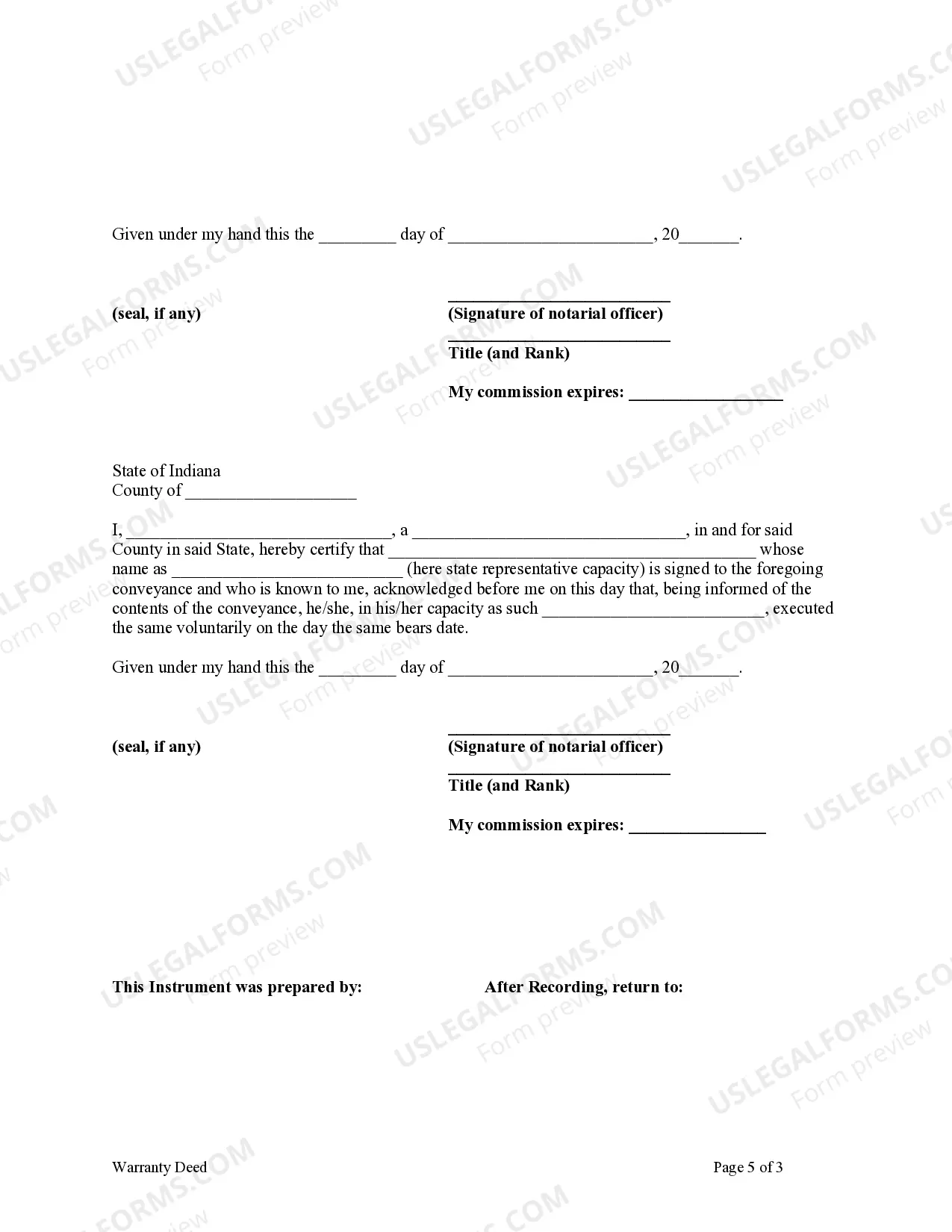
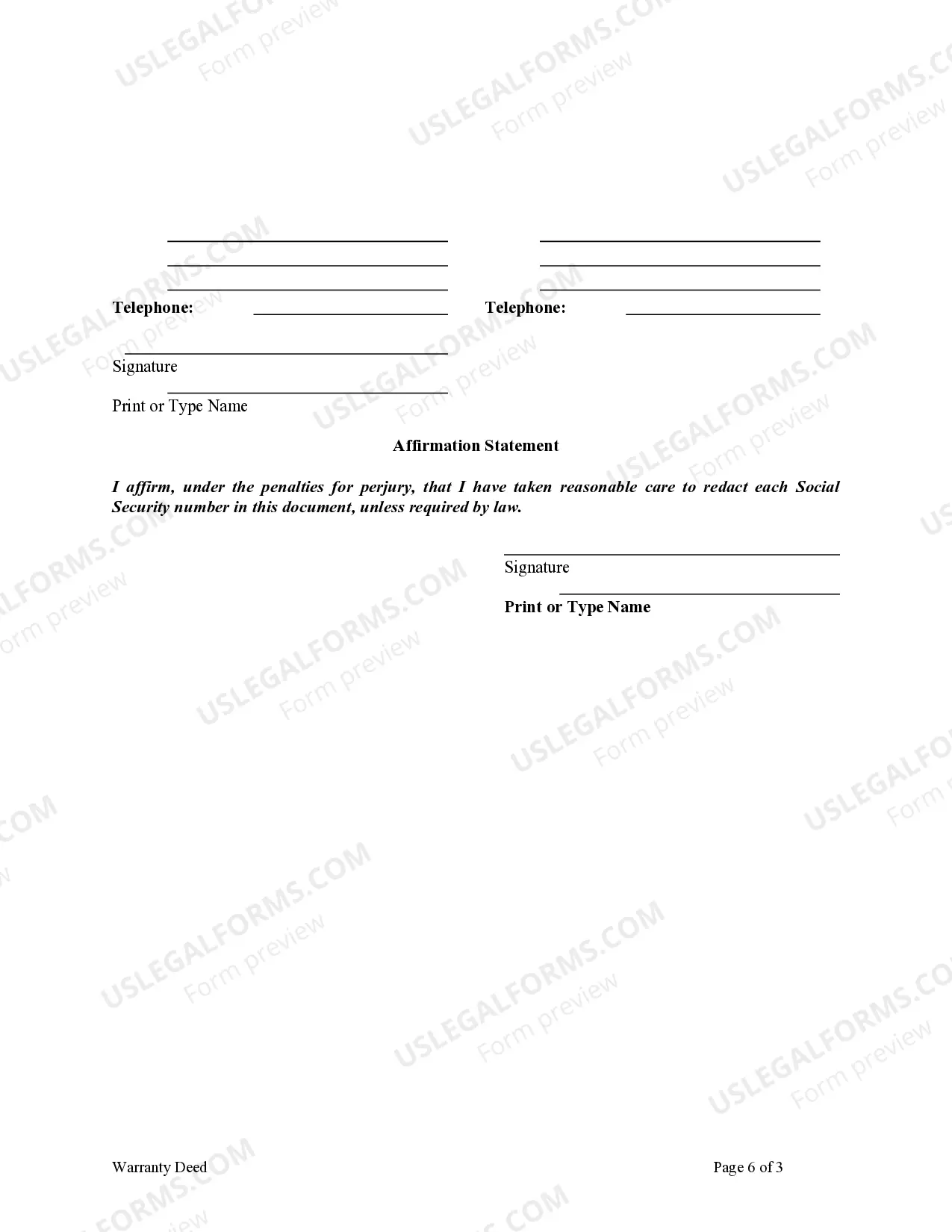
- Signature lines: Areas for the Grantors and Grantees to sign and date.







When to use this document
This Warranty Deed should be used when two individuals or a couple wishes to transfer property ownership to another two individuals or couple, particularly if one or both Grantors are utilizing an attorney-in-fact to act on their behalf. It is commonly needed during sales, inheritances, or gifting of real estate.
Who needs this form
- Individuals or couples transferring real property.
- Grantors who need an attorney-in-fact to act on their behalf.
- Grantees receiving property from two individuals or a couple.
Instructions for completing this form
- Identify the parties involved: Provide the names and addresses of all Grantors and Grantees.
- Specify the property: Clearly describe the property being transferred, including any legal descriptions needed.
- Include attorney information: If applicable, state the name and power of attorney details for the Grantor represented by an attorney-in-fact.
- Enter dates and signatures: Fill in the date of signing and ensure that all parties sign and date the document.
- Prepare for recording: Include a self-addressed envelope for the recorder and ensure that any power of attorney documentation is recorded as necessary.
Does this form need to be notarized?
This form does not typically require notarization unless specified by local law. However, check your jurisdiction's requirements to ensure compliance.
Get your form ready online
Our built-in tools help you complete, sign, share, and store your documents in one place.
Make edits, fill in missing information, and update formatting in US Legal Forms—just like you would in MS Word.
Download a copy, print it, send it by email, or mail it via USPS—whatever works best for your next step.
Sign and collect signatures with our SignNow integration. Send to multiple recipients, set reminders, and more. Go Premium to unlock E-Sign.
If this form requires notarization, complete it online through a secure video call—no need to meet a notary in person or wait for an appointment.
We protect your documents and personal data by following strict security and privacy standards.

Make edits, fill in missing information, and update formatting in US Legal Forms—just like you would in MS Word.

Download a copy, print it, send it by email, or mail it via USPS—whatever works best for your next step.

Sign and collect signatures with our SignNow integration. Send to multiple recipients, set reminders, and more. Go Premium to unlock E-Sign.

If this form requires notarization, complete it online through a secure video call—no need to meet a notary in person or wait for an appointment.

We protect your documents and personal data by following strict security and privacy standards.
Common mistakes
- Failing to accurately describe the property being transferred.
- Not including the attorney-in-fact information when applicable.
- Omitting signatures or dates from the form.
- Not recording the power of attorney, if used, in the deed.
Benefits of completing this form online
- Convenience of completing the form digitally from anywhere.
- Editability allows for easy corrections before finalizing.
- Access to attorney-drafted forms ensures legal compliance.
Summary of main points
- This Warranty Deed is vital for transferring real property between individuals or couples.
- Ensure proper documentation if using an attorney-in-fact.
- Complete all fields accurately to avoid issues during recording.
Looking for another form?
Form popularity
FAQ
In all fifty states, a deed must be signed and acknowledged by the grantor. Additional signatures may also be required, such as a grantee's signature, witnesses, a notary public, and the document preparer.
To add a spouse to a deed, all you have to do is literally fill out, sign and record a new deed in your county recorder's office.
It is possible to be named on the title deed of a home without being on the mortgage. However, doing so assumes risks of ownership because the title is not free and clear of liens and possible other encumbrances.If a mortgage exists, it's best to work with the lender to make sure everyone on the title is protected.
Before adding your spouse to the deed, speak with your attorney. The easiest way to grant your spouse title to your home is via a quitclaim deed (Californians generally use an interspousal grant deed). With a quitclaim deed, you can name your spouse as the property's joint owner.
The easiest way to grant your spouse title to your home is via a quitclaim deed (Californians generally use an interspousal grant deed). With a quitclaim deed, you can name your spouse as the property's joint owner. The quitclaim deed must include the property's description, including its boundary lines.
Locate the prior deed to the property. Create the new deed. Sign the new deed. Record the original deed.
Signing (§ 32-21-2-3) All deed must be executed by one of the following: judge, clerk of a court of record, county auditor, county recorder, notary public, mayor of a city in Indiana or any other state, commissioner appointed in a state other than Indiana by the governor of Indiana, clerk of the city county council
You can get a copy of your deed from the Recorder's office, and our staff can help you with your search. However, we cannot conduct searches for you. Companies may contact you and offer to send a copy of your deed for $60. We can provide you with a copy for $1 per page, and a certified copy for an additional $5.
Discuss the terms of the deed with the new owners. Hire a real estate attorney to prepare the deed. Review the deed. Sign the deed in front of a notary public, with witnesses present. File the deed on public record.