Indiana Warranty Deed - Two Individuals or Husband and Wife, Grantors, both acting through an Attorney in Fact, to Two Individuals or Husband and Wife as Grantees.
Understanding this form
The Warranty Deed is a legal document used to transfer ownership of real property from two individuals or a husband and wife, both acting through an attorney in fact, to another pair of individuals or a husband and wife. This form guarantees that the grantors have the legal right to convey the property and it complies with state law. It differs from other deeds, such as quitclaim deeds, by providing a warranty of title, ensuring that the property is free from liens or claims, providing greater security for the grantees.
Main sections of this form
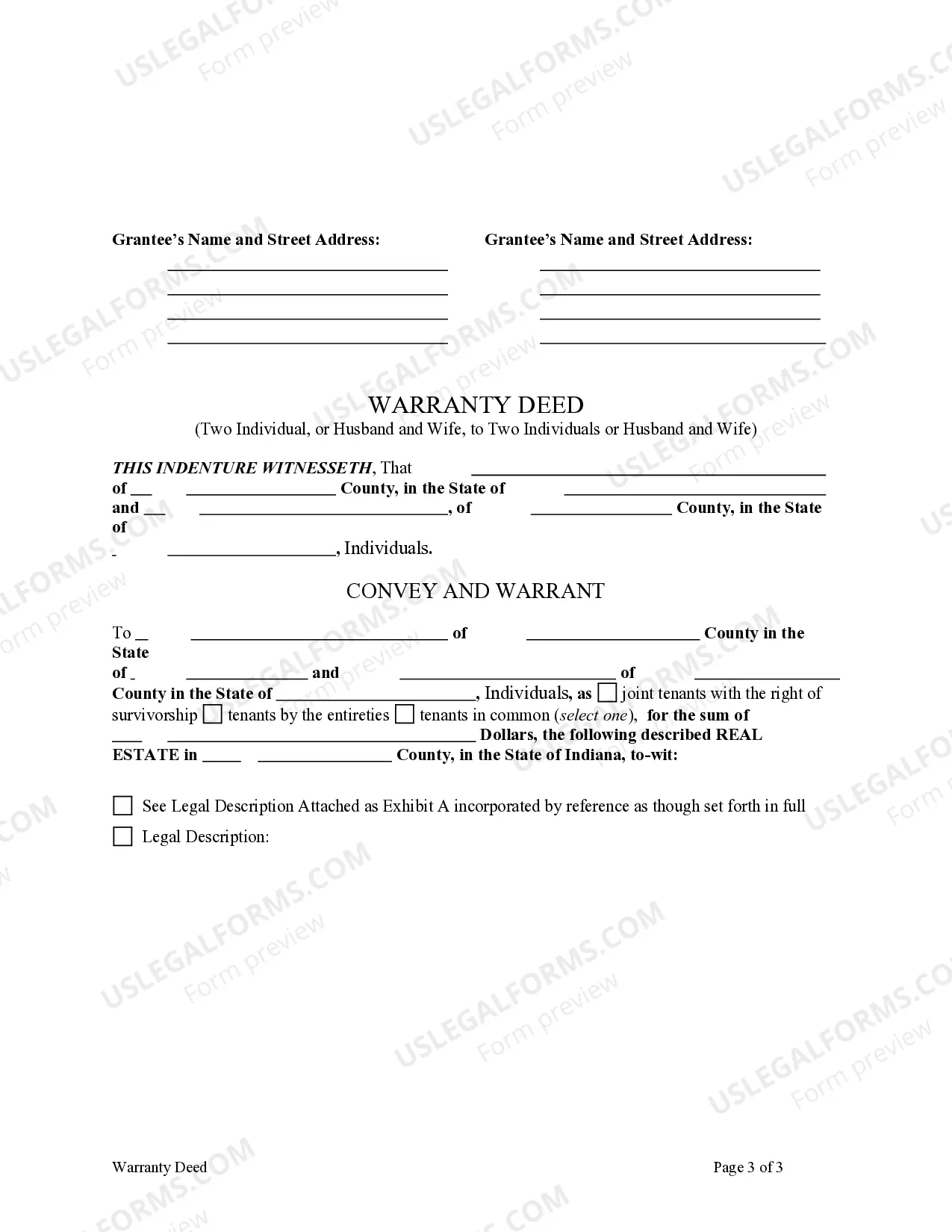
- Identifies the grantors as two individuals or a husband and wife acting through an attorney in fact.
- Defines the grantees as two individuals or a husband and wife.
- A detailed description of the property being transferred.
- Warranties provided by the grantors regarding ownership and title of the property.
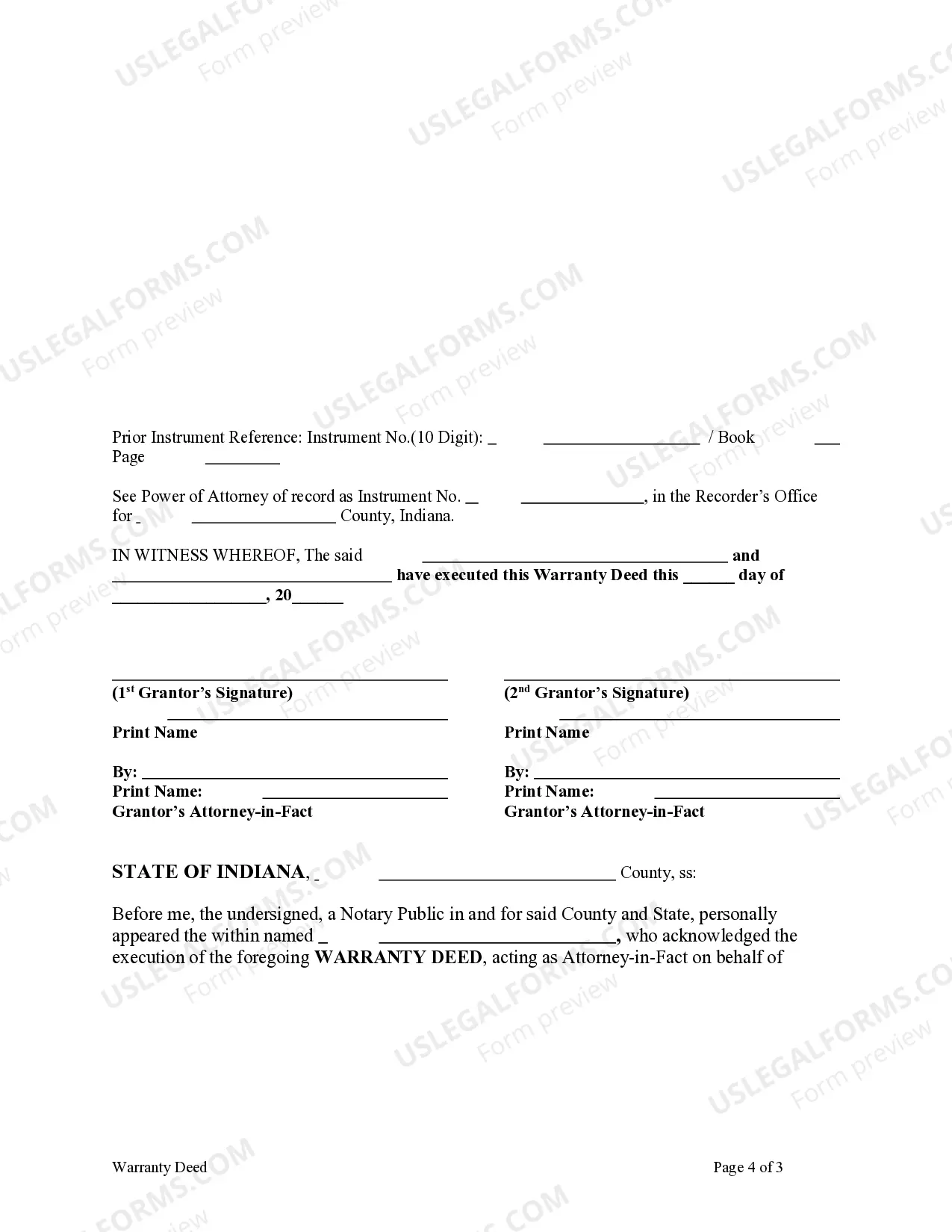
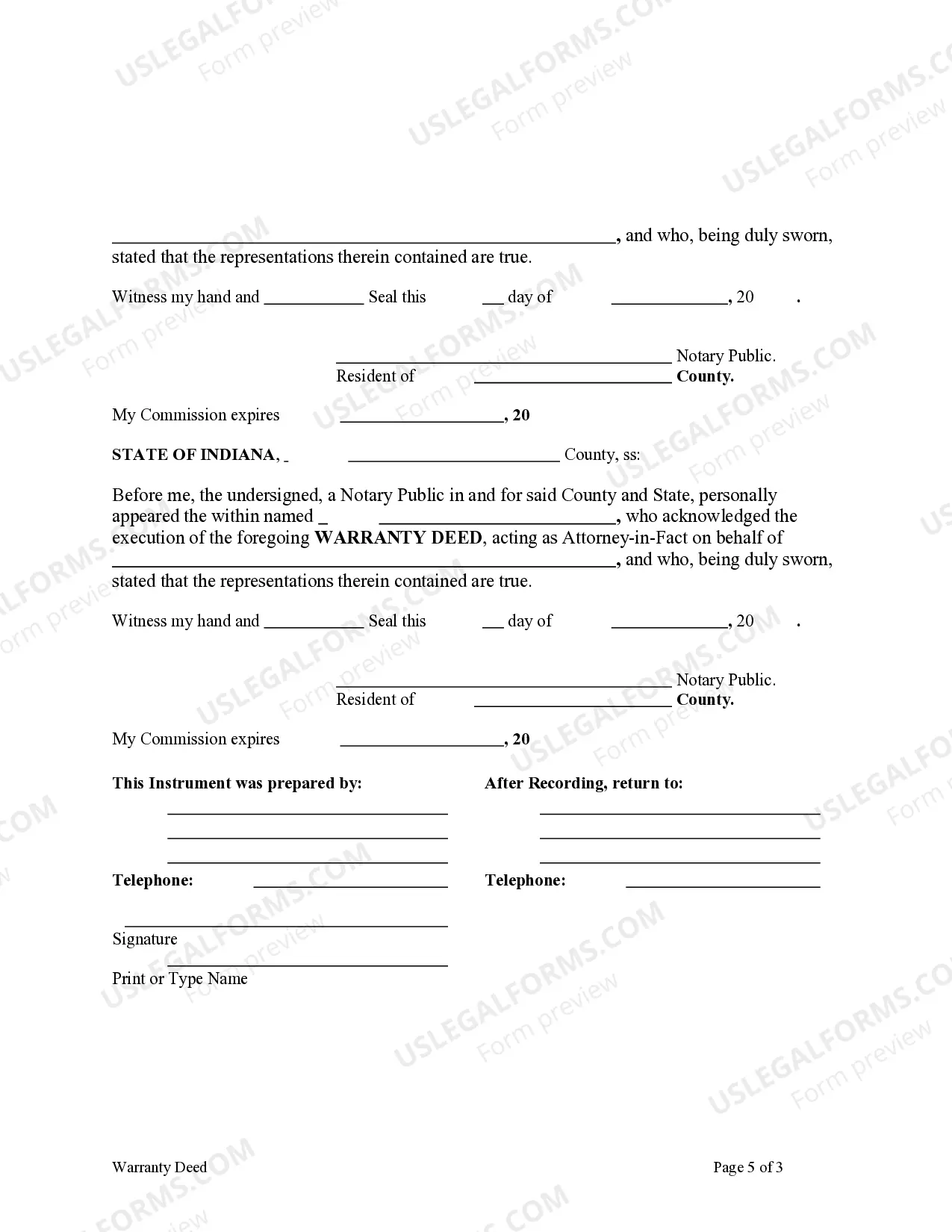
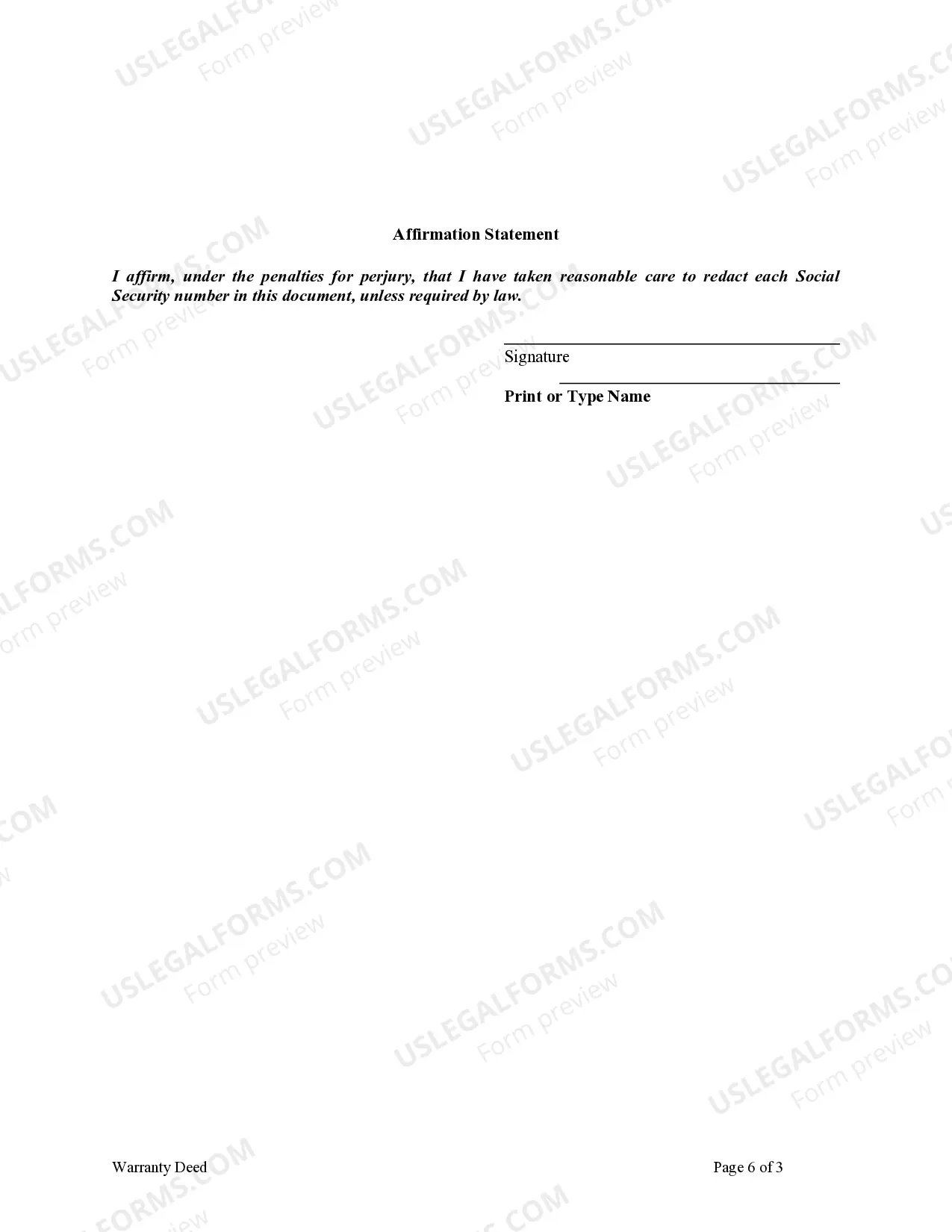
- Spaces for signatures and dates, including requirements for notarization if applicable.


When this form is needed
This form is needed when two individuals or a married couple wish to legally transfer property to another couple or two individuals. Common situations include selling a home, gifting real estate, or facilitating estate planning between family members, where an attorney in fact is acting on behalf of the grantors.
Who should use this form
- Individuals or married couples transferring property ownership.
- Grantors requiring an attorney in fact to represent them in the transaction.
- Grantees receiving property who want formal documentation of the transfer.
How to prepare this document
- Identify the parties involved: grantors and grantees.
- Specify the property being conveyed, including legal descriptions.
- Enter all relevant dates, ensuring accuracy to avoid future disputes.
- Obtain necessary signatures from all parties involved before a notary.
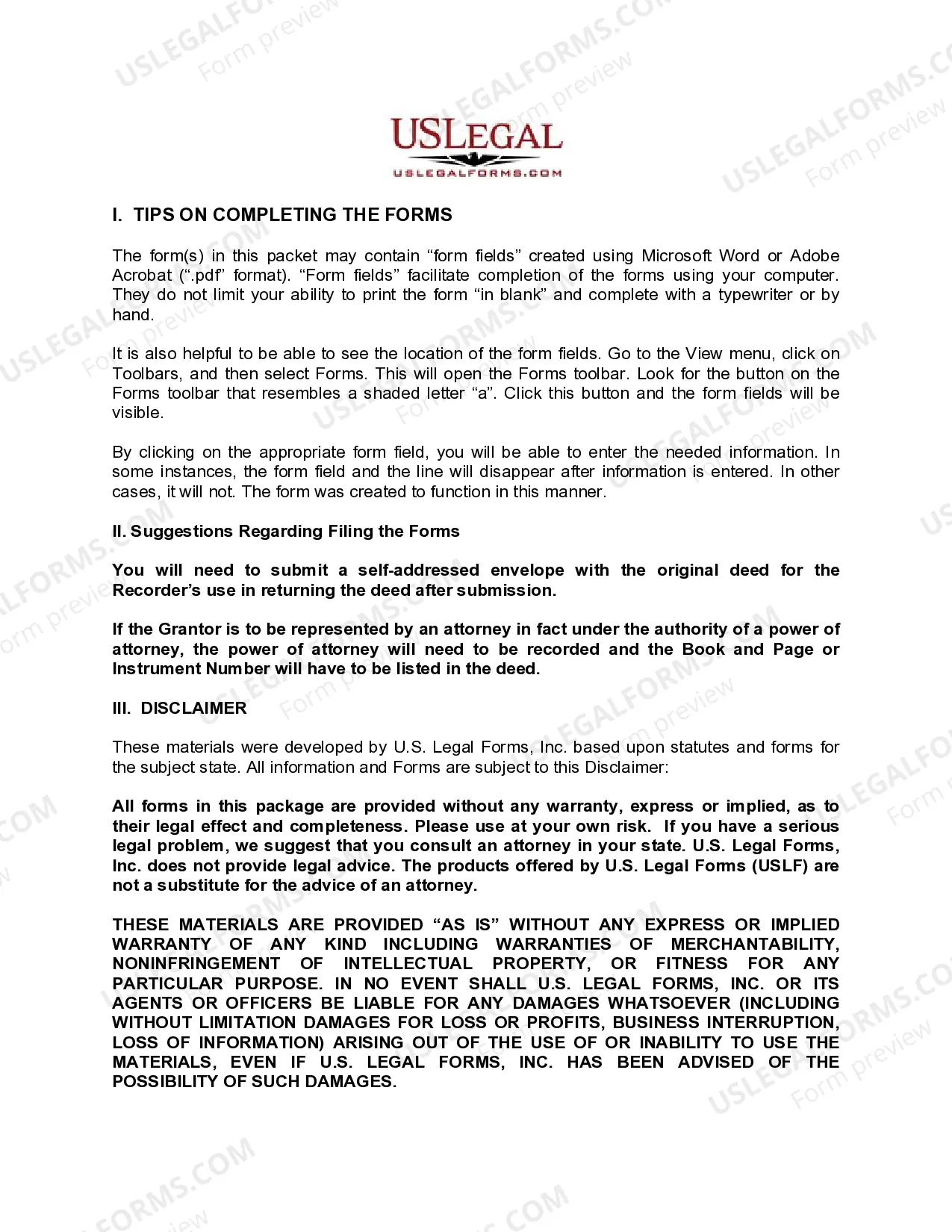
- Include the power of attorney details if applicable, noting Book and Page or Instrument Number.
Notarization requirements for this form
This document requires notarization to meet legal standards. US Legal Forms provides secure online notarization powered by Notarize, allowing you to complete the process through a verified video call, available 24/7.
Get your form ready online
Our built-in tools help you complete, sign, share, and store your documents in one place.
Make edits, fill in missing information, and update formatting in US Legal Forms—just like you would in MS Word.
Download a copy, print it, send it by email, or mail it via USPS—whatever works best for your next step.
Sign and collect signatures with our SignNow integration. Send to multiple recipients, set reminders, and more. Go Premium to unlock E-Sign.
If this form requires notarization, complete it online through a secure video call—no need to meet a notary in person or wait for an appointment.
We protect your documents and personal data by following strict security and privacy standards.

Make edits, fill in missing information, and update formatting in US Legal Forms—just like you would in MS Word.

Download a copy, print it, send it by email, or mail it via USPS—whatever works best for your next step.

Sign and collect signatures with our SignNow integration. Send to multiple recipients, set reminders, and more. Go Premium to unlock E-Sign.

If this form requires notarization, complete it online through a secure video call—no need to meet a notary in person or wait for an appointment.

We protect your documents and personal data by following strict security and privacy standards.
Mistakes to watch out for
- Failing to include proper legal descriptions of the property.
- Not obtaining all necessary signatures from grantors.
- Omitting the power of attorney information when applicable.
- Neglecting to check if additional documentation is required in your state.
- Using incorrect or outdated forms not compliant with current laws.
Advantages of online completion
- Convenient access to legally vetted templates accessible anytime.
- Editability allows you to complete the form at your own pace.
- Reduced risk of errors with ready-made fields for necessary information.
- Ensured compliance with your state's legal requirements.
Looking for another form?
Form popularity
FAQ
A Power of Attorney might be used to allow another person to sign a contract for the Principal. It can be used to give another person the authority to make health care decisions, do financial transactions, or sign legal documents that the Principal cannot do for one reason or another.
The Principal can override either type of POA whenever they want. However, other relatives may be concerned that the Agent (in most cases a close family member like a parent, child, sibling, or spouse) is abusing their rights and responsibilities by neglecting or exploiting their loved one.
A warranty deed can be revoked. In most situations, the person signing the deed needs the cooperation of the person who received the deed to revoke it.If the deed was prepared for a property transfer as part of a typical sale, though, you probably will have to take legal action to revoke the deed.
Special warranties allow the transfer of property title between seller and buyer. The purchase of title insurance can mitigate the risk of prior claims to the special warranty deed.
No a will does not override a deed. A will only acts on death. The deed must be signed during the life of the owner. The only assets that pass through the will are assets that are in the name of the decedent only.
A power of attorney agent is not barred by law to sell the property unto himself by following proper procedures. He is selling the property on behalf of his principal in the capacity of his agent/representative and buying it as a buyer.In his absence or at his option, the POA can act.
A power of attorney enables an agent (also called the attorney-in-fact) to conduct transactions on another person's behalf.If so, a spouse, relative or friend with POA can sign a deed or other real estate documents.
Powers of attorney are often used to transfer real estate.The person named as agent (usually a spouse or other family member) can use the power of attorney to sign the real estate documentsincluding the deedwithout opening a guardianship or conservatorship or otherwise obtaining court permission.
Misconceptions and Realities. It is a misconception that someone can be removed from the deed. Nor can a co-owner simply take away another party's interest in a property by executing a new deed without that other party. In short, no one can be passively removed from a title.