Indiana Warranty Deed - Two Individuals, or Husband and Wife, as Grantors, both by attorney in fact, to an individual Grantee
About this form
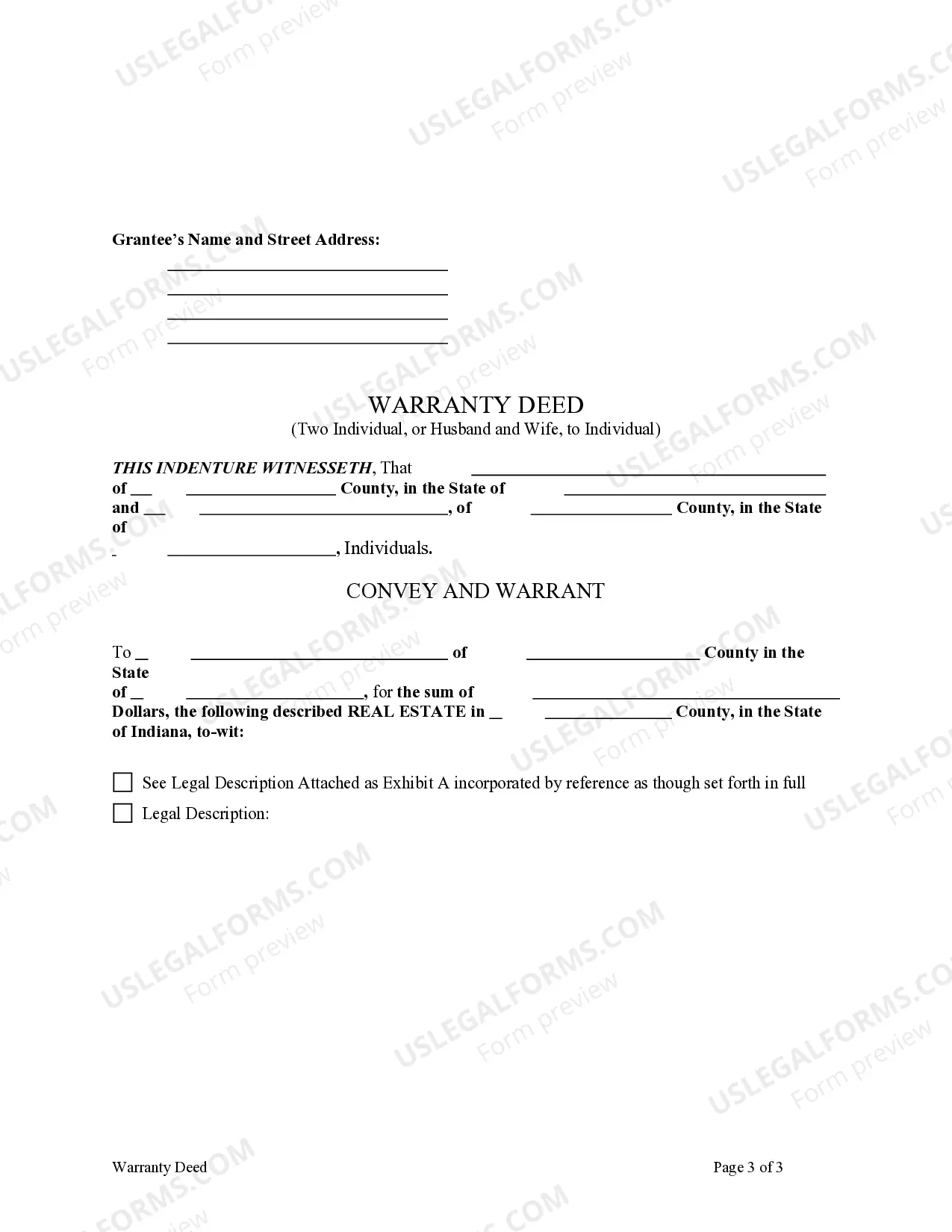
This Warranty Deed is a legal document used for transferring property ownership from two individuals or a married couple acting through an attorney in fact to an individual Grantee. It ensures that the Grantors convey and warrant the described property, providing protection and assurances of ownership. This form complies with all relevant state statutory laws, making it a reliable option for changing property ownership.
What’s included in this form
- Identification of Grantors (two individuals or a married couple).
- Designation of an attorney in fact authorized by a recorded power of attorney.
- Details about the Grantee and the property being conveyed.
- Warranties made by the Grantors regarding the property ownership.
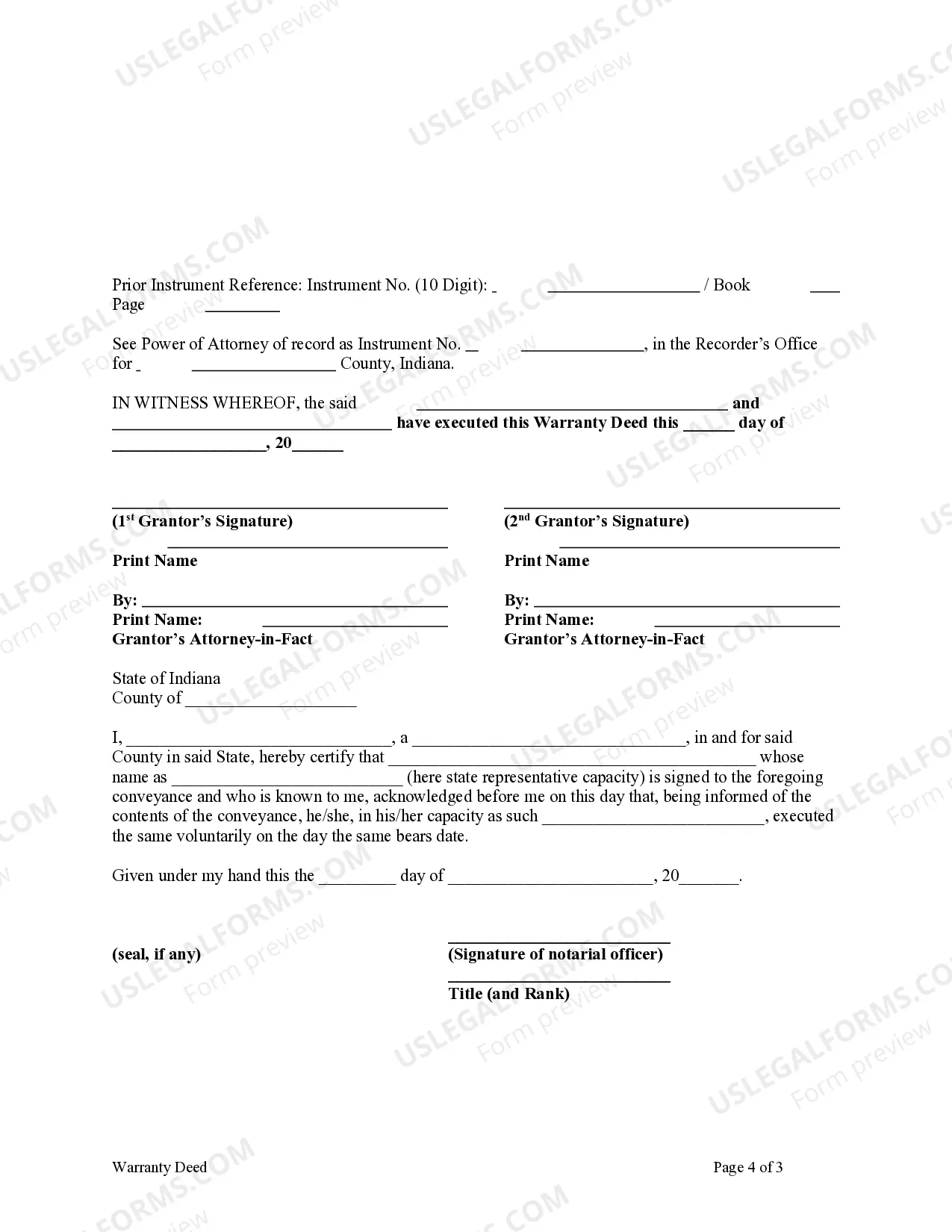
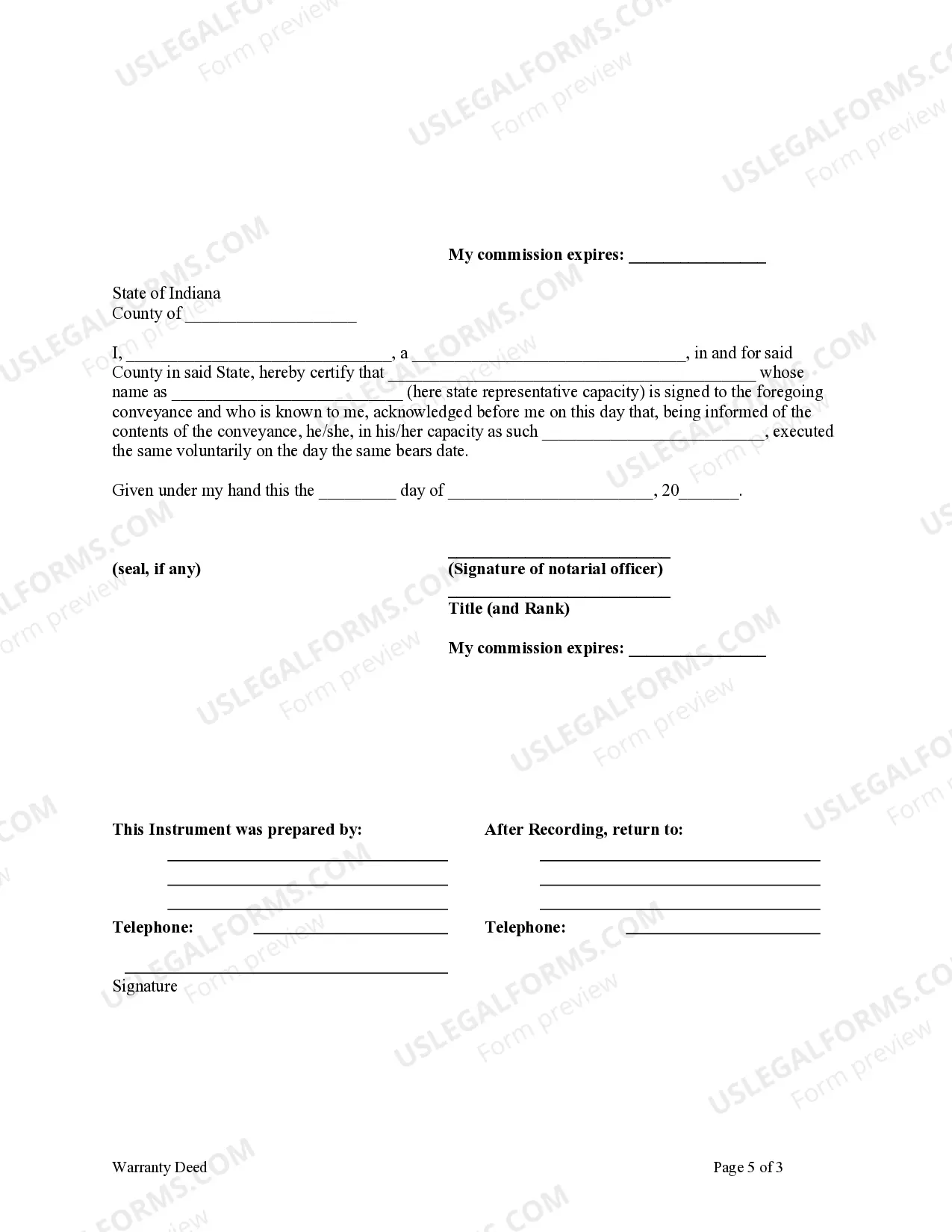
- Space for the recording information, including the power of attorney details.


Common use cases
This form should be used when two individuals or a married couple intends to transfer their property to another individual, with the procedure being facilitated by an attorney in fact. It is suitable for situations where the Grantors may not be able to personally sign the deed due to various circumstances, such as health issues or alternate locations.
Who this form is for
- Any individual or couple acting as Grantors who wish to convey property.
- Individuals acting through an attorney in fact due to incapacity or accessibility concerns.
- Buyers or Grantees looking to receive property with full warranties from the Grantors.
Steps to complete this form
- Identify the Grantors and enter their names and addresses.
- Enter the name of the Grantee receiving the property.
- Specify the property being conveyed with a detailed description.
- Include the recorded power of attorney's Book and Page or Instrument Number.
- Ensure both Grantors or their attorney in fact sign the deed where indicated.
Notarization requirements for this form
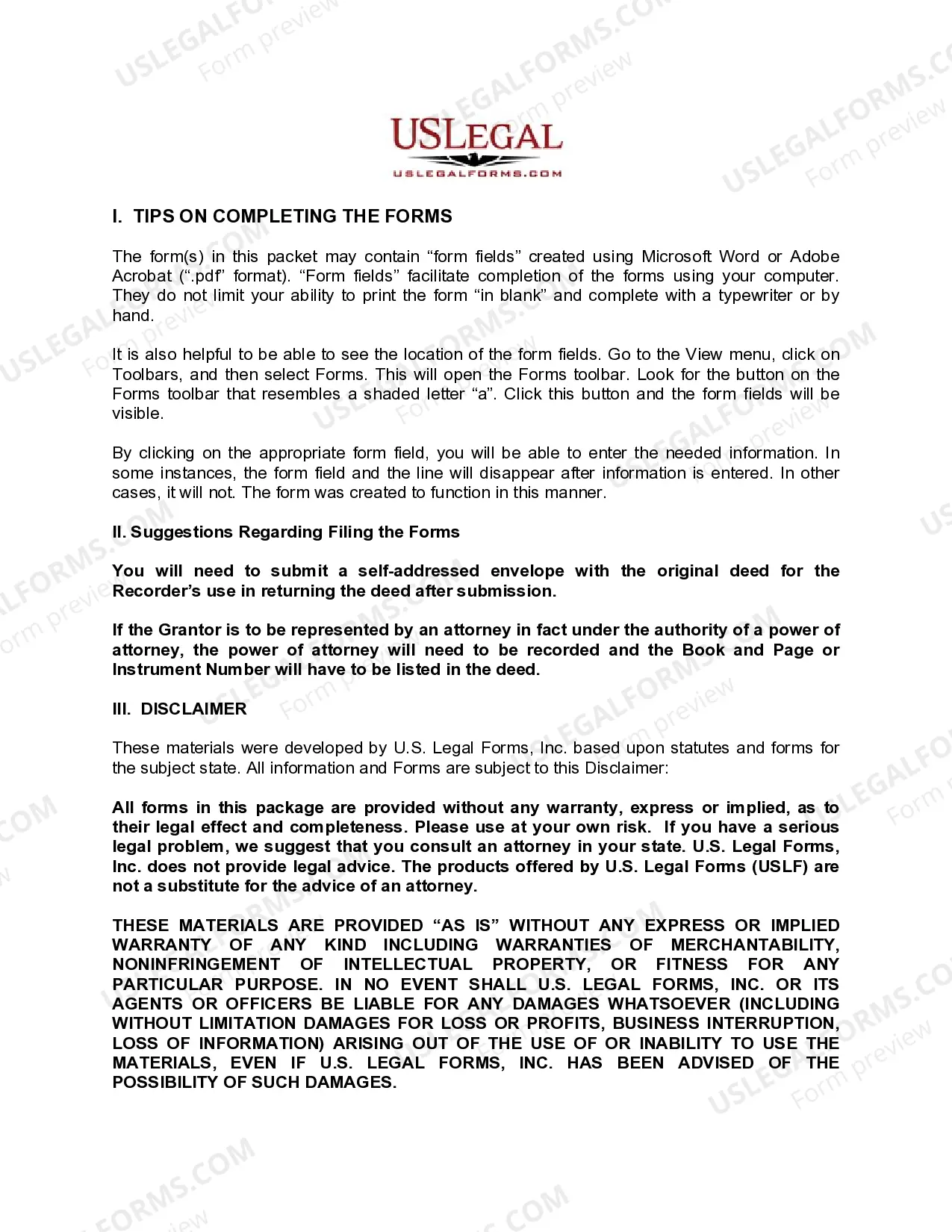
This document requires notarization to meet legal standards. US Legal Forms provides secure online notarization powered by Notarize, allowing you to complete the process through a verified video call, available 24/7.
Get your form ready online
Our built-in tools help you complete, sign, share, and store your documents in one place.
Make edits, fill in missing information, and update formatting in US Legal Forms—just like you would in MS Word.
Download a copy, print it, send it by email, or mail it via USPS—whatever works best for your next step.
Sign and collect signatures with our SignNow integration. Send to multiple recipients, set reminders, and more. Go Premium to unlock E-Sign.
If this form requires notarization, complete it online through a secure video call—no need to meet a notary in person or wait for an appointment.
We protect your documents and personal data by following strict security and privacy standards.

Make edits, fill in missing information, and update formatting in US Legal Forms—just like you would in MS Word.

Download a copy, print it, send it by email, or mail it via USPS—whatever works best for your next step.

Sign and collect signatures with our SignNow integration. Send to multiple recipients, set reminders, and more. Go Premium to unlock E-Sign.

If this form requires notarization, complete it online through a secure video call—no need to meet a notary in person or wait for an appointment.

We protect your documents and personal data by following strict security and privacy standards.
Typical mistakes to avoid
- Not including the required power of attorney information.
- Failing to properly identify the property being transferred.
- Omitting necessary signatures from all Grantors or the attorney in fact.
- Not checking state-specific filing requirements before submission.
Why complete this form online
- Convenient accessibility that allows you to fill out the form from anywhere.
- Editability, enabling you to make changes easily before finalizing.
- Reliable templates drafted by licensed attorneys to ensure compliance.
Summary of main points
- The Warranty Deed is essential for transferring property when Grantors cannot sign.
- Ensure all details, especially regarding the power of attorney, are correctly included.
- Consult state-specific requirements for accuracy and compliance.
- Consider notarizing the deed for added legal assurance.
Looking for another form?
Form popularity
FAQ
Another thing to remember when consider is that if you don't have your name on the mortgage or on the deeds of the property then your partner could kick you out of the house and you have no legal rights here.If you are an unmarried partner whose name is not on the mortgage then your rights will be very limited.
If you live in a common-law state, you can keep your spouse's name off the title the document that says who owns the property.You can put your spouse on the title without putting them on the mortgage; this would mean that they share ownership of the home but aren't legally responsible for making mortgage payments.
Adding someone to your house deed requires the filing of a legal form known as a quitclaim deed. When executed and notarized, the quitclaim deed legally overrides the current deed to your home. By filing the quitclaim deed, you can add someone to the title of your home, in effect transferring a share of ownership.
The Grantee in a Quitclaim Deed is the person who is being given interest in a property from the Grantor. It is possible for someone to be both a Grantor and a Grantee in a Quitclaim Deed.Most real estate deeds are notarized by attorneys.
If you've recently married and already own a home or other real estate, you may want to add your new spouse to the deed for your property so the two of you own it jointly. To add a spouse to a deed, all you have to do is literally fill out, sign and record a new deed in your county recorder's office.
A In order to make your partner a joint owner you will need to add his name at the Land Registry, for which there is a fee of £280 (assuming you transfer half the house to him). You won't, however, have to pay capital gains tax, as gifts between civil partners (and spouses) are tax free.
In California, all property bought during the marriage with income that was earned during the marriage is deemed "community property." The law implies that both spouses own this property equally, regardless of which name is on the title deed.
In all fifty states, a deed must be signed and acknowledged by the grantor. Additional signatures may also be required, such as a grantee's signature, witnesses, a notary public, and the document preparer.
It is possible to be named on the title deed of a home without being on the mortgage. However, doing so assumes risks of ownership because the title is not free and clear of liens and possible other encumbrances.If a mortgage exists, it's best to work with the lender to make sure everyone on the title is protected.