Minnesota Authorization to Release Financial Records and Information - 2 Samples
Overview of this form
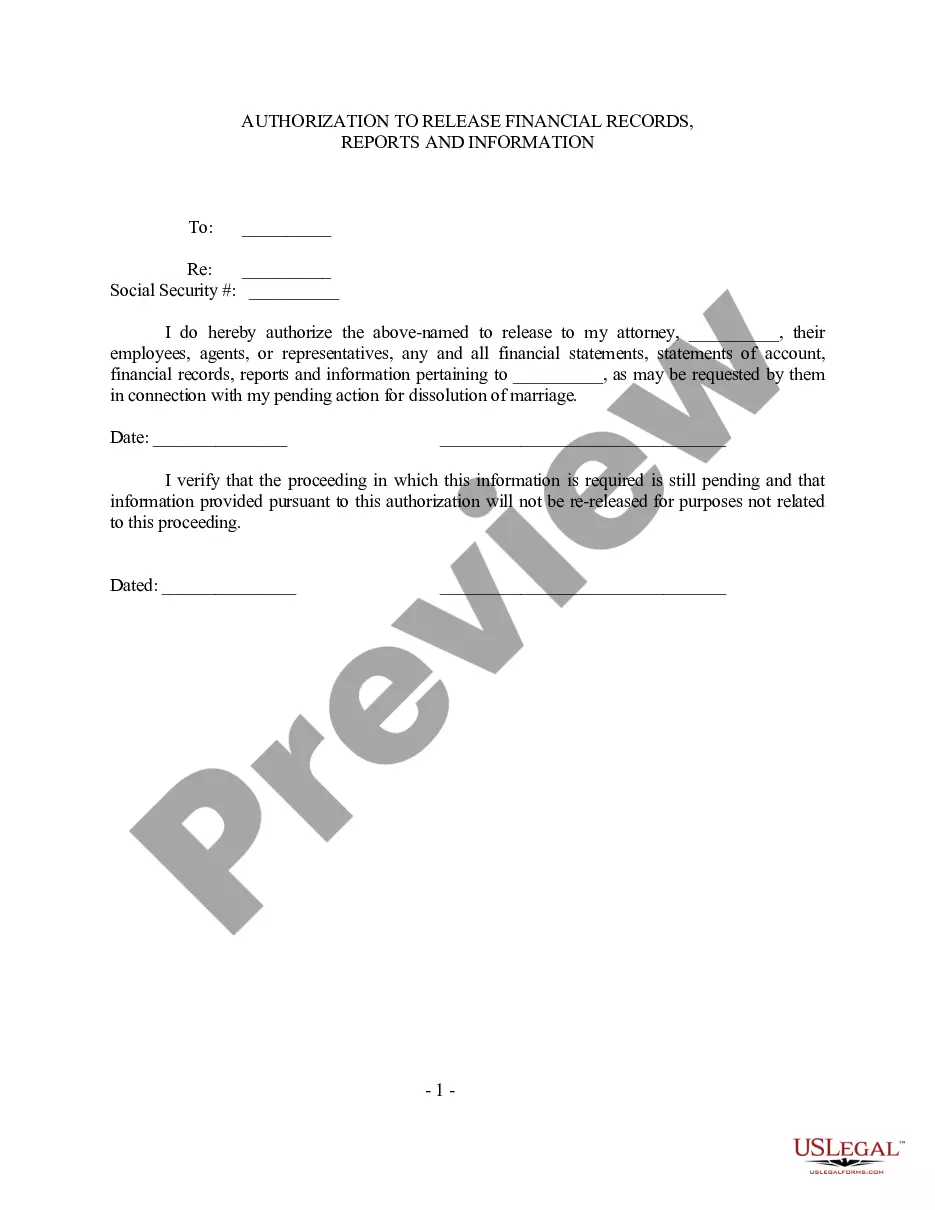
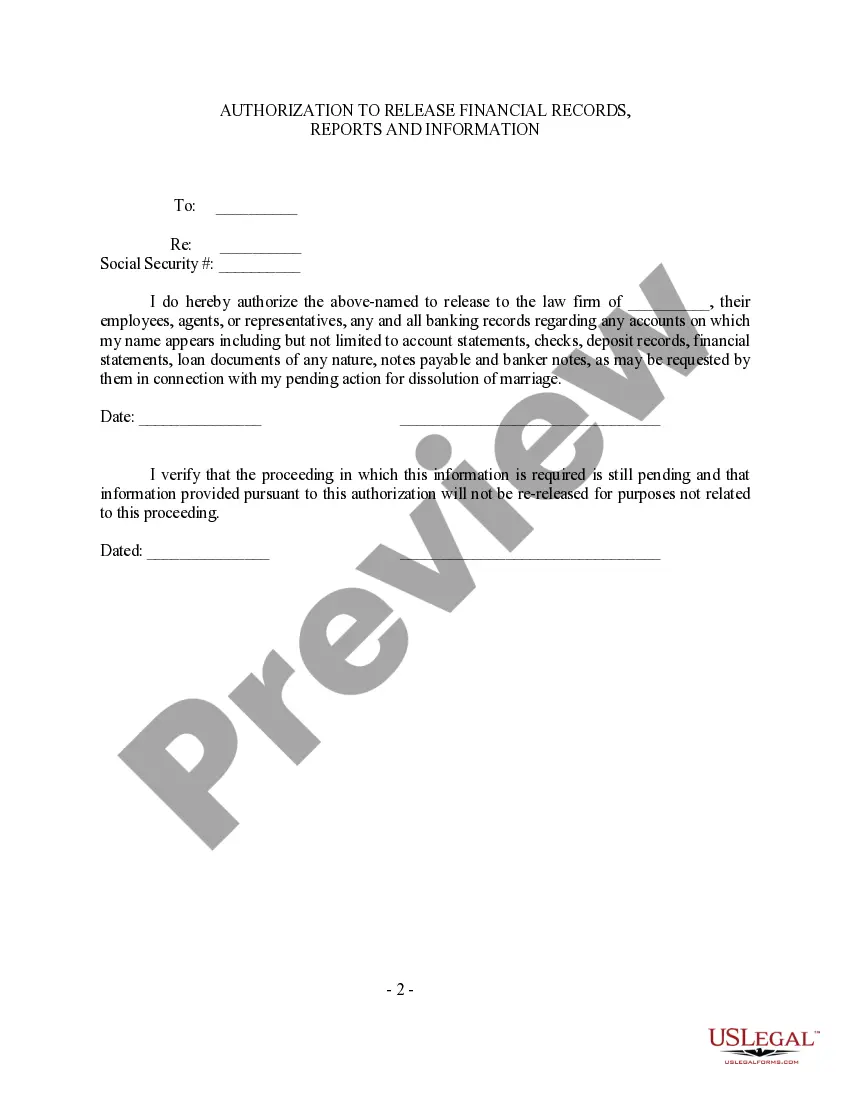
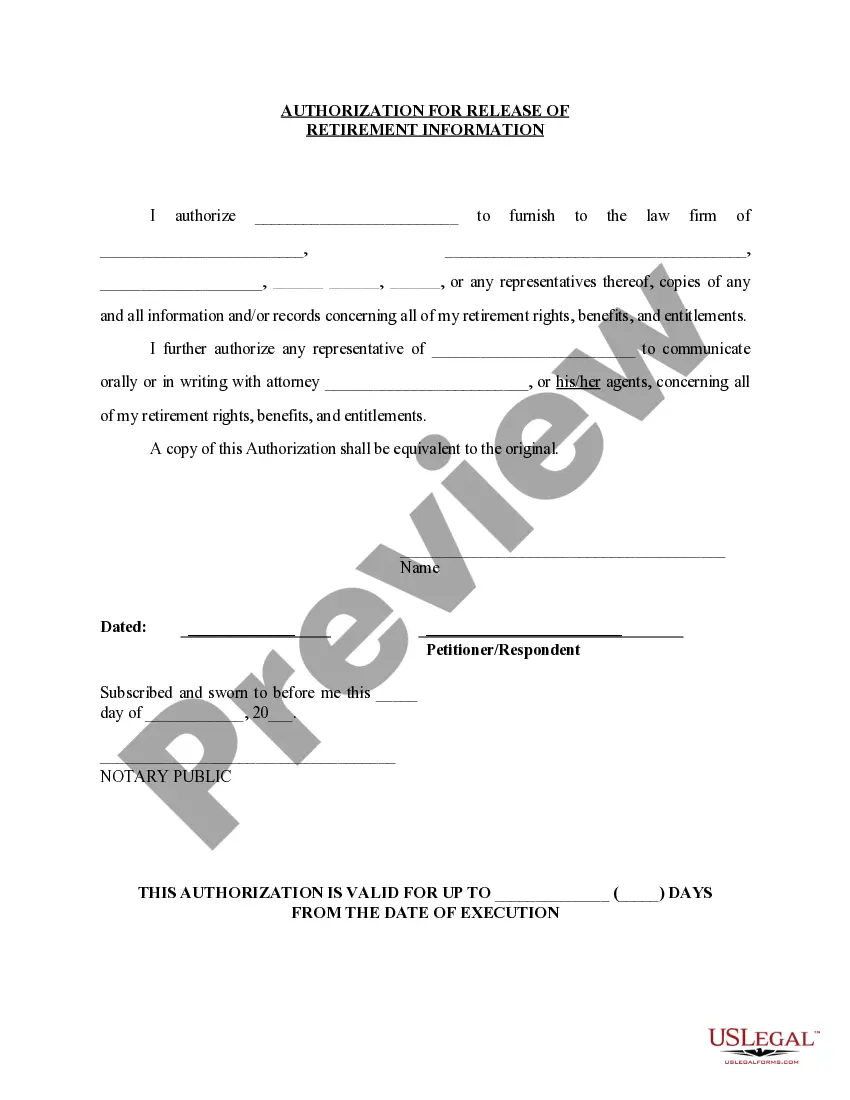
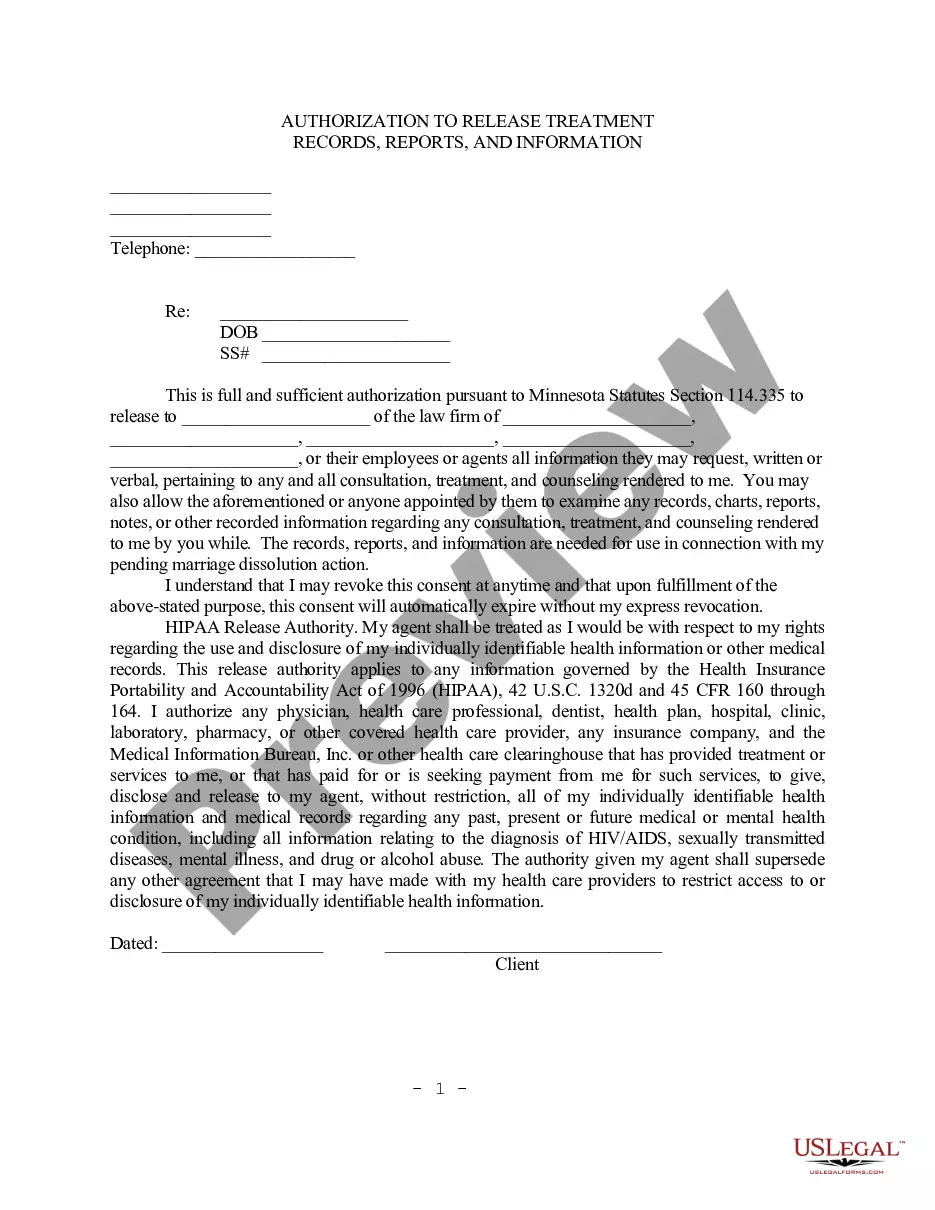
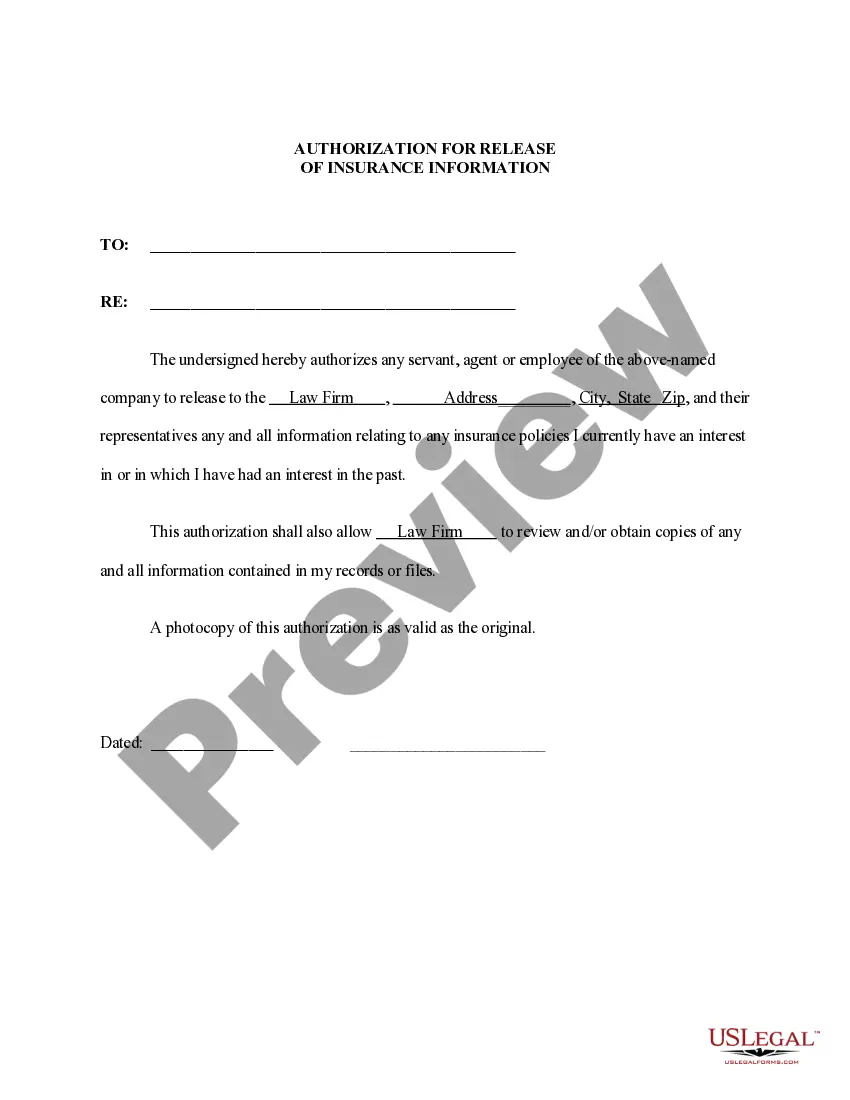
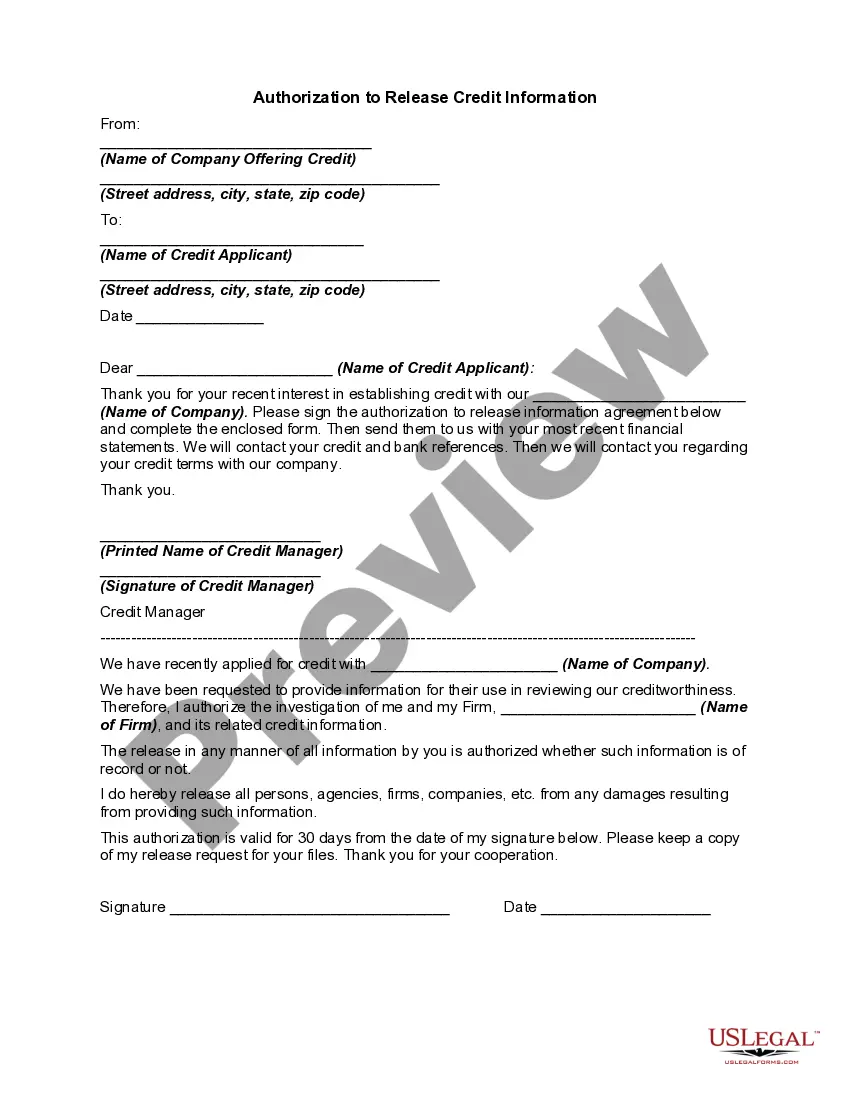
This Authorization to Release Financial Records and Information is a legal document that allows a client to permit specific financial institutions to release their financial information to their attorney. This form is primarily used in the context of a marital dissolution proceeding, ensuring your attorney has access to necessary financial documents such as bank records and financial statements. Unlike other authorization forms, this one is specifically tailored for cases involving divorce and related legal matters.
What’s included in this form
- Identification of the parties involved, including the client and their attorney.
- Details of the financial records to be released, which can include bank statements and financial reports.
- Verification statement confirming the pending nature of the proceeding.
- Signature lines for both the client and the date of the authorization.
When to use this document
This form should be used when you are engaged in a divorce proceeding and require your financial information to be disclosed to your attorney. It is essential when your attorney needs to evaluate the couple's financial situation for equitable distribution of assets or addressing alimony obligations. Utilizing this form ensures that your attorney can act on your behalf with full access to necessary financial records.
Who can use this document
- Individuals undergoing a divorce or dissolution of marriage.
- Clients needing to provide financial information to their attorneys.
- Anyone involved in legal proceedings where financial record review is necessary.
Instructions for completing this form
- Identify the parties: Fill in the names of the client and the attorney.
- Specify the financial records: Clearly indicate the types of financial information to be released.
- Write the date: Enter the date when the form is completed.
- Sign the form: The client must sign to authorize the release, confirming the pending nature of the proceeding.
- Provide any additional details required by your attorney or state regulations.
Notarization requirements for this form
Notarization is not commonly needed for this form. However, certain documents or local rules may make it necessary. Our notarization service, powered by Notarize, allows you to finalize it securely online anytime, day or night.
Get your form ready online
Our built-in tools help you complete, sign, share, and store your documents in one place.
Make edits, fill in missing information, and update formatting in US Legal Forms—just like you would in MS Word.
Download a copy, print it, send it by email, or mail it via USPS—whatever works best for your next step.
Sign and collect signatures with our SignNow integration. Send to multiple recipients, set reminders, and more. Go Premium to unlock E-Sign.
If this form requires notarization, complete it online through a secure video call—no need to meet a notary in person or wait for an appointment.
We protect your documents and personal data by following strict security and privacy standards.

Make edits, fill in missing information, and update formatting in US Legal Forms—just like you would in MS Word.

Download a copy, print it, send it by email, or mail it via USPS—whatever works best for your next step.

Sign and collect signatures with our SignNow integration. Send to multiple recipients, set reminders, and more. Go Premium to unlock E-Sign.

If this form requires notarization, complete it online through a secure video call—no need to meet a notary in person or wait for an appointment.

We protect your documents and personal data by following strict security and privacy standards.
Mistakes to watch out for
- Failing to include all necessary financial institutions in the authorization.
- Not properly identifying the attorney or omitting their details.
- Leaving the signature or date sections blank.
- Assuming that the form is valid regardless of state-specific laws.
Advantages of online completion
- Instant access to professionally drafted templates that save you time.
- Edit and customize the form easily to meet your specific needs.
- Secure digital storage of your legal documents for future reference.
- Convenient completion from the comfort of your own home.
What to keep in mind
- The authorization allows your attorney access to critical financial records.
- Completing this form is a vital step in managing your divorce proceedings.
- Ensure all details are accurate and complete to avoid delays in your case.
Looking for another form?



Form popularity
FAQ
Your financial records can be accessed by various entities, including the government, under specific legal conditions. Individuals or organizations with your consent can also access these records. Knowing who has the right to view your financial information is essential for protecting your privacy. The Minnesota Authorization to Release Financial Records and Information - 2 Samples provides clarity on who can request access and under what circumstances.
A government authority can access your financial institution records through a valid court order or a subpoena. These legal documents must specify the information needed and the reason for the request. This process is in place to ensure that access is justified and necessary. Utilizing resources like the Minnesota Authorization to Release Financial Records and Information - 2 Samples can help you prepare for such requests.
The Right to Financial Privacy Act requires federal agencies to obtain a court order to access your financial information. This law is designed to protect your privacy and limit government access to sensitive data. By understanding your rights under this act, you can better navigate financial requests. The Minnesota Authorization to Release Financial Records and Information - 2 Samples provides a useful framework for managing such situations.
When the government seeks your financial records, the first step is to provide a written request to your financial institution. This request usually includes a detailed explanation of the information needed and the legal basis for the request. It is crucial for you to know that this process aims to protect your rights. Familiarizing yourself with the Minnesota Authorization to Release Financial Records and Information - 2 Samples can clarify what to expect.
The Right to Financial Privacy Act (RFPA) governs how the federal government can access your financial information. Under this law, authorities must obtain a court order before accessing customer financial records. This ensures your privacy is respected and that there is a justifiable reason for the request. Using the Minnesota Authorization to Release Financial Records and Information - 2 Samples can help you understand these legal processes better.
To fill out an authorization for release of information form effectively, start by clearly identifying the individual or organization authorized to disclose the financial records. Next, provide your personal information, including your name, address, and any relevant identification numbers. Be sure to specify the types of records you wish to access, as well as the purpose for which you need them. Lastly, review the Minnesota Authorization to Release Financial Records and Information - 2 Samples available on the US Legal platform for guidance and to ensure you complete the form correctly.
By signing an authorization to release information, a party is consenting to provide another party with access to otherwise confidential information or records about an individual. However, signing a release doesn't mean the complete loss of confidentiality because most authorization forms are subject to limitations.
Written statement by a creditor to the effect that a debtor has either paid off the debt or the debt is otherwise discharged. A creditor may release a lien if the loan has been paid or if other collateral has been offered.
Under the law, agencies enforce the Financial Privacy Rule, which governs how financial institutions can collect and disclose customers' personal financial information; the Safeguards Rule, which requires all financial institutions to maintain safeguards to protect customer information; and another provision designed
Government agencies like the Consumer Financial Protection Bureau and the Federal Trade Commission provide enforcement for financial privacy regulations.