Immigration Due Diligence Guidelines and Individual Considerations
What is this form?
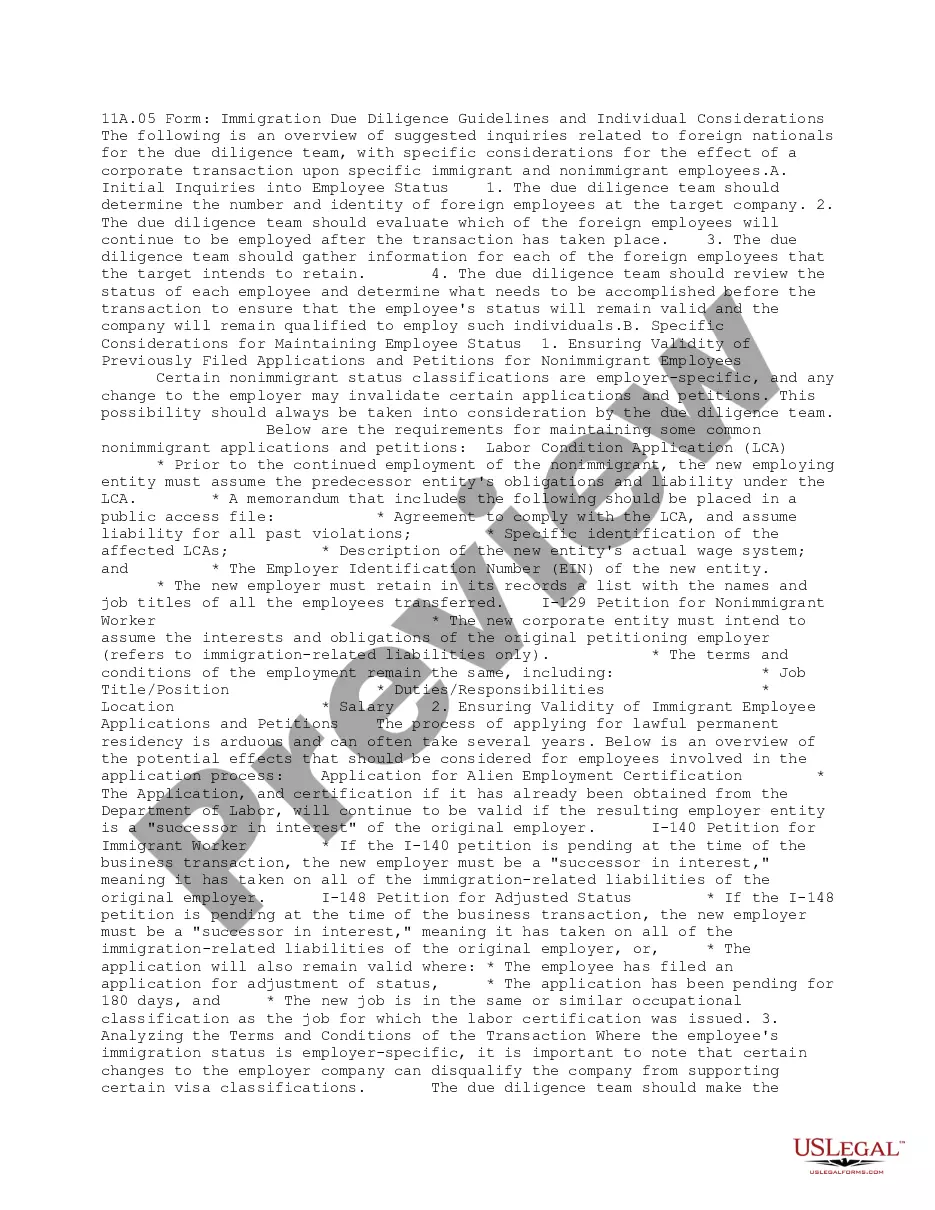
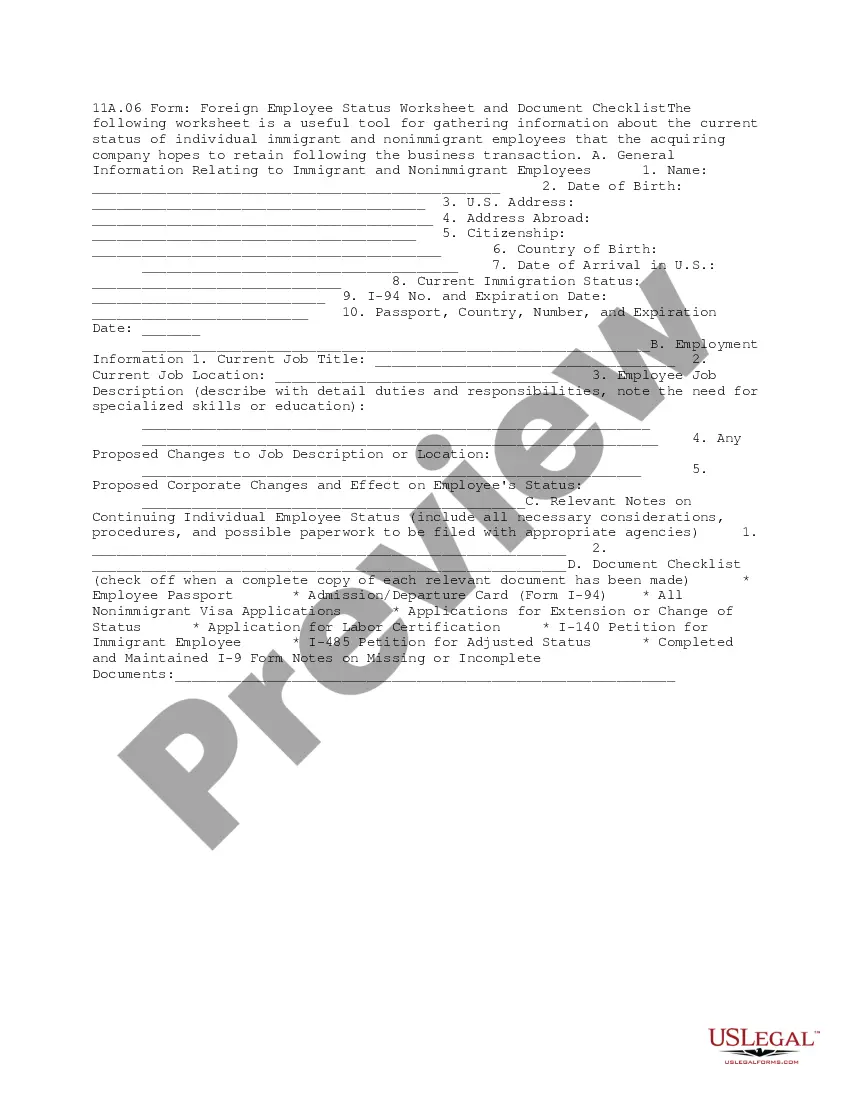
This Immigration Due Diligence Guidelines and Individual Considerations form provides an overview of essential inquiries related to foreign nationals in the context of corporate transactions. It highlights specific considerations for both immigrant and nonimmigrant employees, ensuring compliance with legal requirements during these transactions. This form is distinct from other immigration forms by focusing on the due diligence process necessary for maintaining employee status amidst corporate changes.
Key parts of this document
- Initial inquiries into employee status of foreign nationals.
- Considerations for maintaining nonimmigrant employee status during corporate changes.
- Guidelines for ensuring validity of immigrant employee applications and petitions.
- Analysis of the terms and conditions of the corporate transaction.
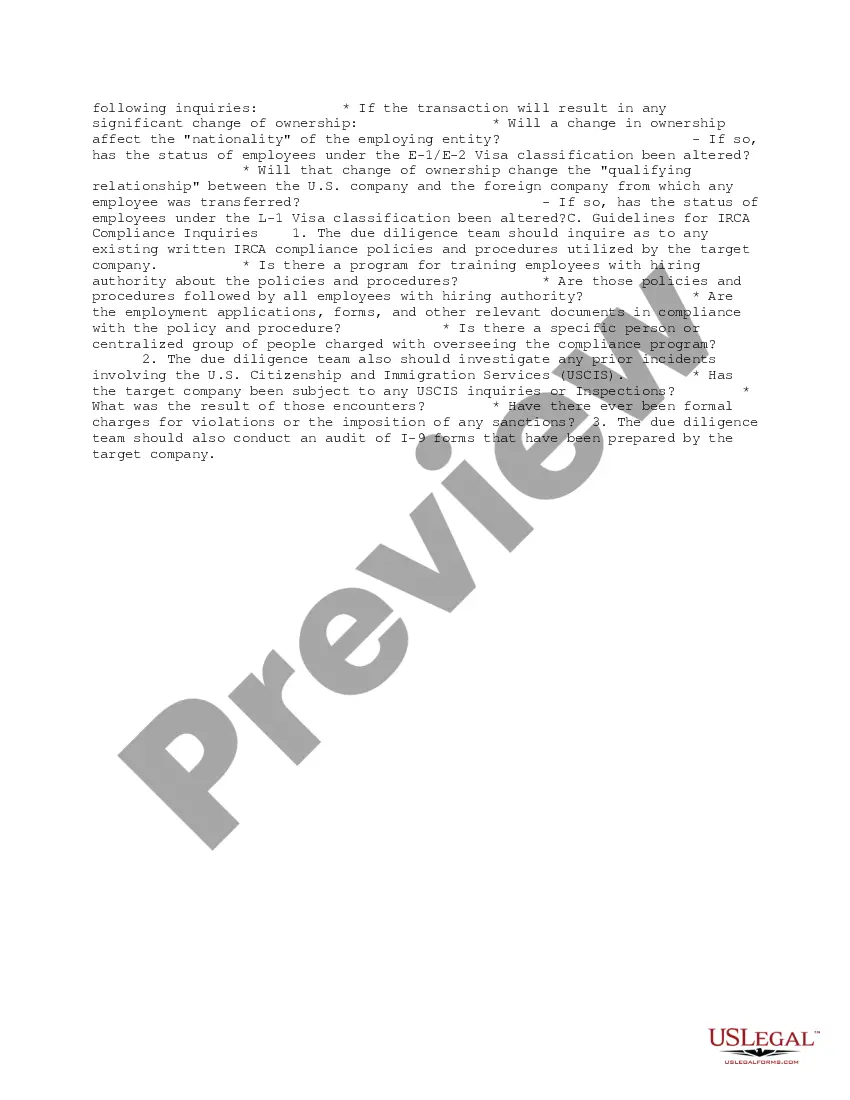
- IRCA compliance inquiries and previous incidents with USCIS.
When this form is needed
This form is needed when a company is undergoing a corporate transaction, such as a merger or acquisition, and needs to assess the implications for its foreign employees. It serves as a guide for the due diligence team to ensure compliance with immigration laws and regulations, helping to avoid potential legal issues regarding employee statuses.
Who needs this form
- Corporate legal teams conducting due diligence in M&A transactions.
- Human resources personnel managing foreign national employees.
- Employers looking to understand immigration status issues during corporate changes.
Steps to complete this form
- Identify the number and identities of all foreign employees at the target company.
- Evaluate which foreign employees will retain their positions after the transaction.
- Gather and document necessary information for each foreign employee intended for retention.
- Review and verify the immigration status of those employees to ensure validity before the transaction.
- Conduct inquiries regarding any existing IRCA compliance policies and past incidents with USCIS.
Is notarization required?
Notarization is generally not required for this form. However, certain states or situations might demand it. You can complete notarization online through US Legal Forms, powered by Notarize, using a verified video call available anytime.
Get your form ready online
Our built-in tools help you complete, sign, share, and store your documents in one place.
Make edits, fill in missing information, and update formatting in US Legal Forms—just like you would in MS Word.
Download a copy, print it, send it by email, or mail it via USPS—whatever works best for your next step.
Sign and collect signatures with our SignNow integration. Send to multiple recipients, set reminders, and more. Go Premium to unlock E-Sign.
If this form requires notarization, complete it online through a secure video call—no need to meet a notary in person or wait for an appointment.
We protect your documents and personal data by following strict security and privacy standards.

Make edits, fill in missing information, and update formatting in US Legal Forms—just like you would in MS Word.

Download a copy, print it, send it by email, or mail it via USPS—whatever works best for your next step.

Sign and collect signatures with our SignNow integration. Send to multiple recipients, set reminders, and more. Go Premium to unlock E-Sign.

If this form requires notarization, complete it online through a secure video call—no need to meet a notary in person or wait for an appointment.

We protect your documents and personal data by following strict security and privacy standards.
Typical mistakes to avoid
- Failing to update or confirm foreign employee status before the transaction.
- Neglecting to review employer-specific immigration applications.
- Not documenting compliance with IRCA policies and procedures.
Why complete this form online
- Convenience of downloading and filling out the form at your own pace.
- Editable templates that can be tailored to specific corporate needs.
- Access to legal forms drafted by licensed attorneys, ensuring reliability and accuracy.
Legal use & context
- This form is enforceable under federal immigration laws, and proper use can help avoid legal complications related to employee statuses during corporate transactions.
- It provides a framework for compliance with IRCA regulations, which can protect companies from sanctions.
Quick recap
- The form provides essential guidelines for ensuring immigration compliance during corporate transactions.
- Proper completion ensures the retention of foreign employees while adhering to legal requirements.
- Understanding the potential impact on employee status is critical for successful transitions during merges or acquisitions.
Looking for another form?





Form popularity
FAQ
Immigration means people moving from their native regions into another country to live. People who immigrate are called immigrants.Immigrant and emigrant both describe human migration. The same people are emigrants when they leave their own country or region, and immigrants when they arrive somewhere else.
To begin with, let's look at the four types of immigration status that exist: citizens, residents, non-immigrants and undocumented.
Immigration is the international movement of people to a destination country of which they are not natives or where they do not possess citizenship in order to settle as permanent residents or naturalized citizens.
In most cases, someone must sponsor you, or file an immigrant petition for you. Once the petition is approved, and there is a visa available in your category, you apply for an immigrant visa. You do this through a U.S. consulate abroad.
: one that immigrates: such as. a : a person who comes to a country to take up permanent residence. b : a plant or animal that becomes established in an area where it was previously unknown.
Family-based immigration. Employment-based immigration. Humanitarian immigration.
To begin with, let's look at the four types of immigration status that exist: citizens, residents, non-immigrants and undocumented. The characteristics of each status are explained below. These are people who were either born in the U.S. or who have become naturalized after three or five years as permanent residents.
Immigration is defined as the process of relocating permanently to a foreign country or the area in an airport or at the border where officials check the entry permits and documentation of people who are coming into a country. An example of immigration is relocating permanently from Mexico to the United States.
Immigration, process through which individuals become permanent residents or citizens of another country. Historically, the process of immigration has been of great social, economic, and cultural benefit to states.