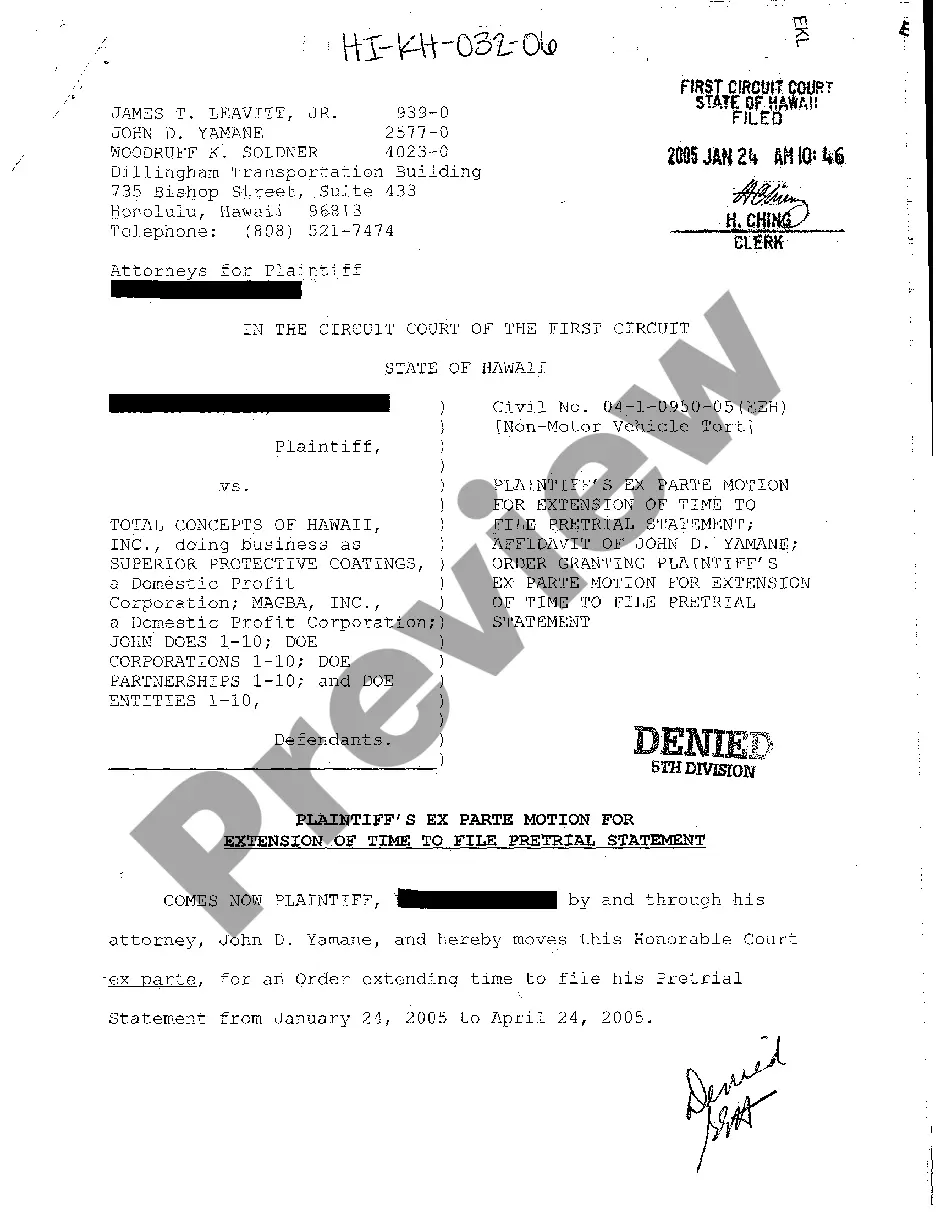
Complaint for Fall On Stairs
What is this form?
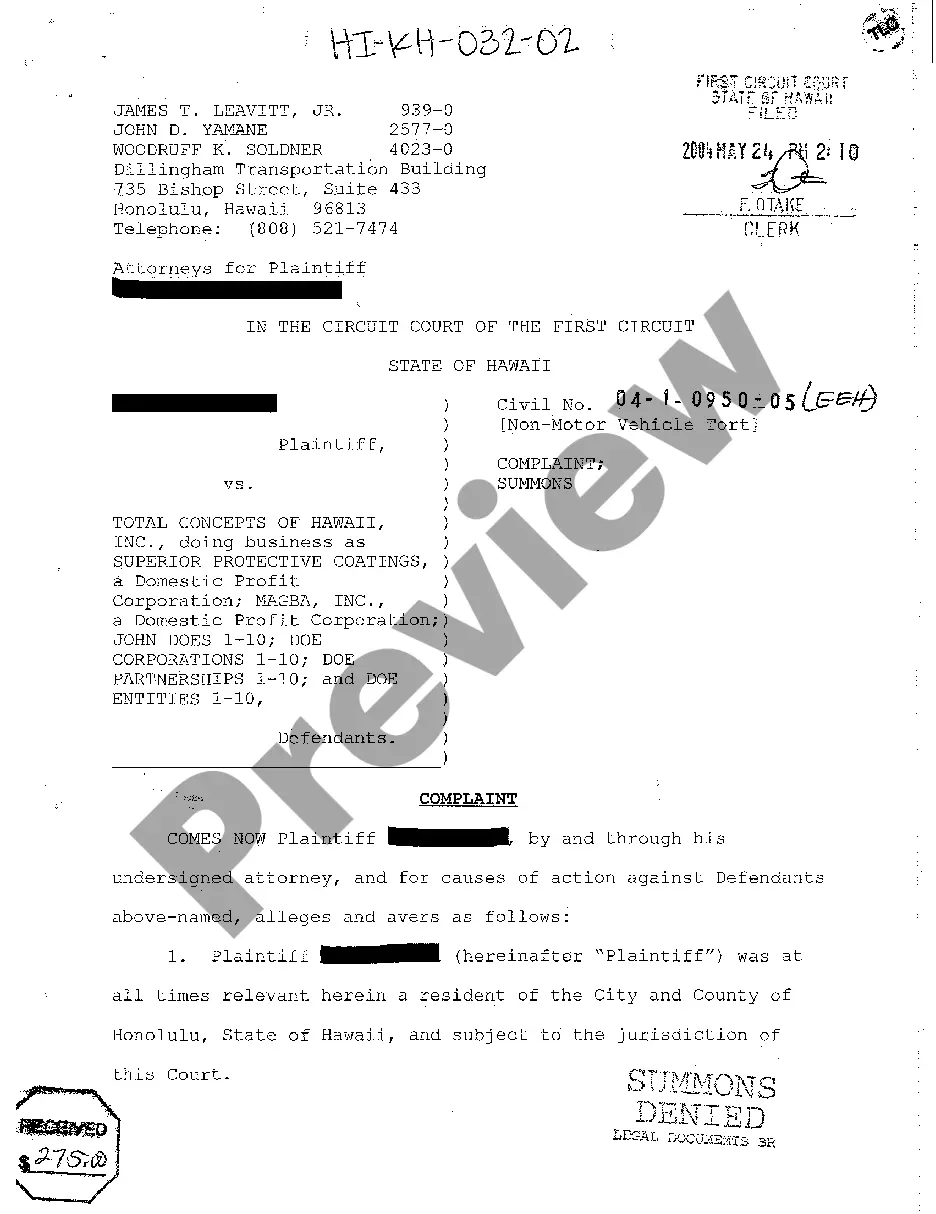
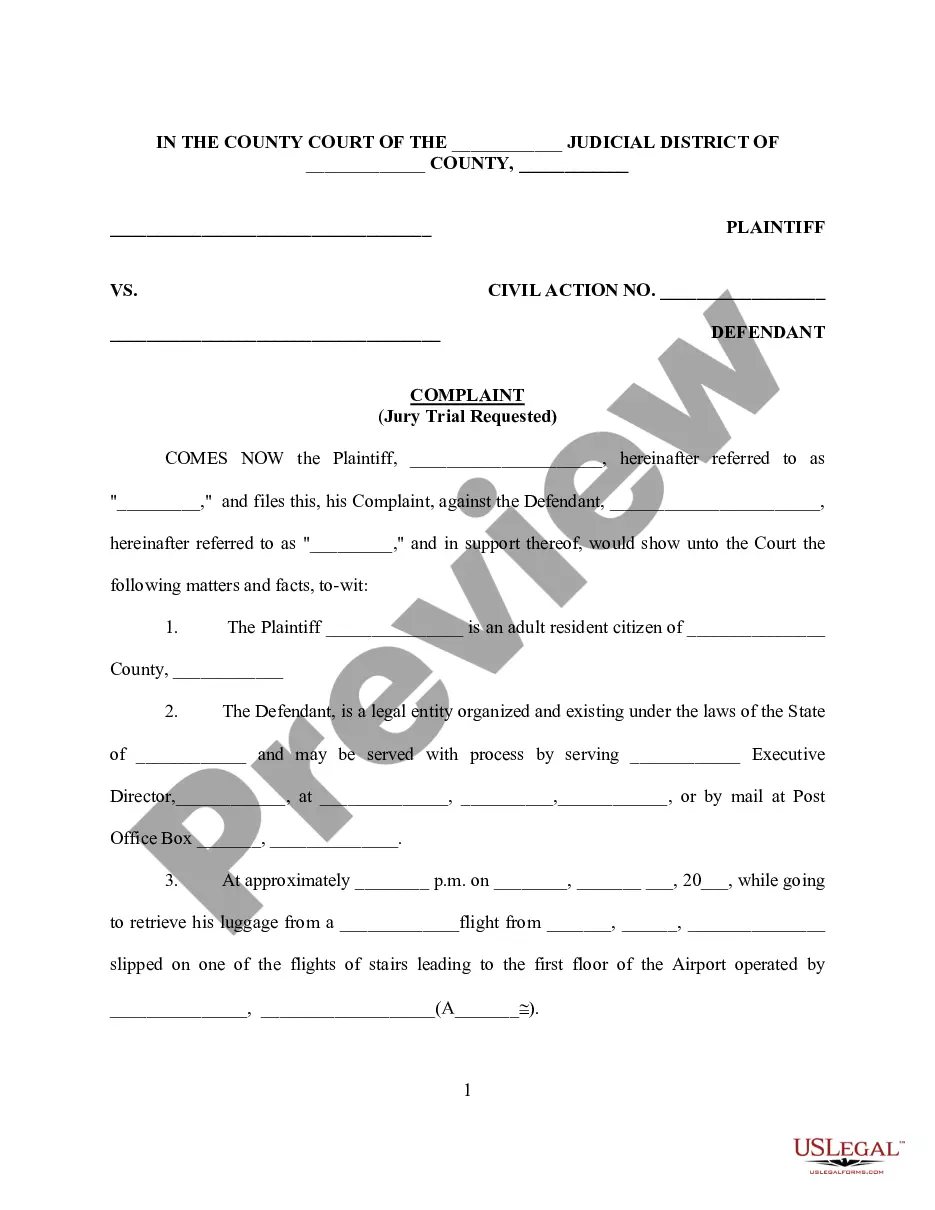
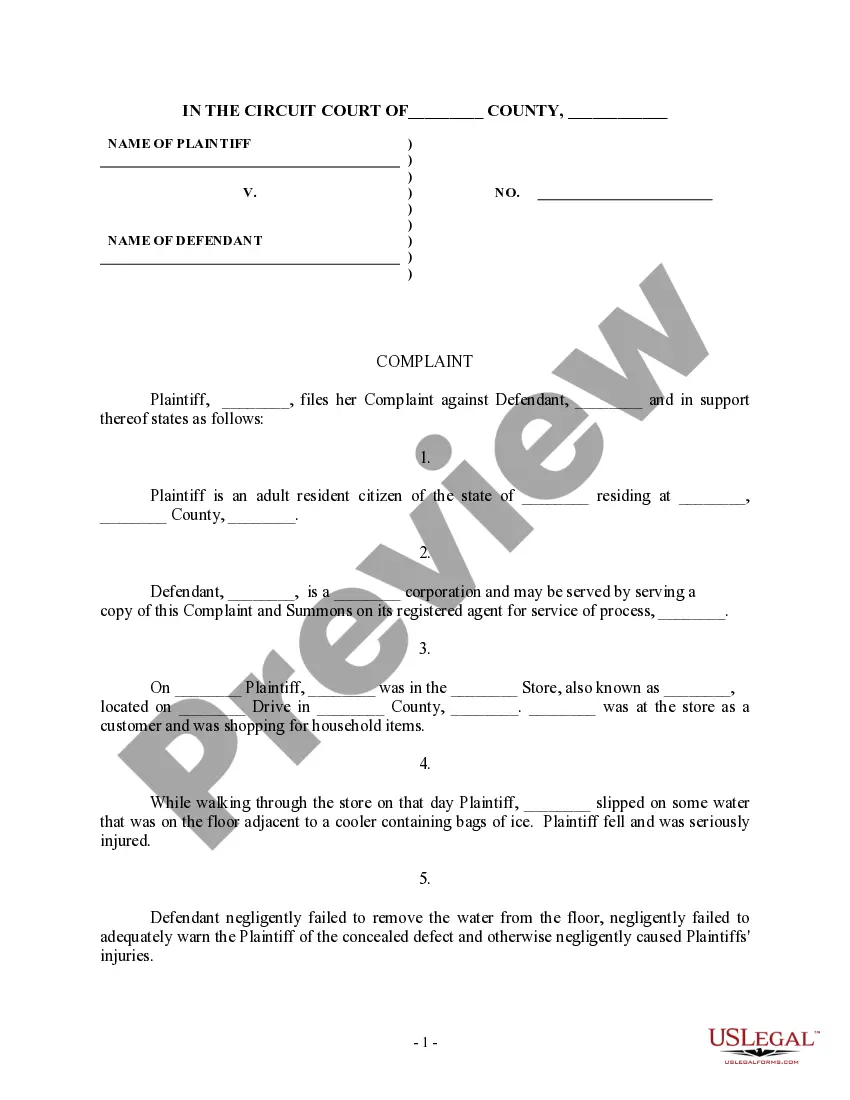
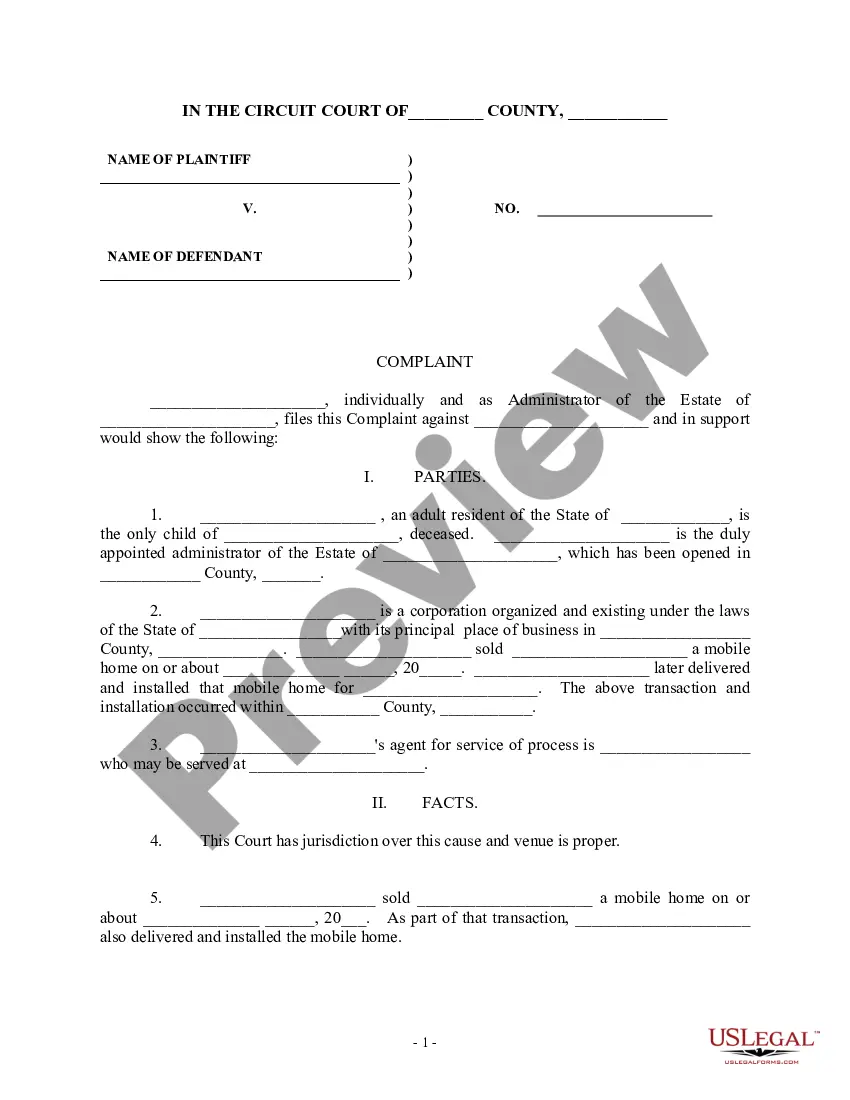
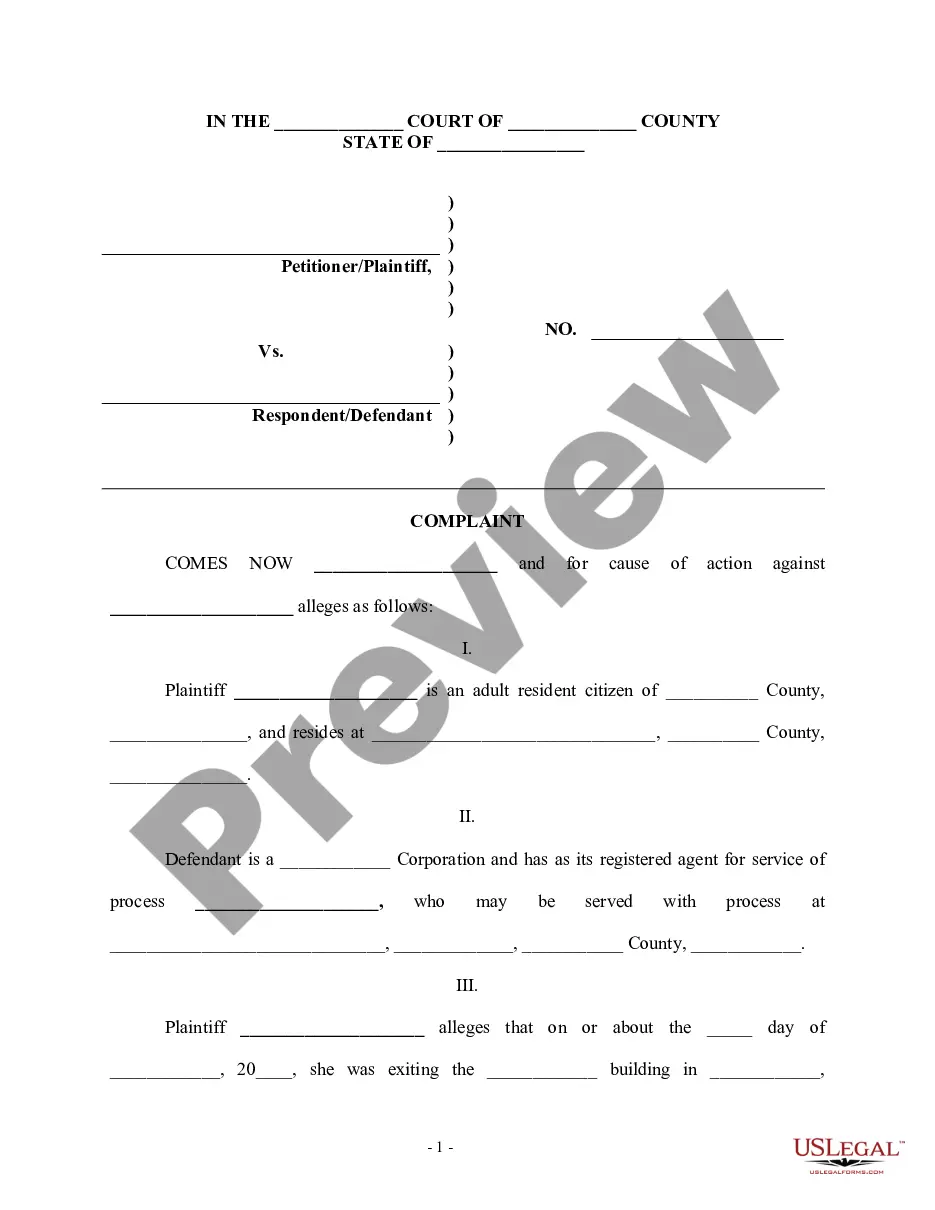
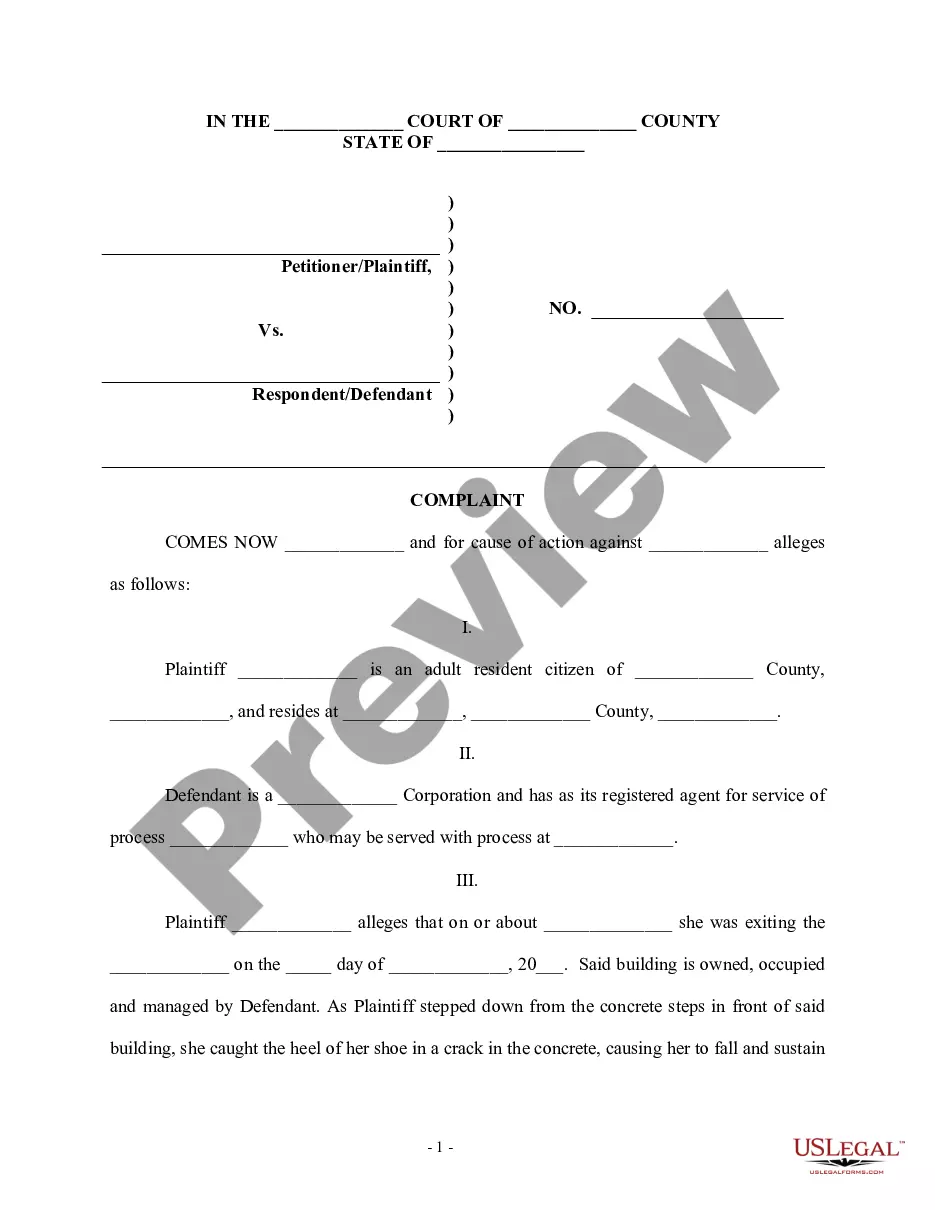
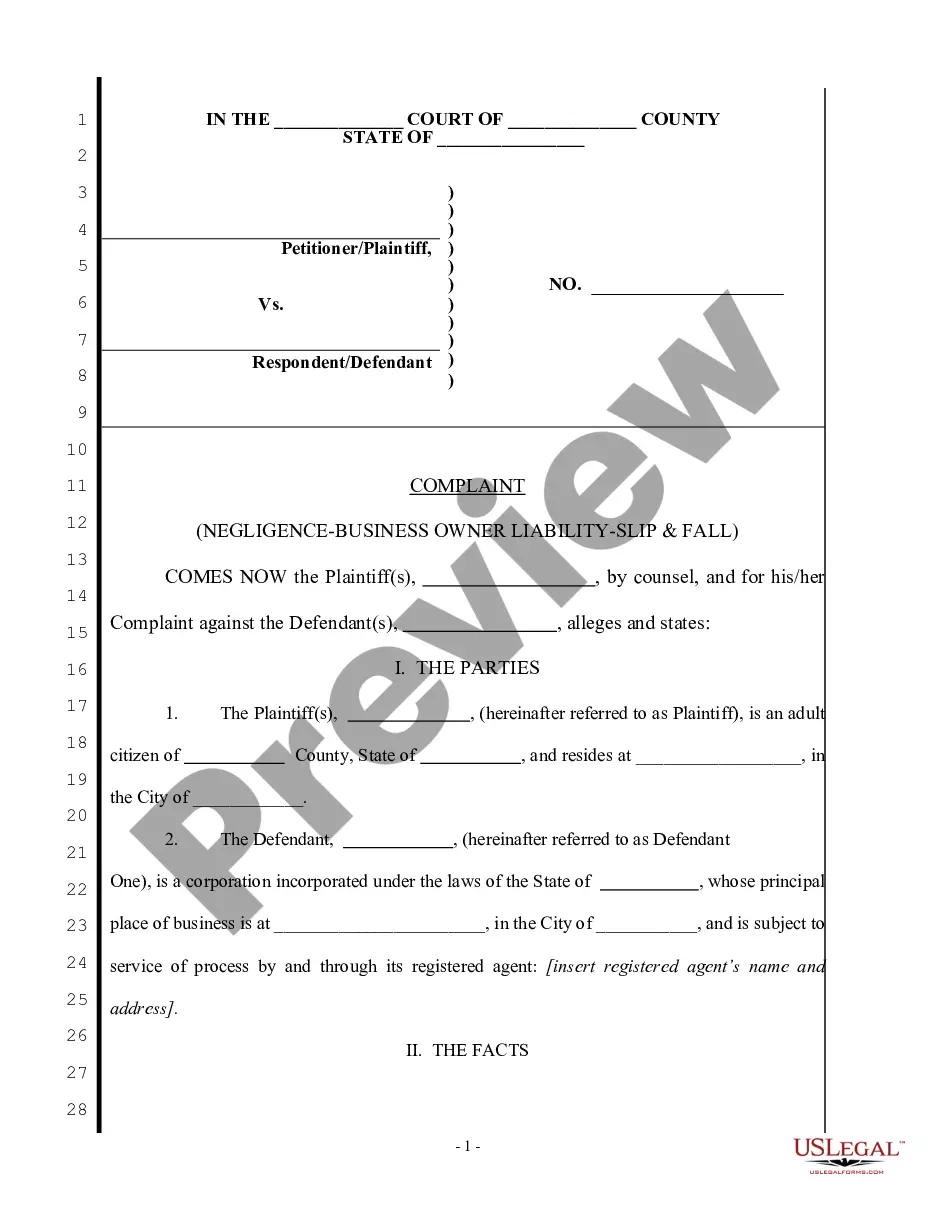
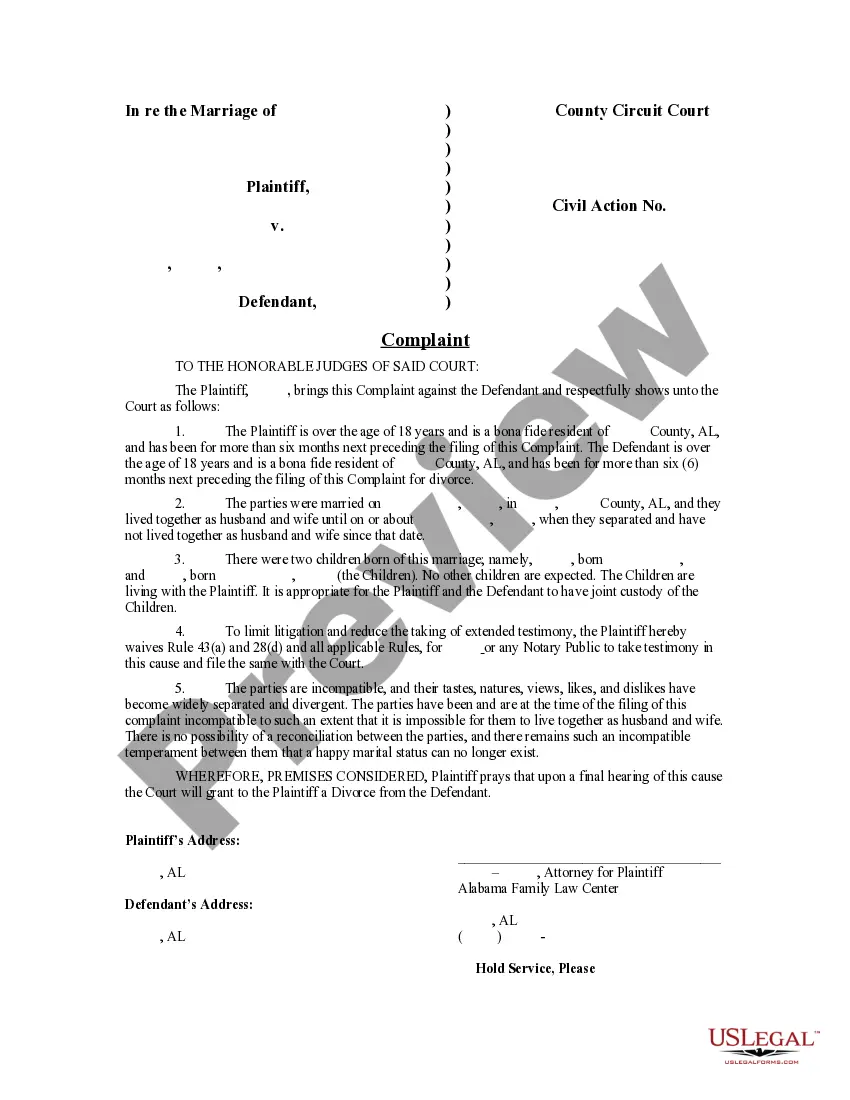
The Complaint for Fall On Stairs is a legal document enabling an individual to formally accuse a property owner, such as a business or facility, of negligence leading to an injury from a fall on stairs. This form details the circumstances of the accident, the injuries sustained, and the compensation sought. It is specifically tailored for cases related to falls on stairs, distinguishing it from general personal injury complaints by focusing on the specifics of stair-related incidents.
What’s included in this form
- Identification of the plaintiff and defendant with relevant contact information.
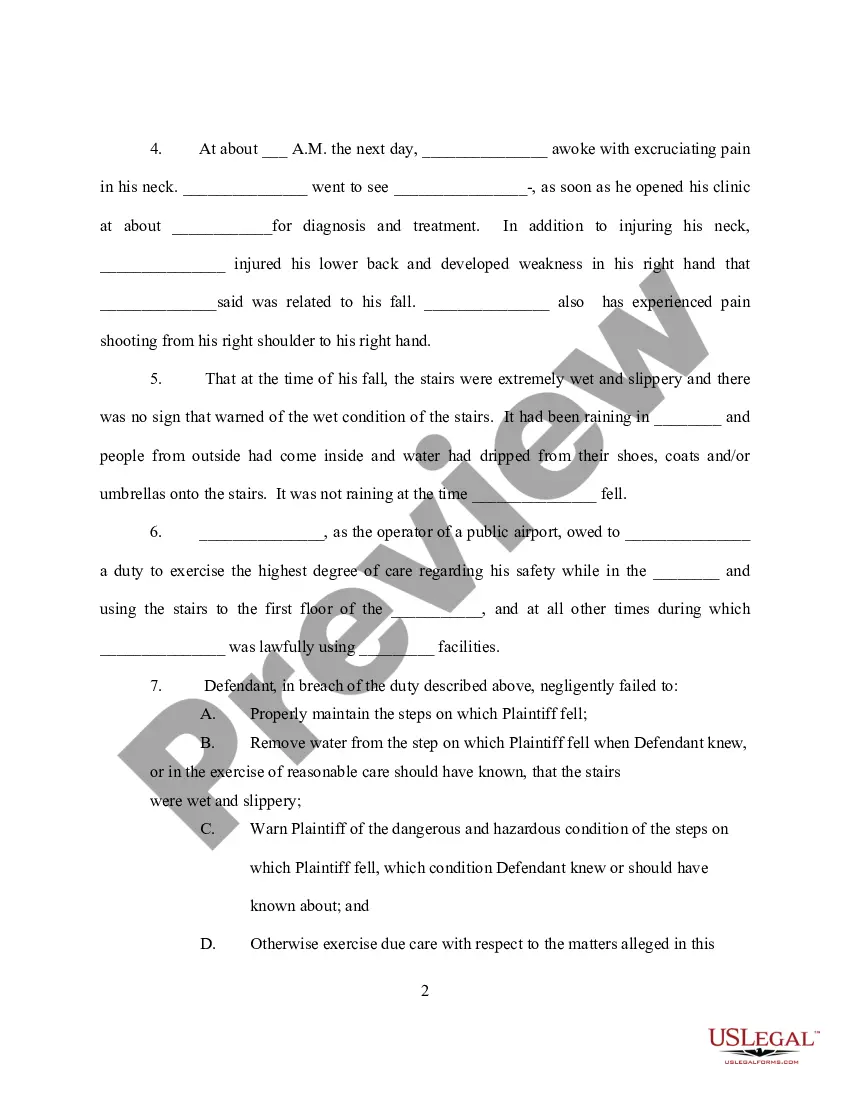
- Description of the accident, including date, time, location, and conditions of the stairs.
- Details of the injuries sustained as a result of the fall.
- Allegations of negligence and the duty of care owed by the defendant.
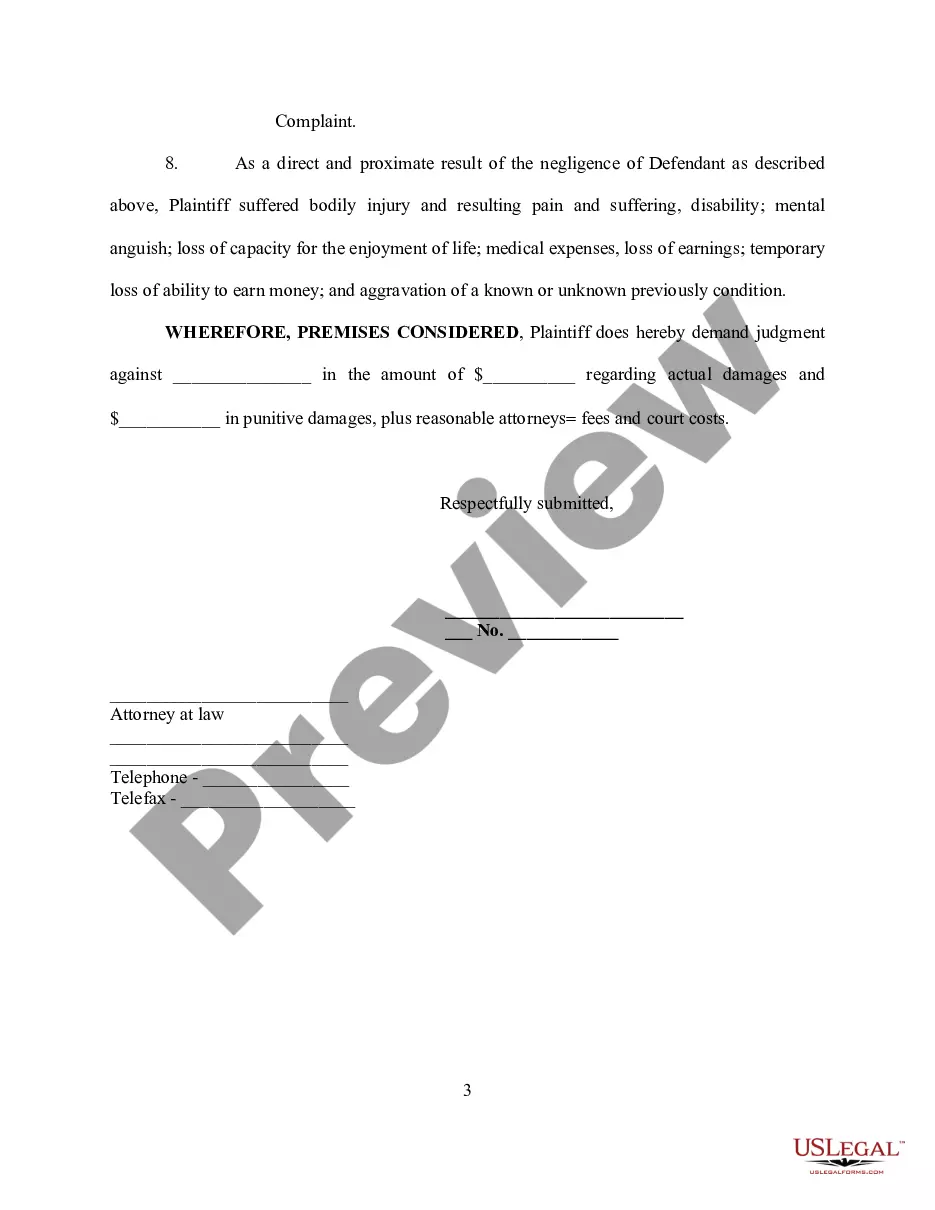
- Request for damages, including both actual and punitive damages.
- Signature and contact information for the attorney representing the plaintiff.
Common use cases
This form should be used when an individual has suffered an injury due to a fall on stairs in a public or private setting where negligence is suspected. Common scenarios include falls in airports, businesses, rental properties, or public buildings where the stairs were wet, poorly maintained, or lacked appropriate warning signs.
Who can use this document
- Individuals who have sustained injuries from a fall on stairs due to negligence.
- Lawyers representing clients in personal injury cases related to stair falls.
- Anyone seeking compensation for medical expenses, lost wages, and pain and suffering caused by stair-related accidents.
Instructions for completing this form
- Identify the parties by filling in the names and addresses of both the plaintiff and the defendant.
- Specify the details of the fall, including the time, date, and specific location where the accident occurred.
- Describe the nature of your injuries clearly and concisely.
- Articulate the basis for the negligence claim against the defendant.
- Indicate the amount of damages you are seeking in terms of compensation for your injuries.
- Have the form signed by your attorney and include their contact information for future correspondence.
Is notarization required?
This form usually doesn’t need to be notarized. However, local laws or specific transactions may require it. Our online notarization service, powered by Notarize, lets you complete it remotely through a secure video session, available 24/7.
Get your form ready online
Our built-in tools help you complete, sign, share, and store your documents in one place.
Make edits, fill in missing information, and update formatting in US Legal Forms—just like you would in MS Word.
Download a copy, print it, send it by email, or mail it via USPS—whatever works best for your next step.
Sign and collect signatures with our SignNow integration. Send to multiple recipients, set reminders, and more. Go Premium to unlock E-Sign.
If this form requires notarization, complete it online through a secure video call—no need to meet a notary in person or wait for an appointment.
We protect your documents and personal data by following strict security and privacy standards.

Make edits, fill in missing information, and update formatting in US Legal Forms—just like you would in MS Word.

Download a copy, print it, send it by email, or mail it via USPS—whatever works best for your next step.

Sign and collect signatures with our SignNow integration. Send to multiple recipients, set reminders, and more. Go Premium to unlock E-Sign.

If this form requires notarization, complete it online through a secure video call—no need to meet a notary in person or wait for an appointment.

We protect your documents and personal data by following strict security and privacy standards.
Mistakes to watch out for
- Failing to provide complete and accurate information about the plaintiff and defendant.
- Omitting critical details about the accident or the conditions of the stairs.
- Not specifying the exact damages being sought.
- Overlooking the need for proper legal representation before filing the complaint.
Why complete this form online
- Convenient download option saves time and effort compared to traditional methods.
- Ability to fill in the form electronically, ensuring clarity and ease of use.
- Access to legal form templates drafted by licensed attorneys for accuracy and compliance.
Looking for another form?


Form popularity
FAQ
Sprains and strains (32.3% according to the above study) Fractures (19.3%) such as to the face, hands and wrists. Spinal cord damage. Deep lacerations. Head and neck injuries (21.6%) Injury to the brain. Injuries to the back or neck. Broken bones.
Sprains and strains (32.3% according to the above study) Fractures (19.3%) such as to the face, hands and wrists. Spinal cord damage. Deep lacerations. Head and neck injuries (21.6%) Injury to the brain. Injuries to the back or neck. Broken bones.
Place a cold compress or ice pack on any bumps or bruises. Give acetaminophen or ibuprofen for pain if your child is alert. Let your child rest, as needed, for the next few hours. Watch your child closely for the next 24 hours for any unusual symptoms or behavior.
The following are some red flags that you should seek medical attention as soon as possible, whether you hit your head in a falling accident or sustain a potential injury to another body part: Severe or lingering pain. Headaches. Obvious swelling.
Can You Sue for Falling Down the Stairs?If you were clumsy on a perfectly safe set of stairs, then you cannot hold the property owner liable for your injuries. However, if there was a hazardous stair condition that caused the fall and your injuries, you should talk with a premises liability lawyer about your options.
If your employer neglected any one of these aspects and you fell down stairs at work as a result, you may be eligible to file a compensation claim. For example, you can claim compensation for your injuries if there was no hazard sign warning you that the stairs were wet or there was an oil spills on the stairs.
Prevent overcrowding around the casualty; Make space so that he or she can breathe better. Do not move the casualty unless there are life-threatening hazards; He or she may have suffered a neck or spinal injury from the fall.
Seek medical help immediately, if someone is experiencing a severe headache, nausea and vomiting, or confusion. Some injuries may cause severe bleeding that won't stop after at least 15 minutes of pressure or there may be an obvious fracture.