Minnesota Discovery Interrogatories for Divorce Proceeding for either Plaintiff or Defendant - Another Form
Understanding this form
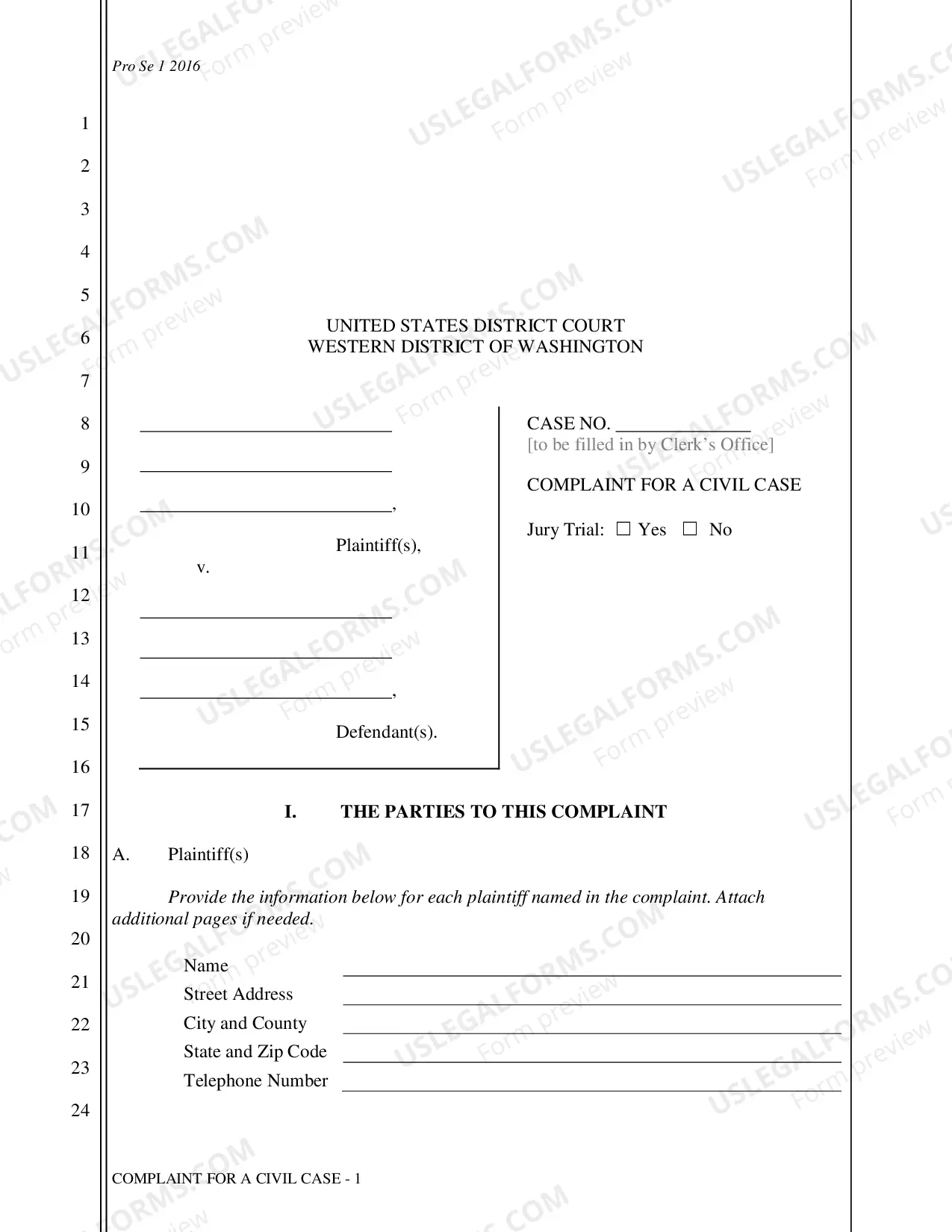
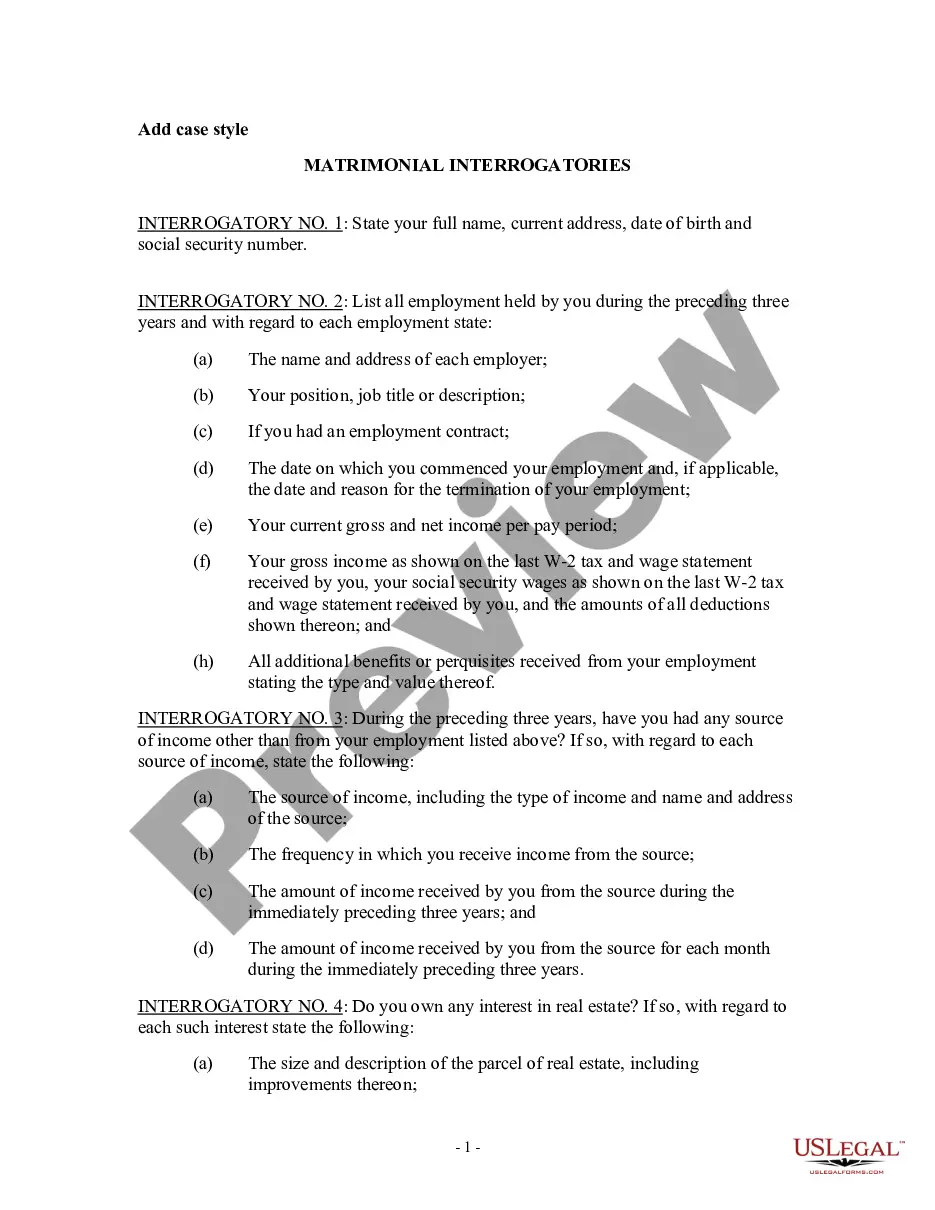
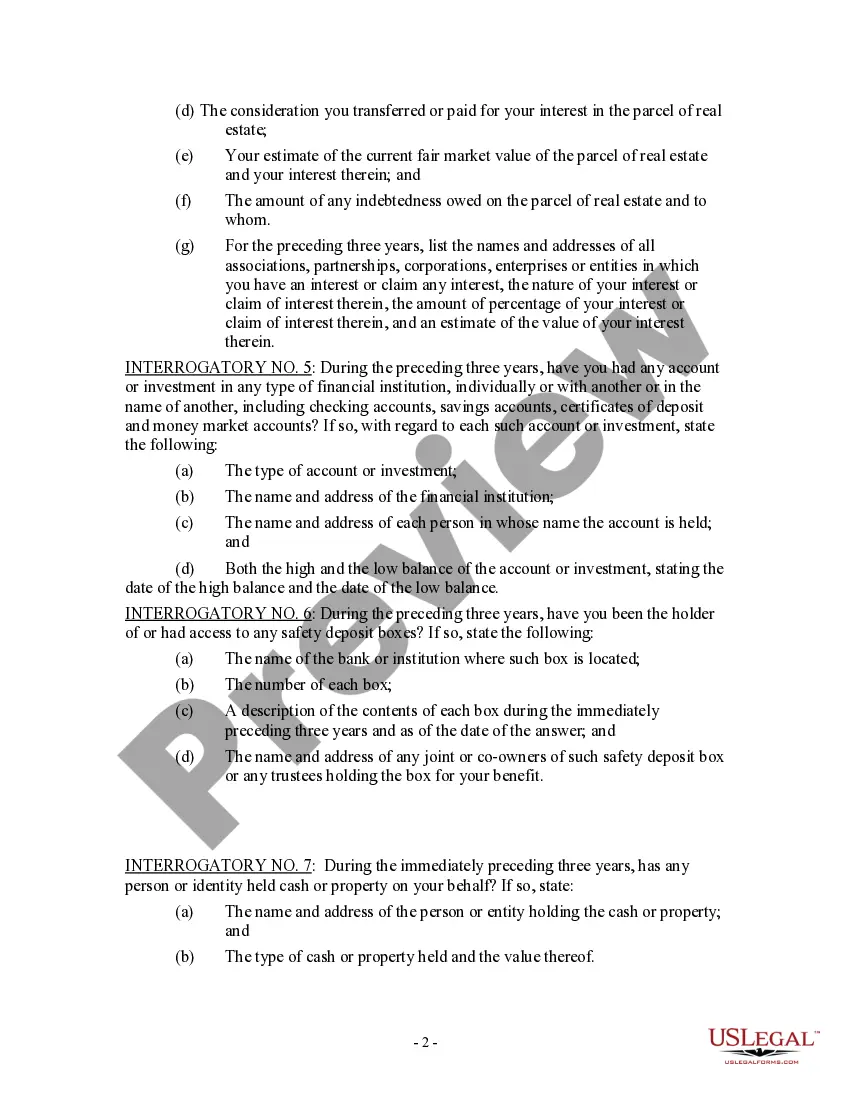
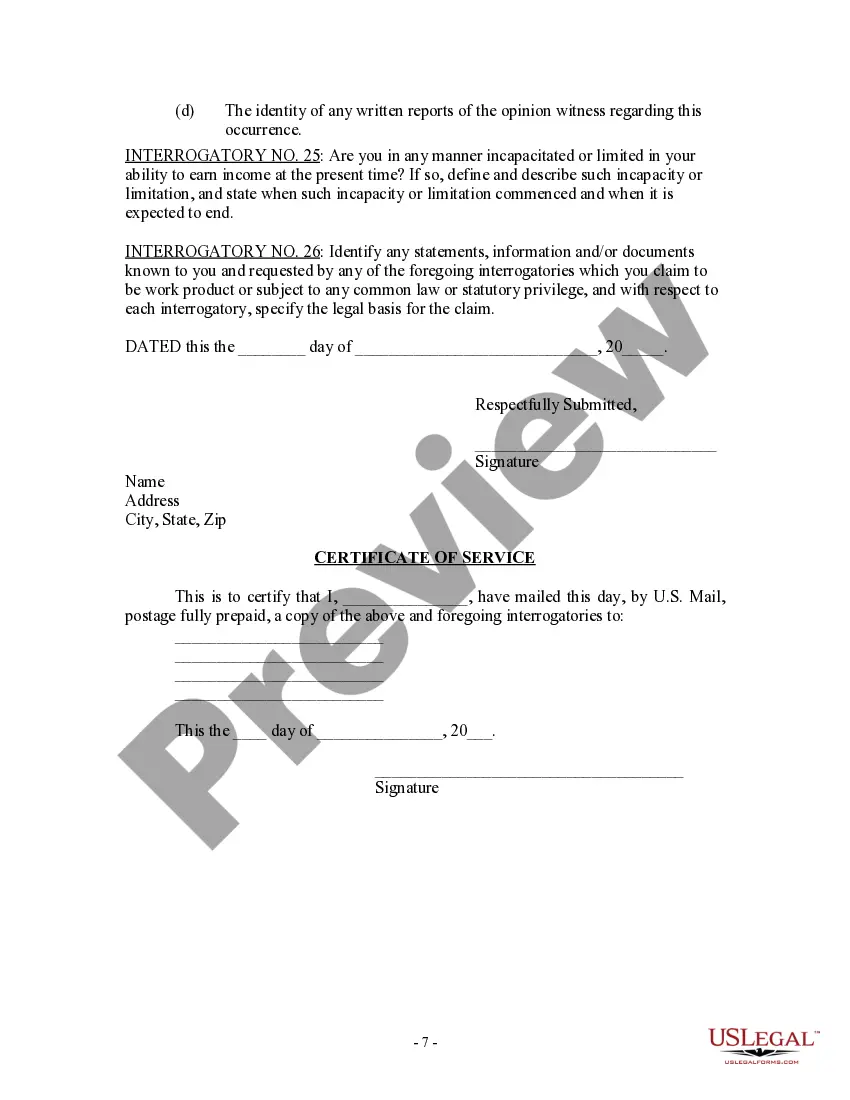
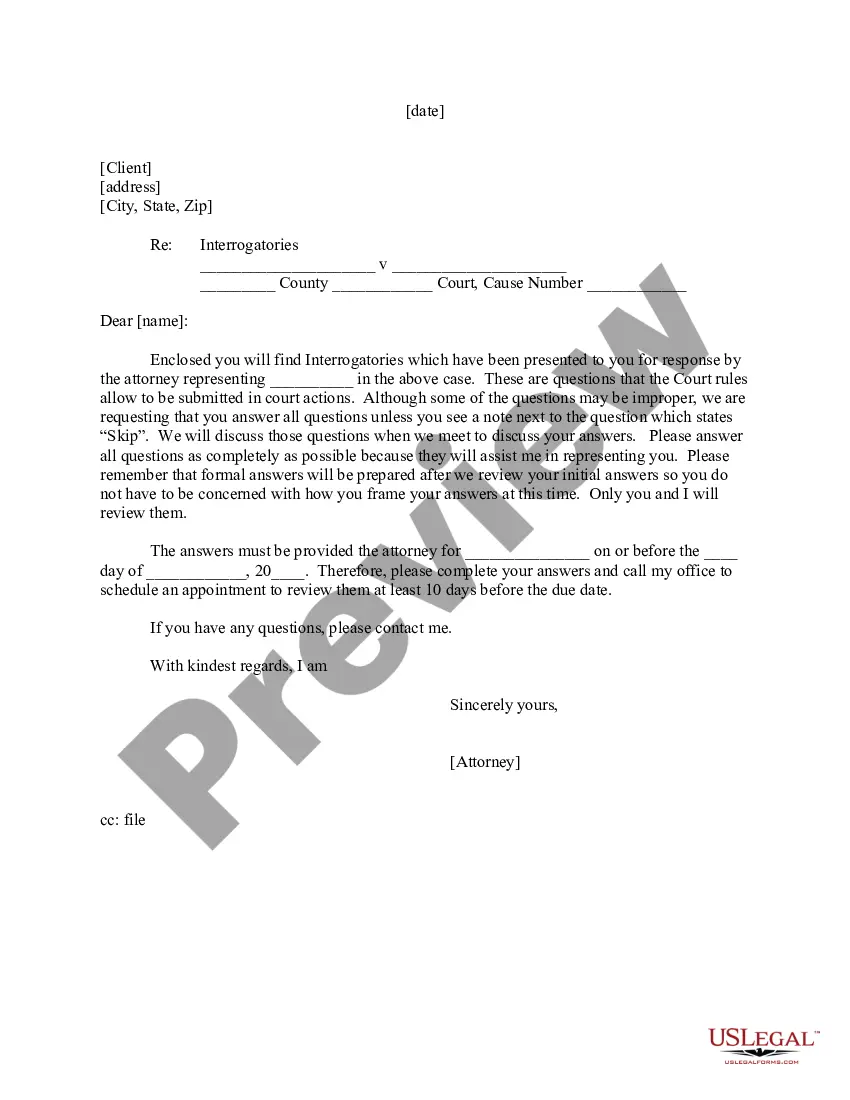
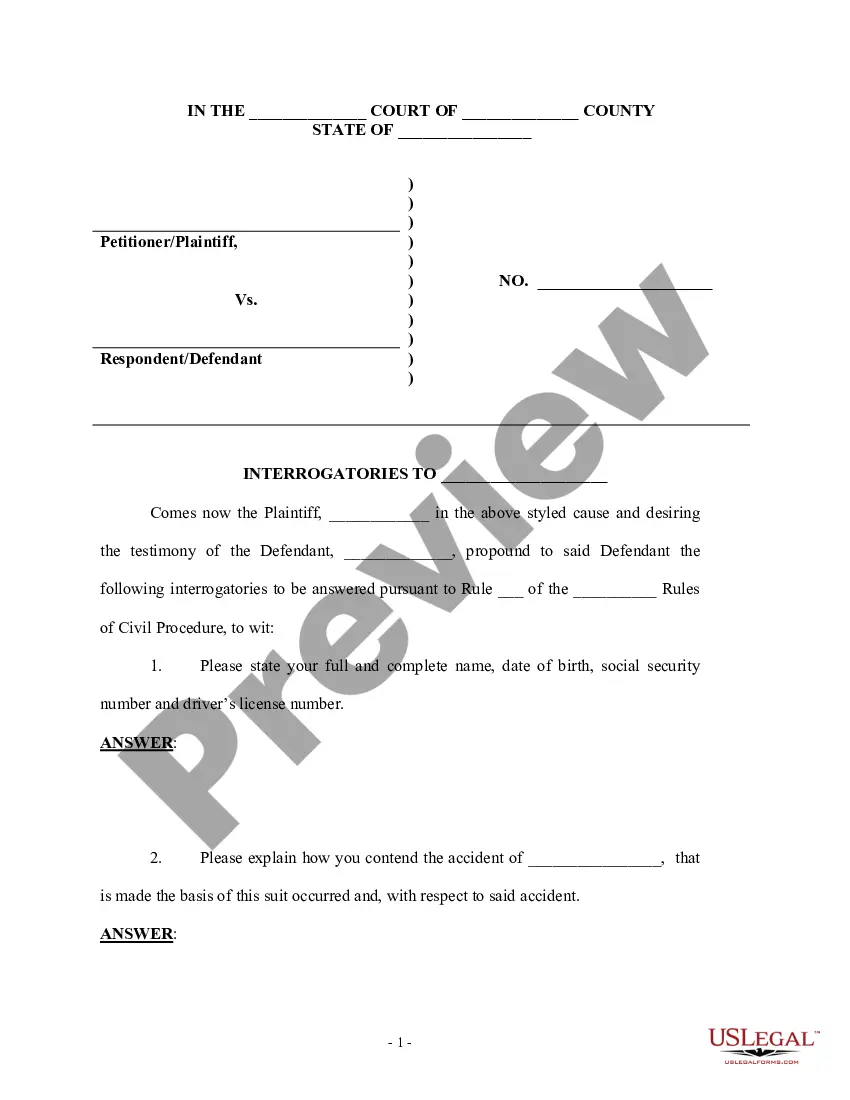
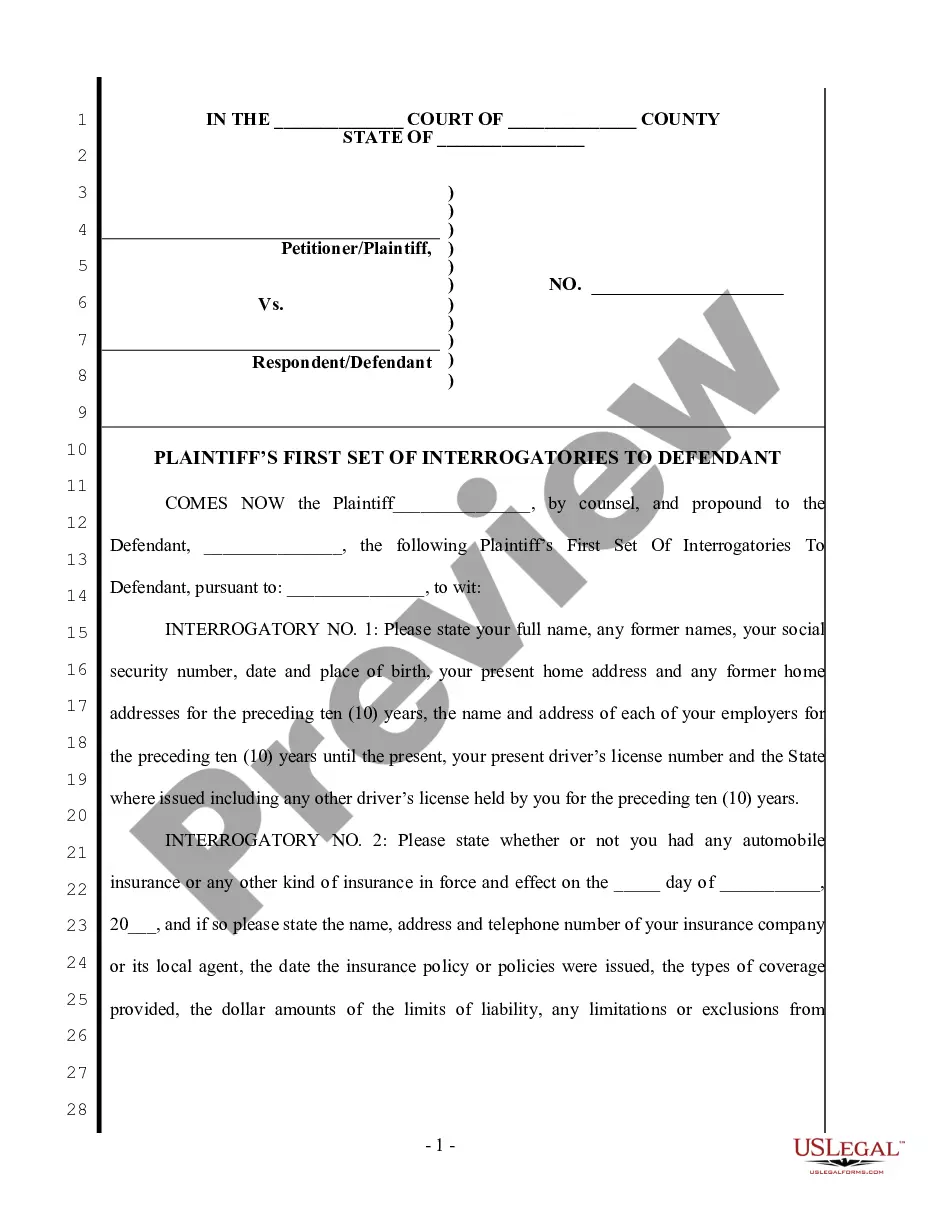
The Discovery Interrogatories for Divorce Proceeding is a legal document used in divorce cases to gather detailed information from the other party, whether the Plaintiff or Defendant. This form allows the requesting party to ask specific questions and request the production of relevant documents, facilitating transparency in the divorce process. Unlike similar forms, this document includes a comprehensive set of interrogatories tailored to a divorce proceeding context.
Main sections of this form
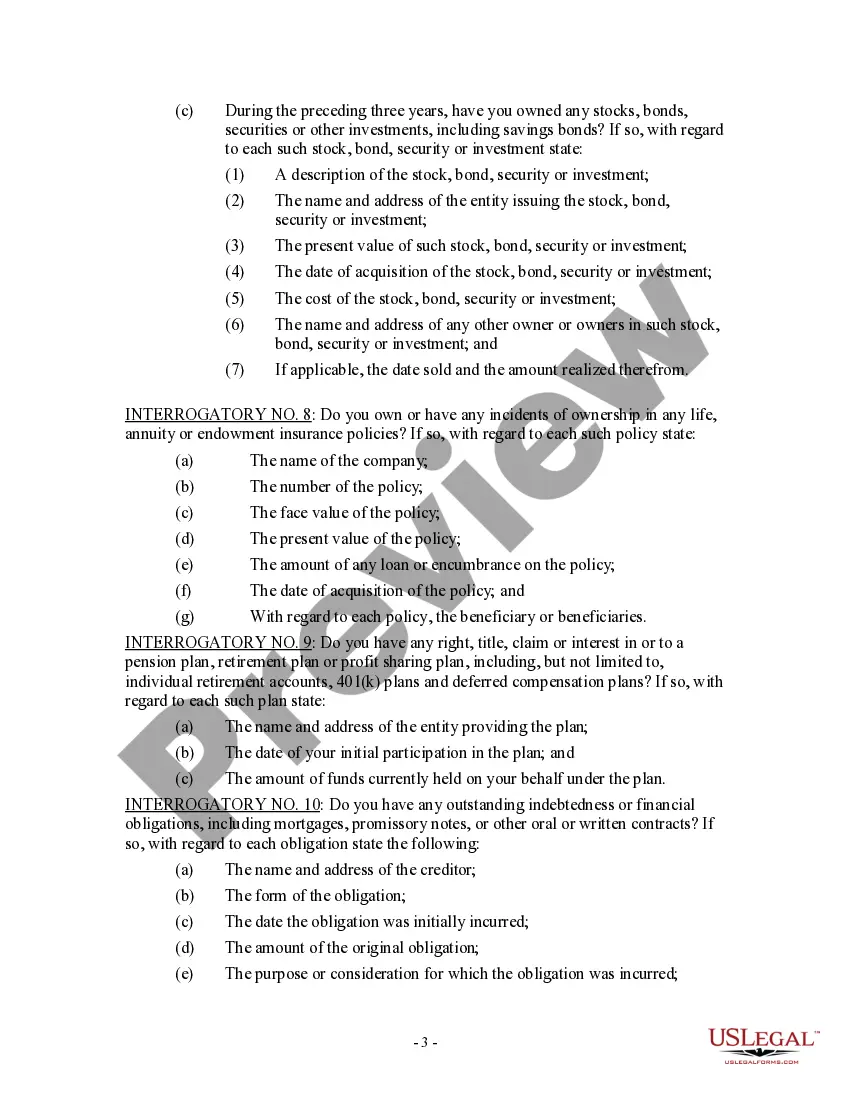
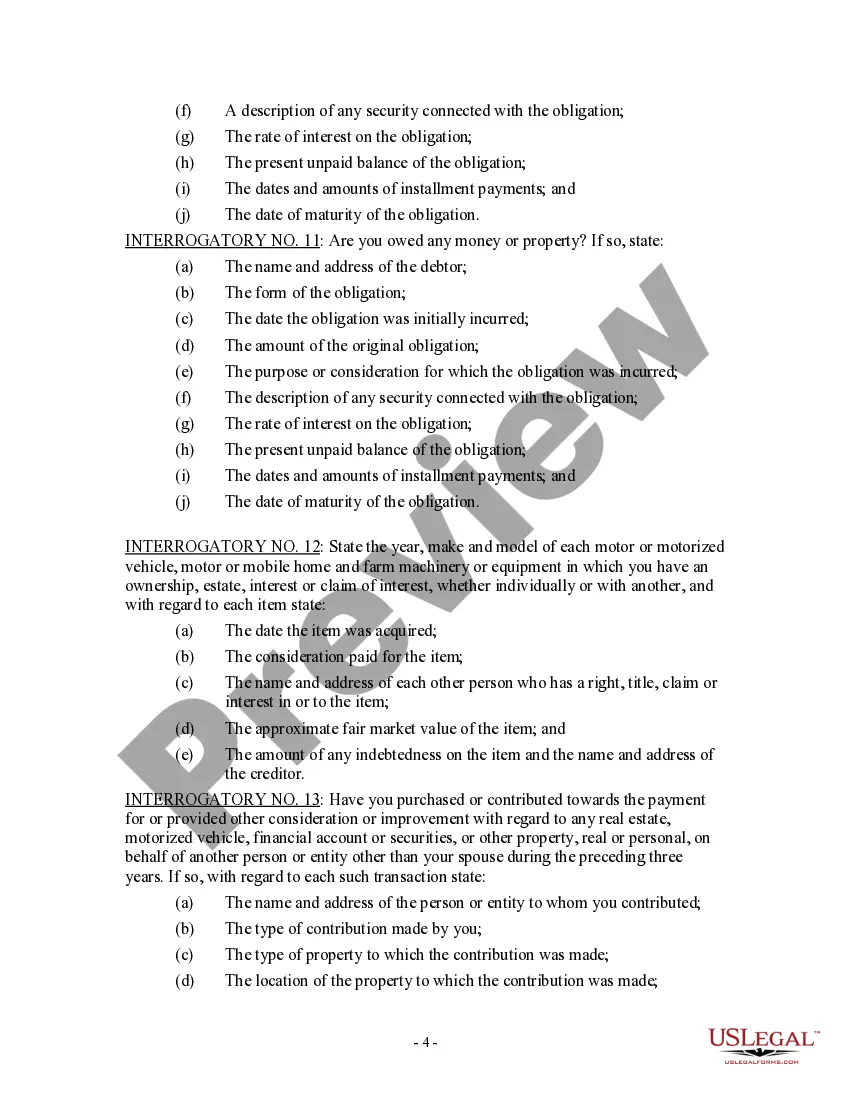
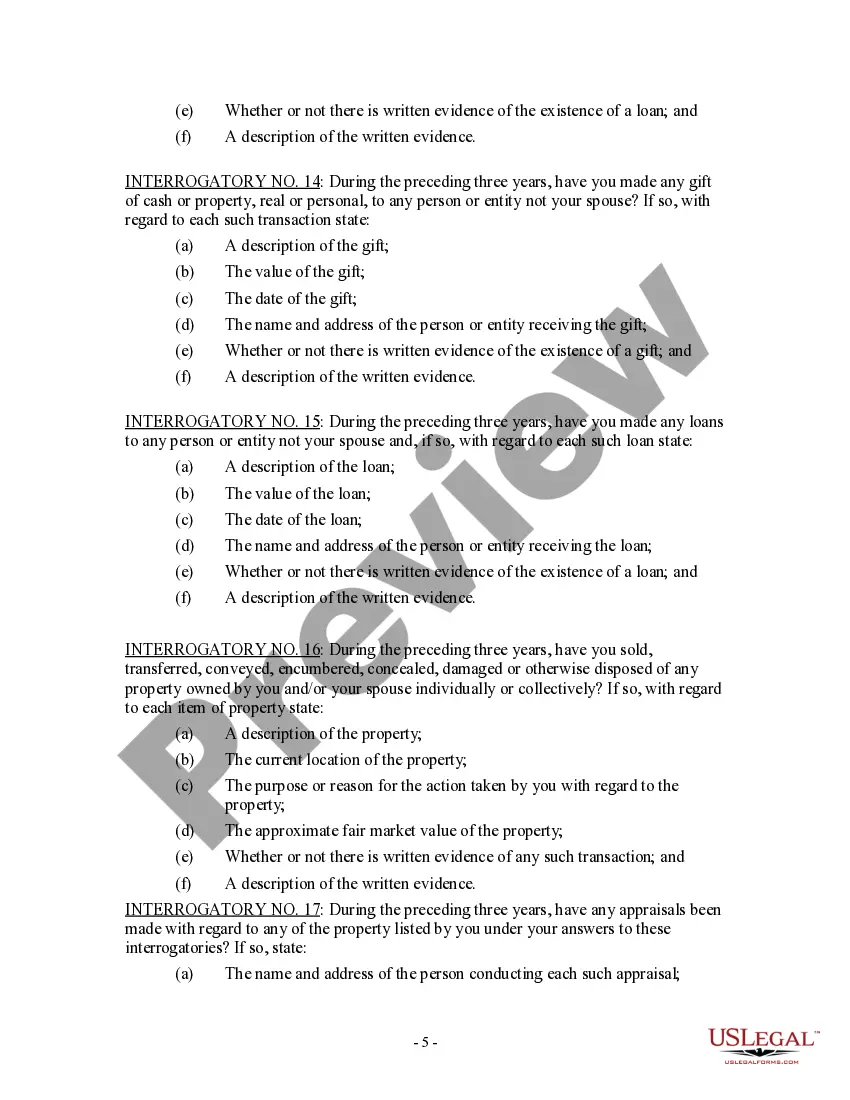
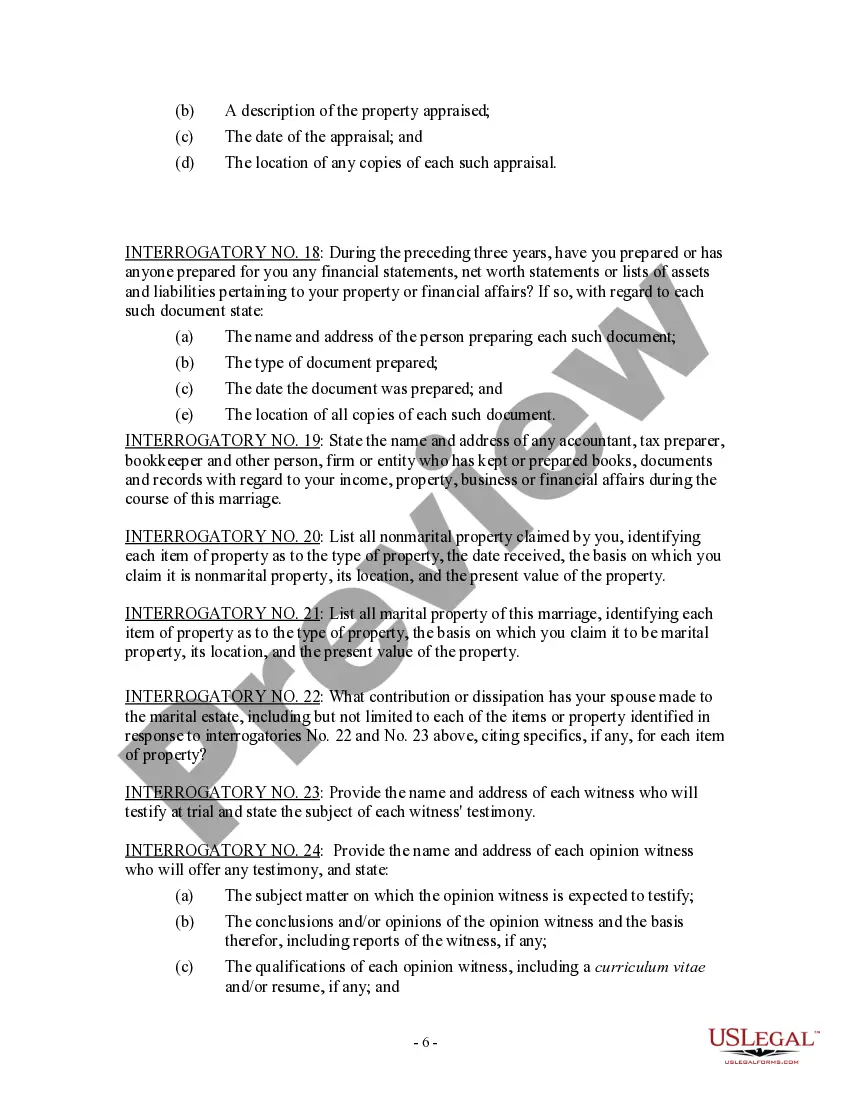
- Full name, current address, date of birth, and social security number of the respondent.
- Employment history over the previous three years, detailing job titles, income, and contractual obligations.
- Ownership interests in real estate and other valuable assets.
- Details of any financial accounts, investments, or safety deposit boxes held.
- Outstanding debts, obligations, and claims against or for the respondent.
- Questions related to any gifts or loans made during the marriage.
Common use cases
This form should be used during divorce proceedings when one party needs to gather information from the other. It is particularly useful when assessing the financial situation of both parties, determining asset valuations, and ensuring equitable distribution of marital property. This form facilitates the discovery process, which is critical for supporting claims and defenses in court.
Who should use this form
This form is intended for:
- The Plaintiff in a divorce action seeking information from the Defendant.
- The Defendant needing to respond to the interrogatories posed by the Plaintiff.
- Legal representatives of either party handling divorce cases.
How to prepare this document
- Begin by identifying the parties involved in the divorce.
- Answer each interrogatory succinctly, ensuring accuracy and completeness.
- If applicable, provide documentation as requested along with your answers.
- Review your responses to ensure all relevant information is included.
- Sign and date the form before submitting it to the court.
- Serve a copy of the completed form to the other party or their legal representative.
Is notarization required?
Notarization is not commonly needed for this form. However, certain documents or local rules may make it necessary. Our notarization service, powered by Notarize, allows you to finalize it securely online anytime, day or night.
Get your form ready online
Our built-in tools help you complete, sign, share, and store your documents in one place.
Make edits, fill in missing information, and update formatting in US Legal Forms—just like you would in MS Word.
Download a copy, print it, send it by email, or mail it via USPS—whatever works best for your next step.
Sign and collect signatures with our SignNow integration. Send to multiple recipients, set reminders, and more. Go Premium to unlock E-Sign.
If this form requires notarization, complete it online through a secure video call—no need to meet a notary in person or wait for an appointment.
We protect your documents and personal data by following strict security and privacy standards.

Make edits, fill in missing information, and update formatting in US Legal Forms—just like you would in MS Word.

Download a copy, print it, send it by email, or mail it via USPS—whatever works best for your next step.

Sign and collect signatures with our SignNow integration. Send to multiple recipients, set reminders, and more. Go Premium to unlock E-Sign.

If this form requires notarization, complete it online through a secure video call—no need to meet a notary in person or wait for an appointment.

We protect your documents and personal data by following strict security and privacy standards.
Common mistakes to avoid
- Failing to answer all interrogatories, resulting in incomplete responses.
- Neglecting to provide supporting documentation when requested by an interrogatory.
- Using vague or unclear language in responses, which may lead to misunderstandings.
- Missing deadlines for submitting interrogatories or responses.
Why use this form online
- Convenience: Quickly download and complete the form from home.
- Editability: Easily customize questions to fit your specific case needs.
- Reliability: Access professionally drafted templates that comply with legal standards.
What to keep in mind
- The form is essential for gathering information in a divorce proceeding.
- Customization is permitted to suit your case requirements.
- Timeliness and accuracy in filing are crucial for the process.
Looking for another form?
Form popularity
FAQ
The 63.03 rule of civil procedure in Minnesota governs the discovery process in civil cases, including divorce proceedings. This rule outlines the obligations of both parties to disclose relevant information and documents, which is essential for fair legal representation. By following this rule, parties can utilize Minnesota Discovery Interrogatories for Divorce Proceeding for either Plaintiff or Defendant - Another Form to ensure compliance. This approach fosters a more organized and efficient process, ultimately benefiting your case.
A motion for discovery in a divorce case is a formal request to obtain information and documents from the other party. This process is crucial as it allows both the plaintiff and defendant to gather necessary evidence, ensuring transparency during the proceedings. Utilizing Minnesota Discovery Interrogatories for Divorce Proceeding for either Plaintiff or Defendant - Another Form can streamline this process. By using these forms, you can effectively request specific information that may support your case.
The purpose of form interrogatories is to gather essential information in a structured format during the divorce process. Specifically, the Minnesota Discovery Interrogatories for Divorce Proceeding for either Plaintiff or Defendant - Another Form allows parties to explore financial, personal, and legal aspects relevant to the case. This information helps in making informed decisions and preparing for court proceedings. Utilizing platforms like US Legal Forms can simplify access to these forms and ensure you meet all requirements.
When answering interrogatories for divorce, focus on delivering precise and truthful information in response to the Minnesota Discovery Interrogatories for Divorce Proceeding for either Plaintiff or Defendant - Another Form. Address each question individually and avoid providing extraneous details that do not pertain to the questions. If you're unsure about how to proceed, US Legal Forms offers valuable resources to help you navigate this process effectively.
Filling out interrogatories involves understanding the specific questions asked in the Minnesota Discovery Interrogatories for Divorce Proceeding for either Plaintiff or Defendant - Another Form. Take your time to reflect on each question and write comprehensive answers. Remember, clarity is key; avoid vague responses to ensure effective communication. US Legal Forms can provide the necessary tools to help you complete this process smoothly.
To fill out an interrogatories form, start by accessing the Minnesota Discovery Interrogatories for Divorce Proceeding for either Plaintiff or Defendant - Another Form. Read each question carefully and provide clear, honest answers. Ensure you include all necessary information to support your case. If you need assistance, consider using US Legal Forms for user-friendly templates and guidance.
In Minnesota, a party is generally allowed to serve up to 30 written interrogatories without seeking permission from the court. This limit encourages focused and relevant inquiries for your case. By strategically using your allotted interrogatories in Minnesota Discovery Interrogatories for Divorce Proceeding for either Plaintiff or Defendant - Another Form, you can effectively gather the information needed for a successful outcome.
The rule for interrogatories in Minnesota allows parties to serve written questions to each other, designed to gather factual information necessary for the case. These rules ensure that interrogatories are relevant, permissible, and specific. When you apply these principles in Minnesota Discovery Interrogatories for Divorce Proceeding for either Plaintiff or Defendant - Another Form, you can streamline your information-gathering process.
Rule 69 in Minnesota addresses the enforcement of judgments and the procedures that can be followed. In the context of divorce proceedings, this rule can play a role in enforcing decisions made regarding asset division and support. Being aware of Rule 69 can enhance your approach when utilizing Minnesota Discovery Interrogatories for Divorce Proceeding for either Plaintiff or Defendant - Another Form.
You cannot ask questions in interrogatories that are overly broad, irrelevant, or invade privacy. Additionally, questions that seek legal opinions or conclusions are generally not allowed. Understanding these limitations is crucial when formulating your Minnesota Discovery Interrogatories for Divorce Proceeding for either Plaintiff or Defendant - Another Form, as it helps maintain the focus and effectiveness of your inquiries.