Employee Evaluation Form for Receptionist
What this document covers
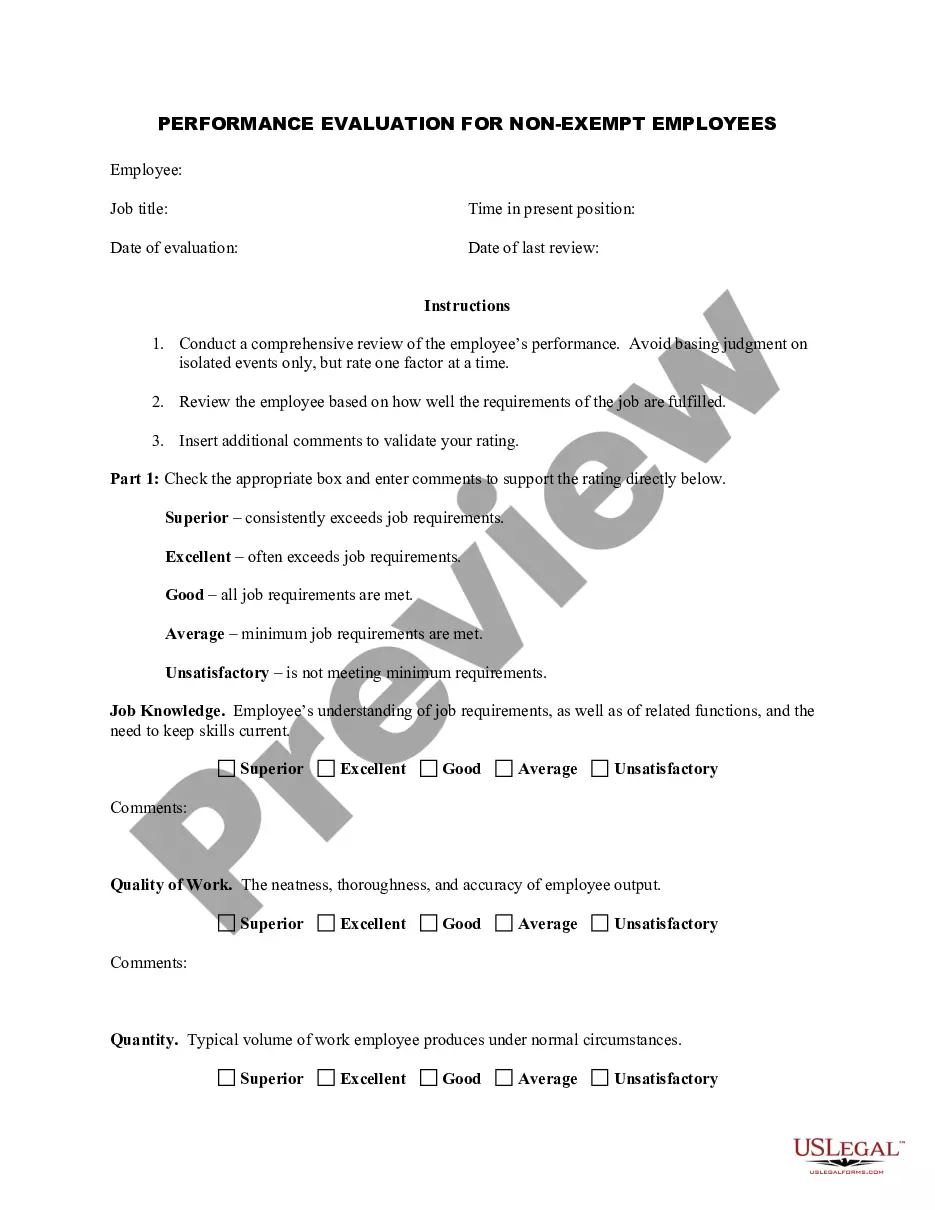
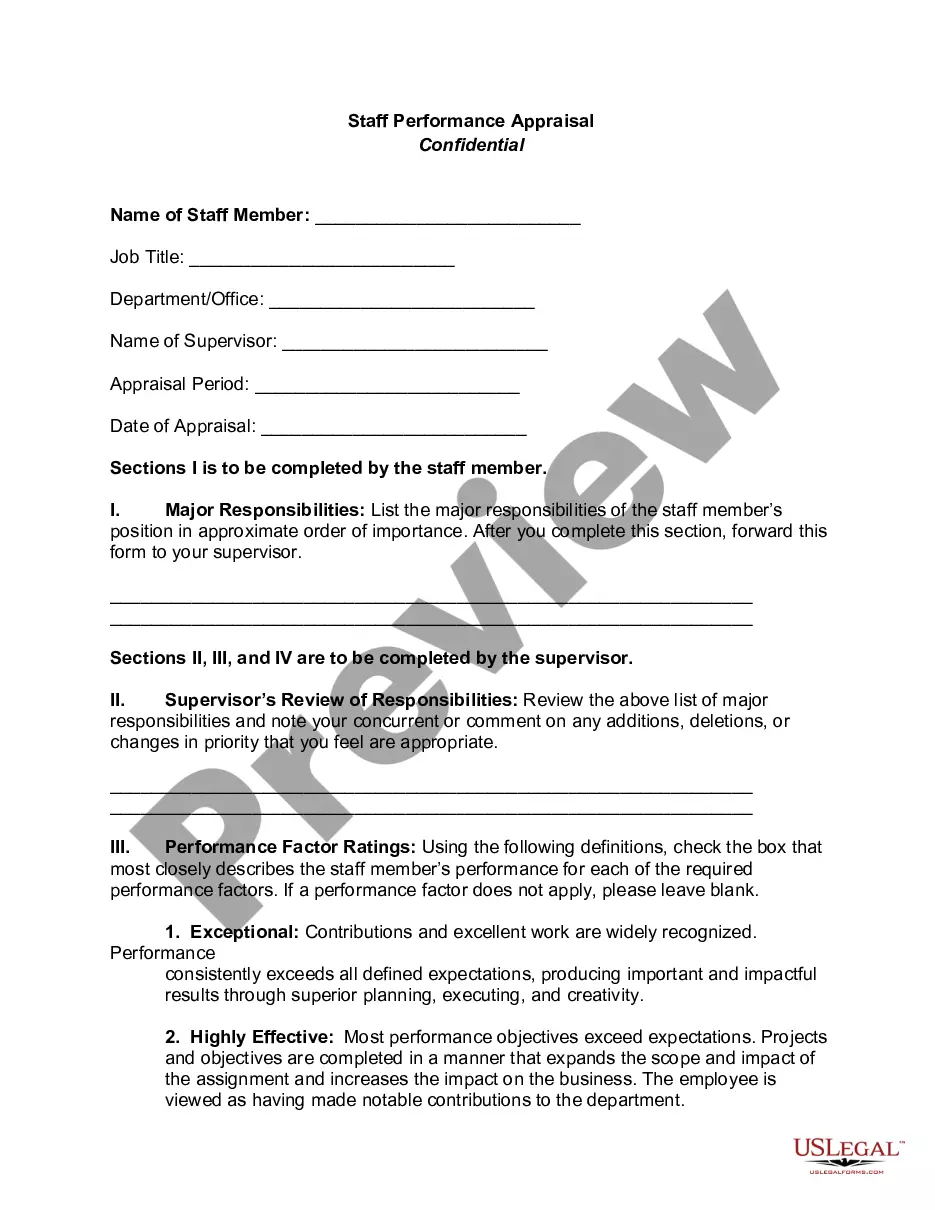
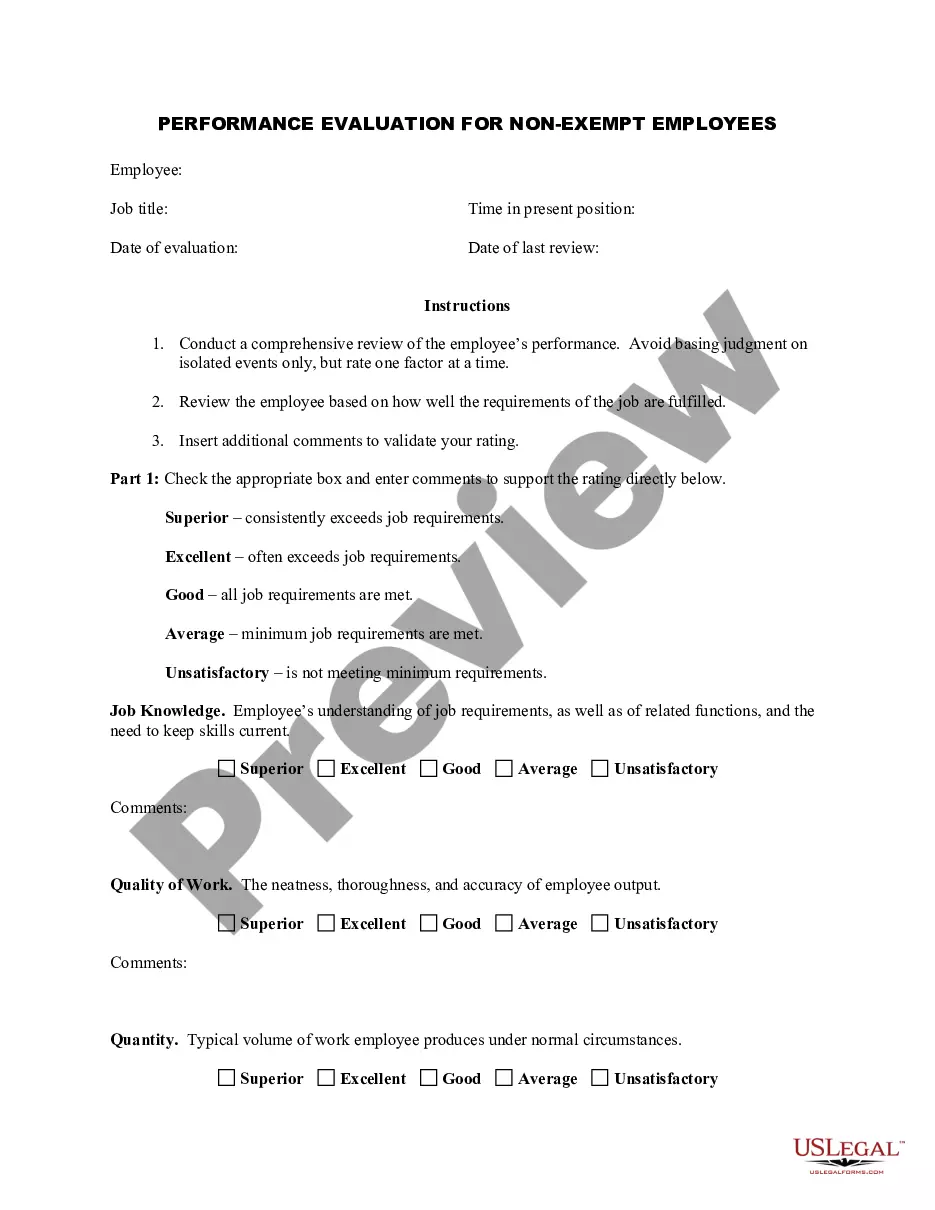
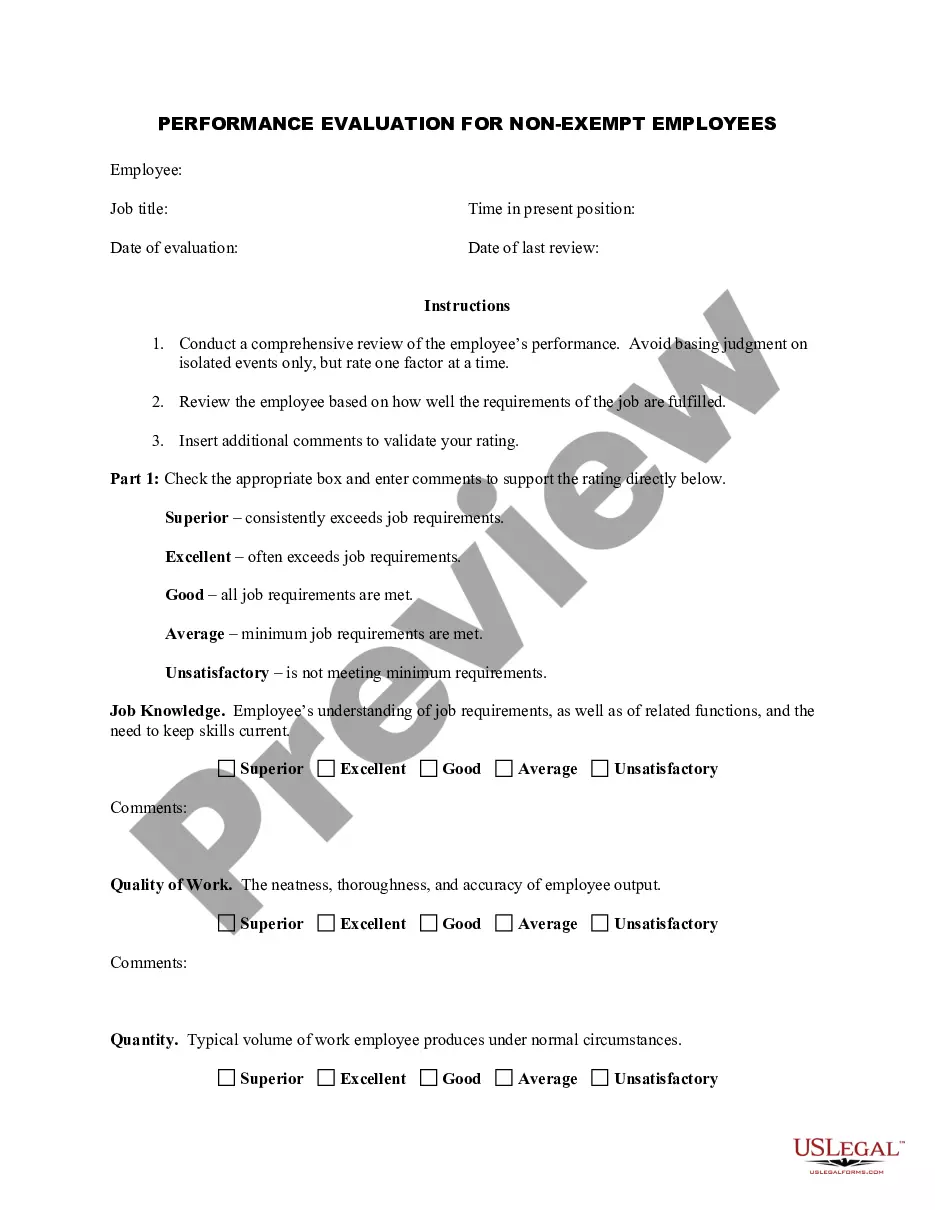
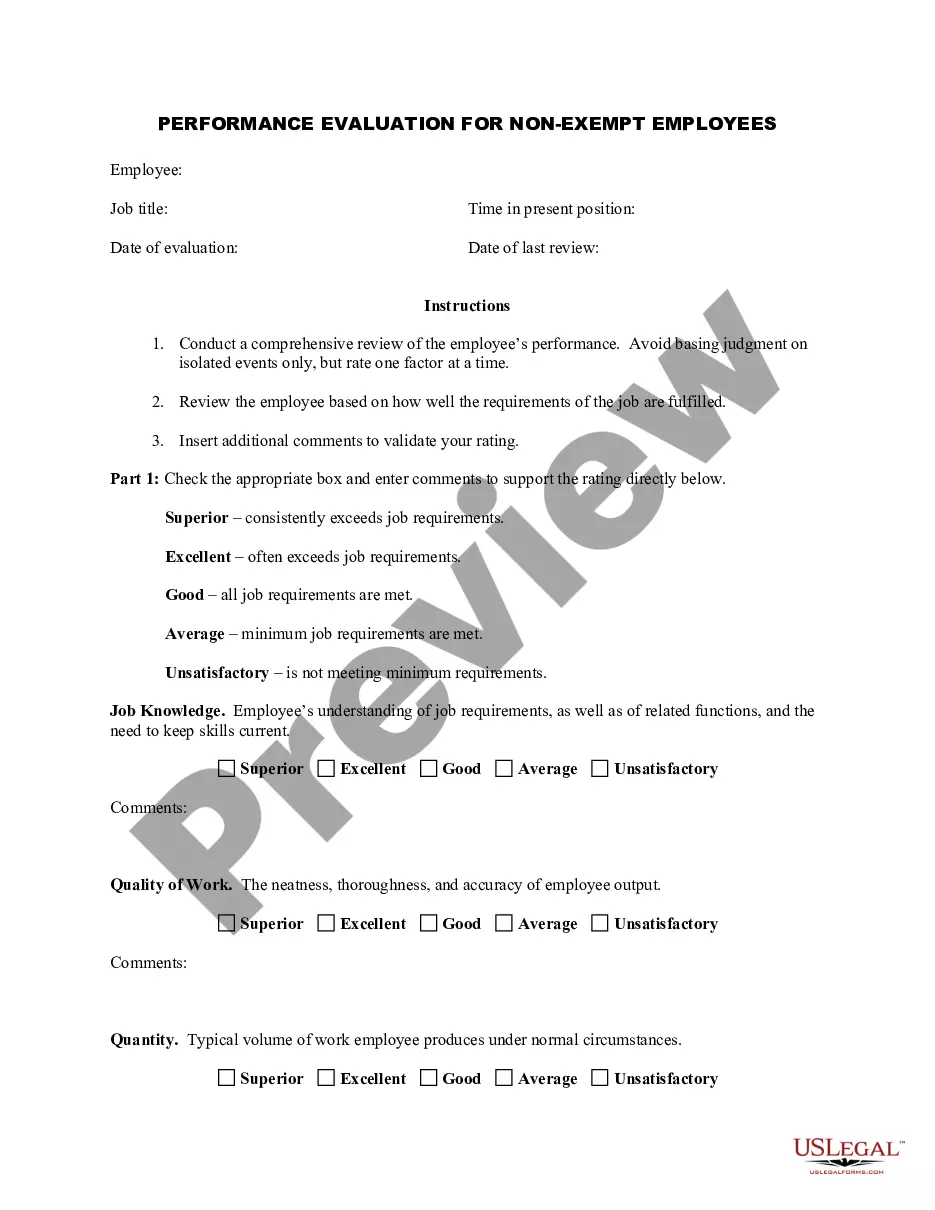
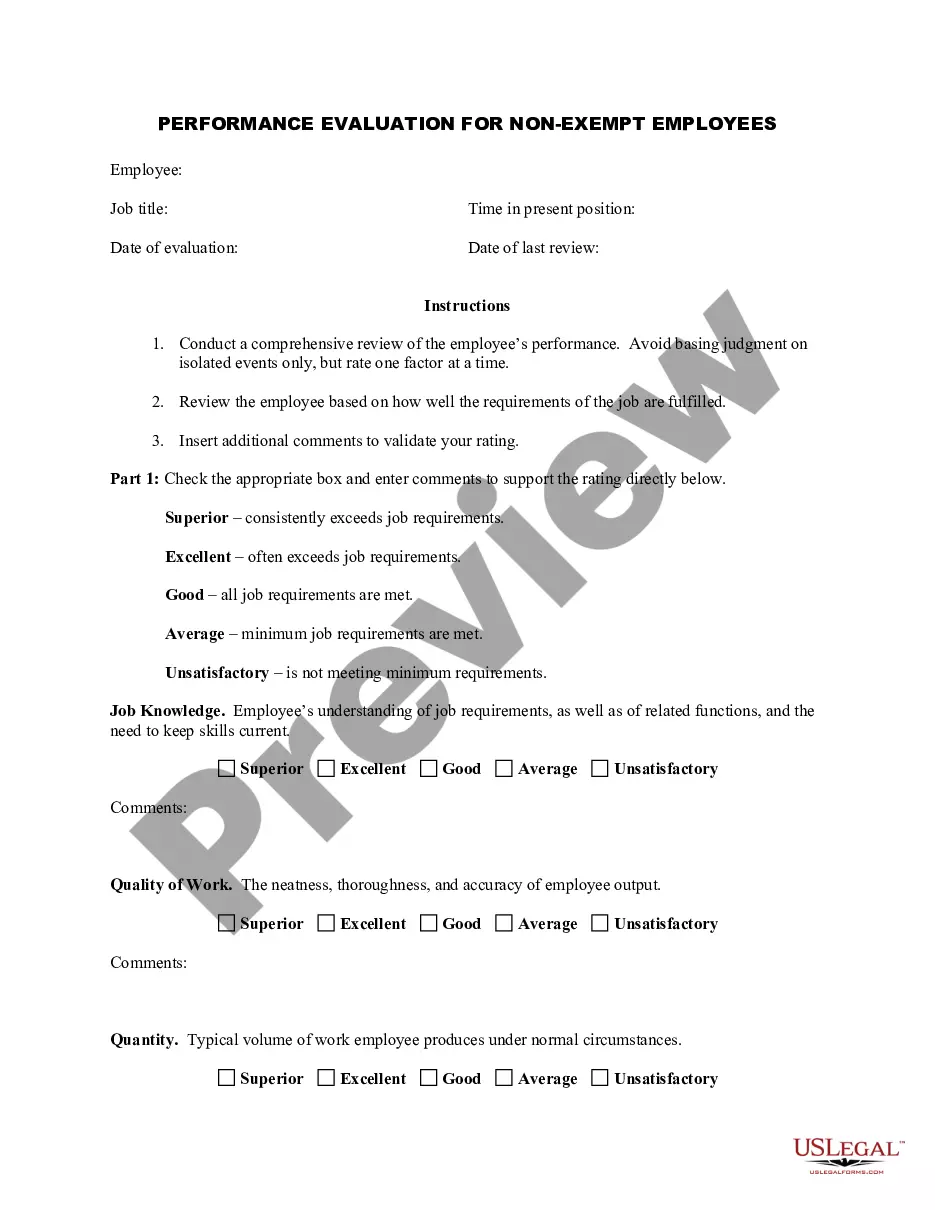
The Employee Evaluation Form for Receptionist is a structured document used to assess a receptionist's performance in meeting job requirements. This form enables supervisors to systematically evaluate specific aspects of the employee's work, ensuring a comprehensive review that is fair and transparent. It differs from other performance review forms by focusing specifically on the unique responsibilities of a receptionist, such as communication skills, professionalism, and overall job proficiency.
Form components explained
- Job title of the employee being evaluated
- Time in present position
- Date of evaluation and date of last review
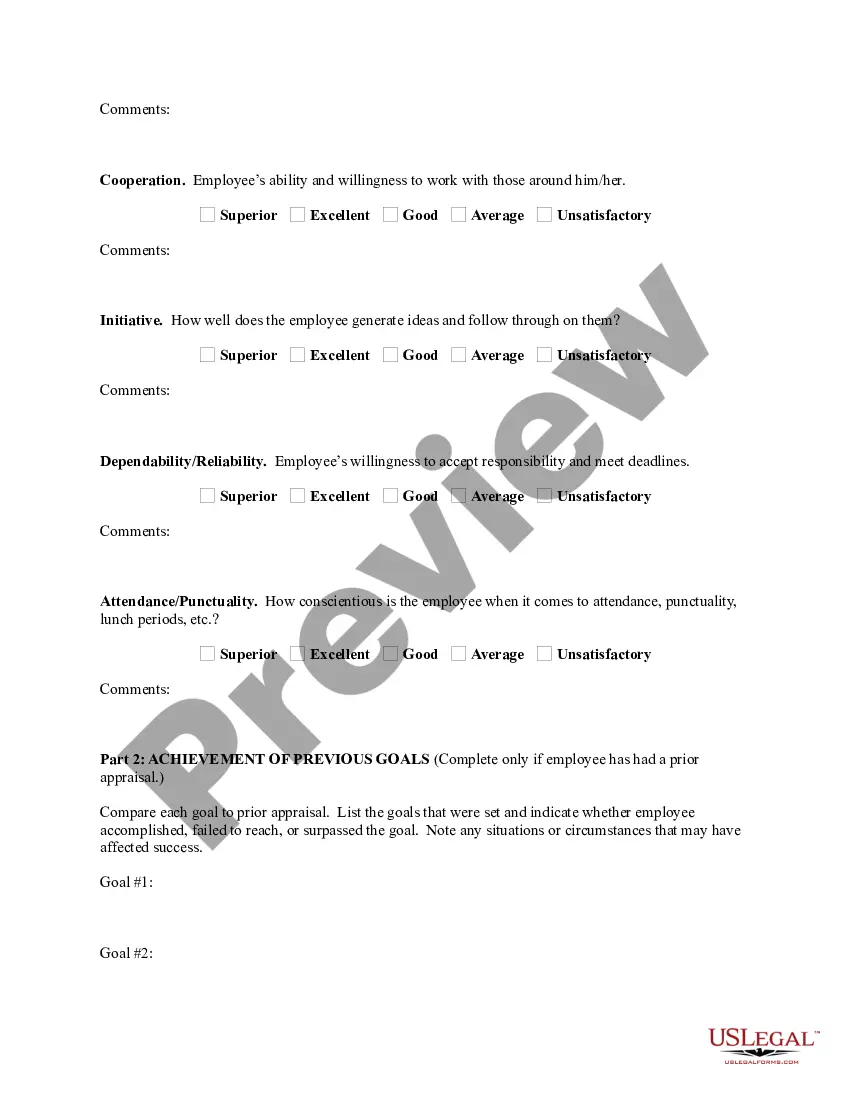
- Performance criteria including job knowledge, quality of work, quantity of work, cooperation, initiative, dependability, and attendance
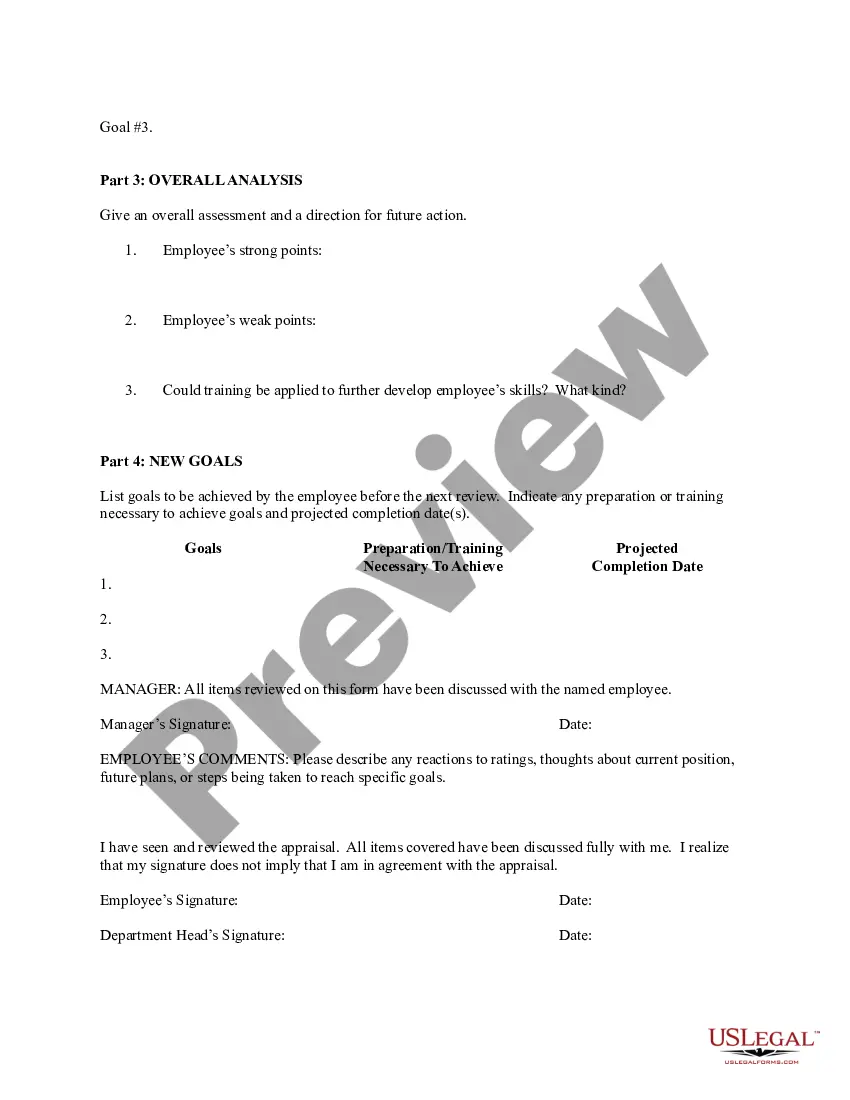
- Goals set during the previous evaluation and their achievement status
- Space for overall analysis and feedback from both manager and employee
When this form is needed
This form should be used during scheduled performance reviews or appraisals for receptionists. It is useful for documenting employee progress, addressing areas of improvement, and setting future goals. Employers may also use this form in instances of onboarding or when significant changes in job responsibilities occur, ensuring that performance metrics are aligned with company expectations.
Who this form is for
The following individuals should utilize this form:
- Managers or supervisors of receptionists responsible for conducting performance evaluations
- Human resources personnel overseeing performance management processes
- Business owners who directly manage administrative staff
Steps to complete this form
- Identify the employee's job title and enter their time in the current position.
- Record the date of evaluation and the date of the last review.
- Assess the employee's performance across various criteria and provide specific comments to support each rating.
- List previous goals and indicate their achievement status, noting any circumstances affecting outcomes.
- Provide an overall analysis and direction for future action, including setting new goals if necessary.
- Both the manager and employee should sign the form to acknowledge that the evaluation has been discussed.
Does this form need to be notarized?
This form does not typically require notarization unless specified by local law.
Get your form ready online
Our built-in tools help you complete, sign, share, and store your documents in one place.
Make edits, fill in missing information, and update formatting in US Legal Forms—just like you would in MS Word.
Download a copy, print it, send it by email, or mail it via USPS—whatever works best for your next step.
Sign and collect signatures with our SignNow integration. Send to multiple recipients, set reminders, and more. Go Premium to unlock E-Sign.
If this form requires notarization, complete it online through a secure video call—no need to meet a notary in person or wait for an appointment.
We protect your documents and personal data by following strict security and privacy standards.

Make edits, fill in missing information, and update formatting in US Legal Forms—just like you would in MS Word.

Download a copy, print it, send it by email, or mail it via USPS—whatever works best for your next step.

Sign and collect signatures with our SignNow integration. Send to multiple recipients, set reminders, and more. Go Premium to unlock E-Sign.

If this form requires notarization, complete it online through a secure video call—no need to meet a notary in person or wait for an appointment.

We protect your documents and personal data by following strict security and privacy standards.
Typical mistakes to avoid
- Failing to provide specific examples to support performance ratings
- Not keeping the form updated with recent evaluations or goals
- Leaving sections blank, which can hinder the effectiveness of the evaluation
- Using vague language that does not clearly convey the employee's job performance
Why complete this form online
- Convenience: Downloadable and easily accessible from any device.
- Editability: Users can customize the form according to specific needs.
- Reliability: Created by licensed attorneys to ensure legality and compliance.
Looking for another form?

Form popularity
FAQ
Employee evaluation forms are used to formally review and document an employee's performance and get their acknowledgment that the evaluation took place. This is important in establishing a paper trail to support important HR decisions.
Communication. Collaboration and teamwork. Problem-solving. Quality and accuracy of work. Attendance, punctuality and reliability. The ability to accomplish goals and meet deadlines.
Make it easy to use. Ensure that the information your evaluation form seeks is clear and concise. Determine the focus of the form. There needs to be a clear purpose. Establish a clearly defined rating scale.
Be proud. One major goal of the self-evaluation is to highlight your accomplishments and recollect milestones in your professional development. Be honest and critical. Continuously strive for growth. Track your accomplishments. Be professional.
1 Know how the self-evaluation is going to be used. 2 Write out a list of your accomplishments. 3 Gather analytics if you can. 4 Write out a list of your struggles. 5 Narrow your accomplishments list down. 6 Don't forget to align your review with your manager's or team's goals.
Make it easy to use. Ensure that the information your evaluation form seeks is clear and concise. Determine the focus of the form. There needs to be a clear purpose. Establish a clearly defined rating scale.
Reflect on feedback. Make a list of your top accomplishments and identify areas for improvements. Gather analytics to show impact. Make a commitment to improve. Set a SMART goal for yourself. Create a plan of action. Communication. Job Performance.
Reflect on feedback. Make a list of your top accomplishments and identify areas for improvements. Gather analytics to show impact. Make a commitment to improve. Set a SMART goal for yourself. Create a plan of action. Communication. Job Performance.