Arizona Writ of General Execution
Overview of this form
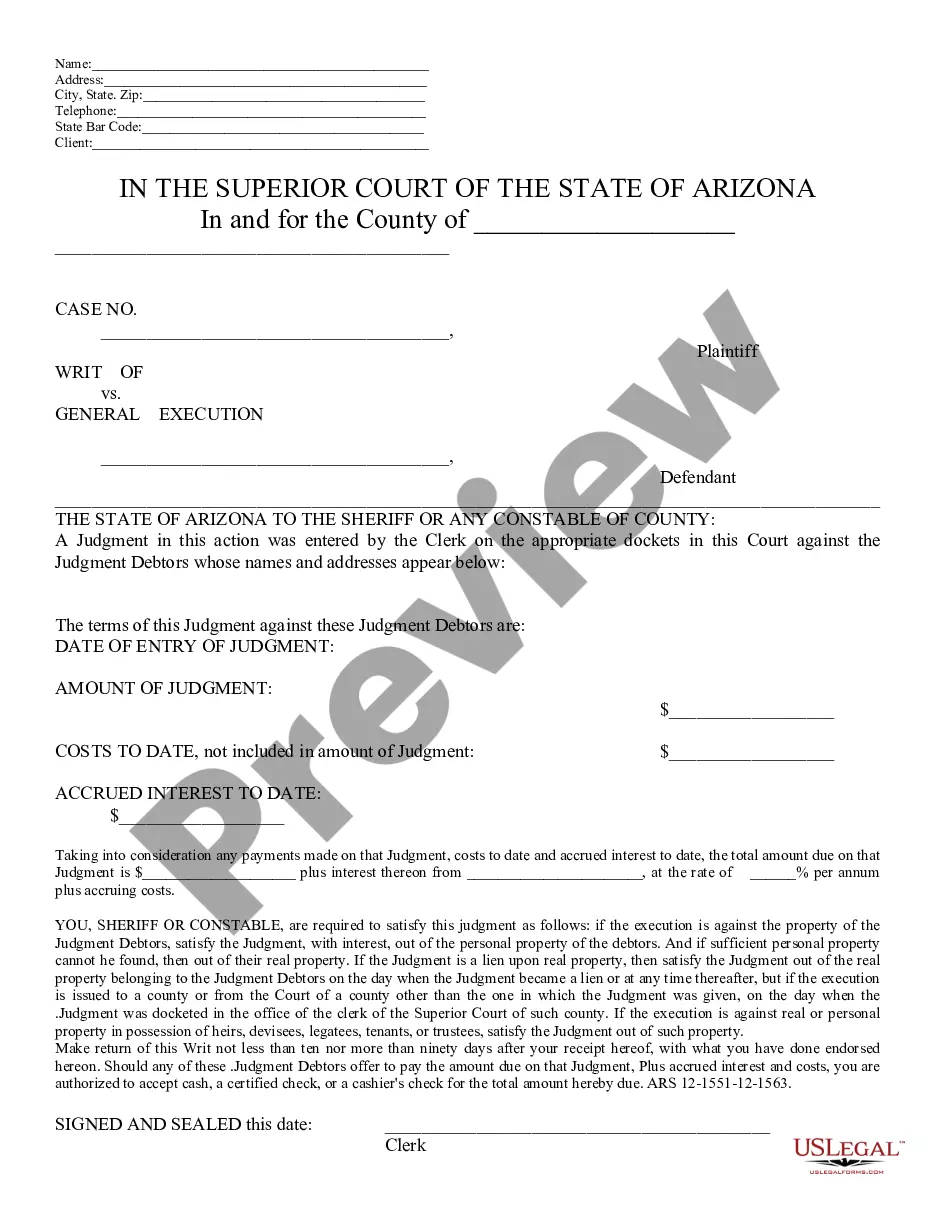
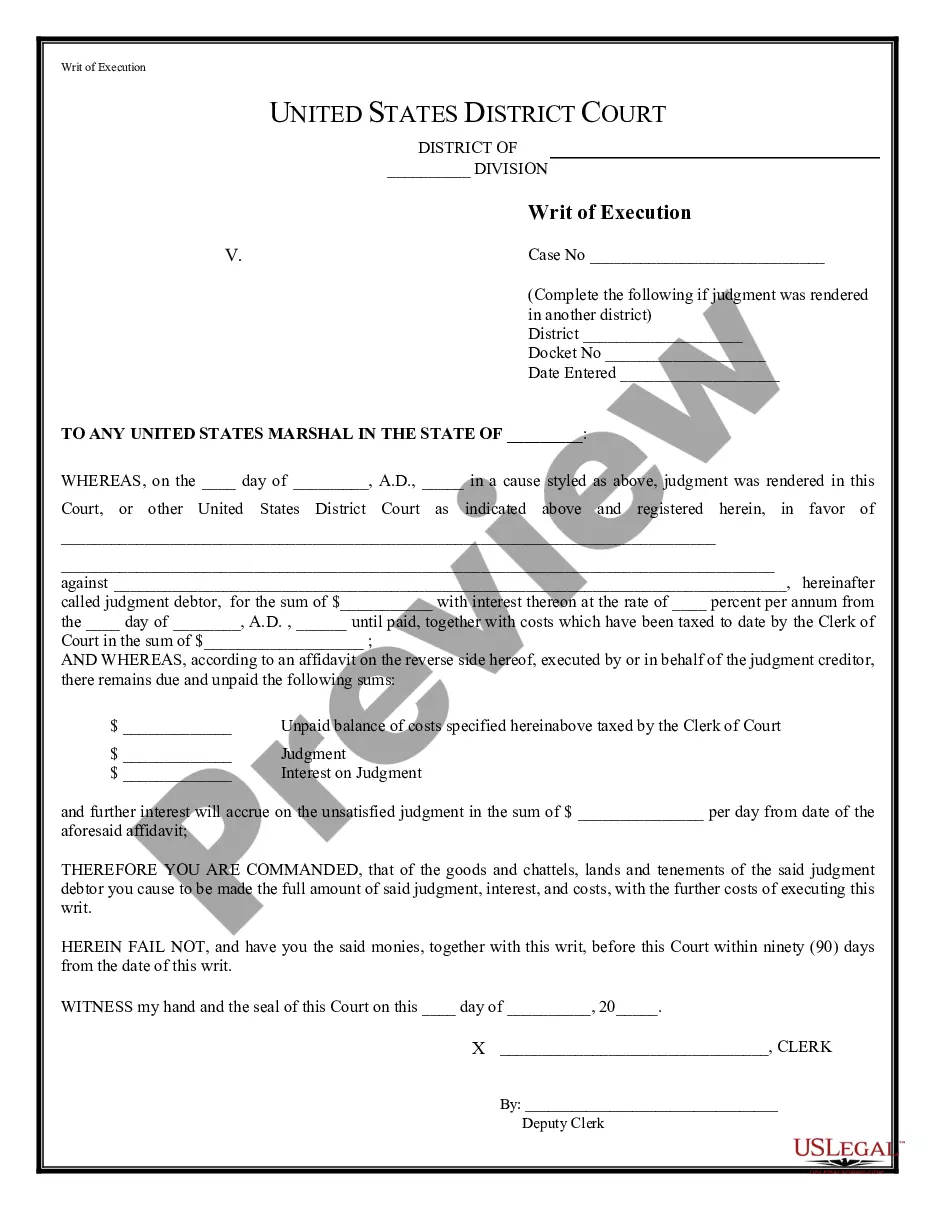
The Writ of General Execution is a legal document that authorizes the sheriff to seize and sell a debtor's property to satisfy a judgment owed to the creditor. This writ specifically allows enforcement against both real and personal property of the debtor. It differs from other legal documents like a general judgment because it initiates the enforcement process, ensuring the creditor can recover the owed amount effectively.
What’s included in this form
- Case number: The unique identifier for the legal proceedings.
- Judgment details: Includes the date, amount, and accruing interest of the judgment.
- Debtor information: Names and addresses of the judgment debtors.
- Instructions for the sheriff: Specific actions to take in executing the writ.
- Payment acceptance clause: Guidelines for accepting payments, including types of acceptable payment methods.
- Return instructions: Specifies the timeframe for the sheriff to report back on the execution of the writ.

When this form is needed
This form is used when a creditor has obtained a judgment against a debtor and needs to enforce that judgment through the seizure of property. It is particularly relevant in situations where the debtor has not voluntarily paid the debt. Creditors may need to act swiftly, as this writ must be executed within ten to ninety days of issuance.
Who this form is for
- Creditors seeking to enforce a judgment against a debtor.
- Individuals or businesses with unsatisfied court judgments.
- Legal representatives acting on behalf of creditors.
How to prepare this document
- Identify the parties involved by entering the plaintiff and defendant names.
- Fill in the case number assigned by the court.
- Enter the judgment details, including the amount owed and any accrued interest.
- Specify the debtor's property that may be subject to execution.
- Provide your details, including your name, address, and state bar code if applicable.
- Sign and date the form to validate its issuance.
Does this document require notarization?
This form does not typically require notarization unless specified by local law.
Get your form ready online
Our built-in tools help you complete, sign, share, and store your documents in one place.
Make edits, fill in missing information, and update formatting in US Legal Forms—just like you would in MS Word.
Download a copy, print it, send it by email, or mail it via USPS—whatever works best for your next step.
Sign and collect signatures with our SignNow integration. Send to multiple recipients, set reminders, and more. Go Premium to unlock E-Sign.
If this form requires notarization, complete it online through a secure video call—no need to meet a notary in person or wait for an appointment.
We protect your documents and personal data by following strict security and privacy standards.

Make edits, fill in missing information, and update formatting in US Legal Forms—just like you would in MS Word.

Download a copy, print it, send it by email, or mail it via USPS—whatever works best for your next step.

Sign and collect signatures with our SignNow integration. Send to multiple recipients, set reminders, and more. Go Premium to unlock E-Sign.

If this form requires notarization, complete it online through a secure video call—no need to meet a notary in person or wait for an appointment.

We protect your documents and personal data by following strict security and privacy standards.
Common mistakes
- Failing to complete all required fields, such as case number or debtor information.
- Overlooking the deadline for execution, which is between ten to ninety days.
- Not providing accurate judgment amounts, leading to confusion or legal complications.
Why use this form online
- Convenience of downloading and completing the form at your own pace.
- Editability allows for corrections without starting over.
- Access to high-quality legal documents crafted by licensed attorneys.
Legal use & context
- This writ provides a lawful method for creditors to enforce court judgments.
- It can lead to the seizure of property if the debtor fails to fulfill the financial obligation.
- Properly executing this writ is crucial for safeguarding the creditor's rights under the law.
Summary of main points
- The Writ of General Execution is used to enforce court judgments through the seizure of debtor property.
- Complete the form accurately to avoid common mistakes.
- This form aligns with Arizonaâs legal requirements for property execution.
Looking for another form?





Form popularity
FAQ
In Arizona, a creditor can take your house under certain conditions, but many protections exist. If the property is your homestead, it may be exempt from seizure under the Arizona Writ of General Execution. However, this can depend on the nature of the debt and other factors. It’s vital to consult legal resources to understand your rights and protections regarding your home.
Filing a garnishee answer in Arizona involves responding to a Writ of Garnishment that a creditor sends to a third party, such as your employer or bank. The garnishee must answer the court within a specified time frame, detailing any funds or property they hold belonging to the debtor. Utilizing the Arizona Writ of General Execution can simplify this process and ensure you comply correctly. Consider seeking legal assistance if you need clarity on the process.
In Arizona, certain assets are exempt from seizure under a Writ of General Execution. These typically include necessary personal items, retirement accounts, and a portion of your wages. Additionally, your primary residence may have some protection under specific circumstances. It is essential to understand these exemptions when navigating your rights in relation to a Writ of General Execution.
A writ of execution in Arizona is a legal document that authorizes the enforcement of a court judgment. This writ allows creditors to seize property or garnish wages to satisfy a judgment. Understanding the workings of an Arizona Writ of General Execution is essential for individuals involved in debt collection or those facing debt enforcement actions. Legal assistance can simplify this process for you.
Judgment rules in Arizona stipulate the processes for obtaining a judgment, including filing requirements and timelines. These rules also explain how judgments can be enforced through mechanisms such as the Arizona Writ of General Execution. Familiarizing yourself with these rules can make a substantial difference in the outcome of your case, so leveraging resources from platforms like uslegalforms is beneficial.
A writ of execution in Arizona is generally valid for five years. After this timeframe, you may need to obtain a renewal if the judgment remains uncollected. Knowing this duration is significant when pursuing an Arizona Writ of General Execution, as it helps you strategize your collection process. Staying informed ensures you take timely actions.
In Arizona, certain properties are exempt from judgment, including primary residences, tools necessary for work, and a portion of your wages. Understanding what is protected from an Arizona Writ of General Execution can be crucial in safeguarding your assets. Consulting with a legal professional can further clarify the exemptions and help you protect your financial stability.
Stopping a garnishment can happen quickly, depending on the circumstances. If you have a valid defense or if you successfully file a motion to quash the garnishment, you can halt the process promptly. Engaging with tools available at uslegalforms can guide you in navigating this urgency effectively, especially if you're dealing with an Arizona Writ of General Execution.
A writ of garnishment in Arizona generally remains effective for up to 90 days. After this period, the creditor may need to renew the writ to continue pursuing the garnished funds. Understanding the timeline and limitations of an Arizona Writ of General Execution can help you plan your financial strategy effectively. Always consult a legal expert for tailored advice.
The default judgment rule in Arizona occurs when a party fails to respond to a lawsuit within the required timeframe. In such cases, the court may issue a ruling in favor of the plaintiff. This judgment can lead to an Arizona Writ of General Execution, allowing the plaintiff to collect the owed amount. It's important to respond promptly to legal actions to avoid this situation.