Employee Evaluation Form for Secretary
What this document covers
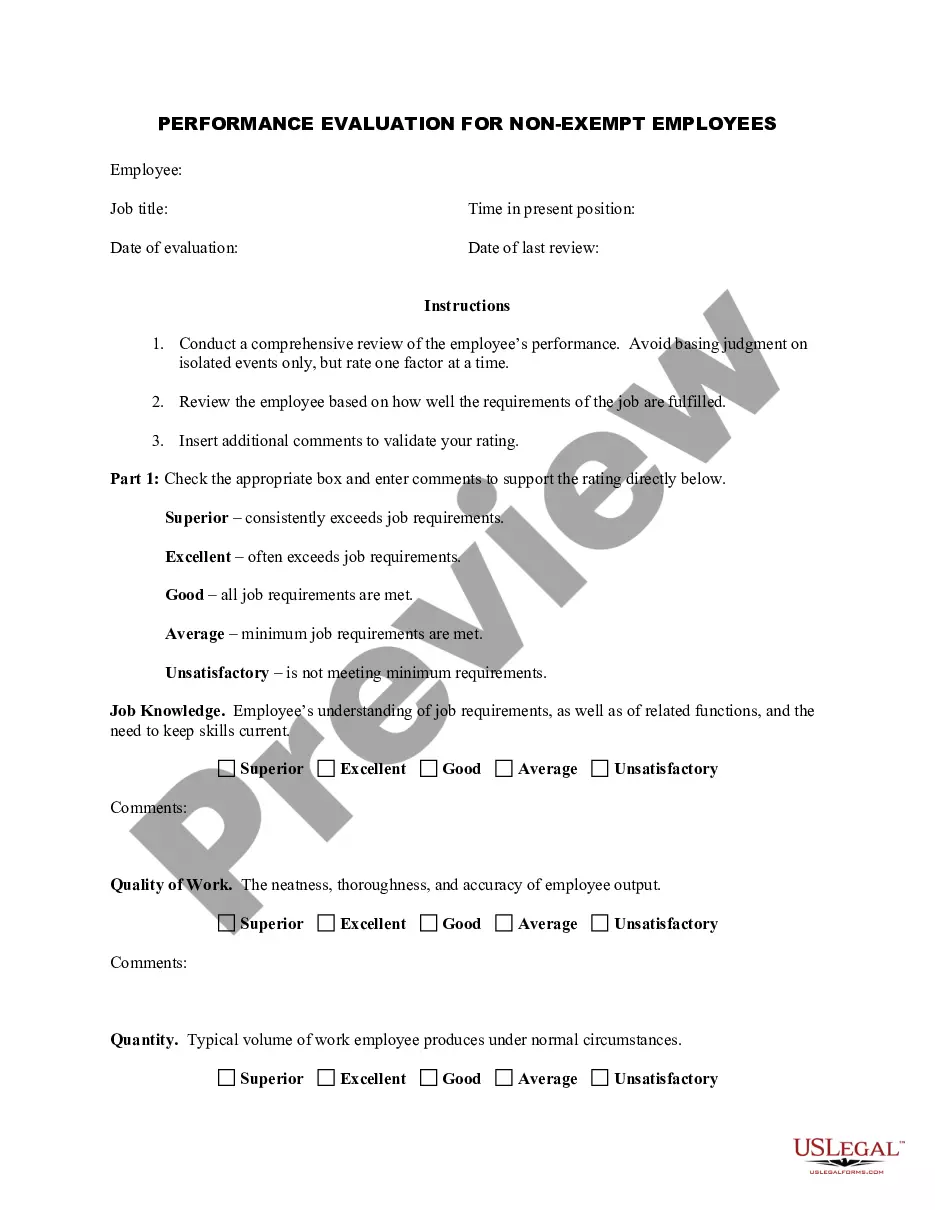
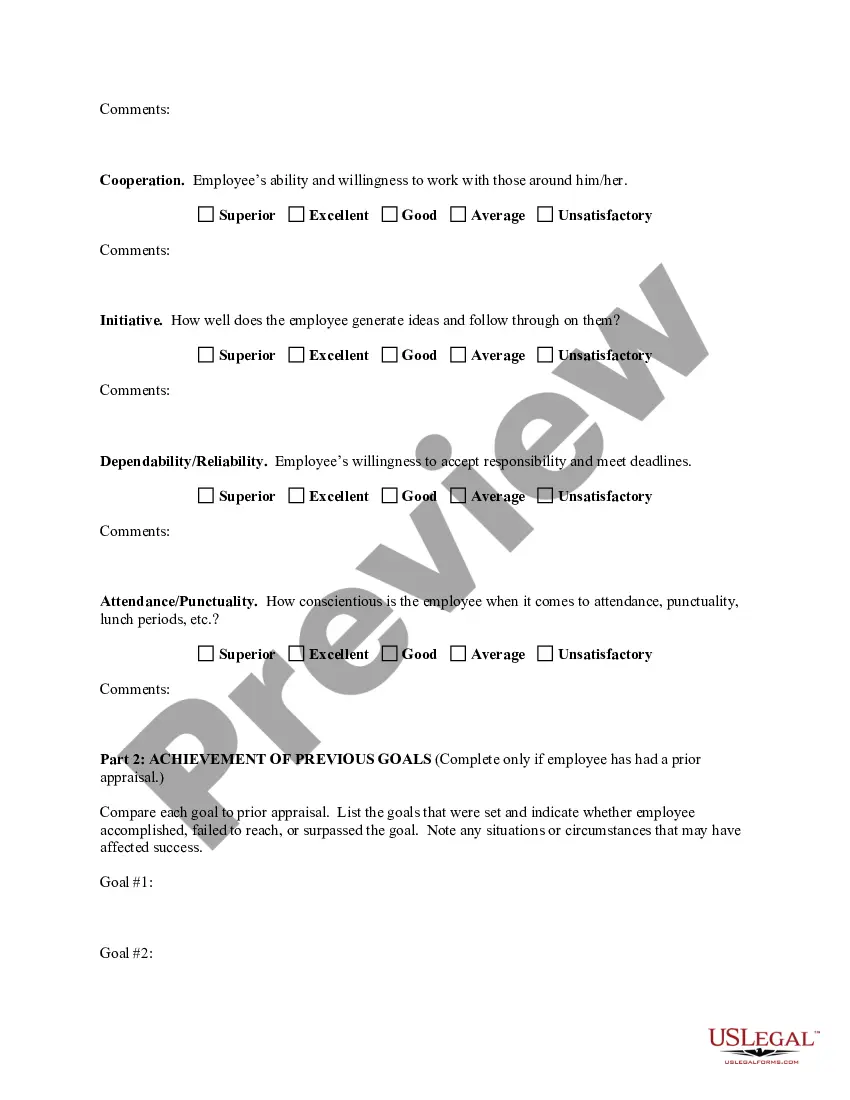
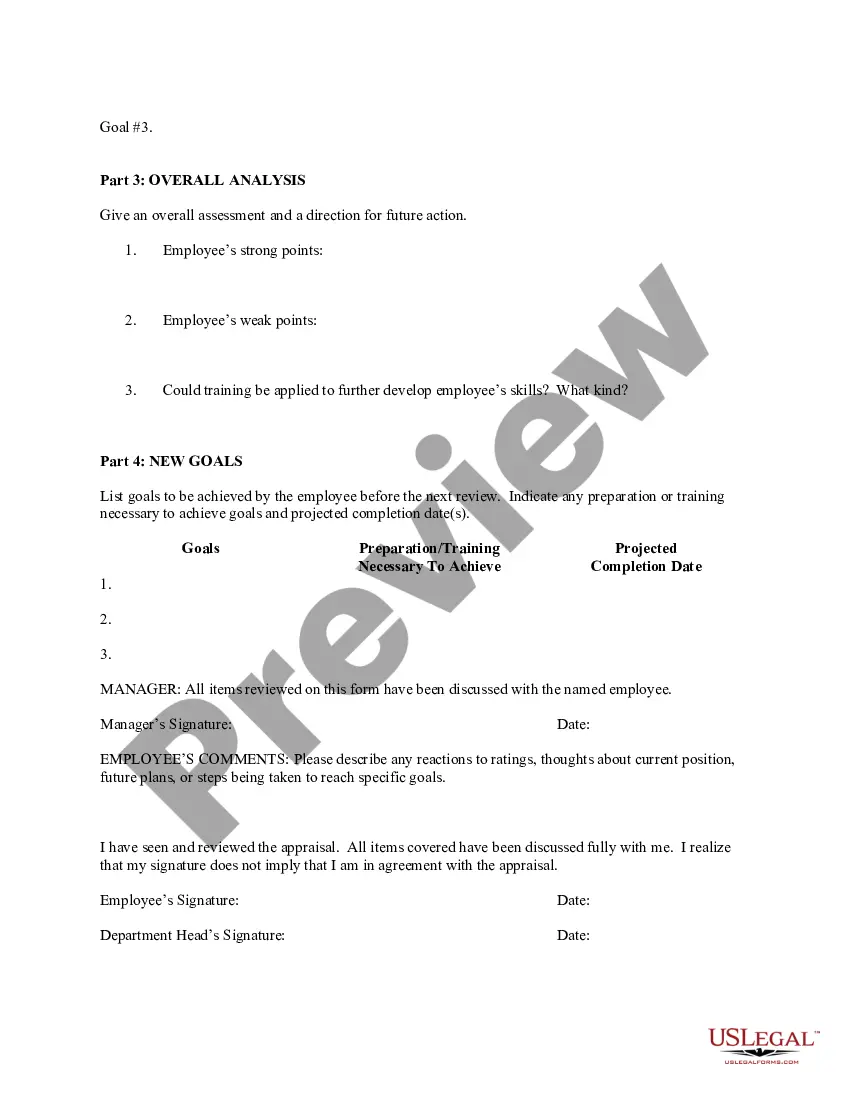
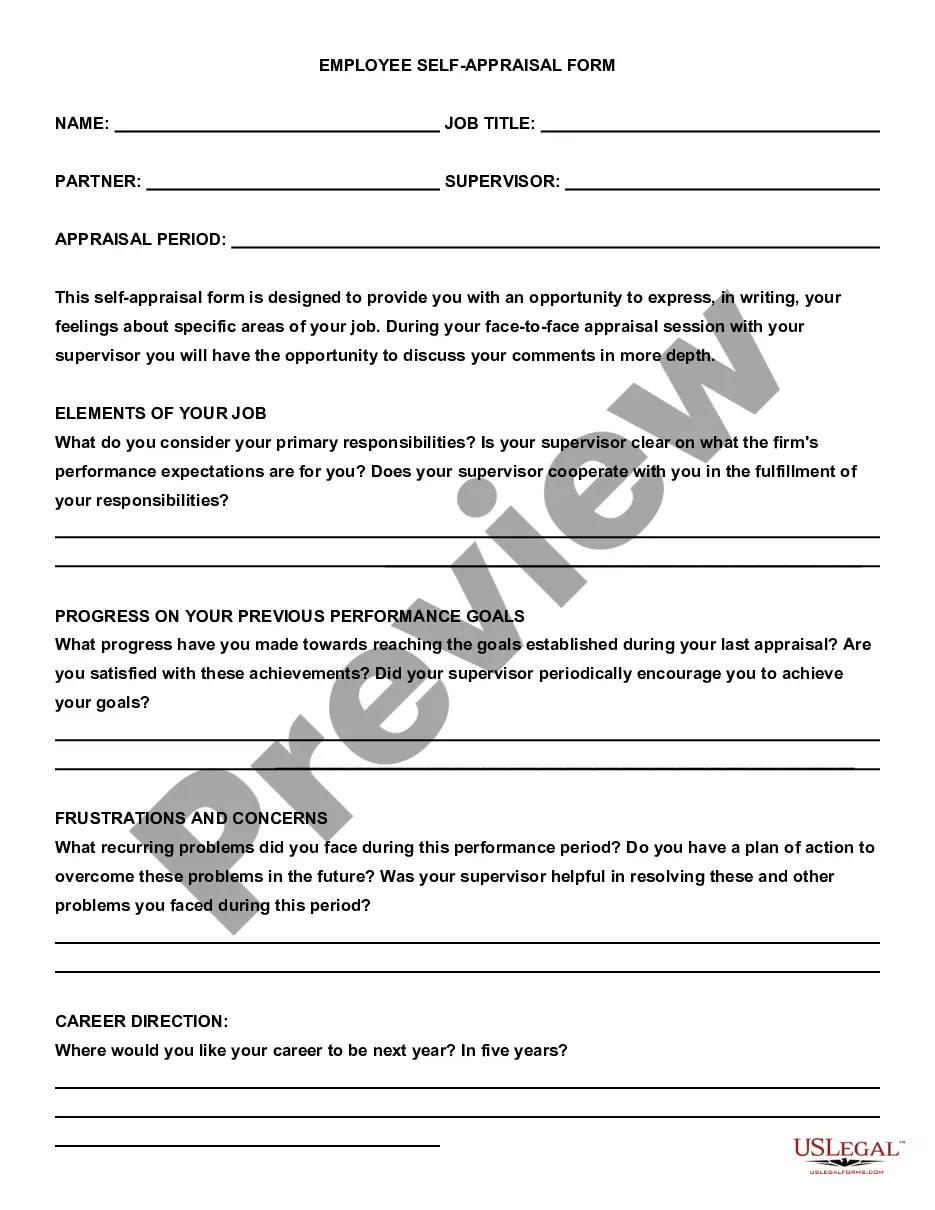
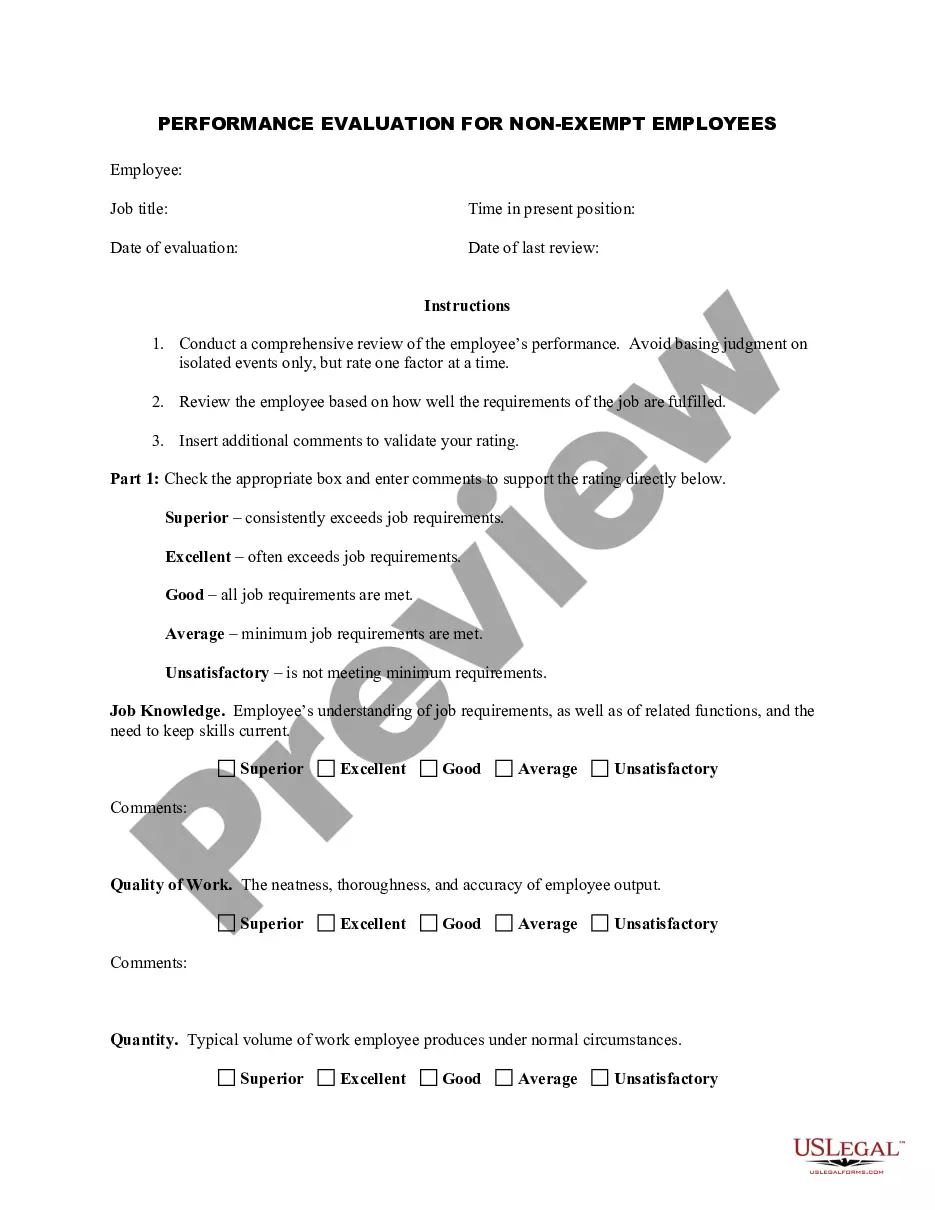
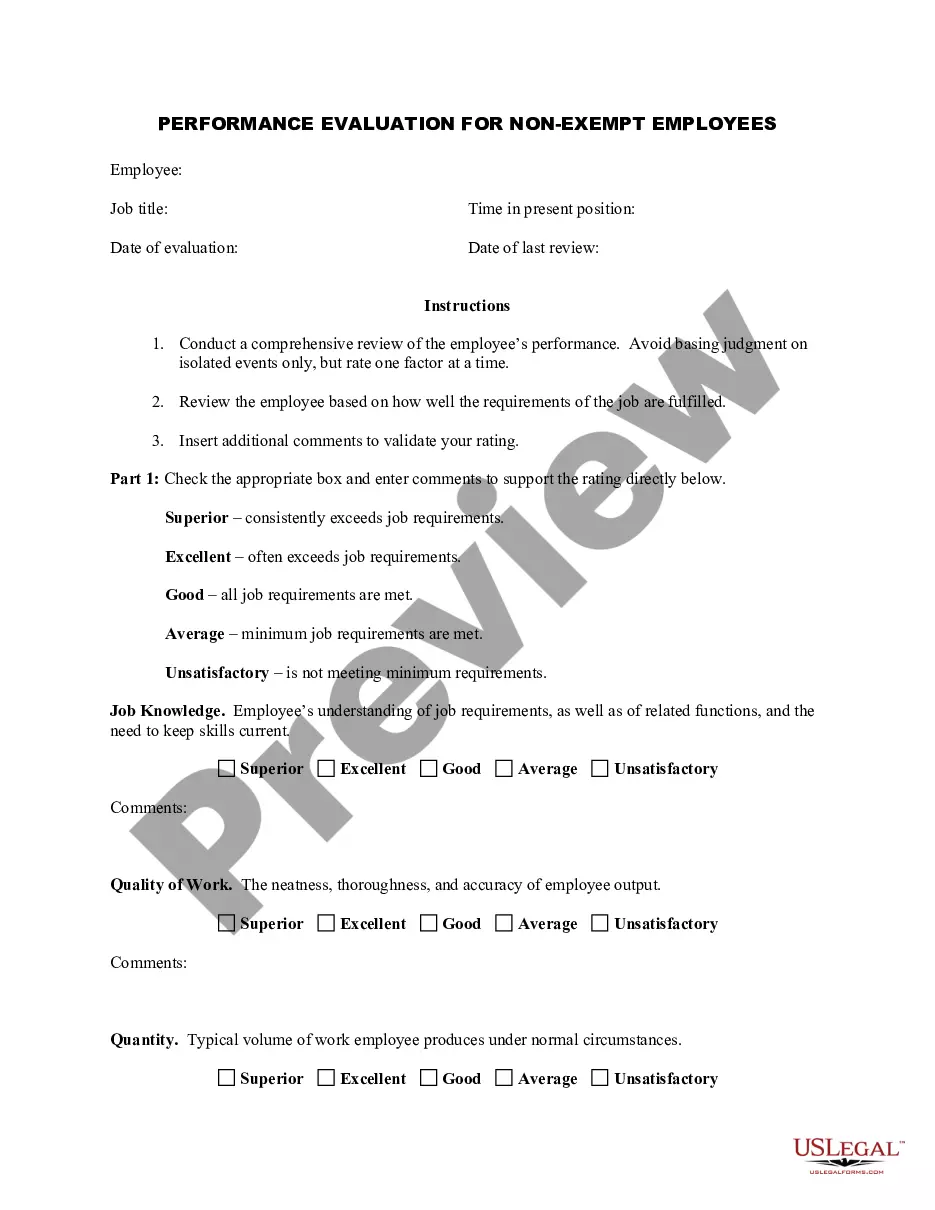
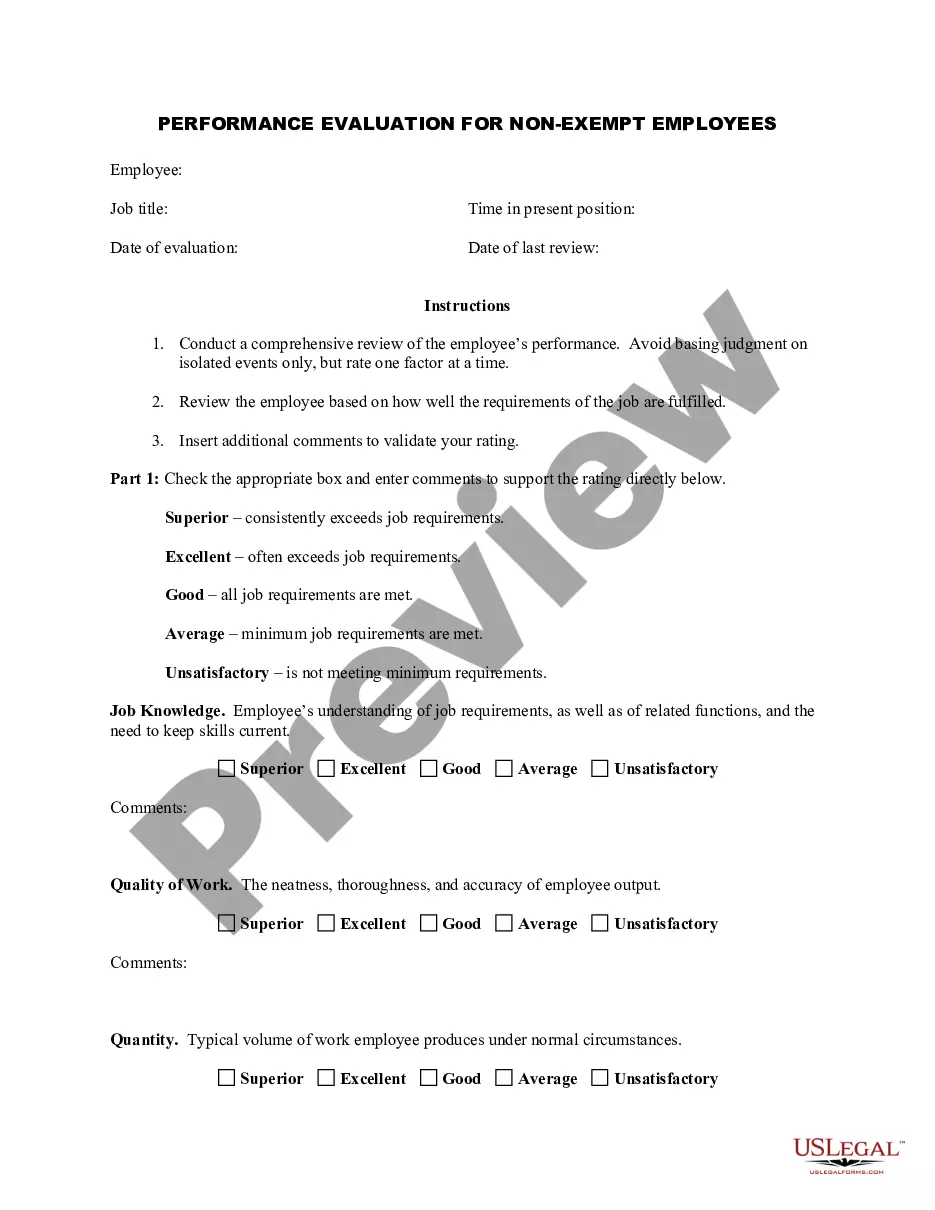
The Employee Evaluation Form for Secretary is a performance review document designed to assess the effectiveness of non-exempt employees in fulfilling their job responsibilities. This form serves to provide structured feedback on an employee's performance, addressing various aspects such as job knowledge, quality of work, cooperation, and initiative. Its purpose is to facilitate constructive performance discussions between employees and supervisors, ensuring that feedback is comprehensive and actionable.
Main sections of this form
- Job Knowledge: Evaluates the employee's understanding of job duties and related functions.
- Quality of Work: Assesses the neatness, thoroughness, and accuracy of the employee's output.
- Cooperation: Measures the employee's ability and willingness to collaborate with peers.
- Initiative: Evaluates how well the employee generates ideas and follows them through.
- Dependability/Reliability: Assesses the employee's willingness to accept responsibility and meet deadlines.
- Attendance/Punctuality: Looks at the employee's conscientiousness regarding their work schedule.
When to use this form
This form should be utilized during regular performance reviews, typically conducted annually or biannually. It is especially important when an employee has recently completed a probationary period, or when there is a need to document significant changes in performance, behavior, or when setting future goals. Using this form can help ensure that evaluations are fair, objective, and consistent across the organization.
Who this form is for
- Managers and supervisors responsible for evaluating the performance of secretaries and other administrative staff.
- Human resource personnel involved in performance management processes.
- Employees receiving evaluations can refer to this form to understand the criteria and expectations of their performance reviews.
Instructions for completing this form
- Identify the employee being evaluated, including their job title and the date of the evaluation.
- Evaluate each key performance area by marking the appropriate rating and providing supporting comments for each section.
- Discuss the employee's previous goals if applicable, noting accomplishments and areas where goals were not met.
- Provide an overall assessment and future goals that focus on the employee's development.
- Both the manager and the employee should sign the form, acknowledging that all evaluation components have been discussed.
Does this document require notarization?
This form does not typically require notarization unless specified by local law.
Get your form ready online
Our built-in tools help you complete, sign, share, and store your documents in one place.
Make edits, fill in missing information, and update formatting in US Legal Forms—just like you would in MS Word.
Download a copy, print it, send it by email, or mail it via USPS—whatever works best for your next step.
Sign and collect signatures with our SignNow integration. Send to multiple recipients, set reminders, and more. Go Premium to unlock E-Sign.
If this form requires notarization, complete it online through a secure video call—no need to meet a notary in person or wait for an appointment.
We protect your documents and personal data by following strict security and privacy standards.

Make edits, fill in missing information, and update formatting in US Legal Forms—just like you would in MS Word.

Download a copy, print it, send it by email, or mail it via USPS—whatever works best for your next step.

Sign and collect signatures with our SignNow integration. Send to multiple recipients, set reminders, and more. Go Premium to unlock E-Sign.

If this form requires notarization, complete it online through a secure video call—no need to meet a notary in person or wait for an appointment.

We protect your documents and personal data by following strict security and privacy standards.
Typical mistakes to avoid
- Failing to provide specific examples to support ratings can lead to ambiguity and confusion.
- Overreliance on occasional performance incidents rather than the overall trend can skew the evaluation.
- Neglecting to have a follow-up discussion about the evaluation can leave employees unclear about their performance and expectations.
- Not allowing sufficient time for the evaluation process can result in rushed judgments.
Benefits of completing this form online
- Convenience of accessing the form from any location, allowing for easier documentation.
- Editability provides flexibility to tailor evaluations based on specific performance metrics.
- Secure online systems ensure that all evaluations are stored safely and can be retrieved when needed.
- Streamlined performance reviews can improve communication and feedback processes within the organization.
Legal use & context
- The form serves as a record for performance evaluations, which can be crucial in disputes regarding employment decisions.
- It provides documentation that can protect both the employer and employee in case of grievances.
- Understanding its contents can enhance the effectiveness and legality of employee performance management processes.
Summary of main points
- The Employee Evaluation Form for Secretary provides a structured approach to assessing employee performance.
- Completing the form requires careful consideration of various performance factors.
- Documentation from the evaluation process is important for both employee development and legal compliance.
Looking for another form?

Form popularity
FAQ
Communication. Collaboration and teamwork. Problem-solving. Quality and accuracy of work. Attendance, punctuality and reliability. The ability to accomplish goals and meet deadlines.
1) Attendance. Punctuality is one of the strongest virtues an employee can possess. 2) Innovation and Creativity. 3) Leadership. 4) Communication Skills. 5) Collaboration and Teamwork. 6) Time Management. 7) Customer Experience. 8) Problem Solving.
Be proud. One major goal of the self-evaluation is to highlight your accomplishments and recollect milestones in your professional development. Be honest and critical. Continuously strive for growth. Track your accomplishments. Be professional.
Review the employee's job description. Get a current copy of each person's job description and review the requirements. Highlight areas of improvement. Compare strengths and weaknesses. Recommend actionable goals. Provide constructive feedback. Welcome employee input.
Reflect on feedback. Make a list of your top accomplishments and identify areas for improvements. Gather analytics to show impact. Make a commitment to improve. Set a SMART goal for yourself. Create a plan of action. Communication. Job Performance.
Set Performance Standards. Set Specific Goals. Take Notes Throughout the Year. Be Prepared. Be Honest and Specific with Criticism. Don't Compare Employees. Evaluate the Performance, Not the Personality. Have a Conversation.
For example, to evaluate a secretary's dependability, review his attendance records and feedback from co-workers, if provided. If he rarely misses a day of work for unexpected absences and always is the employee others can count on to pitch in, then his score for dependability should be quite high.
Prepare all feedback ahead of time. Keep your remarks clear and concise. Provide employees with a copy of the completed evaluation form. Keep employee review meetings a two-way conversation. End with a focus on the future. Hold multiple evaluations throughout the year. Employee evaluation examples.
Talk about your achievements. Talk about a raise. Ask about the development of the business. Set clear goals. Give feedback to your manager. Ask how you can help. Suggest tools you need to do your job. Ask for clarification.