Board of Directors Confidentiality Policy
What this document covers
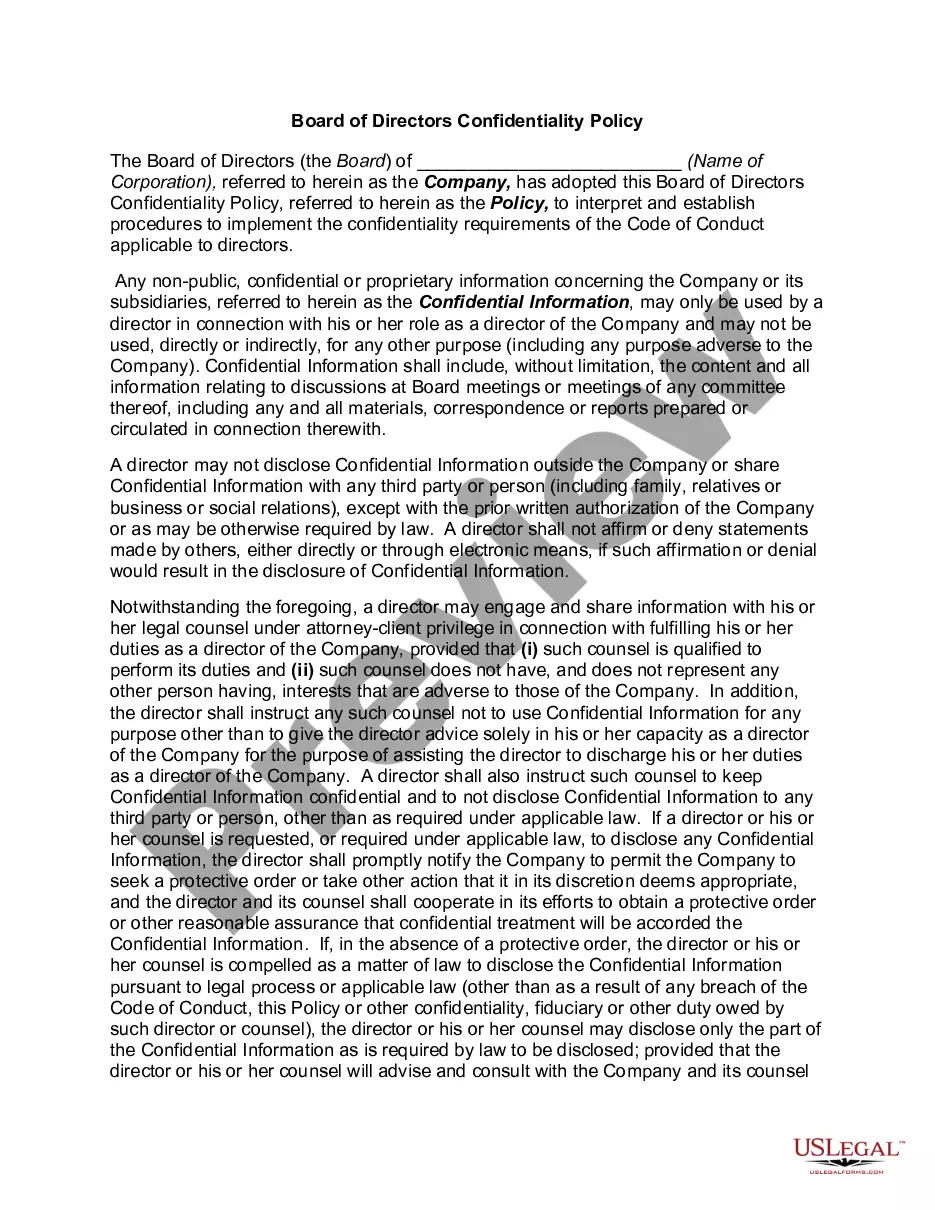
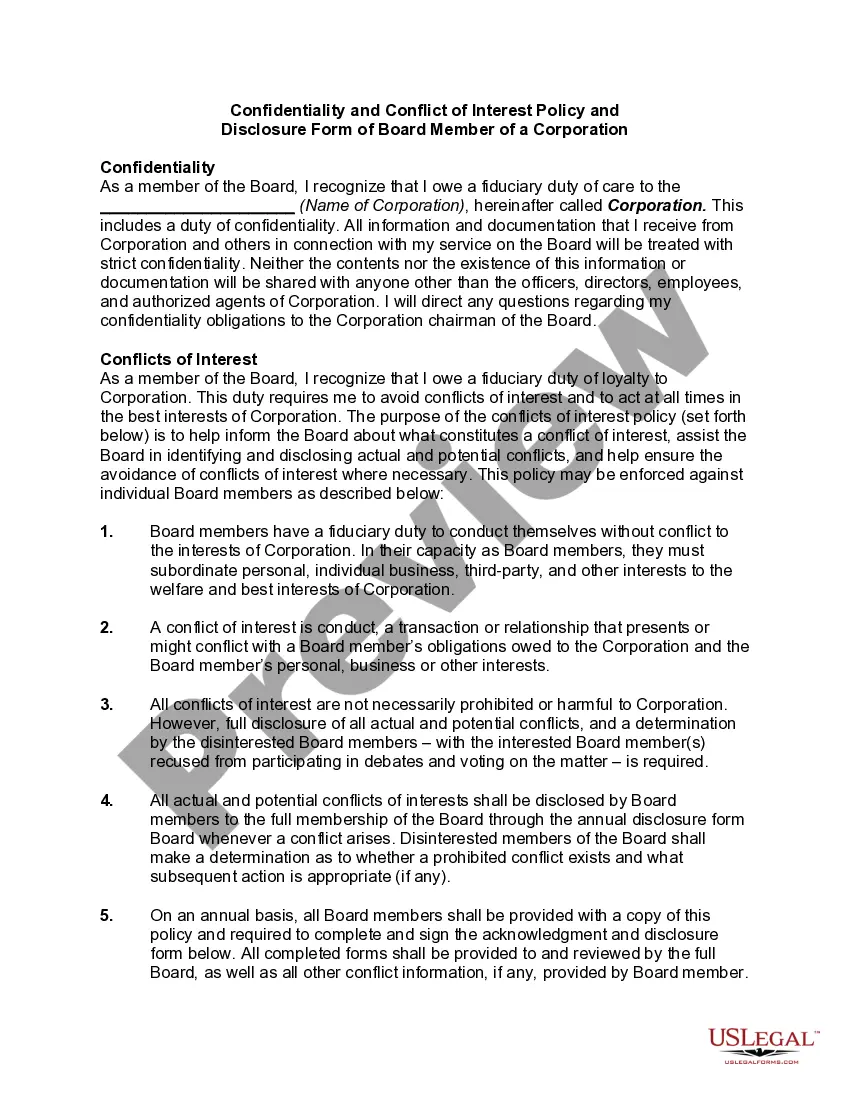
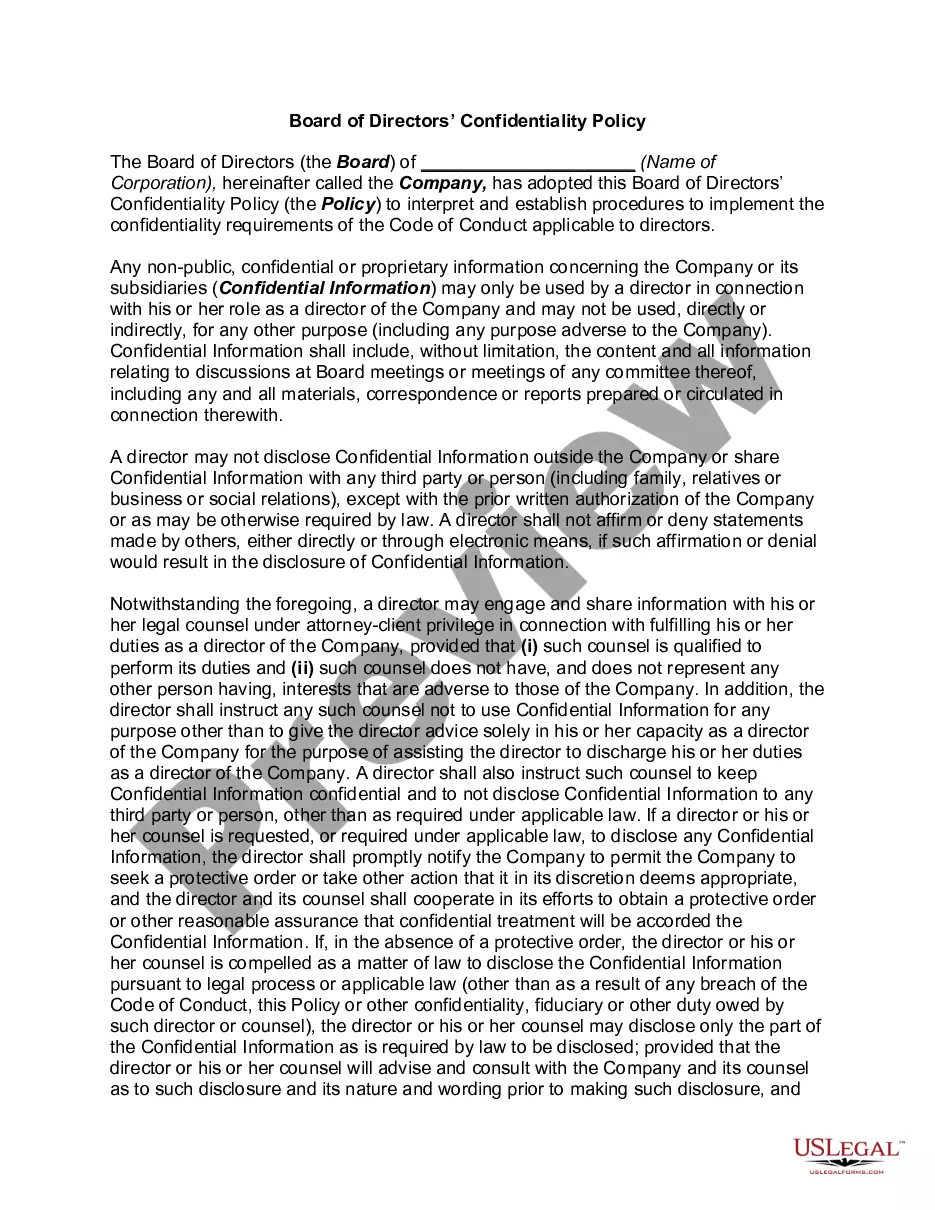
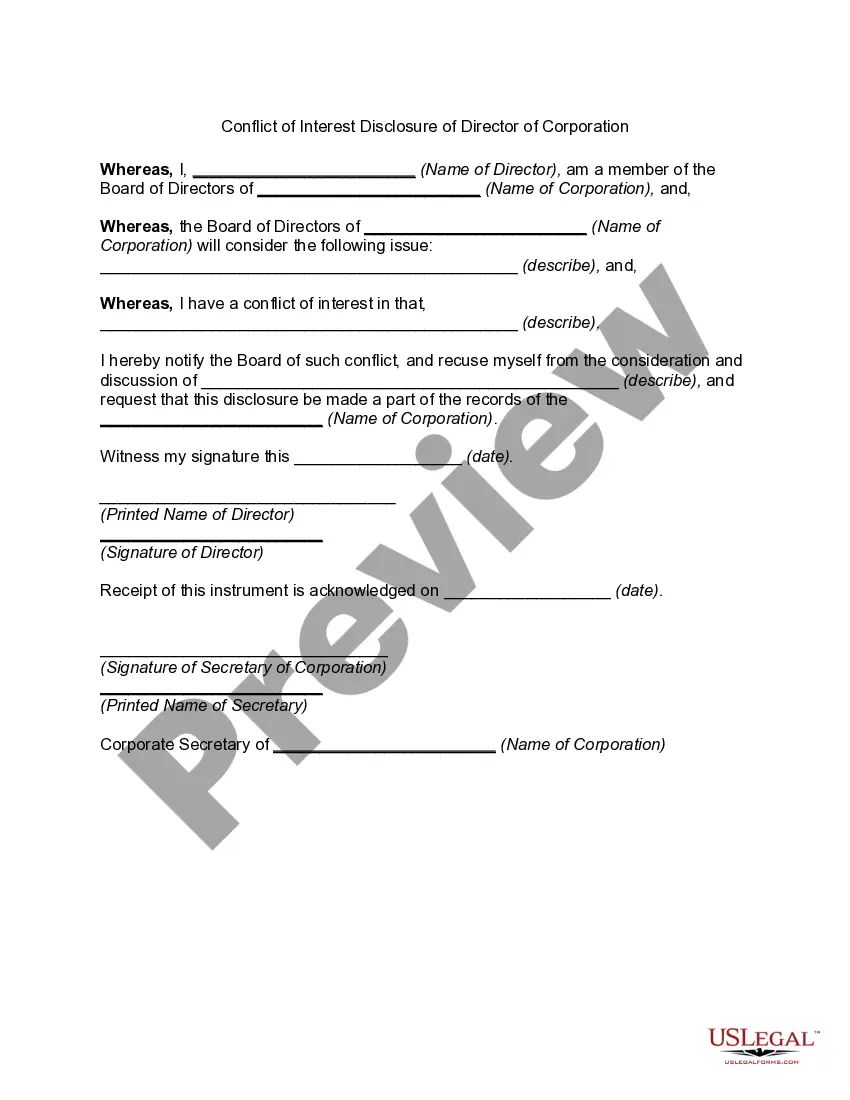
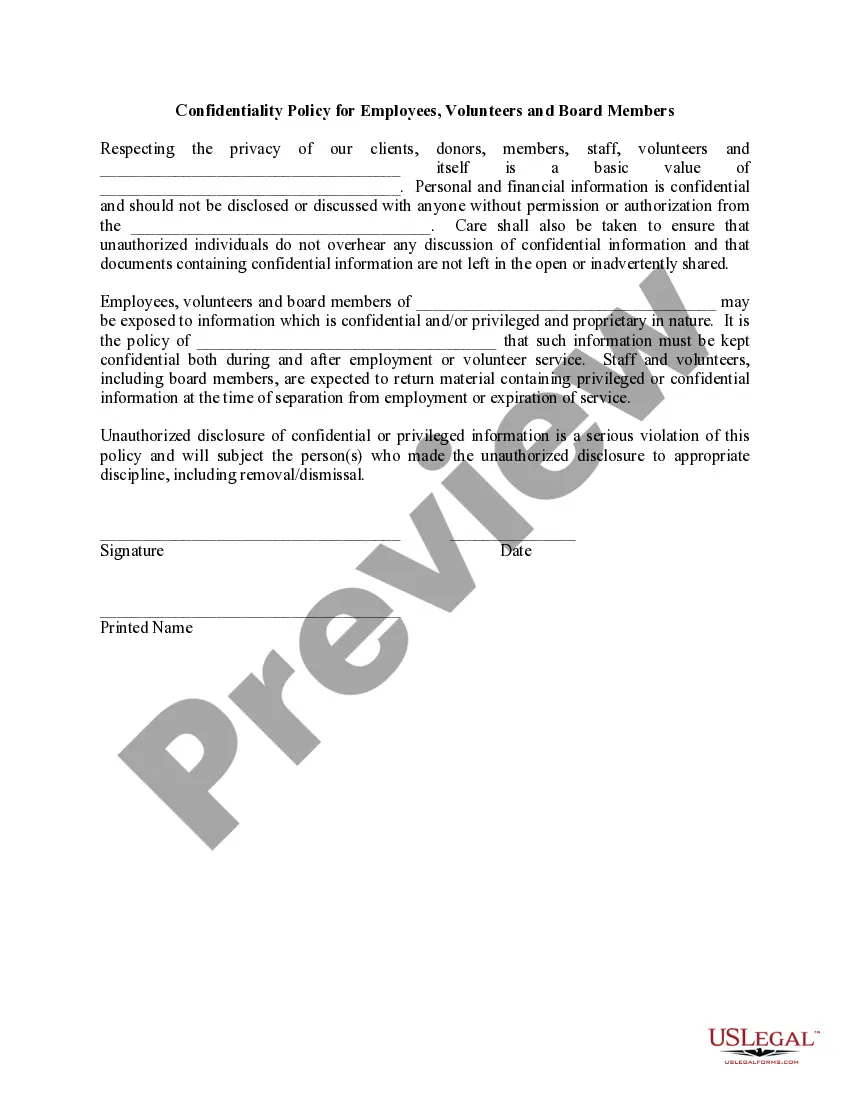
The Board of Directors Confidentiality Policy is a legal document designed to establish the confidentiality obligations of board members with regard to sensitive information. This policy outlines the limits on sharing information related to the corporation and its subsidiaries, ensuring that board members fulfill their fiduciary duties. Unlike other forms, this document specifically addresses the unique confidentiality requirements tailored for board directors, protecting both the corporation and its stakeholders.
Main sections of this form
- Definition of Confidential Information, including materials from Board meetings.
- Restrictions on the use and disclosure of Confidential Information.
- Guidelines for legal counsel access to Confidential Information.
- Procedures for disclosing Confidential Information when legally required.
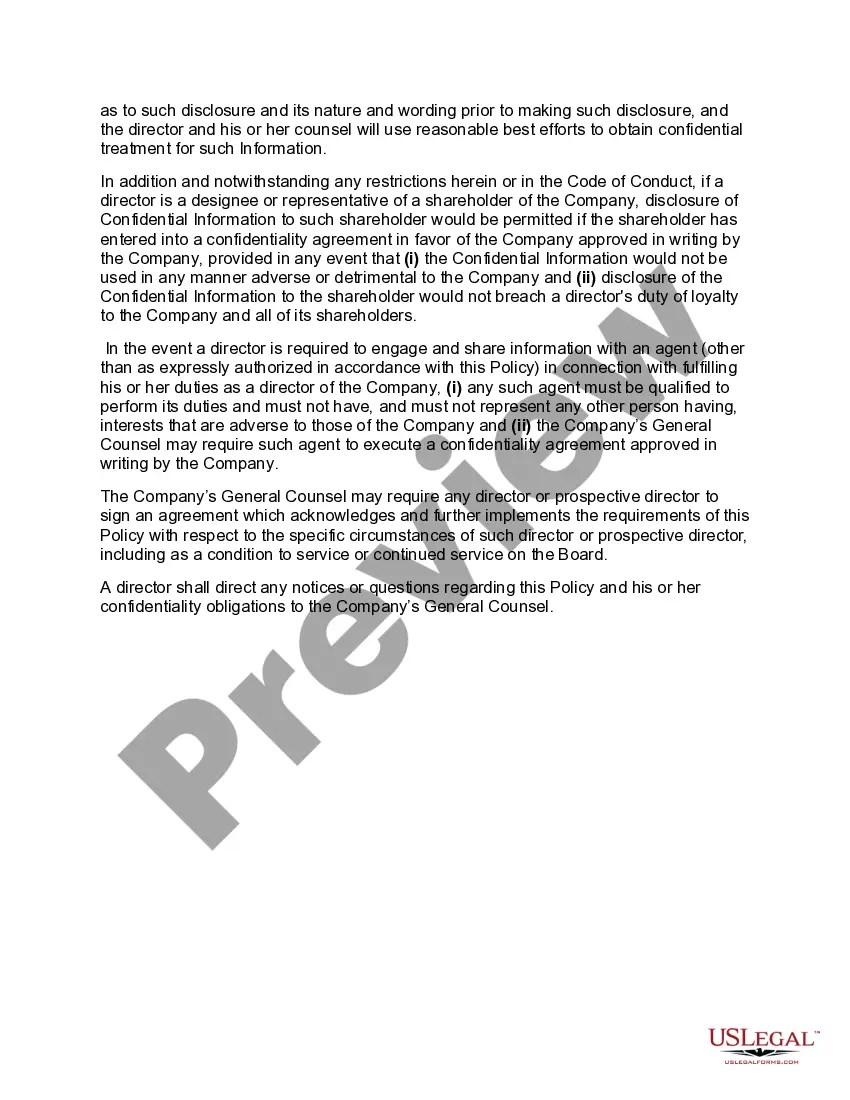
- Provisions for engaging agents and ensuring confidentiality agreements.
- Requirements for signing an acknowledgment agreement related to this Policy.
When this form is needed
This form should be used when a corporation aims to formalize the confidentiality obligations of its board members. It is essential during initial board member appointments, ongoing tenure of directors, or when revising corporate governance policies. Utilizing this policy is critical to preserving sensitive information and maintaining the integrity of board discussions.
Who should use this form
- Corporations with a Board of Directors looking to establish confidentiality practices.
- Board members who need to understand their obligations regarding confidential information.
- Corporate legal counsel assisting in drafting or implementing confidentiality policies.
How to prepare this document
- Identify the corporationâs name and the relevant board members.
- Include definitions of what constitutes Confidential Information specific to the corporation.
- Detail the circumstances under which information may be disclosed with proper authorization.
- Specify procedures for legal counsel access to Confidential Information, including the need for confidentiality agreements.
- Ensure all directors sign the policy acknowledgment agreement as a condition of their service.
Notarization guidance
This form does not typically require notarization unless specified by local law. However, it is important to check if any specific legal requirements in your state necessitate notarization for corporate documents.
Get your form ready online
Our built-in tools help you complete, sign, share, and store your documents in one place.
Make edits, fill in missing information, and update formatting in US Legal Forms—just like you would in MS Word.
Download a copy, print it, send it by email, or mail it via USPS—whatever works best for your next step.
Sign and collect signatures with our SignNow integration. Send to multiple recipients, set reminders, and more. Go Premium to unlock E-Sign.
If this form requires notarization, complete it online through a secure video call—no need to meet a notary in person or wait for an appointment.
We protect your documents and personal data by following strict security and privacy standards.

Make edits, fill in missing information, and update formatting in US Legal Forms—just like you would in MS Word.

Download a copy, print it, send it by email, or mail it via USPS—whatever works best for your next step.

Sign and collect signatures with our SignNow integration. Send to multiple recipients, set reminders, and more. Go Premium to unlock E-Sign.

If this form requires notarization, complete it online through a secure video call—no need to meet a notary in person or wait for an appointment.

We protect your documents and personal data by following strict security and privacy standards.
Common mistakes
- Failing to clearly define what constitutes Confidential Information.
- Not having board members sign the policy upon onboarding.
- Overlooking the need for confidentiality agreements when disclosing information to third parties.
- Ignoring state-specific laws that might affect confidentiality obligations.
Why use this form online
- Instant access to a professionally drafted confidentiality policy.
- Convenience of downloading and customizing the policy as needed.
- Reliability in ensuring compliance with legal standards.
- Time-saving with straightforward steps to complete and implement the policy.
Looking for another form?

Form popularity
FAQ
The principle of confidentiality is about privacy and respecting someone's wishes. It means that professionals shouldn't share personal details about someone with others, unless that person has said they can or it's absolutely necessary.
All confidential information should be locked or secured at all times. It should not be taken outside the Organisation's premises.Information should only be disclosed to others when authorised by senior management. Confidential information should not be used for personal profit or benefit.
Name, date of birth, age, sex and address. current contact details of family, guardian etc. bank details. medical history or records. personal care issues. service records and file progress notes. individual personal plans. assessments or reports.
The best protection against breaches in confidentiality is to keep the number of employees and personnel who have access to sensitive information to a necessary minimum.
This procedure implements the Information Governance Policy providing information on Confidentiality and outlining the processes needed to ensure compliance with all legislative, regulatory and best practice requirements.
This procedure implements the Information Governance Policy providing information on Confidentiality and outlining the processes needed to ensure compliance with all legislative, regulatory and best practice requirements.
Confidentiality is the responsibility of a person to ensure that information remains private. Confidentiality is especially important in the medial field because patient information must not be shared with anyone unless it is needed to help the patient being treated.
Board Papers will be created, maintained and distributed in a manner which is consistent with their confidential status. They will be kept separately from other (non-confidential) documents and stored in a manner which limits access to them by unauthorised persons (including employees).
Specifically, Directors can be held personally liable based on three fiduciary duties: the duty of care, the duty of loyalty, and the duty of obedience. Unfortunately, many board members seem to be unaware of their fiduciary responsibilities for the organization for which they volunteer.