Conflict of Interest Disclosure and Confidentiality Statement for Board of Directors of Non-Profit Corporation and Staff
Overview of this form
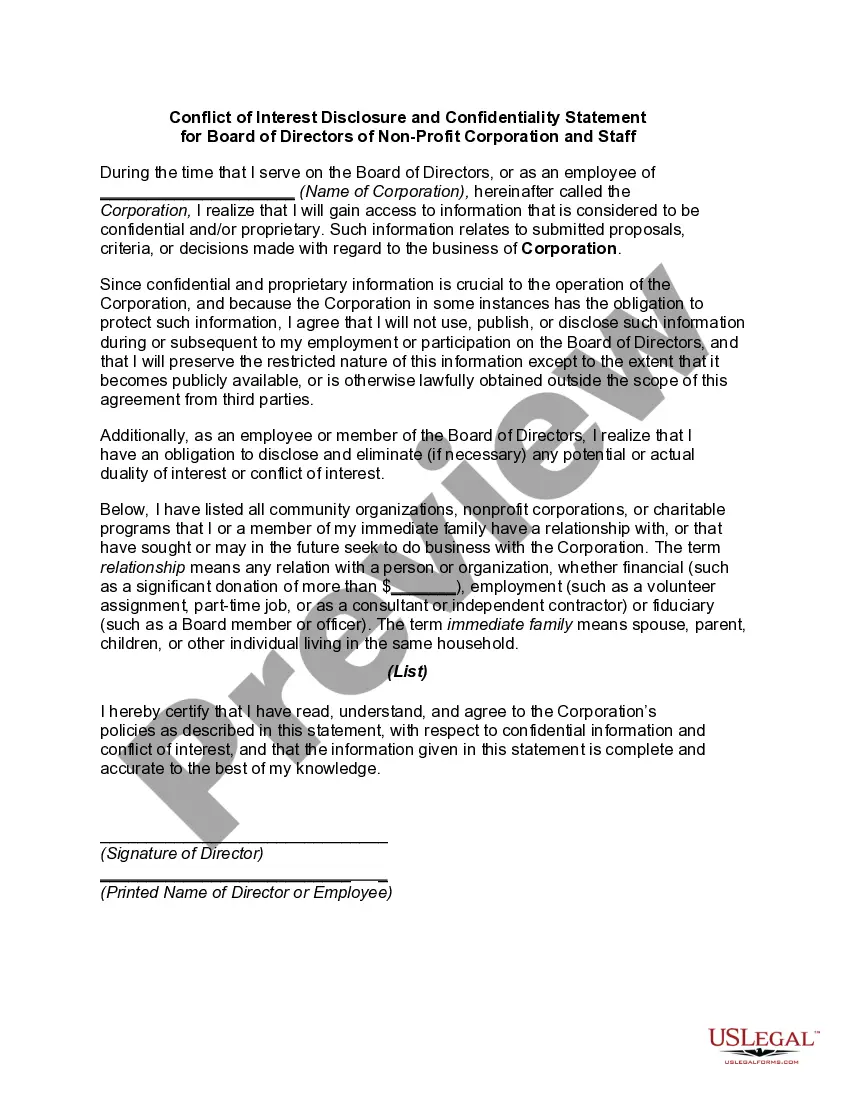
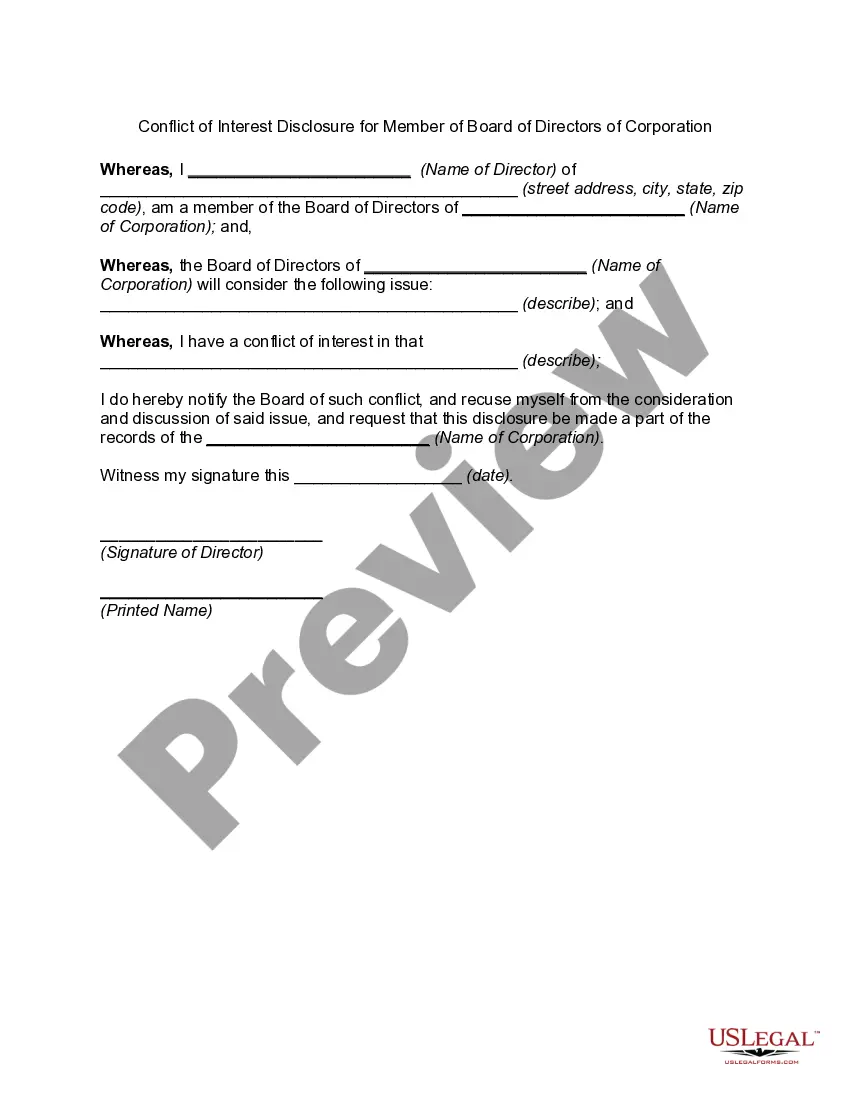
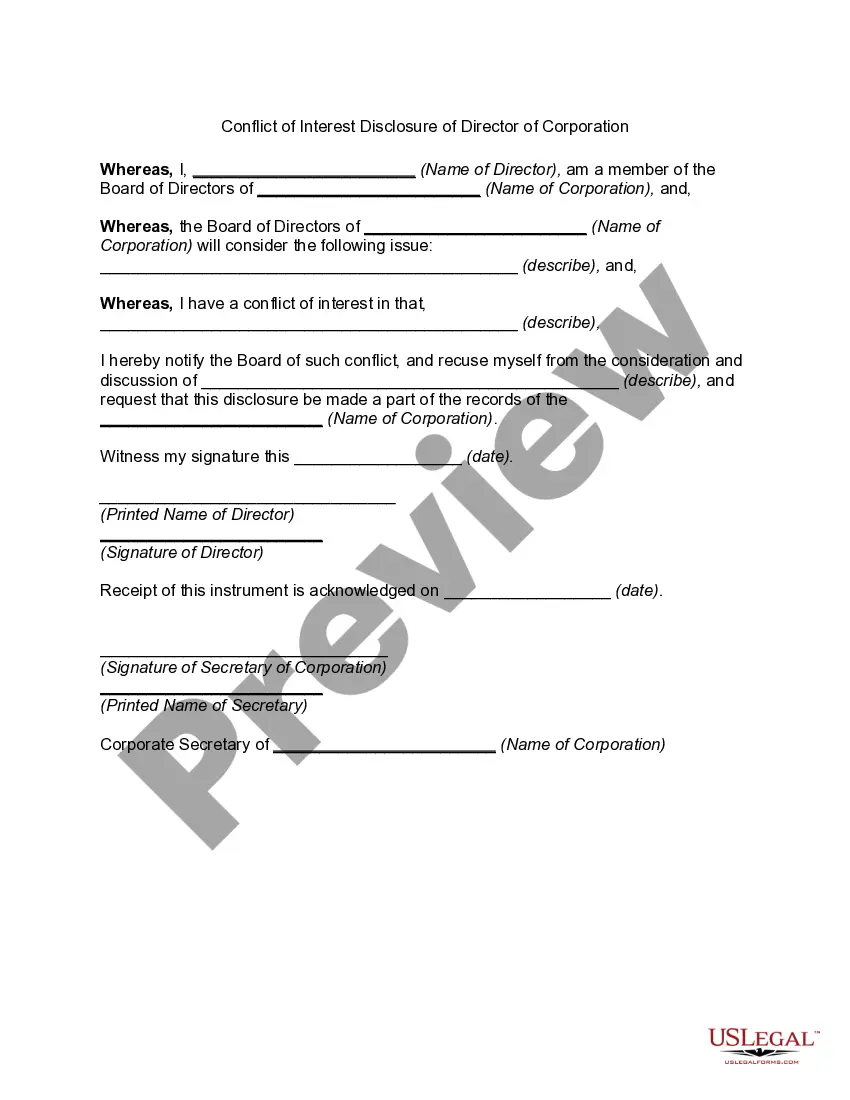
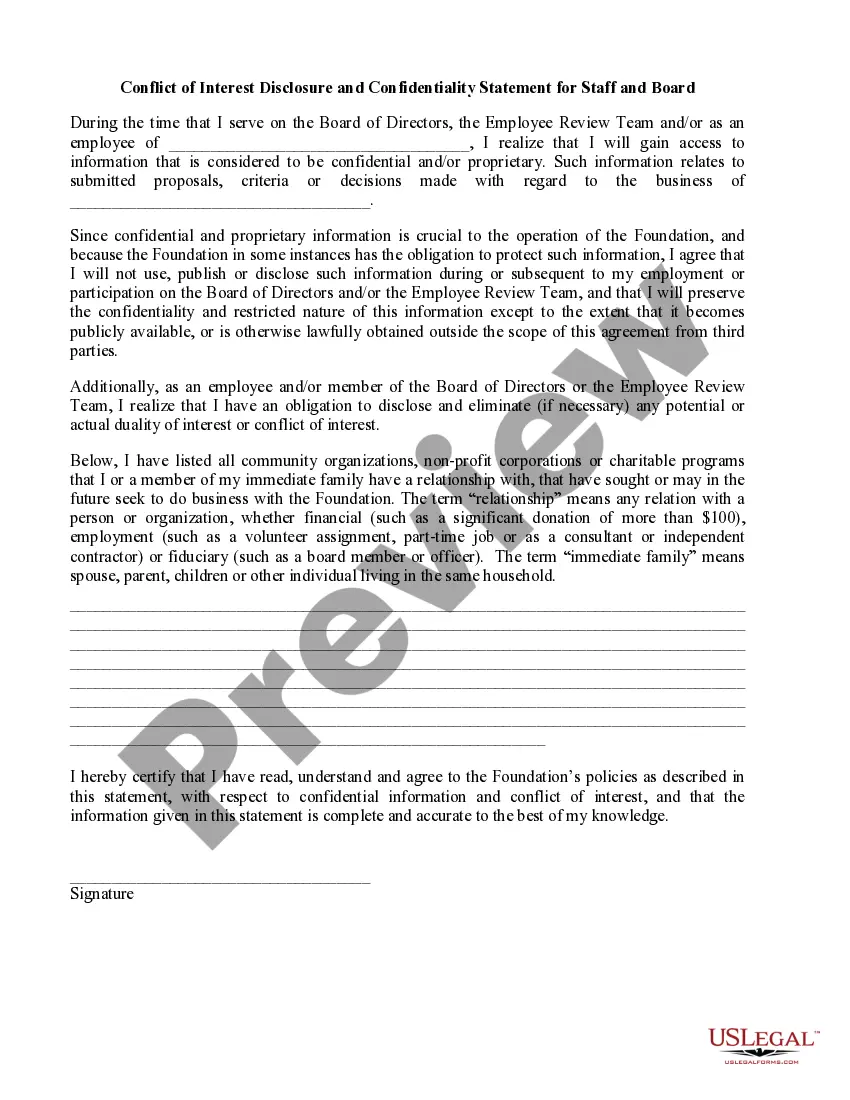
The Conflict of Interest Disclosure and Confidentiality Statement for Board of Directors of Non-Profit Corporation and Staff is a legal document designed to ensure that members of the Board of Directors and staff of a non-profit organization disclose any potential conflicts of interest and maintain the confidentiality of sensitive information. This form differs from other types of conflict of interest disclosures by specifically addressing the unique needs and obligations of non-profit entities, where trust and transparency are crucial for public confidence.
Key parts of this document
- Identification of the individual serving on the Board or as an employee.
- Agreement to protect confidential and proprietary information related to the Corporation.
- Disclosure of community organizations or business relationships that may pose a conflict of interest.
- Certification of understanding of the Corporation's policies regarding conflicts of interest.
- Signature and printed name of the Director or Employee confirming agreement to the terms.
Common use cases
This form should be used when individuals are appointed to a Board of Directors or hired as staff members in a non-profit organization. It is crucial during the onboarding process to ensure that all parties are aware of their duty to avoid conflicts of interest, and to protect the confidentiality of sensitive organizational information. It may also be referenced when new conflicts arise or when existing board members renew their commitment to the organizationâs code of conduct.
Who can use this document
- Members of the Board of Directors of a non-profit corporation.
- Staff members or employees of a non-profit organization.
- Individuals involved in decisions that may impact the operations of a non-profit.
- Volunteers who hold positions of responsibility within the organization.
How to complete this form
- Begin by entering the name of the Corporation in the designated area.
- Review the obligation to maintain confidentiality and the importance of disclosing any conflicts of interest.
- List any community organizations, non-profits, or charitable programs with which you or your immediate family have a relationship.
- Carefully read the Corporation's policies as stated in the form.
- Sign and print your name to certify your agreement to the terms outlined in the document.
Is notarization required?
This form does not typically require notarization unless specified by local law. Always verify your stateâs specific requirements to ensure compliance.
Get your form ready online
Our built-in tools help you complete, sign, share, and store your documents in one place.
Make edits, fill in missing information, and update formatting in US Legal Forms—just like you would in MS Word.
Download a copy, print it, send it by email, or mail it via USPS—whatever works best for your next step.
Sign and collect signatures with our SignNow integration. Send to multiple recipients, set reminders, and more. Go Premium to unlock E-Sign.
If this form requires notarization, complete it online through a secure video call—no need to meet a notary in person or wait for an appointment.
We protect your documents and personal data by following strict security and privacy standards.

Make edits, fill in missing information, and update formatting in US Legal Forms—just like you would in MS Word.

Download a copy, print it, send it by email, or mail it via USPS—whatever works best for your next step.

Sign and collect signatures with our SignNow integration. Send to multiple recipients, set reminders, and more. Go Premium to unlock E-Sign.

If this form requires notarization, complete it online through a secure video call—no need to meet a notary in person or wait for an appointment.

We protect your documents and personal data by following strict security and privacy standards.
Common mistakes
- Failing to disclose all potential conflicts of interest.
- Not including the name of the Corporation at the beginning.
- Overlooking the signature or printed name section, which may render the form invalid.
- Misunderstanding what constitutes a conflict of interest, leading to incomplete disclosures.
Advantages of online completion
- Easy access to templates that can be downloaded and completed at your convenience.
- Editable forms allow for customization to suit specific organizational needs.
- Reliable resources that have been drafted by licensed attorneys.
Legal use & context
- This form is legally acknowledged in the context of non-profit governance and compliance.
- It helps in adhering to best practices in organizational transparency and integrity.
- Failure to use this form may lead to legal complications related to undisclosed conflicts.
Key takeaways
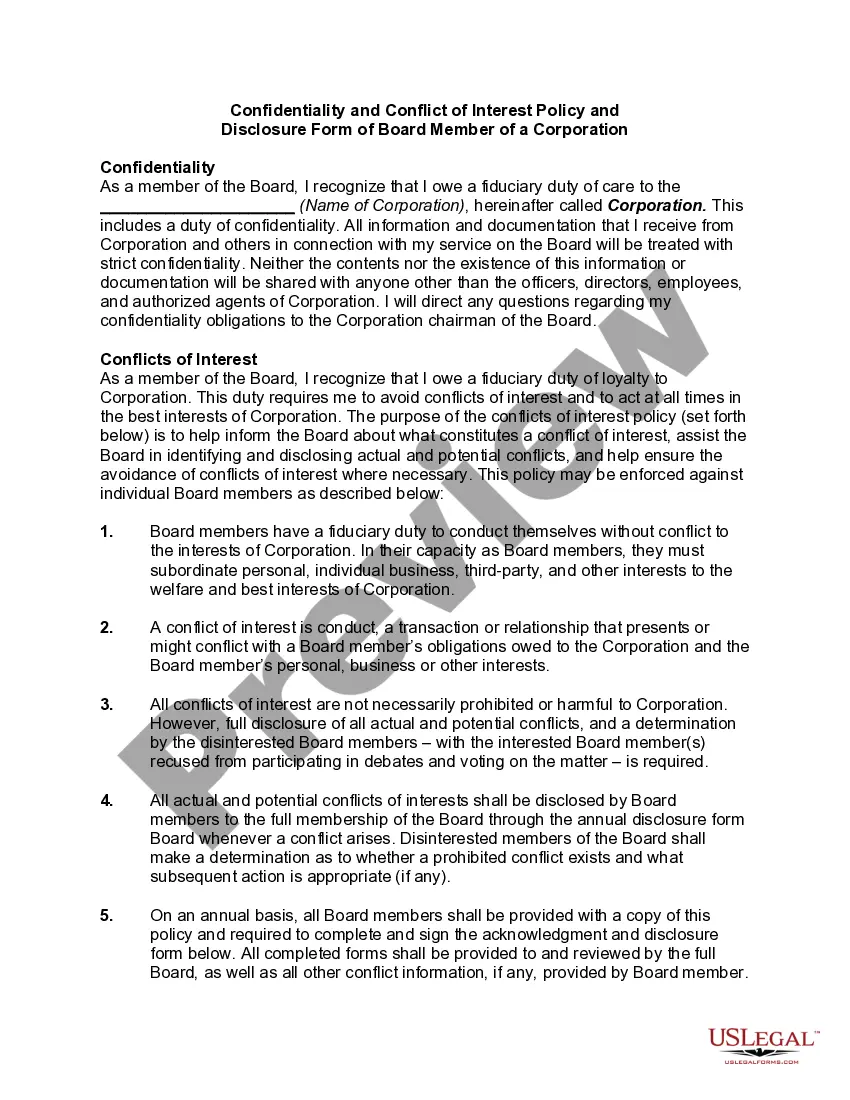
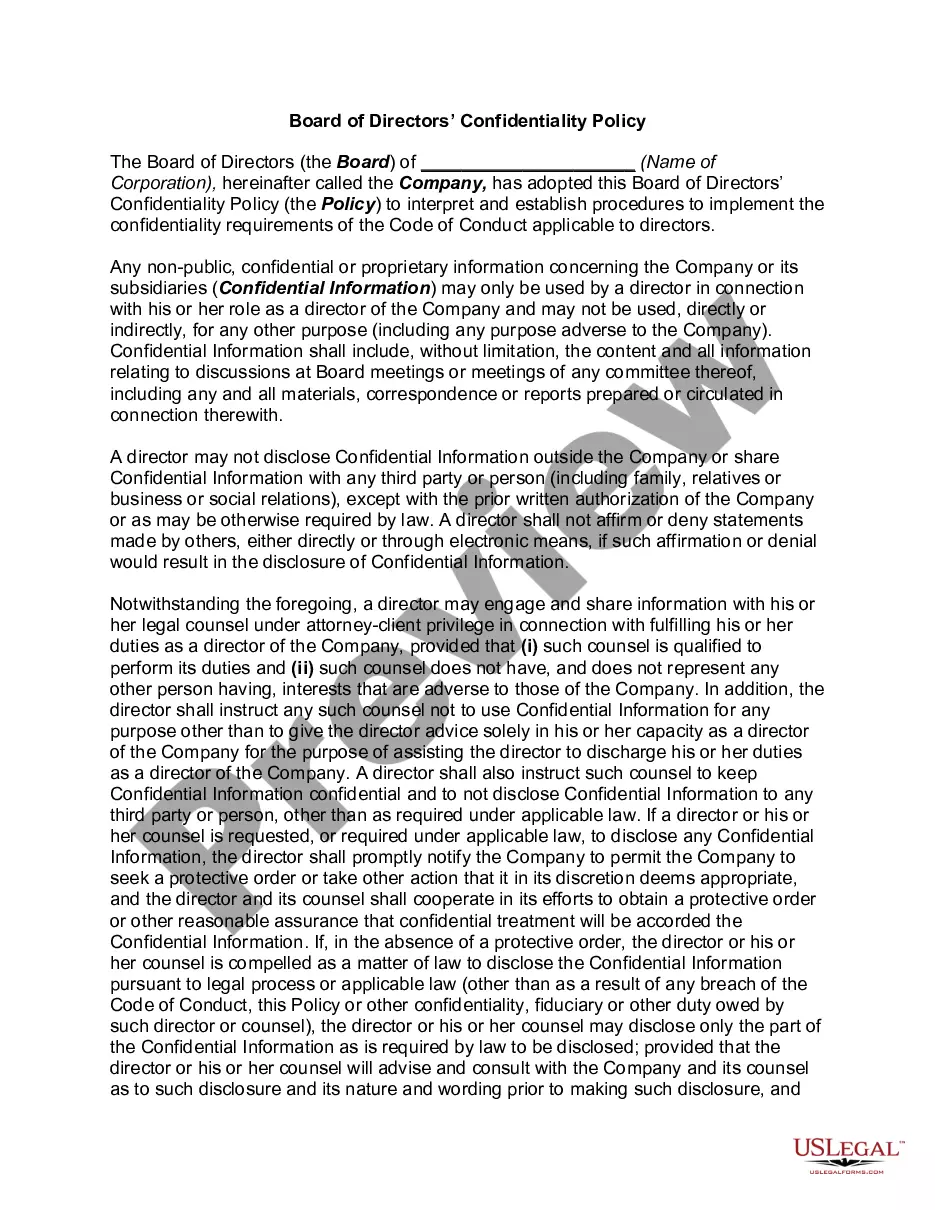
- Use this form to maintain confidentiality and disclose any conflicts of interest effectively.
- Ensure all information is complete and accurate to uphold organizational integrity.
- Review and update the form regularly as part of good governance practices.
Looking for another form?
Form popularity
FAQ
Types of conflict of interest and duty Open all. Actual conflict of interest. There is a real conflict between an employee or director's public duties and private interests. Potential conflict of interest.Perceived conflict of interest.Conflict of duty.
Major conflicts of interest could include, but are not restricted to, salaries and perks, misappropriation of company assets, self-dealing, appropriating corporate opportunities, insider trading, and neglecting board work.
Nonprofit Conflict of Interest Policy, Definitions It basically discourages and prohibits gifts, favors, loans, and transaction arrangements between directors, officers, or employees of the organization.
For example, if a board director, employee, or volunteer takes a donor list and uses it to solicit donors for another organization, that is clearly a conflict of interest. It's common for businesses to ask their employees to sign non-compete agreements for this reason, but it's not as common in nonprofit organizations.
A conflict of interest exists when a member of the organization has a personal interest that may influence them when making decisions. While the law focuses primarily on financial interests and provides some guidelines, nonprofit organizations contend with a variety of potential and perceived conflicts of interest.
What to Include in a Conflict of Interest Policy. At its core, a board member conflict of interest policy should (a) require those with a conflict (or a potential conflict) to disclose it, and (b) prohibit any board members from voting on any matter in which they have a personal conflict.
A policy on conflicts of interest should (a) require those with a conflict (or who think they may have a conflict) to disclose the conflict/potential conflict, and (b) prohibit interested board members from voting on any matter in which there is a conflict.