Employee Evaluation Form for Plumber
What is this form?
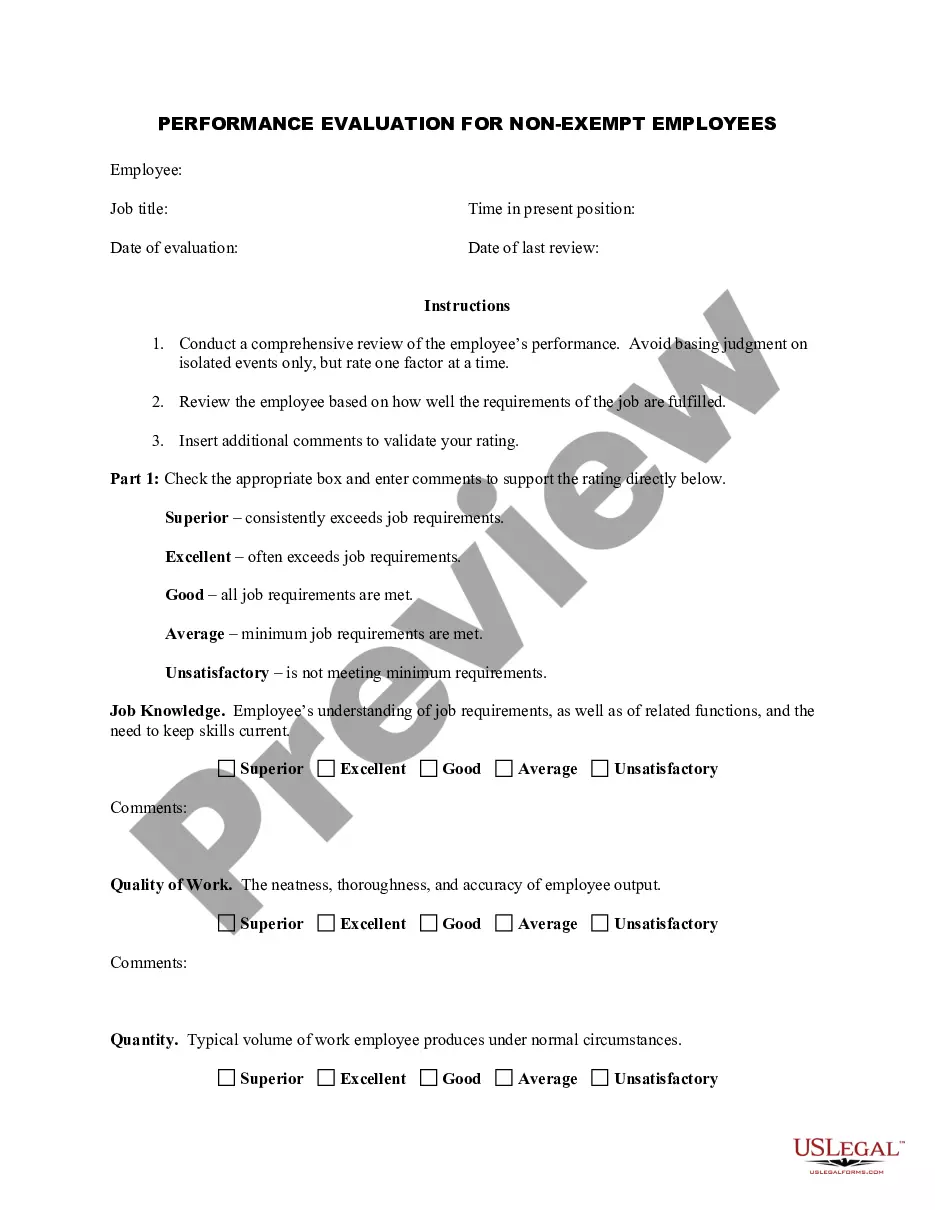
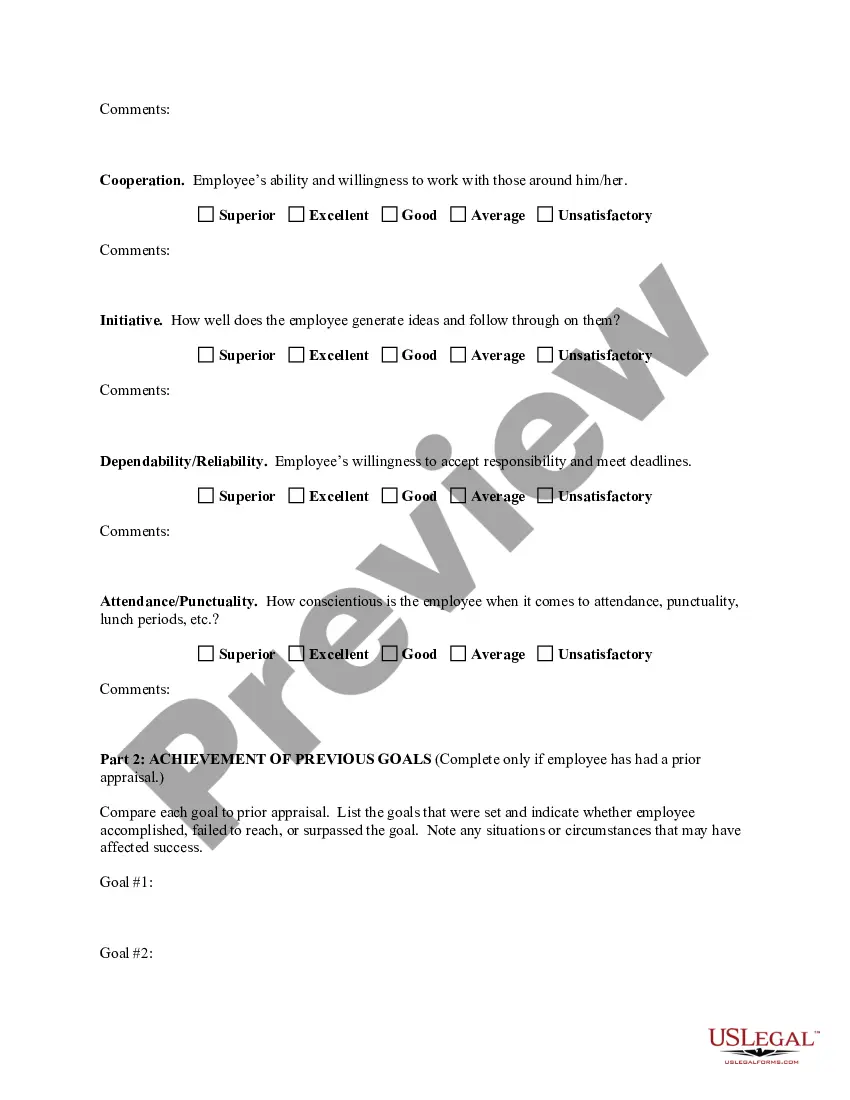
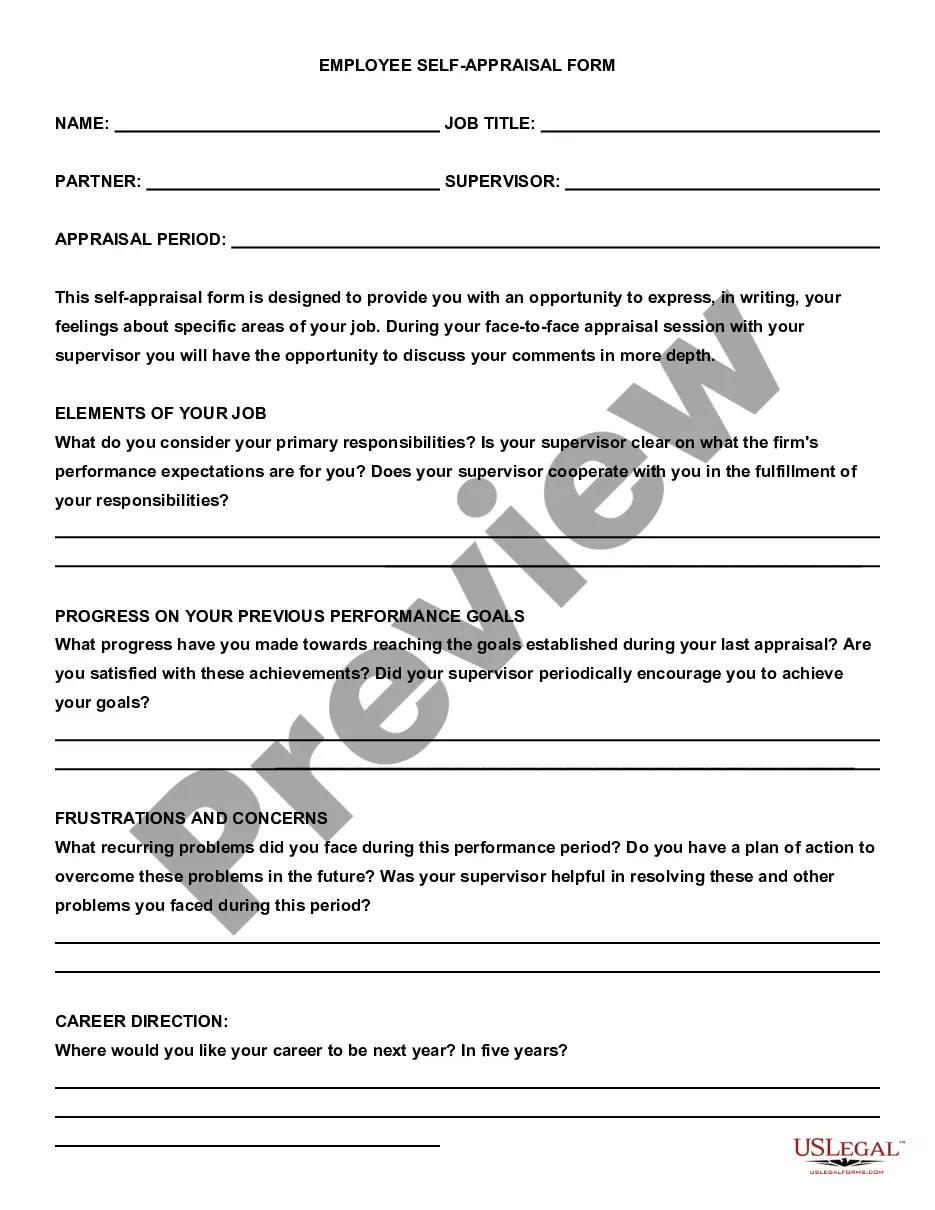
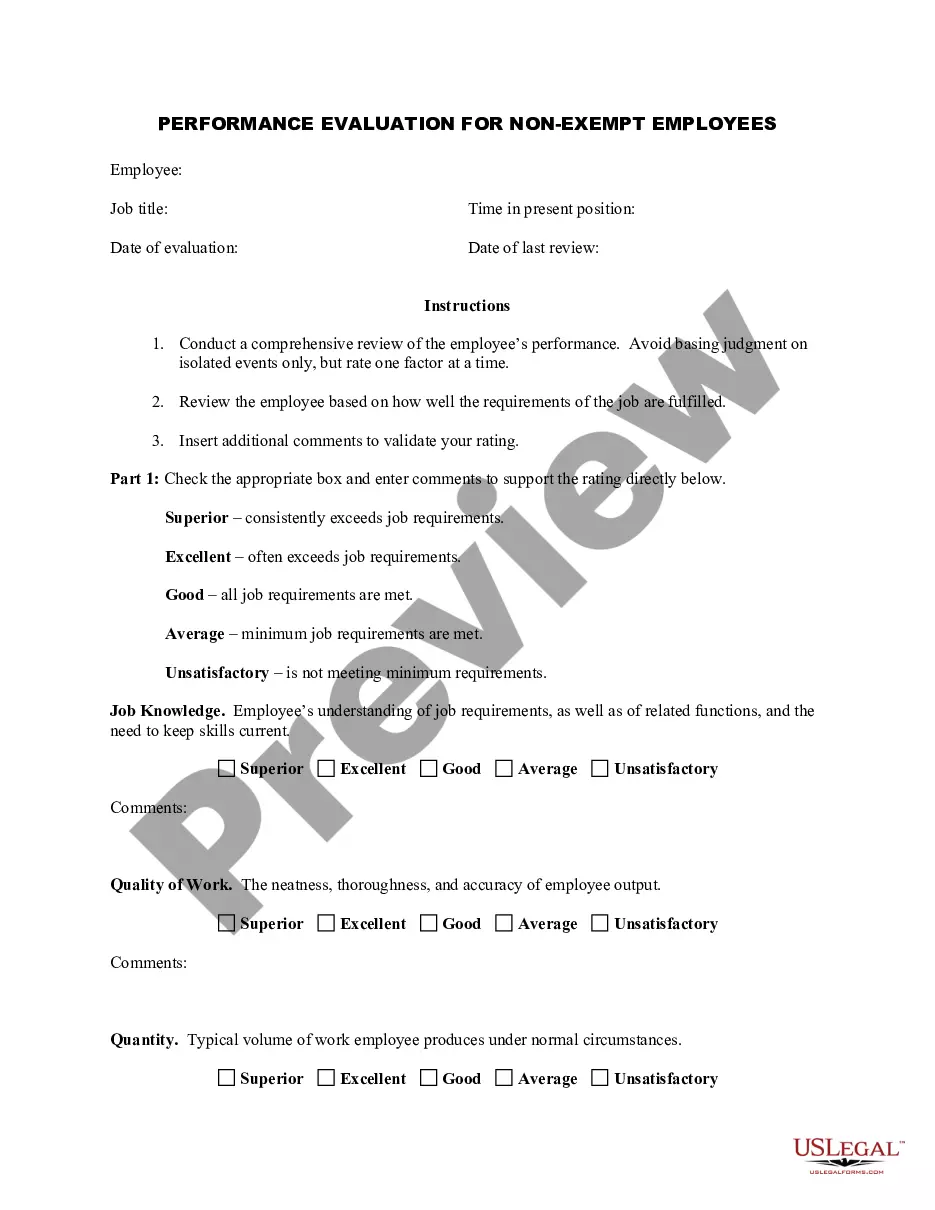
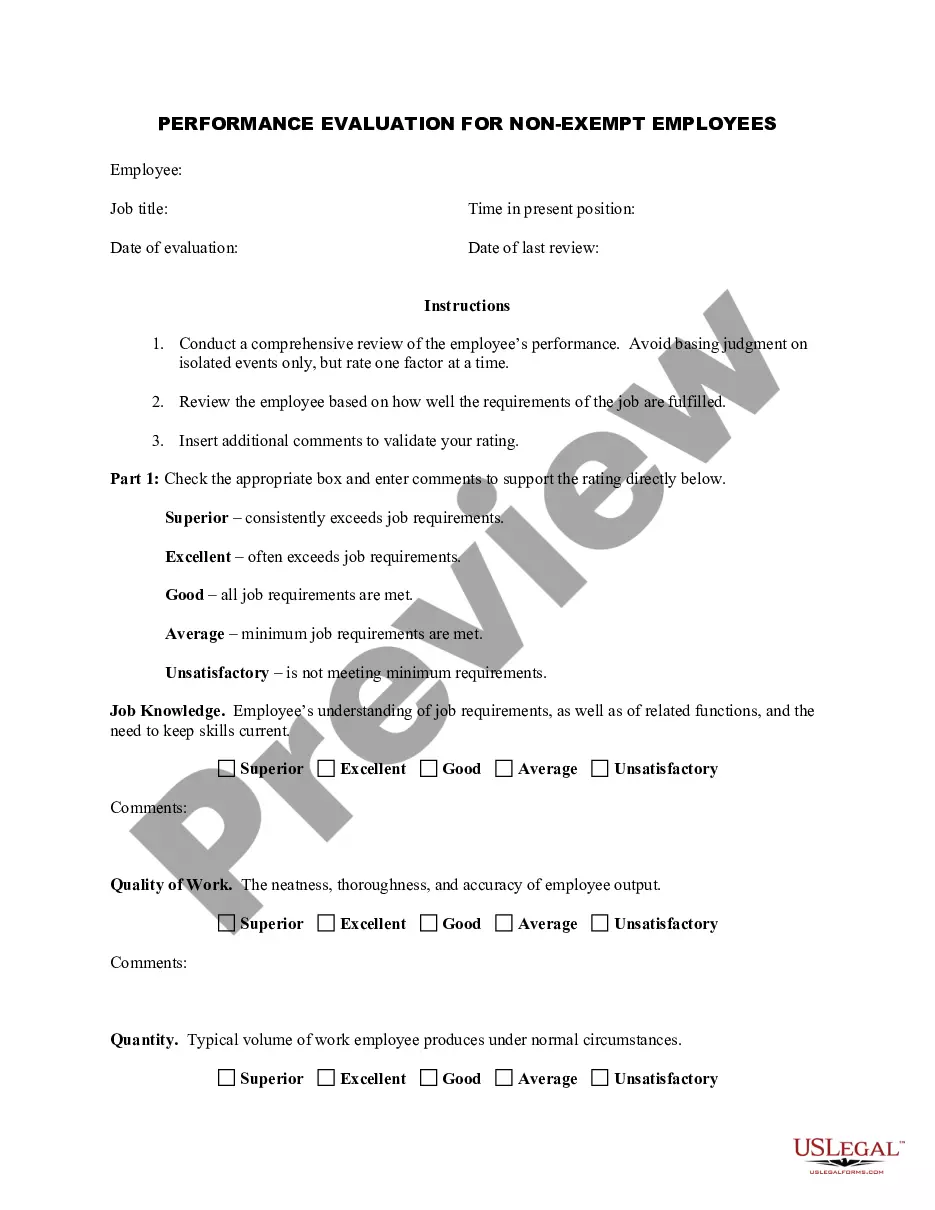
The Employee Evaluation Form for Plumber is a structured tool used by employers to assess the performance of a plumber. This form aids in evaluating various aspects of the employee's work, including job knowledge, quality of work, initiative, and overall dependability. Unlike generic employee evaluation forms, this document is specifically tailored for plumbing professionals, ensuring that evaluations consider industry-specific requirements and competencies.
Form components explained
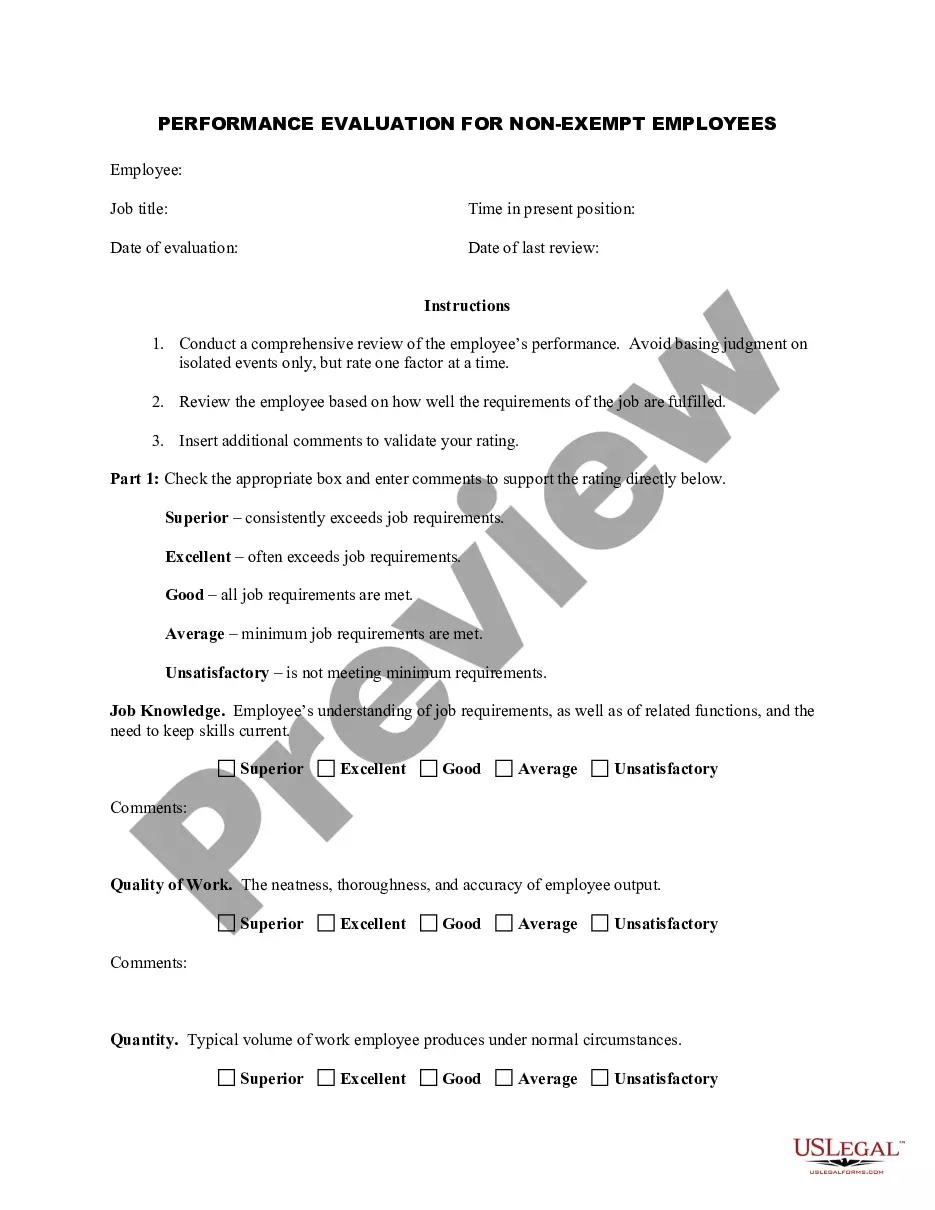
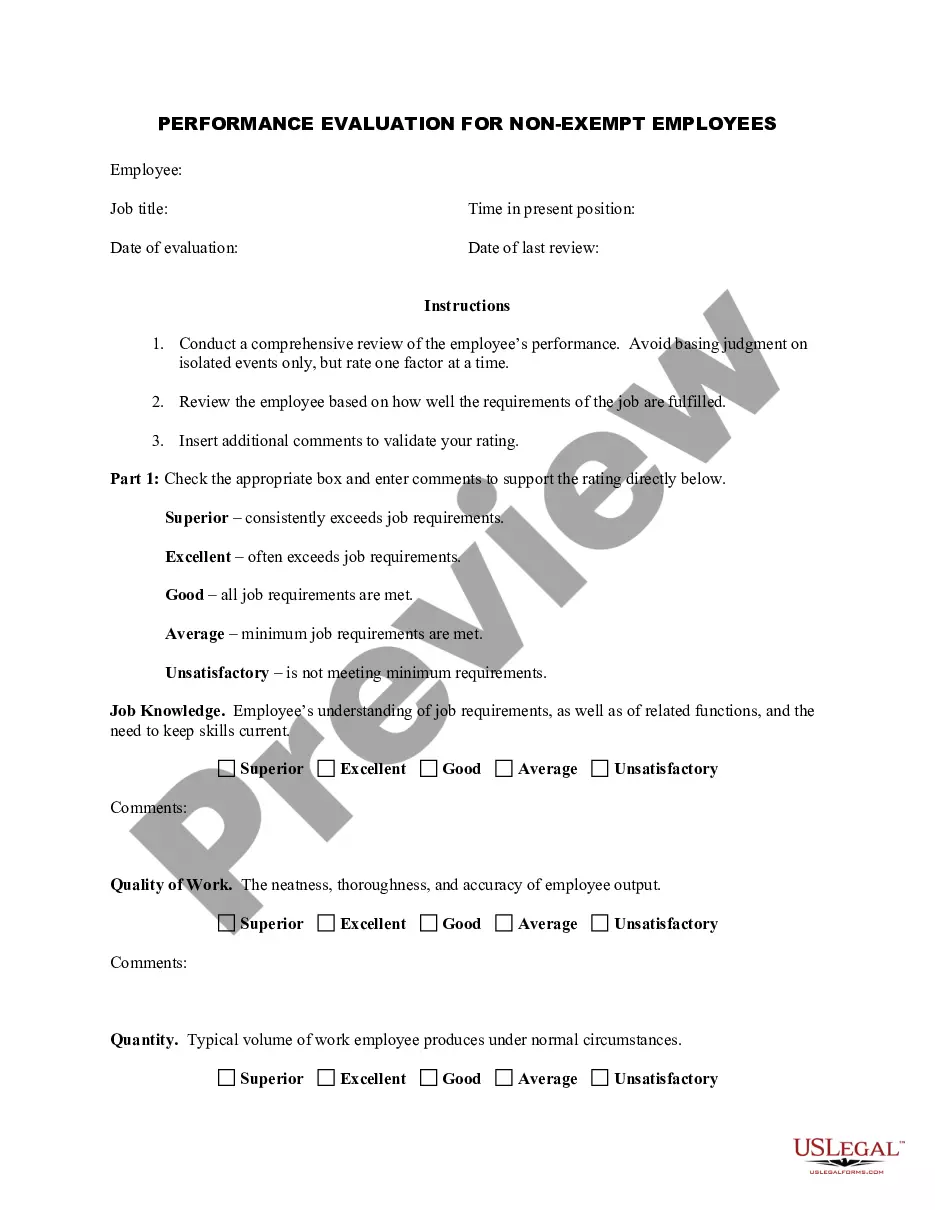
- Job Knowledge: Assesses the employee's understanding of plumbing duties and the importance of keeping skills updated.
- Quality of Work: Evaluates the neatness, thoroughness, and accuracy of the plumbing tasks performed.
- Dependability: Reviews the employee's reliability in meeting responsibilities and deadlines.
- Initiative: Measures the employee's ability to generate ideas and successfully follow through with them.
- Attendance: Looks at the punctuality and attendance habits of the employee.
Situations where this form applies
This form should be used during regular employee assessments or annual performance reviews. It is also useful when addressing specific situations, such as when a plumber is up for promotion, or after a significant project, to ensure performance aligns with the company's standards and expectations.
Intended users of this form
- Human resource managers involved in employee evaluations.
- Supervisors or managers directly overseeing plumbers.
- Small business owners who employ plumbers.
Completing this form step by step
To complete the Employee Evaluation Form for Plumber, follow these steps:
- Identify the employee being evaluated and fill in necessary personal details.
- Assess each component of the employee's performance using the provided rating scale.
- Provide specific comments and examples to support each rating.
- Assess the employee's achievement of previous goals if applicable.
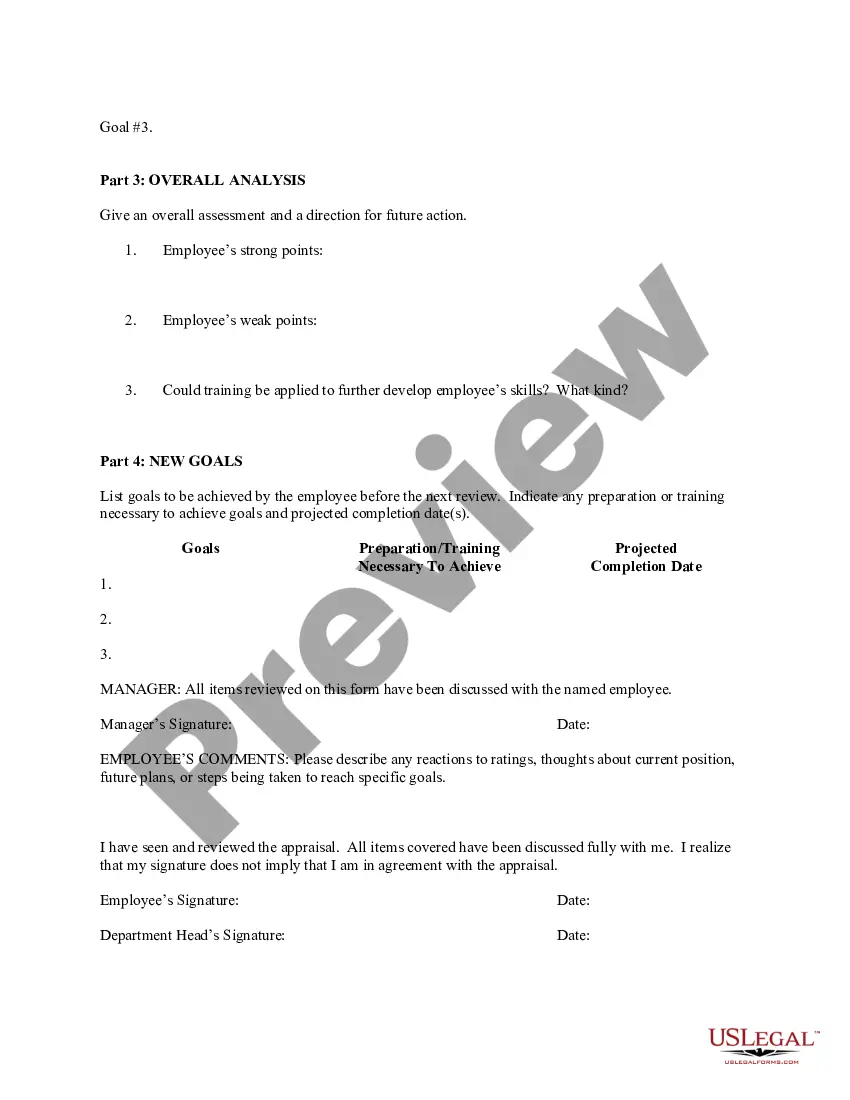
- Set new goals for the upcoming evaluation period based on the discussion with the employee.
- Ensure that both the managerâs and employeeâs signatures are on the form to acknowledge the evaluation process.
Does this document require notarization?
This form does not typically require notarization unless specified by local law.
Get your form ready online
Our built-in tools help you complete, sign, share, and store your documents in one place.
Make edits, fill in missing information, and update formatting in US Legal Forms—just like you would in MS Word.
Download a copy, print it, send it by email, or mail it via USPS—whatever works best for your next step.
Sign and collect signatures with our SignNow integration. Send to multiple recipients, set reminders, and more. Go Premium to unlock E-Sign.
If this form requires notarization, complete it online through a secure video call—no need to meet a notary in person or wait for an appointment.
We protect your documents and personal data by following strict security and privacy standards.

Make edits, fill in missing information, and update formatting in US Legal Forms—just like you would in MS Word.

Download a copy, print it, send it by email, or mail it via USPS—whatever works best for your next step.

Sign and collect signatures with our SignNow integration. Send to multiple recipients, set reminders, and more. Go Premium to unlock E-Sign.

If this form requires notarization, complete it online through a secure video call—no need to meet a notary in person or wait for an appointment.

We protect your documents and personal data by following strict security and privacy standards.
Avoid these common issues
- Failing to provide specific examples to justify ratings.
- Rushing through evaluations without thorough consideration of the employee's performance.
- Neglecting to address previous goals set in the last evaluation.
- Using vague language that does not clearly communicate the employee's strengths and areas for improvement.
Benefits of completing this form online
- Convenience of easily accessible online forms that can be edited as needed.
- Structured format ensures comprehensive evaluations, leaving no important aspect overlooked.
- Legal assurance that evaluations are conducted professionally, enhancing employee trust and accountability.
Looking for another form?

Form popularity
FAQ
Level of execution. Quality of work. Level of creativity. Amount of consistent improvement. Customer and peer feedback. Sales revenue generated. Responsiveness to feedback. Ability to take ownership.
Reflect on feedback. Make a list of your top accomplishments and identify areas for improvements. Gather analytics to show impact. Make a commitment to improve. Set a SMART goal for yourself. Create a plan of action. Communication. Job Performance.
Don't Make It Personal. This is one of the most unprofessional things that a manager can do. Don't Do It Through E-mail. Don't Publicly Shame. Don't Yell/ Use Foul Language. Don't Be Unfair (No Bias) Start With A Honest Positive Review. Be Well-prepared. Discuss And Help Them With Their Issues.
Communication. Collaboration and teamwork. Problem-solving. Quality and accuracy of work. Attendance, punctuality and reliability. The ability to accomplish goals and meet deadlines.
Have your employee complete self-assessment first. Be open to amendments. Don't make it personal. Focus on strengths. Use concrete examples. Base the review against their job description. Include action items for moving forward. Follow up.
Ensure feedback is specific Don't just tell the employee their behavior needs to improve. Point out exactly what negative traits they have and the impact each has on other employees. Provide examples of bad behavior One way to make feedback specific is to highlight past examples of the employee's poor attitude.
Focus on the job, not the person. Be specific. Consider questions over statements. With positives, stick to process. Connect personally where you can. Get serious but don't get mean.
Gather information. List employee responsibilities. Use objective language. Use action verbs. Compare performance ratings. Ask open-ended questions. Use a point system.
Critique Behavior, Not People. Listen to Feedback. Give Clear Direction. Document Problematic Behavior. Consult the HR Department. Work Together Toward a Solution. Write Down Expectations. Set Specific Consequences.