Louisiana Act of Subordination
About this form
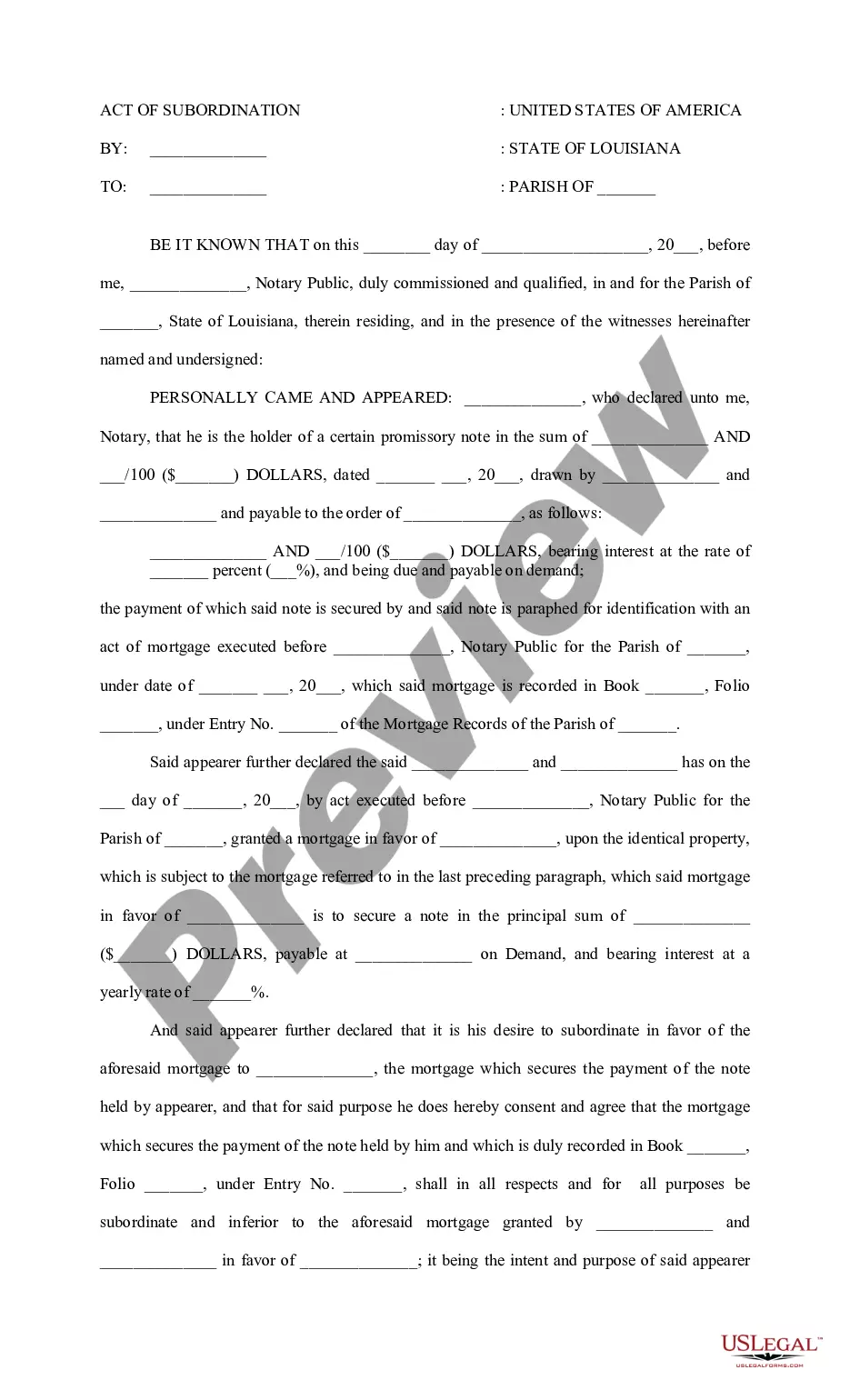
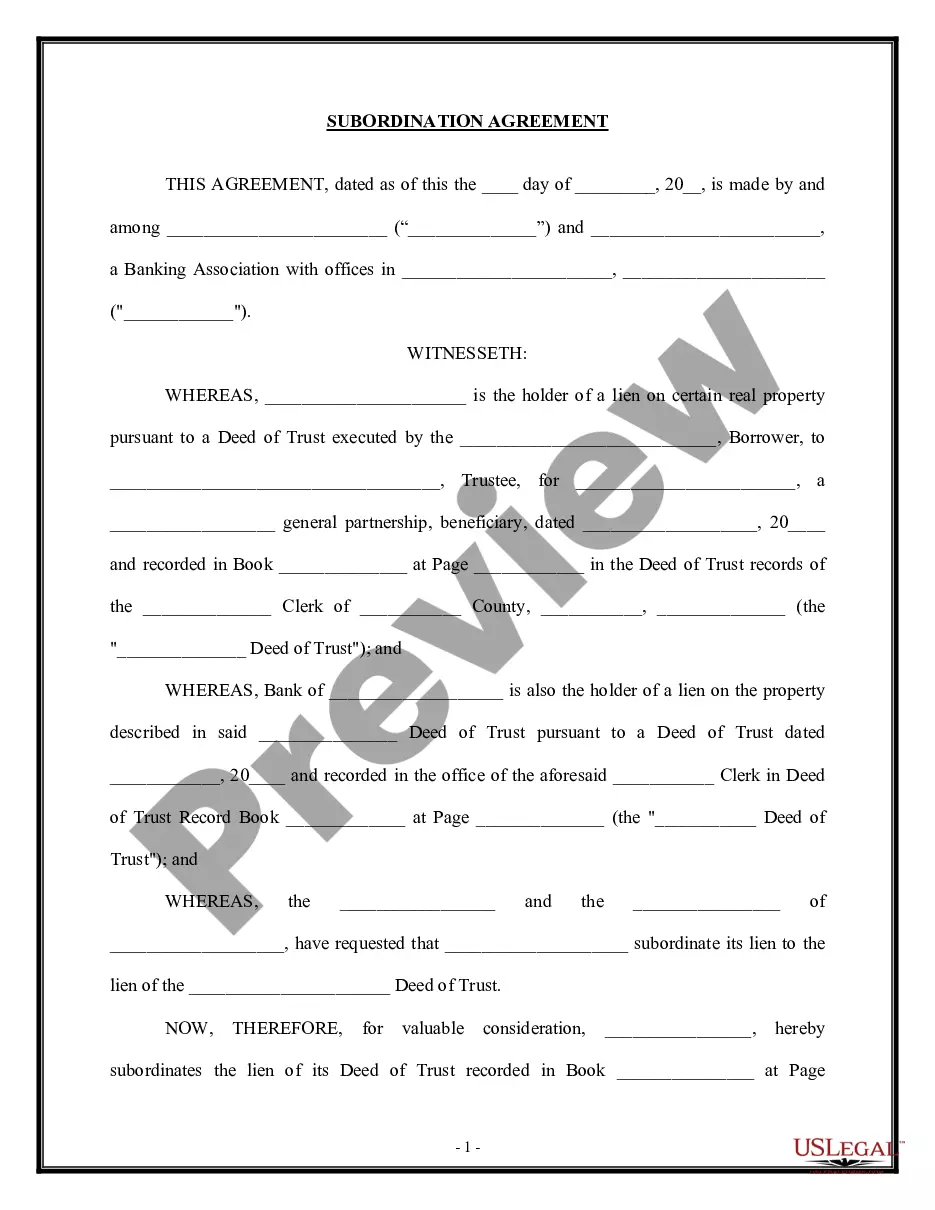
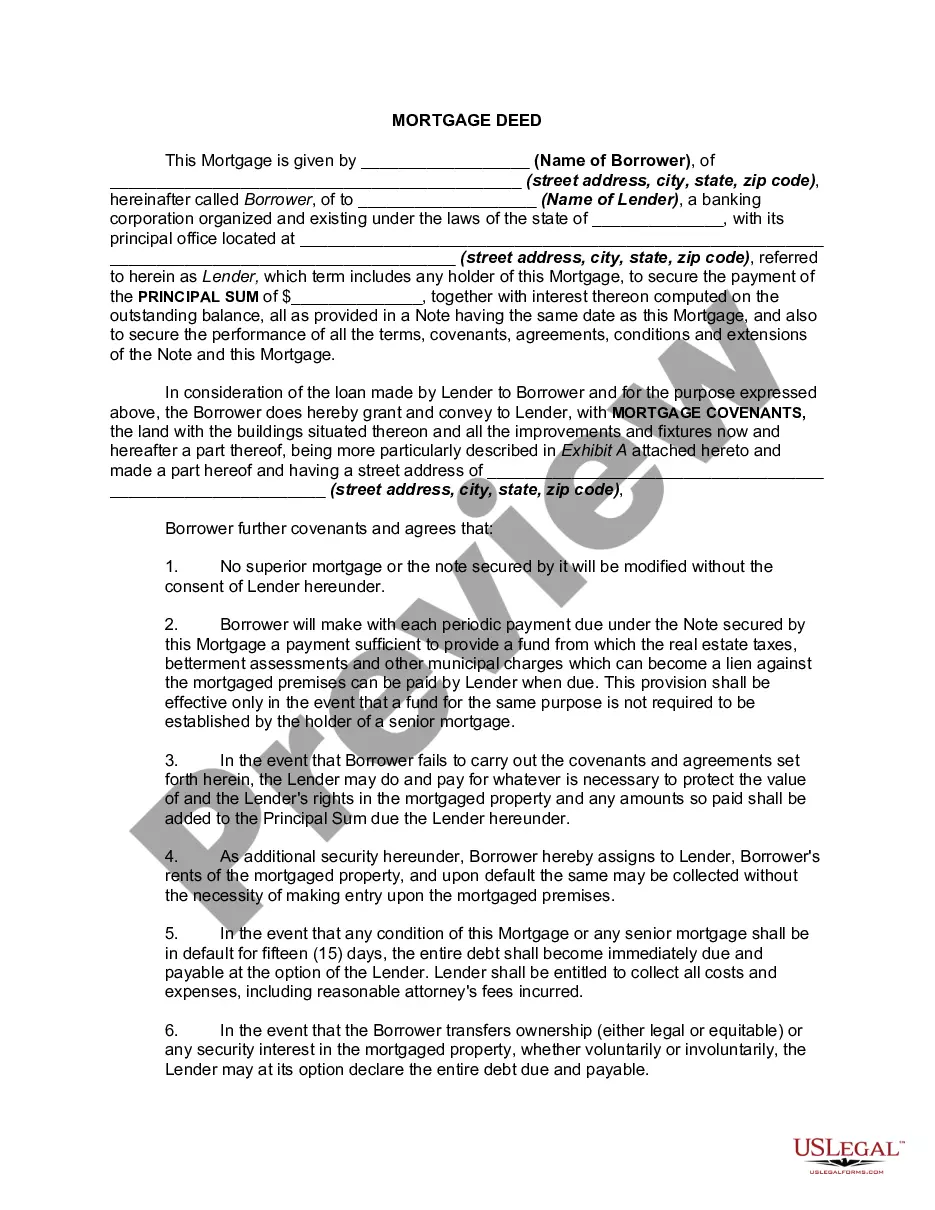
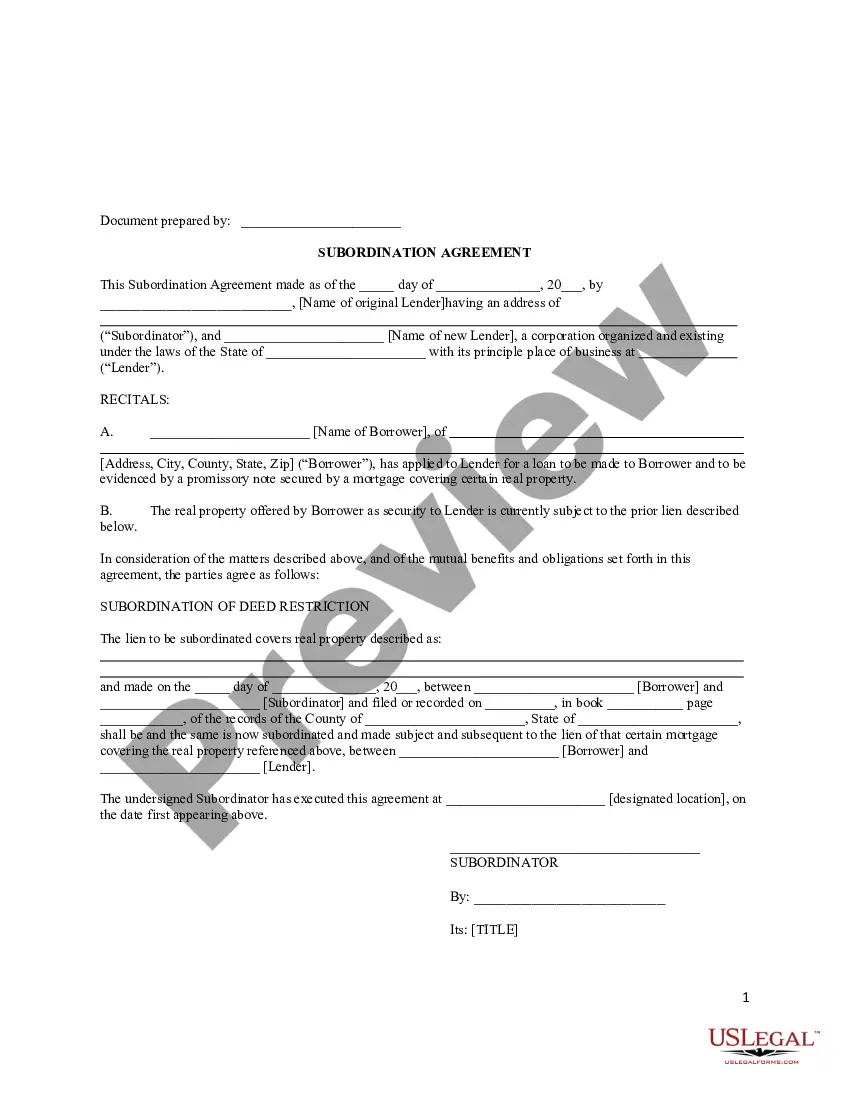
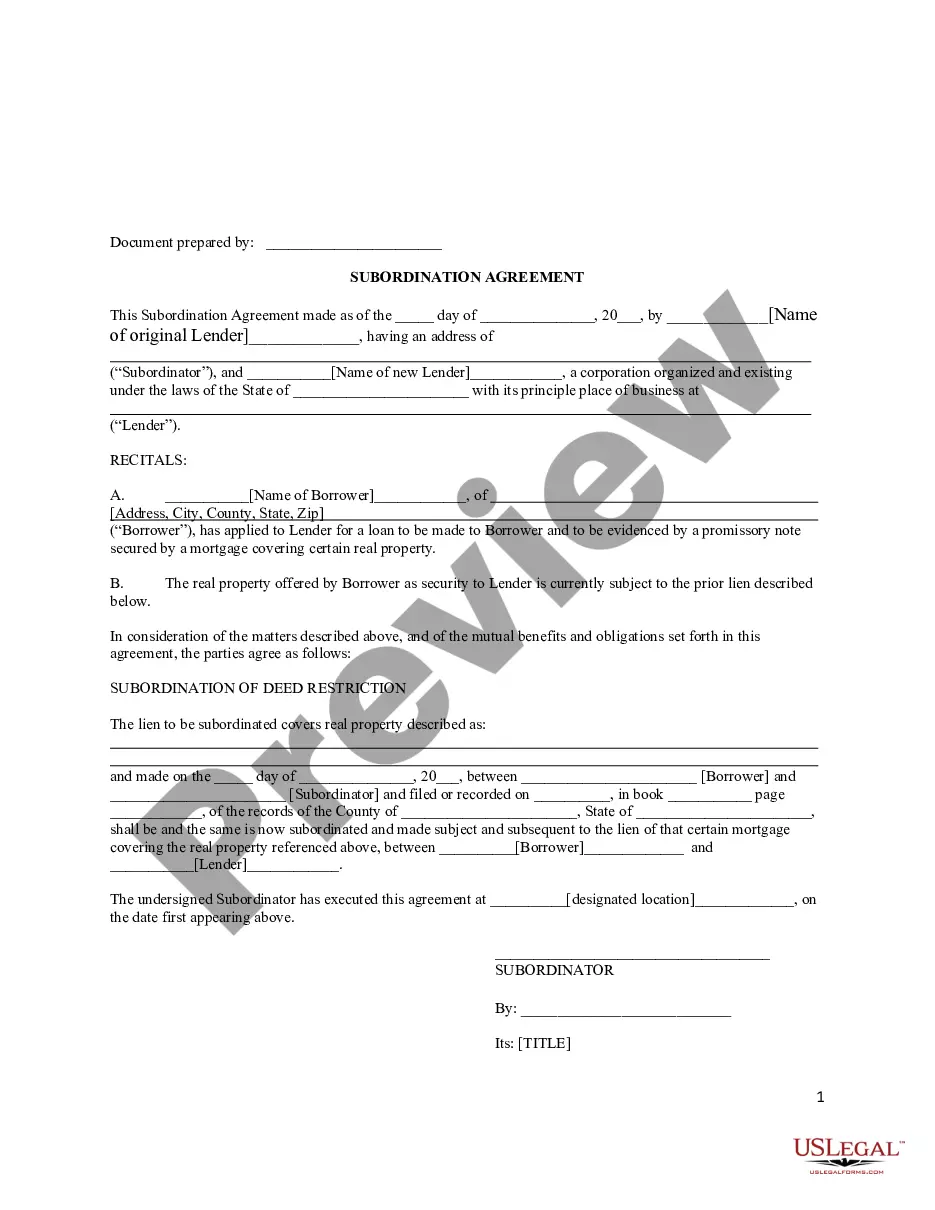
The Act of Subordination is a legal document that allows a property owner to alter the priority of debt repayments associated with a property. Specifically, it enables the holder of an existing mortgage to agree to subordinate their interest, making way for a new mortgage to take priority. This is important for property owners who wish to secure additional financing, such as a second mortgage, for improvements or repairs on their property.
Key components of this form
- Parties involved in the subordination, including names and addresses.
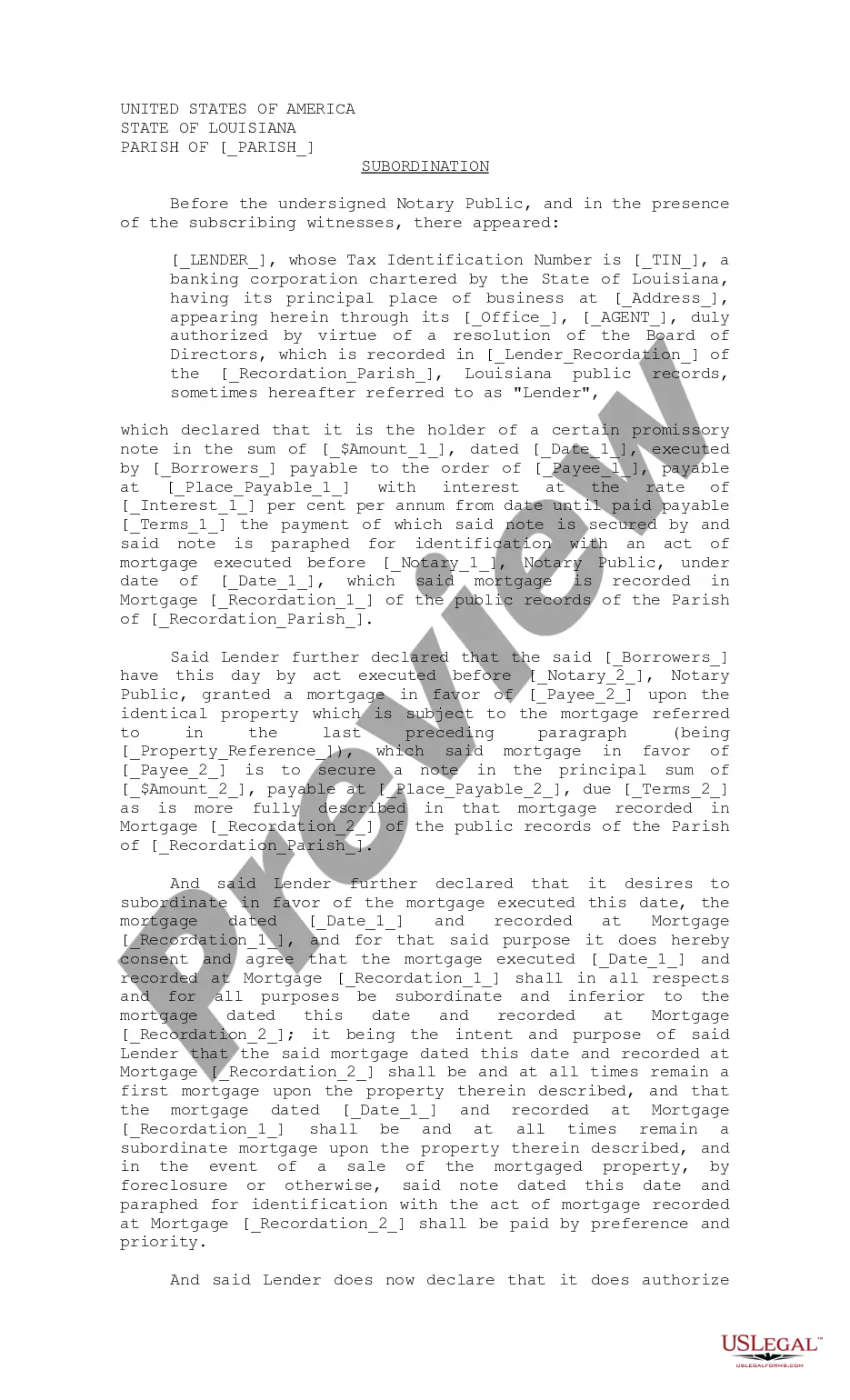
- Details of the promissory note and existing mortgage, including amounts and interest rates.
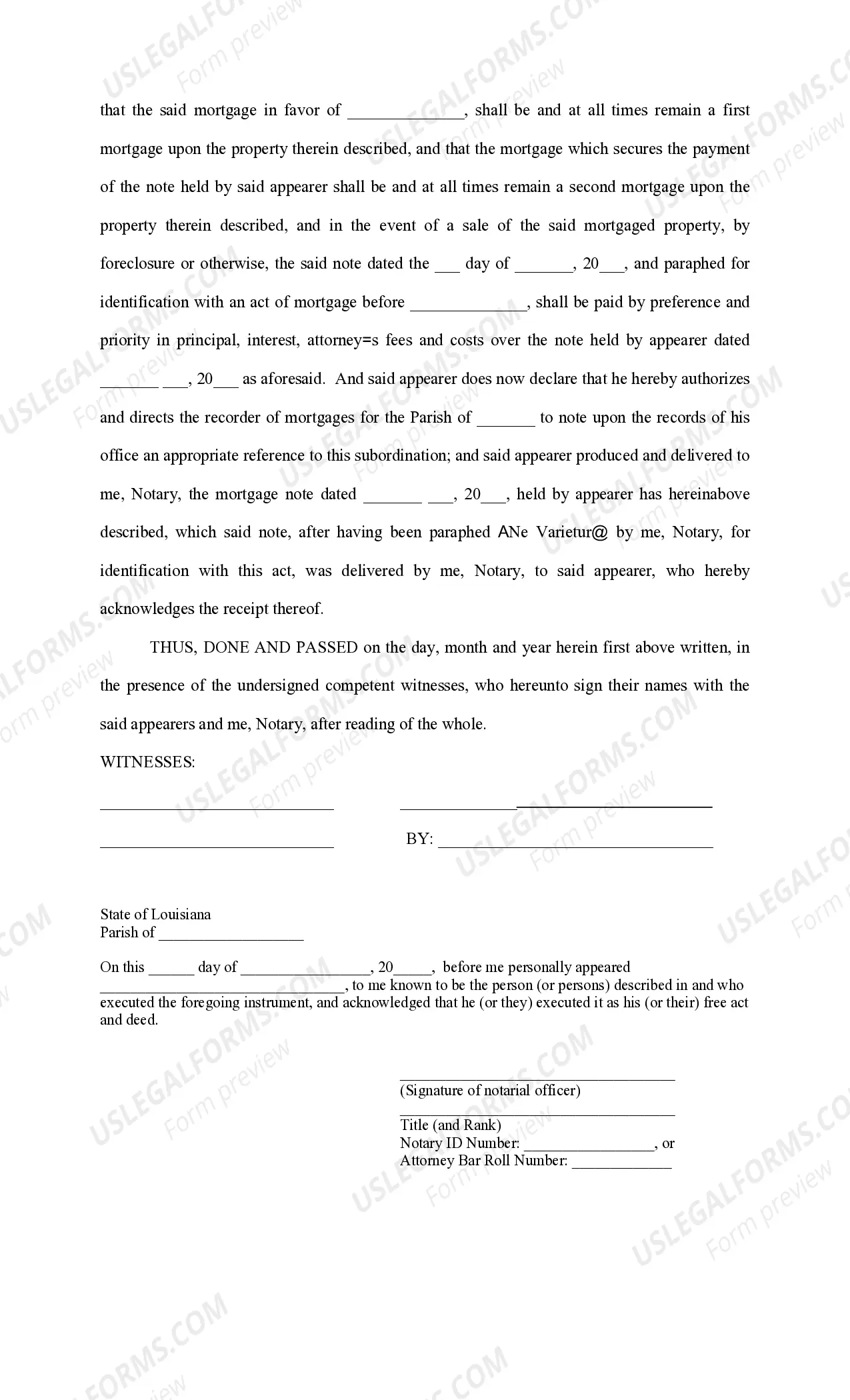
- Statement of consent to subordinate the original loan.
- Information regarding the new mortgage that is taking first priority.
- Signatures of all parties, witnesses, and a notary public.
When to use this form
This form is typically used when a property owner intends to refinance or obtain a second mortgage. If a property owner wants to ensure that their new loan has priority over any existing debts tied to the property, they must secure a subordination agreement. This ensures that in case of foreclosure, the new lender will be paid first.
Who this form is for
- Property owners seeking to take out a second mortgage.
- Lenders requiring documentation to establish priority over existing debts.
- Individuals involved in refinancing who need a clear priority of claims on property.
Instructions for completing this form
- Identify all parties involved in the transaction, including their addresses.
- Provide details regarding the existing promissory note, including its date and amount.
- Include information about the new mortgage that will take priority.
- Obtain signatures from all parties and have the document notarized.
- Ensure witnesses sign the document as required by Louisiana law.
Notarization guidance
This form needs to be notarized to ensure legal validity. US Legal Forms provides secure online notarization powered by Notarize, allowing you to complete the process through a verified video call, available anytime.
Get your form ready online
Our built-in tools help you complete, sign, share, and store your documents in one place.
Make edits, fill in missing information, and update formatting in US Legal Forms—just like you would in MS Word.
Download a copy, print it, send it by email, or mail it via USPS—whatever works best for your next step.
Sign and collect signatures with our SignNow integration. Send to multiple recipients, set reminders, and more. Go Premium to unlock E-Sign.
If this form requires notarization, complete it online through a secure video call—no need to meet a notary in person or wait for an appointment.
We protect your documents and personal data by following strict security and privacy standards.

Make edits, fill in missing information, and update formatting in US Legal Forms—just like you would in MS Word.

Download a copy, print it, send it by email, or mail it via USPS—whatever works best for your next step.

Sign and collect signatures with our SignNow integration. Send to multiple recipients, set reminders, and more. Go Premium to unlock E-Sign.

If this form requires notarization, complete it online through a secure video call—no need to meet a notary in person or wait for an appointment.

We protect your documents and personal data by following strict security and privacy standards.
Avoid these common issues
- Failing to include all parties' names and addresses correctly.
- Not providing complete details about the existing and new mortgages.
- Missing signatures from required witnesses or the notary.
- Not following local laws regarding recording the subordination.
Why complete this form online
- Convenience of downloading and completing the form at your own pace.
- Editability allows you to enter specific details without errors.
- Access to reliable forms drafted by licensed attorneys for peace of mind.
Legal use & context
- The Act of Subordination alters the priority of existing loans, affecting repayment in the event of foreclosure.
- It is essential for ensuring that lenders are aware of their rights in relation to the property being mortgaged.
- The form must comply with local laws to be enforceable and valid.
Summary of main points
- The Act of Subordination allows for the adjustment of loan priorities when obtaining additional financing.
- It is a crucial document for protecting the interests of new lenders.
- Proper execution and notarization are necessary for the form's validity.
Looking for another form?



Form popularity
FAQ
Richard Nordquist. Updated March 09, 2020. Subordination in English grammar is the process of linking two clauses in a sentence so that one clause is dependent on (or subordinate to) another. Clauses joined by coordination are called main clauses or independent clauses.
Subordination allows you to convey differences in importance between details within a sentence. You can use the technique within a single sentence or to combine two or more smaller sentences. You should always present the most important idea in an independent clause.
1 : placed in or occupying a lower class, rank, or position : inferior a subordinate officer. 2 : submissive to or controlled by authority. 3a : of, relating to, or constituting a clause that functions as a noun, adjective, or adverb. b : subordinating. subordinate.
: placement in a lower class, rank, or position : the act or process of subordinating someone or something or the state of being subordinated As a prescriptive text, moreover, the Bible has been interpreted as justifying the subordination of women to men.
A subordination agreement is a legal document that establishes one debt as ranking behind another in priority for collecting repayment from a debtor. The priority of debts can become extremely important when a debtor defaults on payments or declares bankruptcy.
Subordination involves identifying one idea as less important than another. Coordination and Subordination allow writers to make connections between ideas, emphasize certain ideas as more important than others, and create transitions between different ideas.
Subordination refers to ideas in a sentence that are of less importance than the main idea. Subordinated ideas are typically connected to the rest of the sentence with a subordinating conjunction or a relative pronoun. Coordination refers to two or more ideas of equal weight in a single sentence.
Subordination uses conjunctions (for example: although, because, since, when, which, who, if, whereas) to connect one dependent clause to an independent clause, creating a COMPLEX sentence. By using a complex sentence, you indicate to your reader that one idea carries more weight than the other.