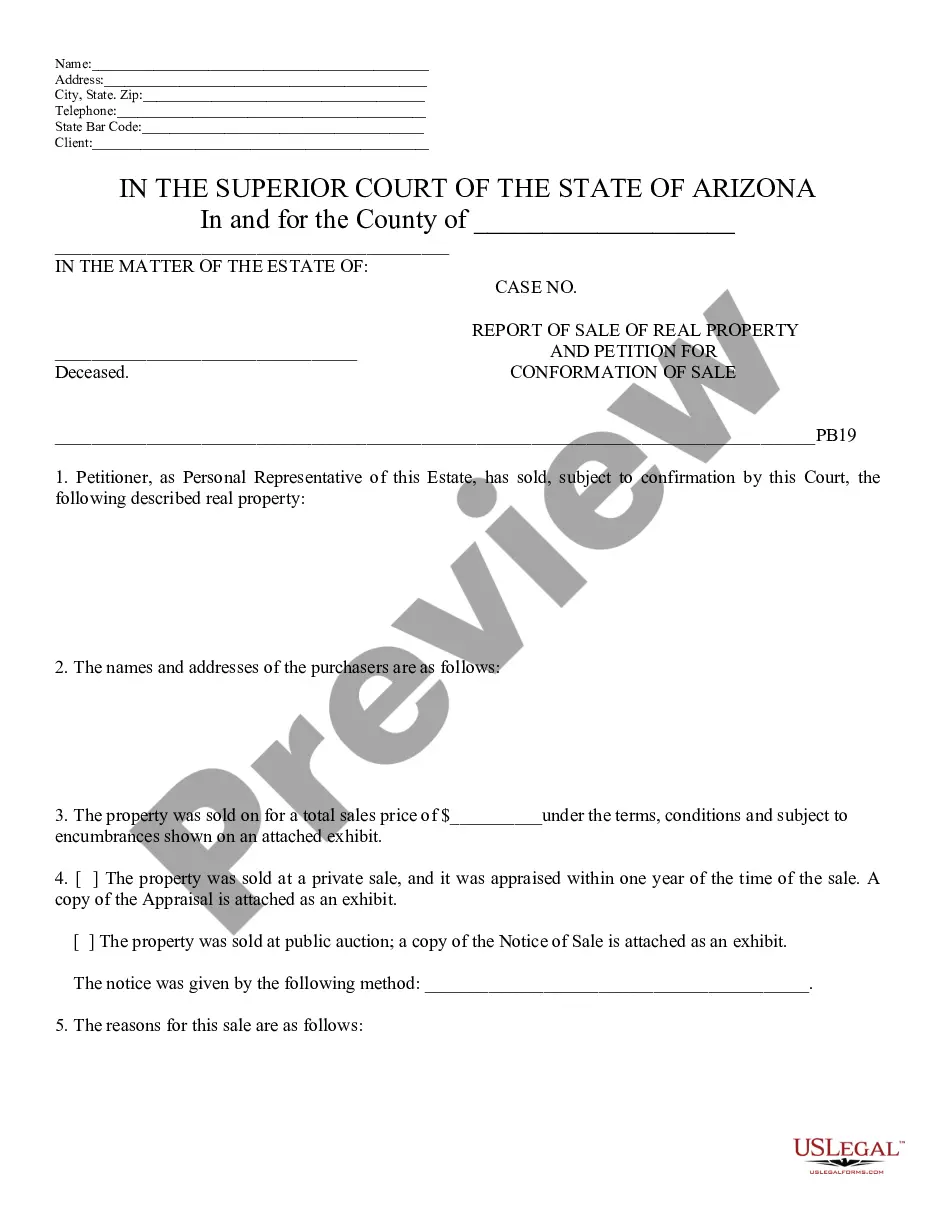
Mississippi Motion for Examination of Judgment Debtor
Understanding this form
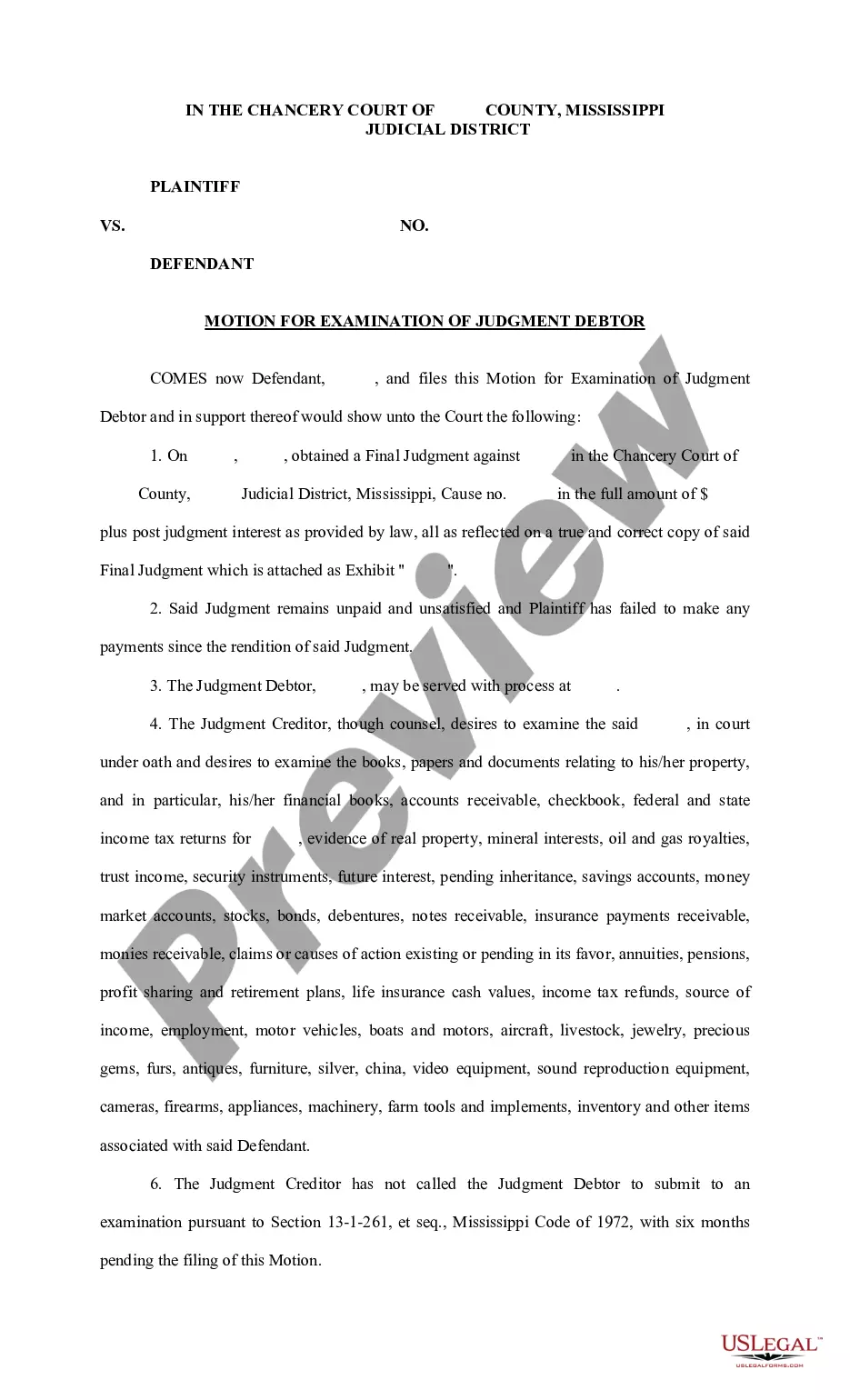
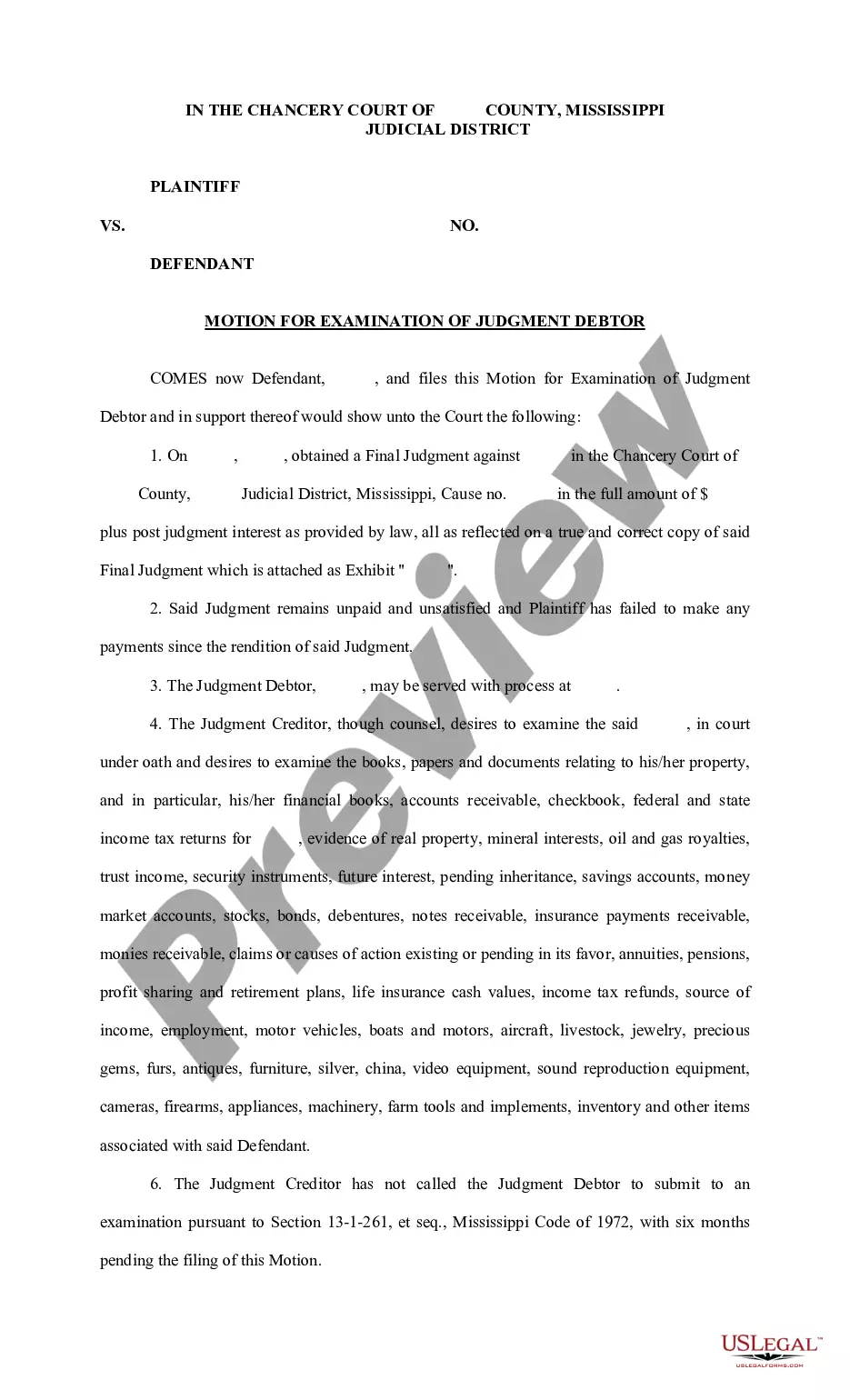
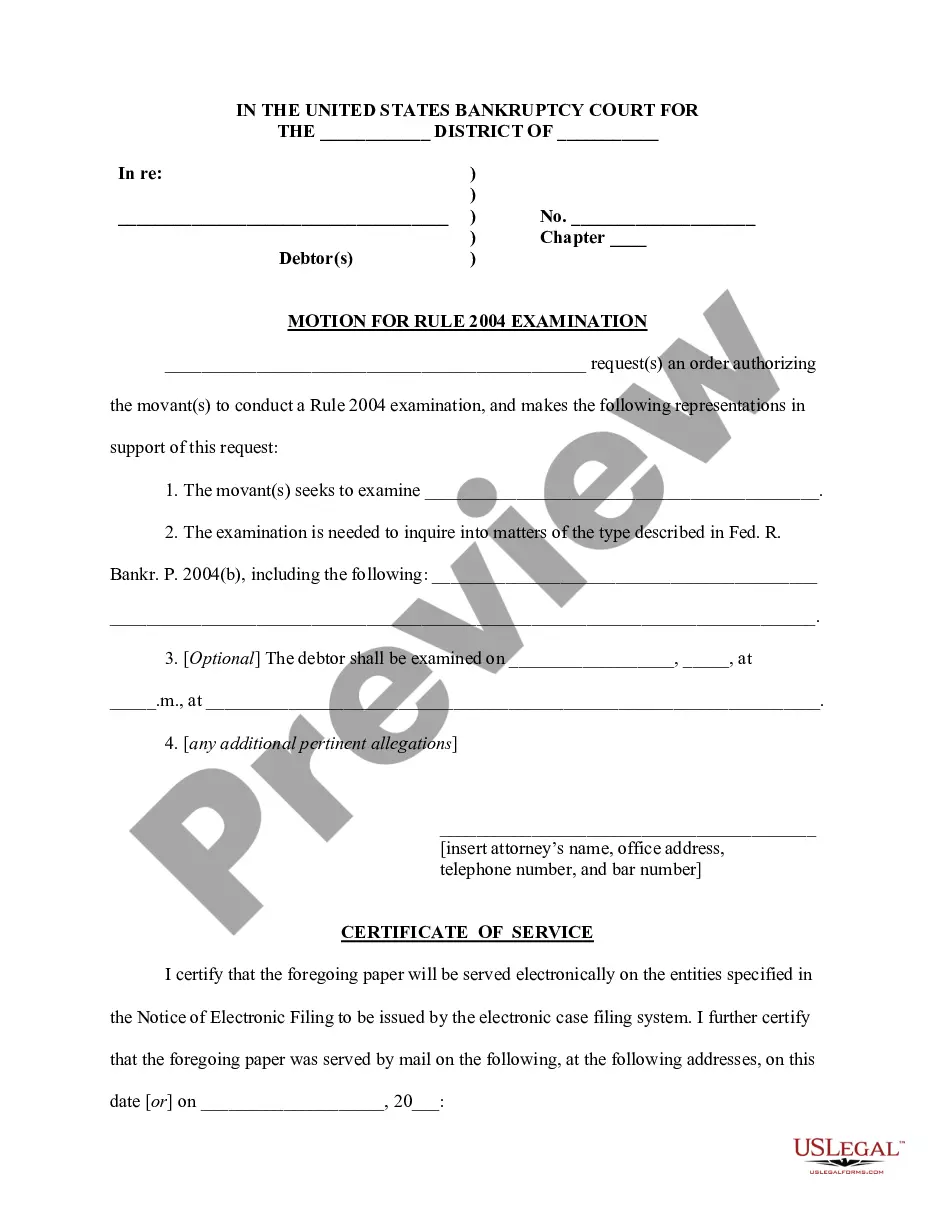
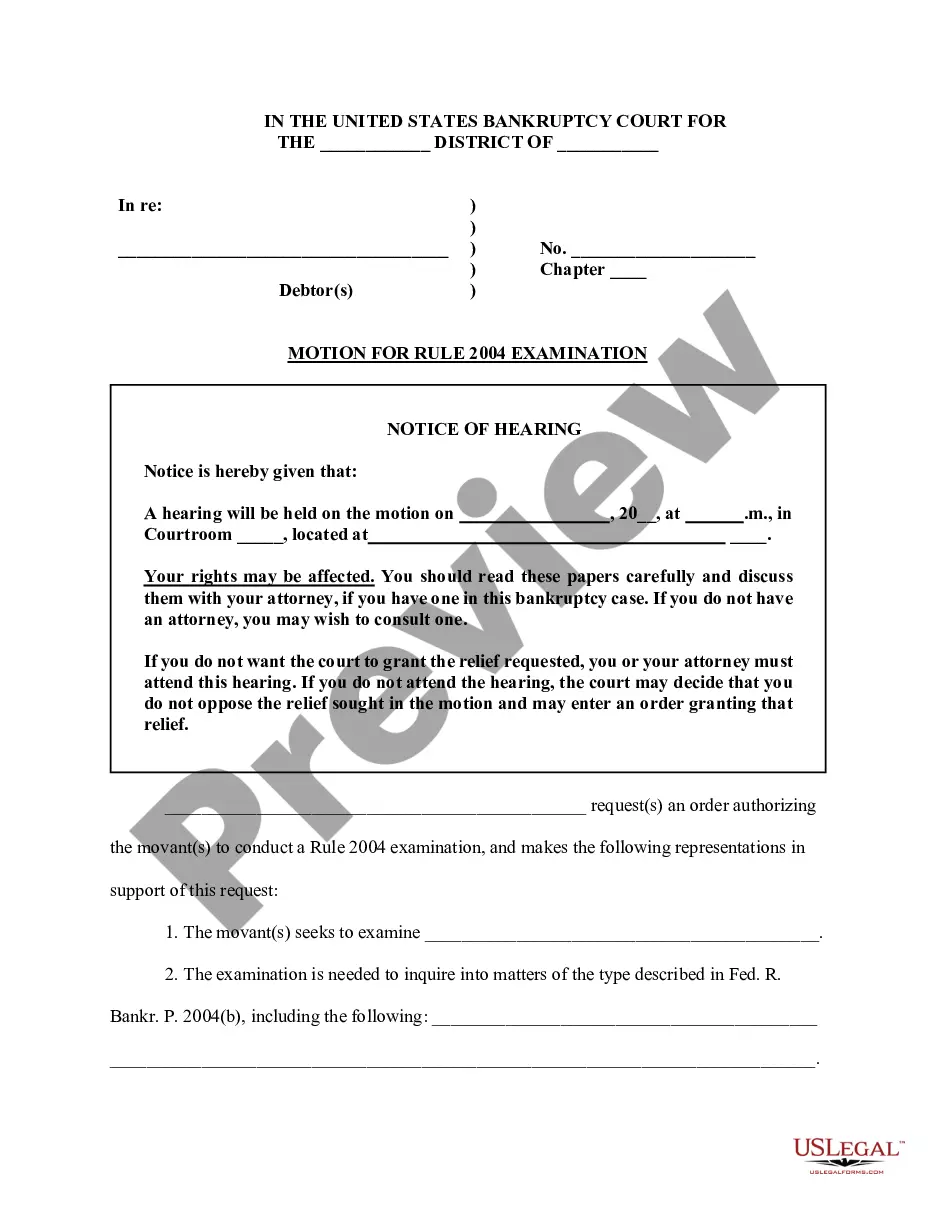
The Motion for Examination of Judgment Debtor is a formal request made to the court. This document is specifically used to ask the court to evaluate the financial status of a debtor who has not fulfilled a judgment. Unlike other forms of motions, this one focuses on the debtor's ability to pay the owed amount, providing the creditor a means to recover funds. Available for download now in standard formats, this motion can be adapted to fit your specific situation.
Key parts of this document
- Identification of the Judgment Creditor and Judgment Debtor.
- Statement of the unpaid judgment details.
- Request for the debtor's financial examination.
- Citation of relevant Mississippi legal statutes.
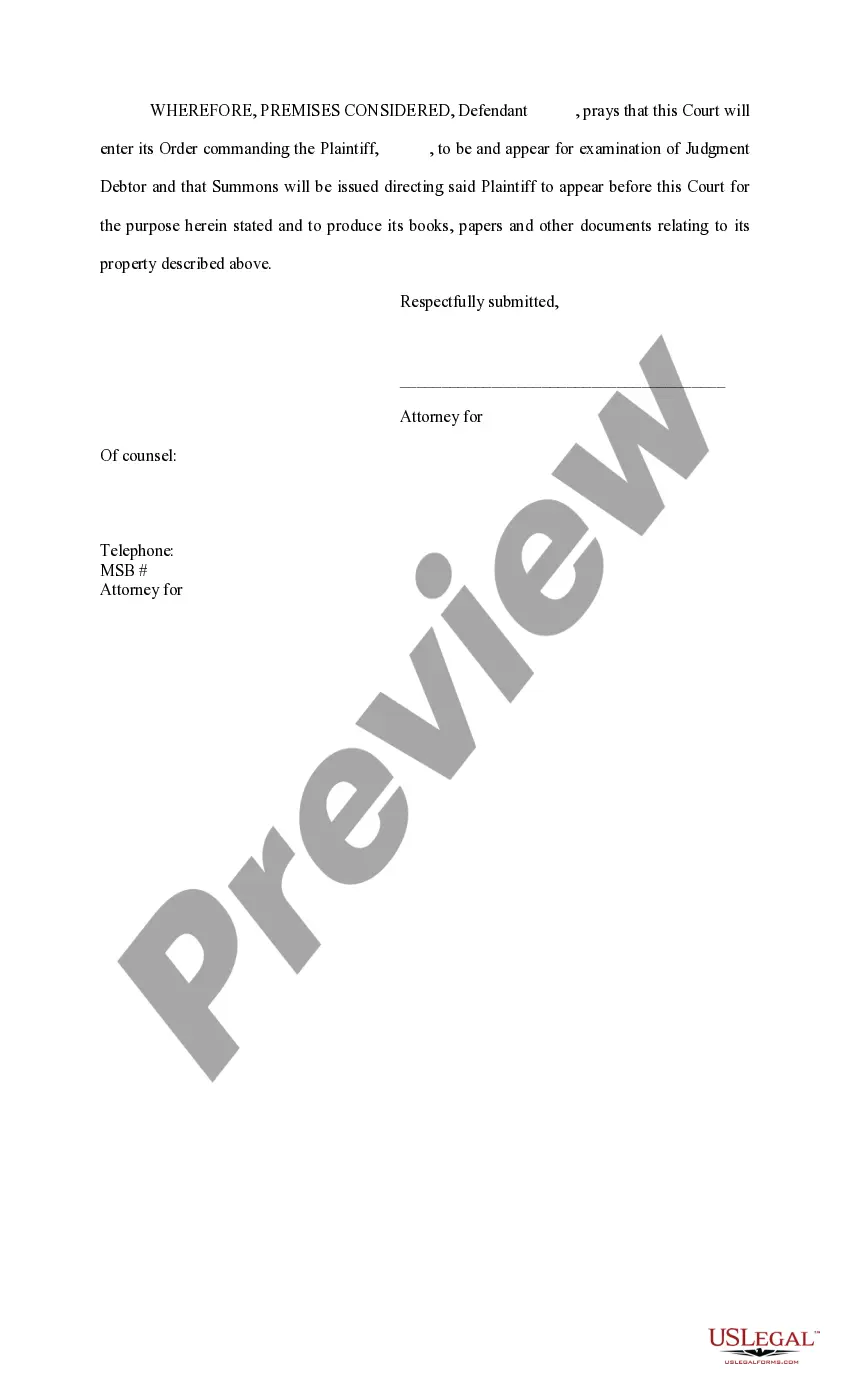
- Signature area for the creditor to affirm the request.
When to use this document
This form is essential when a judgment creditor needs to investigate a debtor's financial situation after a court has issued a judgment. It is typically used when the creditor suspects that the debtor has assets but is not voluntarily making payments. Filing this motion allows creditors to gather information about the debtorâs income and assets to facilitate collection.
Who needs this form
- Judgment creditors who have obtained a court decision in their favor.
- Individuals or entities seeking to recover unpaid debts.
- Attorneys representing clients in need of debt recovery.
Completing this form step by step
- Identify the parties involved by filling in the names and addresses of both the Judgment Creditor and Judgment Debtor.
- Enter the details of the judgment, including the amount owed and the date it was issued.
- State your request for the debtor's financial examination.
- Include any relevant citations from Mississippi law to support your motion.
- Sign and date the form to validate your request.
Does this form need to be notarized?
This form does not typically require notarization unless specified by local law.
Get your form ready online
Our built-in tools help you complete, sign, share, and store your documents in one place.
Make edits, fill in missing information, and update formatting in US Legal Forms—just like you would in MS Word.
Download a copy, print it, send it by email, or mail it via USPS—whatever works best for your next step.
Sign and collect signatures with our SignNow integration. Send to multiple recipients, set reminders, and more. Go Premium to unlock E-Sign.
If this form requires notarization, complete it online through a secure video call—no need to meet a notary in person or wait for an appointment.
We protect your documents and personal data by following strict security and privacy standards.

Make edits, fill in missing information, and update formatting in US Legal Forms—just like you would in MS Word.

Download a copy, print it, send it by email, or mail it via USPS—whatever works best for your next step.

Sign and collect signatures with our SignNow integration. Send to multiple recipients, set reminders, and more. Go Premium to unlock E-Sign.

If this form requires notarization, complete it online through a secure video call—no need to meet a notary in person or wait for an appointment.

We protect your documents and personal data by following strict security and privacy standards.
Common mistakes
- Failing to include accurate debtor information, which may delay the court's action.
- Not citing the correct legal references, impacting the motionâs validity.
- Neglecting to sign the motion, which renders it invalid.
Why use this form online
- Convenience of downloading and filling out the form at your own pace.
- Ability to customize the document based on your specific situation.
- Access to templates drafted by licensed attorneys, ensuring legal compliance.
Main things to remember
- The Motion for Examination of Judgment Debtor allows creditors to request a court examination of the debtor's financial details.
- Proper completion and filing of this form can facilitate the collection of owed funds.
- Judgment creditors must have been unable to reach the debtor for examination for a minimum of six months before filing this motion.
Looking for another form?

Form popularity
FAQ
A Judgment Debtor Summons is a summons issued by the court to be served on the Judgment Debtor to compel the Judgment Debtor to appear in court to provide information about his assets and how they can be disposed of to settle the judgment debt.
To obtain a debtor examination, the creditor must file an Application and Order for Appearance and Examination. The court will then schedule the examination for a specific date and time, and issue an order requiring the debtor's appearance.
A debtor's examination is a special proceeding used by judgment creditors to look into ways it can collect a judgment from you, such as using a wage garnishment or attaching funds in a bank account. However, many judgment creditors use debtor's exams to pressure you to pay a debt.
A debtor's examination is a special proceeding used by judgment creditors to look into ways it can collect a judgment from you, such as using a wage garnishment or attaching funds in a bank account. However, many judgment creditors use debtor's exams to pressure you to pay a debt.
In English and American law, a judgment debtor is a person against whom a judgment ordering him to pay a sum of money has been obtained and remains unsatisfied.
An Order of Examination is a court process to aid enforcement of a monetary judgment. The party being examined will be required to furnish information to aid in the enforcement of a monetary judgment. The Judgment Creditor or their representative may ask questions relating to: Personal financial assets.
Once a creditor has a court judgment against a debtor, the creditor can ask to have an examination of the debtor. This is a hearing to gather information about the debtor's financial situation and have an order made.
The person in whose favour a decree is passed is called decree-holder and against whom the decree is passed is judgement debtor. There are various ways under civil law by which a decree can be passed. One such way is arrest and detention.
The main ways to legally avoid appearing at a debtor examination are to pay off the debt or reach a settlement with the creditor that provides a way for paying back the debt. You also may be able to avoid the examination by filing for bankruptcy, which will trigger an automatic stay of collection efforts.