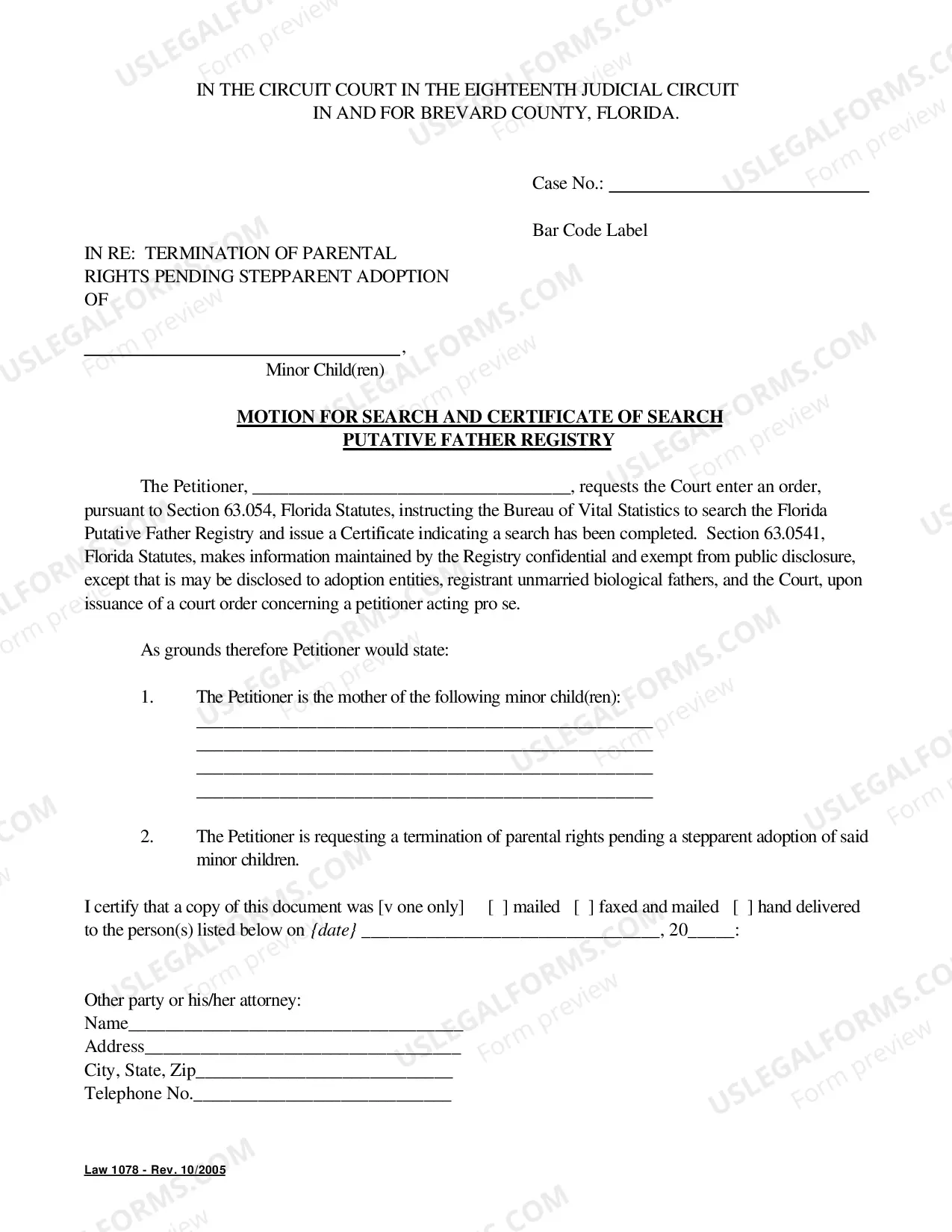
Terms and Conditions of Website
What is this form?
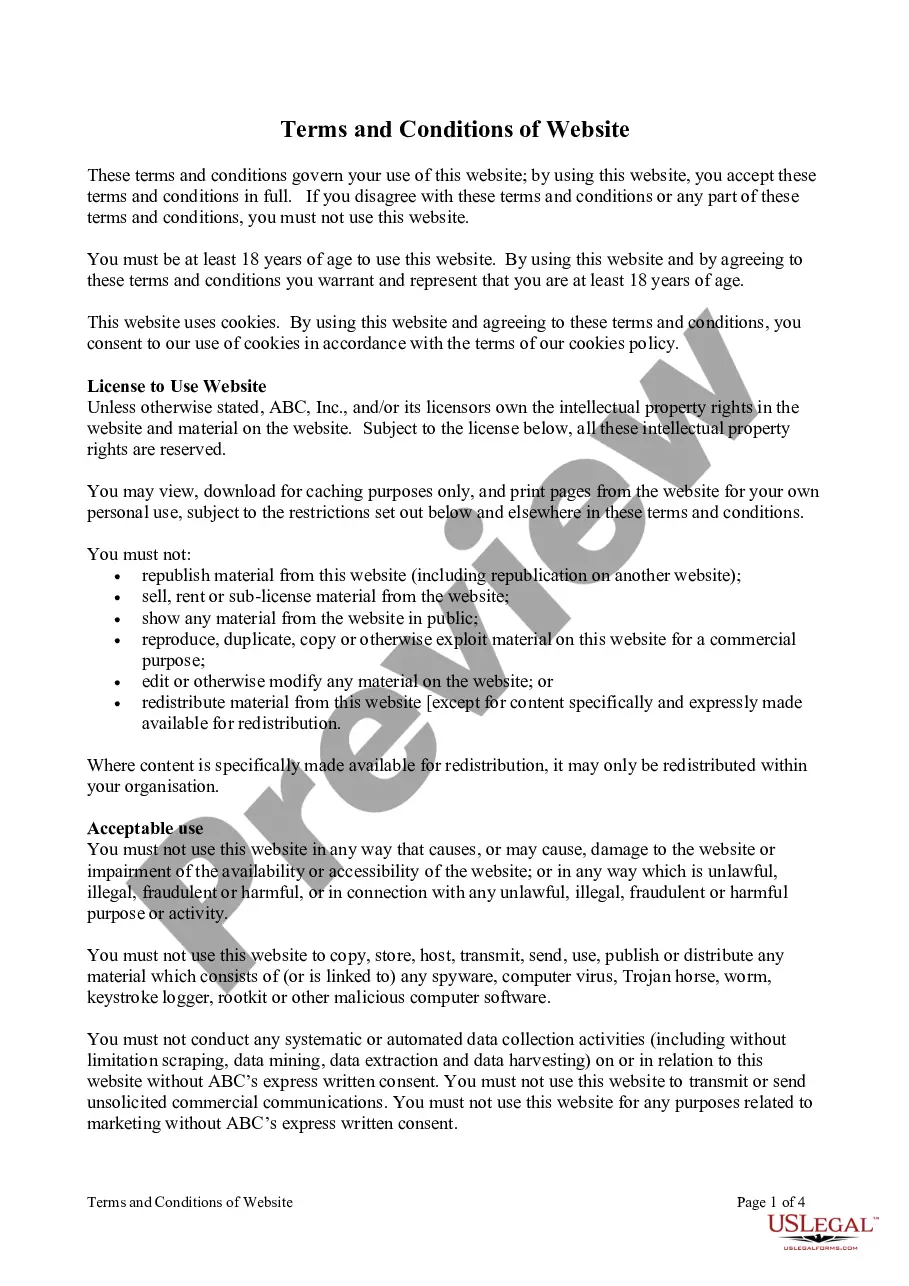
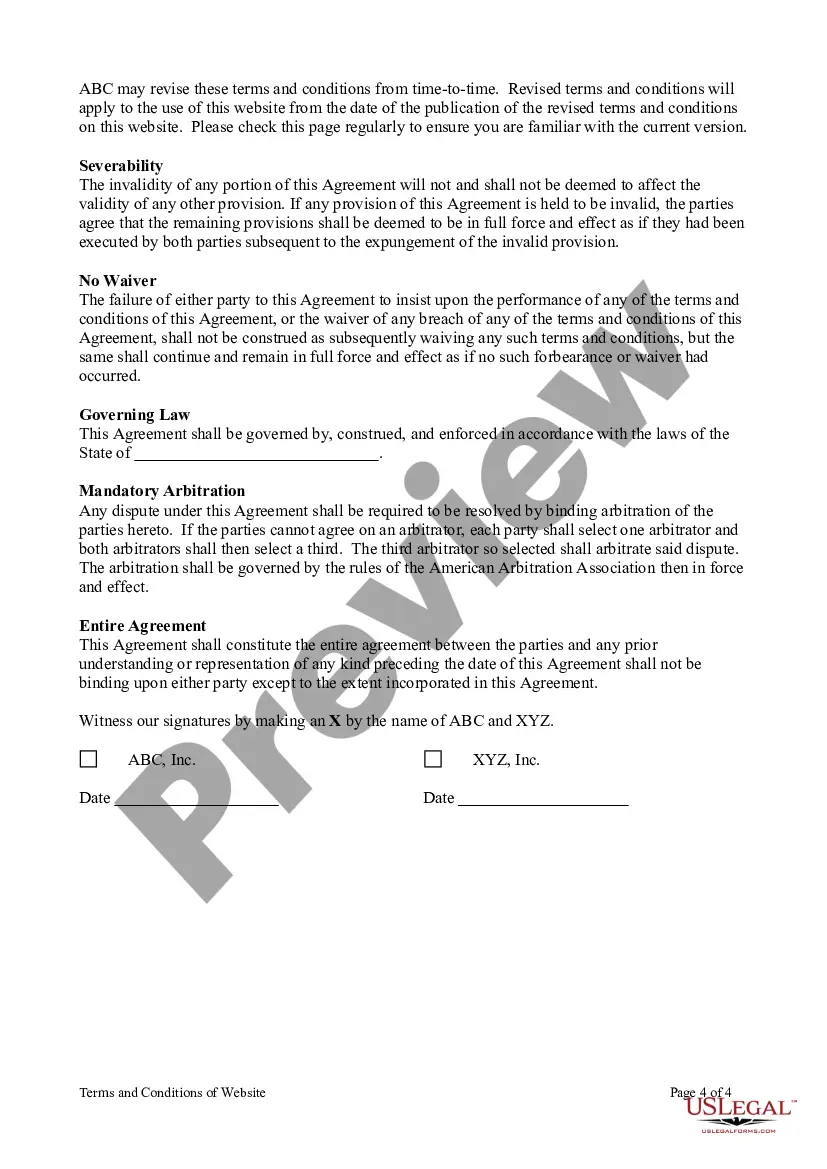
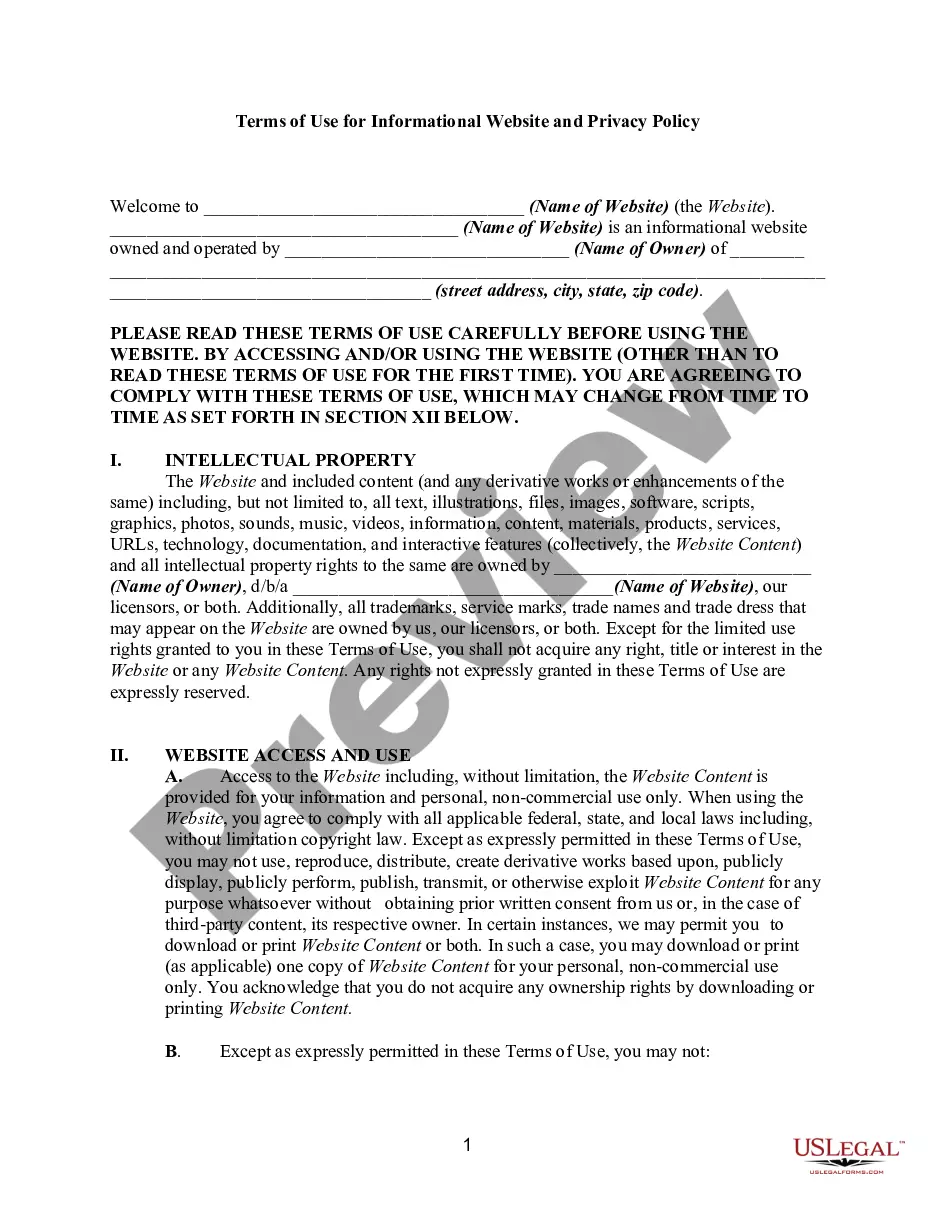
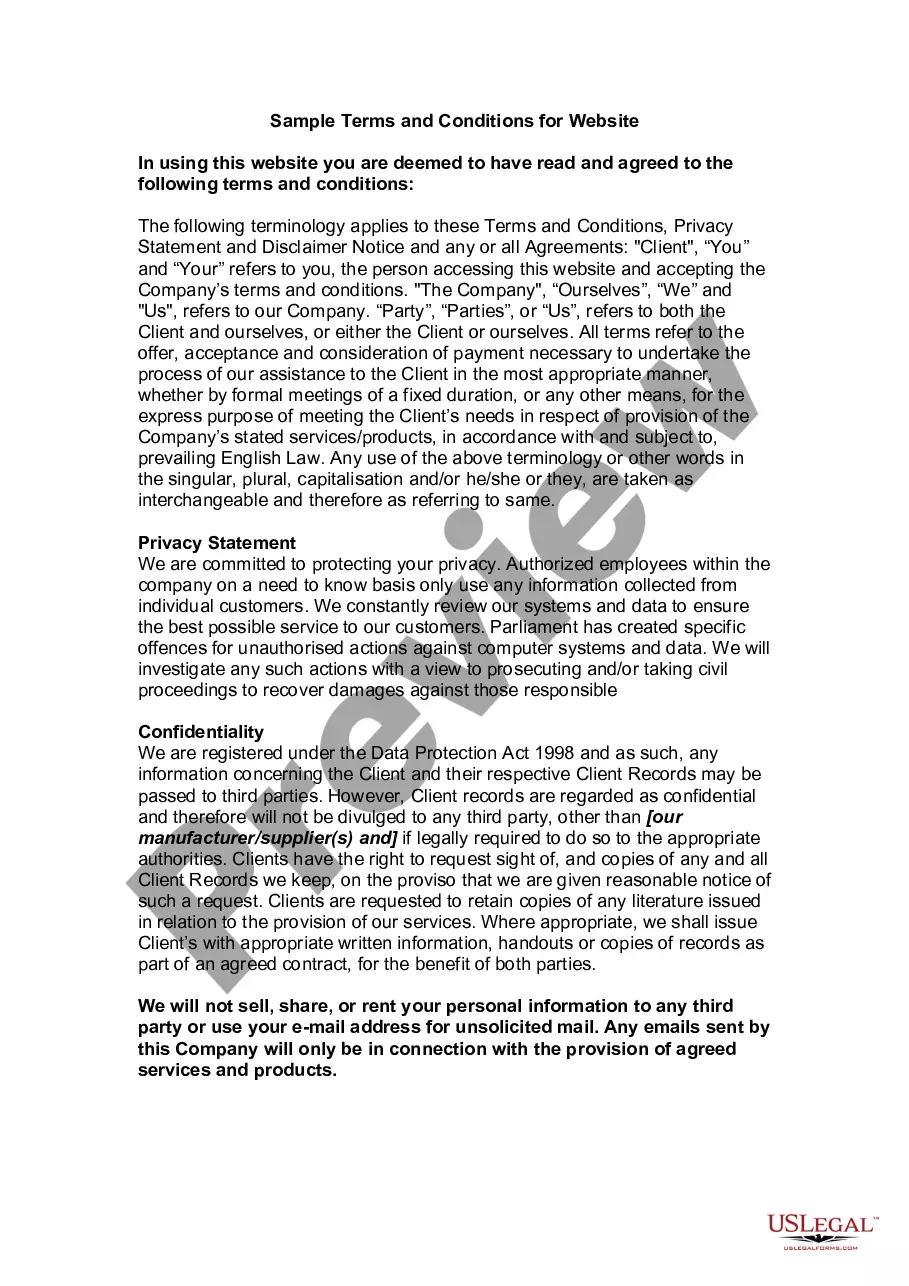
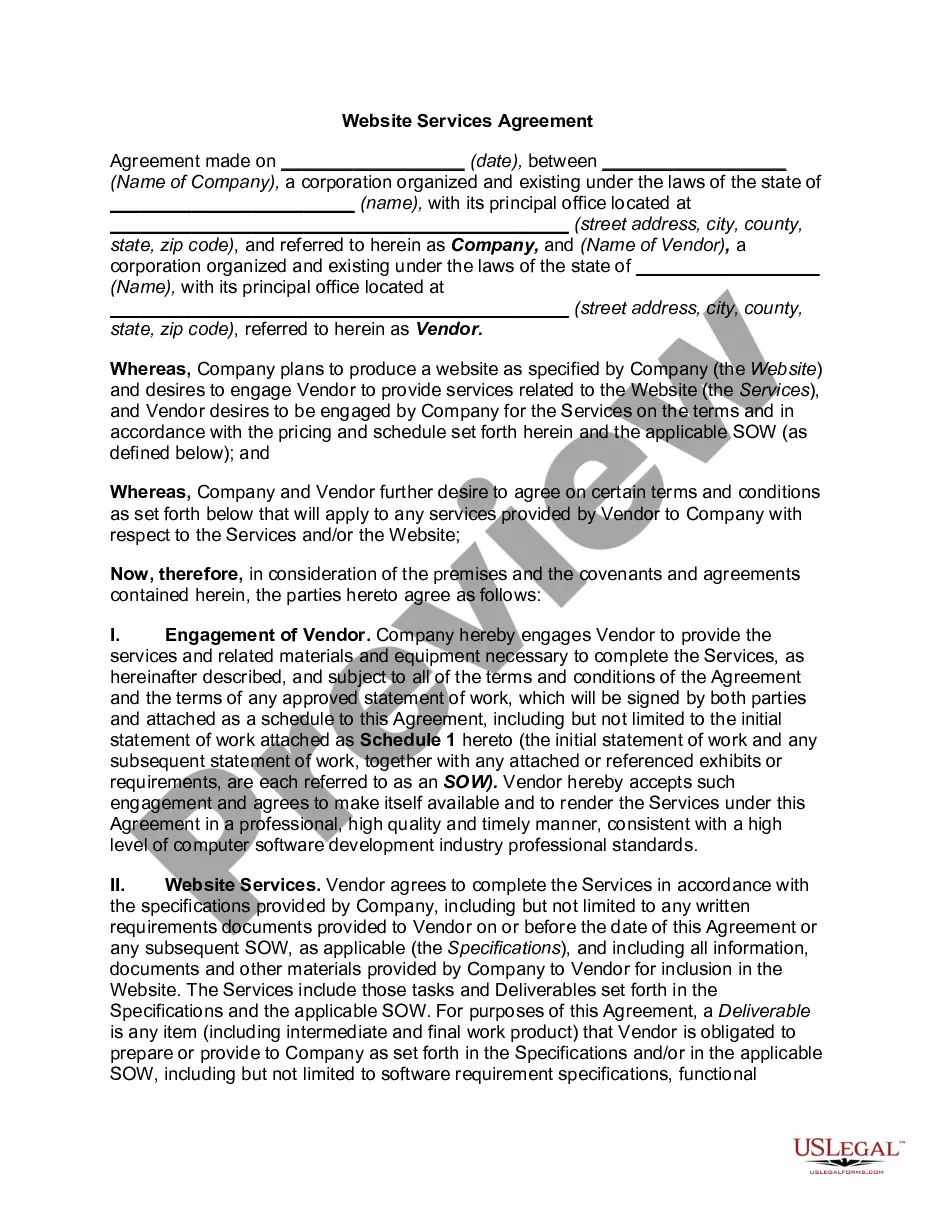
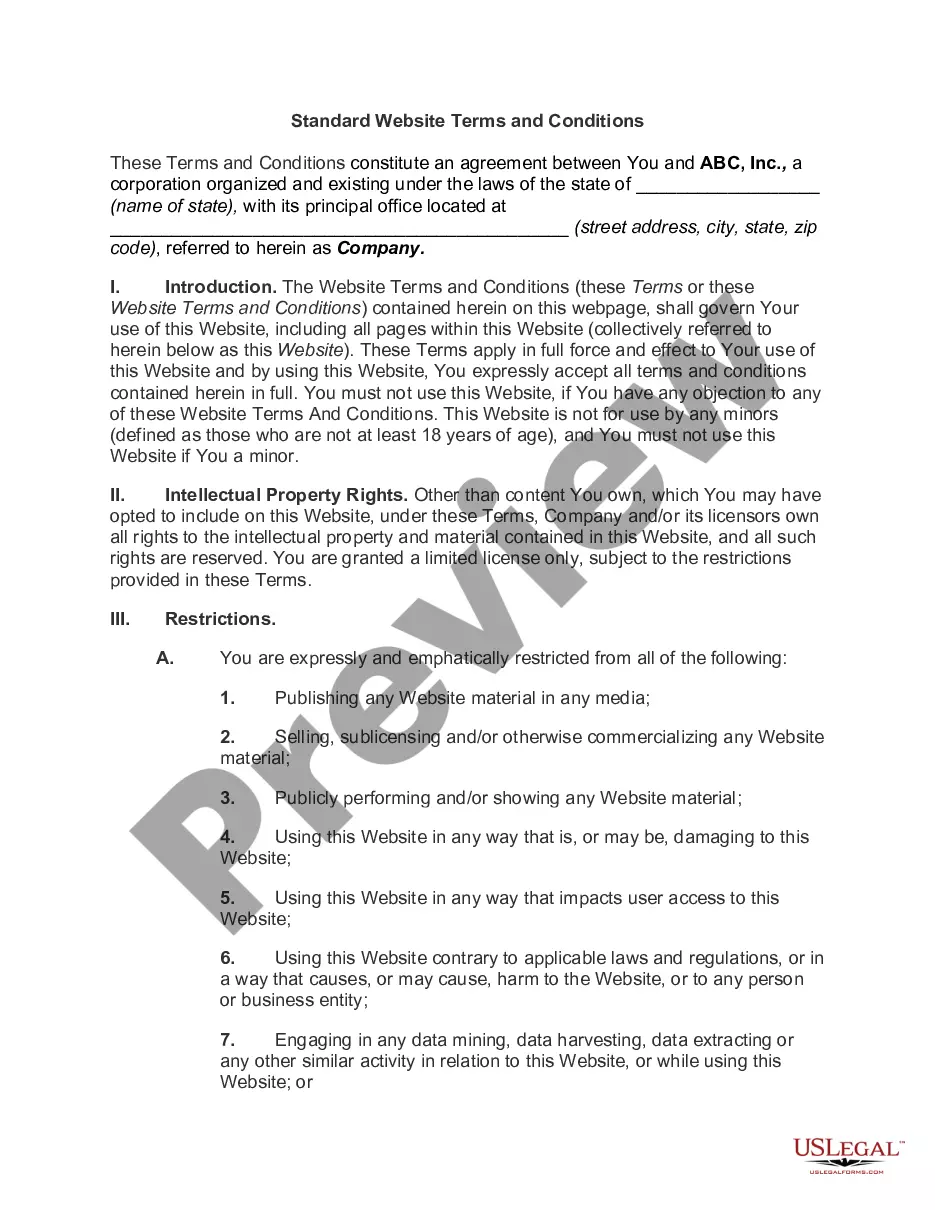
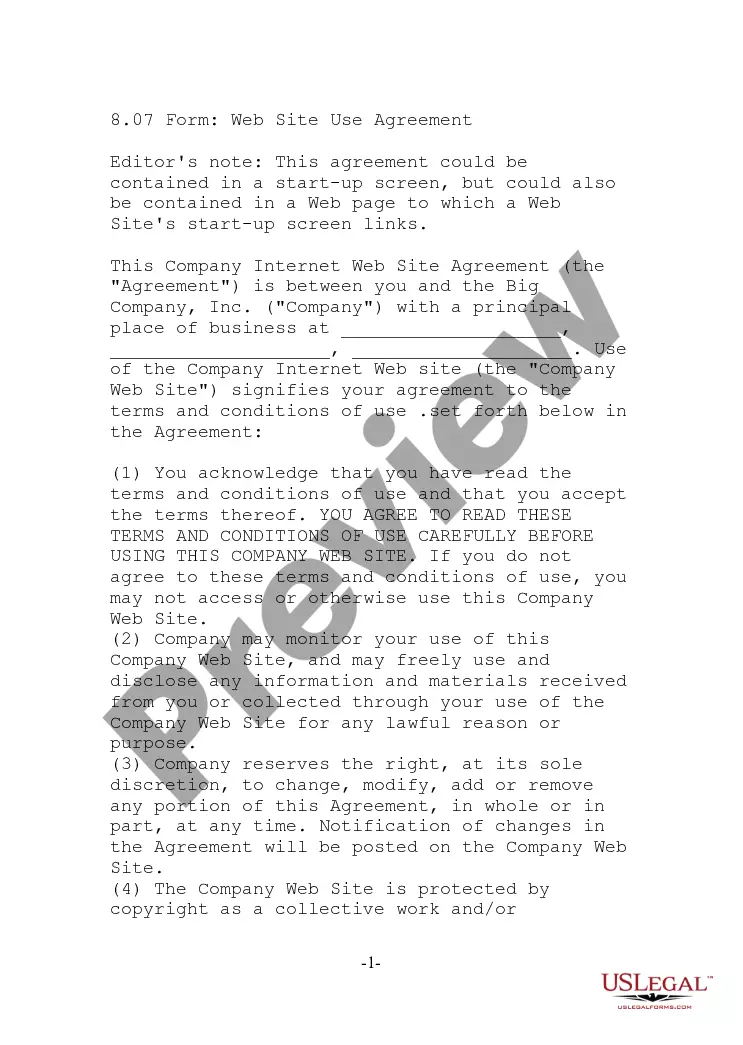
The Terms and Conditions of Website form is a legal document that outlines the rules and guidelines for using a website. It helps protect the website owner by stating the rights and responsibilities of users, establishing limits on liability, and setting the legal framework for the use of the site. Unlike other legal forms, this document specifically addresses online interactions and the unique aspects of digital content and user-generated material.
What’s included in this form
- User agreement to terms and conditions
- Age requirement for users
- Details on licensing and intellectual property rights
- Acceptable use and prohibited activities
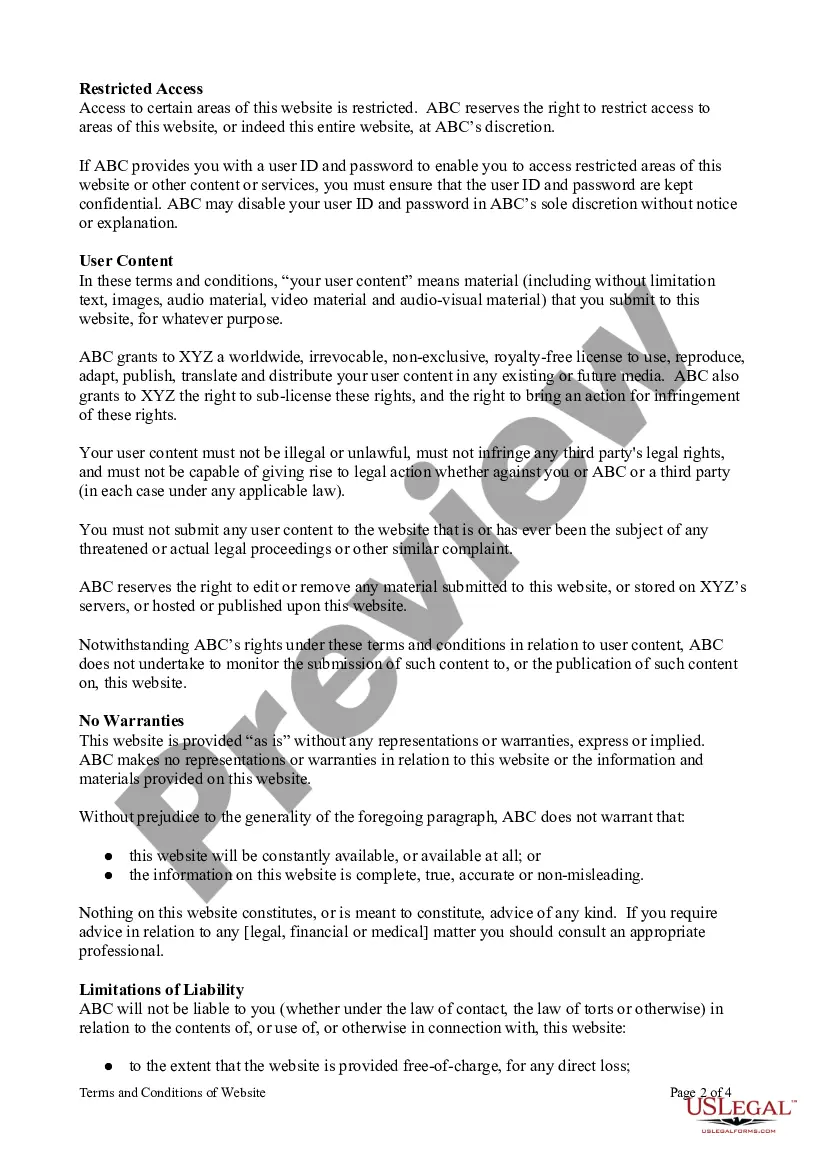
- User content and its licensing to the website owner
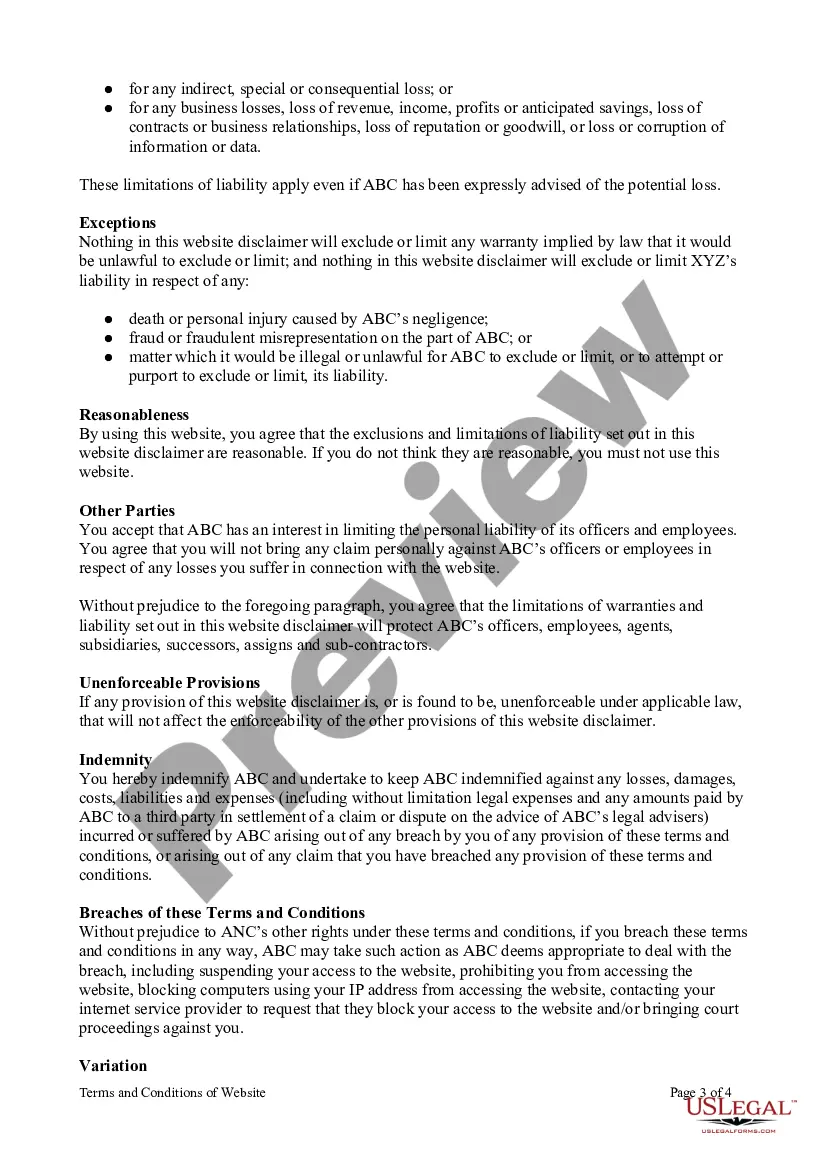
- Limitations of liability and warranty disclaimers
- Indemnity and breach of terms
- Governing law and dispute resolution
Situations where this form applies
This form should be used whenever a website owner wants to establish clear guidelines for users who visit their site. It is particularly important for e-commerce sites, blogs, or any platform that allows user interaction or content submission. Incorporating these terms helps ensure that both the website owner and users understand their rights and obligations, especially regarding the use of intellectual property and liability issues.
Who needs this form
- Website owners looking to protect their legal interests
- Businesses operating online platforms
- Bloggers and content creators who allow user interaction
- Organizations that publish user-generated content
- Individuals setting up personal or professional websites
Instructions for completing this form
- Review the terms and understand the obligations and rights outlined.
- Ensure that you meet the age requirement of at least 18 years old.
- Specify any required information, such as user ID and password for restricted access.
- Consider modifying sections to reflect your specific website needs.
- Obtain user consent for cookie policies if applicable.
Is notarization required?
This form does not typically require notarization unless specified by local law. It is essential to provide clear terms and conditions in a legally valid format for users to understand their rights when visiting your website.
Get your form ready online
Our built-in tools help you complete, sign, share, and store your documents in one place.
Make edits, fill in missing information, and update formatting in US Legal Forms—just like you would in MS Word.
Download a copy, print it, send it by email, or mail it via USPS—whatever works best for your next step.
Sign and collect signatures with our SignNow integration. Send to multiple recipients, set reminders, and more. Go Premium to unlock E-Sign.
If this form requires notarization, complete it online through a secure video call—no need to meet a notary in person or wait for an appointment.
We protect your documents and personal data by following strict security and privacy standards.

Make edits, fill in missing information, and update formatting in US Legal Forms—just like you would in MS Word.

Download a copy, print it, send it by email, or mail it via USPS—whatever works best for your next step.

Sign and collect signatures with our SignNow integration. Send to multiple recipients, set reminders, and more. Go Premium to unlock E-Sign.

If this form requires notarization, complete it online through a secure video call—no need to meet a notary in person or wait for an appointment.

We protect your documents and personal data by following strict security and privacy standards.
Common mistakes
- Failing to update the terms to reflect changes in laws or business practices.
- Not clearly stating the age requirement for users.
- Neglecting to specify prohibited activities and acceptable uses of the website.
- Overlooking the importance of protecting intellectual property rights.
- Inadequate communication of user content rights and restrictions.
Why complete this form online
- Ease of customization to fit specific website needs.
- More efficient than drafting terms from scratch.
- Ensures comprehensive legal coverage for website operations.
- Allows for quick distribution and user awareness of terms.
- Convenience of electronic signatures and notarization options.
Legal use & context
- Enforces rules for user behavior and content management on the website.
- Provides a legal basis for resolving disputes related to the website.
- Limits liability for the website owner regarding user actions.
Key takeaways
- Establishes user responsibilities and the legal framework for interaction.
- Protects both users and website owners from legal issues.
- Can be customized to suit specific website needs and complies with applicable laws.
Looking for another form?
Form popularity
FAQ
Ownership and copyright of the website's content. acceptable and unacceptable use of the website and content. registration, password and security procedures. availability of the website. use of cookies. links to other websites.
Use clear and concise language. Try and use language that is friendly and positive and explain the rational for provisions that might otherwise appear too strong. Make sure the information is set out in a well-structured and logical way.
When you hire a lawyer in the Priori network, drafting terms and conditions typically costs anywhere from $300 to $5,000. Drafting a privacy policy may cost anywhere from $275 for simple policies to $5,000 for more complex documents.
Terms and conditions agreement (T&C) is a page on a website that sets out the rights and responsibilities of anyone using the site.It will include what action may be taken against a user who breaks the terms and may also detail the intellectual rights of the website owner.
A brief introduction. The effective date. Jurisdiction/governing law. Link to your Privacy Policy. Contact information. Limitation of liability and disclaimer of warranties. Rules of conduct. User restrictions.
Writing Your Terms and Conditions. Start with a statement regarding the acceptance of your terms and conditions. Your very first paragraph should always be an acceptance of terms clause. This clause ensures that your users understand that by using your service they are accepting the terms and conditions.
The terms and conditions that detail the rules that apply to fulfilling a particular contract and that form an integral part of that contract. Buyers and sellers must agree the terms and conditions to form a contract.
Introduction. Right to make changes to the agreement. User guidelines (rules, restrictions, requirements) Copyright and intellectual property. Governing law. Warranty disclaimer. Limitation of liability.
Products Or Services Provided. Prices And Payment. Shipping And Delivery. Guarantees And Warranties. Returns, Refunds And Complaints. Limitation Of Liability. Intellectual Property Rights. Future Changes.