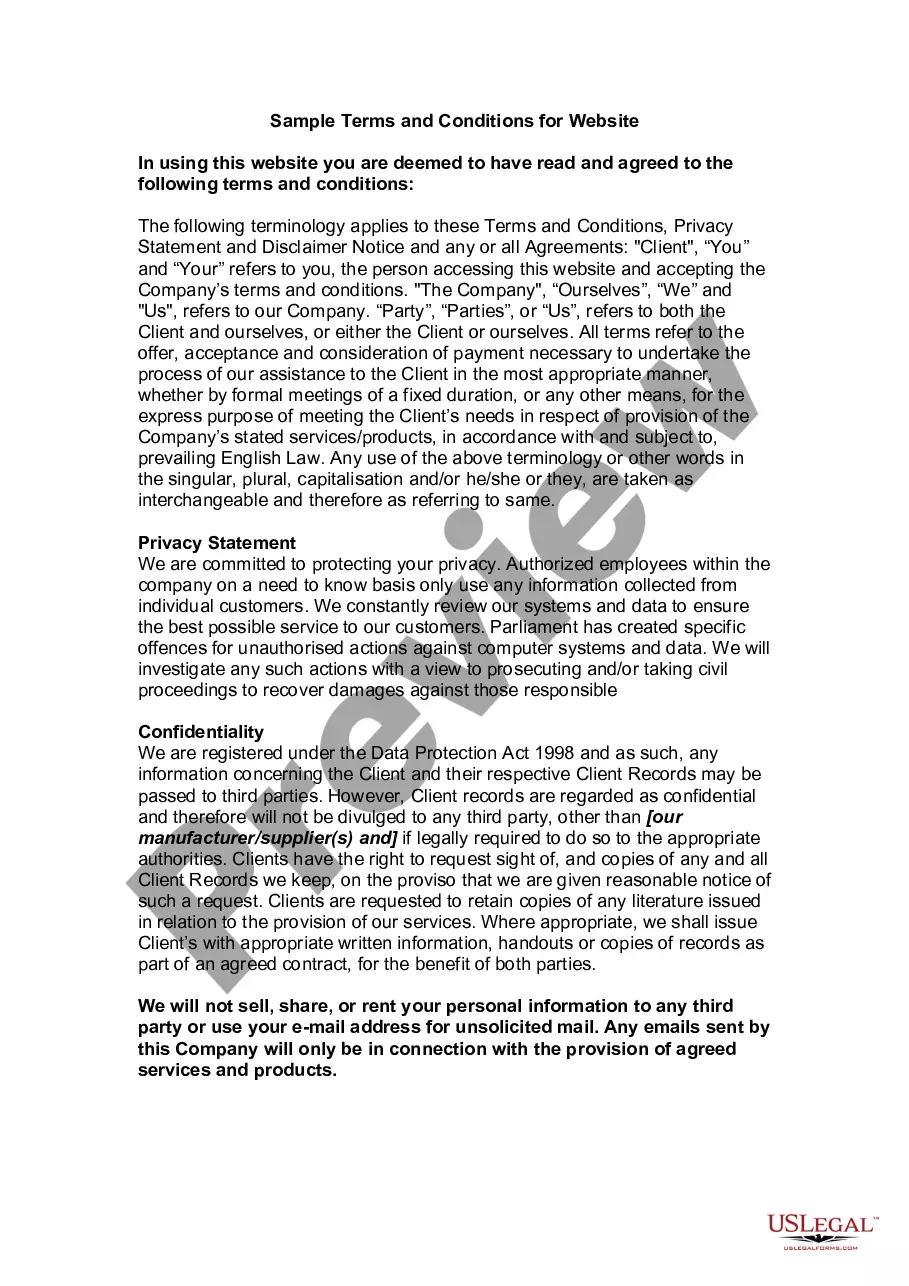
Sample Terms and Conditions for Website
What is this form?
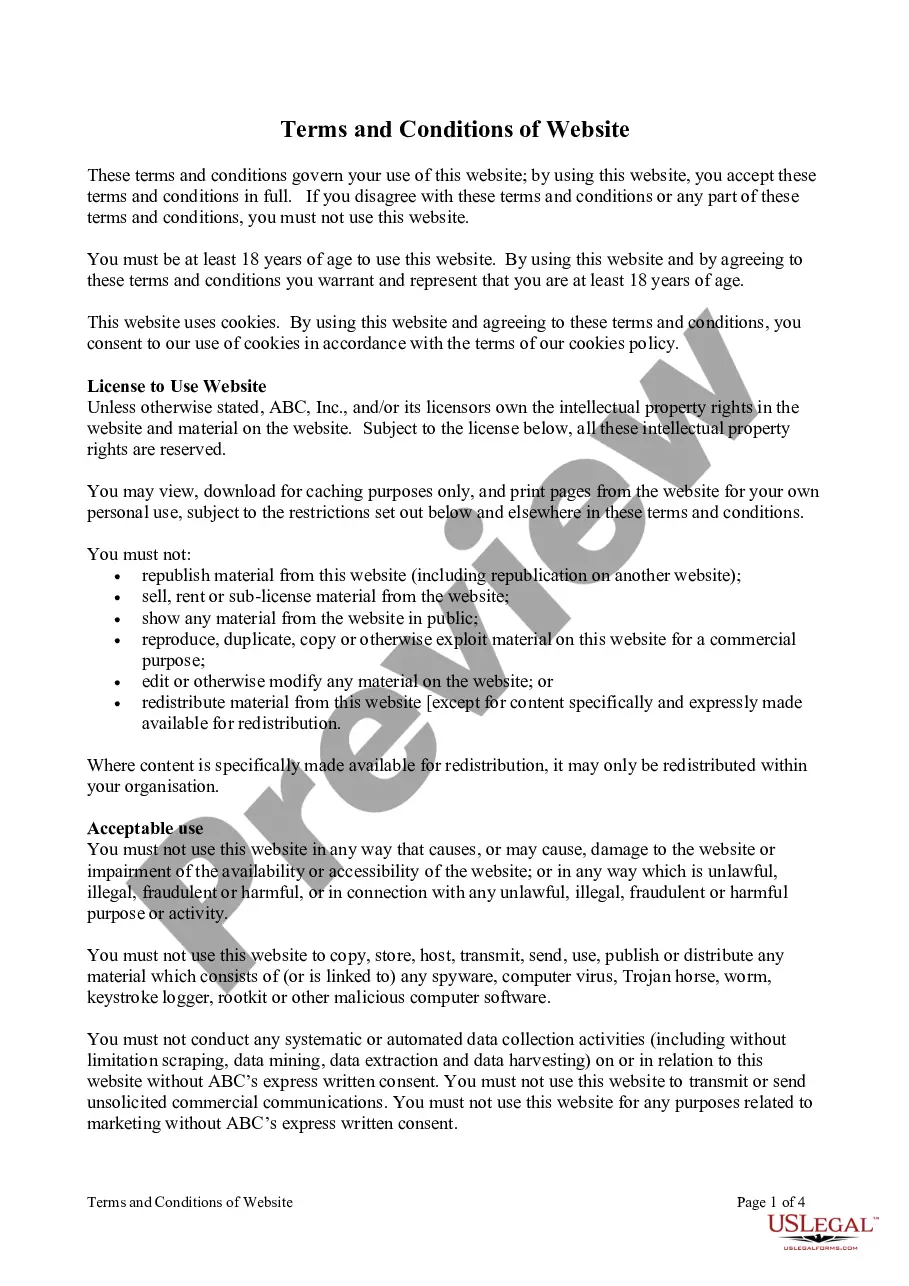
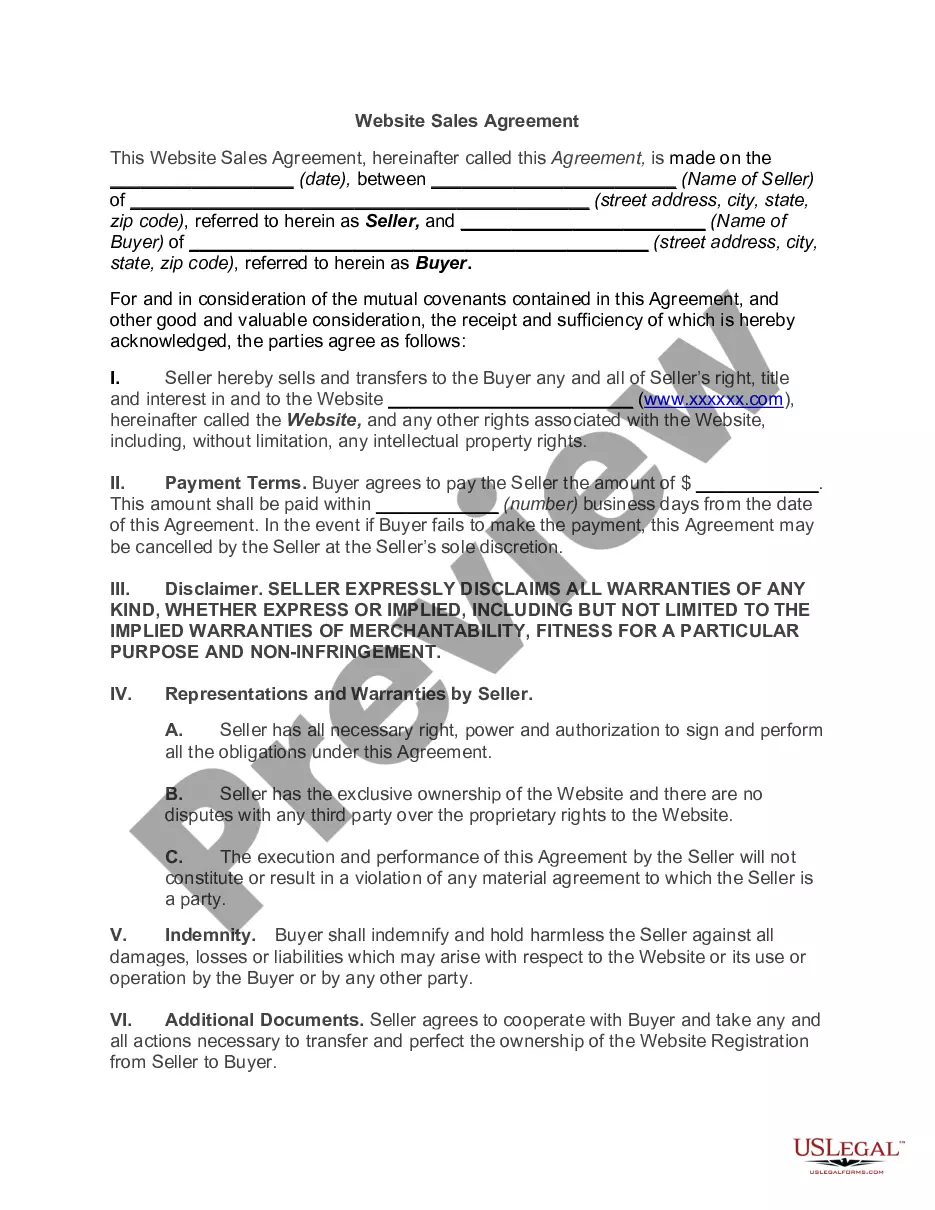
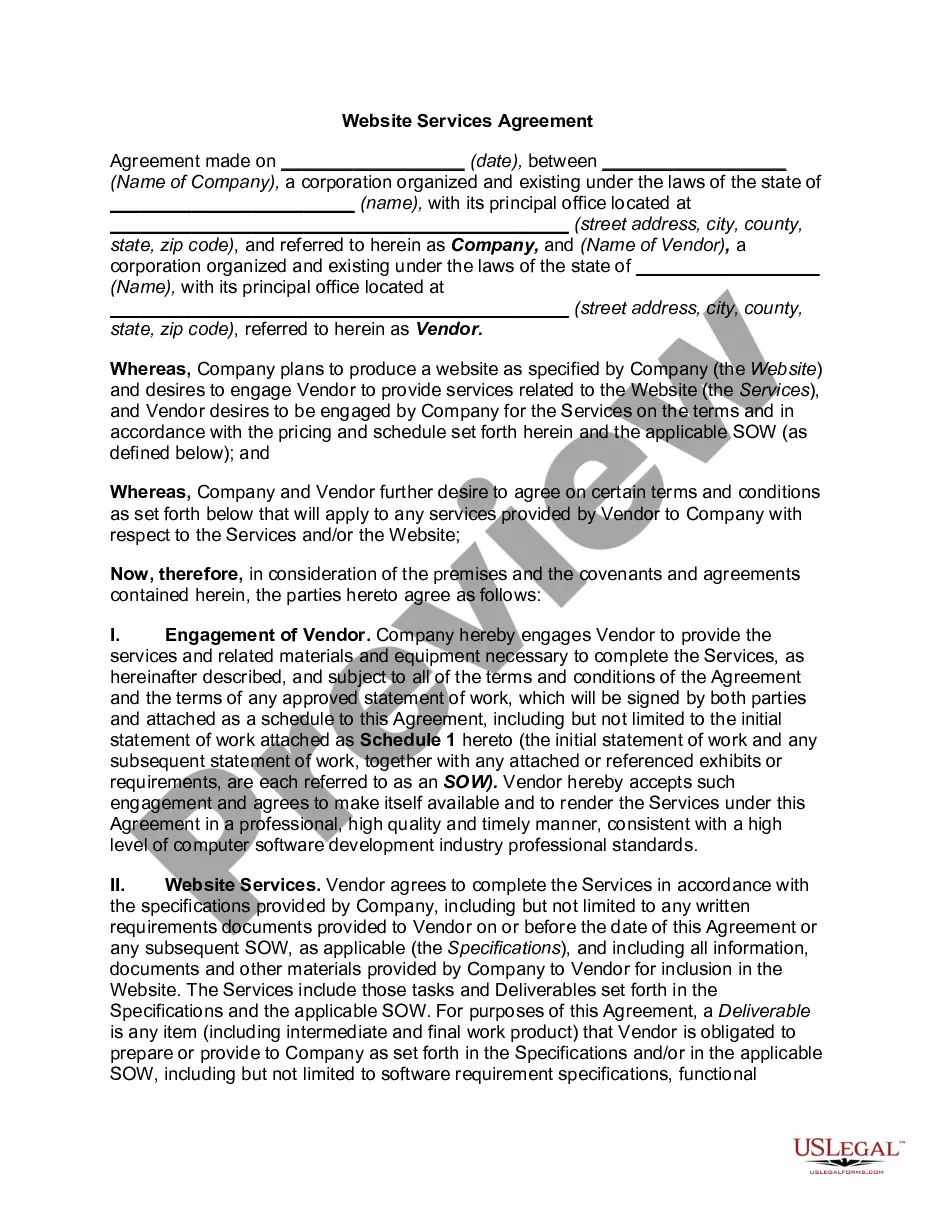
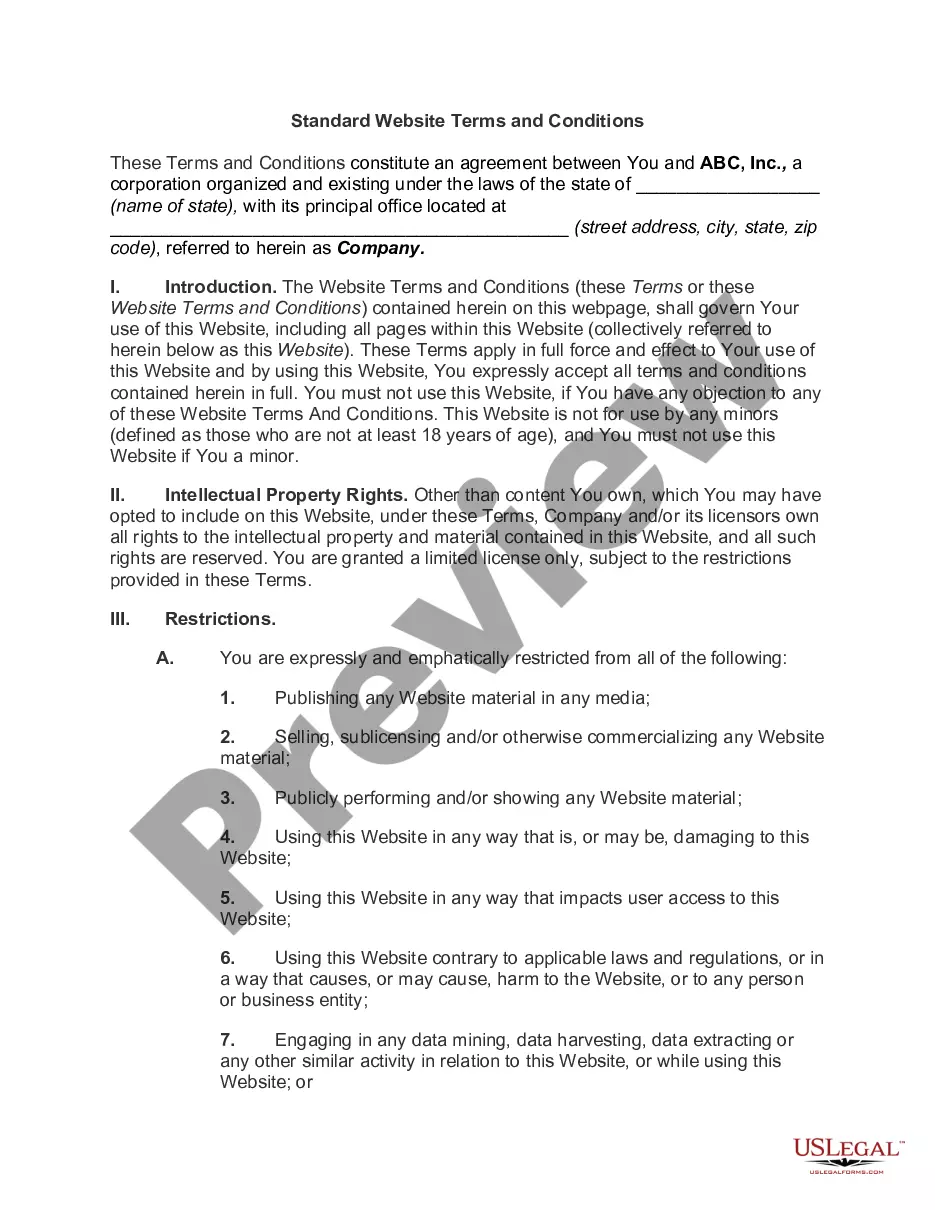
The Sample Terms and Conditions for Website form outlines the rules governing the use of your website. This essential document serves to protect your interests as a website owner by establishing guidelines for user behavior and outlining prohibited activities. Unlike generic disclaimers, this form is specifically tailored to address legal and operational concerns unique to your website, ensuring clarity for both you and your users.
Key components of this form
- Definitions of terminology used within the agreement.
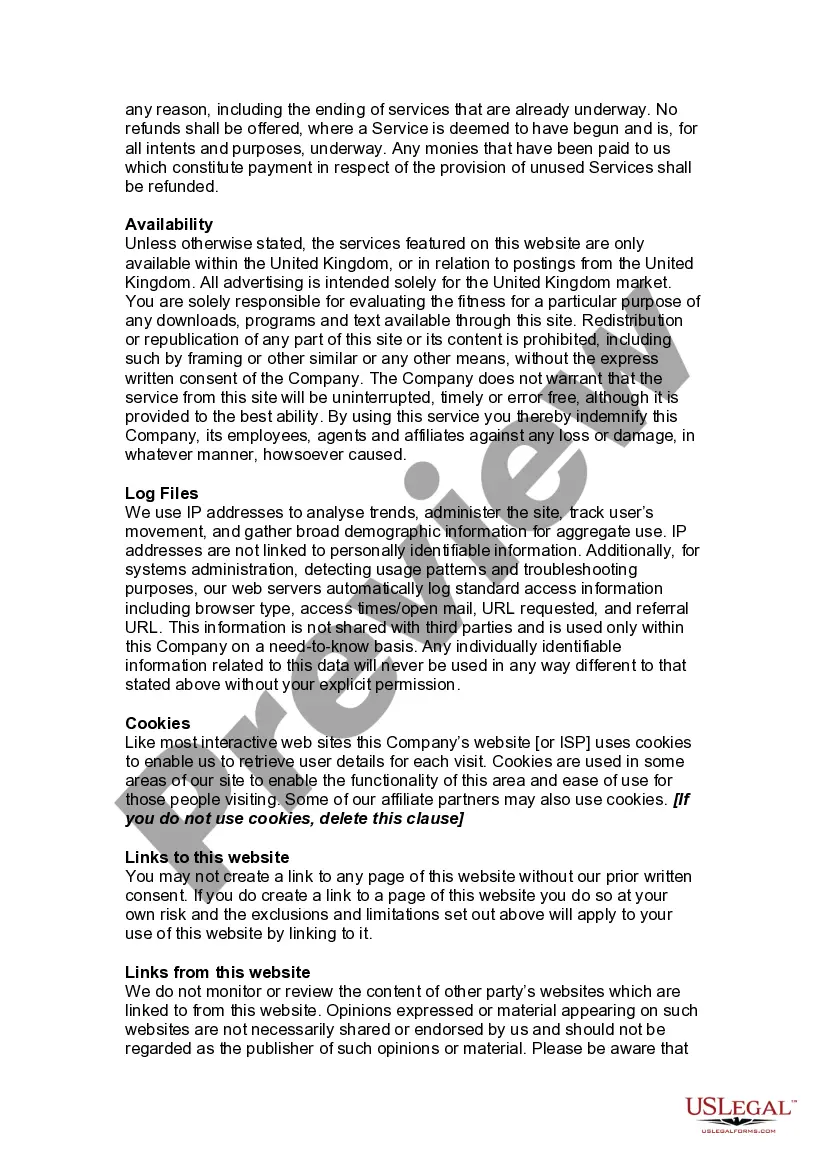
- Privacy statement outlining data protection measures.
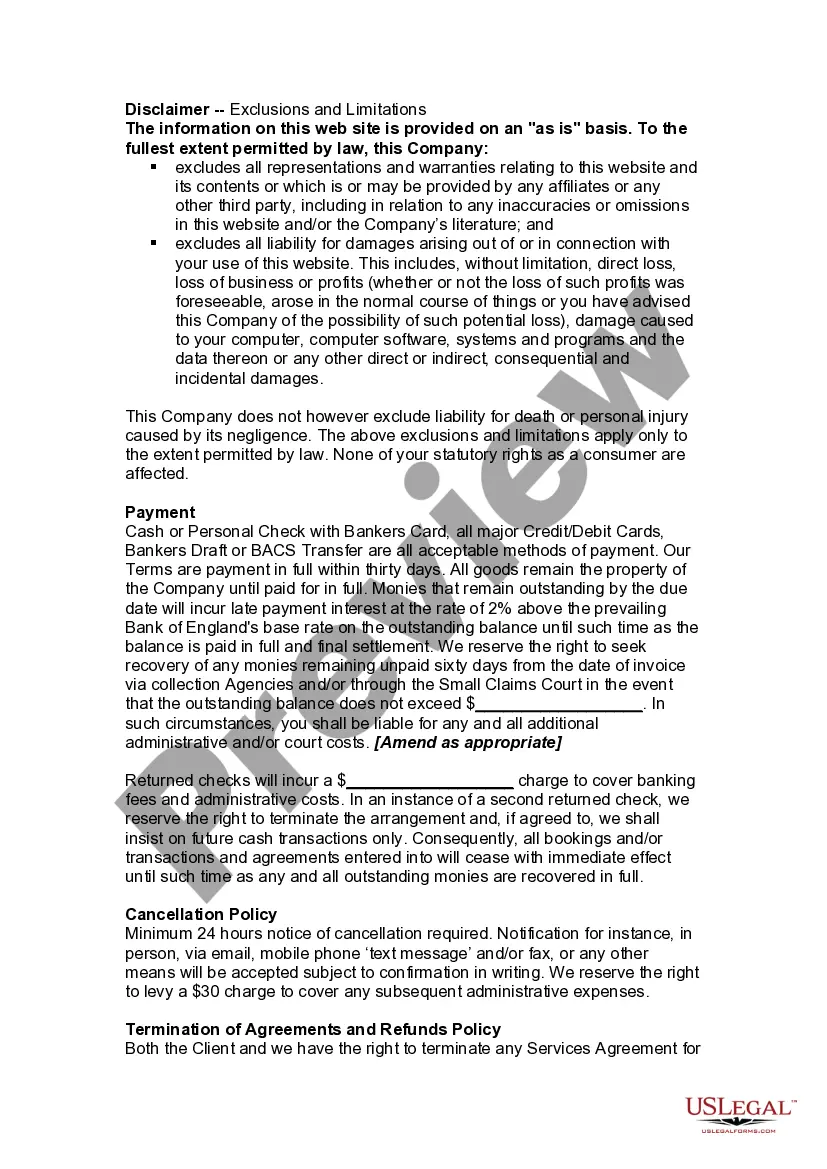
- Cancellations and refunds policy details.
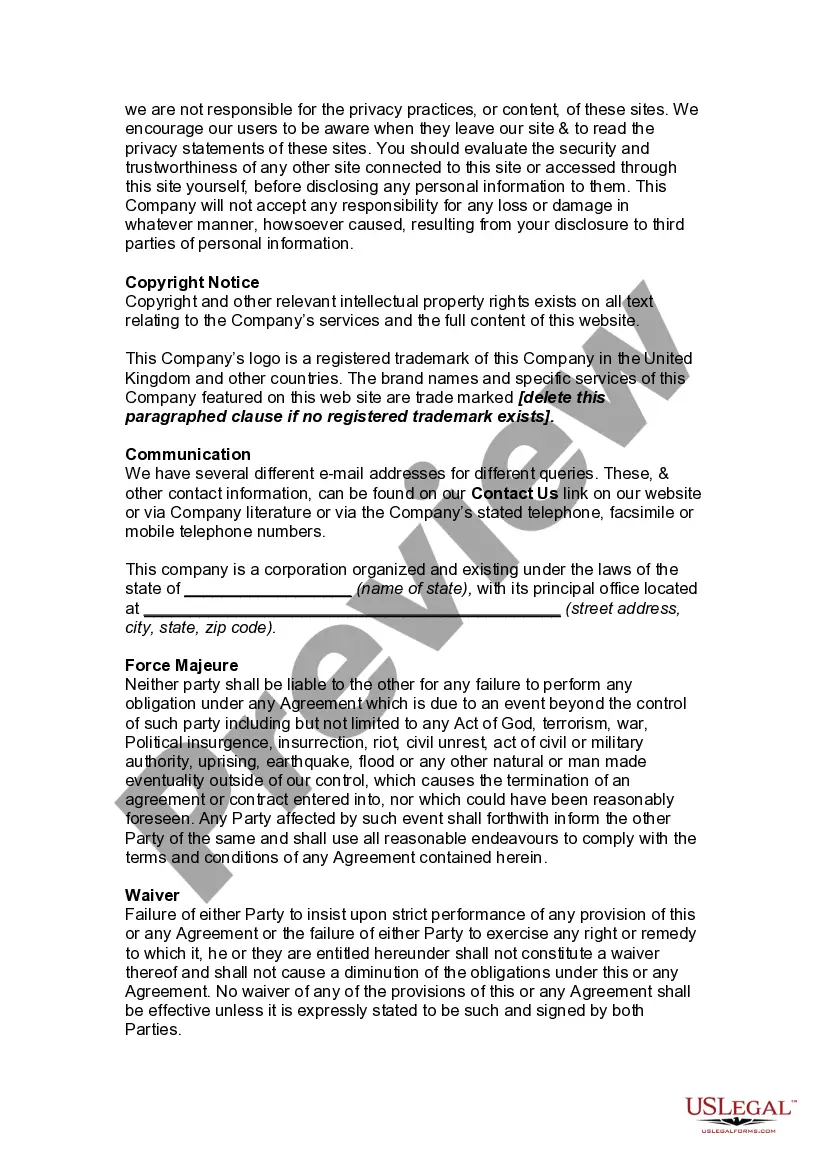
- Limitation of liability disclaimers.
- Cookies policy and user tracking methodologies.
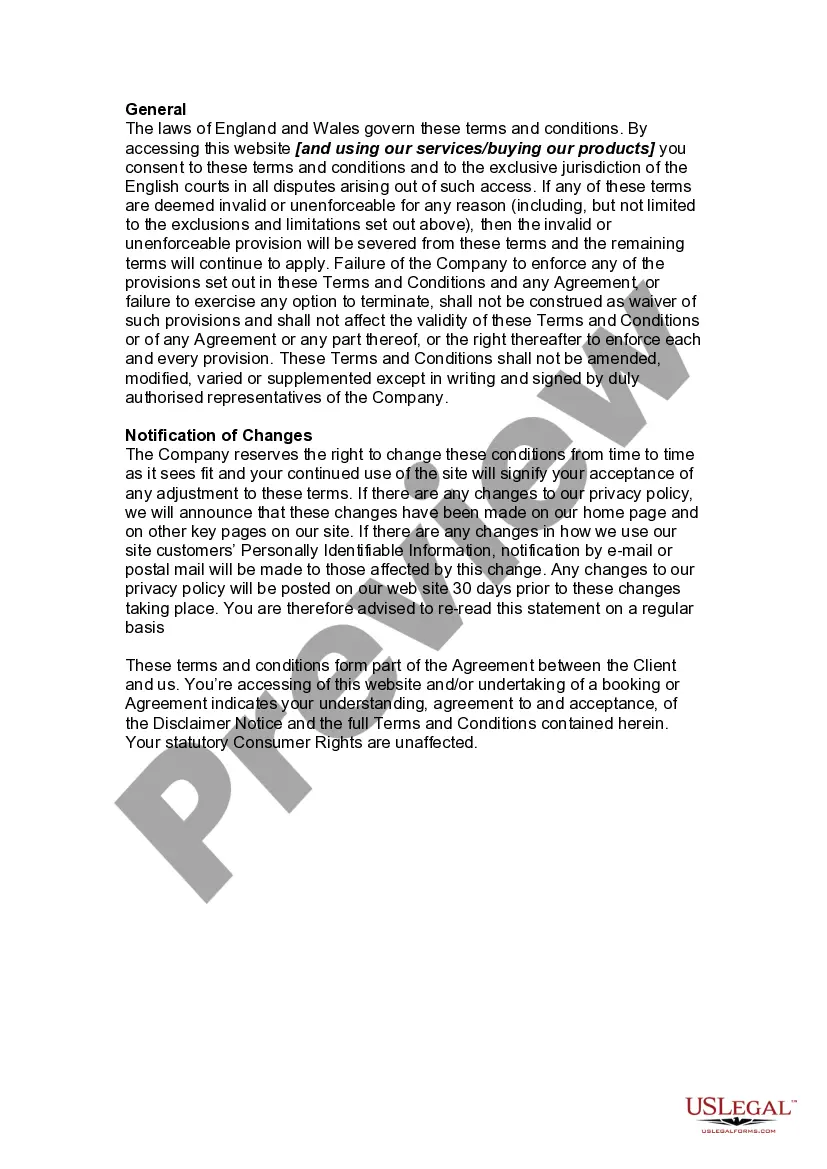
- Termination rights and conditions.
When to use this document
You should use the Sample Terms and Conditions for Website form when establishing a new website or updating an existing one. This form is crucial if you want to set clear ground rules regarding user conduct, protect sensitive information, manage liabilities, and define the scope of services provided on your platform. It's also advisable to use this form if you're experiencing issues with spam or improper use of your website.
Who can use this document
This form is ideal for:
- Website owners and administrators looking to establish clear usage guidelines.
- Small business owners operating an e-commerce or informational site.
- Bloggers who want to set terms for user interaction and comments.
- Organizations and nonprofits that provide online resources or services.
Steps to complete this form
- Identify and define the parties involved in the agreement.
- Clearly outline the prohibited behaviors and acceptable use of your website.
- Include privacy and data protection guidelines that apply to users.
- Specify the terms for cancellations and refunds related to services offered.
- Review and update the section on liability to reflect your specific business needs.
Notarization guidance
Notarization is generally not required for this form. However, certain states or situations might demand it. You can complete notarization online through US Legal Forms, powered by Notarize, using a verified video call available anytime.
Get your form ready online
Our built-in tools help you complete, sign, share, and store your documents in one place.
Make edits, fill in missing information, and update formatting in US Legal Forms—just like you would in MS Word.
Download a copy, print it, send it by email, or mail it via USPS—whatever works best for your next step.
Sign and collect signatures with our SignNow integration. Send to multiple recipients, set reminders, and more. Go Premium to unlock E-Sign.
If this form requires notarization, complete it online through a secure video call—no need to meet a notary in person or wait for an appointment.
We protect your documents and personal data by following strict security and privacy standards.

Make edits, fill in missing information, and update formatting in US Legal Forms—just like you would in MS Word.

Download a copy, print it, send it by email, or mail it via USPS—whatever works best for your next step.

Sign and collect signatures with our SignNow integration. Send to multiple recipients, set reminders, and more. Go Premium to unlock E-Sign.

If this form requires notarization, complete it online through a secure video call—no need to meet a notary in person or wait for an appointment.

We protect your documents and personal data by following strict security and privacy standards.
Common mistakes to avoid
- Failing to update terms regularly, especially as services evolve.
- Using vague language that can lead to misinterpretation by users.
- Not including all necessary sections, leading to potential legal gaps.
- Overlooking the explanation of key terms that users may not understand.
Why use this form online
- Convenient access to legally vetted templates that save time on drafting.
- Editability allows you to customize terms to fit your specific website needs.
- Reliable structure helps ensure you cover all necessary areas for legal protection.
- Immediate download capability facilitates quick implementation.
Legal use & context
- This form provides a legal framework for user interaction on your website.
- It is designed to enforce compliance with established terms, which can be beneficial in legal disputes.
- Understanding and adherence to these terms by users can minimize liability for website operators.
Main things to remember
- The Sample Terms and Conditions for Website form is essential for establishing clear usage rules.
- Using this form protects your interests and clarifies user expectations.
- Regular updates and clarity are crucial for effective legal compliance.
- Different stakeholders can benefit from using this tailored agreement to enhance website operation.
Looking for another form?


Form popularity
FAQ
How To Write Terms and Conditions ? Step by Step Write the Introduction.Draft the Terms of Service.Create an Acknowledgment Statement.Limit Your Liability.List Who Owns Intellectual Property Rights.Generate a Privacy Policy.Spell Out What Happens for Non-Compliance.Add a Signature and Dateline for Both Parties.
Terms and Conditions: An Overview This can include general and special conditions. A general condition is one that is common and included in most contracts. Special conditions are those that are specific to that contract, i.e., payment, price variation, penalties, etc.
?Terms and Conditions? is the document governing the contractual relationship between the provider of a service and its user. On the web, this document is often also called ?Terms of Service? (ToS), ?Terms of Use?, EULA (?End-User License Agreement?), ?General Conditions? or ?Legal Notes?.
Contracts are made up of two types of contractual terms: expressed terms and implied terms.
Basic Elements of Terms and Conditions Limit Liability. You'll need a basic disclaimer removing your liability for any errors in your web content.Copyright.Trademark Notice.Privacy Policy.Set Governing Law.Click Wrap Agreement.Other Elements.Don't Copy Another Site.
A terms and conditions document is a legally binding document which sets out the terms around your provision of goods and/or services to your customers. Your terms and conditions should be read and accepted by your customers before they make payment.
A Terms and Conditions agreement is where you let the public know the terms, rules and guidelines for using your website or mobile app. They include topics such as acceptable use, restricted behavior and limitations of liability.