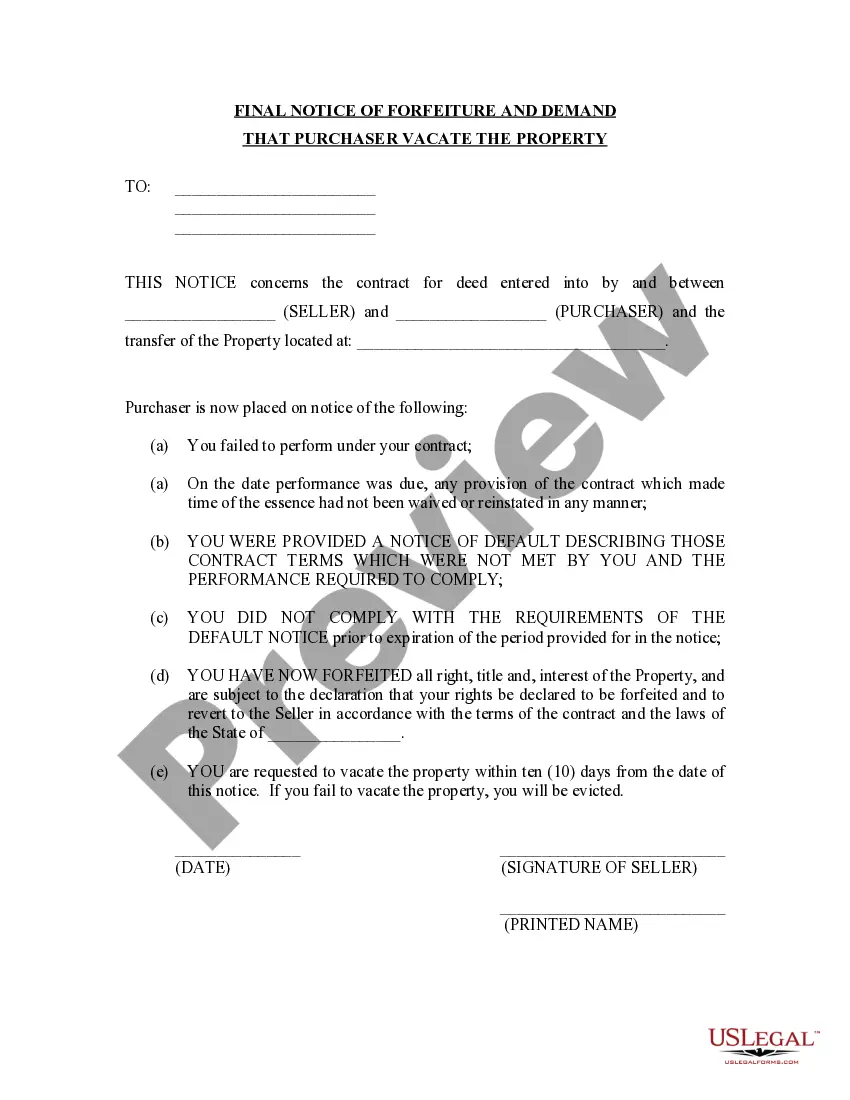
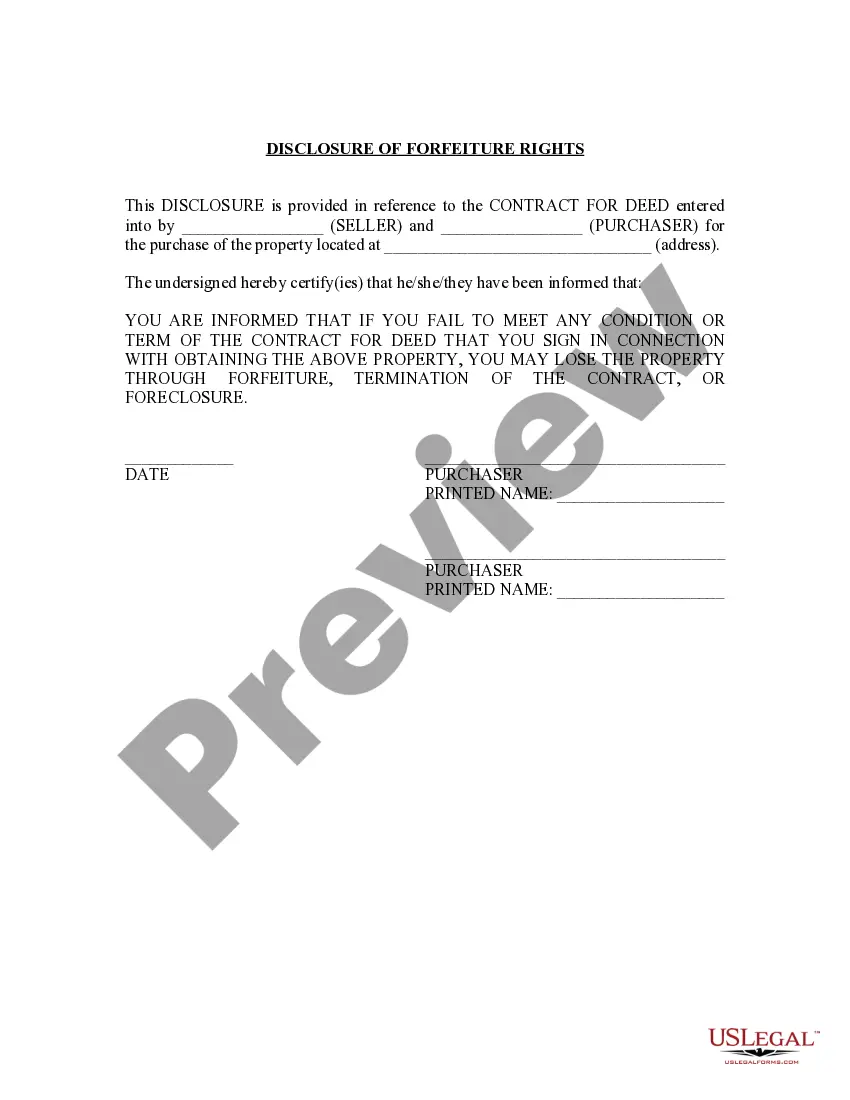
Oregon Complaint regarding Forcible Entry and Unlawful Detainer
About this form
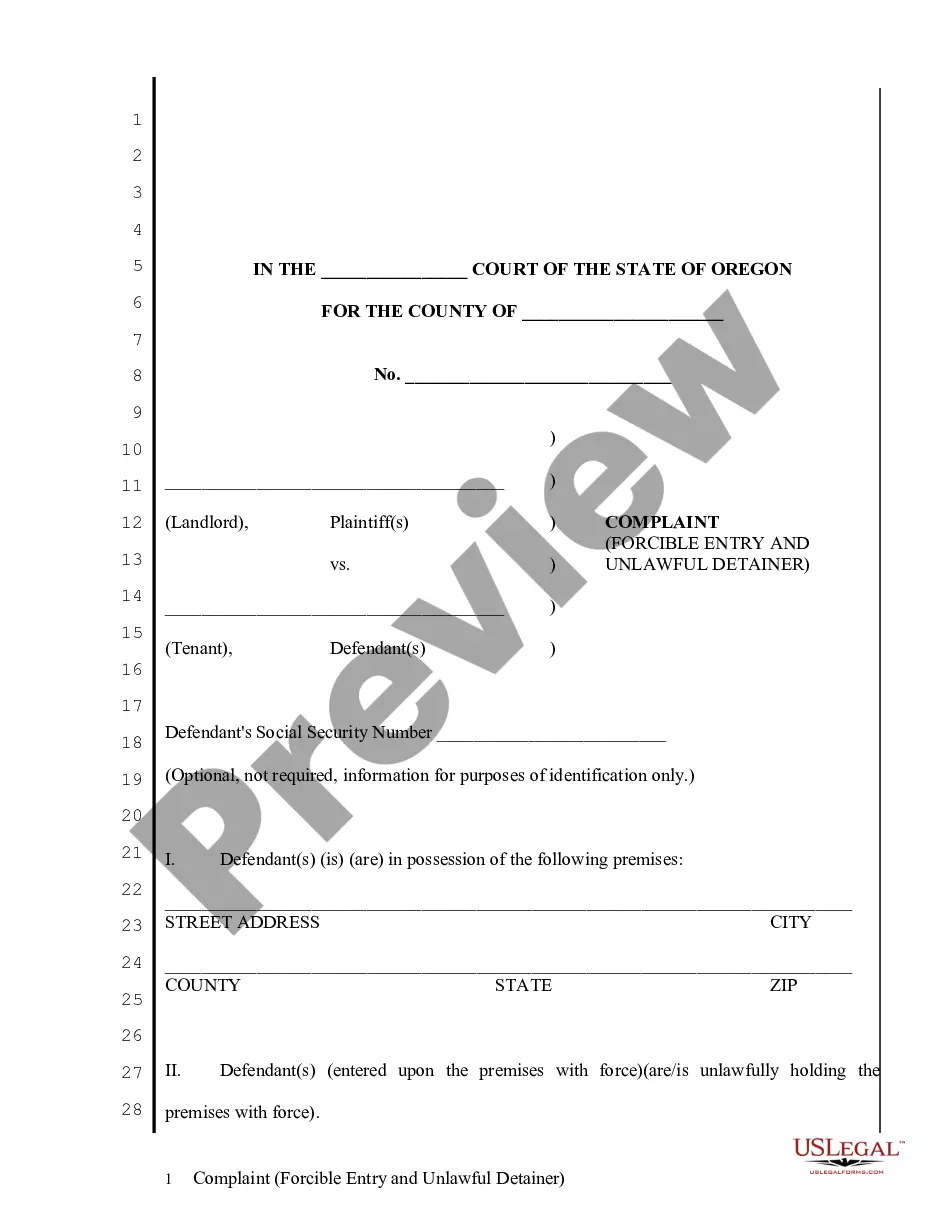
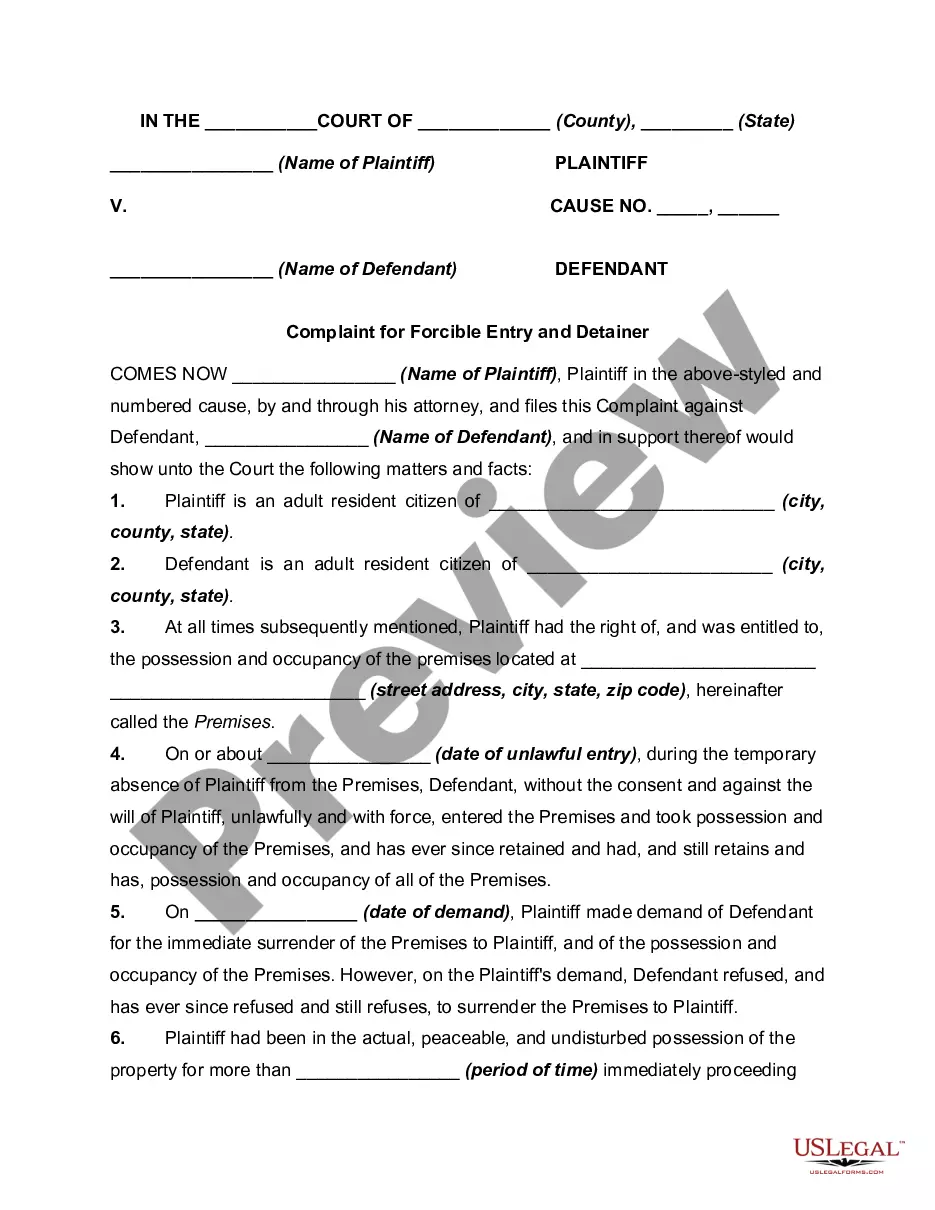
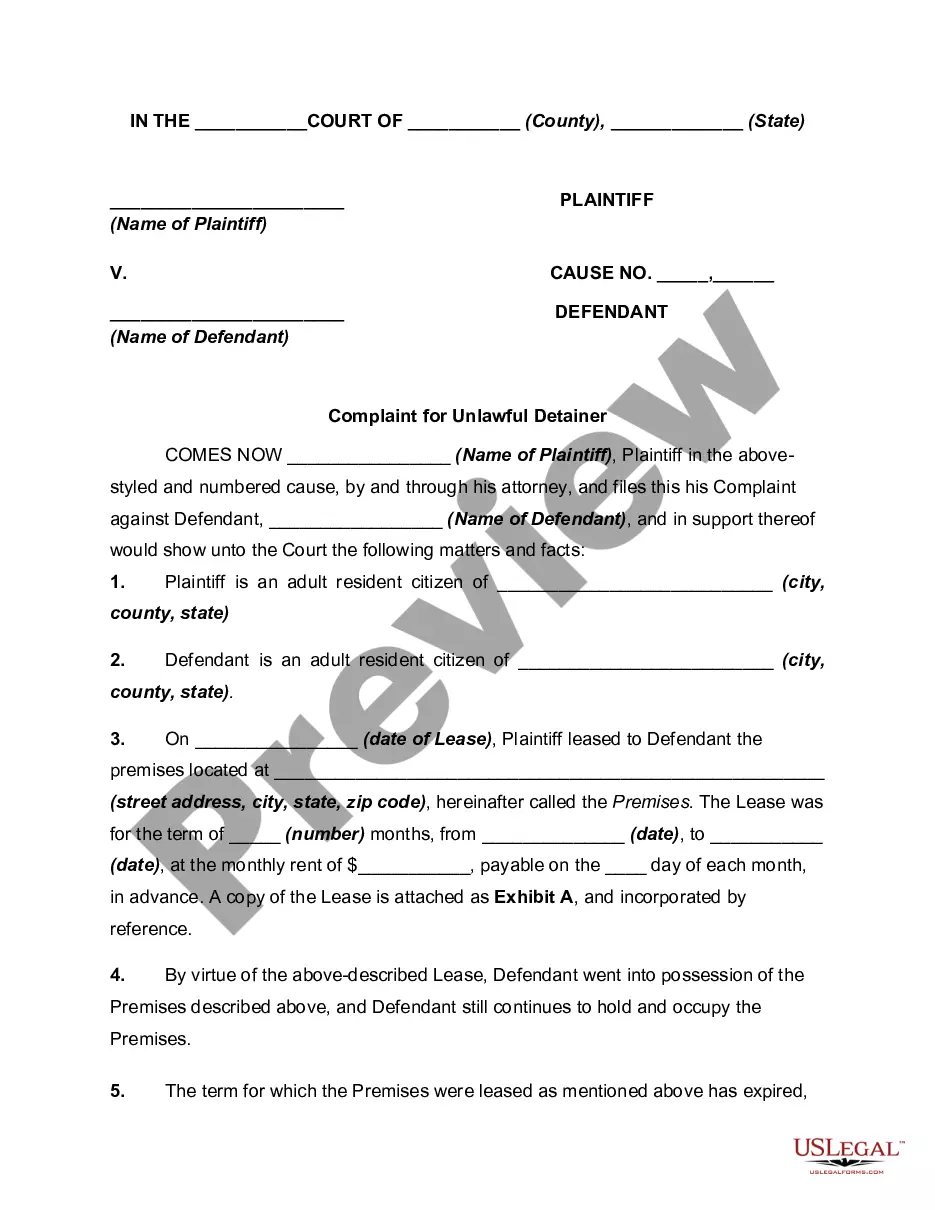
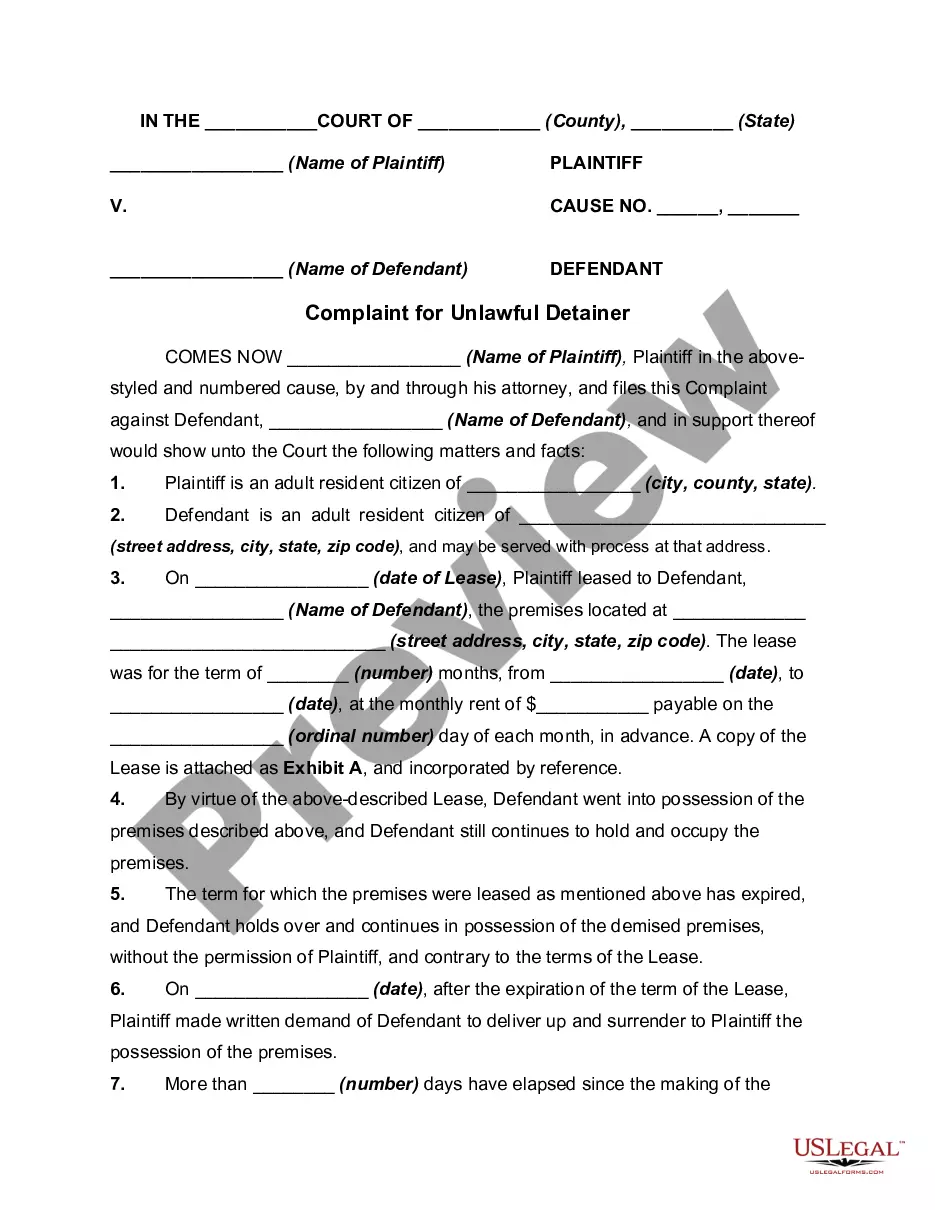
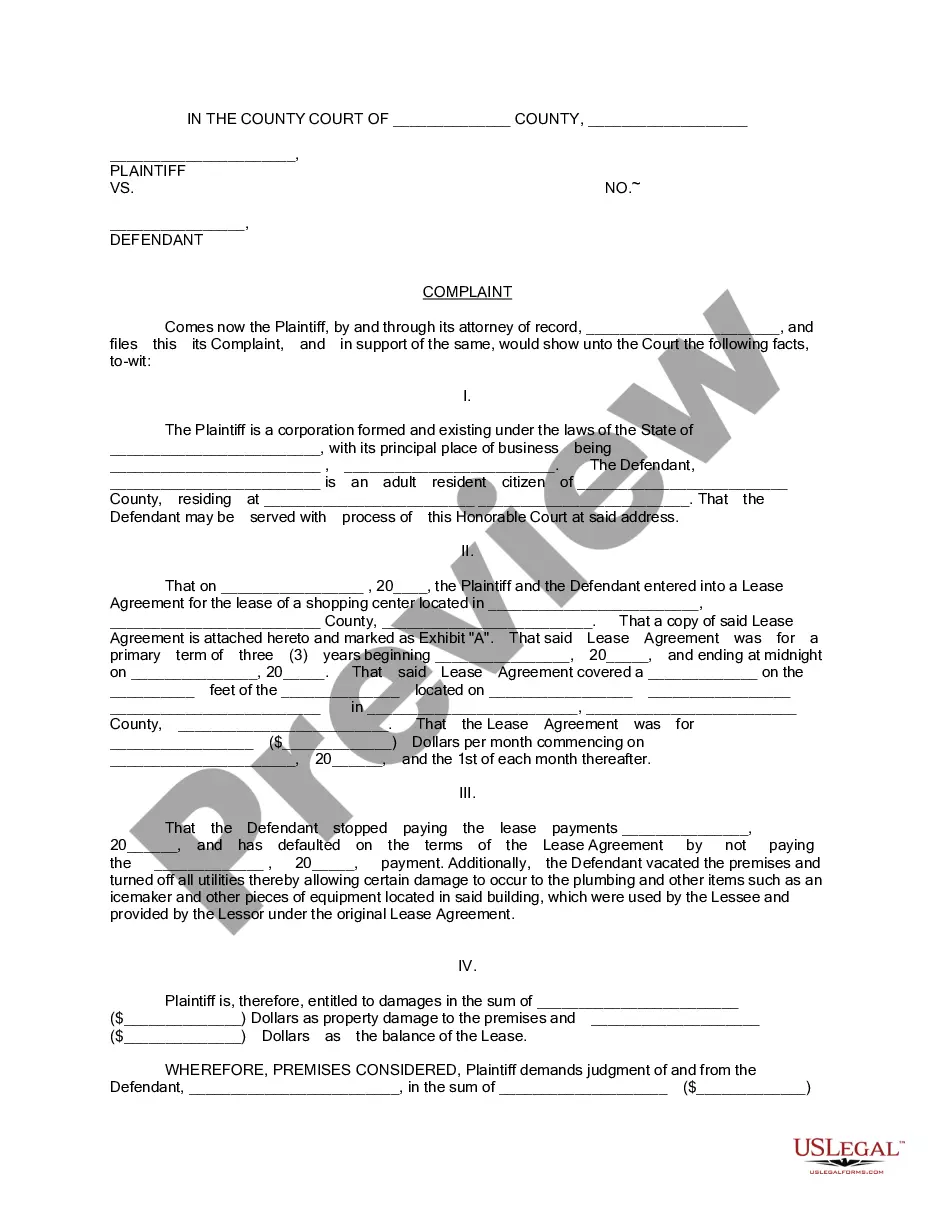
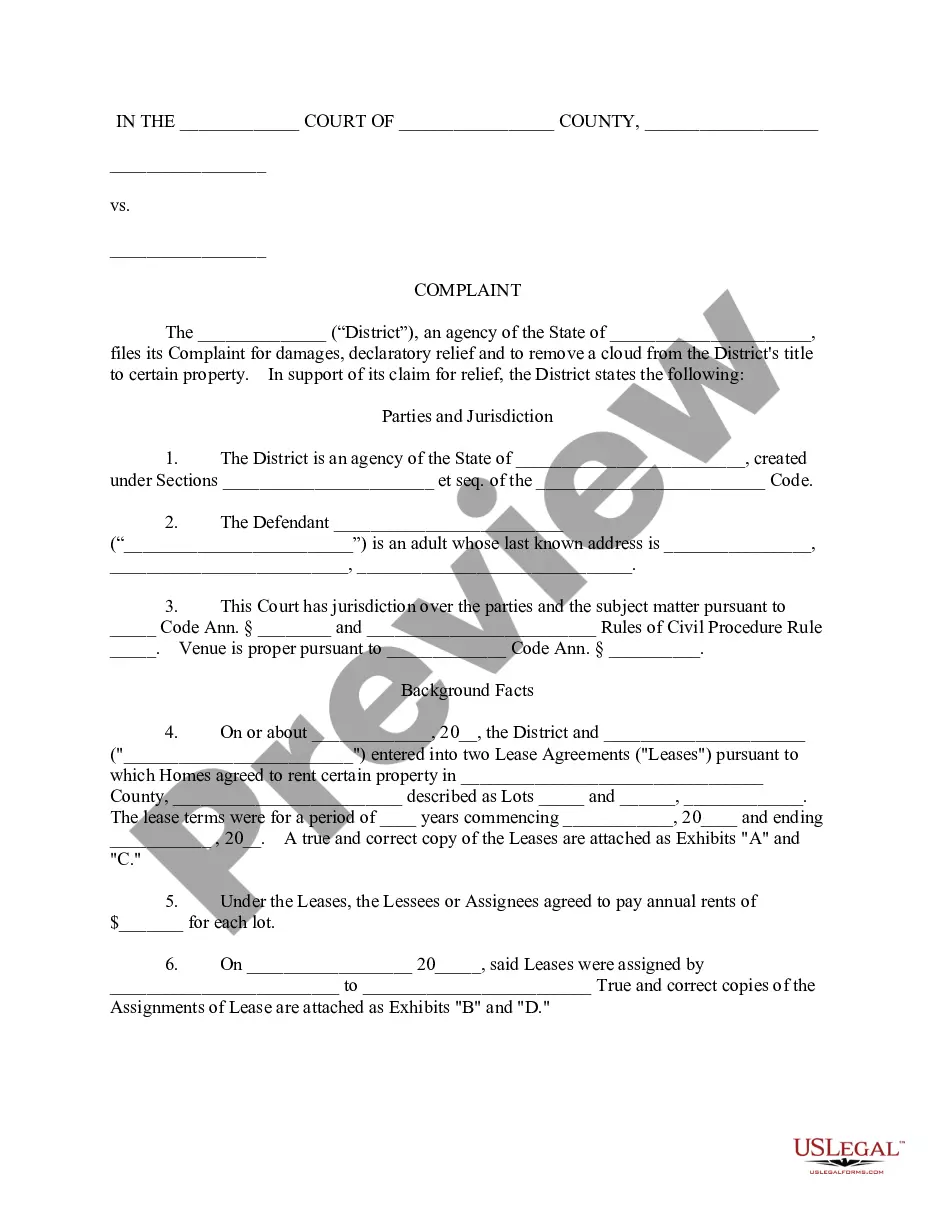
The Complaint regarding Forcible Entry and Unlawful Detainer is a legal document used in civil litigation in Oregon. This form is filed by a landlord seeking to regain possession of a rental property from a tenant who is unlawfully occupying it. It outlines the reasons for the eviction and provides the court with the necessary information to process the complaint. Unlike other eviction notices that may focus solely on notice periods, this form is specifically tailored for forcible entry and unlawful detainer cases, offering a structured approach to resolving such disputes in court.
Form components explained
- Identification of the court and county where the complaint is filed.
- Names of the landlord (plaintiff) and tenant (defendant).
- Description of the premises in question, including address details.
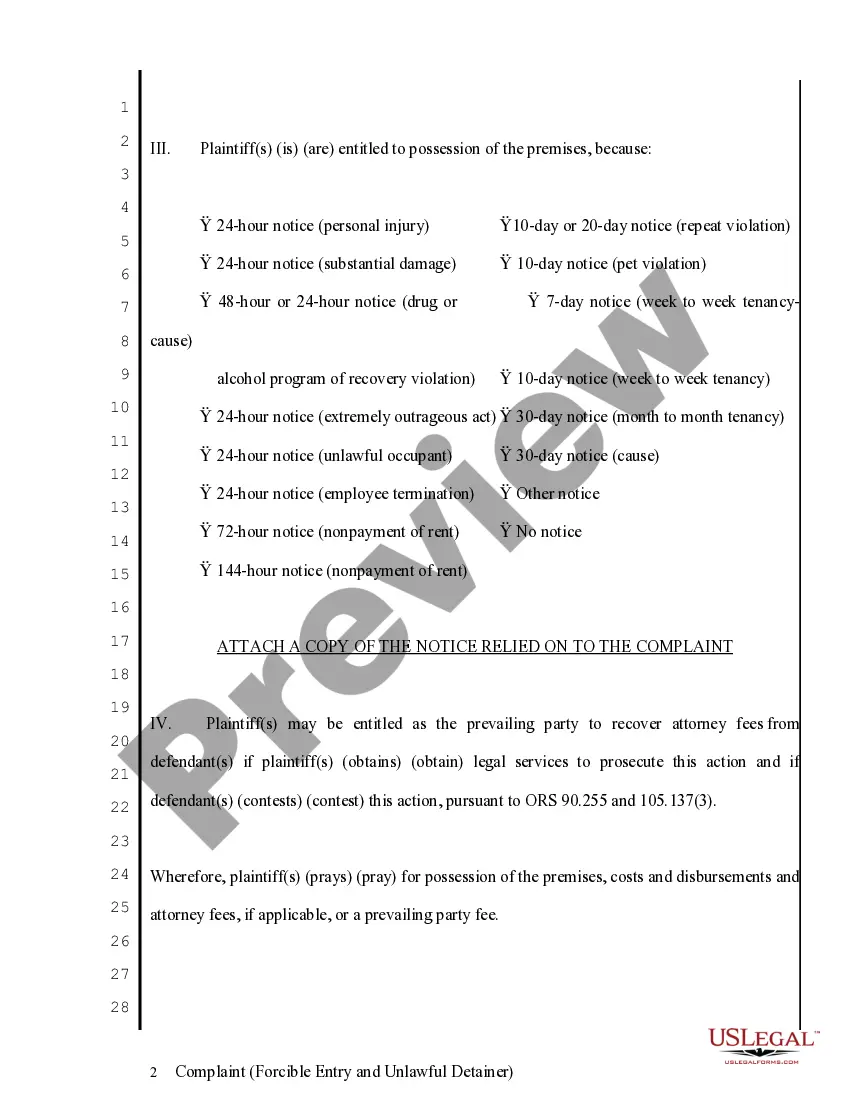
- Specific reasons for the forcible entry and unlawful detainer claim.
- Information about any prior notices served to the tenant.
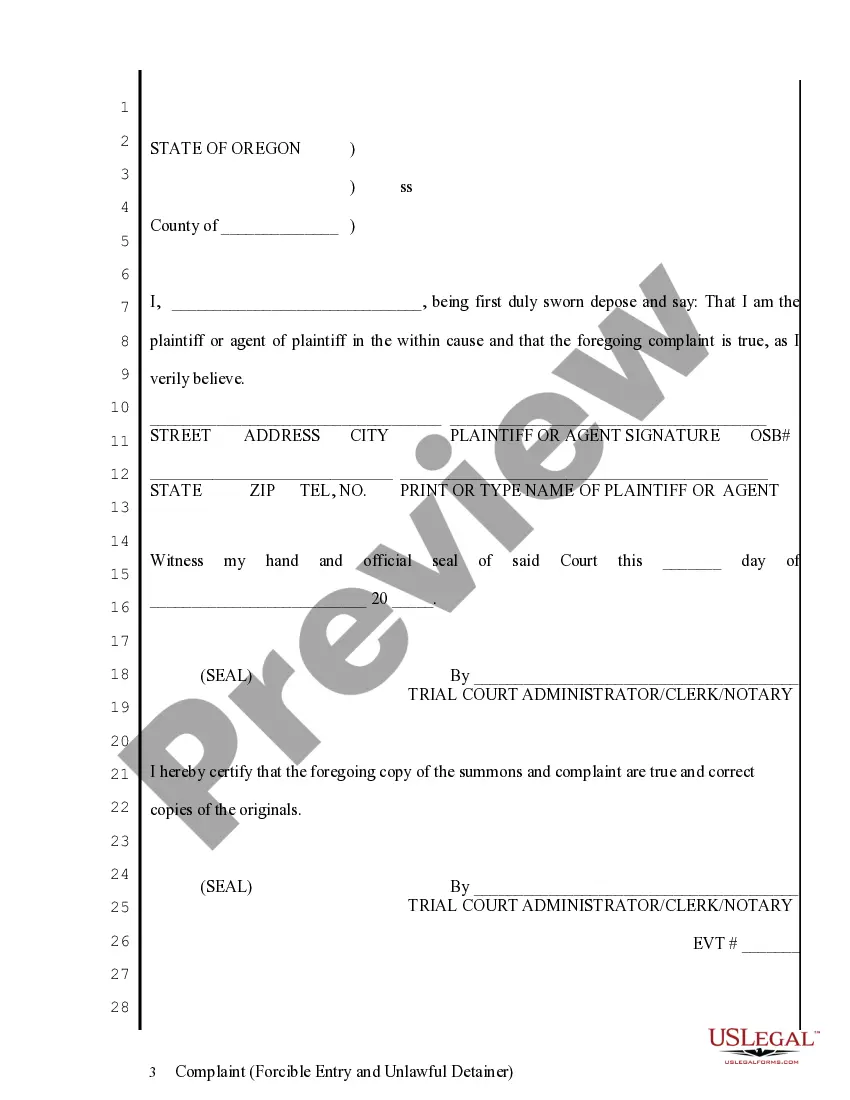
- Signature section for the plaintiff or their agent, along with certification by a court administrator or notary.
When this form is needed
This form should be used when a landlord needs to file a formal complaint against a tenant who is unlawfully occupying the rental property. Common scenarios include instances where a tenant has not paid rent, violated lease terms, or refused to vacate the premises after a notice has been served. By using this form, landlords can initiate the legal process to recover possession efficiently, ensuring that they follow the correct legal procedures in the State of Oregon.
Who can use this document
- Landlords seeking to evict tenants for non-compliance with lease agreements.
- Property managers acting on behalf of landlords in eviction cases.
- Landlords who have issued eviction notices that the tenant has ignored.
- Legal representatives assisting landlords with eviction proceedings.
Completing this form step by step
- Identify the court and county where you will file the complaint.
- Provide the names of the landlord and tenant involved in the case.
- Specify the address of the rental property in question.
- State the reasons for the eviction, selecting the relevant notice type from the options provided.
- Sign the complaint and provide your contact information as the plaintiff or agent.
- Attach a copy of the notice given to the tenant prior to filing this complaint.
Does this form need to be notarized?
Notarization is required for this form to take effect. Our online notarization service, powered by Notarize, lets you verify and sign documents remotely through an encrypted video session, available 24/7.
Get your form ready online
Our built-in tools help you complete, sign, share, and store your documents in one place.
Make edits, fill in missing information, and update formatting in US Legal Forms—just like you would in MS Word.
Download a copy, print it, send it by email, or mail it via USPS—whatever works best for your next step.
Sign and collect signatures with our SignNow integration. Send to multiple recipients, set reminders, and more. Go Premium to unlock E-Sign.
If this form requires notarization, complete it online through a secure video call—no need to meet a notary in person or wait for an appointment.
We protect your documents and personal data by following strict security and privacy standards.

Make edits, fill in missing information, and update formatting in US Legal Forms—just like you would in MS Word.

Download a copy, print it, send it by email, or mail it via USPS—whatever works best for your next step.

Sign and collect signatures with our SignNow integration. Send to multiple recipients, set reminders, and more. Go Premium to unlock E-Sign.

If this form requires notarization, complete it online through a secure video call—no need to meet a notary in person or wait for an appointment.

We protect your documents and personal data by following strict security and privacy standards.
Common mistakes
- Failing to provide complete information about the tenant or property.
- Not attaching a copy of the required eviction notice.
- Incorrectly identifying the court or county for filing.
- Omitting the signature or necessary contact details of the plaintiff.
Benefits of completing this form online
- Convenience of downloading and completing the form from anywhere.
- Editability allows landlords to customize the form as needed.
- Reliable templates drafted by licensed attorneys ensure compliance with legal standards.
Main things to remember
- The Complaint regarding Forcible Entry and Unlawful Detainer is essential for initiating eviction proceedings in Oregon.
- Ensure to provide complete and accurate information to avoid delays in the legal process.
- Utilizing this online form facilitates compliance with legal standards and enhances the efficiency of handling eviction cases.
Looking for another form?

Form popularity
FAQ
If you file an eviction (unlawful detainer) case and you decide you do not want to move forward, you can ask the court to dismiss the case.You included more than one tenant in your eviction case but have decided you only want to evict one or some of them, so you dismiss the case as to the others.
Courts commonly refer to eviction actions as "forcible entry and detainer" or "unlawful detainer" actions. The legal theory is that the landlord alleges the tenant unlawfully continues to have use and possession of the rental property, and the landlord seeks the assistance of the court to have the tenant removed.
Know Your Rights. It goes without saying, but take some time to know your rights as a tenant. Keep Good Records. Make Sure Notice is Proper. Service of the Unlawful Detainer. Talking to an Attorney. Managing Partner Lipton Legal Group, A PC Beverly Hills, CA.
If you have an eviction record on your background, you can petition the court in the county where the case was filed to have the record expunged, or sealed. This typically requires filing a petition with the court and paying a filing...
You can remove your eviction from your public record by petitioning the court, winning your case or disputing an inaccurately reported eviction. While the process is more difficult, it's not impossible.