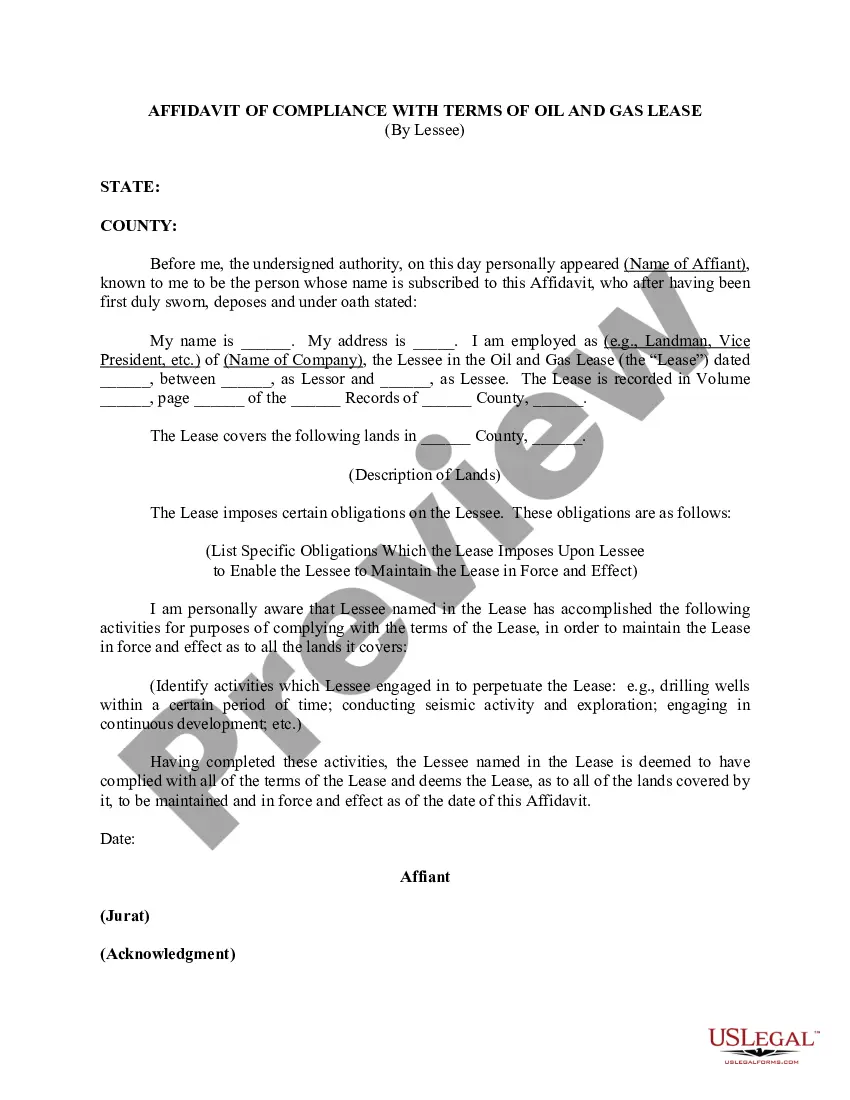
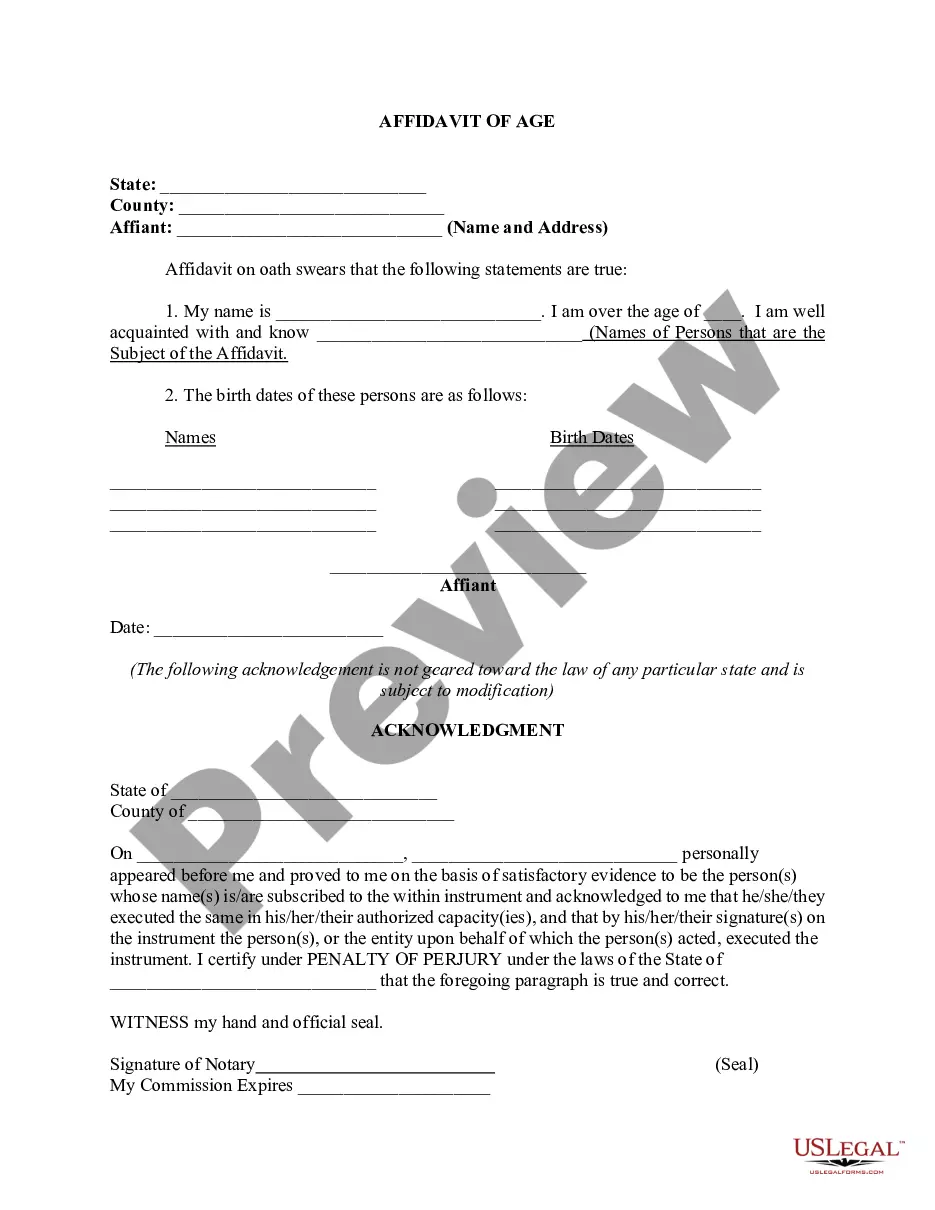
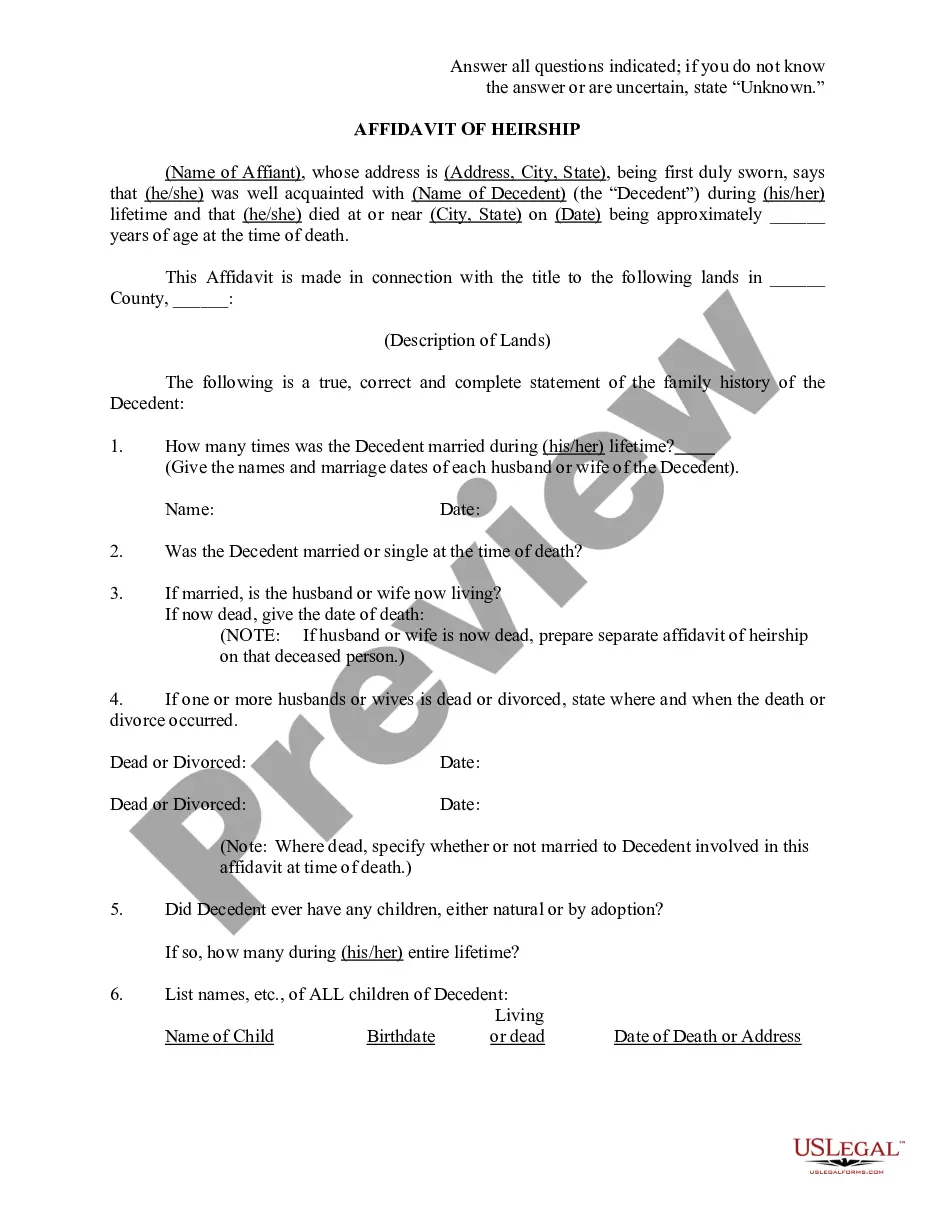
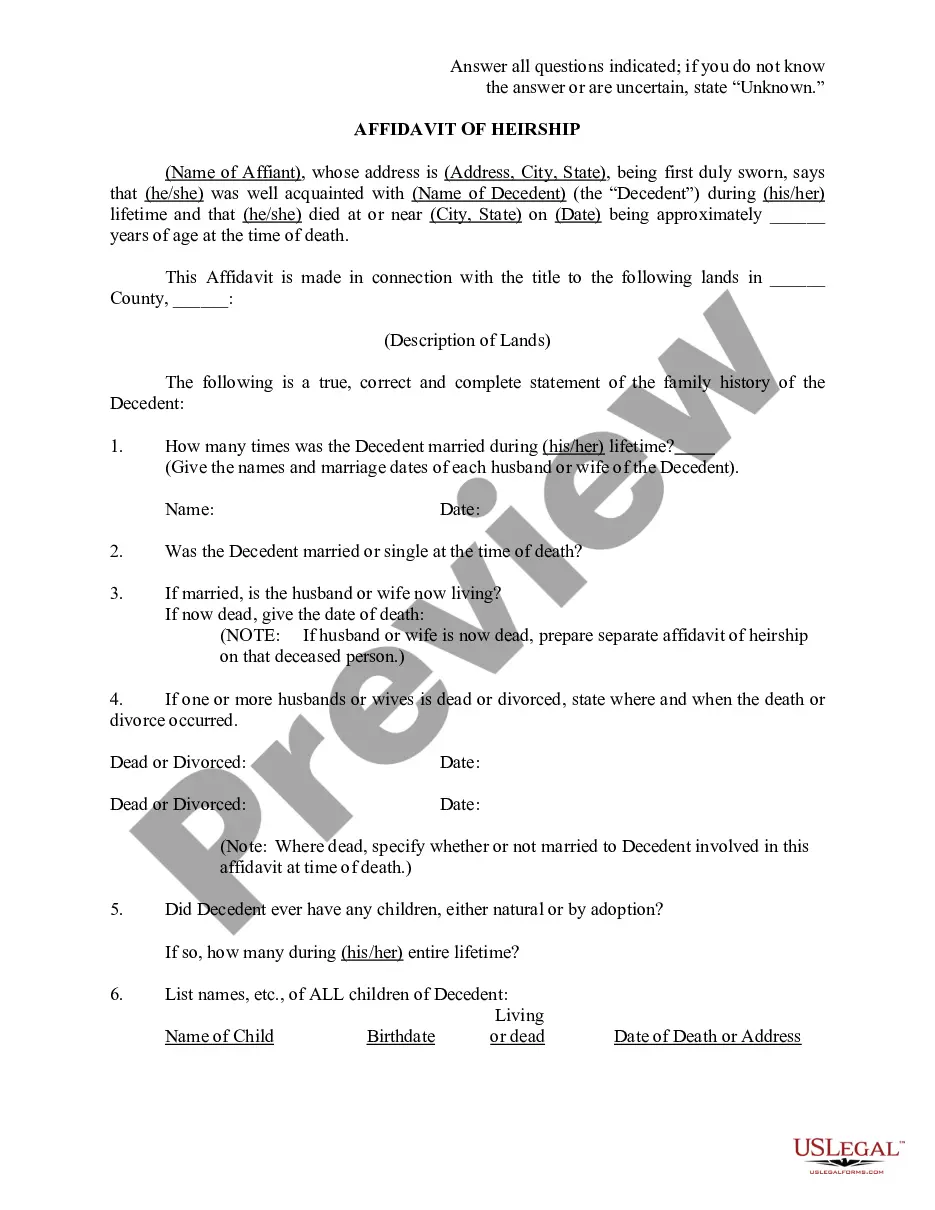
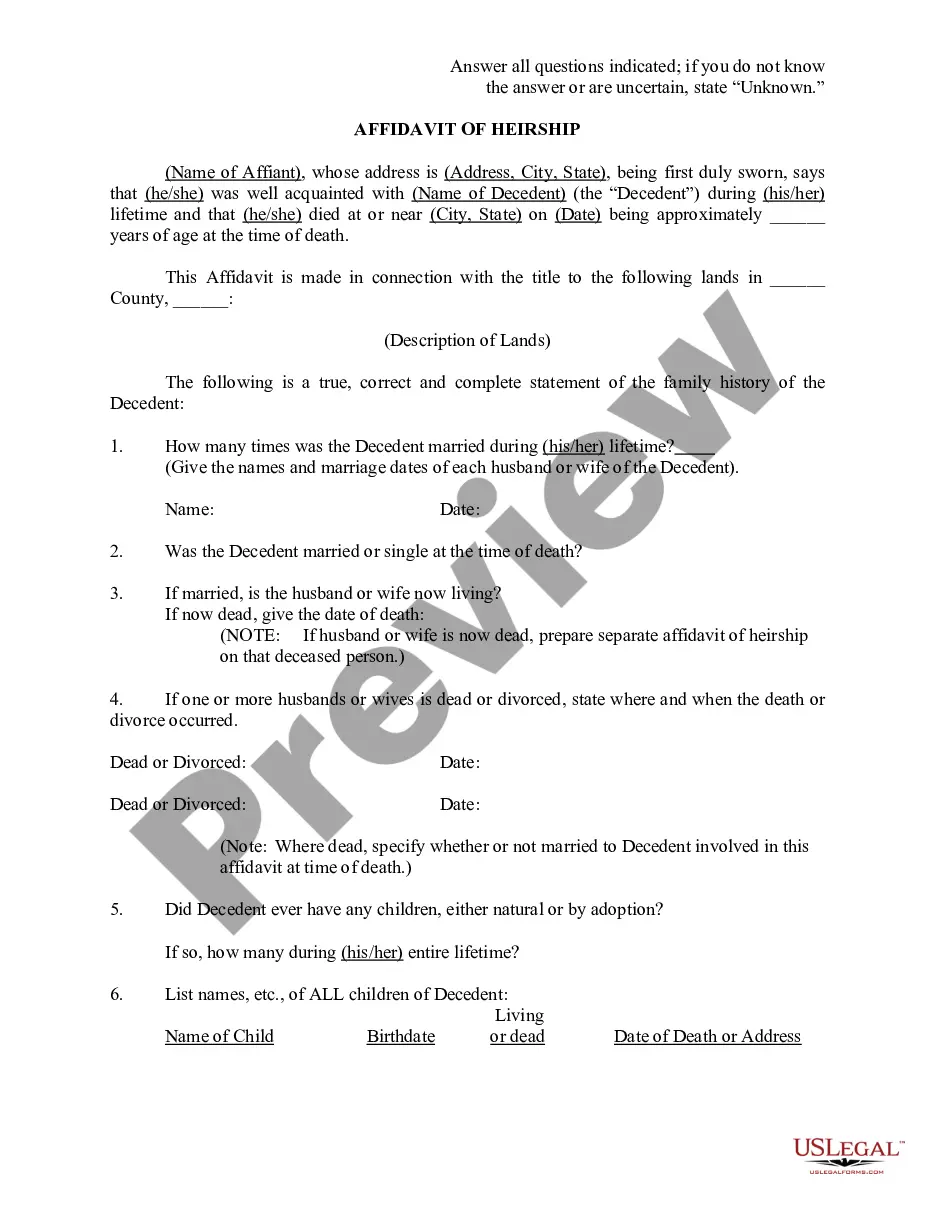
Minnesota Petitioner - Affidavit and Petition for Order for Protection
Understanding this form
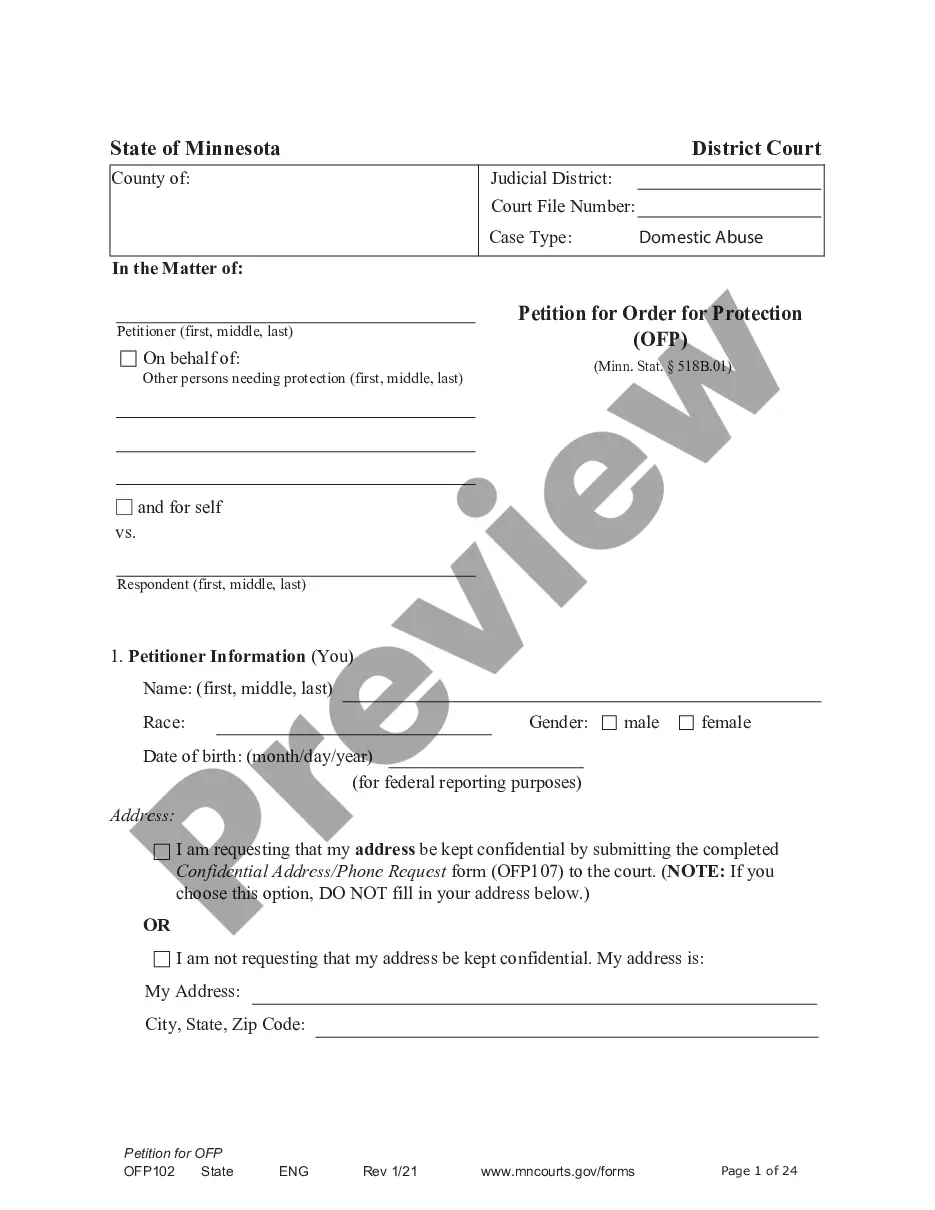
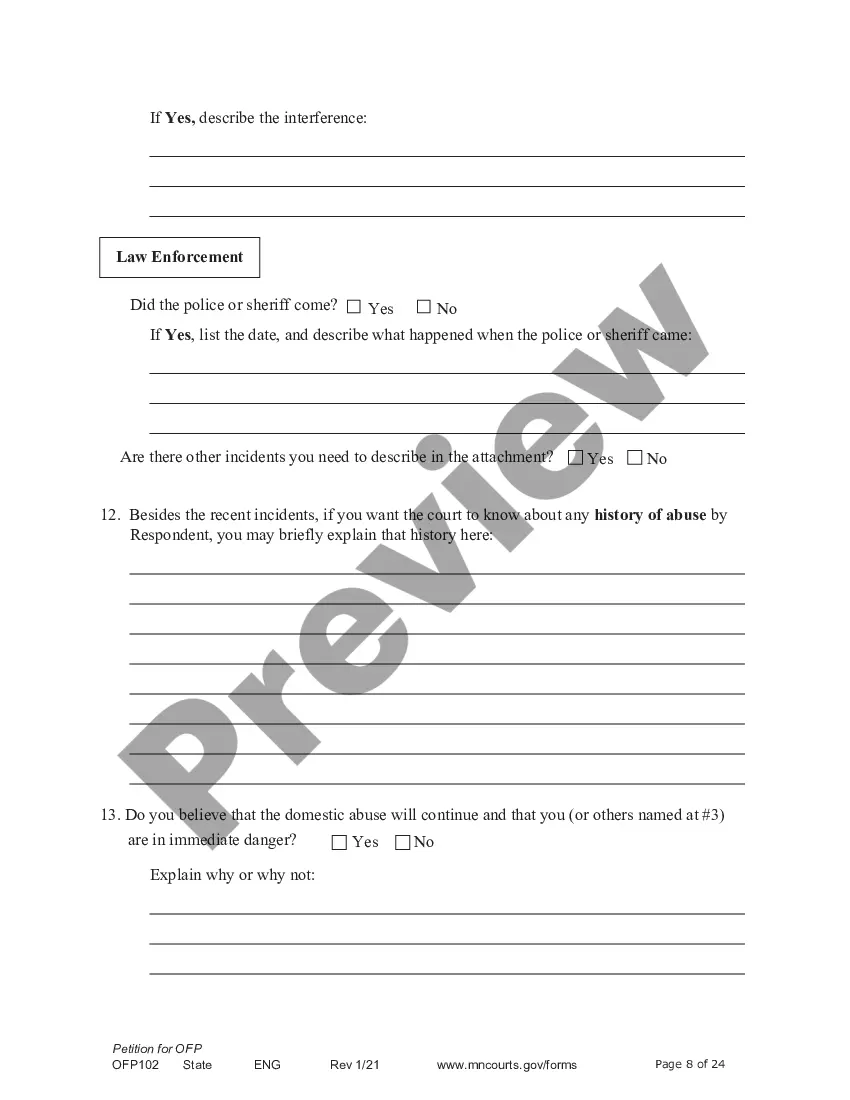
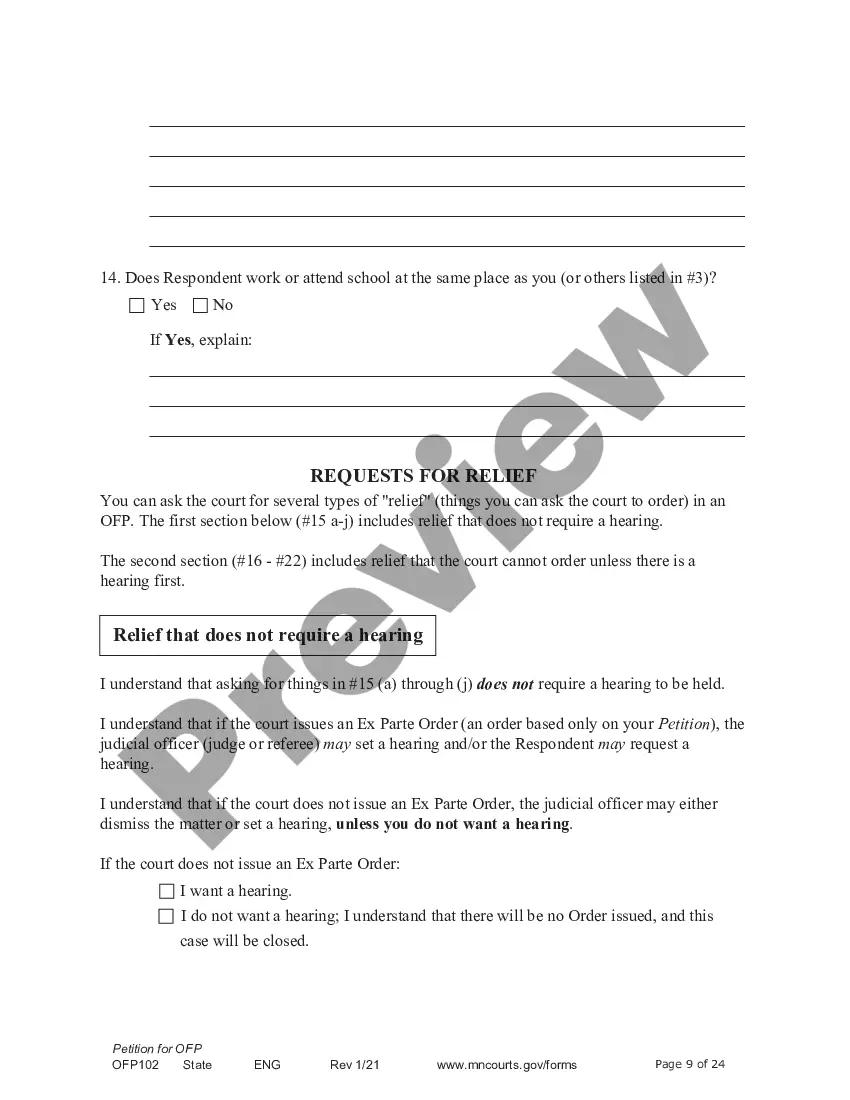
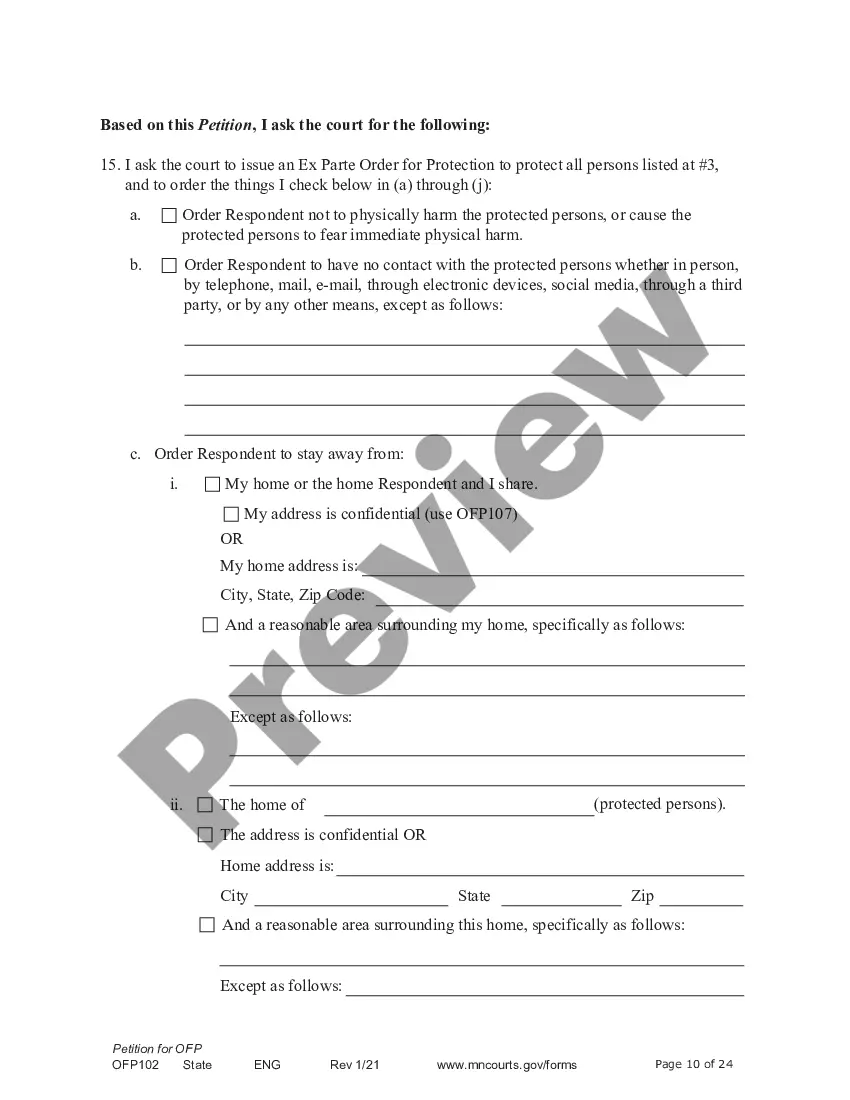
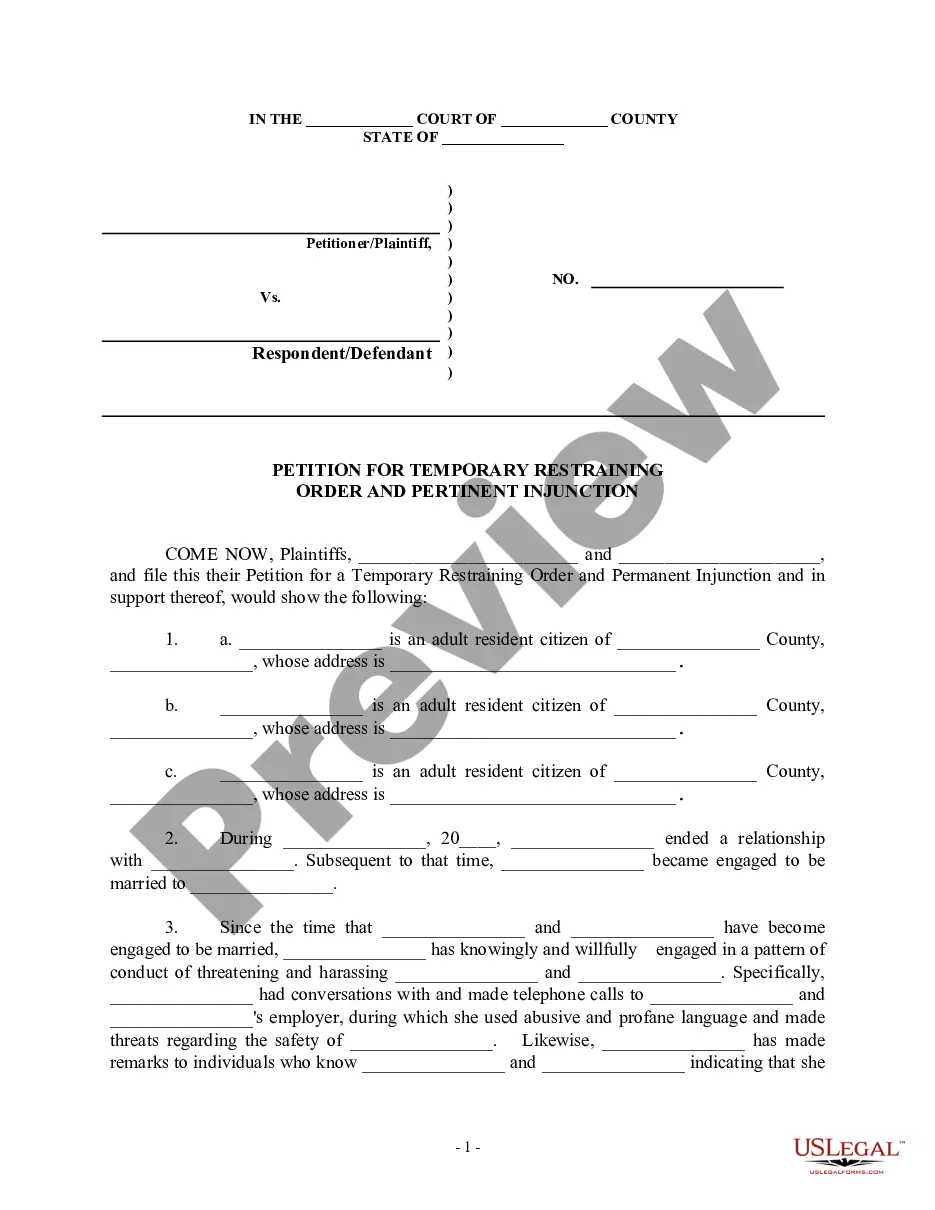
The Petitioner - Affidavit and Petition for Order for Protection is an official Minnesota court form used in domestic abuse cases. This form is designed for individuals seeking legal protection from another person, commonly known as the respondent. It allows the petitioner to formally request an order for protection, which can include prohibiting the respondent from contacting them or coming near their home. Unlike other general legal forms, this specific petition addresses the serious issue of domestic violence and provides a structured process for victims to secure the necessary legal safeguards.
Main sections of this form
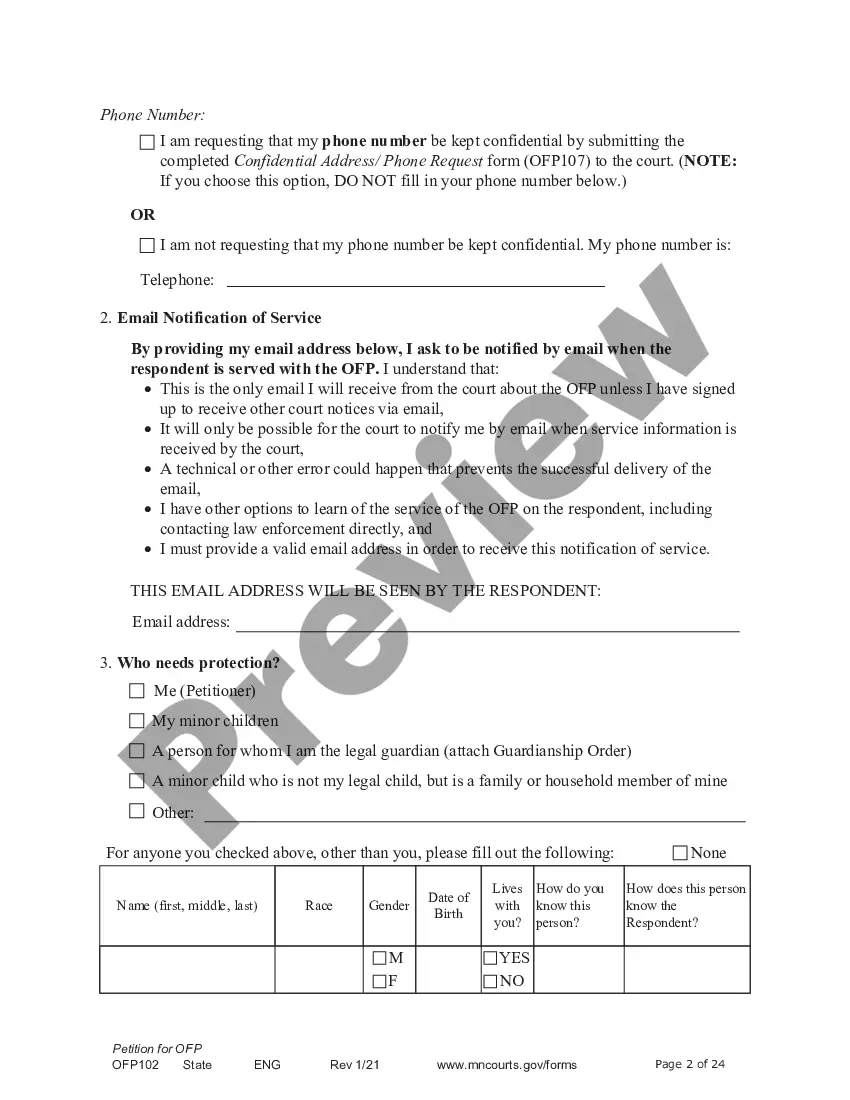
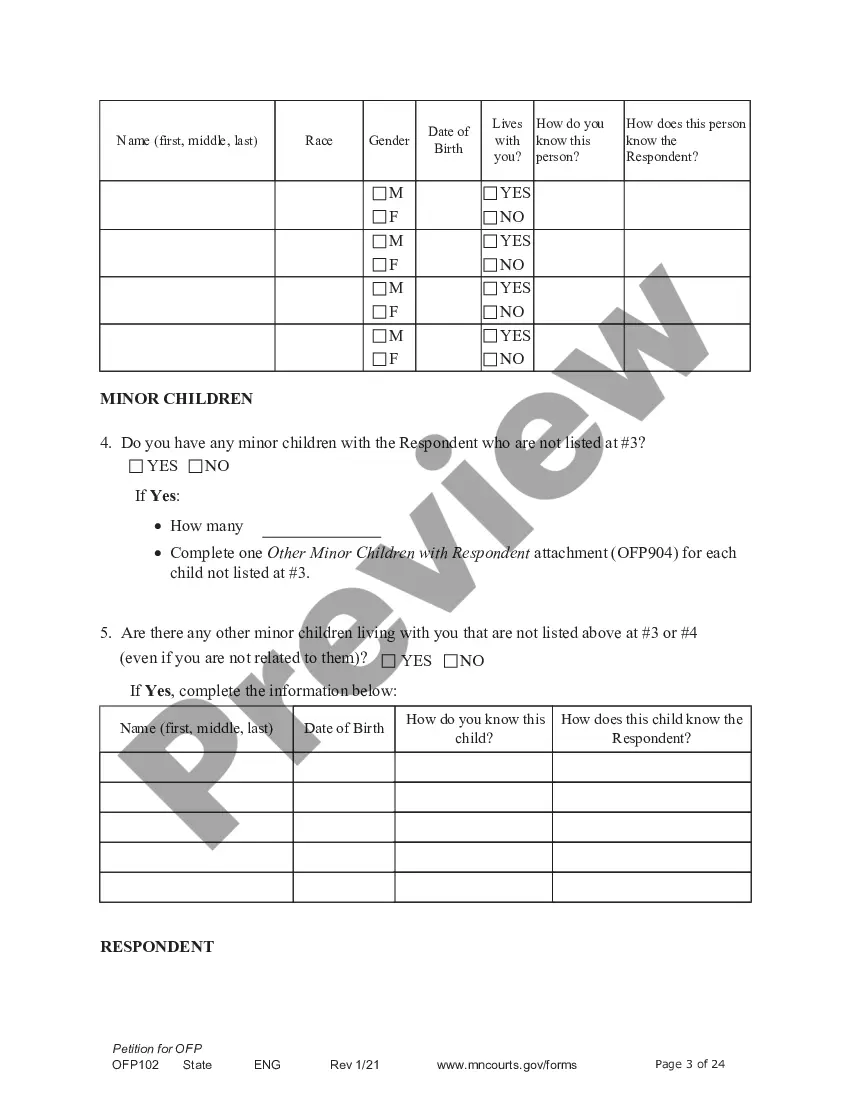
- Petitioner Information: provides the personal details of the person seeking protection.
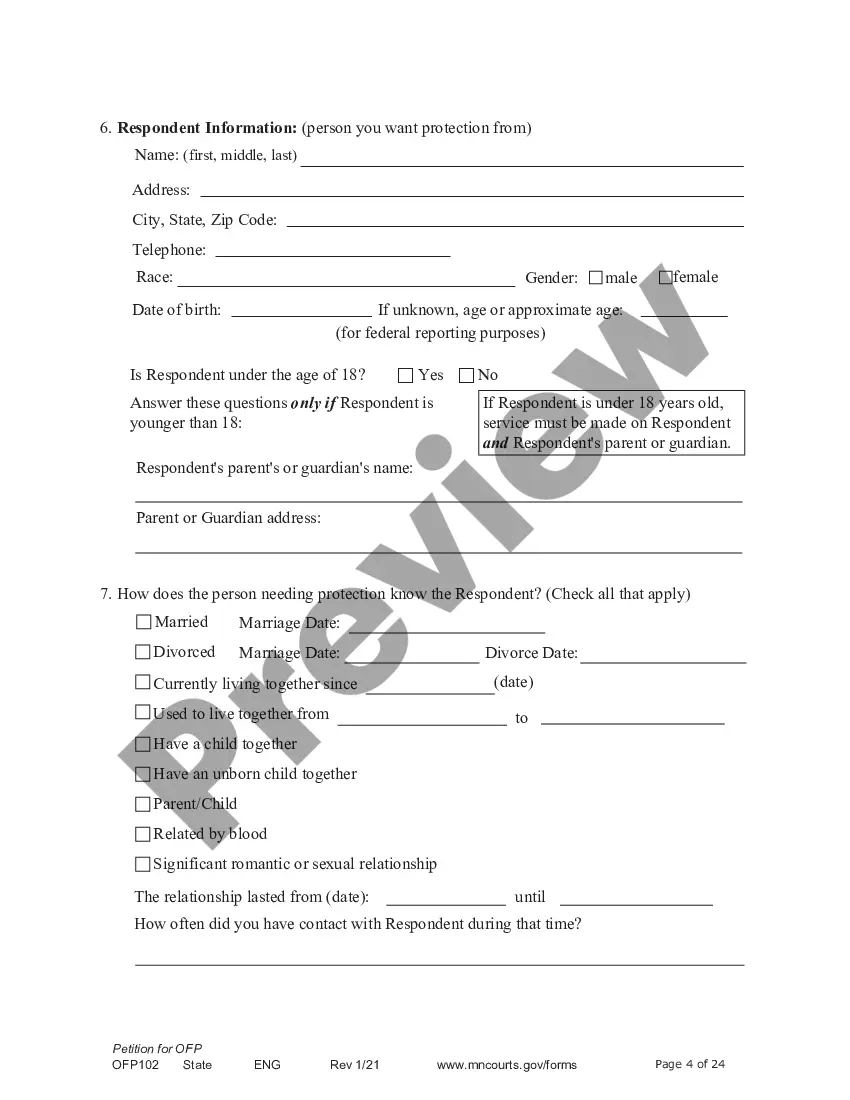
- Respondent Information: includes identifying information about the individual from whom protection is sought.
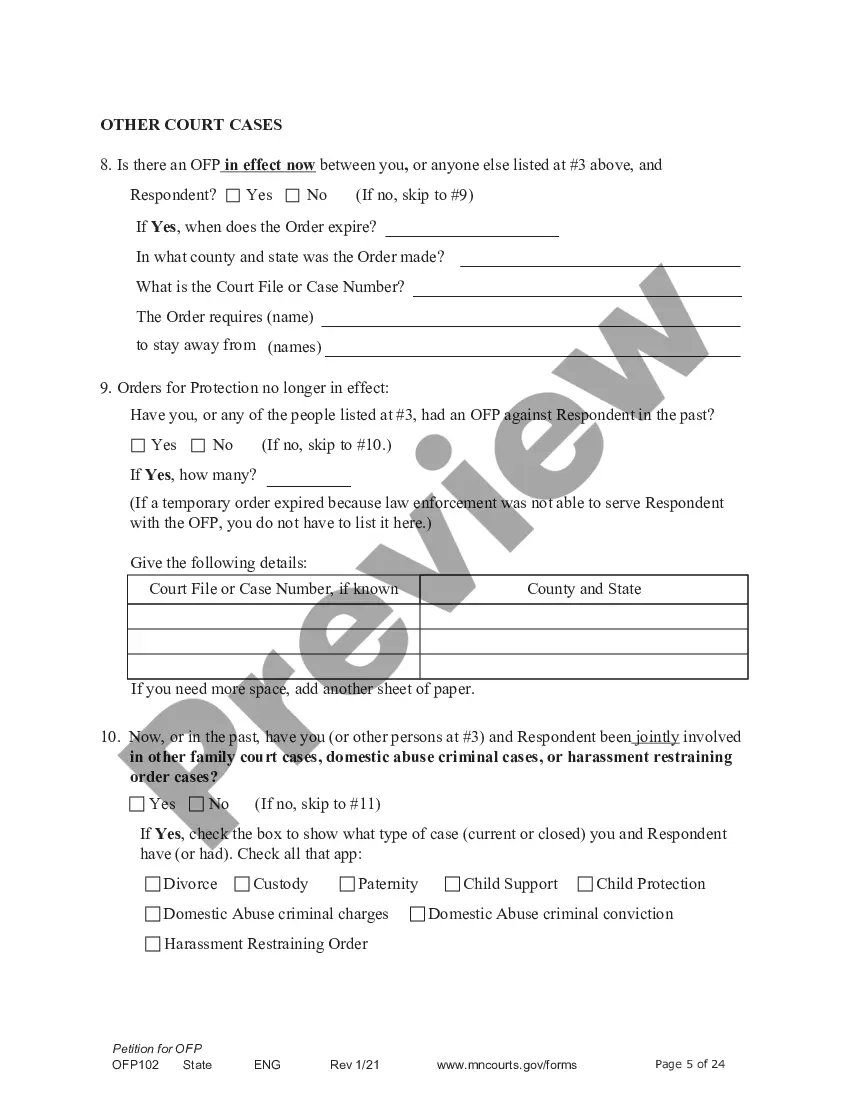
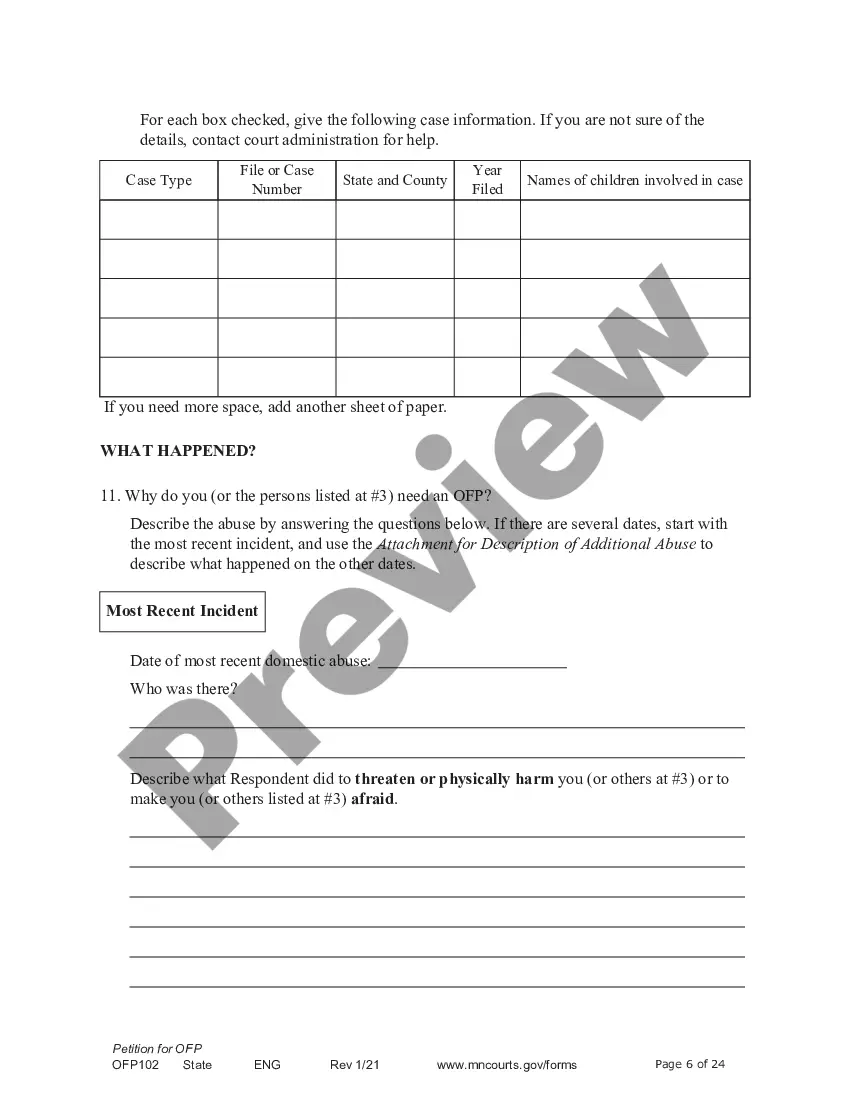
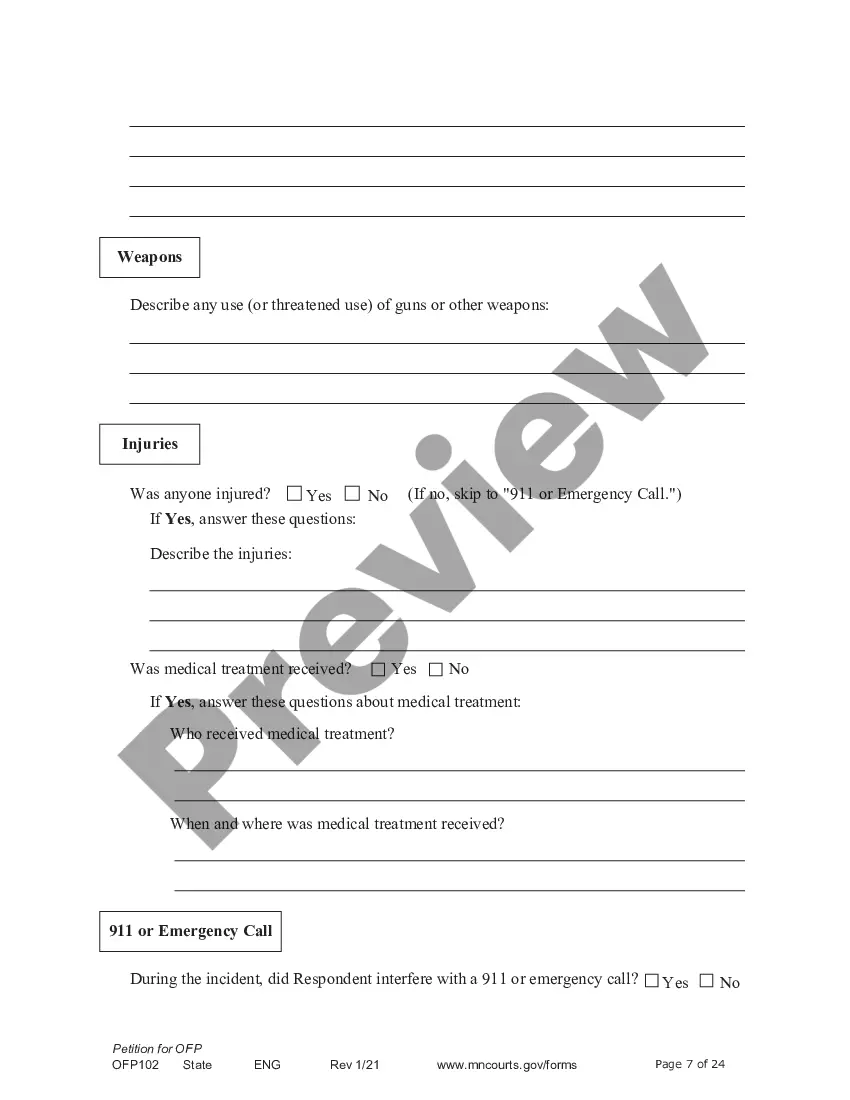
- Details of Abuse: allows the petitioner to describe the incidents of abuse, including any physical threats or harm.
- Requests for Relief: specifies the types of orders and restrictions the petitioner is requesting from the court.
- Contact Information: options for maintaining confidentiality regarding the petitioner's contact details.

Situations where this form applies
This form should be used when an individual is a victim of domestic abuse and needs legal protection from their abuser. Situations that warrant the use of this form include instances of physical violence, threats of harm, stalking, or any pattern of abusive behavior by the respondent. It is essential to act promptly to ensure safety, especially if there is an immediate threat of violence.
Who needs this form
- Individuals experiencing domestic violence or abuse from a partner or family member.
- Parents who need protection for themselves or their children from an abusive co-parent.
- Guardians seeking protection on behalf of a minor or a vulnerable individual.
- Anyone who has experienced harassment or intimidation that requires legal intervention.
Steps to complete this form
- Fill out the Petitioner Information section with your details, noting if you want your address confidential.
- Provide complete Respondent Information, including name and address if known.
- Describe the abuse you've experienced in detail, listing any relevant incidents and injuries.
- Select your requests for relief, noting any specific orders you wish the court to make.
- Review all information for accuracy before signing and submitting the form to the court.
Notarization requirements for this form
This form does not typically require notarization unless specified by local law. Always check with local court rules to confirm if additional formalities are necessary when submitting the petition.
Get your form ready online
Our built-in tools help you complete, sign, share, and store your documents in one place.
Make edits, fill in missing information, and update formatting in US Legal Forms—just like you would in MS Word.
Download a copy, print it, send it by email, or mail it via USPS—whatever works best for your next step.
Sign and collect signatures with our SignNow integration. Send to multiple recipients, set reminders, and more. Go Premium to unlock E-Sign.
If this form requires notarization, complete it online through a secure video call—no need to meet a notary in person or wait for an appointment.
We protect your documents and personal data by following strict security and privacy standards.

Make edits, fill in missing information, and update formatting in US Legal Forms—just like you would in MS Word.

Download a copy, print it, send it by email, or mail it via USPS—whatever works best for your next step.

Sign and collect signatures with our SignNow integration. Send to multiple recipients, set reminders, and more. Go Premium to unlock E-Sign.

If this form requires notarization, complete it online through a secure video call—no need to meet a notary in person or wait for an appointment.

We protect your documents and personal data by following strict security and privacy standards.
Common mistakes
- Failing to provide detailed descriptions of the incidents of abuse.
- Not completing all required sections or leaving blank fields.
- Forgetting to sign the petition before submitting it to the court.
- Overlooking confidentiality options for personal information.
Why use this form online
- Convenience: Access and complete the form from home at your own pace.
- Editability: Make necessary changes easily before final submission.
- Reliability: Use a trusted source that provides up-to-date legal forms.
Key takeaways
- The petition is crucial for individuals seeking protection against domestic abuse.
- Accurate and detailed information is vital for the court to process your request effectively.
- Maintaining confidentiality is an option if you are concerned about your safety.
Looking for another form?
Form popularity
FAQ
Yes, in Minnesota, an affidavit must be notarized to be considered valid. This process involves signing the affidavit in front of a notary public, who will then verify your identity and witness your signature. Notarization adds an important layer of credibility to your Affidavit and Petition for Order for Protection. For a seamless experience, refer to USLegalForms, where you can find resources that guide you through the notarization requirements.
When writing a letter of declaration for a restraining order, begin by clearly stating your name, the date, and the purpose of the letter. Provide a detailed account of the incidents that led you to seek protection, and make sure to include any relevant dates and contexts. It is crucial to maintain clarity and honesty throughout your account. If you need a structured approach, USLegalForms offers templates that simplify the process for Minnesota Petitioners.
To fill out a restraining order, start by gathering the necessary information about the situation and the individuals involved. You will need to complete the Affidavit and Petition for Order for Protection, ensuring that you clearly state the reasons for your request. It is essential to be specific and detailed in your descriptions. For assistance, consider using USLegalForms, which provides templates and guidance tailored to help Minnesota Petitioners navigate this process effectively.
To qualify for an Order for Protection (OFP) in Minnesota, you must demonstrate that you have experienced domestic abuse or harassment from a family or household member. The law considers various factors, including physical harm, threats, or fear of imminent harm. You can file your petition with the court, and it's beneficial to gather any supporting documents or evidence. The US Legal platform provides valuable tools to assist Minnesota Petitioners in navigating the Affidavit and Petition for Order for Protection process.
To write an affidavit for a restraining order, start by clearly stating your name, address, and relationship to the other party. Then, outline the specific incidents that led you to seek protection, including dates and details. Ensure that your affidavit includes any evidence that supports your claims, as this will strengthen your case. Utilizing the resources available on the US Legal platform can help you create a comprehensive Minnesota Petitioner - Affidavit and Petition for Order for Protection.
They are public. A conviction record shows that a jury or judge accepted the allegation as true beyond a reasonable doubt. Criminal case restraining orders, though public, are still less damaging than a record of conviction.
You can apply for an OFP for a child in your family or household. If you are worried about abuse of an adult in someone else's family or household, call Minnesota Adult Abuse Report Center at (844) 880-1574.
It does not cost anything to file for an order of protection. Many orders of protection cases are handled without a lawyer however it can often be helpful to have one represent you in court.If you are going to be in court without a lawyer, our Preparing for Court By Yourself section may be useful to you.
If you're the person who asked for the no contact order, you can ask the judge in your case to drop it. While there's no guarantee that the judge will do so, if you can show that you're not being forced or coerced into doing it, you'll have a better chance of getting it dropped.
An Order for Protection (OFP) is a restraining Order that is sought where abuse or threats of abuse are alleged. Often, such proceedings are improperly used as a vehicle when divorce is contemplated to have a spouse removed from the family home and/or to seek advantage in a subsequent custody proceeding.