Web Site Use Agreement
Overview of this form
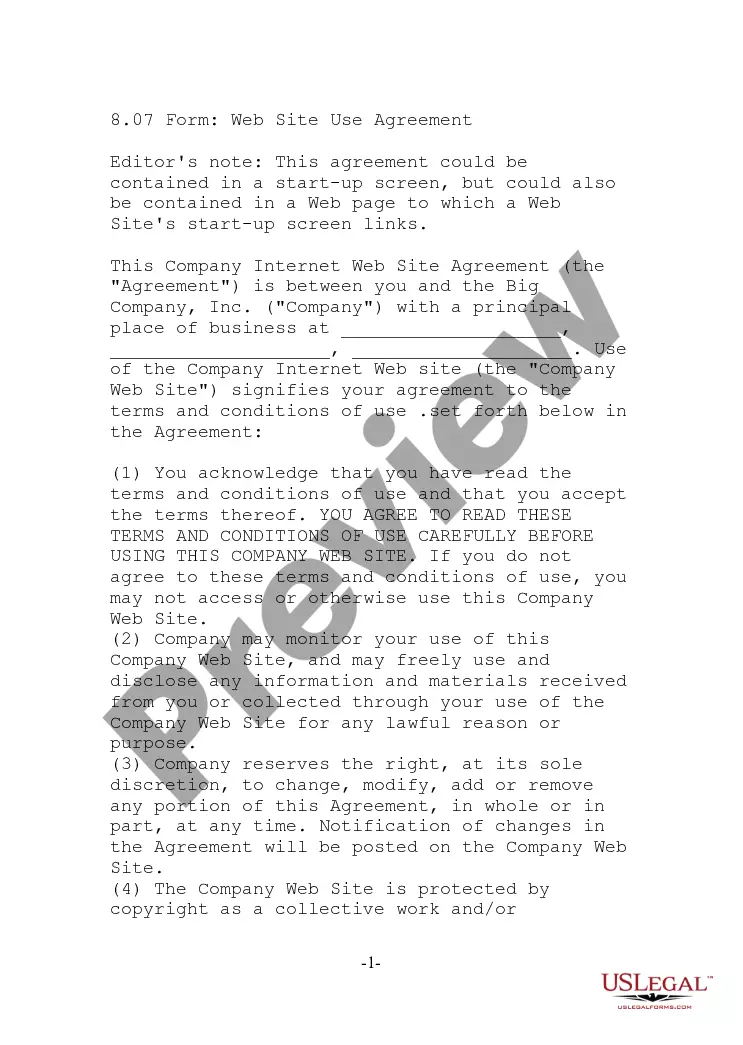
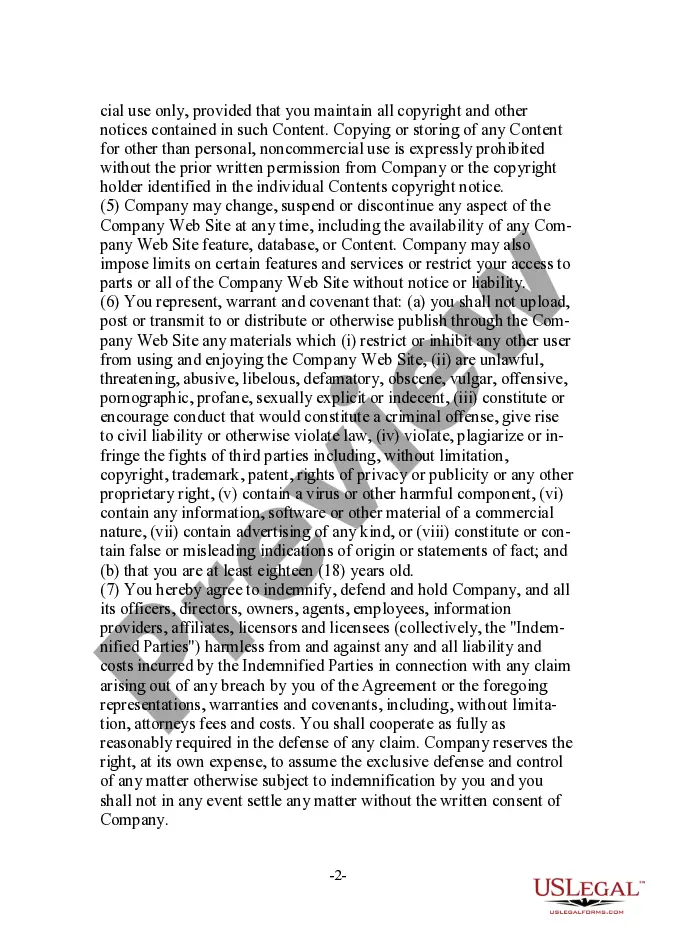
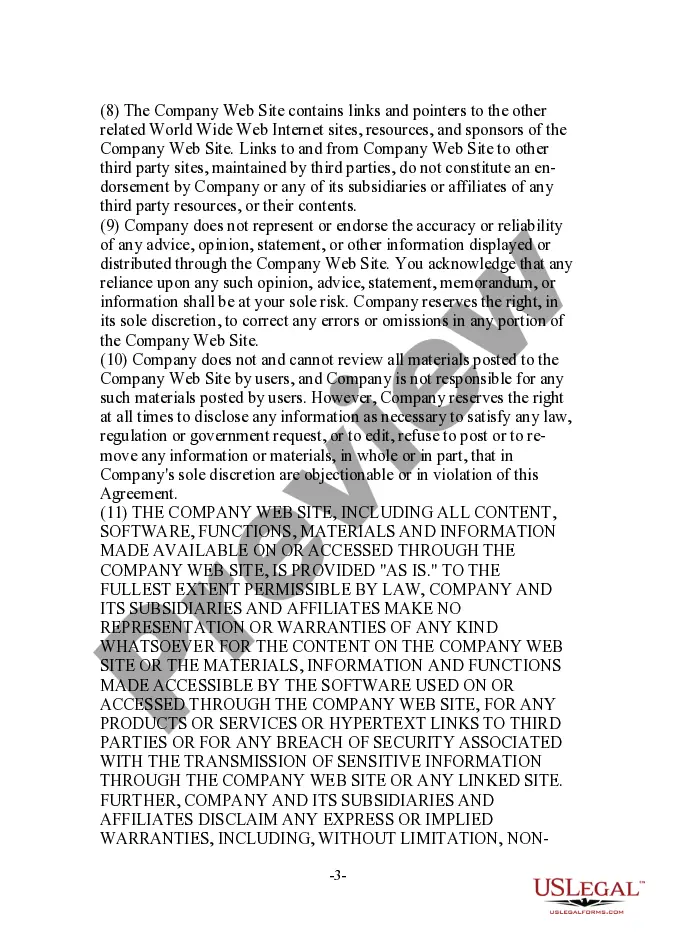
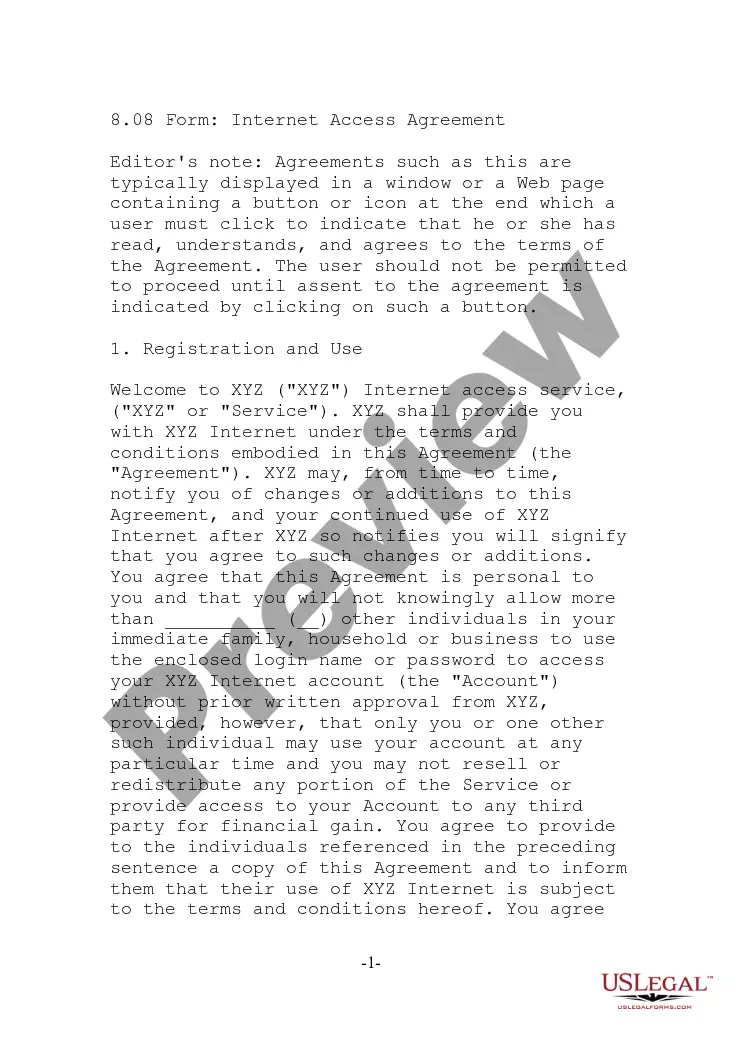
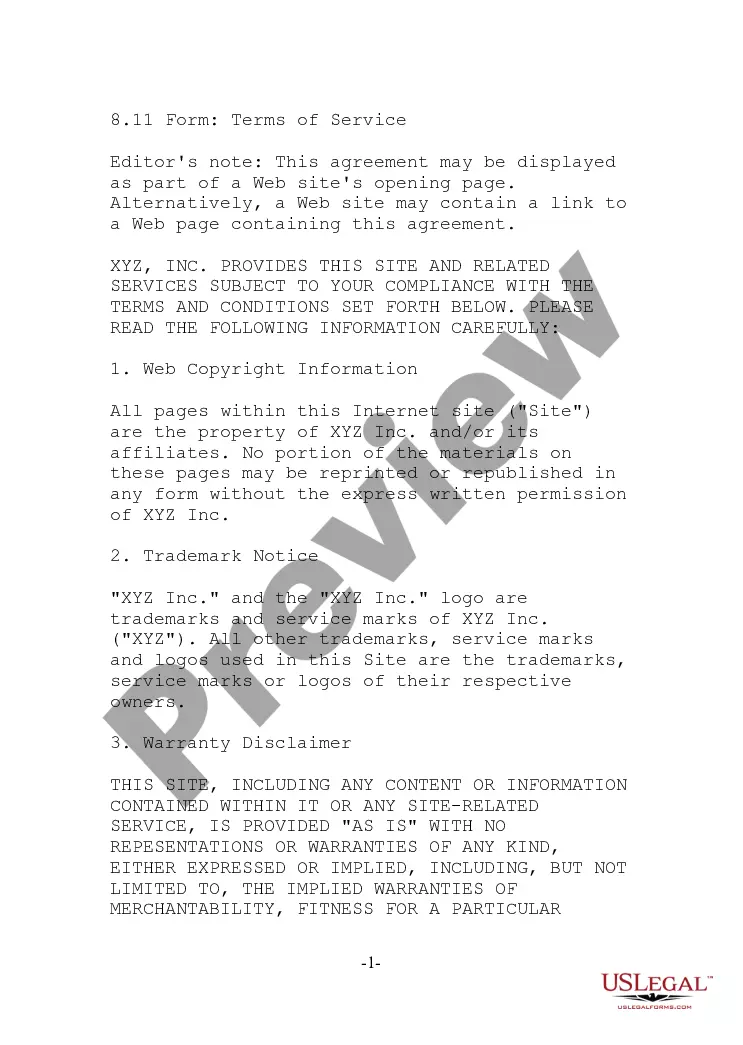
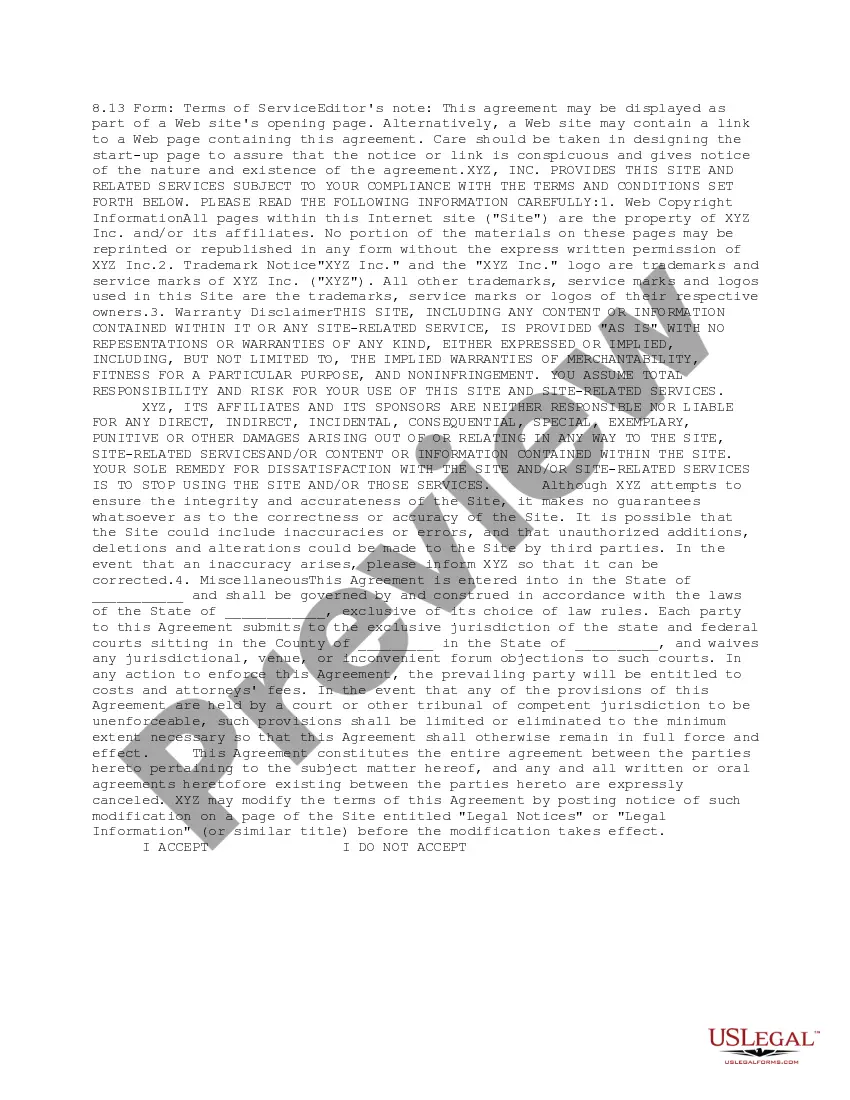
The Web Site Use Agreement is a legal document that outlines the terms and conditions for using a company's website. This agreement is essential for both the company and its users, ensuring that all parties understand the rules and guidelines that govern the use of the site. Unlike other agreements, this document is specifically tailored for web interactions, catering to the unique aspects of online services and content usage. It provides a clear framework for acceptable behavior and the rights of both the company and users.
What’s included in this form
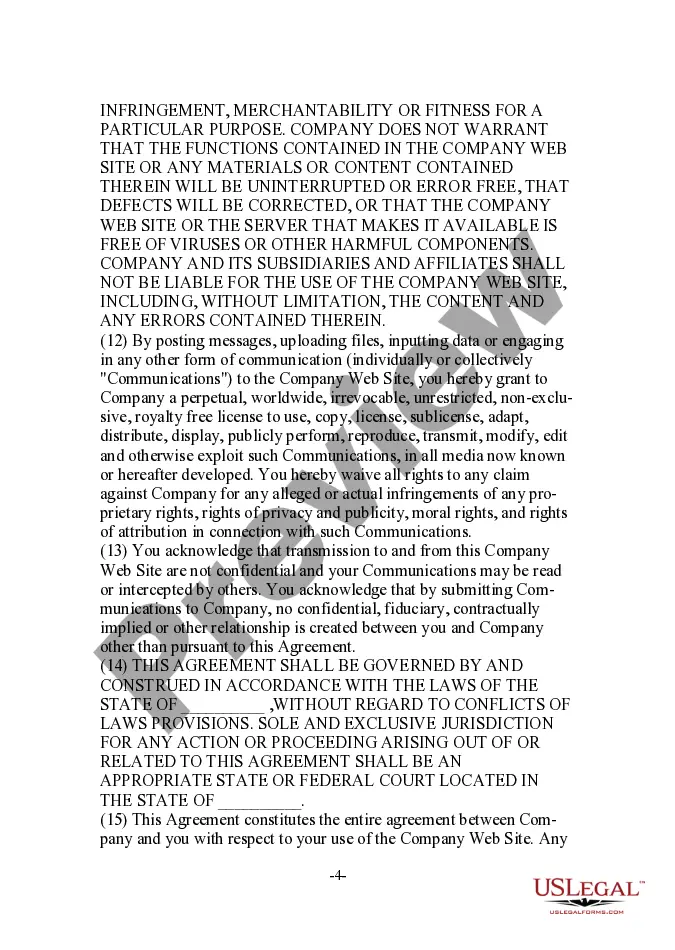
- Acceptance of terms: Users must agree to the terms outlined in the agreement to access the website.
- User monitoring: The company reserves the right to monitor user usage and disclose information as needed.
- Copyright information: All content on the website is protected by copyright, outlining user rights regarding content usage.
- User obligations: Users must refrain from uploading illegal or harmful content to the site.
- Indemnification clause: Users agree to protect the company from any claims resulting from their use of the site.
- Jurisdiction details: The agreement specifies the legal jurisdiction governing disputes related to the site.
When this form is needed
This form should be used by any company operating a website to establish clear rules for its users. It is particularly important for businesses that handle user data, provide online services, or allow user-generated content. By having this agreement in place, companies can protect themselves legally and ensure that users understand their rights and responsibilities while using the website.
Who needs this form
Individuals or entities that should consider using the Web Site Use Agreement include:
- Businesses operating websites with user interaction.
- E-commerce platforms selling goods or services online.
- Content providers allowing user submissions, such as blogs or forums.
- Nonprofits offering information or services through their websites.
Instructions for completing this form
- Identify the parties: Enter the name and address of the company and designate it as the "Company."
- Provide user acknowledgment: Include an area for users to confirm their acceptance of the terms.
- Specify jurisdiction: Fill in the appropriate state name governing the agreement.
- Include copyright notices: Ensure all copyrights are clearly stated to protect company content.
- Outline user obligations: Clearly state what is acceptable and unacceptable conduct on the website.
Does this form need to be notarized?
Notarization is generally not required for this form. However, certain states or situations might demand it. You can complete notarization online through US Legal Forms, powered by Notarize, using a verified video call available anytime.
Get your form ready online
Our built-in tools help you complete, sign, share, and store your documents in one place.
Make edits, fill in missing information, and update formatting in US Legal Forms—just like you would in MS Word.
Download a copy, print it, send it by email, or mail it via USPS—whatever works best for your next step.
Sign and collect signatures with our SignNow integration. Send to multiple recipients, set reminders, and more. Go Premium to unlock E-Sign.
If this form requires notarization, complete it online through a secure video call—no need to meet a notary in person or wait for an appointment.
We protect your documents and personal data by following strict security and privacy standards.

Make edits, fill in missing information, and update formatting in US Legal Forms—just like you would in MS Word.

Download a copy, print it, send it by email, or mail it via USPS—whatever works best for your next step.

Sign and collect signatures with our SignNow integration. Send to multiple recipients, set reminders, and more. Go Premium to unlock E-Sign.

If this form requires notarization, complete it online through a secure video call—no need to meet a notary in person or wait for an appointment.

We protect your documents and personal data by following strict security and privacy standards.
Common mistakes
- Not clearly defining user rights and responsibilities in the agreement.
- Failing to update the agreement as website features or laws change.
- Neglecting to inform users about significant changes to the agreement.
Benefits of completing this form online
- Convenience of instant download and editing to match your needs.
- Reliability as the form is drafted by licensed attorneys.
- Ensures compliance with current legal standards for web agreements.
- Easy to customize for various business types and online platforms.
Legal use & context
- This agreement is designed to protect the intellectual property of the company and define user permissions regarding content usage.
- It helps to mitigate potential legal disputes by ensuring users are aware of their rights and obligations.
What to keep in mind
- The Web Site Use Agreement establishes critical terms for website usage.
- It ensures users understand their responsibilities and the legal implications of their behavior online.
- This form is essential for any business to protect its interests in an increasingly digital environment.
Looking for another form?
Form popularity
FAQ
A Terms and Conditions agreement is also known as a Terms of Service or a Terms of Use agreement: A Terms of Service Agreement is a set of regulations which users must agree to follow in order to use a service.This agreement sets the rules that users must agree to in order to use your website.
What are the terms and conditions? Terms and conditions agreement (T&C) is a page on a website that sets out the rights and responsibilities of anyone using the site. It effectively forms a contract between the site and the user.
Review Competitor Sites. Agreement to be Bound. Prohibited Uses. Service Interruptions and Updates. Term, Termination, and Survival. Subscriber Data and Legal Compliance. Confidential Information. Indemnification and Limitation of Liability.
A terms of use is an agreement that a user must agree to and abide by in order to use a website or service. Terms of use (TOU) can go by many other names, including terms of service (TOS) and terms and conditions.
Terms and Conditions Overview While most websites seem to have one, there's actually no legal requirement for defining Terms and Conditions.These pages can limit your liability should a customer take you to court, as well as protect your rights to the content contained in your website.
Fill in all the necessary information on the right sidebar. Click Generate at the end. Done! Your Terms & Conditions are generated.
Making Disclaimers legally binding Your Disclaimers can be legally binding as long as they are not unfair and users can review them.
A Terms of Service Agreement is a set of regulations which users must agree to follow in order to use a service. Terms of Use is often named Terms of Service, Terms and Conditions, or Disclaimer when addressing website usage. This agreement sets the rules that users must agree to in order to use your website.
Read terms and conditions on other websites like yours. Set out the ground rules of your website. Tailor the terms and conditions to fit your website. Personalize your language. Don't make it more complicated than it needs to be. Create a new page for your terms and services, and upload it to your website.